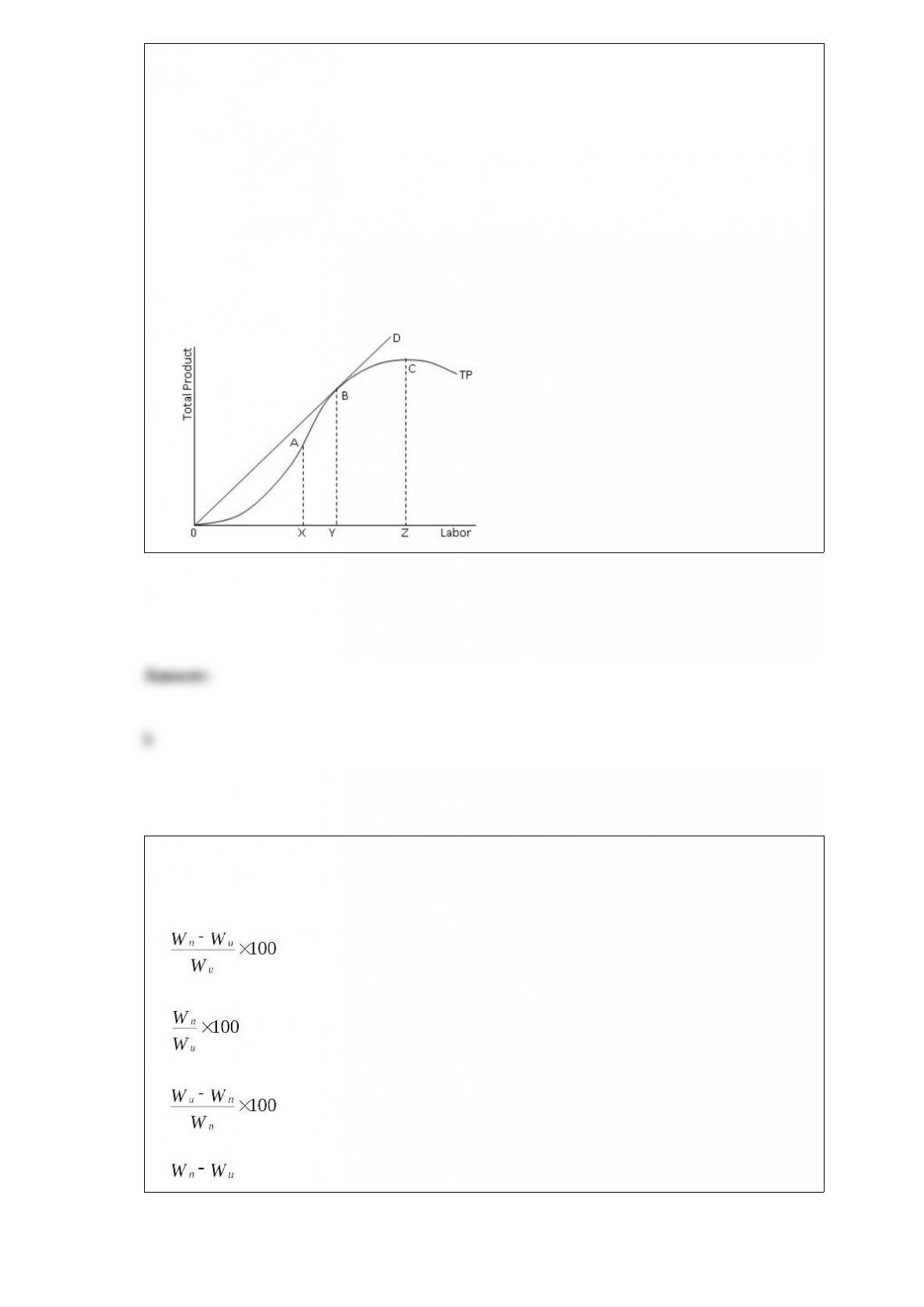
The “law of diminishing marginal returns” begins to take effect at labor input level:
a. 0
b. X
c. Y
d. Z
If Wu is the union wage and Wn is the nonunion wage, the pure union wage advantage
is:
a.
b.
c.
d.

Laureate Gary Becker is known for economic theories in all of the following areas
except:
a. economics of households
b. investment in human capital
c. the “old” labor economics
d. economics of discrimination
The equilibrium positions shown in the diagram imply that for a wage increase:
a. both the income and substitution effects increase desired work hours
b. both the income and substitution effects reduce desired work hours
c. the income effect increases desired work hours and the substitution effect reduces
desired work hours
d. the income effect reduces desired work hours and the substitution effect increases
desired work hours

The concept of demand must be modified when applied to labor markets to reflect the
fact that:
a. non-monetary characteristics of jobs may be as important to workers as their pay
b. labor demand curves slope upward from left to right
c. the demand for labor is derived from the demand for the various products that labor
produces
d. the demand for output is derived from the demand for labor used to produce that
output
Given the initial situation, which one of the following may be expected to occur?
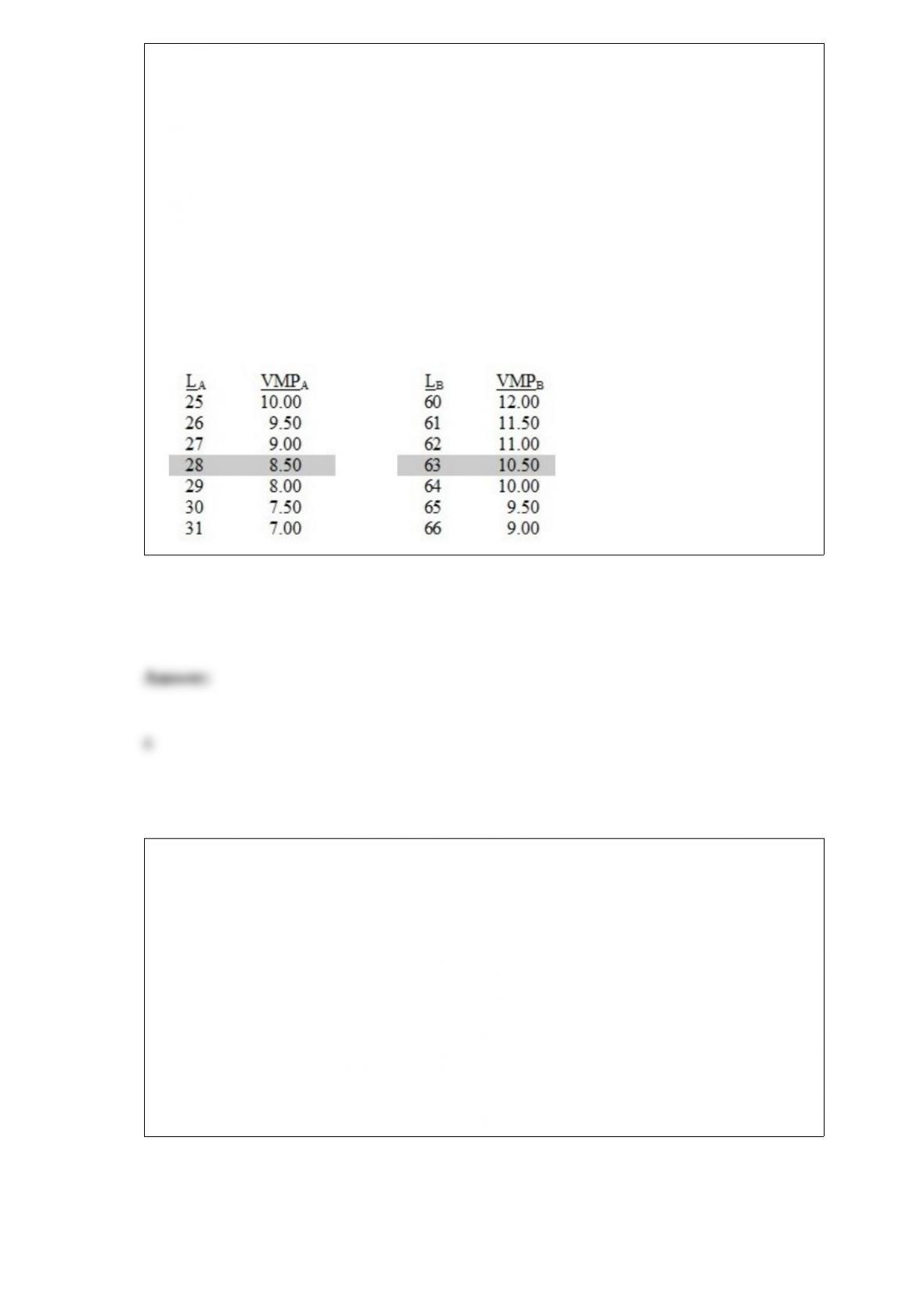
(There are initially 28 workers in market A and 63 workers in market B as indicated by
the shaded cells. All markets are assumed competitive and there is perfect information
and costless migration; jobs in markets A and B are identical in all nonwage aspects.)
a.Workers will migrate from A to B
b.Workers will migrate from B to A
c.There will be no migration of workers
d.A migration pattern cannot be determined from the information
Suppose some development rotates the isoprofit line outward, to line 2. If history is a
guide, we would expect this worker’s new wage-fringe optimum to be at point: (All
points along the ray 0P reflect a constant proportion of wages to fringe benefits.)
a. D
b. E
c. F.
d. G

Which one of the following most closely corresponds to the average annual rate of
productivity growth in the U.S. for the period 1948 ” 1973?
a.0-1%
b.1-2%
c.3-4%
d.5-8%
Structural unemployment is characterized by:
a.a geographical or skill-based mismatch between available jobs and job seekers
b.deficient aggregate demand

c.unemployment in excess of the natural rate
d.wage rigidity
Which of the following would unambiguously increase the economic rent of current
dental assistants?
a.Requiring all future dental assistants to get an advanced degree
b.Requiring all current and future dental assistants to get an advanced degree
c.Requiring all current dental assistants to get an advanced degree
d.Requiring all dental assistants to work under the direct supervision of a dentist
The share of 2010 earnings received by the top quintile of full-time workers was
approximately:
a.20%
b.35%
c.45%
d.70%

At firms obligated to undertake affirmative action, female and minority shares of
employment:
a. grew consistently from 1975 to the present
b. grew from 1975 to 1980, but have not changed appreciably since then
c. did not change appreciably from 1965 to 1975, but have grown consistently since
then
d. did not change from 1965 to the present
The slope of a wage-fringe indifference curve reflects:
a. the overall utility level of a person
b. a worker’s willingness to give up an extra dollar of wages in exchange for an extra
dollar of fringe benefits
c. the firm’s cost of paying an extra dollar of compensation as wages rather than fringe
benefits
d. an increasing marginal rate of substitution of fringe benefits for cash

Which of the following research findings would support an efficiency wage explanation
of pay differentials?
a. Firms with higher turnover costs pay lower than average wages
b. Firms with higher costs of detecting shirking pay higher than average wages
c. Pay is positively correlated with human capital investments in a given industry
d. Differences in observable worker characteristics explain most of the variance in pay
across industries
The principal-agent problem arises primarily because:
a. principals and agents work in a team, leading to free-rider problems
b. principals and agents have common interests
c. principals pursue some of their own objectives that may conflict with the objectives
of the agents
d. agents pursue some of their own objectives that may conflict with the objectives of
the principals

Human capital theory predicts that the proportion of people attending college will
decrease if:
a. the age at which retirement benefits are received is lowered to 59
b. the age at which retirement benefits are received is raised to 75
c. there is a relatively large population of new high school graduates
d. there is an increase in the demand for college educated workers
The index of segregation for this economy is: (the following labor market data showing
the distribution of males and females within the three occupations (labeled A, B, and C)
of a hypothetical economy.):
a. .20
b. .30
c. .40
d. .70
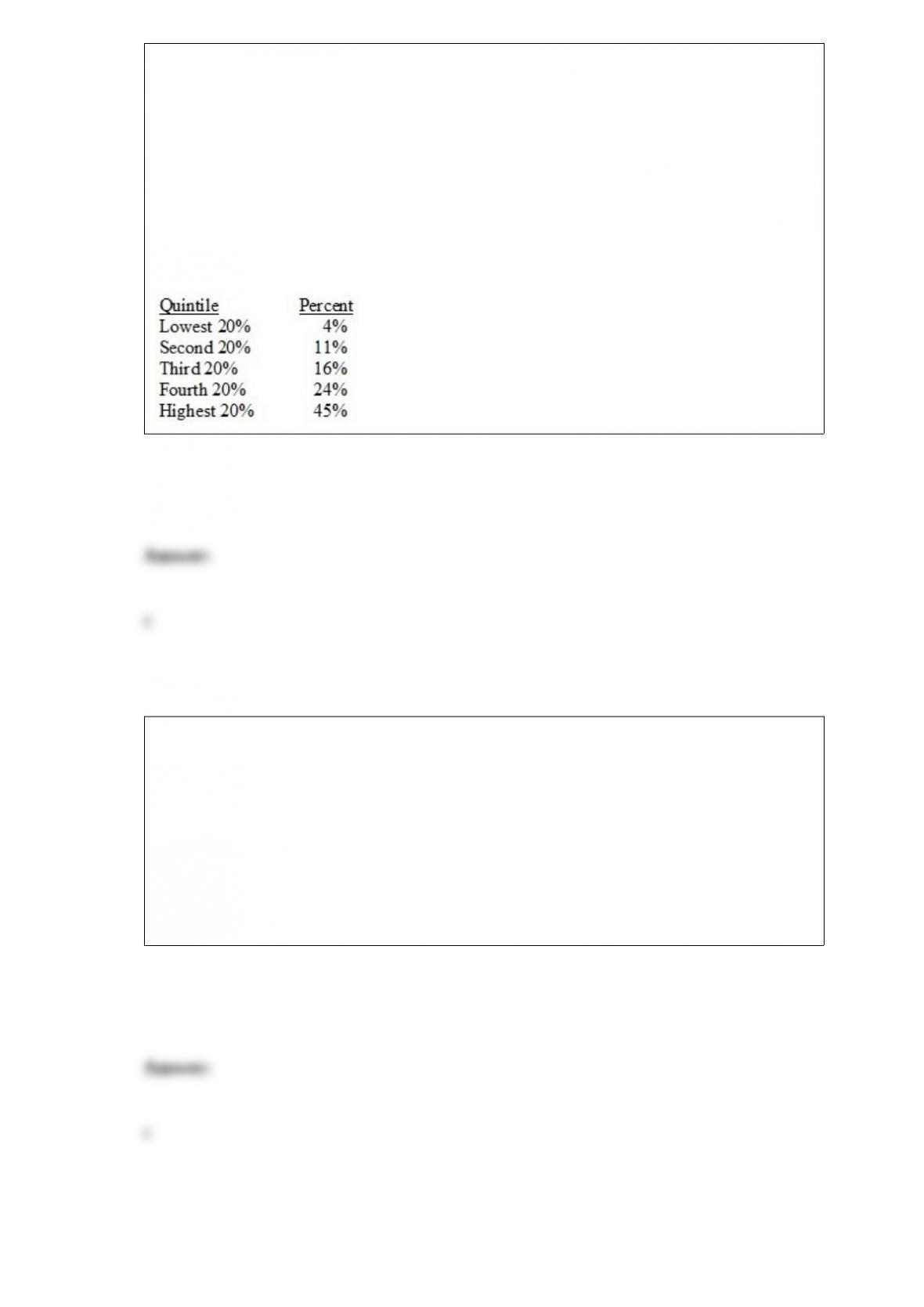
The median of this distribution is in the: ( the following quintile earnings distribution
data):
a.second 20%
b.third 20%
c.fourth 20%
d.highest 20%
In an internal labor market, promotions are generally accorded on the basis of:
a.ability
b.work effort
c.seniority
d.age

If the actual wage is $7, the wage cost per effective unit of labor is: (Suppose a “fully
effective” worker can produce 20 units per hour in a particular firm. The firm’s
wage-productivity relationship is given by the table below):
a. $3.50
b. $10.00
c. $7.00
d. $14.00
Which of the following best exemplifies the Becker income effect? An increase in the
market wage leads a household to:
a. substitute time for goods in the production of commodities
b. consume fewer time-intensive commodities and more goods-intensive commodities
c. consume more commodities
d. have fewer children
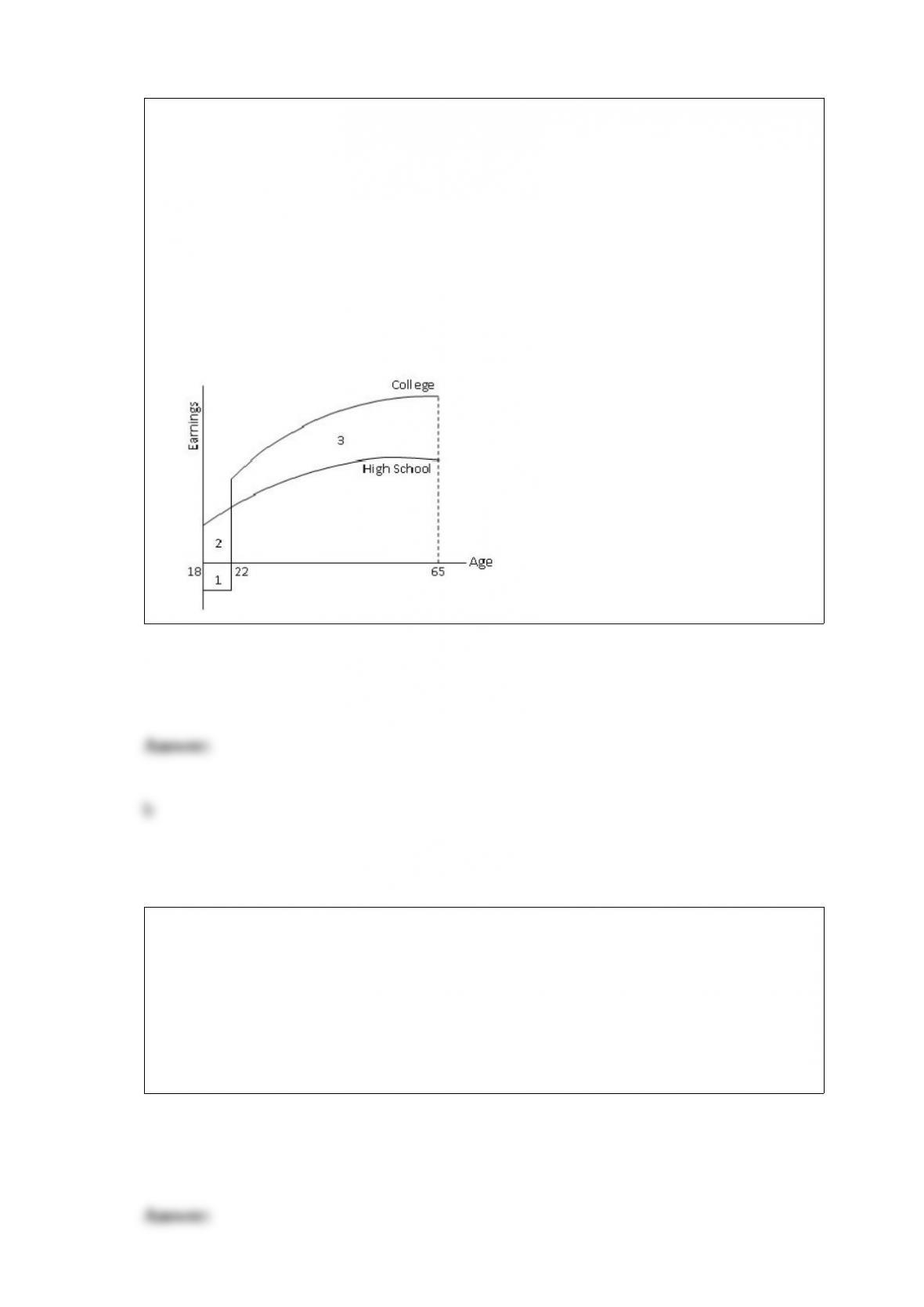
Which one of the following would increase the likelihood of investing in a college
education?
a. an increase in area 1
b. a reduction in area 2
c. a reduction in the retirement age
d. a reduction in area 3 and an equal increase in area 2
For a firm hiring labor and selling its output in perfectly competitive markets:
a. PL= MWC and VMP = MRP
b. PL= MWC and VMP > MRP
c. PL> MWC and VMP = MRP
d. PL> MWC and VMP > MRP

A strongly efficient union contract:
a.pays a wage equal to the monopoly union wage
b.pays a wage equal to the competitive wage
c.sets employment at the monopoly union level
d.sets employment at the competitive level
The break-even level of income is:
a. $4500
b. $6000
c. $9000
d. $18,000
An increase in the unemployment rate may be caused by a(n):
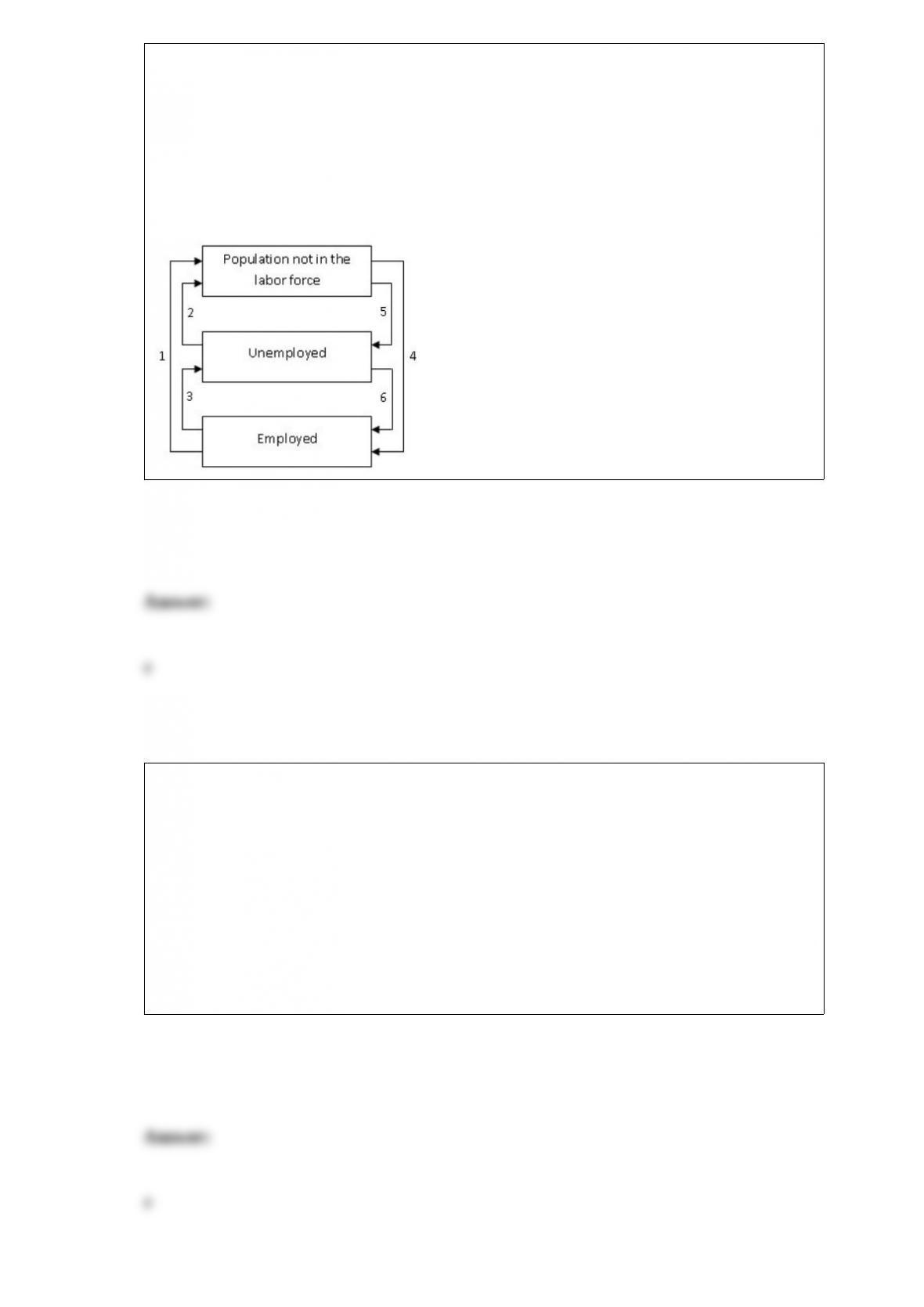
a.increase in flow 1
b.increase in flow 2
c.decrease in flow 5
d.increase in flow 6
According to models of asymmetric information, strikes are more likely when:
a.firm profitability is highly variable and uncertain
b.there is less democracy in the union
c.union leaders have less information regarding firm profitability than the rank and file
members
d.none of the above

Demand-deficient unemployment occurs when:
a.a decrease in aggregate demand causes a decrease in the demand for labor, with little
reduction in real wage rates
b.an increase in aggregate supply reduces wage rates, causing fewer people to seek jobs
c.a decrease in aggregate demand causes a decrease in wage rates, causing fewer people
to seek jobs
d.a decrease in aggregate supply reduces consumer demand, thereby reducing the
demand for labor
Which of the following is a member of the potential labor force?
a. A 75 year old retired autoworker living at home
b. A 15 year old student
c. A 60 year old Alzheimer’s patient now living in a nursing home
d. A 35 year old stockbroker convicted of fraud now serving a 10-year sentence
Suppose this worker’s union negotiates an increase in the straight-time wage from $8 to
$9.33 per hour with no bonus for overtime. This plan would allow earnings of $560 at
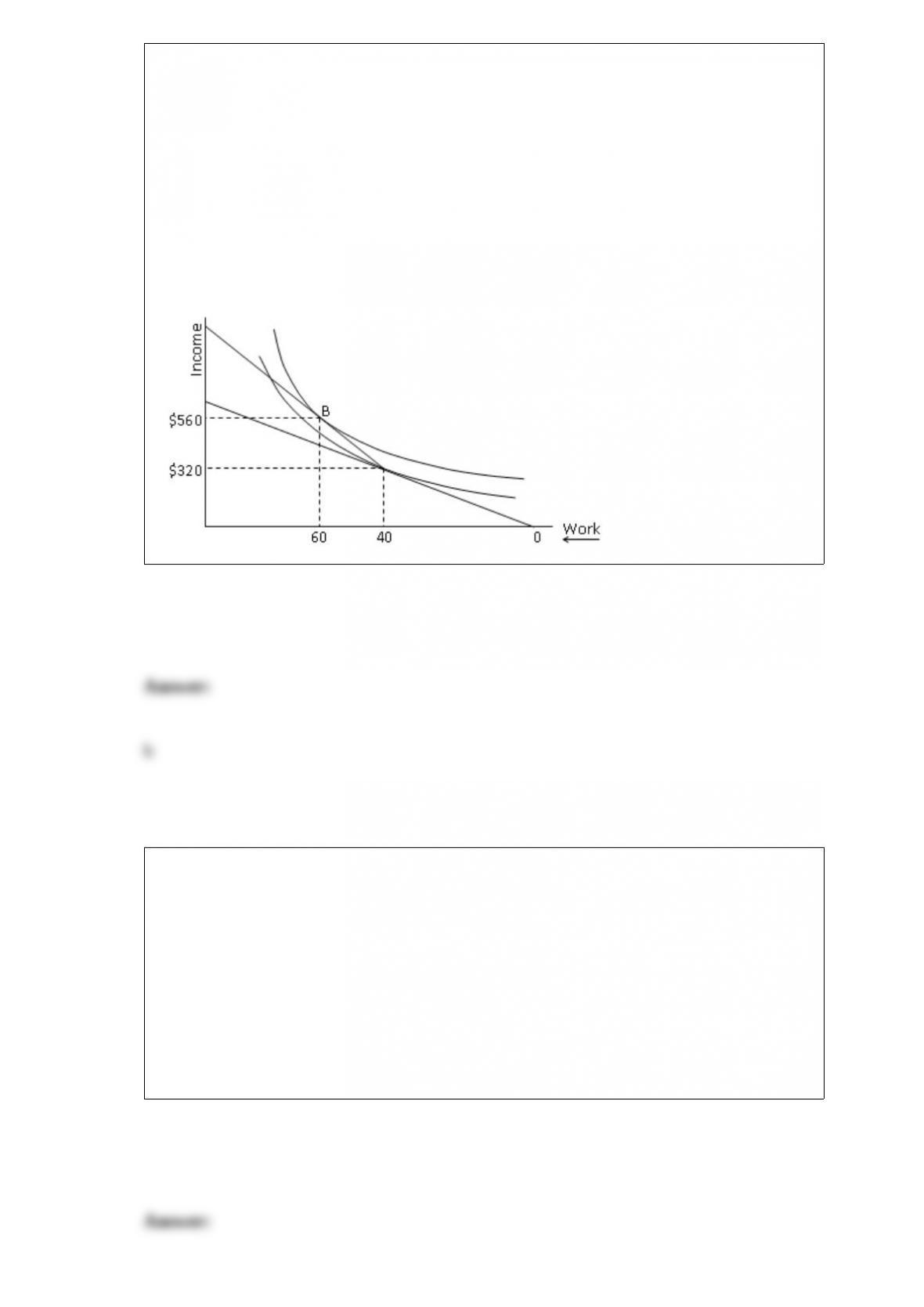
60 hours per week. Assuming this worker can freely choose the number of hours
worked, he will choose to work:
a. 60 hours per week
b. fewer than 60 hours per week
c. more than 60 hours per week
d. more than 60 hours per week if the income effect dominates; less otherwise
Following the change to “blind” orchestra auditions in the 1970 and 1980s:
a. the proportion of females in major orchestras increased substantially
b. orchestra sizes increased substantially to accommodate additional females and
African Americans
c. the quality of major orchestras declined substantially
d. all of the above

Steven’s reservation wage is $12 and his market wage is $11. We can conclude that:
a. Steven’s marginal rate of substitution of leisure for income is less than his reservation
wage
b. Steven will be a nonparticipant in the labor market
c. Steven’s subjective valuation of nonmarket time is less than the value of work
d. Steven has no nonwage sources of income
An unemployed worker will continue a job search provided the:
a.expected benefit of continued search is rising
b.expected cost of continued search is falling
c.last wage offer was below the acceptance wage
d.worker is able to ‘store” job offers