If policy makers want to increase real GDP by $100 billion and the marginal propensity
to consume is 0.75, they should increase government purchases of goods and services
by $75 billion.
A) True
B) False
Gains from trade arise because of:
A) specialization in production.
B) specialization in consumption.
C) marginal analysis.
D) individual choice.
In the long-run changes in the money supply will change prices but not real GDP or
interest rates.
A) True
B) False

Bank reserves are:
A) the fraction of deposits kept in gold with the Federal Reserve.
B) the deposits lent to finance illiquid investments.
C) the fraction of deposits kept in the form of very liquid assets.
D) gold kept in the bank’s vault.
Planned aggregate expenditures are represented by a line that is:
A) upward sloping.
B) downward sloping.
C) vertical.
D) horizontal.
Many S&Ls failed in the 1980s mainly because:
A) foreign governments defaulted on bonds that the thrifts were holding.

B) many of their risky real estate loans went bad.
C) Congress gave the home mortgage business to two government agencies, Fannie
Mae and Freddie Mac.
D) the Glass-Steagall Act was passed.
Of all types of financial assets, transactions costs are likely to be the lowest for loans.
A) True
B) False
The Great Moderation consensus regarding the use of monetary or fiscal policy to
reduce unemployment in the long run is that:
A) unemployment can be constantly decreased as long as expectations of inflation are
kept low.
B) the natural rate of unemployment limits what monetary and fiscal policy can
accomplish.
C) the concept of the nonaccelerating inflation rate of unemployment, or NAIRU, was a
mistake.
D) the only effective policy is to maintain a constant growth rate of the money supply.
Planned investment spending _____ the interest rate.
A) is positively related to
B) is negatively related to
C) is independent of
D) moves in the same direction as
Stocks are usually riskier than bonds but also typically earn a higher rate of return than
bonds.
A) True
B) False
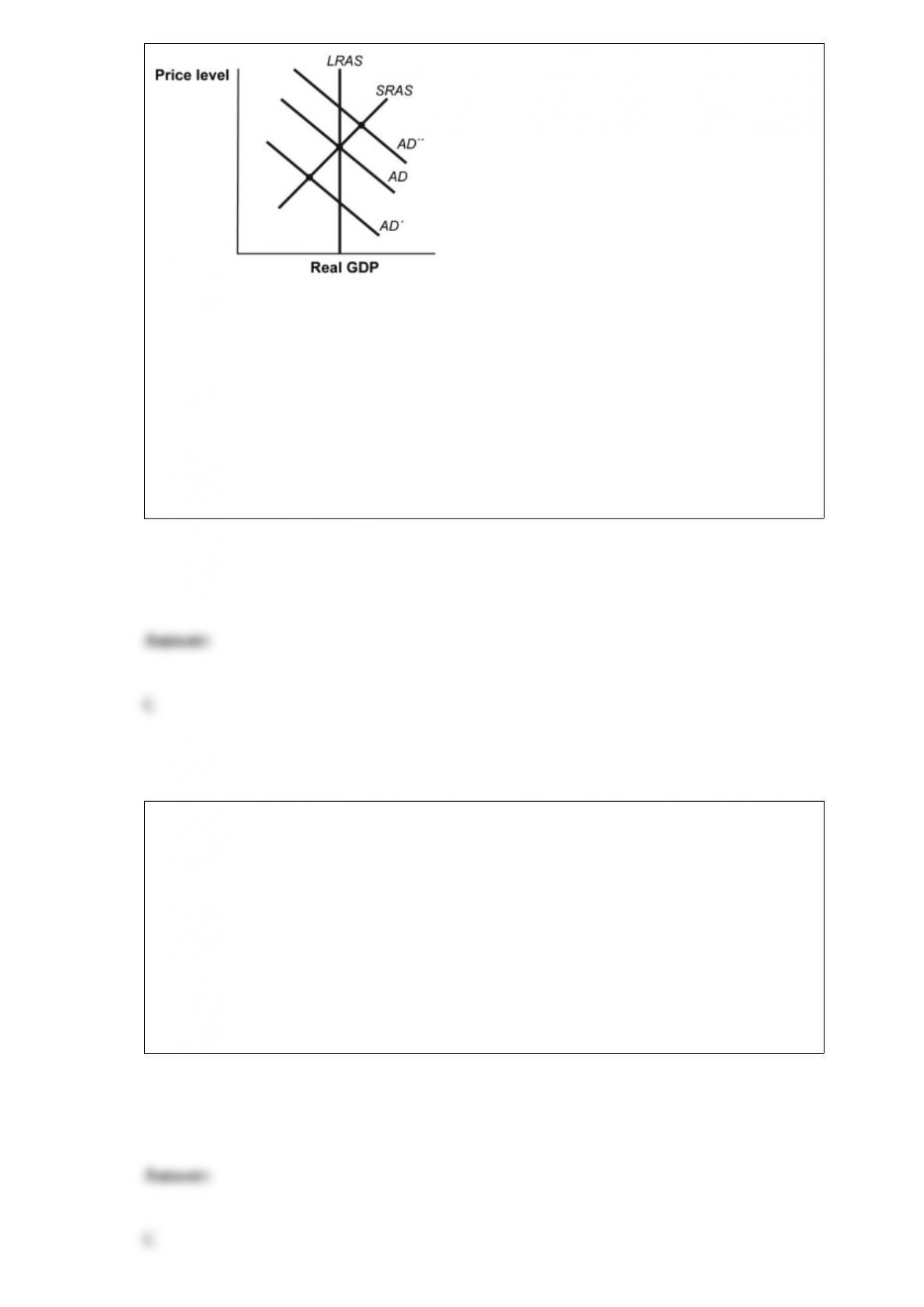
Look at the figure Fiscal Policy Options. If the aggregate demand curve is AD:
A) a contractionary fiscal policy may be warranted.
B) an expansionary fiscal policy may be warranted.
C) no change in discretionary fiscal policy is warranted.
D) the economy is in an inflationary gap.
A wage offered by an employer as an incentive for more work effort and performance
and that exceeds the equilibrium wage rate is known as a(n) _____ wage.
A) minimum
B) equilibrium
C) efficiency
D) union
A dixie was the first gold coin issued by the U.S. Treasury.
A) True
B) False
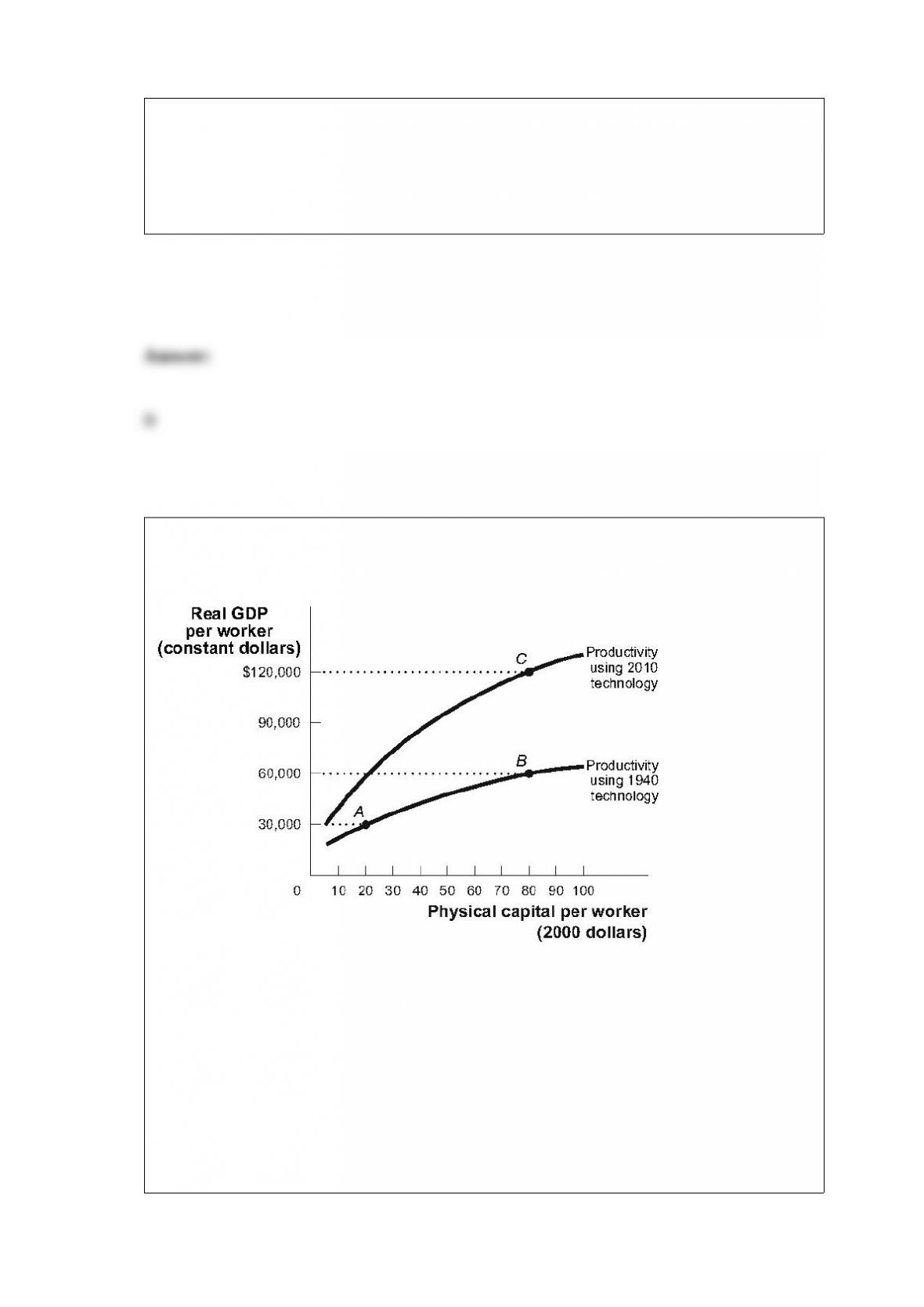
Figure: Technological Progress and Productivity Growth
Look at the figure
Technological Progress and Productivity Growth. Which of the following changes in
real GDP is most likely to have resulted from an increase in domestic savings?
A) A to B
B) B to A
C) C to B
D) C to A
If the government were required to balance the budget during a recession, it would have
to increase taxes and decrease government spending.
A) True
B) False
Monetary policy attempts to affect the overall level of spending by making changes in:
A) taxes.
B) taxes and spending.
C) taxes and interest rates.
D) interest rates and the quantity of money.
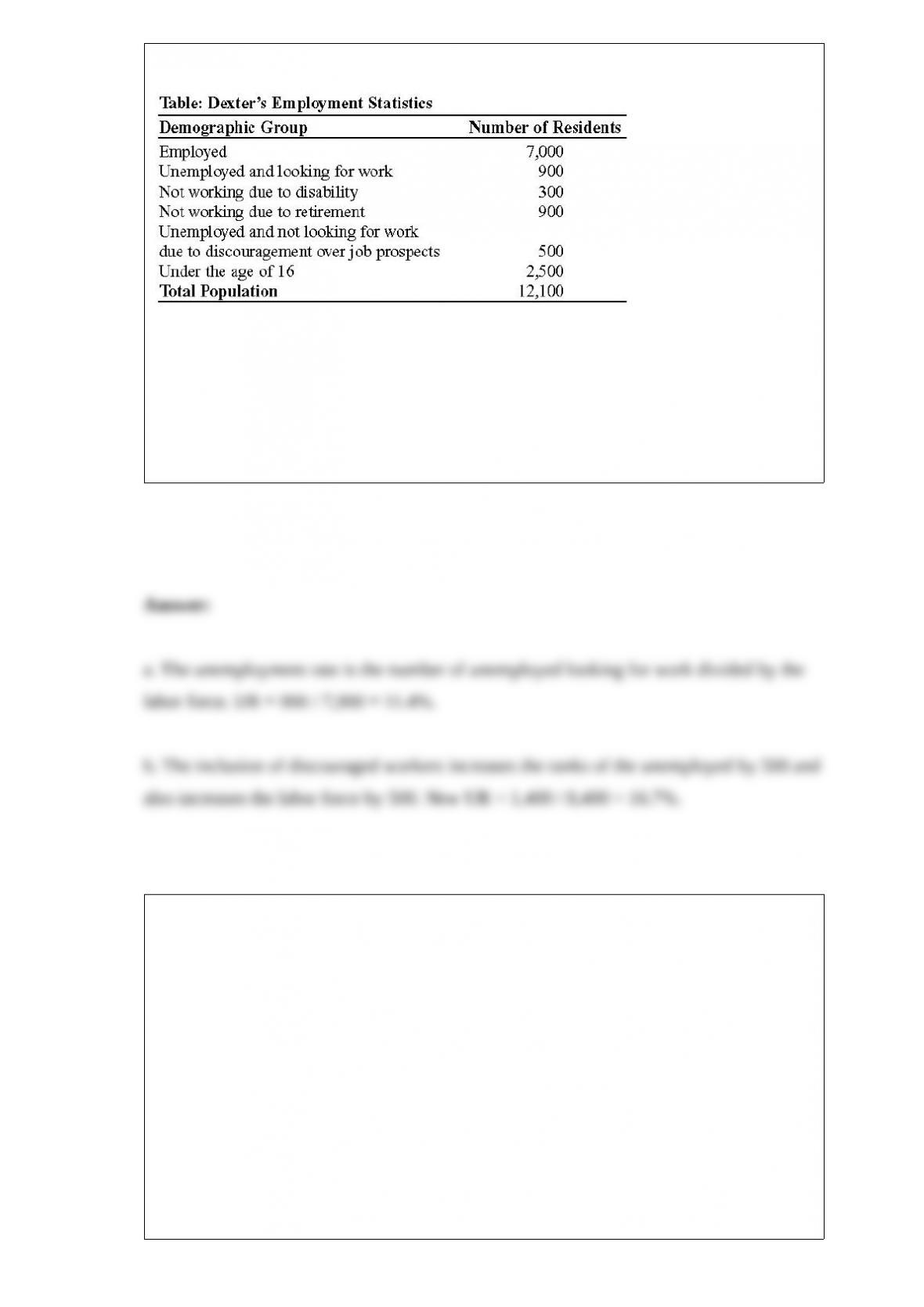
Look at the table Dexter’s Employment Statistics. Use these data for the following
computations.
a. What is the unemployment rate?
b. Including discouraged workers, what is the unemployment rate?
Which of the following was an argument IN FAVOR of Britain’s adopting the euro?
I. Using the same currency as many other European countries would expand trade and
increase productivity.
II. Using the euro would increase the effectiveness of monetary policy.
A) I only
B) II only
C) I and II
D) neither I nor II
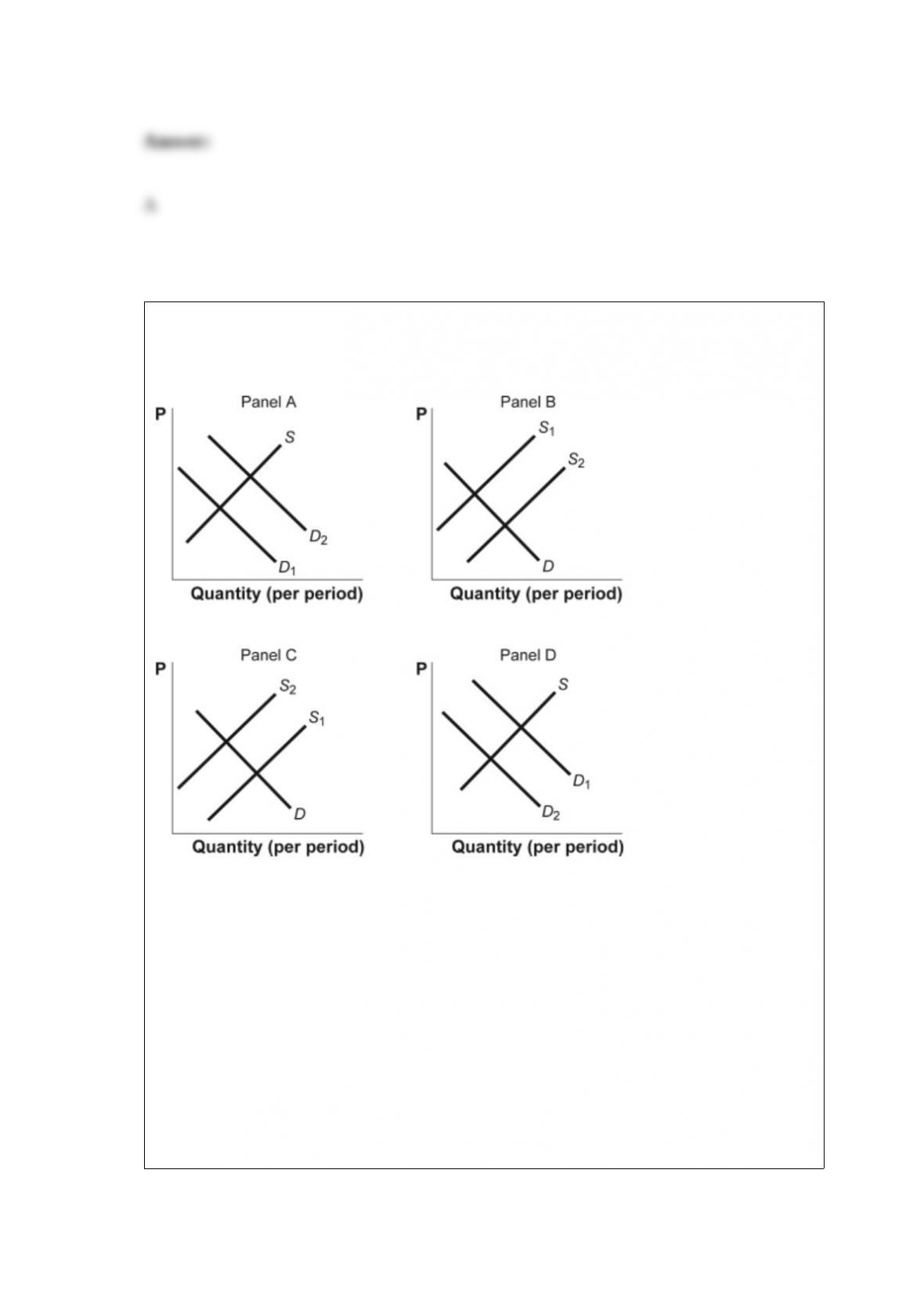
Figure: Shifts in Demand and Supply III
Look at the figure Shifts in Demand and Supply III. The figure shows how supply and
demand might shift in response to specific events. Suppose a spring frost destroys
one-third of the nation’s artichoke crop. Which panel BEST describes how this will
affect the market for mayonnaise, which is a complement to artichokes?
A) panel A
B) panel B
C) panel C
D) panel D

The government deficit:
A) is essentially the same as the government debt.
B) is much higher than the government debt.
C) measures the difference between the amount government spends and the amount it
collects in tax revenues in a given period.
D) is the total amount of money a government owes at a particular time.
In macroeconomics:
A) aggregate data such as real GDP, the price level, and unemployment are analyzed.
B) individual and firm decisions regarding utility and profit maximization are studied.
C) long-term growth is not considered to be important.
D) market intervention from the government is not considered important.

Which of the following group of economists DISAGREES with discretionary monetary
policy in favor of a monetary rule that prescribes a slow increase in the money supply?
A) Keynesians
B) monetarists
C) supply-side economists
D) classical economists
Which of the following combinations of assets is considered to be money?
A) currency in circulation, checkable bank deposits, and credit cards
B) currency in circulation, checkable bank deposits, and traveler’s checks
C) currency in circulation and in bank vaults, checkable bank deposits, and traveler’s
checks
D) currency in circulation and in bank vaults, checkable bank deposits, and credit cards
Transfer payments are payments that:
A) governments make to households although the government did not receive a good or
service from the household.

B) governments make to households when the government receives a good or service.
C) erode the purchasing power of the economy.
D) are essentially tax refunds.
In 2011, consumption spending is $7,000, government purchases of goods and services
is $2,000, and investment spending is $1,500. If GDP for 2011 is $10,300, exports are
_____ and imports are _____.
A) $400; $200
B) $100; $200
C) $600; $800
D) $500; $300
Foreign exchange controls decrease the costs of red tape and corruption surrounding
international trade.
A) True
B) False

If interest rates are at the zero lower bound:
A) the effectiveness of monetary policy increases.
B) monetary policy is ineffective.
C) automatic stabilizers don’t work.
D) monetary policy is more effective than fiscal policy.
In the market for tacos, you observe that the equilibrium price and quantity have
increased. This can be caused only by:
A) an increase in the price of beef.
B) an increase in the wages of taco shop workers.
C) fewer taco shops.
D) an increase in the incomes of people who eat tacos.

The negative relationship between the inflation rate and the unemployment rate is
known as the:
A) short-run Phillips curve.
B) short-run aggregate supply curve.
C) long-run Phillips curve.
D) aggregate demand curve.
Khalil is offered a free ticket to the opera. His opportunity cost of going to the opera is:
A) zerothe tickets were free.
B) the price listed on the ticket.
C) whatever Khalil would have done had he not gone to the opera.
D) the price listed on the ticket and whatever Khalil would have done had he not gone
to the opera.
Figure: Labor Force Participation Rate
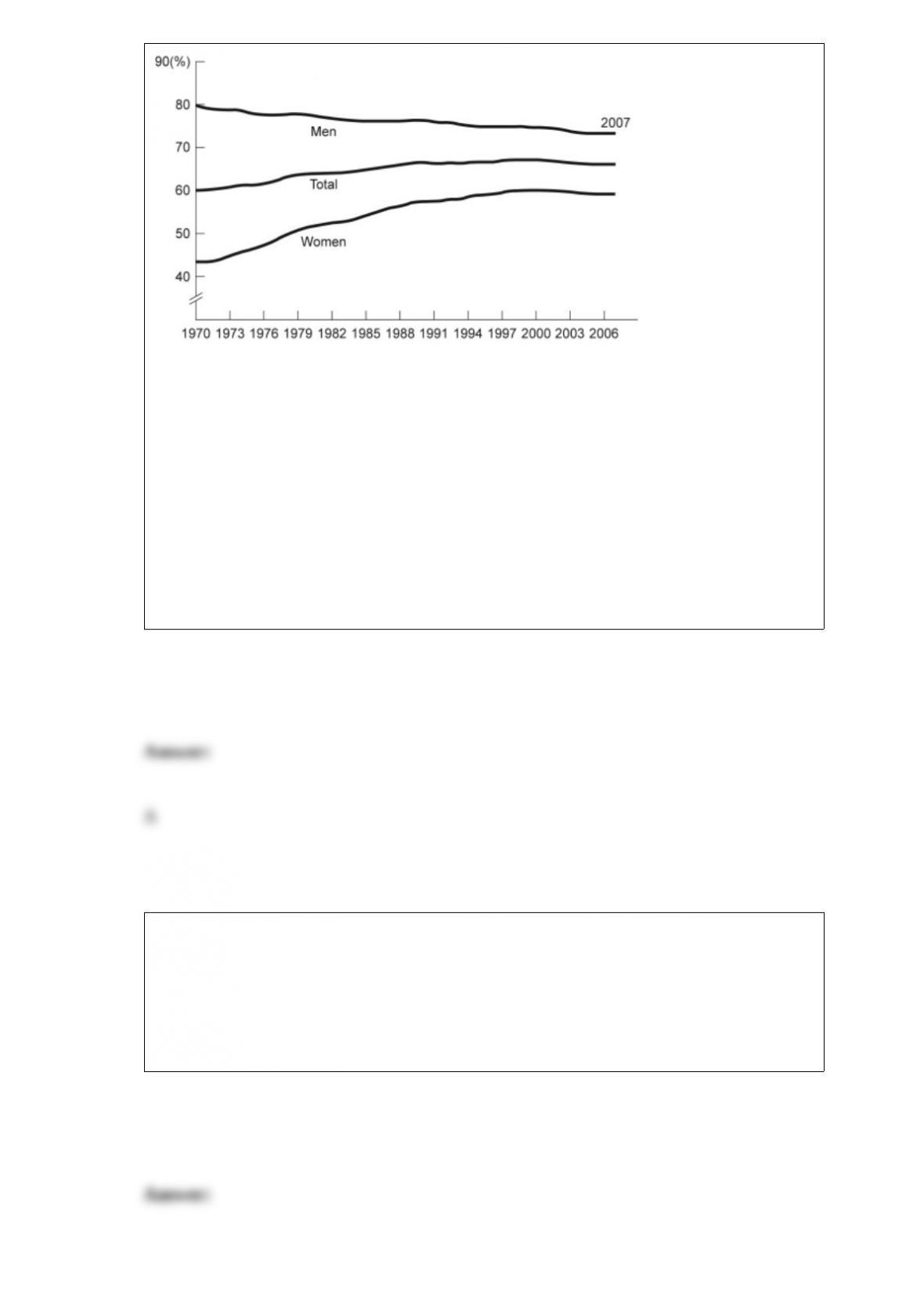
Look at the figure Labor Force Participation Rate. Using the figure, the labor force
participation rate for women was ______ during 1970″1985 and ______ during
1998″2006.
A) increasing; slightly decreasing
B) increasing; increasing
C) decreasing; increasing
D) decreasing; constant
In a recession, the Fed usually sells short-term government securities to increase
interest rates and decrease spending.
A) True
B) False
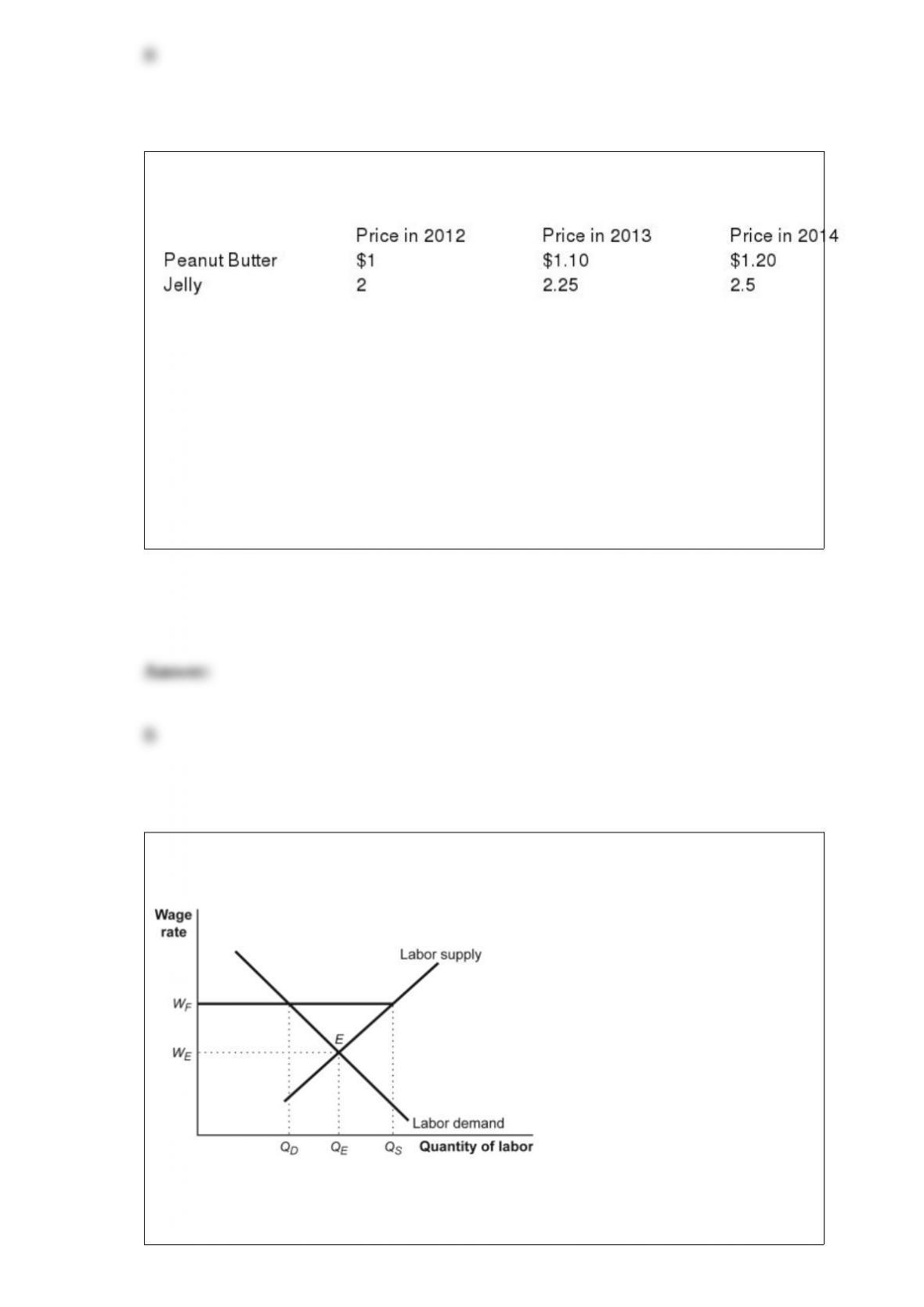
Table: Peanut Butter and Jelly
Look at the table Peanut Butter and Jelly. Suppose a market basket consists of 20 jars of
peanut butter and 10 jars of jelly. What is the value of the market basket in 2012?
A) $3
B) $40
C) $42
D) $44.50
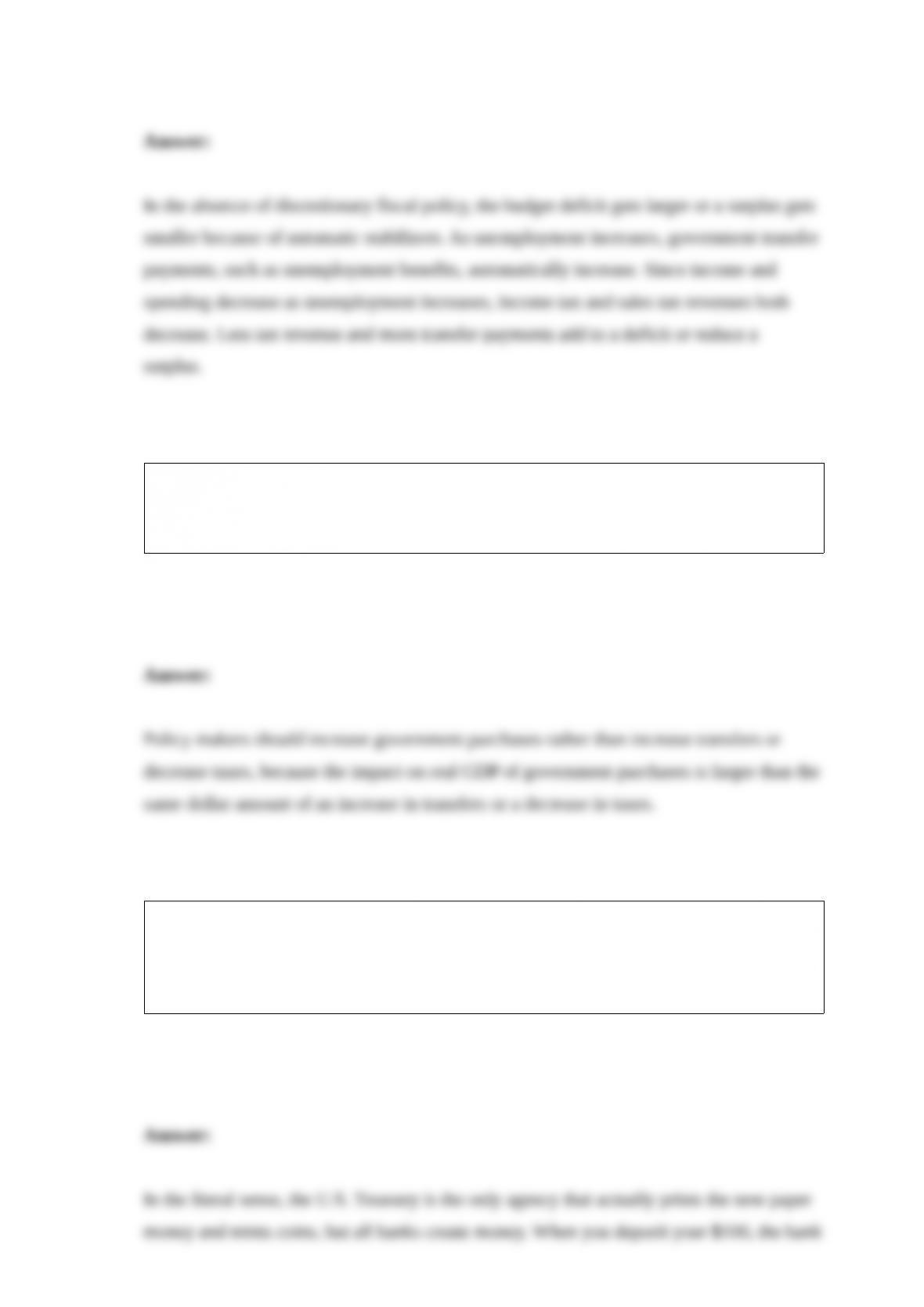
Figure: The Effect of a Minimum Wage
Look at the figure The Effect of a Minimum Wage. Suppose the labor market is in
equilibrium at E when the government imposes a minimum wage of WF. Structural

unemployment will equal:
A) QS ” QD.
B) QE ” QD.
C) QS ” QE.
D) zero.
The short-run Phillips curve:
A) is upward sloping because inflation and unemployment rates have a positive
relationship in the short run.
B) is vertical because there is no trade-off between inflation and unemployment rates in
the short run.
C) is downward sloping because there is a trade-off between inflation and
unemployment rates in the short run.
D) is horizontal because there is no trade-off between inflation and unemployment rates
in the short run.
Why does the budget surplus get smaller or the deficit get larger, even without
discretionary fiscal policy, when unemployment increases?
Suppose that economic policy makers want to increase real GDP by $100 with as little
impact on the budget balance as possible. Should they increase government purchases
of goods and services, increase transfer payments, or decrease taxes?
Suppose you take $100 in cash to the bank and make a deposit in your checking
account. Making small talk, you ask the teller, “Do you make money here?” A little
surprised, the teller responds, “Of course not; only the U.S. Treasury makes money.” Is
the teller correct or incorrect? Explain.
Explain the law of demand. What does it tell us about the shape of a demand curve?
Suppose that China’s target exchange rate for the yuan is below its equilibrium
exchange rate. What is the possible disadvantage of using monetary policy to achieve
the target exchange rate?
An economist wishes to build a model to explain the relationship between the number
of diamonds purchased every year and the average income of consumers in that year.
Which variable should be the dependent variable and which should be the independent
variable? All else equal, do you expect this relationship to be positive or negative?
Explain.
The economy is booming and under inflationary pressure. There is also a budget
surplus. The head of the President’s Council of Economic Advisers is a proponent of
classical economics. What will this classical economist recommend or not recommend?
Will she advocate balancing the budget? Explain.
What caused the savings and loan crisis of the 1980s?
Suppose that the natural rate of unemployment is 5% and that the economy is operating
at 97.5% of potential output. Use Okun’s law to determine the unemployment rate.
At most airports there are multiple security guards ready to screen passengers and their
luggage through the X-ray and metal detector checkpoints. The length of the wait for
each line is about the same. Why?
Some advocates of trade protection in the domestic market for steel argue that it is
needed to protect domestic steelworkers’ jobs. Why are economists usually unconvinced
by this argument?
Donald owns several hotels in U.S. tourism destinations. Much of Donald’s hotel
revenue comes from Europeans. Suppose the U.S. dollar depreciates against the euro.
Explain how this will affect Donald’s hotel business.
You have recently graduated from high school and are debating whether to attend
college or get a job. Assume that you can spend a certain amount today for tuition and
receive your college degree in only one year. When you graduate, you will receive a job
that pays you $100,000 immediately and $100,000 the following year. If you begin
working immediately, you can earn $35,000 today and each of the next two years. If the
interest rate is 10%, solve for the amount of tuition that would make you indifferent
between going to college and working immediately.
When hurricane Katrina devastated the Gulf coast, the businesses in the area, even
those not physically damaged by the storm, had losses. Explain how this illustrates the
principle that “one person’s spending is another person’s income.”
Suppose that country A has a domestic savings rate of 3%, while country B has a
savings rate of 8%. Which country is likely to have the higher rate of economic growth?
Why?
Consider a point within a production possibility frontier for a simple economy that
produces only two goods, X and Y. Why is this point described as feasible but not
efficient?