1) A farmer discovers a natural gas reserve on his property. He can extract the natural
gas for a profit of $40 per unit now, $55 per unit in one year, $57 per unit in two years,
and $60 in three years. The current market rate of interest is 6 percent. When should the
farmer extract the natural gas to obtain the most profit per unit in present value terms?
A.Today
B.One year
C.Two years
D.Three years
2)
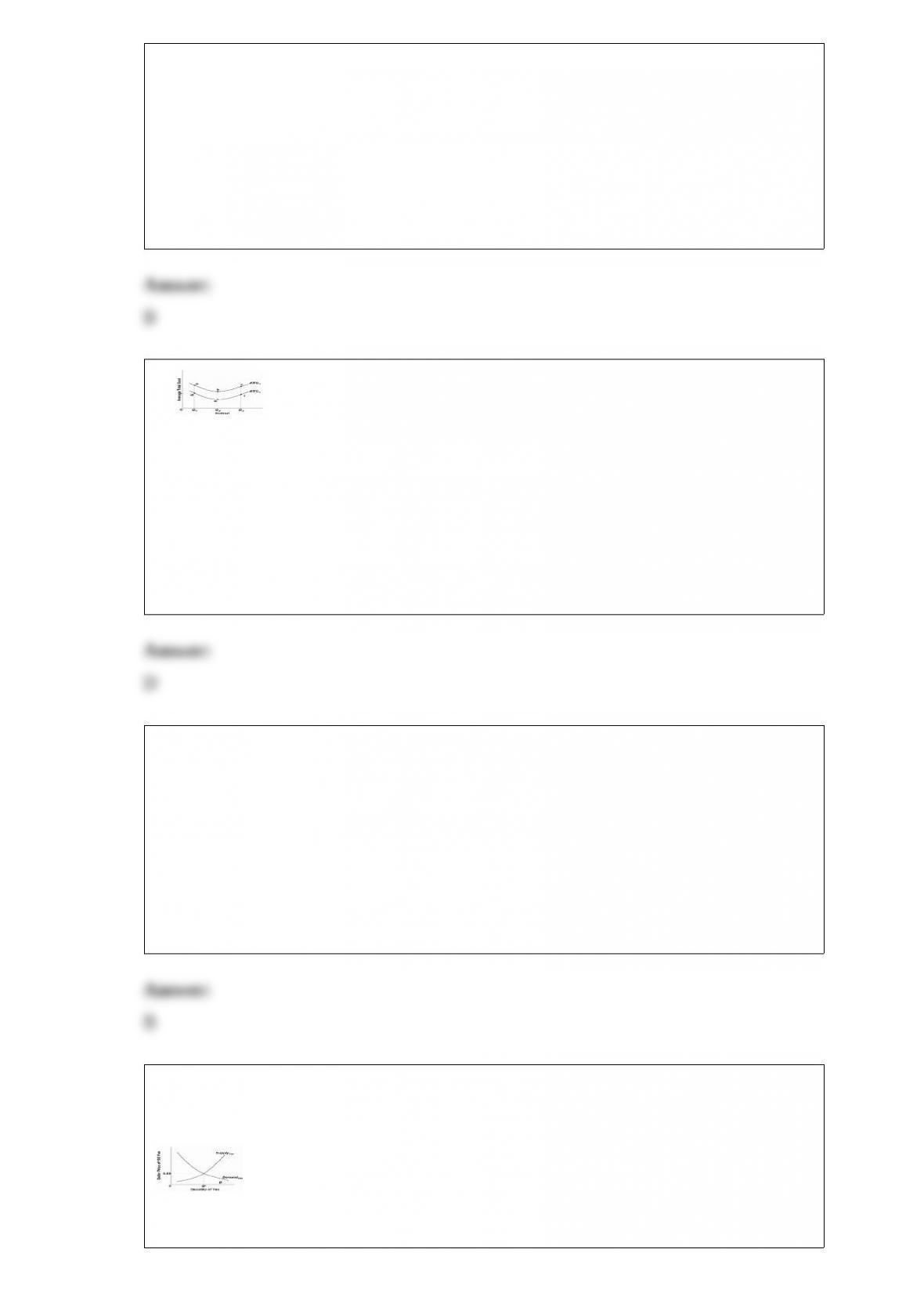
Refer to the above diagram. Assume the firm is currently producing at Q1 with average
cost associated with point a. A process innovation will reduce average costs from point
a to point:
A.e
B.b
C.c
D.d
3) Answer the question on the basis of the following information. The demand for
commodity X is represented by the equation P = 100 – 2Q and supply by the equation P
= 10 + 4Q.
Refer to the given information. The equilibrium price is:
A.$50
B.$70
C.$80
D.$130
4) Assume that Japan and the United States are engaged in a system of flexible
exchange rates.
Refer to the graph above. One U.S. dollar will purchase how many Japanese yen?

A.80
B.120
C.125
D.140
5) Answer the question using the following table. Figures are in billions of dollars.
Refer to the above table. A usury law that sets the interest rate 4 percent below the
market rate of interest will result in a shortage of loanable funds of:
A.$10 billion
B.$14 billion
C.$20 billion
D.$30 billion
6) Brain scientists have found that the human brain devotes more neurons toward
processing and interpreting visual information than it does to anything else, therefore:
A.We can always believe what our eyes tell us
B.We should only believe what our eyes tell us
C.Since our eyes can fool us, we probably make mental mistakes in other areas too
D.Behavioral and neoclassical economists agree that our visual impressions are always
right
7) The question is based on the following table showing the expected rate of return,
R&D spending, and interest-rate cost-of-funds for a hypothetical firm.
Refer to the above data. In a graph for determining the optimal R&D expenditure, the
interest-cost of funds curve would be a(n):
A.Upsloping line within the $35-to-$75M range
B.Horizontal line at 7 percent
C.Upsloping line within the 5-to-13 percent range
D.Downsloping line within the 13-to-5 percent range
8)
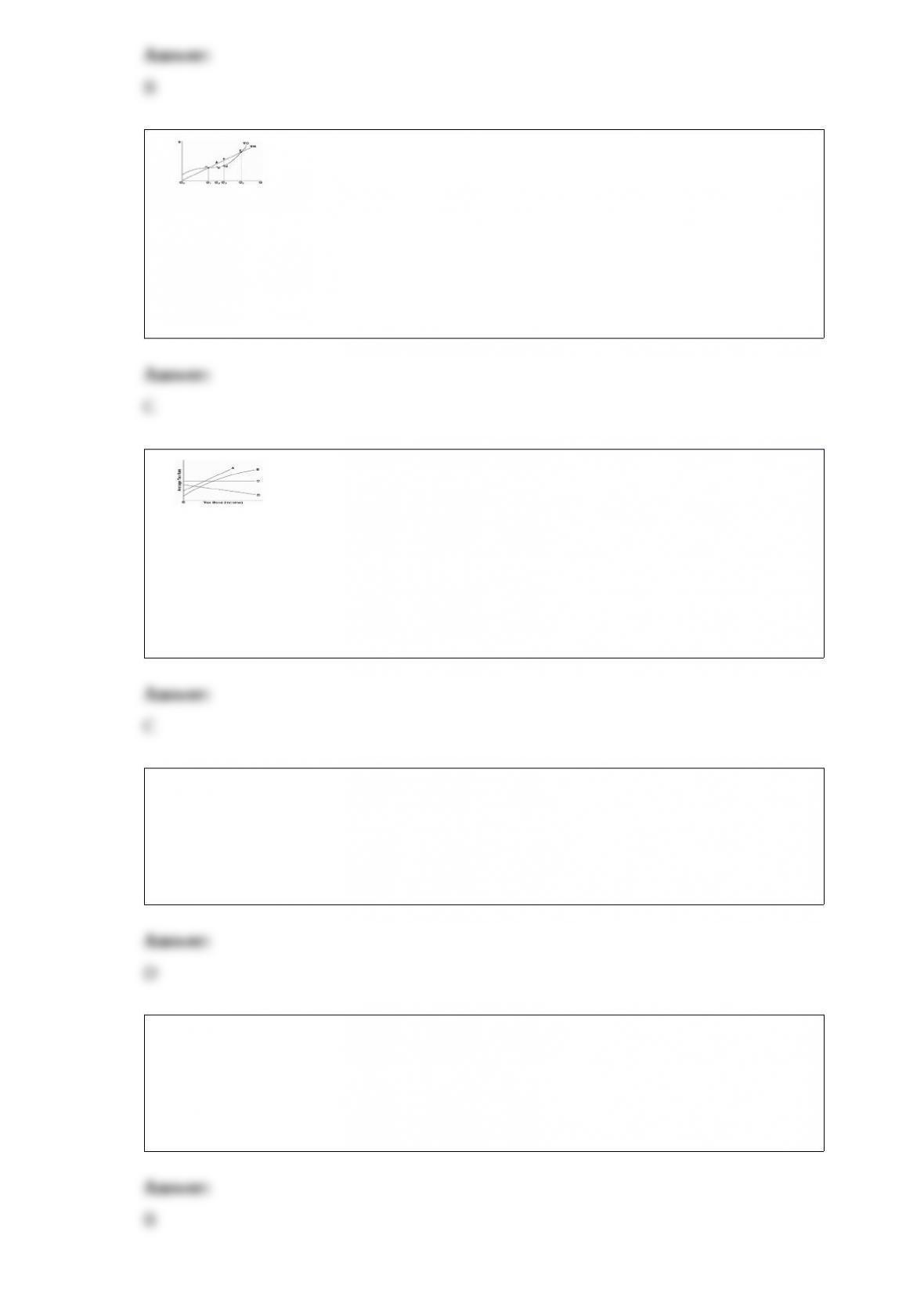
Refer to the above graph. The amount of profit is measured by the difference between:
A.a and c
B.b and c
C.d and e
D.a and f
9)
Refer to the graph. Which of the lines in the diagram represent(s) a proportional tax?
A.Both A and B.
B.D only.
C.C only.
D.B only.
10) Collusion among oligopolistic firms:
A.Is common in world markets, but does not happen in the U.S.
B.Becomes more difficult if there were fewer firms in the group
C.Becomes easier during a recession when sales are falling
D.Becomes more difficult if the firms all have different cost and demand curves
11) Cartels are difficult to maintain in the long run because:
A.they are illegal in all industrialized countries.
B.individual members may find it profitable to cheat on agreements.
C.it is more profitable for the industry to charge a lower price and produce more output.
D.entry barriers are insignificant in oligopolistic industries.