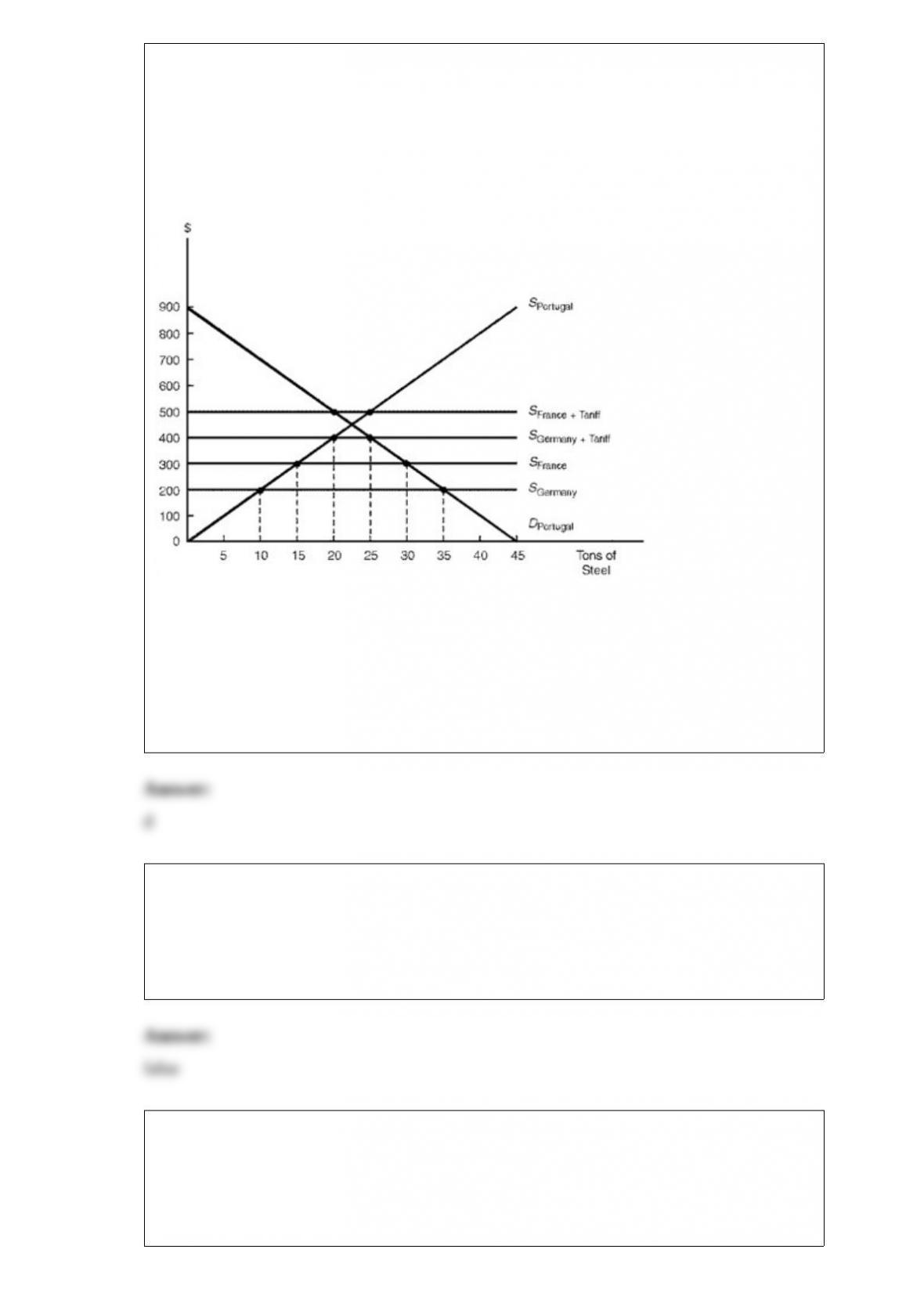
1) the figure below depicts the steel market for portugal, a small nation that is unable to
affect the world price. assume that germany and france can supply steel to portugal at a
price of $200 and $300 respectively.
figure 8.2. portugal’s steel market
consider figure 8.2.with free trade portugal will
a.import 0 tons of steel for germany and 15 tons of steel from france at $300 per ton
b.import 25 tons of steel from germany at $200 per ton and 15 tons of steel from france
at $300 per ton
c.import 15 tons of steel from germany at $200 per ton and 10 tons of steel from france
at $200 per ton
d.import 25 tons of steel from germany at $200 per ton and 0 tons from france
2) with increasing opportunity costs, comparative advantage depends on a nation’s
supply conditions and demand conditions; with constant opportunity costs, comparative
advantage depends only on demand conditions.
a.true
b.false
3) reliance on an automatic adjustment process tends to be unacceptable in trade-deficit
nations since it requires them to accept price deflation and/or falling income as a cost of
reducing imports.
a.true
b.false
4) the dynamic gains from trade include all of the following except:
a.economies of large-scale production resulting in decreasing unit cost
b.increased saving and investment resulting in economic growth
c.increased competition resulting in lower prices and wider range of output
d.increasing comparative advantage leading to specialization
5) unlike japan and the united states, france has refrained from forming explicit
industrial policies to enhance the competitiveness of its national champions.
a.true
b.false
6) with a compound duty, its ‘specific” portion neutralizes the cost disadvantage of
domestic manufacturers that results from tariff protection granted to domestic suppliers
of raw materials, and the “ad valorem” portion of the duty grants protection to the
finished-goods industry.
a.true
b.false
7) unlike the tokyo round of multilateral trade negotiations, the uruguay round
addressed the issues of intellectual property protection, trade barriers in services, and
agricultural subsidies.
a.true
b.false
8) under managed floating exchange rates, if the rate of inflation in the united states is

less than the rate of inflation of its trading partners, the dollar will likely:
a.appreciate against foreign currencies
b.depreciate against foreign currencies
c.be officially revalued by the government
d.be officially devalued by the government
9) intellectual property refers to holdings of rare books and pieces of art that are traded
on the world market.
a.true
b.false
10) assume 1990 to be the base year. if by the end of 2004 a country’s export price
index rose from 100 to 125 while its import price index rose from 100 to 125, its terms
of trade would equal 100.
a.true
b.false
11) figure 8.1 depicts the supply and demand schedules of calculators for greece, a
‘small” country that is unable to affect the world price. greece’s supply and demand
schedules of calculators are respectively depicted by sg and dg. assume that greece
imports calculators from either germany or france. suppose germany is the world’s
low-cost producer who can supply calculators to greece at $20 per unit, while france
can supply calculators at $30 per unit.
figure 8.1. effects of a customs union
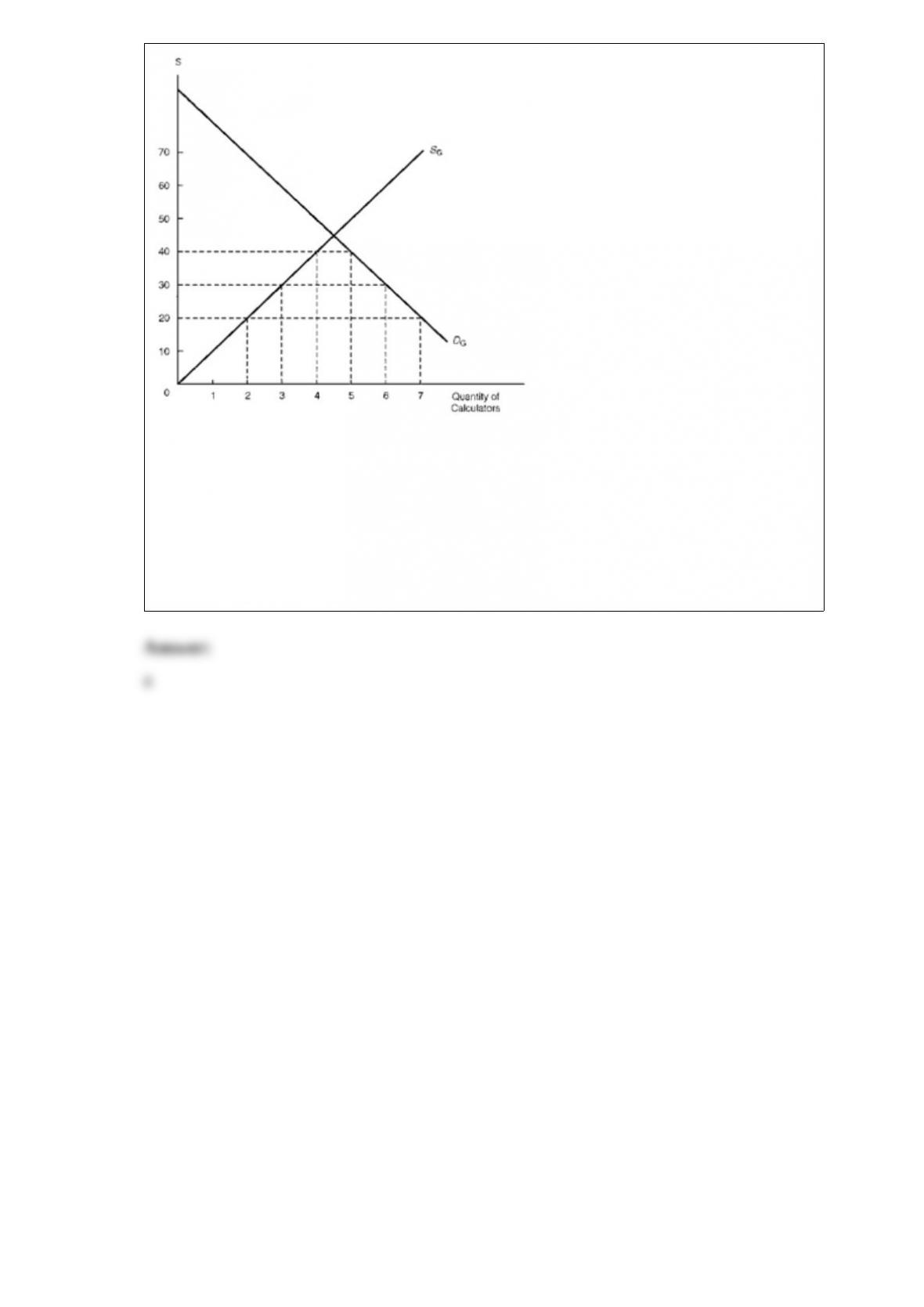
consider to figure 8.1. assume greece levies a per-unit tariff of $20 on imports from
both germany and france.
greece will import:
a.1 calculator from germany
b.1 calculator from france
c.3 calculators from germany
d.3 calculators from france
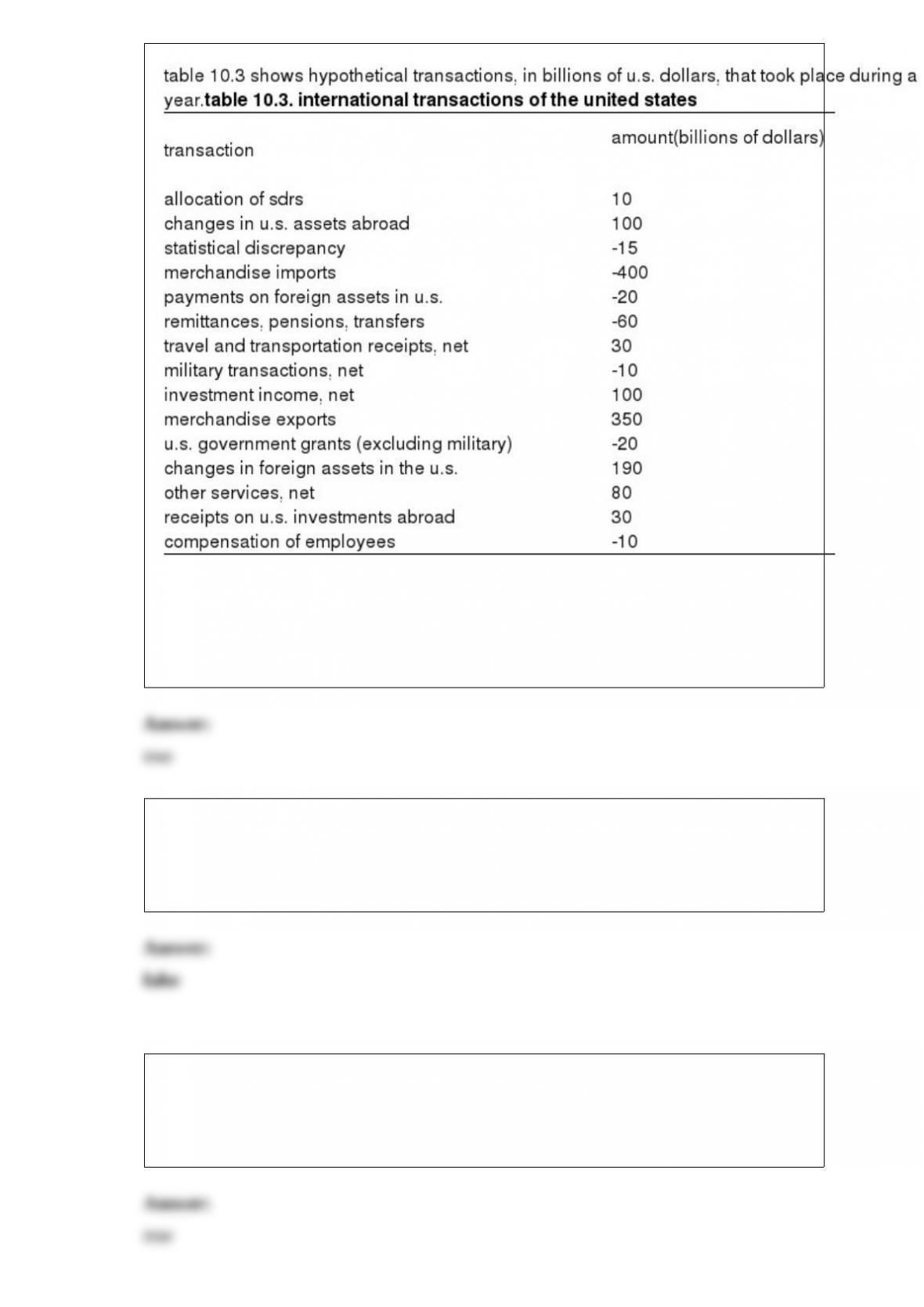
12) refer to table 10.3. the services balance registered a surplus of $100 billion.
a.true
b.false
13) if a nation has an open economy, it means that the nation allows private ownership
of capital.
a.true
b.false
14) as the dollar’s exchange value appreciates against the pound, u.s. residents tend to
import more british goods and thus demand more pounds.
a.true
b.false
15) the commodity terms of trade are found by dividing a country’s import price index
by its export price index.
a.true
b.false
16) ricardo’s theory of comparative advantage was of limited relevance to the real world
since it assumed that labor was only one of several factors of production.
a.true
b.false
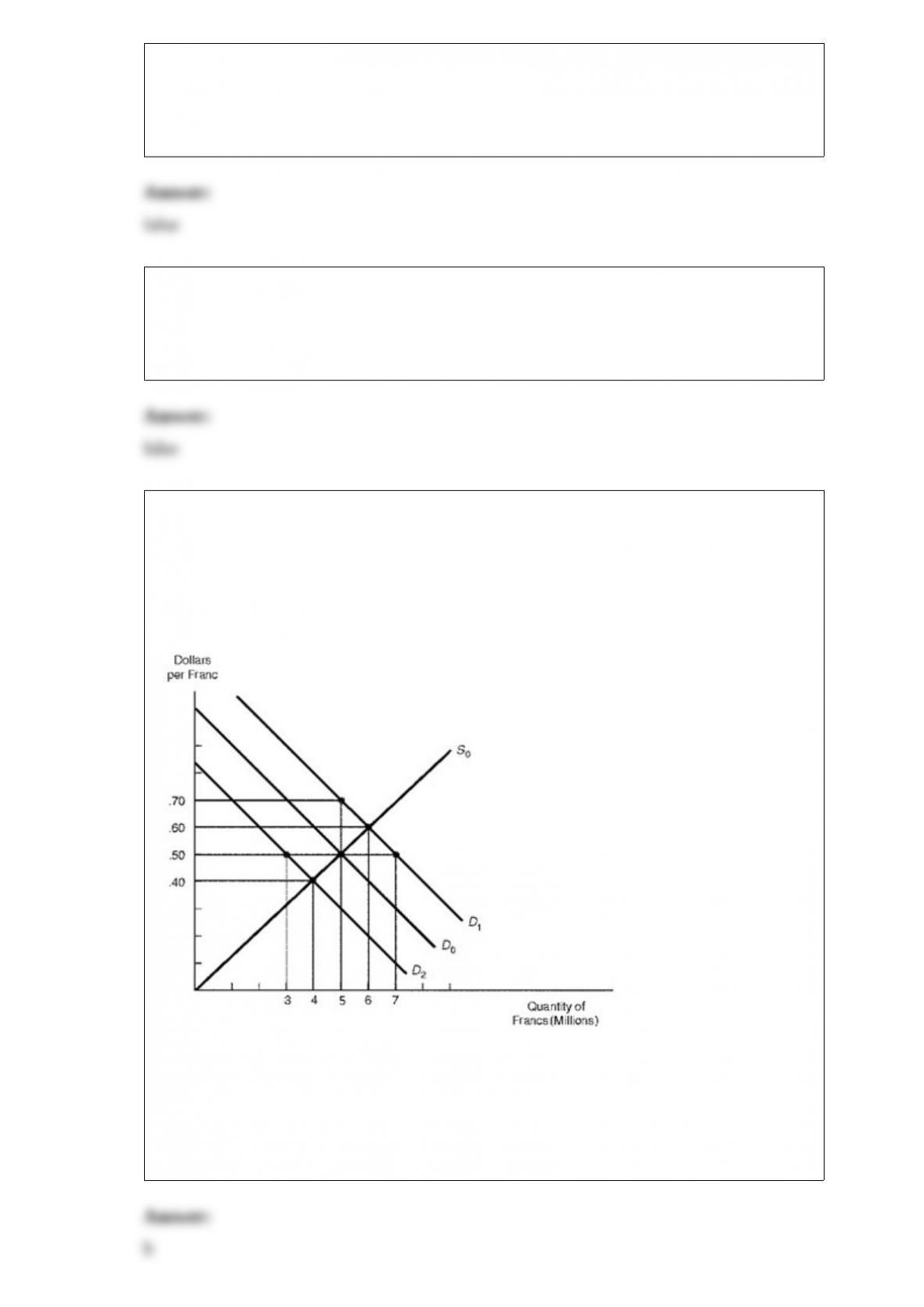
17) figure 15.1 shows the market for the swiss franc. in the figure, the initial demand
for marks and supply of marks are depicted by d0 and s0 respectively.
figure 15.1. the market for the swiss franc
refer to figure 15.1. with a system of floating exchange rates, the equilibrium exchange
rate is:
a.$0.40 per franc
b.$0.50 per franc
c.$0.60 per franc
d.$0.70 per franc
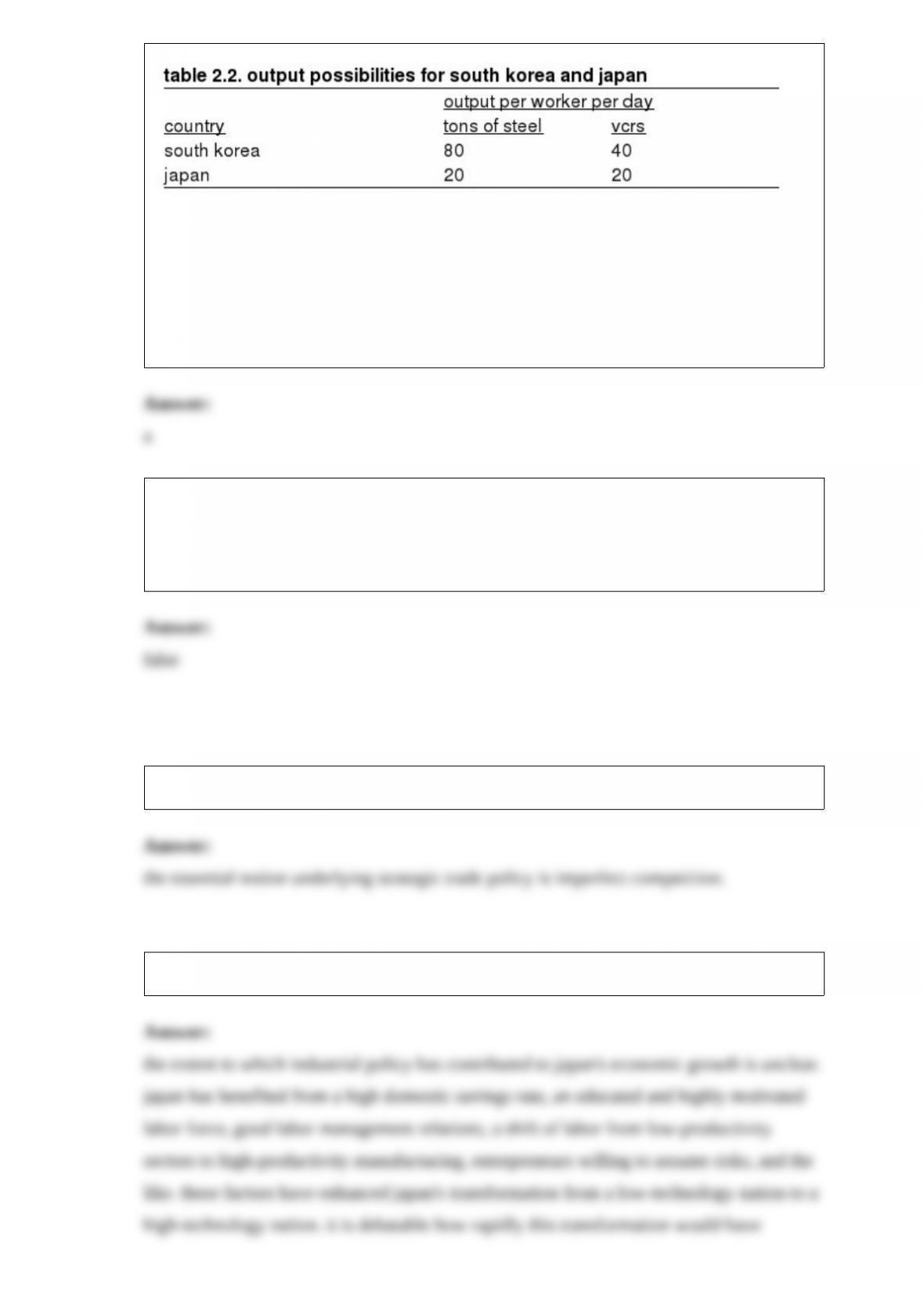
18) referring to table 2.2, the opportunity cost of one vcr in japan is:
a.1 ton of steel
b.2 tons of steel
c.3 tons of steel
d.4 tons of steel
19) although the theory of comparative advantage explains trade in manufactured
goods, it has no explanatory value for trade in business services.
a.true
b.false
20) what is the essential idea behind strategic trade policy?
21) has industrial policy contributed significantly to japan’s economic growth?
22) what is an sdr?
23) how do demand elasticities influence a country’s trade position when exchange rates
change?
24) is it possible to trade foreign exchange in the futures market? how does such trading
differ from the forward market?
25) what is the price-based definition of dumping?