
1) In the United States and parts of Western Europe, the amount of land covered by
forests is increasing.
2) immigration of workers is an example of a goods and services flow:
3) If the MPC is .8 in a private closed economy, a $30 billion increase in planned
investment will increase equilibrium real GDP by $120 billion.
4) The “real” factors in the real-business cycle theory include resource availability and
technology.
5) an annual rate of inflation of 7 percent will double the price level in about 15 years.
6) the health care industry currently absorbs about 16 percent of u.s. gross domestic
product.
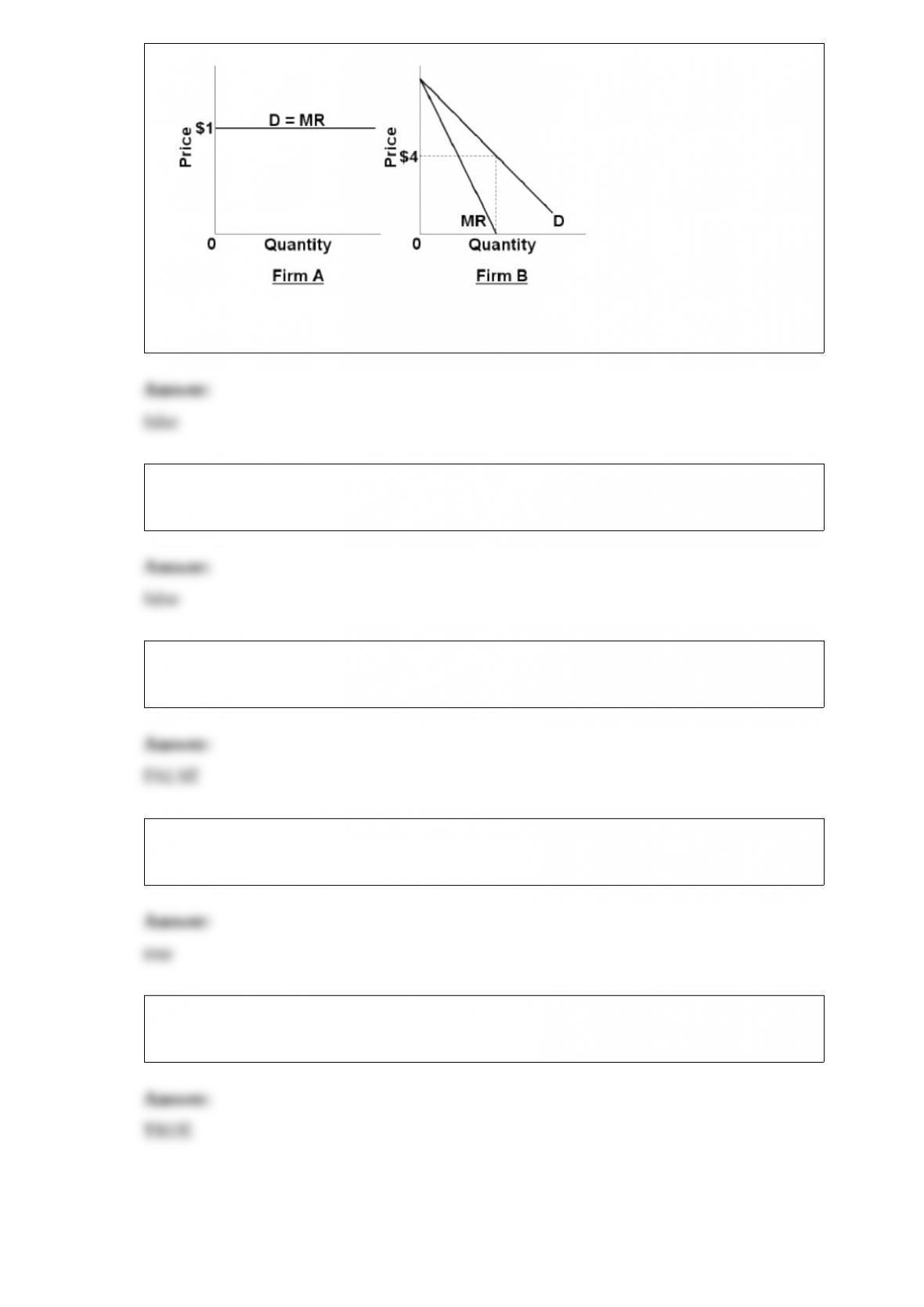
7)
refer to the above diagrams. if drawn, firm a’s average revenue curve would lie below
its demand curve.
8) if the coefficient of cross elasticity of demand is positive, the two products are
complementary goods.
9) The immediate-short-run aggregate supply curve is vertical at the full employment
level of output.
10) modern economic growth since the 1820s has widened wealth and income
disparities between richer and poorer nations.
11) Other things equal, the less competitive the market in which a firm sells its product,
the less elastic will be its resource demand curve.
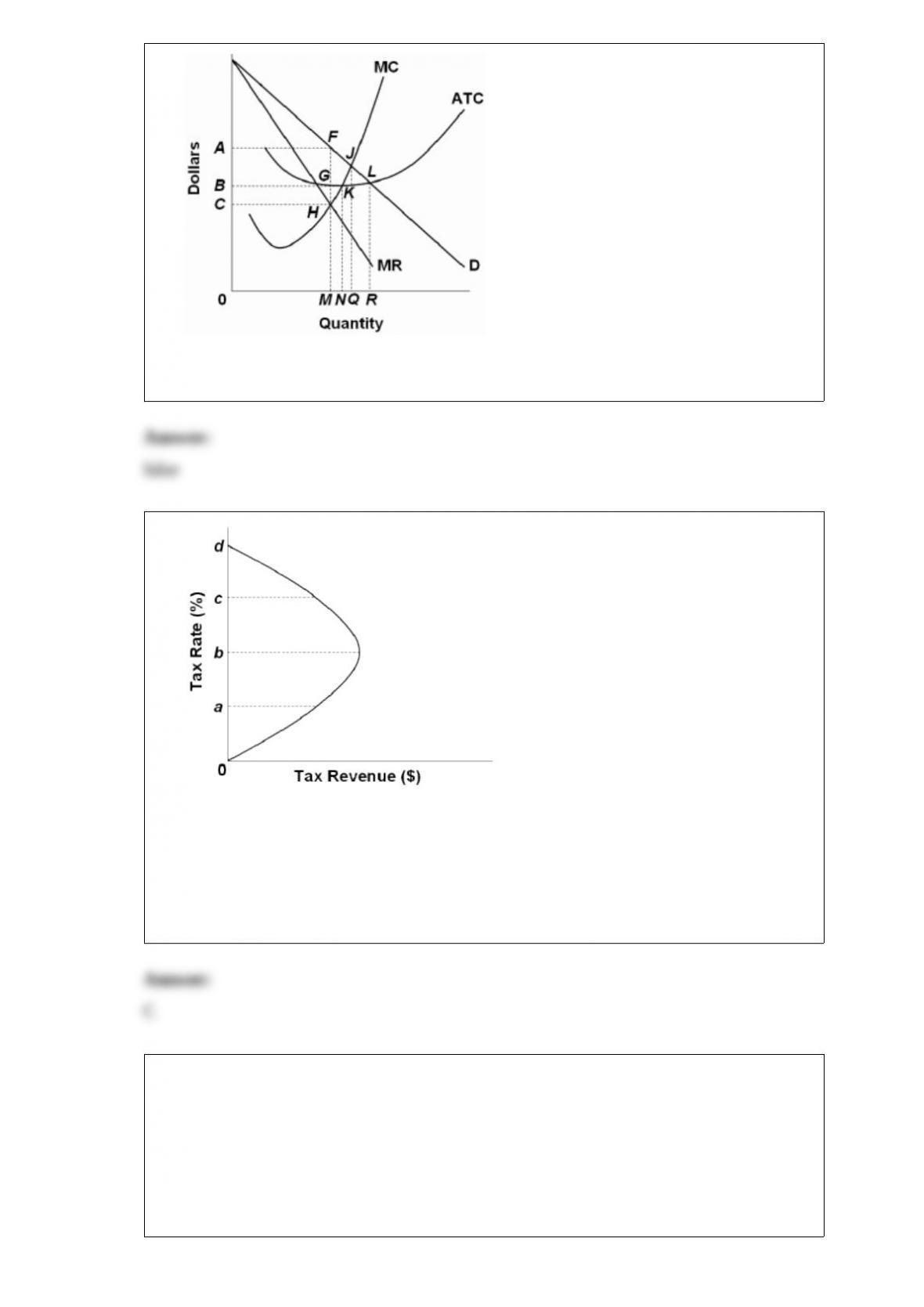
12)
refer to the above diagram for a nondiscriminating monopolist. at output q average
variable cost is qj.
13)
Refer to the above diagram. If the tax rate is currently c and the government wants to
maximize tax revenue, it should:
A.leave the tax rate at c
B.increase the tax rate to d
C.reduce the tax rate to b
D.reduce the tax rate to a
14) the first pepsi yields craig 18 units of utility and the second yields him an additional
12 units of utility. his total utility from three pepsis is 38 units of utility. the marginal
utility of the third pepsi is:
a.26 units of utility.
b.6 units of utility.
c.8 units of utility.
d.38 units of utility.
15) suppose that an economy’s labor productivity and total worker-hours each grew by
4 percent between year 1 and year 2. we could conclude that this economy’s:
a.real gdp also increased by 4 percent.
b.real gdp remained constant.
c.production possibilities curve shifted outward.
d. capital stock increased by 4 percent.
16) Individual Transferable Quotas are limited in their effectiveness because:
A.they are only enforceable within 200 miles of a nation’s shores.
B.government, rather than the market, sets their price.
C.they encourage wasteful spending by fishers in ITQ areas.
D.they are not tradable.
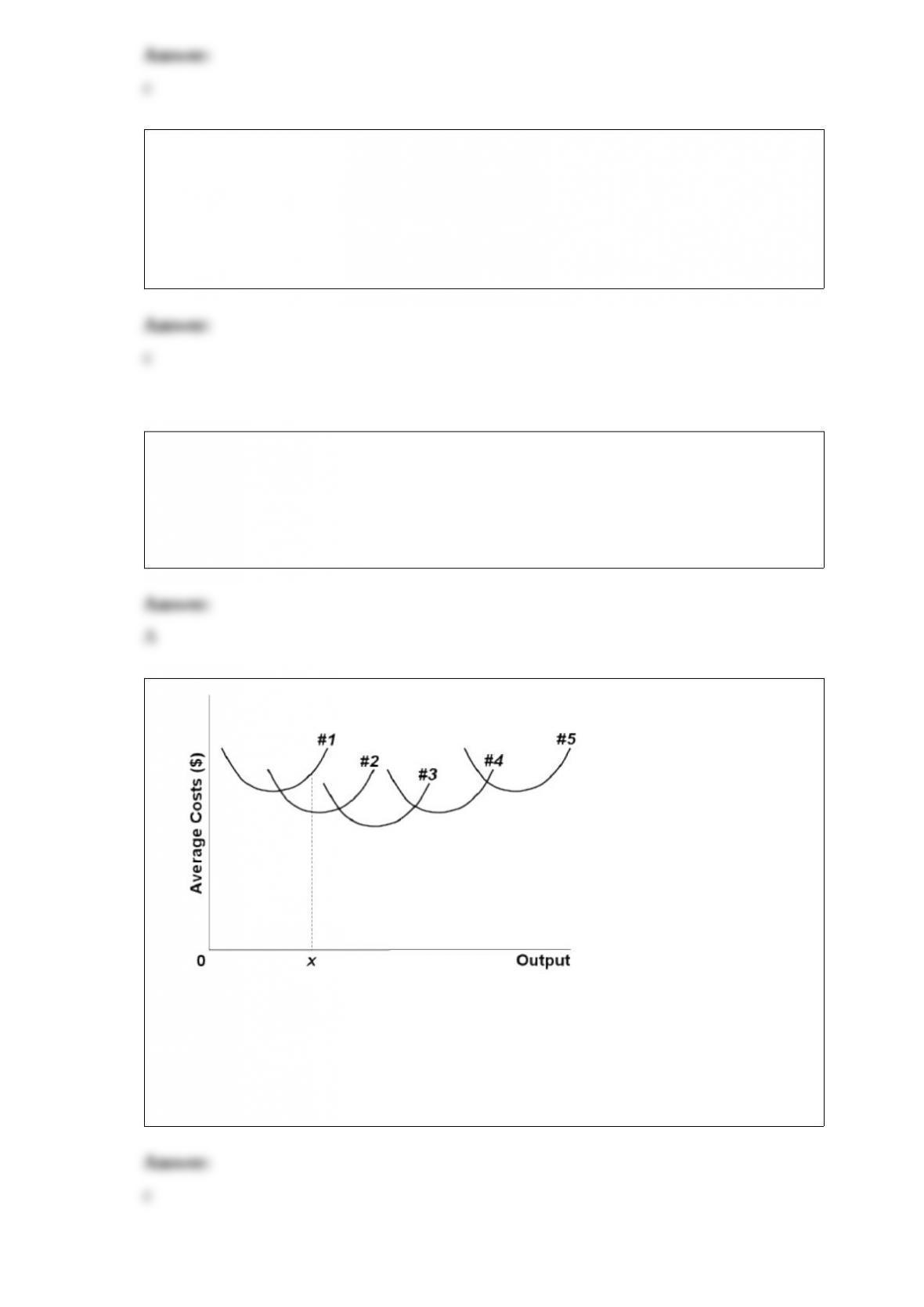
17)
as the firm in the above diagram expands from plant size #3 to plant size #5, it
experiences:
a.increasing returns.
b.economies of scale.
c.diseconomies of scale.
d.constant costs.

18) Which of the following is not an aggregate-demand-side explanation of business
cycles?
A.the real-business-cycle theory
B.the idea of coordination failures
C.mainstream macroeconomics
D.monetarism
19) in an economy experiencing a persistently falling price level:
a.potential gdp will necessarily exceed actual gdp.
b.changes in nominal gdp may either overstate or understate changes in real gdp.
c.changes in nominal gdp understate changes in real gdp.
d.changes in nominal gdp overstate changes in real gdp.
20) the concept of opportunity cost:
a.is irrelevant in socialistic economies because of central planning.
b.suggests that the use of resources in any particular line of production means that
alternative outputs must be forgone.
c.is irrelevant if the production possibilities curve is shifting to the right.
d.suggests that insatiable wants can be fulfilled.
21) two major virtues of the market system are that it:
a.allocates resources efficiently and allows economic freedom.
b.results in an equitable personal distribution of income and always maintains full
employment.
c.results in price level stability and a fair personal distribution of income.
d.eliminates discrimination and minimizes environmental pollution.
22) suppose that an individual sees a tremendous opportunity to produce and sell a new
product, but dismisses the idea because there is no way to exploit this opportunity for
personal gain. this situation best identifies the:
a.coordination problem under communist central planning.
b.self-sufficiency dilemma under communism.
c.asymmetric information problem under communism.
d.incentive problem under communist central planning.
23) When economists refer to capital flight, they are speaking of an:
A.outflow of financial capital from a certain country.
B.outflow of real capital from a certain country.
C.outflow of financial and real capital from a certain country.
D.outflow of human capital from a certain country.
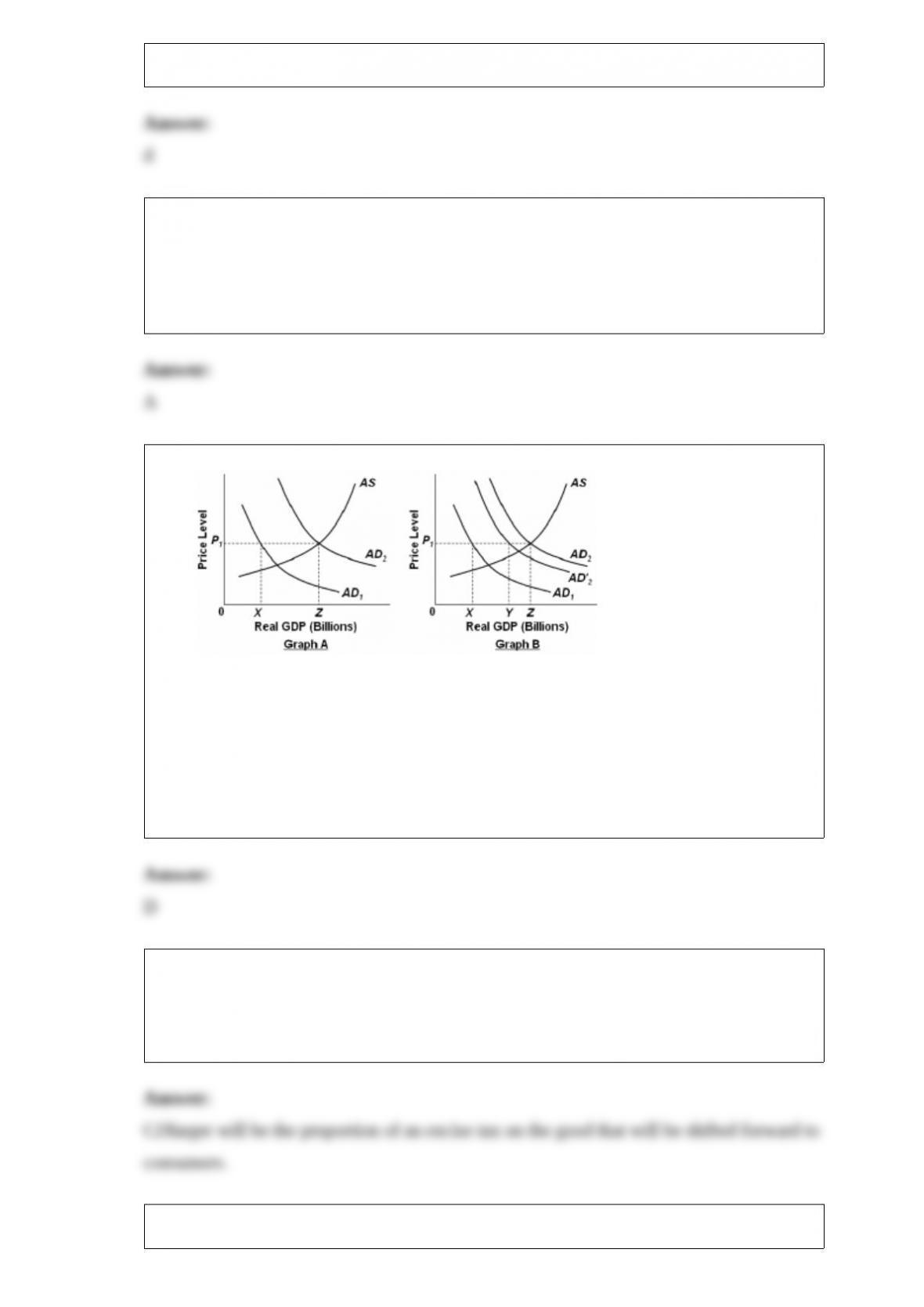
24)
Suppose real GDP is X, as shown in graph A. If the economy’s MPC is .75, X is $100
billion and full-employment real GDP Y is $140 billion, an appropriate fiscal policy
would be to:
A.reduce taxes by $100 billion.
B.increase government expenditures by $100 billion.
C.reduce taxes by $10 billion.
D.increase government expenditures by $10 billion.
25) The greater the elasticity of supply of and demand for a good the:
A.smaller will be the efficiency loss of an excise tax on the good.
B.more likely the good will be a public good rather than a private good.
C.larger will be the efficiency loss of an excise tax on the good.
26) Which one of the following is not correct?
A.In antitrust cases defendants attempt to define the relevant market broadly.
B.The courts have varied over time in their interpretations of the antitrust statutes.
C.Antitrust suits can only be originated by the Federal Trade Commission.
D.In antitrust cases the prosecution attempts to define the relevant market narrowly.
27) the term allocative efficiency refers to:
a.the level of output that coincides with the intersection of the mc and avc curves.
b.minimization of the afc in the production of any good.
c.the production of the product-mix most desired by consumers.
d.the production of a good at the lowest average total cost.
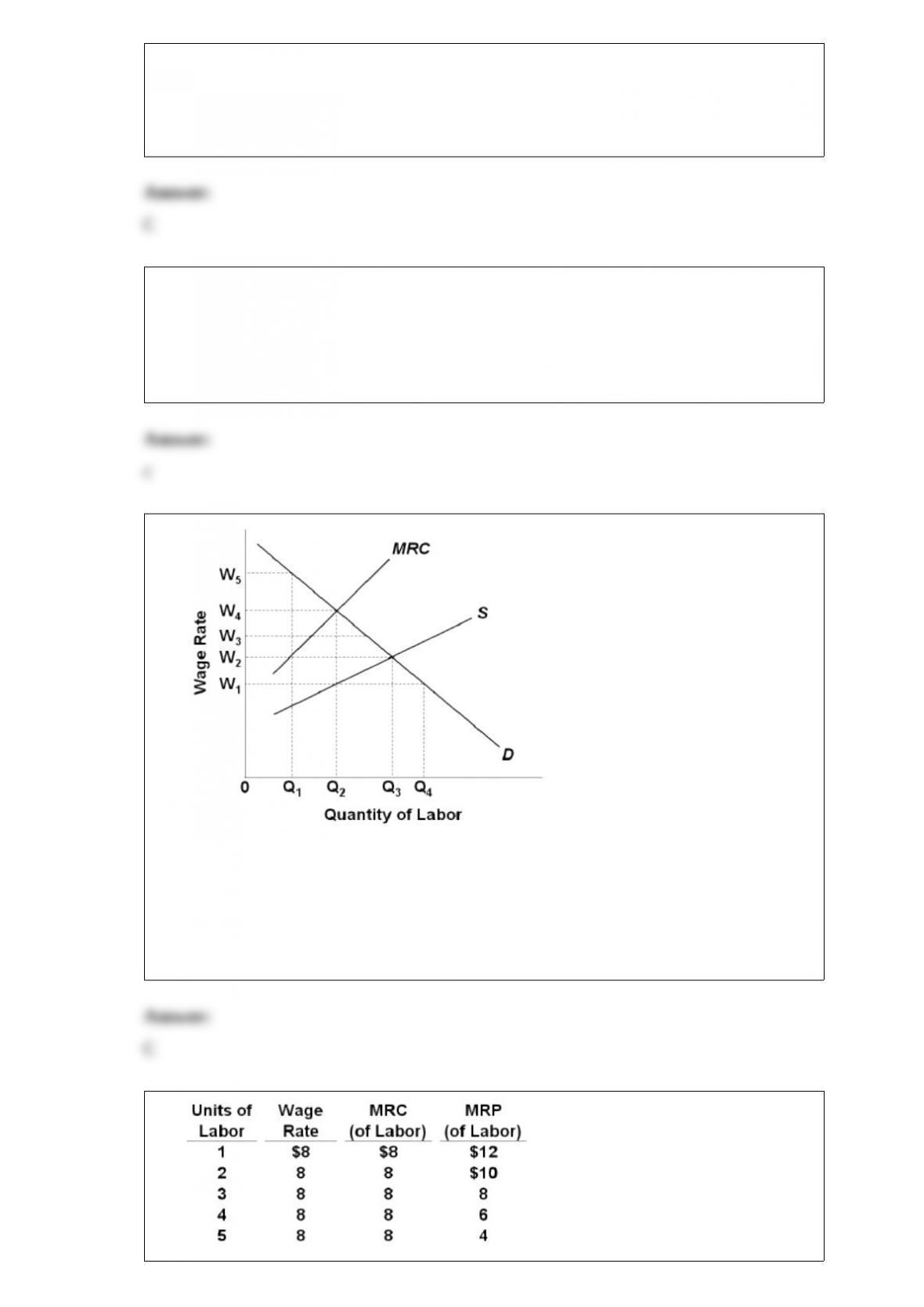
28)
Refer to the above diagram. An industrial union could maximize employment by
negotiating a wage rate of:
A.W4.
B.W3.
C.W2.
D.W1.
29)

Refer to the above data. At the profit maximizing level of employment, this firm’s:
A.MRP will exceed its MRC.
B.MRP will equal its MRC.
C.MRP will be less than its MRC.
D.MRP will be zero.
30) Which of the following findings would be the most likely to lead the U.S. Justice
Department to block a corporate merger under terms of the Clayton Act?
A.a buyer-seller relationship between the two firms
B.a high pre-merger Herfindahl index in the industry and a large boost in the index
because of the merger
C.a low pre- and post-merger concentration ratio in the industry
D.evidence that one of the firms is highly unprofitable
31) Explain the basic conclusions from inverted-U theory of R&D. What will be the
optimal market structure for technological progress? What does the evidence suggest
about its validity?
32) Explain how present value calculations are used to evaluate future possibilities in
the case of oil. Give an example using a present value calculation.

33) What is the meaning of the incidence of a tax? Give an example using a landlord
and tenants.
34) Draw a graph of the cost curves for a monopolistically competitive firm that clearly
illustrates the excess capacity that arises in the long run. Explain why this excess
capacity arises.

35) Indicate how the following events will shift the firms demand curve for labor:
increase it (I); decrease it (D); keep it the same (S).
___Technological advances increase labors productivity.
___The wage rate increases.
___The demand for the product that labor produces decreases.
___The wage rate decreases.
___Absenteeism reduces labors productivity.
___The price of labor-saving machinery is reduced and the substitution effect is greater
than the output effect.