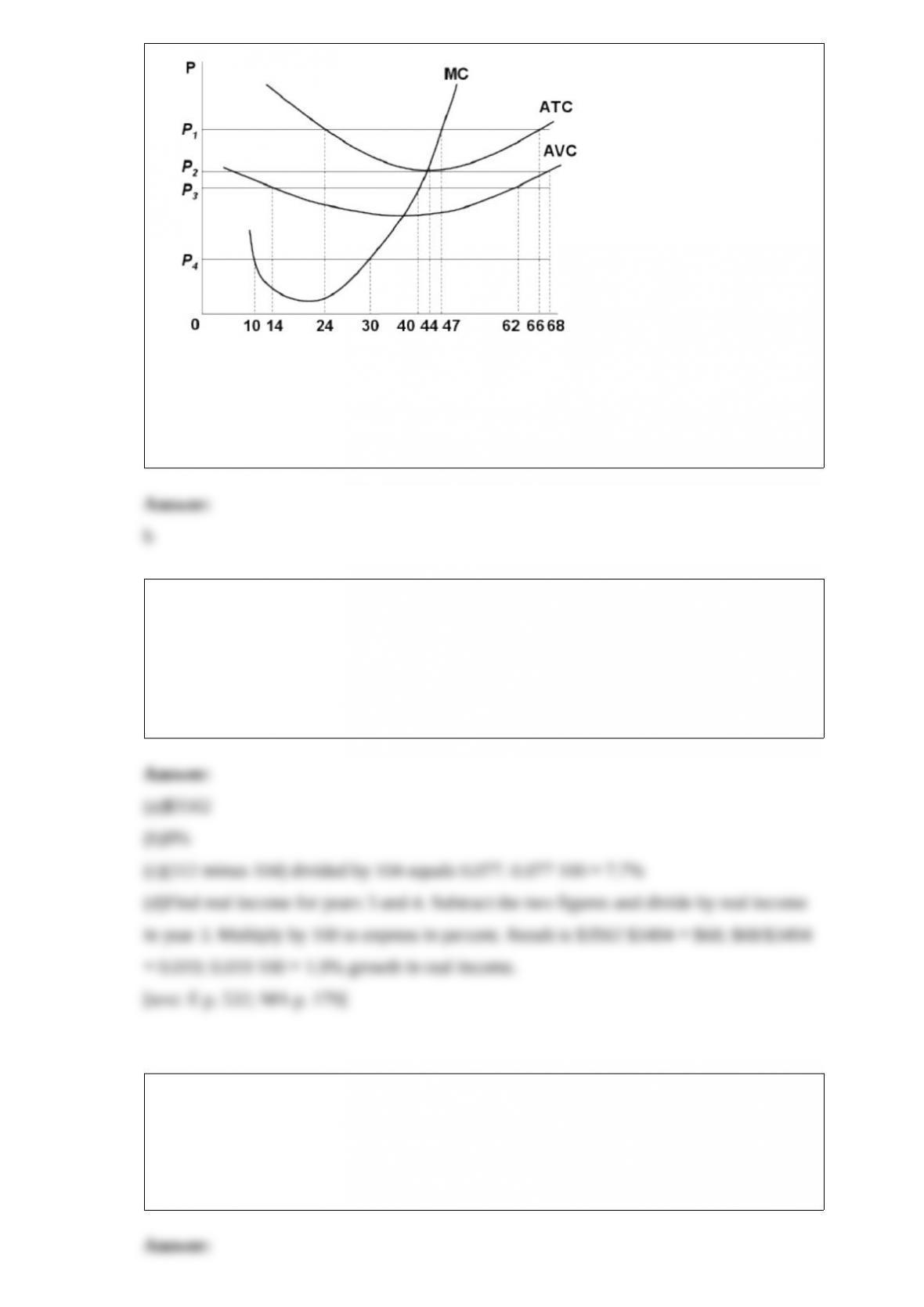
1)
refer to the above diagram. at p2, this firm will:
a.produce 44 units and realize an economic profit.
b.produce 44 units and earn only a normal profit.
c.produce 66 units and earn only a normal profit.
d.shut down in the short run.
2) Answer the next four questions based on the following data using year 1 as the base
year. All dollars are in billions.
(a)Find real income in year 4.
(b)What was the percentage rise in prices between years 1 and 3?
(c)What was the percentage rise in prices between years 2 and 4?
(d)What was the increase in real income from year 3 to year 4 in percentage?
3) The real rate of interest is:
A.the interest rate charged on long-term government bonds.
B.the interest rate associated with a riskless loan.
C.the interest rate that large commercial banks charge their best customers.
D.the interest rate after adjustment has been made for inflation.
4) In recent years, the United States has had large:
A.current account surpluses.
B.capital and financial account deficits.
C.balance of trade deficits.
D.balance of payments surpluses.
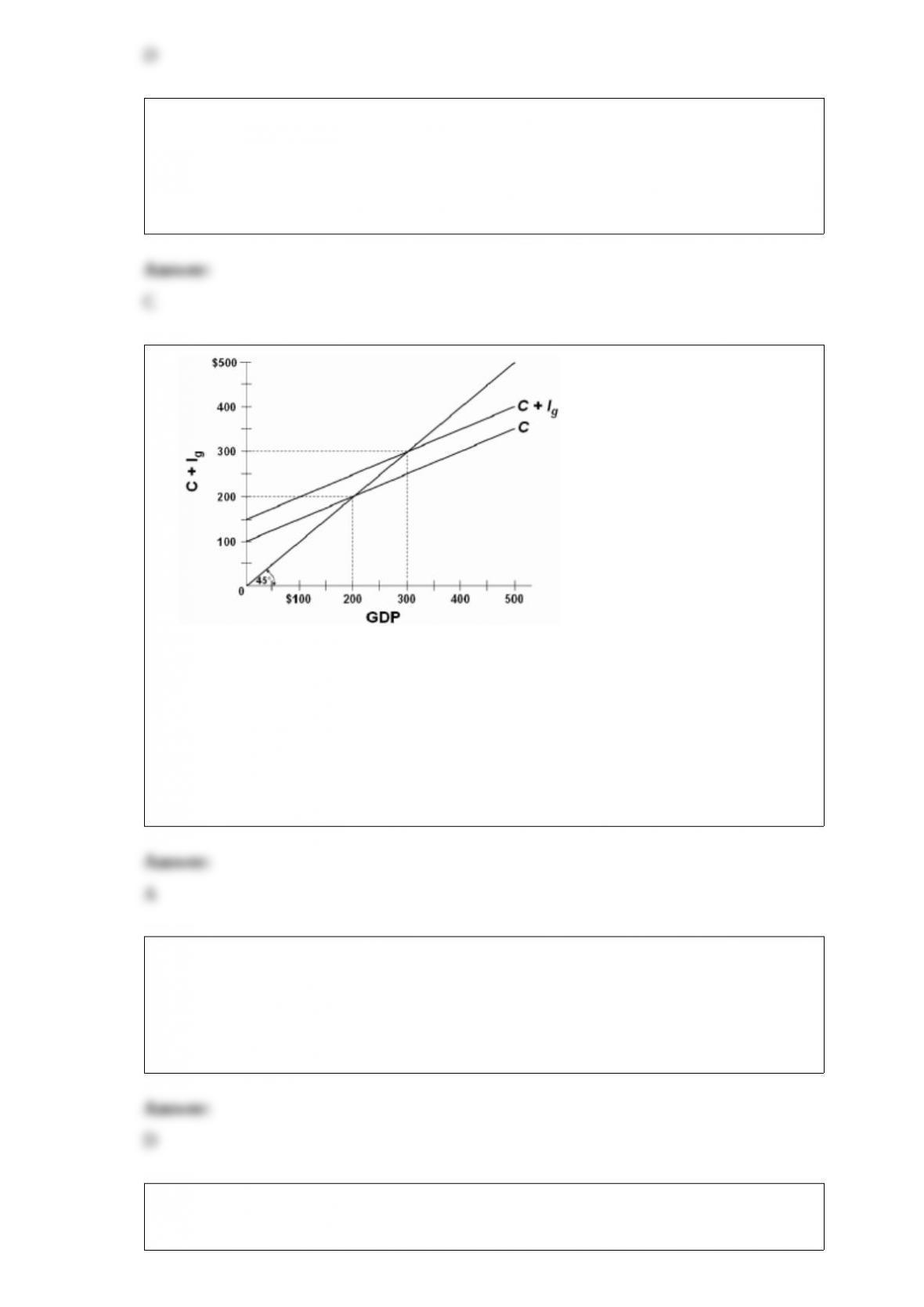
5)
Refer to the above diagram for a private closed economy. At the $200 level of GDP:
A.consumption is $200 and planned investment is $50 so that aggregate expenditures
are $250.
B.consumption is $200 and planned investment is $100 so that aggregate expenditures
are $300.
C.consumption is $250 and actual investment is $50 so that aggregate expenditures are
$300.
D.aggregate expenditures fall short of GDP with the result that GDP will decline.
6) A total fertility rate of 1.0 will cause the:
A.population to remain stable.
B.population to double in one generation.
C.population to collapse in one generation.
D.next generation to be half the size of the current generation.
7) which of the following is most likely to be an implicit cost for company x?
a.depreciation charges on company-owned equipment
b.rental payments on ibm equipment
c.payments for raw materials purchased from company y
d.transportation costs paid to a nearby trucking firm
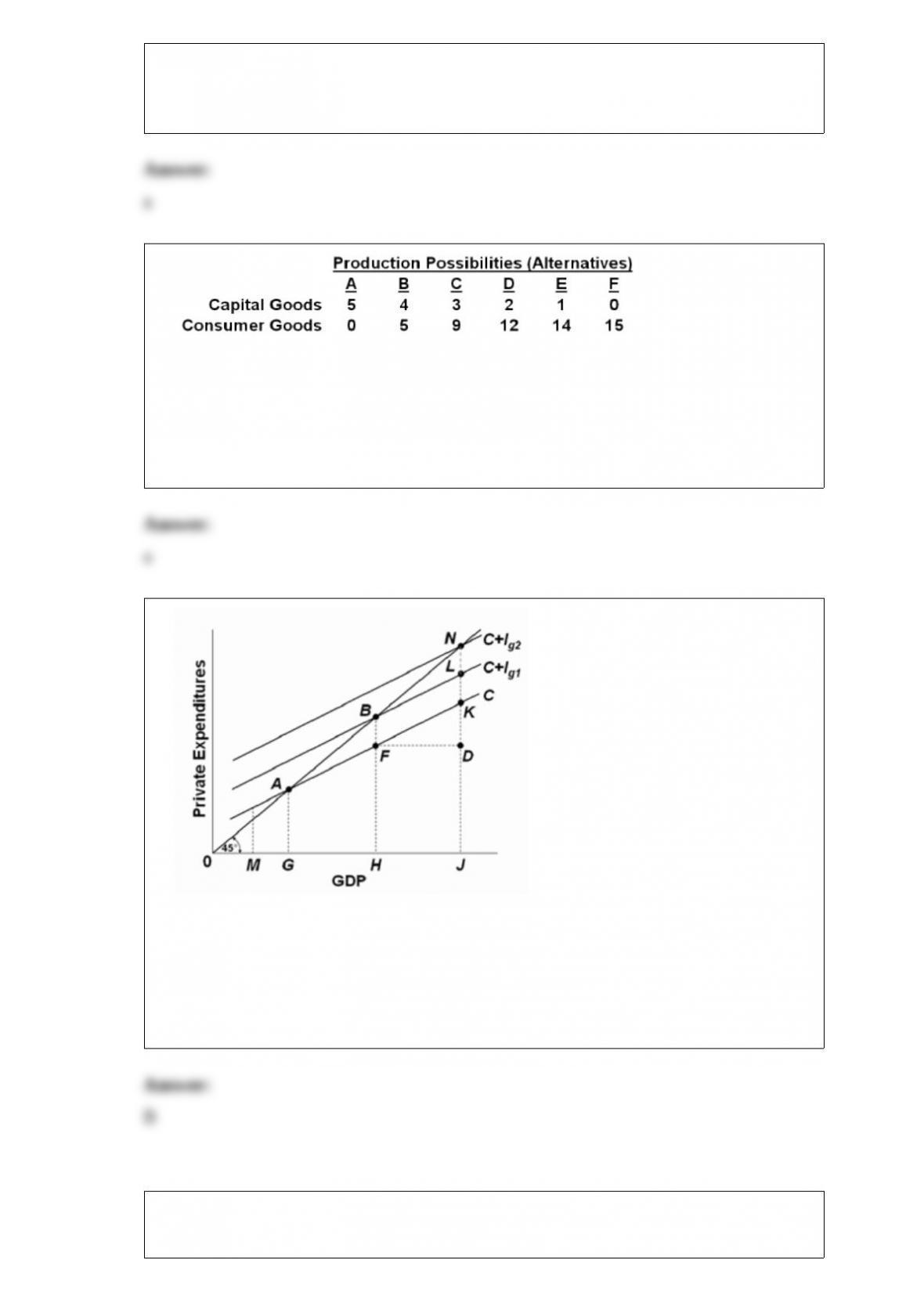
8)
refer to the above table. as compared to production alternative d, the choice of
alternative c would:
a.tend to generate a more rapid growth rate.
b.be unattainable.
c.entail unemployment.
d.tend to generate a slower growth rate.
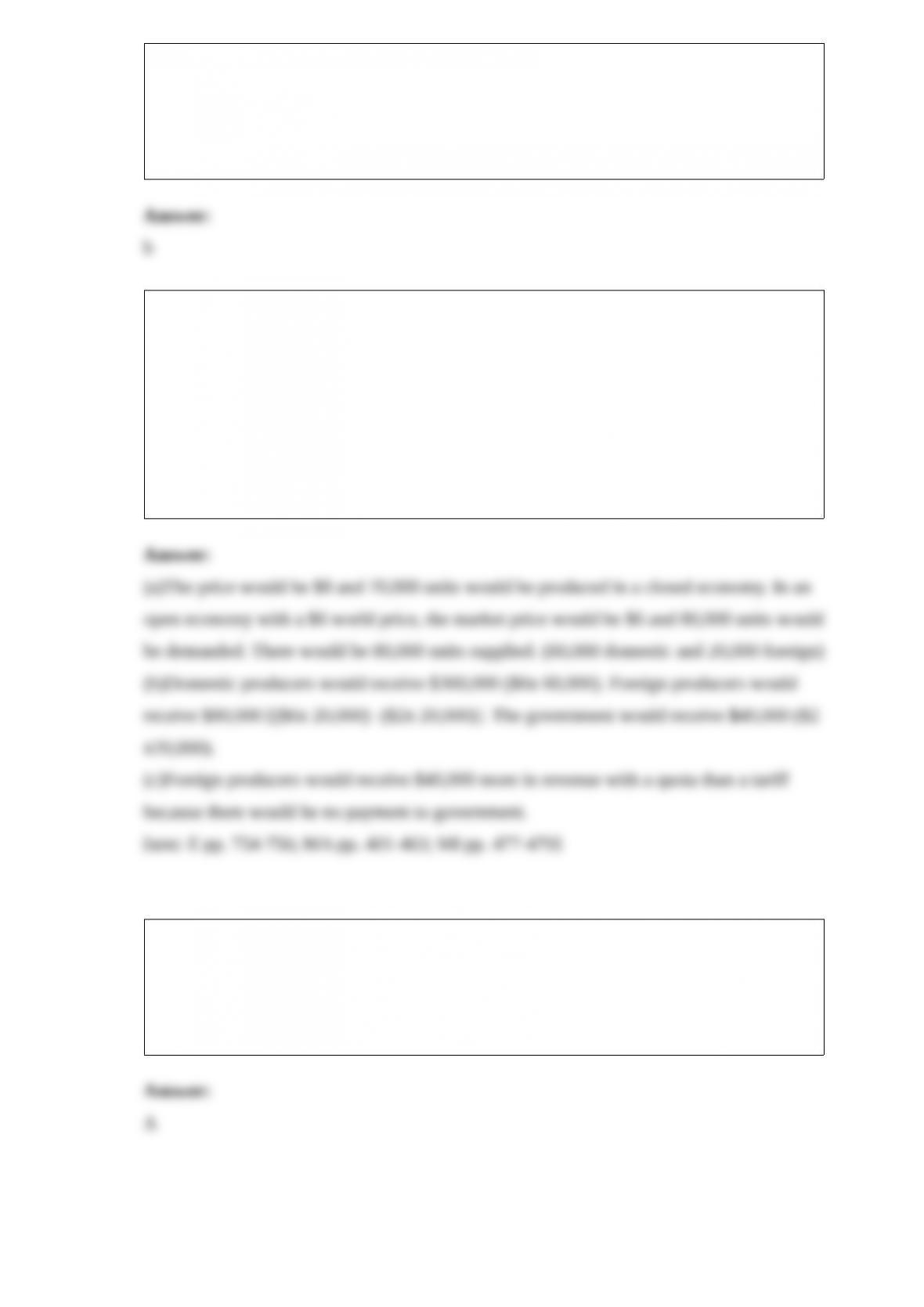
9)
Refer to the above diagram that applies to a private closed economy. If aggregate
expenditures are C + Ig 2, the amount of saving at income level J is:
A.LK.
B.KN.
C.KD.
D. JD
10) over a recently ended 66-year period, debeers:
a.earned only a normal profit because of its high mining and marketing costs.
b.operated substantially in accord with the predictions of the unregulated monopoly
model.
c.was subject to u.s. antimonopoly laws and therefore could not control diamond prices.
d.was regulated by the south african government and thus had to limit prices to average
total cost.
11) The next three questions refer to the information in the following table.
(a)What would price and quantity be if the market were closed to international trade?
What would the domestic and foreign quantity supplied be if it were open to
international trade and the world price was $6?
(b)If the world price was $4 and a tariff of $2 were placed on the product, what would
be the total revenues going to domestic producers, foreign producers (after-tax), and the
government? Explain.
(c)Given a world price of $4, what would be the difference in the total revenue received
by foreign producers with a $2 per unit tariff compared with a quota of 20,000 units?
12) Actual investment equals saving:
A.at all levels of GDP.
B.at all below-equilibrium levels of GDP.
C.at all above-equilibrium levels of GDP.
D.only at the equilibrium GDP.
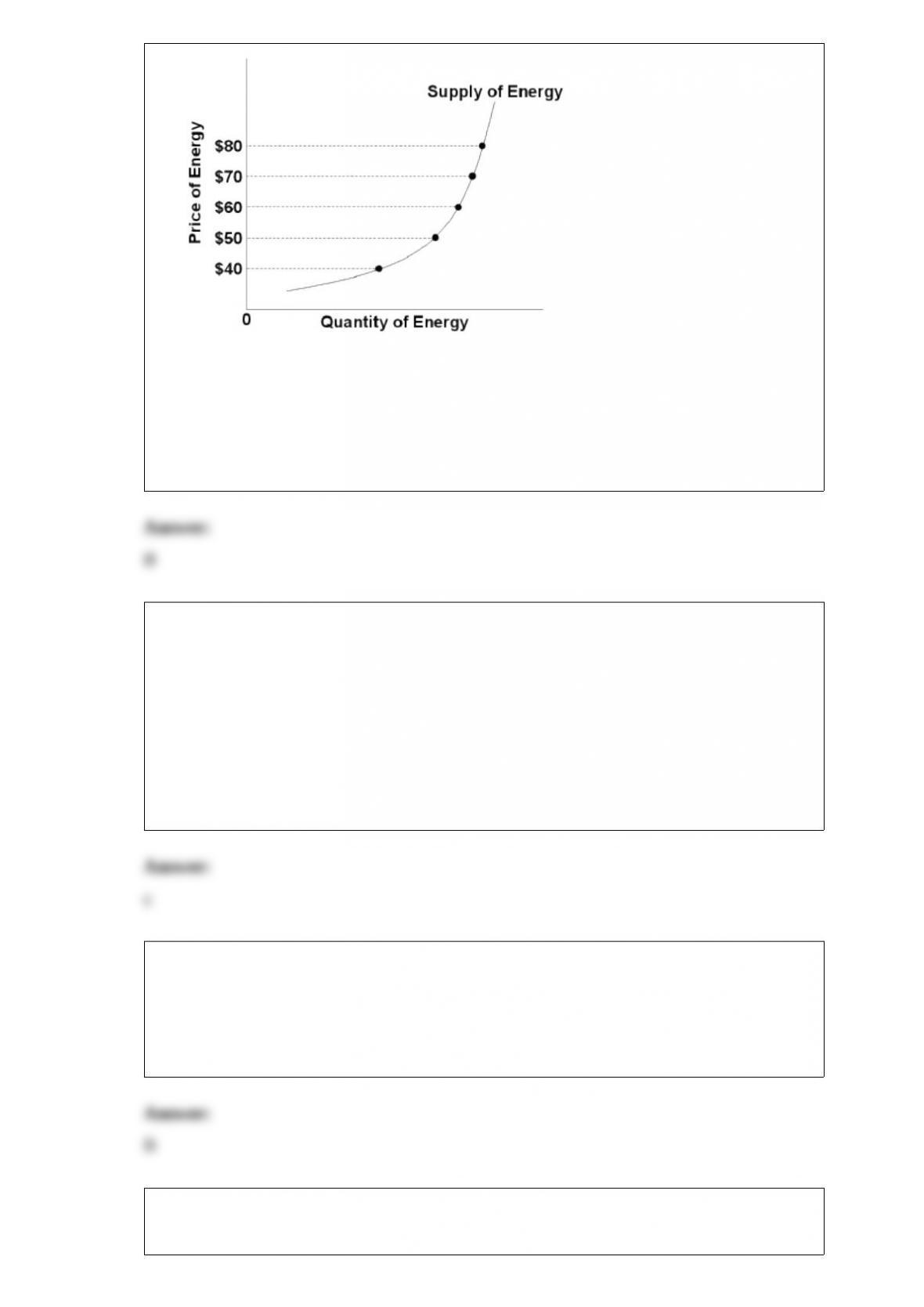
13)
Refer to the diagram above. Assuming it represents the overall supply of energy, at what
per barrel price of oil does the extraction of shale oil become economically viable?
A.$40.
B.$50.
C.$60.
D.$70.
14) which of the following statements is correct?
a.the united states’ exports and imports are smaller absolutely, but larger as a percentage
of gdp, than other nations’.
b.a number of other nations have exports and imports that are absolutely larger than
those of the united states.
c.the united states’ exports and imports are absolutely larger than any other nation’s, but
the exports and imports of many other nations are a larger percentage of their gdps.
d.the united states’ exports and imports are larger absolutely and as a percentage of gdp
than any other nation’s.
15) A profit-maximizing firm should not undertake a R&D project for which the:
A.expected rate of return exceeds its interest-rate cost of funds.
B.interest-rate cost of funds exceeds the expected rate of return.
C.expected returns are in the distant future.
D.the expected returns, though potentially very large, are uncertain.
16) When economists say that money serves as a store of value, they mean that it is:
A.a way to keep wealth in a readily spendable form for future use.

B.a means of payment.
C.a monetary unit for measuring and comparing the relative values of goods.
D.declared as legal tender by the government.
17) When economists say that the demand for labor is a derived demand, they mean that
it is:
A.dependent on government expenditures for public goods and services.
B.related to the demand for the product or service labor is producing.
C.based on the desire of businesses to exploit labor by paying below equilibrium wage
rates.
D.based on the assumption that workers are trying to maximize their money incomes.
18) other things equal, in which of the following cases would economic profit be the
greatest?
a.an unregulated monopolist which is able to engage in price discrimination
b.an unregulated, nondiscriminating monopolist
c.a regulated monopolist charging a price equal to average total cost
d.a regulated monopolist charging a price equal to marginal cost
19) suppose that a firm has “pricing power” and can segregate its market into two
distinct groups based on differences in elasticities of demand. the firm might charge:
a.a lower price to the group that has the less elastic demand.
b.a higher price to the group that has the less elastic demand.
c.the same price to both groups but include a “free” related product for the group that
has an inelastic demand.
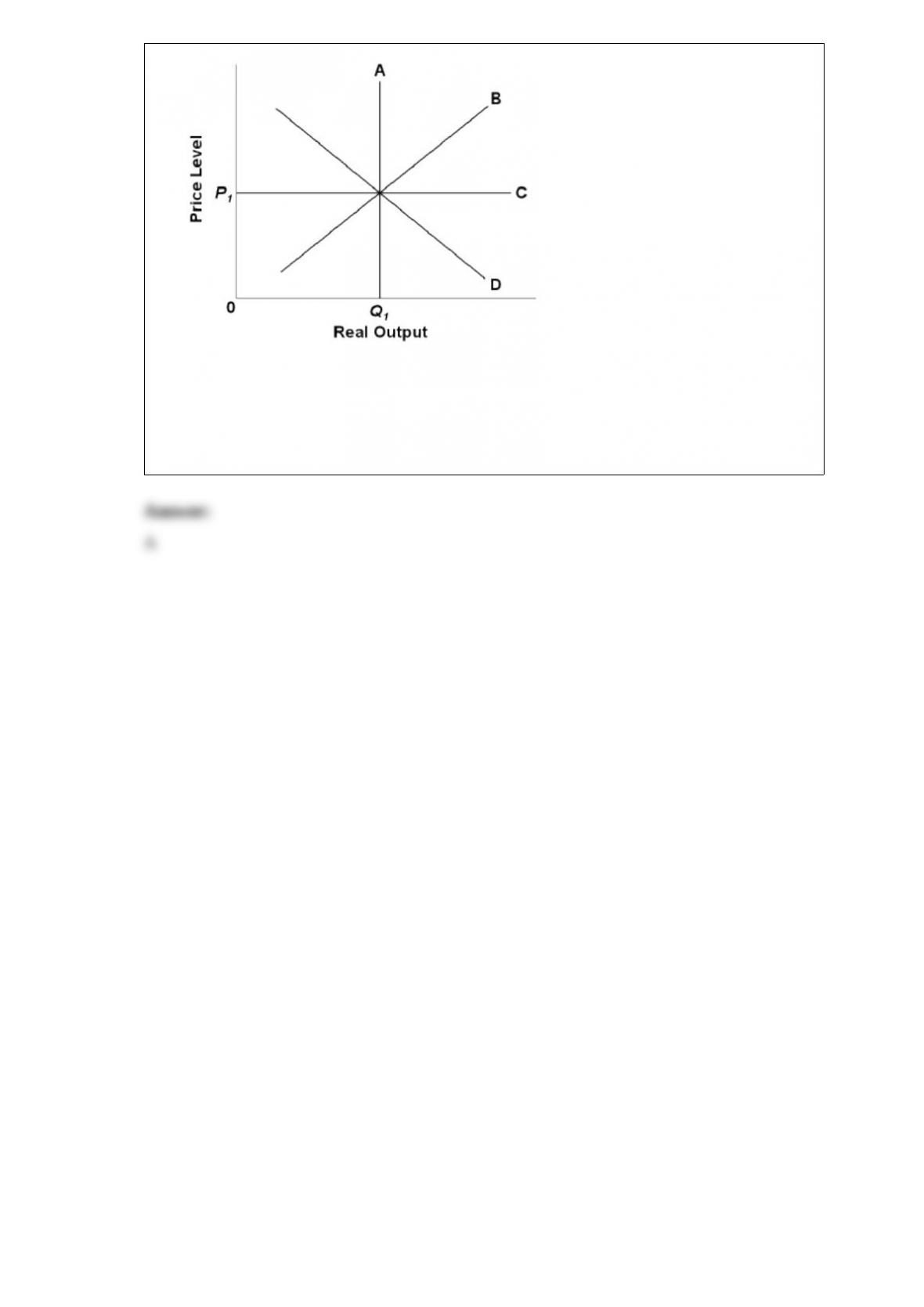
20)
Refer to the above diagram. The long-run aggregate supply curve is:
A.A.
B.B.
C.C.
D.D.