1) the free-rider problem is associated with:
a.all market goods.
b.the structure of airline fares.
c.producing goods that have characteristics of public goods.
d.the overallocation of the resources to transportation facilities.
2) in a competitive market economy firms will select the least-cost production
technique because:
a.such choices will result in the full employment of available resources.
b.to do so will maximize the firms’ profits.
c.this will prevent new firms from entering the industry.
d.”dollar voting” by consumers mandates such a choice.
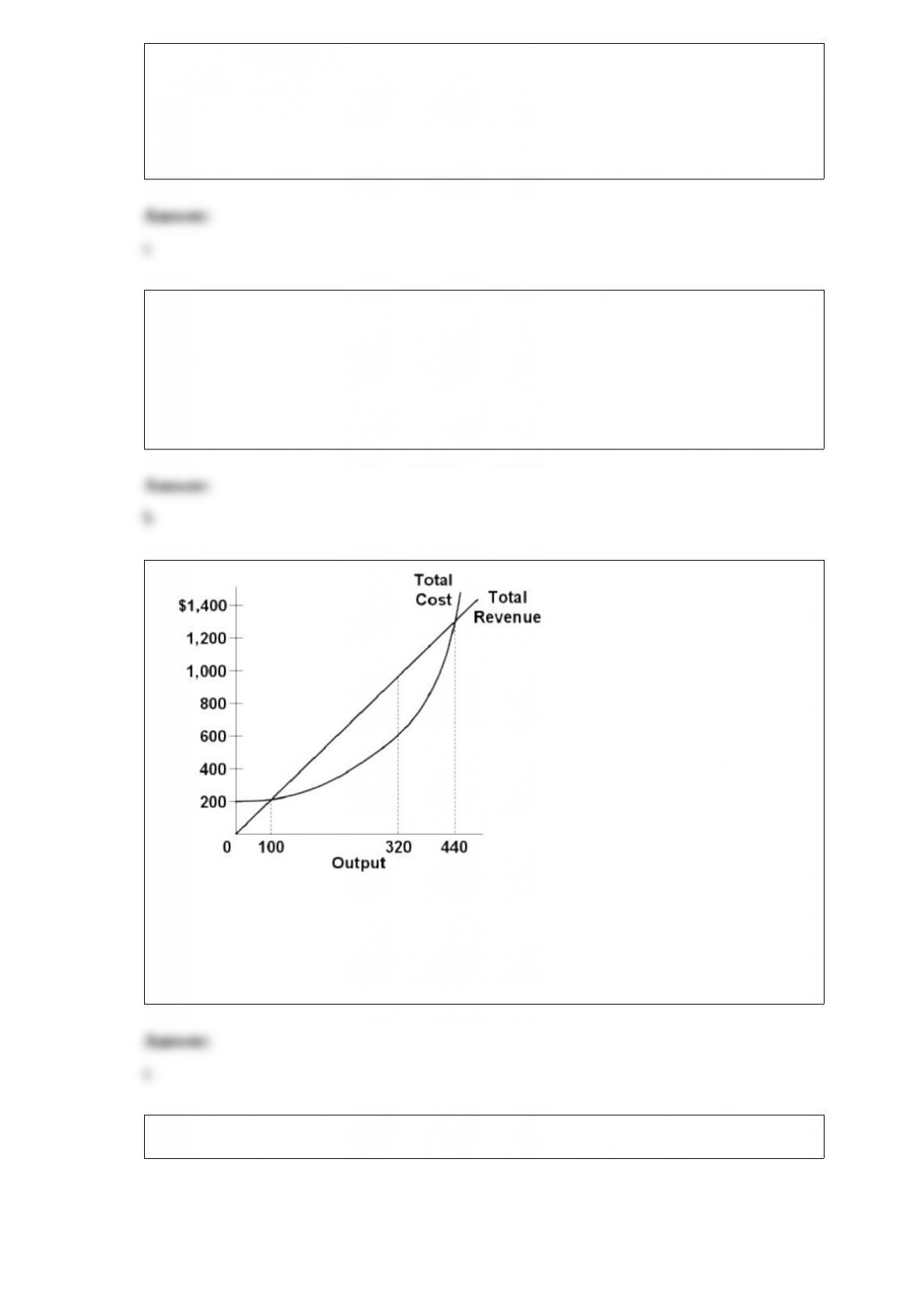
3)
refer to the above short-run data. the profit-maximizing output for this firm is:
a.above 440 units.
b.440 units.
c.320 units.
d.100 units.
4) Consumer’s income = $12
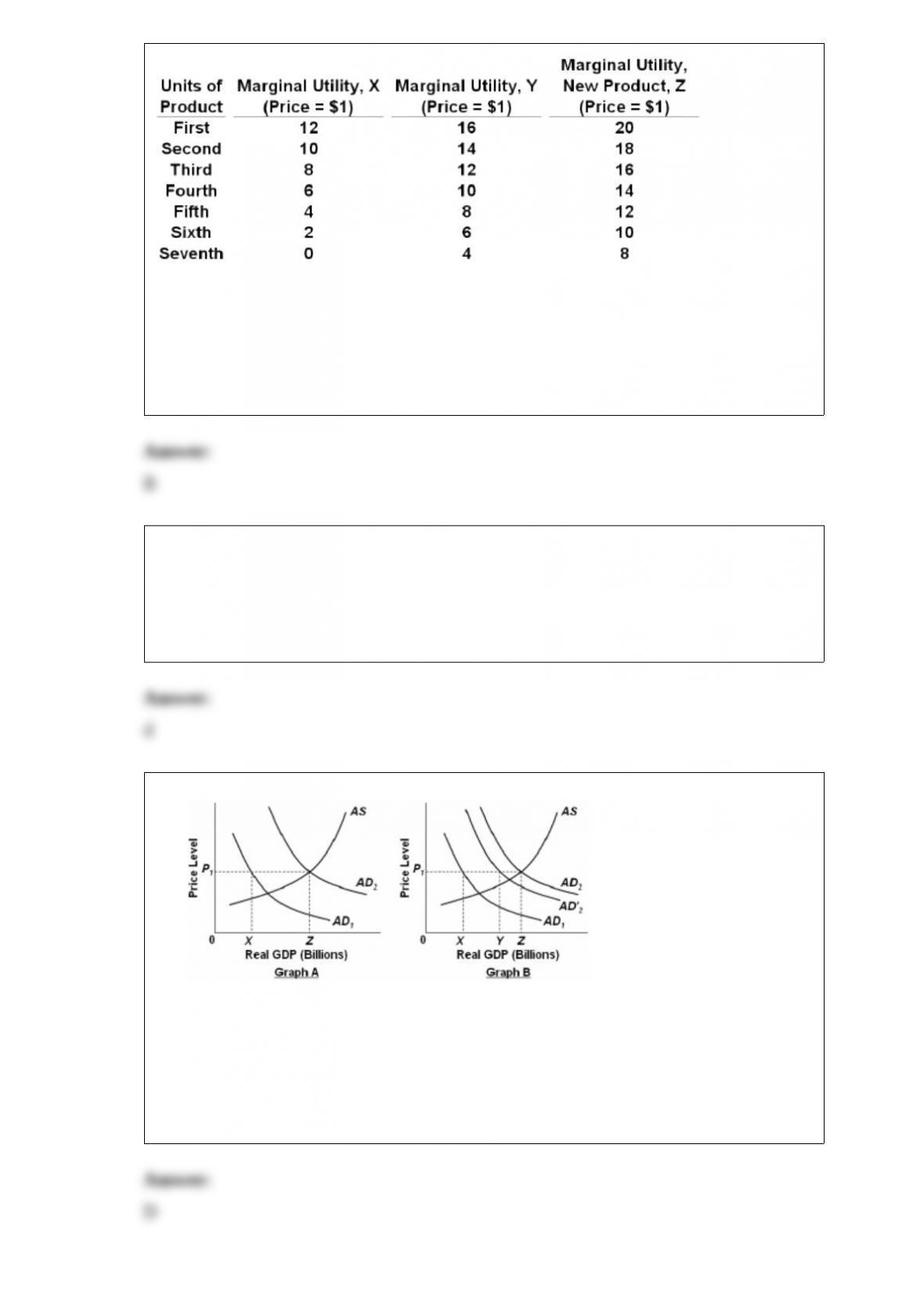
Refer to the above data. Suppose the price of new product Z is $10 rather than $1. This
consumer would purchase:
A.some of Z but not as much as if the price were $1.
B.none of Z.
C.less of X, Y, and Z than if the price were $1.
D.more of X, Y, and Z than if the price were $1.
5) the long-run average total cost curve:
a.will rise if diminishing returns are encountered.
b.will fall if diminishing returns are encountered.
c.will rise if economies of scale are incurred.
d.is based on the assumption that all resources are variable.
6)
Suppose real GDP is X, as shown in graph A. Appropriate government fiscal policy
would be to:
A.increase taxes.
B.reduce government spending.
C.reduce government spending and taxes by equal-sized amounts.
D.reduce taxes or increase government spending.
7) a public good:
a.can be produced profitably by private firms.
b.is available to all and cannot be denied to anyone.
c.is characterized by rivalry and excludability.
d.produces no externalities.
8) Menu costs:
A.increase during recession.
B.decrease during recession.
C.are the costs to firms of changing prices and communicating them to customers.
D.are sunk costs and therefore should be disregarded.
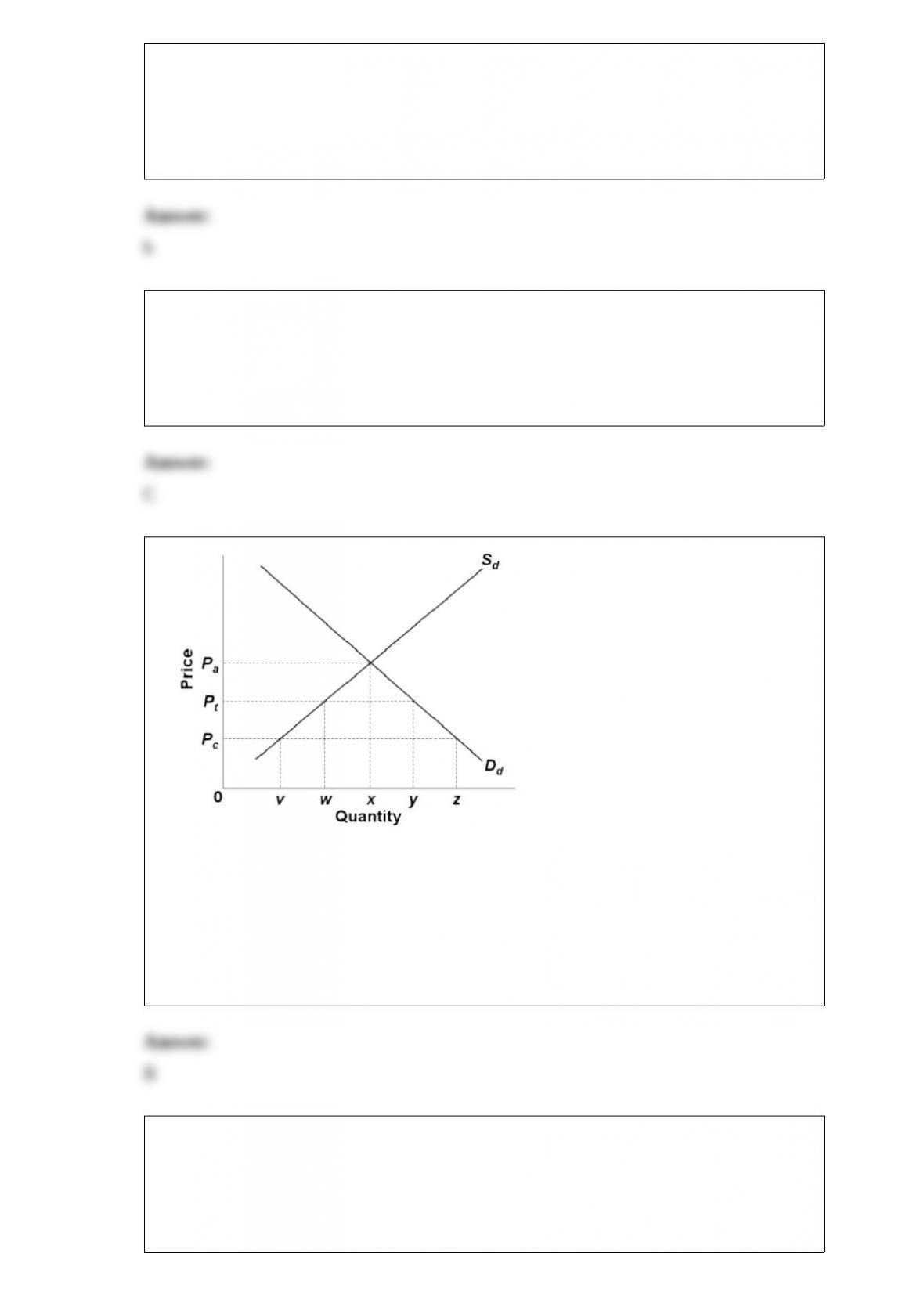
9)
Refer to the above diagram, where Sd and Dd are the domestic supply and demand for a
product and Pc is the world price of that product. If this economy was entirely closed to
international trade, equilibrium price and quantity would be:
A.Pa and z.
B.Pa and x.
C.Pc and z.
D.Pc and v.
10) nominal gdp is:
a.the sum of all monetary transactions that occur in the economy in a year.
b.the sum of all monetary transactions involving final goods and services that occur in
the economy in a year.
c.the amount of production that occurs when the economy is operating at full
employment.
d.money gdp adjusted for inflation.
11) The view that the antitrust laws should be enforced relatively leniently because of
the tendency for monopoly power to erode over time is known as the:
A.structuralist view of antitrust.
B.behavioralist view of antitrust.
C.laissez-faire perspective on antitrust.
D.active antitrust perspective.
12) Which of the following ideas most directly relates to R&D expenditures?
A.increasing cost industries
B.inverted-U theory
C.a cartel
D.kinked-demand curve
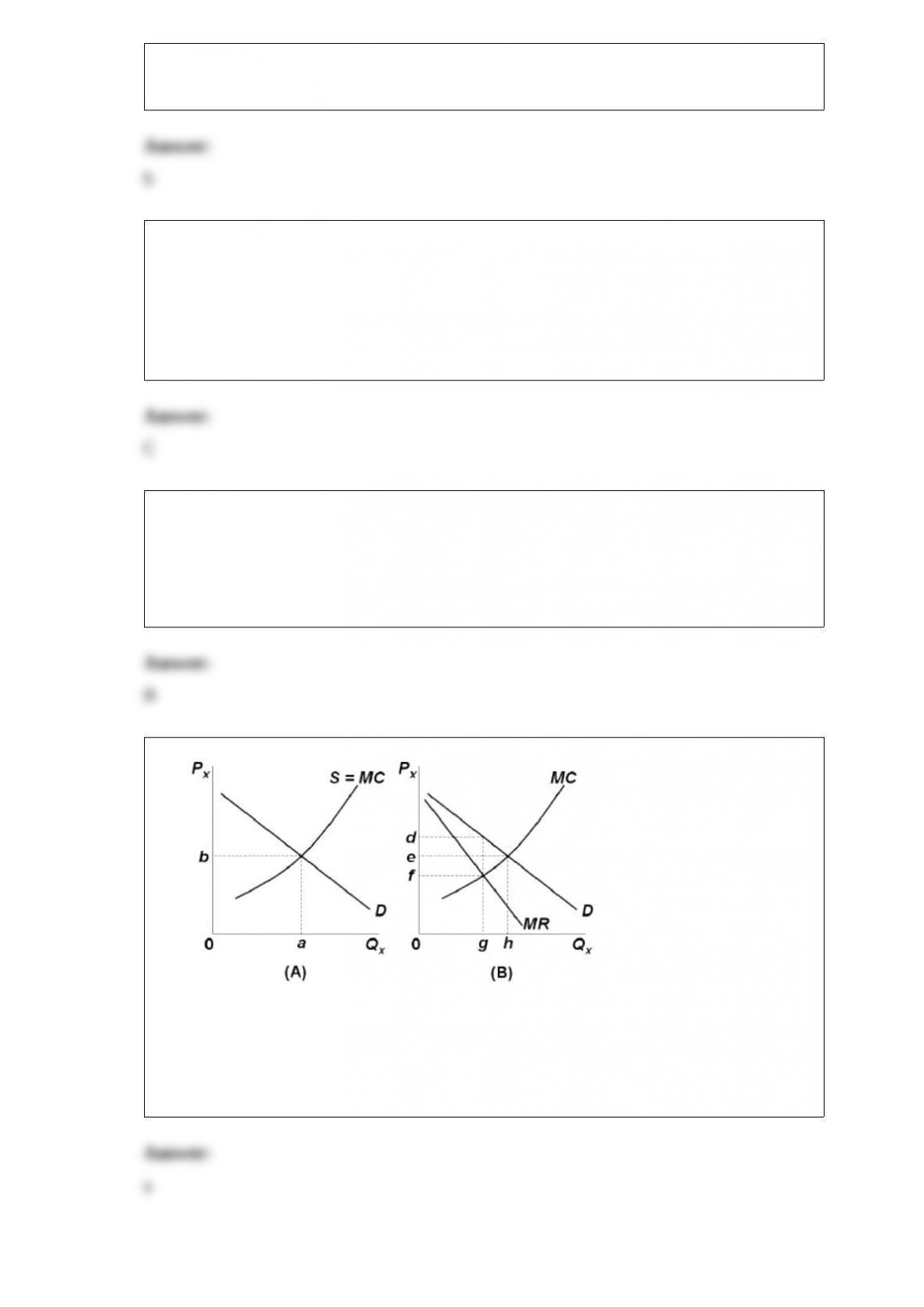
13)
refer to the above diagrams. diagram (a) represents:
a.equilibrium price and quantity in a purely competitive industry.
b.the pure monopoly model.
c.an industry in which there is productive efficiency but not allocative efficiency.
d.a single firm operating in a purely competitive industry.