1) the main characteristics of a public good are:
a.nonrivalry and nonexcludability.
b.nonexcludability and rising costs of production.
c.nonrivalry and large external costs.
d.production at constant cost and rising demand.
2) which of these groups of nations are all members of the euro zone?
a.great britain, france, and switzerland
b.france, germany, and italy
c.denmark, sweden, and norway
d.russia, poland, and hungary
3) which of the following will shift the production possibilities curve to the right?
a.an increase in the unemployment rate from 6 to 8 percent
b.a decline in the efficiency with which the present labor force is allocated
c.a decrease in the unemployment rate from 8 to 6 percent
d.a technological advance that allows farmers to produce more output from given inputs
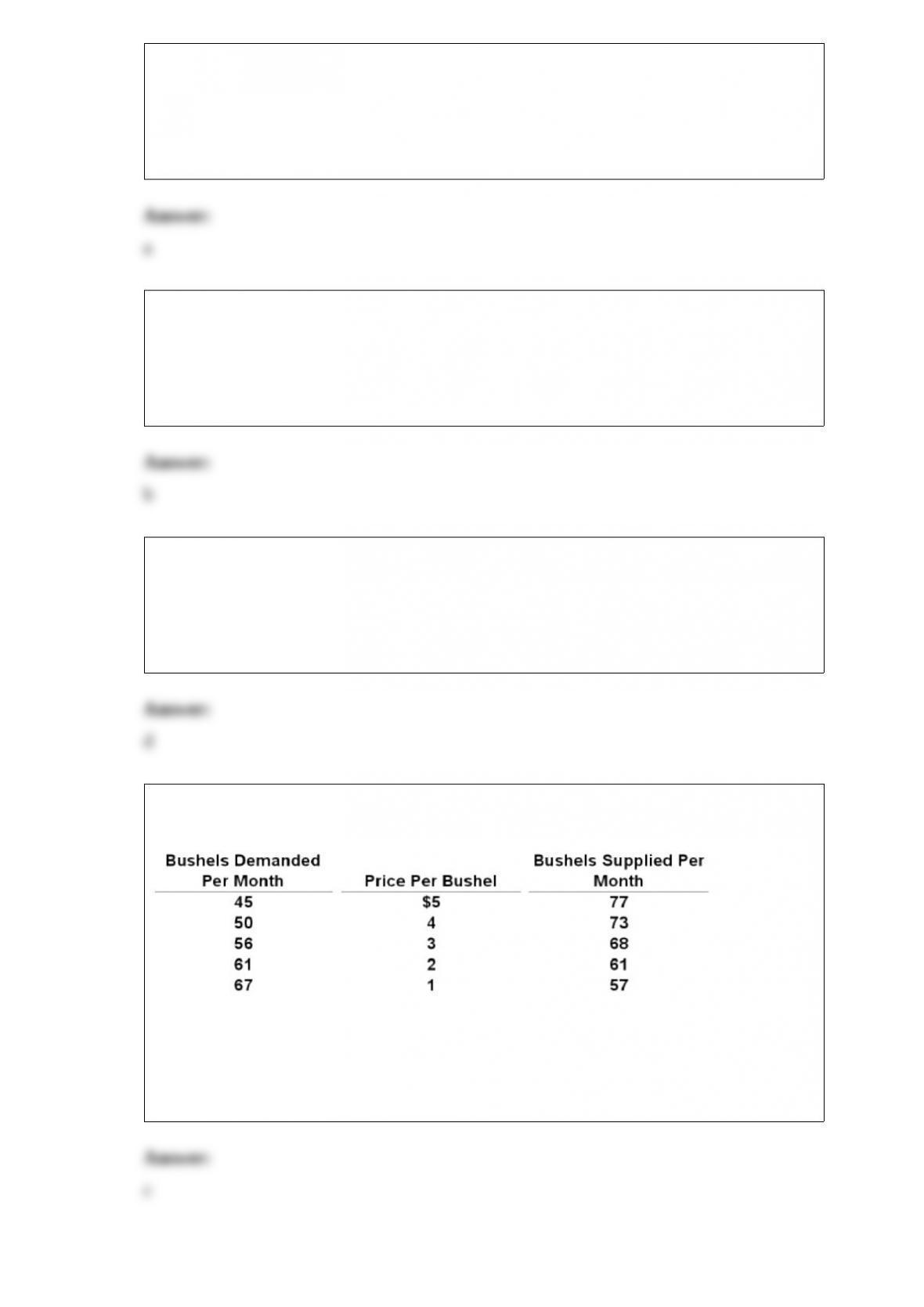
4) the given supply and demand data for wheat:
refer to the above data. if the price in this market was $4:
a.the market would clear; quantity demanded would equal quantity supplied.
b.buyers would want to purchase more wheat than is currently being supplied.
c.farmers would not be able to sell all their wheat.
d.there would be a shortage of wheat.
5) A firm decides to make a $10 million expenditure on research and development that
will create a new product. This product is expected to increase the firms revenues by a
total of $12 million in the next year. The firm also estimates that the production cost of
the new product will be $11 million.
(a)What is the expected rate of return on this research and development expenditure?
(b)If the firm has to take out a loan to finance the project, what is the highest interest
rate they will pay and still do the project? Explain.
6)
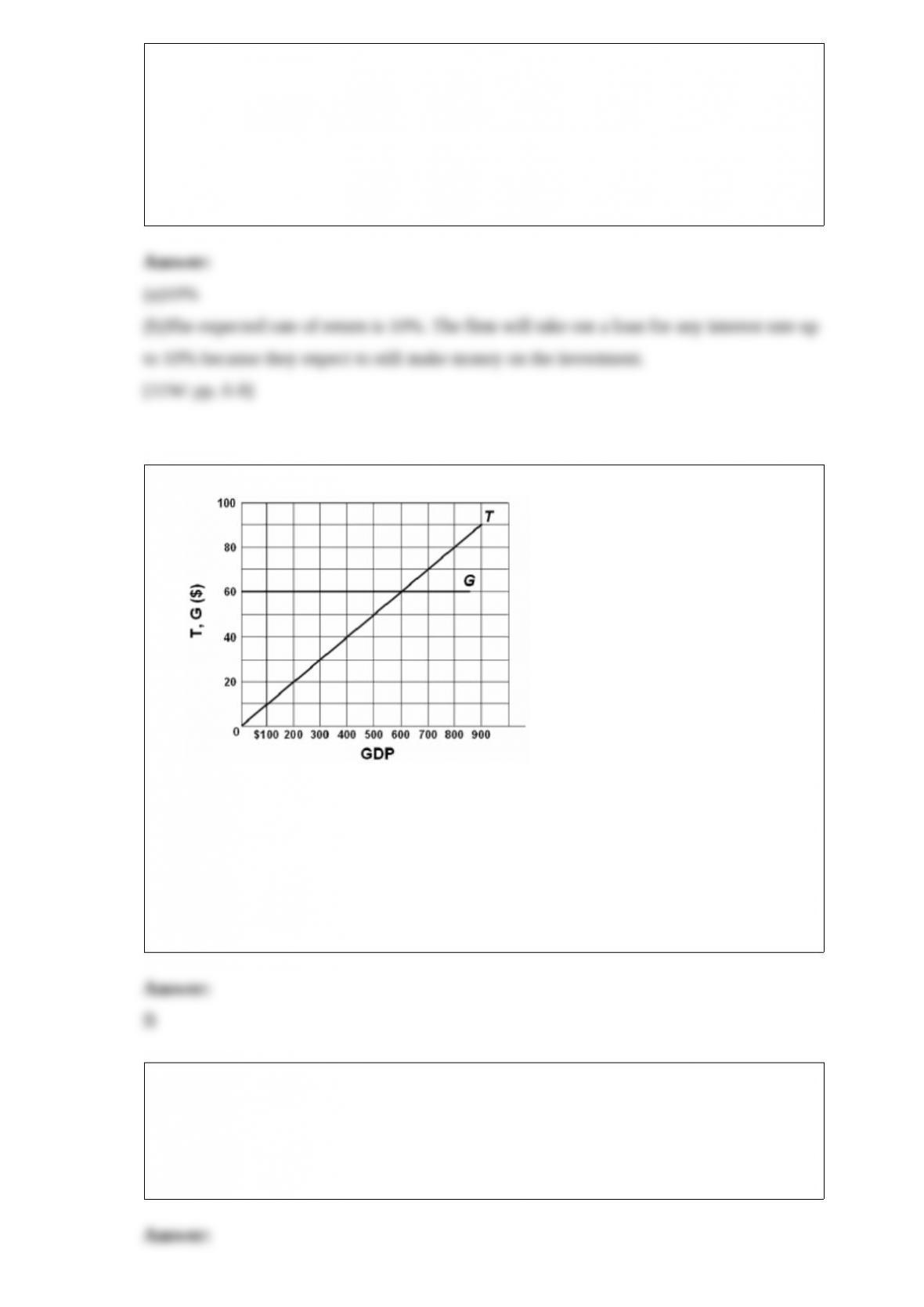
Refer to the above diagram where T is tax revenues and G is government expenditures.
All figures are in billions of dollars. If the full-employment GDP is $400 billion while
the actual GDP is $200 billion, the cyclical deficit is:
A.$40 billion.
B.$20 billion.
C.zero.
D.$60 billion.
7) Which of the following is characteristic of a regulated natural monopoly?
A.extensive economies of scale
B.the wasteful duplication of capital facilities in the event of competition
C.the provision of an essential service
D.all of these

8) Suppose the balance on the financial account is -$300 billion and the balance on the
capital account is +$5 billion. The size of the current account is:
A.+$295 billion.
B.-$295 billion.
C.+$305 billion.
D.+$5 billion.
9) Alex and Ben are both loggers wanting to harvest timber from the same forest. Alex
prefers to harvest and replant at a sustainable rate; Ben wants to harvest as many trees
as possible to maximize short-run profit, and then move on. They face the same
production costs.
Refer to the information above. The forest is more likely to be harvested and replanted
at a sustainable rate if:
A.property rights are well-defined and enforced.
B.property rights are weak or non-existent.
C.there is no government protection of property rights and the parties can negotiate a
settlement.
D.Ben is given sole ownership of the property.
10) Below is the information for Manfred’s Shoe Shine Parlor. Assume Manfred hires
labor, its only variable input, under purely competitive conditions. Shoe shines are also
sold competitively.
Refer to the above data. At what price does each shoe shine sell?
A.$1
B.$2
C.$3
D.$2.50

11) The U.S. price support program, which guaranteed prices for currently grown crops:
A.ended with passage of the Freedom to Farm Act of 1996.
B.began with the Grain Planting Act of 1914.
C.remains the core of U.S. farm policy.
D.was restored in full and expanded by the Food, Conservation, and Energy Act of
2008.
12) Economist Milton Friedman is most closely associated with:
A.Keynesian economics.
B.the rational expectations theory.
C.supply-side economics.
D.monetarism.
13) Shifts in the aggregate supply curve are caused by changes in:
A.consumption spending.
B.the quantity of real output demanded.
C.the quantity of real output supplied.
D. one or more of the determinants of aggregate supply.
14) market economies have been characterized by:
a.occasional instability of employment and price levels.
b.uninterrupted economic growth.
c.persistent full employment.
d.declining populations.
15) Below is the information for Manfred’s Shoe Shine Parlor. Assume Manfred hires
labor, its only variable input, under purely competitive conditions. Shoe shines are also
sold competitively.
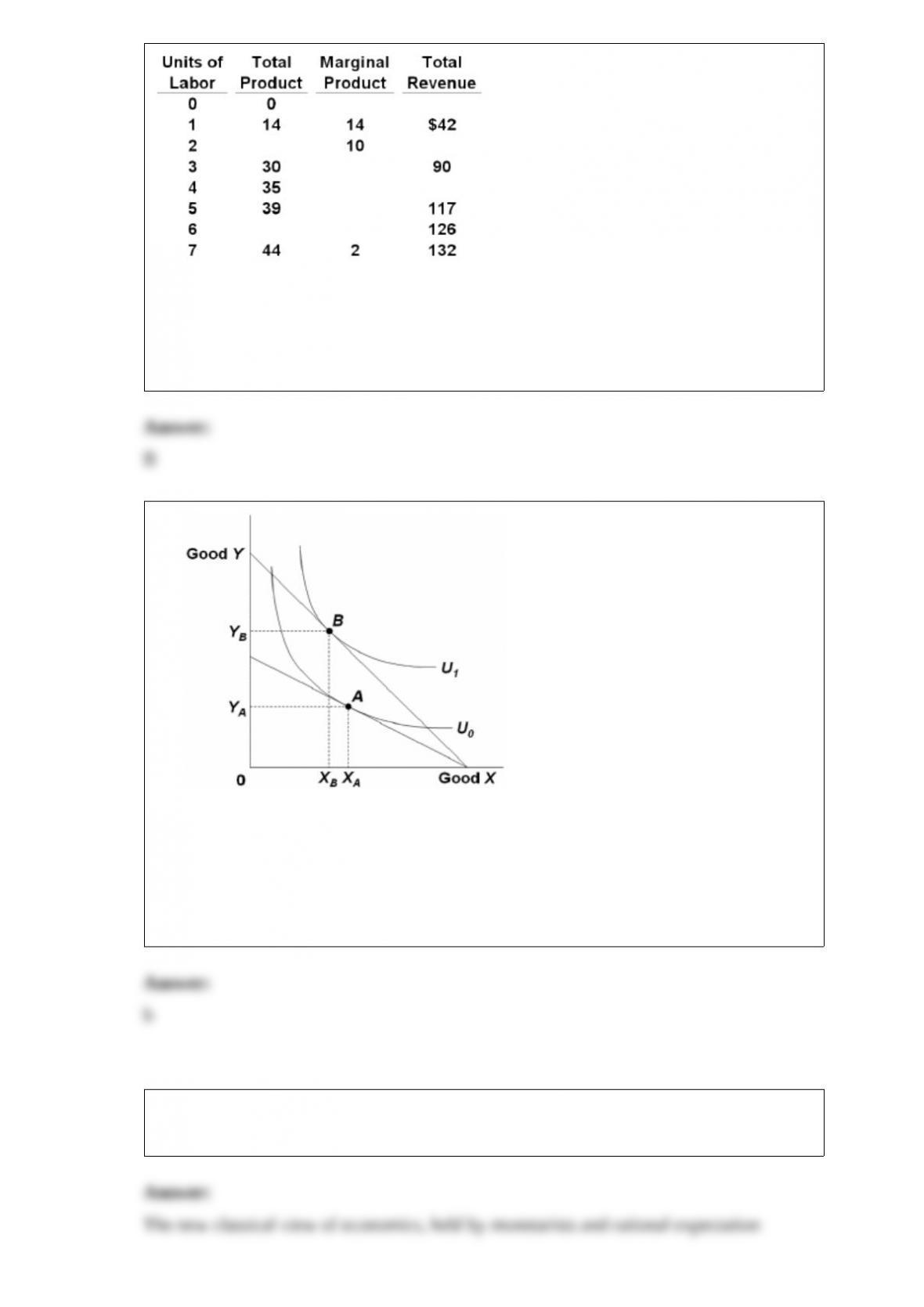
Refer to the above data. What is the marginal product of the sixth worker?
A.2 units
B.3 units
C.4 units
D.5 units
16)
refer to the above diagram. suppose the budget line shifts so that the consumer’s
equilibrium changes from point a to point b. this means that the:
a.price of y has increased.
b.price of y has decreased.
c.price of x has increased.
d.consumer’s money income has increased.
17) Compare and contrast the new classical and the mainstream view of self-correction
in the economy.
18) How can paying workers an above-market wage result in greater efficiency? What
are the implications for the flexibility of wages?
19) How can the Big Mac index be used to explain purchasing power parity theory?
20) Use a leaky bucket to discuss the tradeoff between income equality and economic
efficiency.
21) How does speculation in currencies affect the value of a nations currency?
22) What are two positive roles that speculators play in currency markets?
23) Define aggregate supply. Describe the characteristics of the aggregate supply curve
in the immediate short-run, short-run and long-run perspectives.
24) What are conflict diamonds and what do they illustrate about resource use?
25) If monopolistically competitive firms have some control over their prices, why dont
they set price above average total cost so they will realize an economic profit in the
long run?