1)
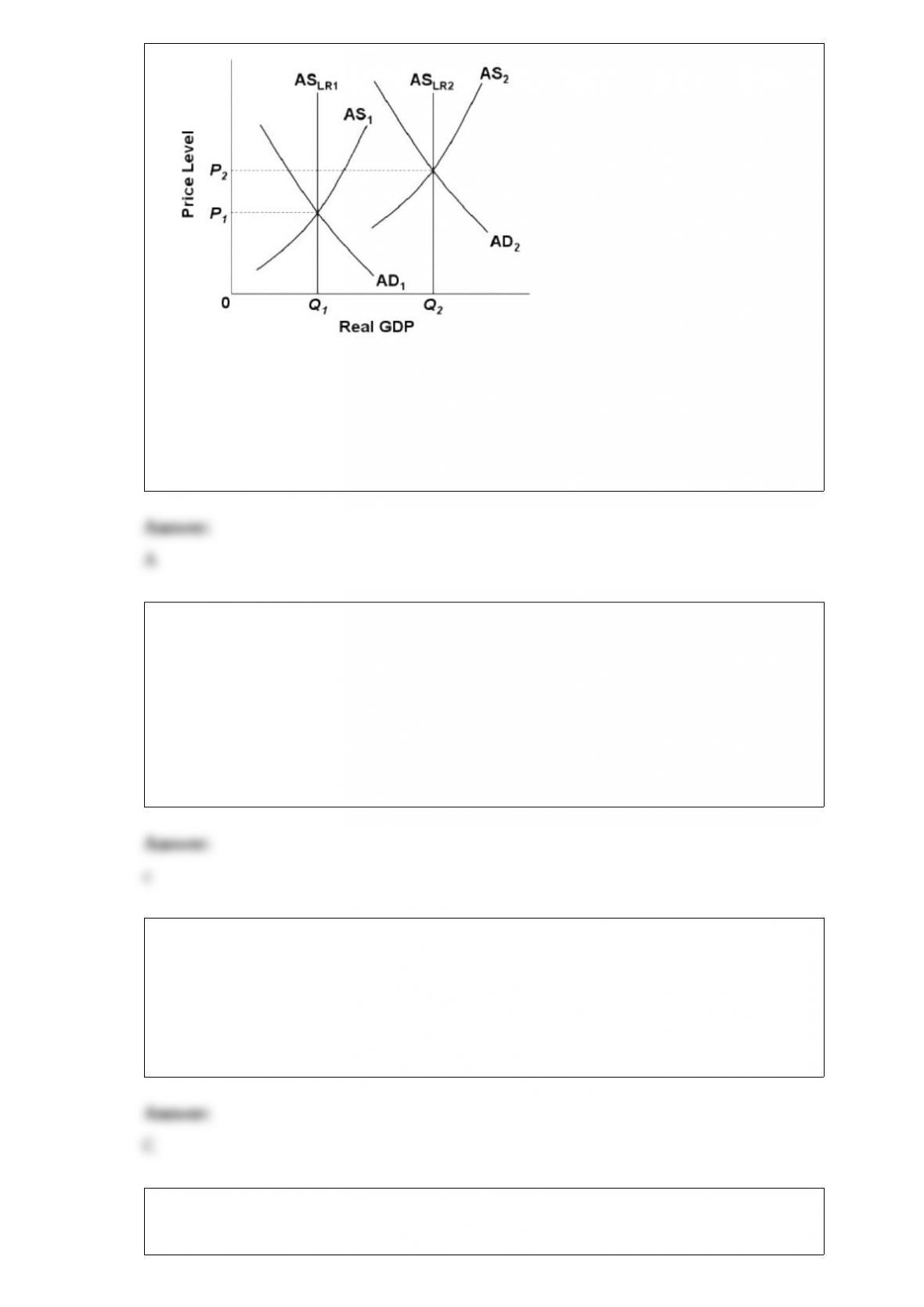
Refer to the above graphs, where the subscripts on the labels denote years 1 and 2. In
year 1 the economy:
A.is in long-run equilibrium at output Q1.
B.is in short-run equilibrium at output Q1, but not in long-run equilibrium.
C.cannot be in long-run equilibrium because output changes in period 2
D.is in a recession, based on output Q1 being below output Q2.
2) the fundamental problem associated with the u.s. health care system is that:
a.the financing of health care through insurance has resulted in the underallocation of
resources to the health care industry.
b.frivolous malpractice suits have increased malpractice insurance premiums for
doctors.
c.at the margin the value of health care services may be less than the value of
alternative goods and services.
d.there are too many general practitioners and not enough specialists.
3) If a certain household earns and spends $24,000 per year and, on the average, holds a
money balance of $6,000, then the velocity of money for this household is:
A.6.
B.1/6.
C.4.
D.1/4.
4) demand-pull inflation:
a.occurs when total spending in the economy is excessive.
b.is measured differently than cost-push inflation.
c.can be present even during an economic depression.
d.is also called “hyperinflation.”
5)
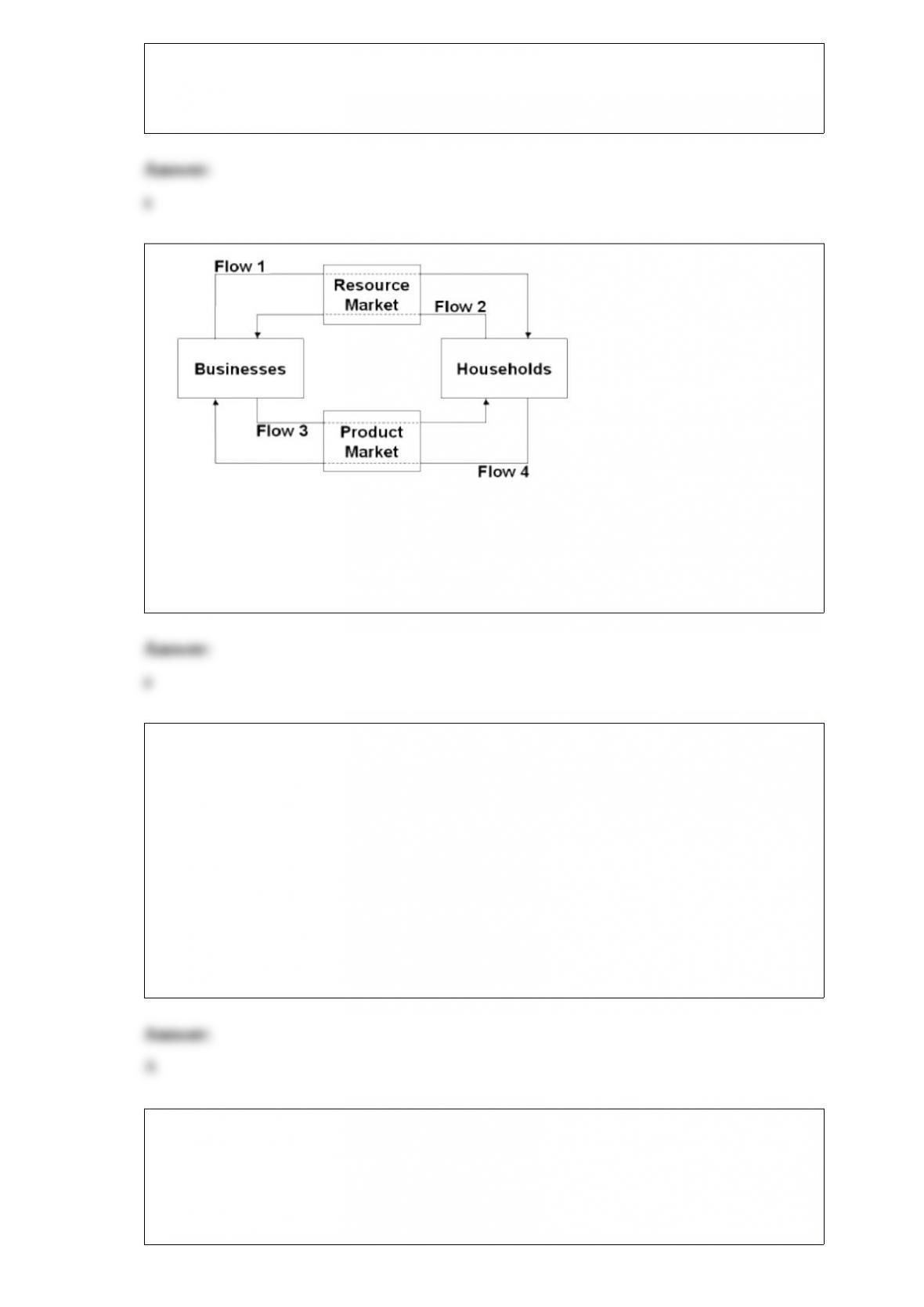
refer to the above diagram. flow (1) represents:
a.wage, rent, interest, and profit income.
b.land, labor, capital, and entrepreneurial ability.
c.goods and services.
d.consumer expenditures.
6) Alex and Ben are both loggers wanting to harvest timber from the same forest. Alex
prefers to harvest and replant at a sustainable rate; Ben wants to harvest as many trees
as possible to maximize short-run profit, and then move on. They face the same
production costs.
Refer to the information above. The forest is more likely to be harvested and replanted
at a sustainable rate if:
A.property rights are well-defined and enforced.
B.property rights are weak or non-existent.
C.there is no government protection of property rights and the parties can negotiate a
settlement.
D.Ben is given sole ownership of the property.
7) Firms whose central business is to offer security advice and buy and sell individual
stocks and bonds for clients are known as:
A.thrifts.
B.pension fund companies.
C.securities firms.

D.insurance companies.
8) Pa and Pb are the prices that individuals A and B are willing to pay for the last unit of
a public good, rather than do without it. These people are the only two members of
society.
Refer to the above data. The collective willingness of this society to pay for the 2nd unit
of this public good is:
A.$2.
B.$4.
C.$6.
D.$8.
9) if the income elasticity of demand for lard is -3.00, this means that:
a.lard is a substitute for butter.
b.lard is a normal good.
c.lard is an inferior good.
d.more lard will be purchased when its price falls.
10) In deciding on an optimal amount and type of research and development, firms
should adhere to the rule: Expand R&D until:
A.expected rate of return is zero.
B.expected rate of return equals the interest rate.
C.expected rate of return exceeds the interest rate by the greatest amount.
D.the interest rate is constant.