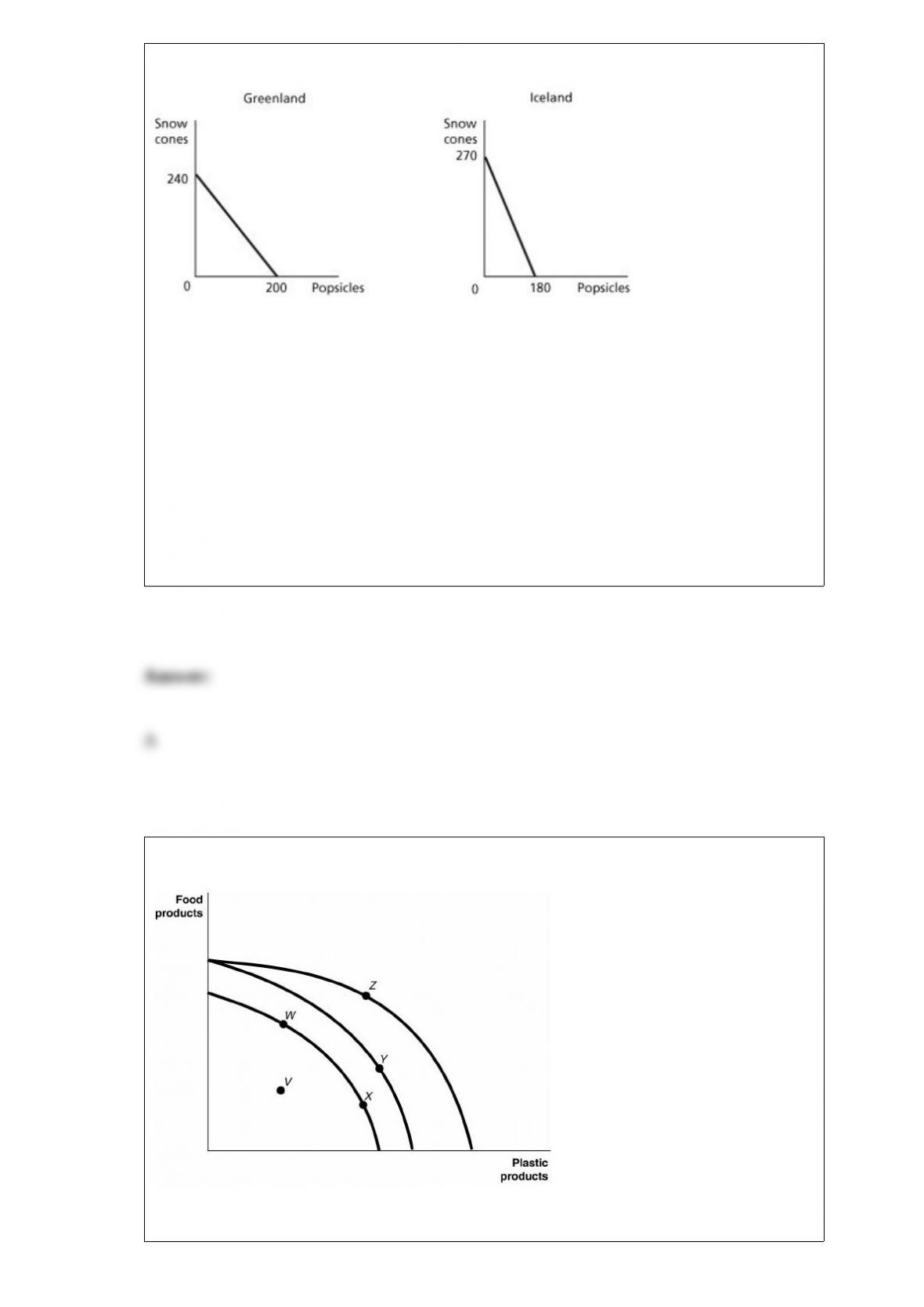
Figure 2-9
Figure 2-9 shows the production possibilities frontiers for Greenland and Iceland. Each
country produces two goods, snow cones and popsicles.
Refer to Figure 2-9. What is the opportunity cost of producing 1 popsicle in Iceland?
A) 1 1/2 snow cones
B) 3/4 of a snow cone
C) 2/3 of a snow cone
D) 270 snow cones
Figure 2-4
Figure 2-4 shows various points on three different production possibilities frontiers for

a nation.
Refer to Figure 2-4. Consider the following movements:
a. from point V to point W
b. from point W to point Y
c. from point Y to point Z
Which of the movements listed above represents advancements in technology with
respect to only plastic production?
A) a, b, and c
B) b and c only
C) b only
D) c only
Suppose President Obama is successful in passing a $10 billion tax increase. Assume
that taxes are fixed, the economy is closed, and the marginal propensity to consume is
0.8. What happens to equilibrium GDP?
A) There is a $50 billion increase in equilibrium GDP.
B) There is a $50 billion decrease in equilibrium GDP.
C) There is a $40 billion increase in equilibrium GDP.
D) There is a $40 billion decrease in equilibrium GDP.

If the dollar depreciates against the Indian rupee,
A) Indian imports to the U.S. become less expensive.
B) U.S. exports to India become less expensive.
C) U.S. exports to India become more expensive.
D) The value of Indian imports to the United States does not change.
Thailand’s experience with pegging the baht to the dollar failed because the baht was
________ relative to the dollar, and China’s experience with pegging the yuan to the
dollar has run into difficulties because the yuan has been ________ relative to the
dollar.
A) overvalued; overvalued
B) undervalued; overvalued
C) undervalued; undervalued
D) overvalued; undervalued
A decrease in real GDP can
A) shift money demand to the right and decrease the interest rate.
B) shift money demand to the right and increase the interest rate.
C) shift money demand to the left and decrease the interest rate.

D) shift money demand to the left and increase the interest rate.
In economics, money is defined as
A) the total value of one’s assets in current prices.
B) the total value of one’s assets minus the total value of one’s debts, in current prices.
C) the total amount of salary, interest, and rental income earned during a year.
D) any asset people generally accept in exchange for goods and services.
If interest rates in the United States rise,
A) the value of the dollar will fall as foreign investors sell their U.S. investments.
B) the value of the dollar will rise as the foreign investors increase their holdings of
U.S. investments.
C) the value of the dollar will fall as foreign investors increase their holdings of U.S.
investments.
D) the value of the dollar will rise as foreign investors sell their U.S. investments.
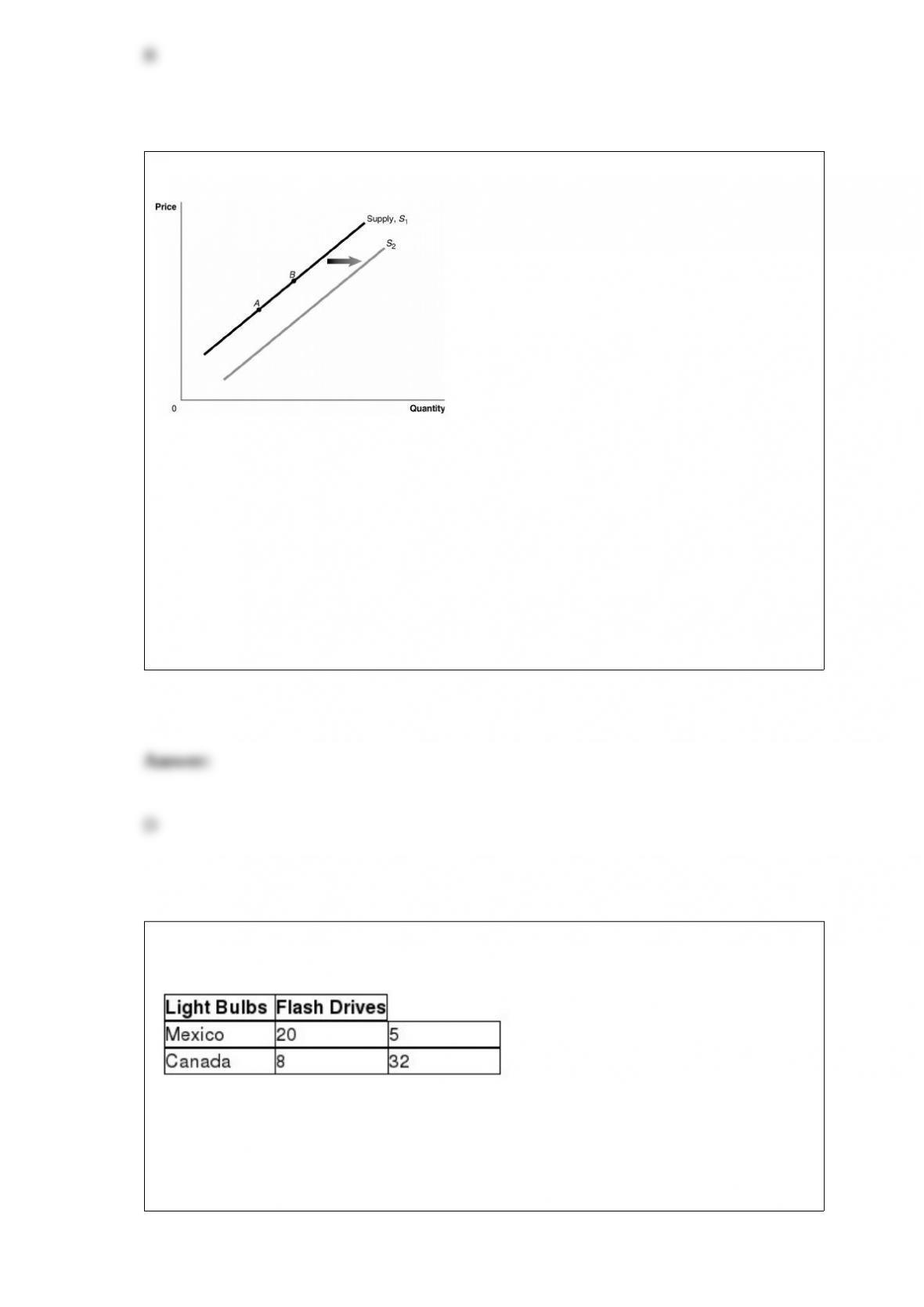
Figure 3-2
Refer to Figure 3-2. A decrease in the number of firms in the market would be
represented by a movement from
A) A to B.
B) B to A.
C) S1 to S2.
D) S2 to S1.
Table 7-4
Output Per Hour of Work
Table 7-4 shows the output per hour of work for light bulbs and flash drives in Mexico
and in Canada.
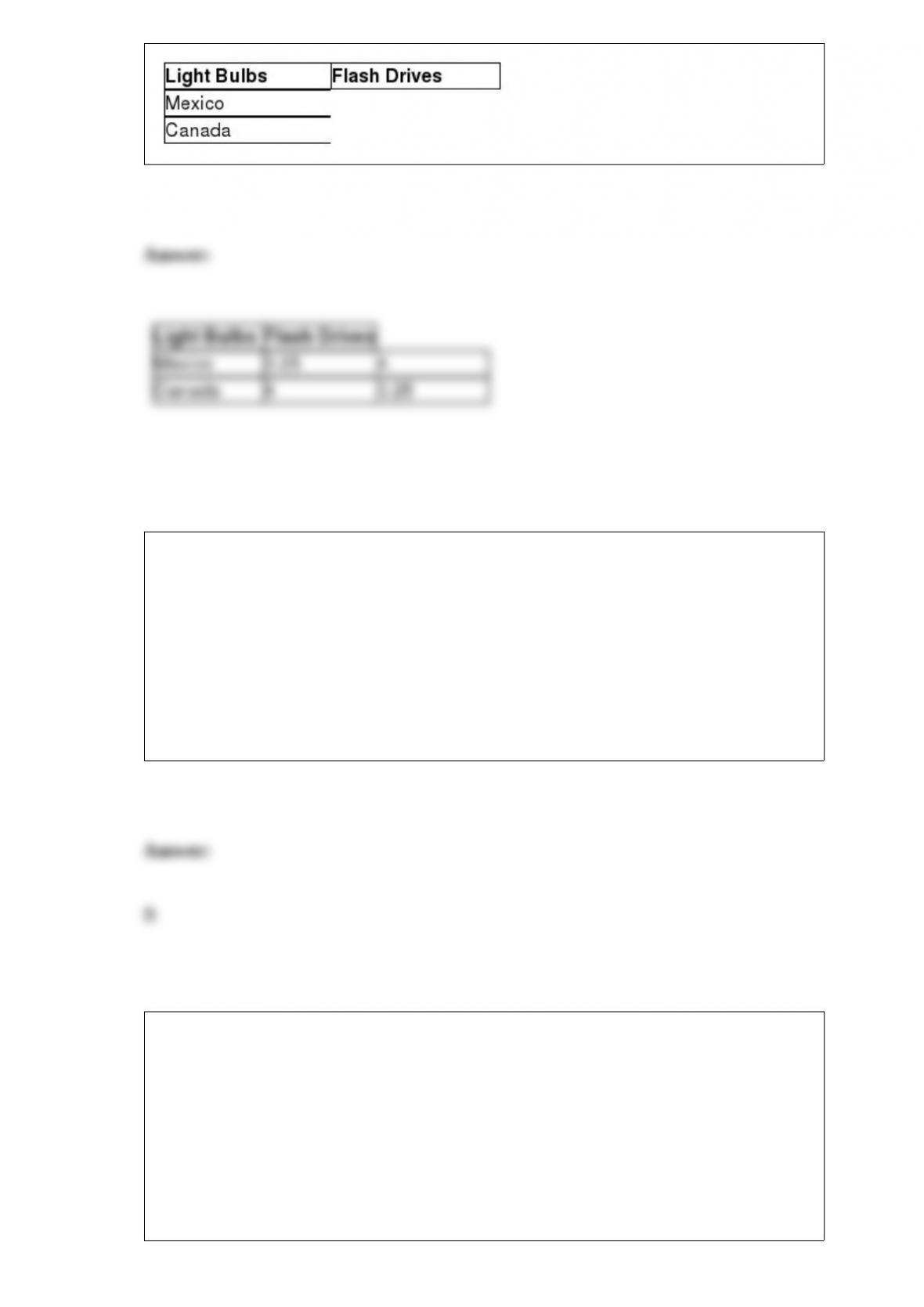
Refer to Table 7-4. Fill in the following table with the opportunity costs of producing
light bulbs and flash drives for Mexico and Canada.
An increase in the real interest rate will
A) cause consumers to spend more and save less.
B) most likely lower consumers’ purchases of durable goods.
C) most likely lower the reward to savings.
D) most likely lower the cost of borrowing.
The financial statements of firms generally are audited by
A) employees of the firm being audited.
B) employees of private accounting firms.
C) employees of the federal government.
D) the board of directors of the corporation being audited.