
Which of the following has a tendency to raise the unemployment rate?
A) implementing a minimum wage in an economy
B) reducing unemployment insurance in an economy
C) offering wages at the market-clearing rate
D) reducing labor unions membership in an economy
In the United States, barriers to entry in professional team sports (for example, football
and baseball) result from
A) the draft of college players, which grants teams exclusive signing rights to
individual players.
B) long-term leases teams sign for stadiums and ballparks in major cities.
C) television contracts, which give networks the exclusive rights to broadcast games.
D) the reserve clause, which is a provision in contracts of professional athletes that
require them to play for specific teams over the length of their contracts.
Figure 15-15
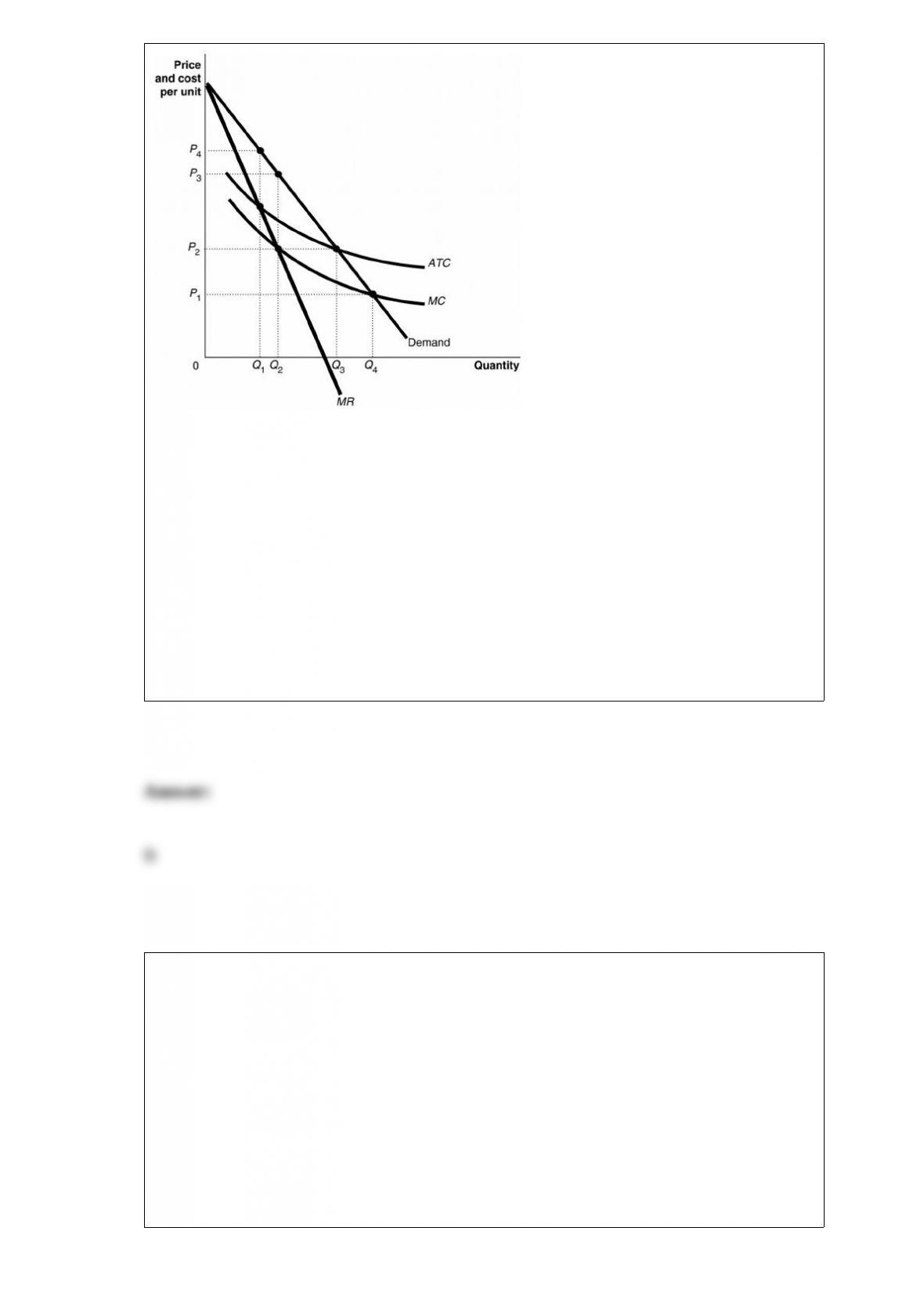
Figure 15-15 shows the cost and demand curves for the Erickson Power Company. The
firm would maximize profit by producing
A) Q1 units.
B) Q2 units.
C) Q3units.
D) Q4units.
Which of the following describes a situation in which every good or service is produced
up to the point where the last unit provides a marginal benefit to consumers equal to the
marginal cost of producing it?
A) productive efficiency
B) allocative efficiency
C) marginal efficiency
D) profit maximization
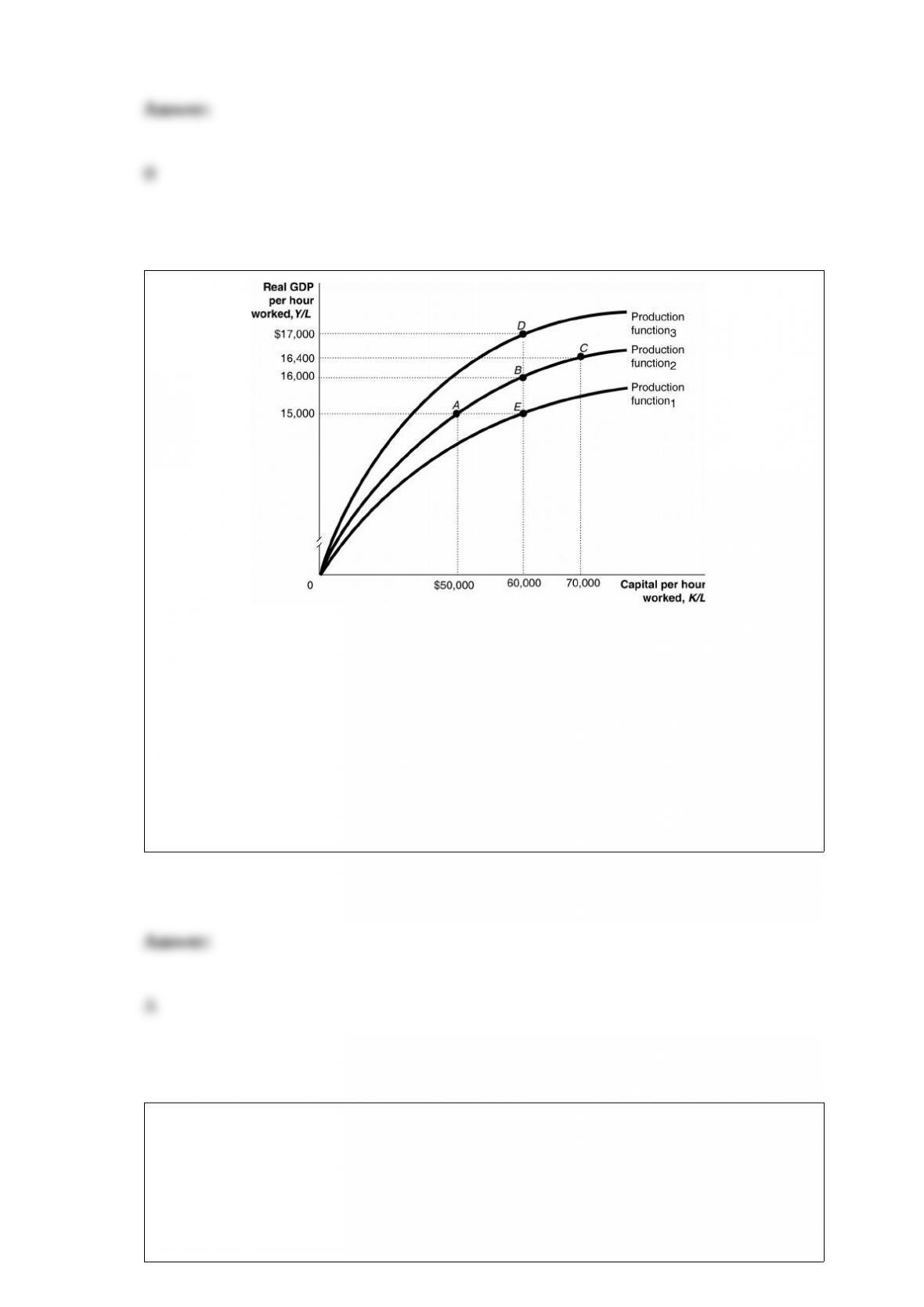
Figure 22-4
The movement from E to B to D in the figure above illustrates
A) an improvement in technology.
B) a decline in capital per worker.
C) diminishing returns to capital.
D) diminishing returns to labor.
If a country sets a pegged exchange rate that is below the equilibrium exchange rate,
how can the country maintain the peg?
A) by purchasing surplus domestic currency at the pegged rate
B) by selling surplus domestic currency at the pegged rate

C) by purchasing surplus domestic currency at the equilibrium exchange rate
D) by decreasing the pegged exchange rate
The economic analysis of minimum wage involves both normative and positive
analysis. Consider the following consequences of a minimum wage:
a. The minimum wage law causes unemployment.
b. A minimum wage law benefits some groups and hurts others.
c. In some cities such as San Francisco and New York, it would be impossible for
low-skilled workers to live in the city without minimum wage laws.
d. The gains to winners of a minimum wage law should be valued more highly than the
losses to losers because the latter primarily comprises businesses. Which of the
consequences above are positive statements and which are normative statements?
A) a, b, and c are positive statements and d is a normative statement.
B) a and b are positive statements, c and d are normative statement.
C) Only a is a positive statement, b, c, and d are normative statements.
D) a and c are positive statements, b and d are normative statements.
Scenario 1-2 Suppose a hat manufacturer currently sells 2,000 hats per week and makes
a profit of $5,000 per week. The plant owner observes, “Although the last 300 hats we
produced and sold increased our revenue by $1,000 and our costs by $1,100, we are still
making an overall profit of $5,000 per week so I think we’re on the right track. We are
producing the optimal number of hats.”
Using marginal analysis terminology, another economic term for the incremental
revenue received from the sale of the last 300 hats is
A) gross earnings.
B) marginal revenue.
C) sales revenue.
D) gross profit.
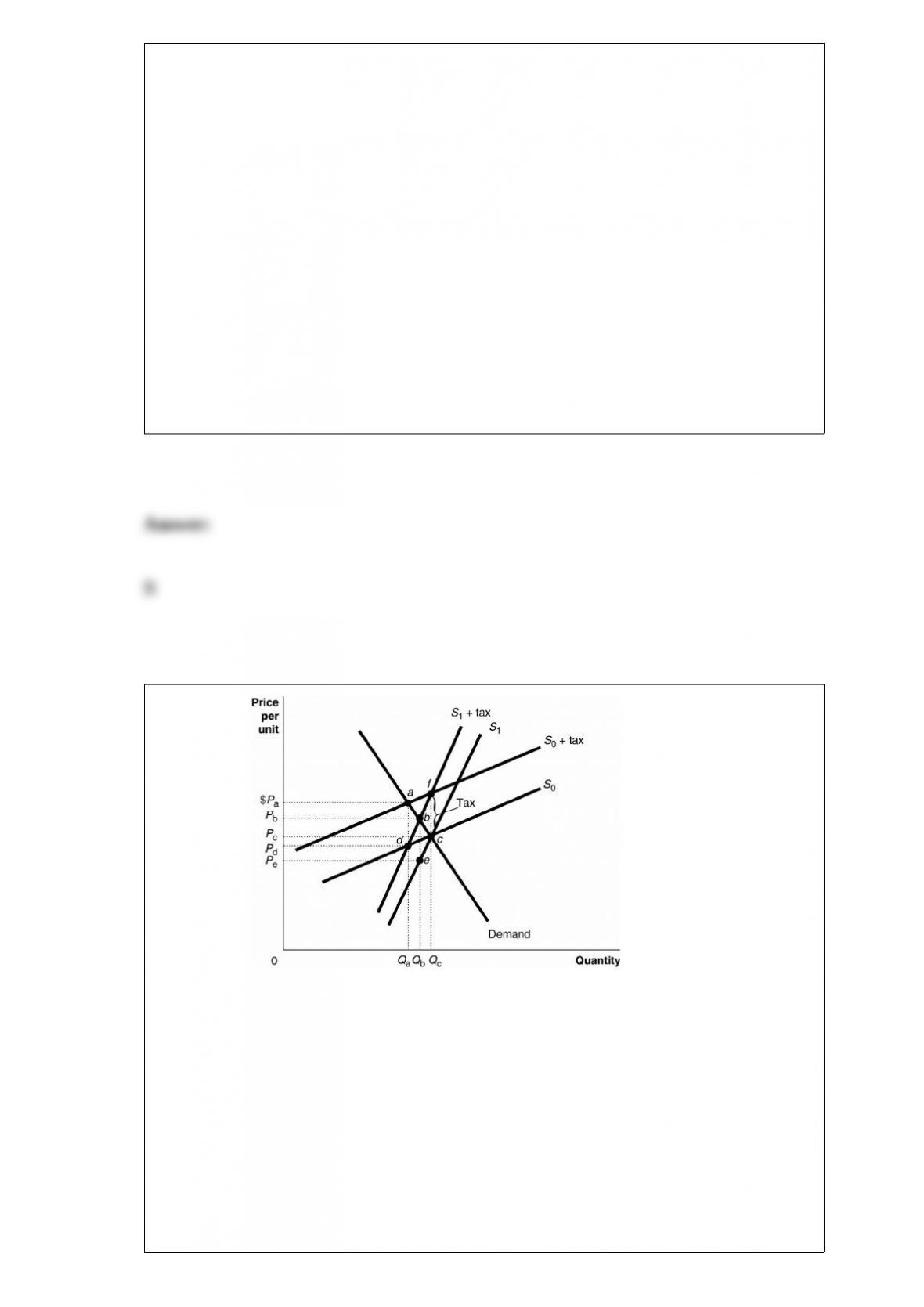
Figure 18-2 Figure 18-2 shows a
demand curve and two sets of supply curves, one set more elastic than the other.
If the government imposes an excise tax of $1.00 on every unit sold,
A) the deadweight loss is identical under either supply curve.
B) the deadweight loss is greater under the supply curve S1.
C) the deadweight loss is greater under the supply curve S0.
D) there is no deadweight loss since revenue raised is used to fund government projects.

For a natural monopoly to exist,
A) a firm must continually buy up its rivals.
B) a firm’s long-run average cost curve must exhibit diseconomies of scale beyond the
economically efficient output level.
C) a firm’s long-run average cost curve must exhibit economies of scale throughout the
relevant range of market demand.
D) a firm must have a government-imposed barrier.