
When oligopolists take into account their competitors’ behavior, this situation is called:
a. mutual interdependence.
b. monopolistic competition.
c. independent.
d. price discrimination.
e. loss minimization.
A model (or theory):
a. is a general statement about the causal relationship between variables based on facts.
b. helps explain and predict the relationship between variables.
c. when expressed as a downward (negatively) sloping graph implies an inverse
relationship between the variables.
d. all of these.
Exhibit 8-3 Cost per unit curves
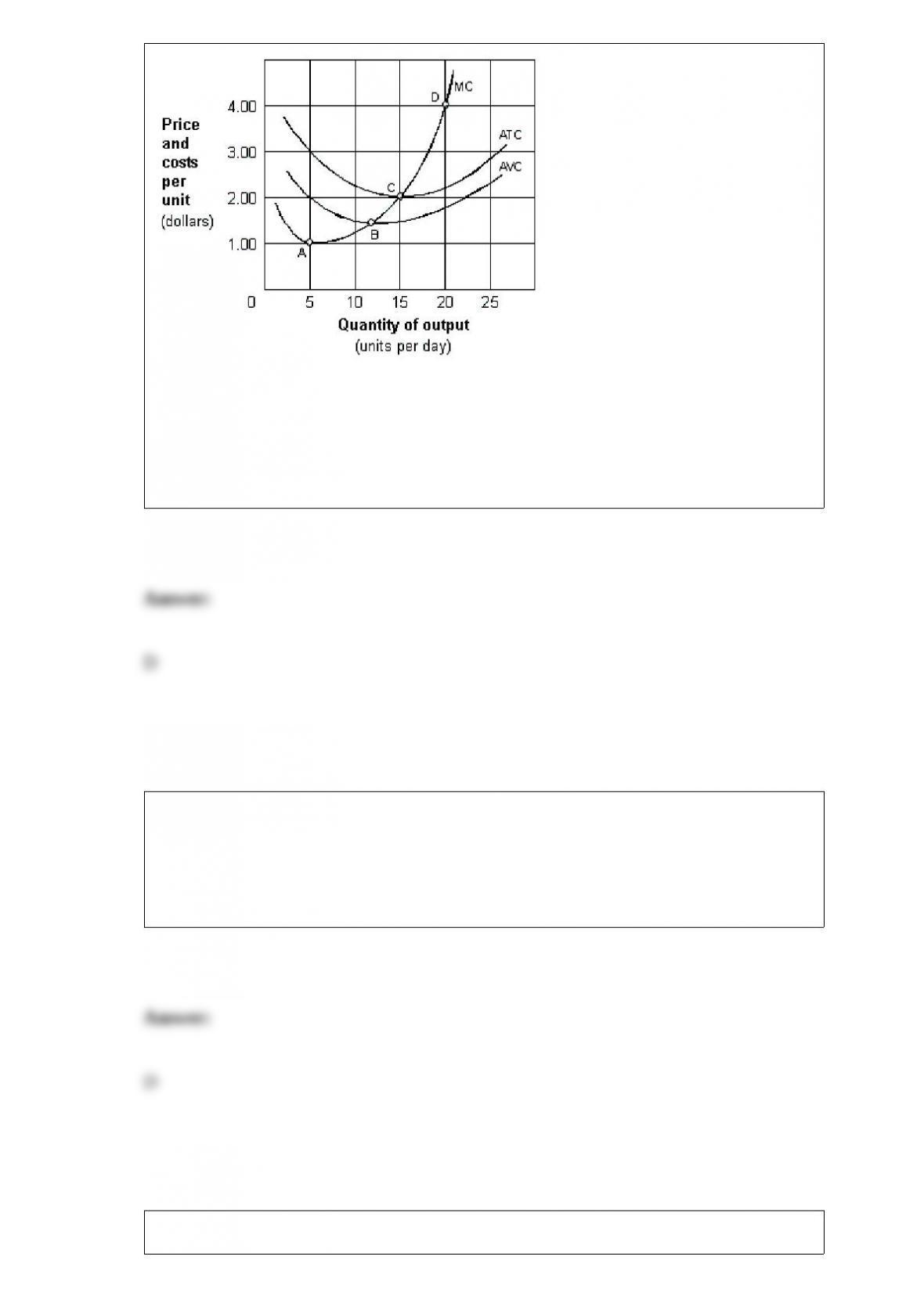
As shown in Exhibit 8-3, if the product price is either $1.00, $1.50, $2.00, or $4.00, the
firm’s economic profit is maximum at an output of:
a. 5 units per day.
b. 10 units per day.
c. 15 units per day.
d. 20 units per day.
Suppose seller X is willing to sell one good X for $5, a second good X for $10, a third
for $16, a fourth for $25, and the market price is $20. What is seller X’s producer
surplus?
a. $15 c. $22
b. $20 d. $29
Which of the following is true for the law of demand?
a. Sellers increase the quantity of a good available as the price of the good increases.
b. An increase in price results from false needs.
c. There is an inverse relationship between the price of a good and the quantity of the
good demanded.
d. Prices increase as more units of a product are demanded.
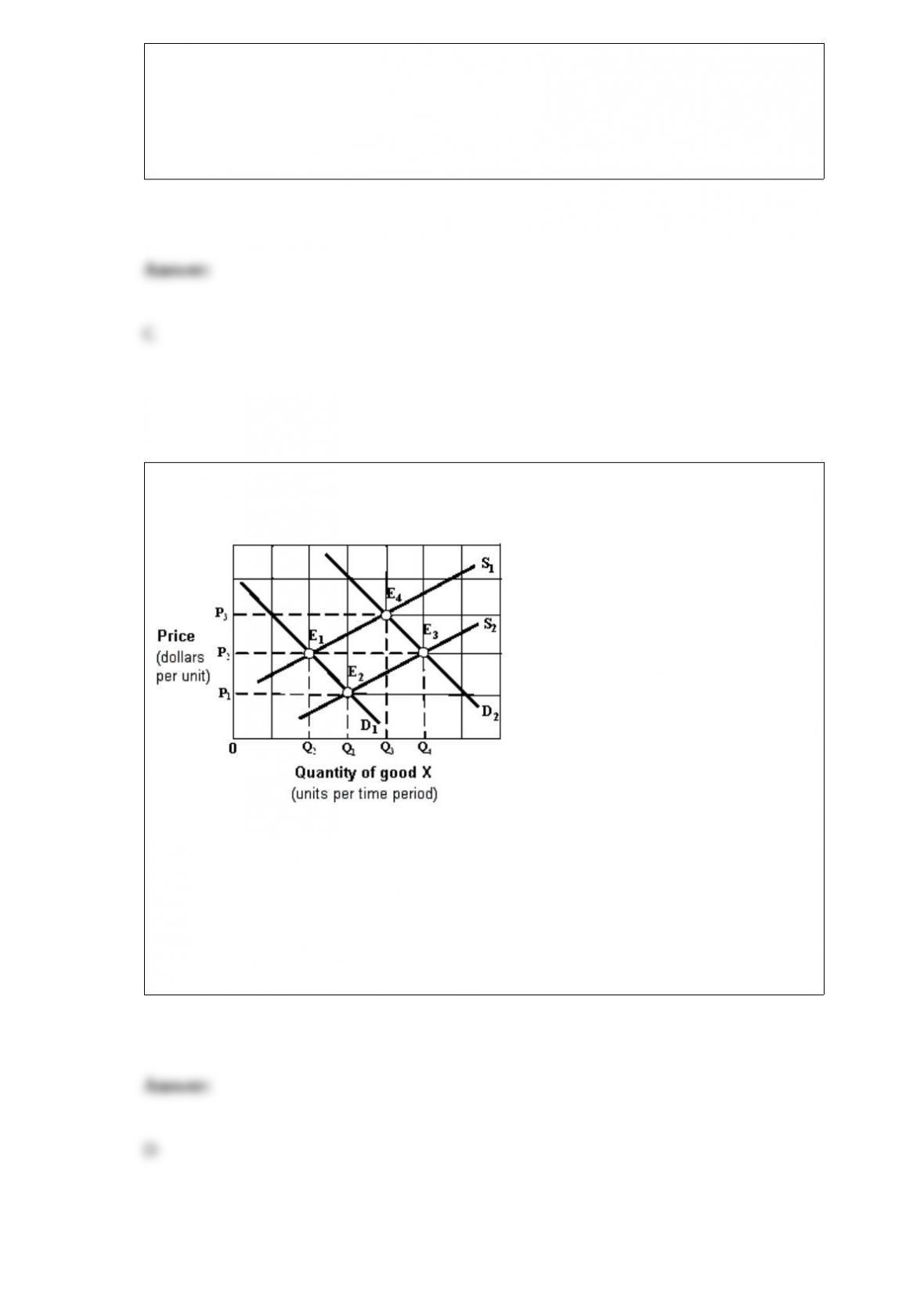
Exhibit 4-2 Supply and demand curves
In Exhibit 4-2, a decrease in quantity demanded would cause a movement from which
equilibrium point to another, other things being equal?
a. E1 to E2. c. E4 to E1.
b. E1 to E3. d. E3 to E4.

Consider a firm with the following cost information: ATC = $15, AVC = $12, and MC =
$14. If we know that this firm has decided to produce Q = 20 by following the rule to
maximize profits or minimize losses, then the price of the output is:
a. $12. c. $15.
b. $14. d. $20.
A rightward shift in the demand curve is called a(an):
a. decrease in output.
b. decrease in demand.
c. increase in demand.
d. increase in income.
The task of economic regulation is to:
a. protect monopoly profits.
b. approximate the results of the competitive market.
c. replace competition with government ownership.
d. ensure laissez faire.
e. increase competition within the market.
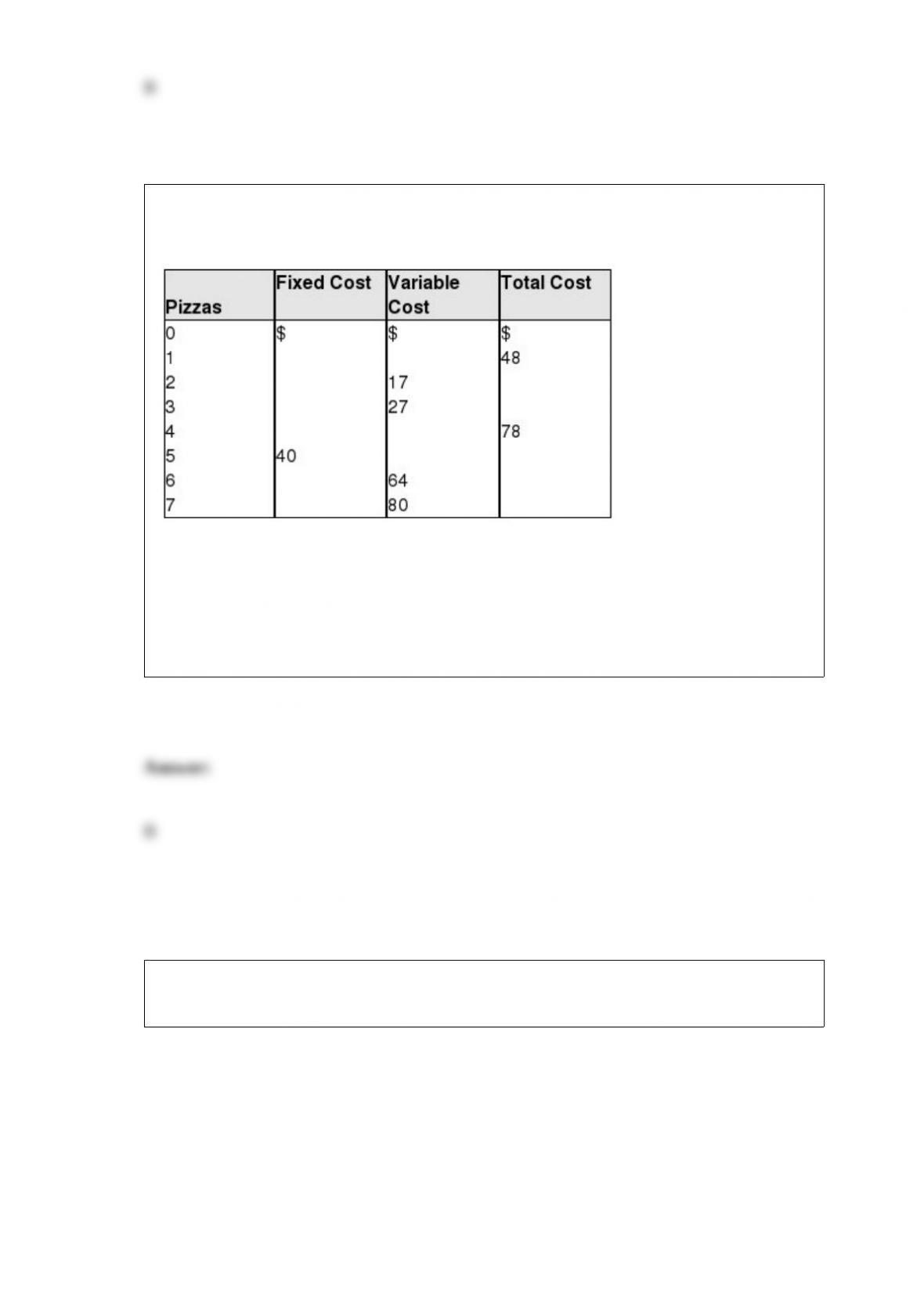
Exhibit 7-12 Cost schedule for producing pizza
By filling in the blanks in Exhibit 7-12, the AFC of 3 pizzas is shown to be equal to:
a. $10.
b. $13.33.
c. $9.
d. $22.33.
e. $40.
Exhibit 5-8 Supply and demand curves for good X
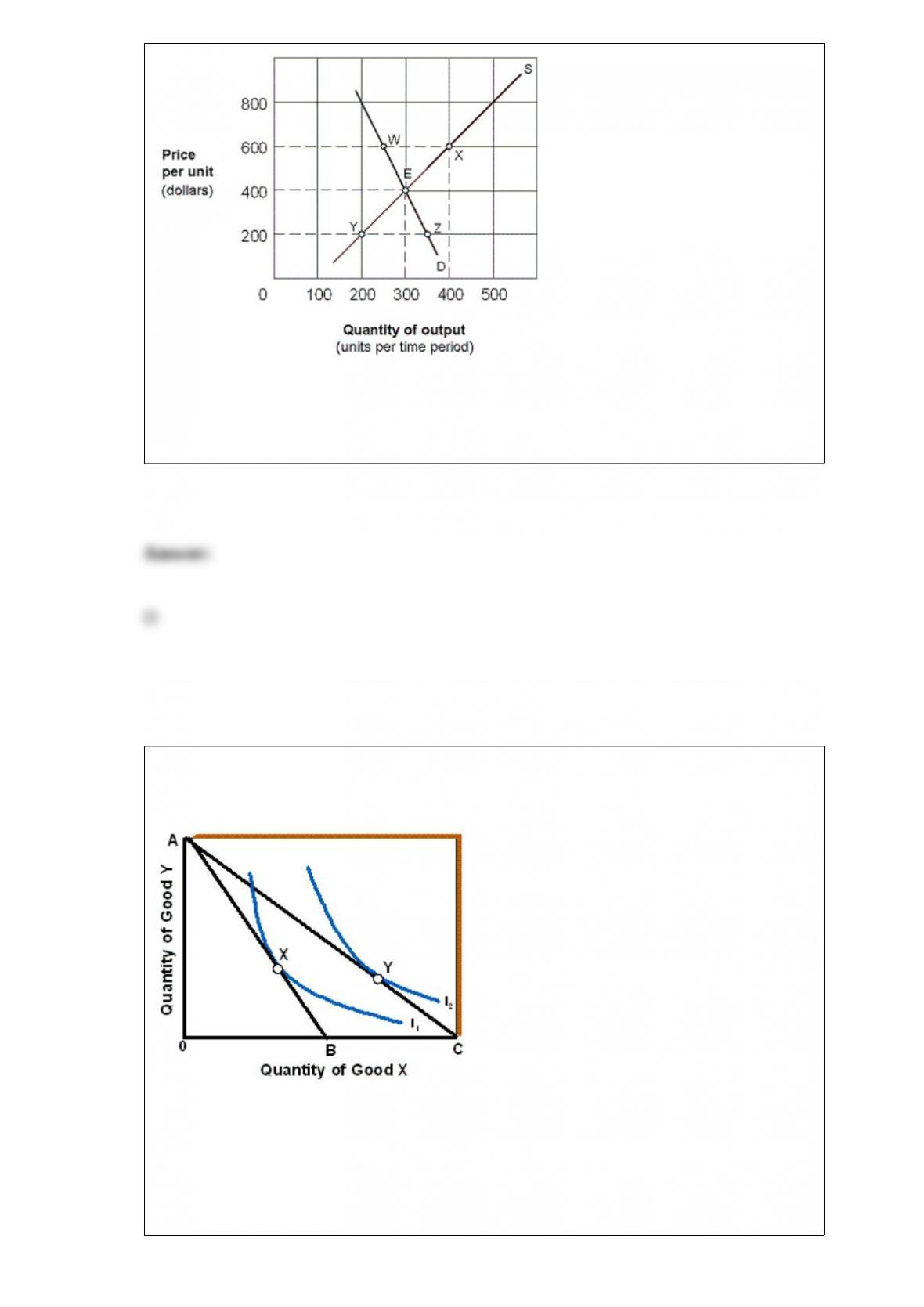
As shown in Exhibit 5-8, the price elasticity of supply for good X between points E and
X is:
a. 1/5 = 0.20. c. 1/2 = 0.50.
b. 1/11 = 0.91. d. 5/11 = 0.45.
Exhibit 6A-4 Consumer Equilibrium
Given the budget lines and indifference curves shown in Exhibit 6A-4, if the budget
line shifts from AB to AB, then the equilibrium points X and Y:
a. result from a decrease in the price of good X.
b. are two points along a downward sloping demand curve for good X.
c. result from a decrease in the consumer’s budget.
d. result from a decrease in the price of good Y.
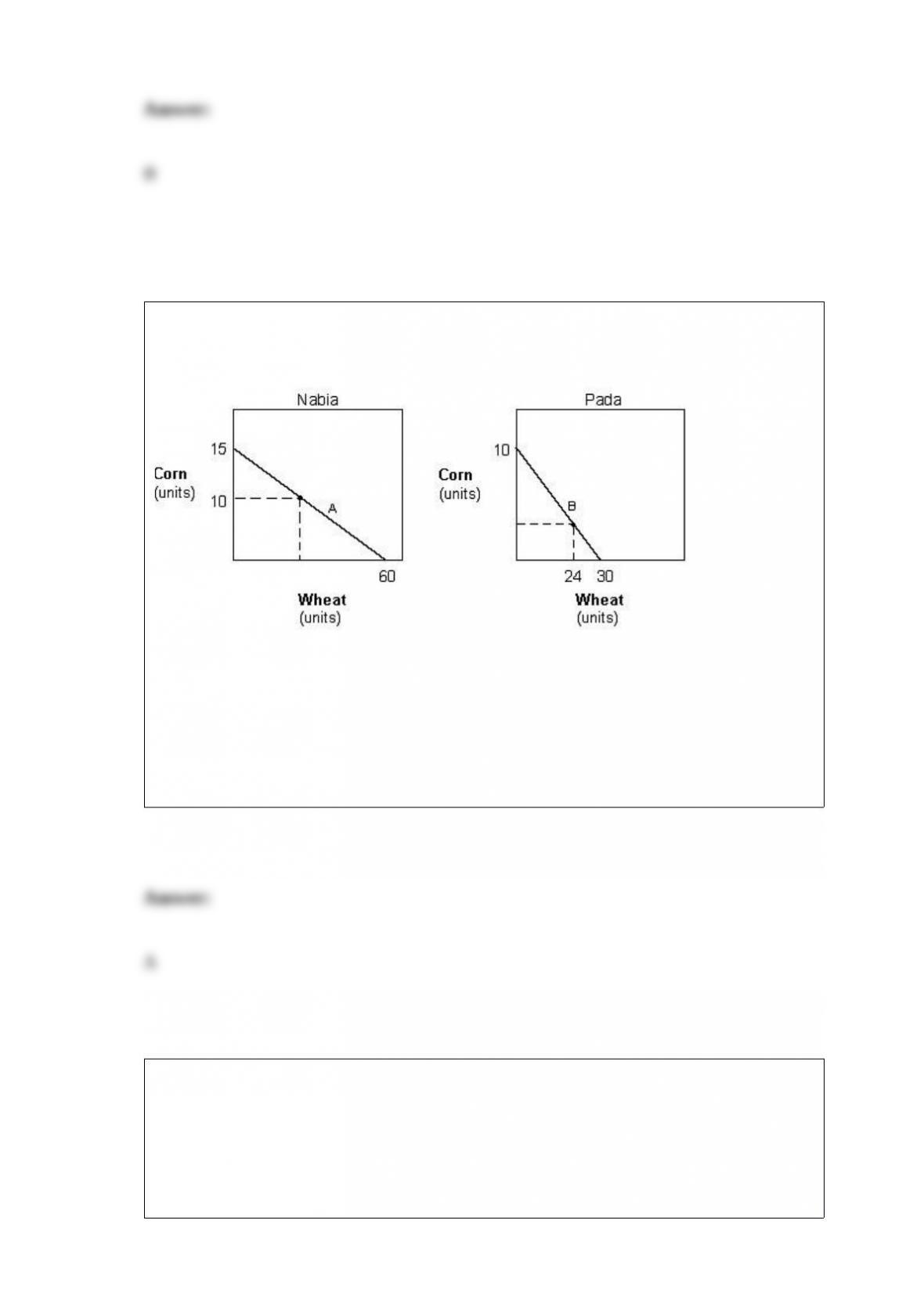
Exhibit 15-1 Production possibilities curves
In Exhibit 15-1, the production possibilities curves of wheat and corn for Nabia and
Pada are presented. In Pada the cost of producing one more unit of corn is equal to:
a. 3 units of wheat.
b. 3 units of corn.
c. 1/3 unit of wheat.
d. 15 units of wheat.
e. 30 units of wheat.
The decreasing portion of a firm’s long run average cost curve is attributable to:
a. diminishing returns to scale.
b. increasing marginal cost.
c. economies of scale.
d. diseconomies of scale.
e. constant returns to scale.

People are forced to make choices because of:
a. unlimited wants and unlimited resources.
b. limited wants and unlimited resources.
c. unlimited wants and limited resources.
d. limited wants and limited resources.
e. irrational wants and limited resources.
The antitrust legislation that made it illegal for a firm to pay cash for a competitor’s
patents, plant, and equipment was the:
a. Sherman Antitrust Act.
b. Celler-Kefauver Act.
c. Robinson-Patman Act.
d. Clayton Act.
e. FTC Act.

If the equilibrium price of good X is $4 and a price ceiling is imposed at $5, the result
will be a(n):
a. depletion of inventories. c. surplus.
b. shortage. d. equilibrium.
Which of the following is not an idea advocated by Adam Smith?
a. Businesspersons conspiring to fix prices are a threat to the price system.
b. Pursuit of private self interest with an invisible hand is the best way to promote the
public interest.
c. Government should control the economy.
d. The government should provide for national defense and little else.
Which of the following statements is not true?
a. Price elasticity of demand for basic foods is low.
b. When price elasticity of demand is very high, we say there is brand loyalty.
c. The availability and price of substitutes affect the elasticity of demand for a good or
service.
d. When goods have very low prices, the elasticity of demand is usually quite low.
e. Elasticities increase as the price of the good increases.

If the marginal product of labor is always positive, the total revenue will grow with
each additional worker. Firms do not continuously hire new workers because:
a. there isn’t enough room in the factory.
b. there isn’t an infinite number of workers.
c. wages would have to increase.
d. they stop when MRP = wage
e. marginal revenue product will become negative.
An increase in the price level in Japan relative to the price level in the United States
will shift the demand curve for dollars leftward and the dollar depreciates or becomes
weaker.
If people’s incomes decrease, their demand for other currencies shifts to the right.
Why can a monopoly earn economic profits in the long run?
If some resources went to waste rather to use in production, the economy would operate
outside its production possibility curve.
If the current account and capital account are both in surplus, the official reserve
account does not have to be in deficit.