
The increased stability of the financial system in the United States since 1950 can help
explain
A) why the United States has only experienced one recession since 1950.
B) the severity of the 2007-2009 recession.
C) the increase in the gap between potential GDP and real GDP.
D) the decrease in severity of business cycle fluctuations.
Which of the following is an example of a monetary policy?
A) The federal government increases income tax rates on people earning more than
$250,000.
B) The duration of unemployment benefits is extended to 99 weeks.
C) The Federal Reserve increases interest rates.
D) Congress authorizes a cut in spending on education.
Some policymakers claim that raising the minimum wage leads to higher employee
morale and productivity. In this sense, an increased minimum wage would be operating
like
A) an equilibrium real wage.

B) an efficiency wage.
C) a full employment wage.
D) a sticky wage.
Economists assume that households and firms share two important characteristics. One
of these characteristics is that
A) they usually smooth spending during expansions but rarely do during recessions.
B) the growth rate in spending by each always decreases during recessions.
C) they only consider the future when making decisions.
D) they are forward looking.
Suppose that in 2013,potential GDP in the nation of Bologna is $150,000, real GDP is
$138,000, and potential GDP grows at a rate of 5% per year.
a. Calculate potential GDP for the next 3 years.
b. If real GDP is $143,000 in 2014, what is the output gap?
c. If real GDP is $160,000 in 2015, what is the output gap?
d. If real GDP is $182,000 in 2016, what is the output gap?
Suppose that in 2013, all prices in the economy increased by 50% and that all wages
and salaries also increased by 50%. In 2013, you were
A) better off than you were in 2012 as your salary was higher than it was in 2012 and
you could buy more goods and services.
B) worse off than you were in 2012 as you could no longer afford to buy as many goods
and services.
C) no better off or worse off than you were in 2012 as the purchasing power of your
salary remained the same.
D) The purchasing power of your salary cannot be determined with the given
information, so you cannot determine if you were better off or worse off in 2013 than in
2012.

If the required reserve ratio increases and the monetary base is unchanged, the value of
the money multiplier will ________ and the value of the money supply will ________
A) decline; decline
B) decline; increase
C) increase; decline
D) increase; increase
Which of the following equations best represents the long-term real interest rate? The
long-term real interest rate =
A) the short-term real interest rate + the term structure effect + the default-risk premium
+ the expected rate of inflation
B) the short-term nominal interest rate + the term structure effect + the default-risk
premium – the expected rate of inflation
C) the long-term nominal interest rate + the term structure effect + the default-risk
premium – the expected rate of inflation
D) the short-term nominal interest rate – the term structure effect – the default-risk
premium + the expected rate of inflation
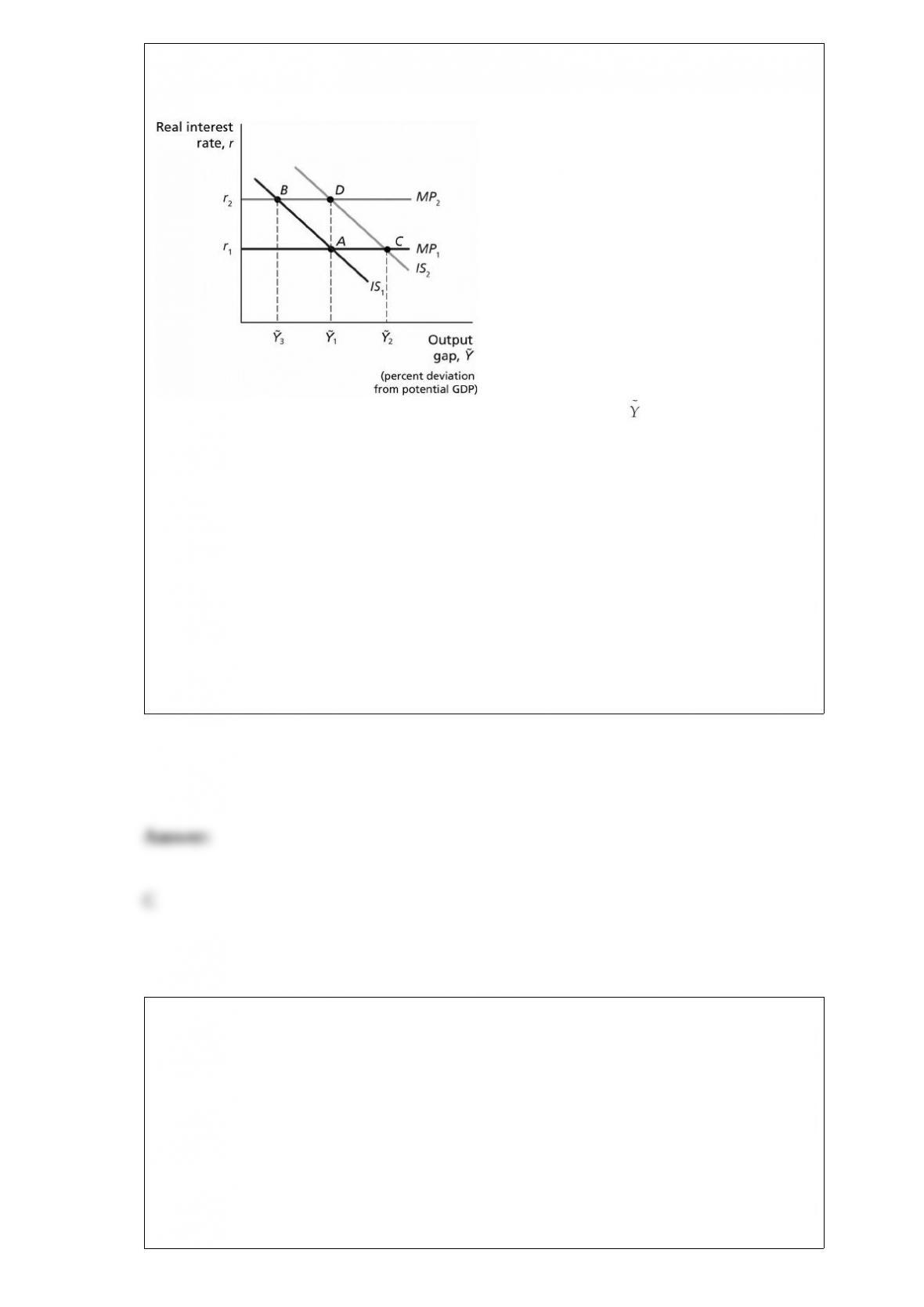
Figure 11.2
Refer to Figure 11.2. Assume the economy is in equilibrium at 1, where real GDP
equals potential GDP. The economy experiences a negative demand shock, and the Fed
responds by decreasing real interest rates to bring real GDP and inflation back to their
original levels. Other things equal, the Fed’s response to the negative demand shock is
best represented by a movement from
A) point B to point D.
B) point C to point D.
C) point B to point A.
D) point C to point A.
Suppose the population of a fictional economy falls into the following categories: 320
are employed full time; 110 are employed part time; 20 are unemployed but are actively
looking for employment; 50 are unemployed and are not actively looking for
employment. The official unemployment rate as calculated by the BLS would be
A) 4.4%
B) 5.9%
C) 14%

D) 28.9%
A decrease in the unemployment rate which is accompanied by an increase in the
inflation rate is represented by a ________ the Phillips curve.
A) movement down
B) movement up
C) upward shift of
D) downward shift of
Changes in the saving rate, labor-force growth rate, and depreciation rate will ________
the steady-state level of real GDP per capita and will ________ the steady-state growth
rate.
A) affect; affect
B) affect; not affect
C) not affect; affect
D) not affect; not affect

As the workforce ages,
A) structural and frictional unemployment increase.
B) cyclical unemployment declines.
C) cyclical unemployment increases.
D) the natural rate of unemployment declines.
The ________ the down payment made by a borrower when taking out a mortgage, the
________.
A) lower; lower the interest rate usually charged by the financial company issuing the
mortgage
B) lower; more highly leveraged that borrower is on the mortgage
C) higher; more likely the mortgage-issuer will be faced with a mortgage default.
D) higher; greater the risk that the borrower will find herself upside down on the
mortgage
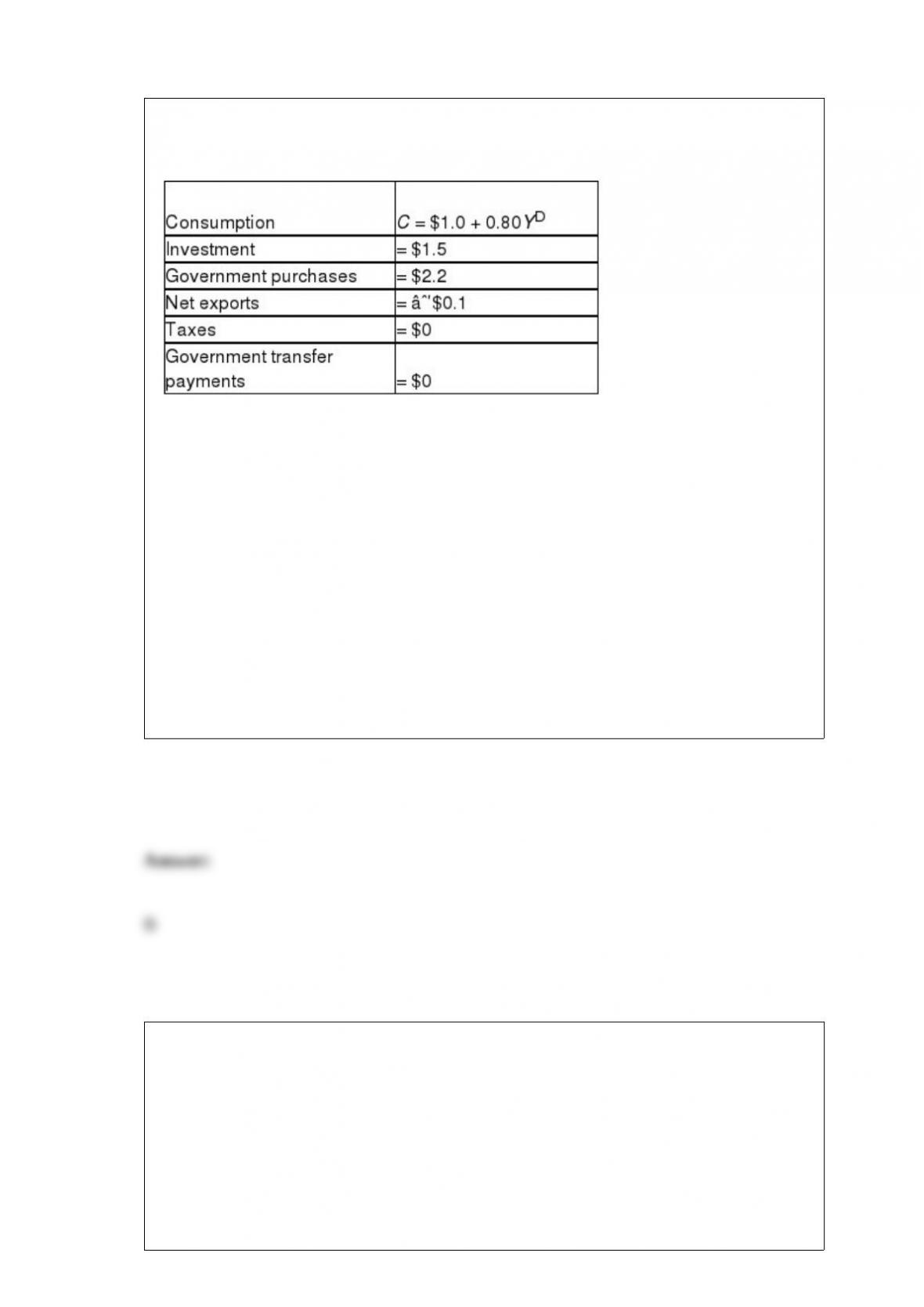
Table 10.1
(all values are in billions of dollars)
Refer to Table 10.1. Suppose that all of the information given in the Table remains the
same except that taxes increase by $1.0 billion and transfers increase by $1.5 billion. If
potential GDP equals $30 billion, by how much more would taxes have to change for
equilibrium GDP to equal potential GDP?
A) $1 billion
B) $1.25 billion
C) $1.5 billion
D) $5 billion
Nominal GDP is the value of goods and services
A) adjusted for inflation.
B) adjusted for anticipated inflation.
C) using base-year prices.
D) using current -year prices.
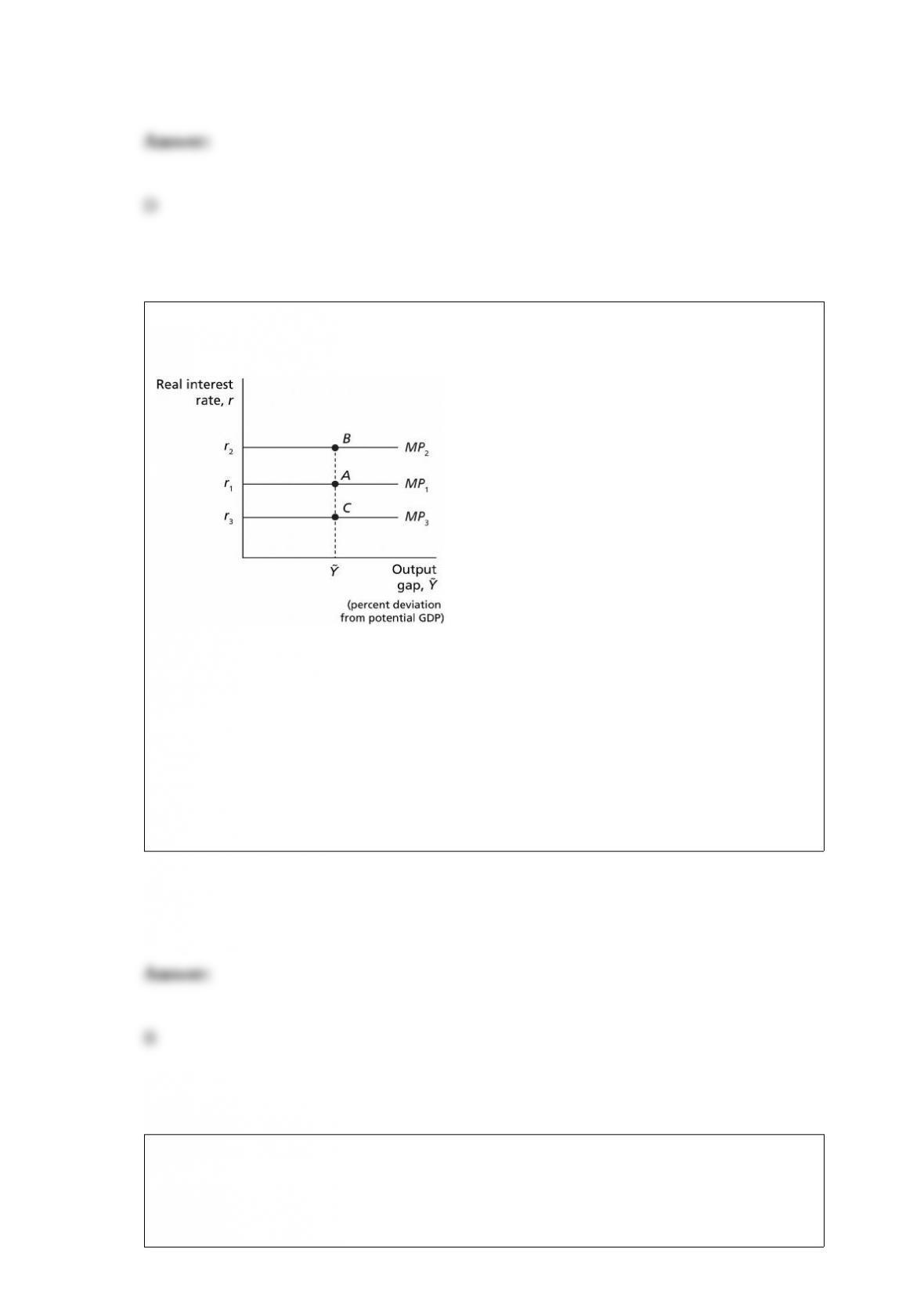
Figure 10.5
Refer to Figure 10.5. A shift from MP1 to MP3 will occur if
A) the term structure effect increases.
B) the default-risk premium decreases.
C) investors increase the short-term interest they expect in the future.
D) the Fed increases its target for the short-term nominal interest rate.
If the MPC is 0.8 and the tax rate is 20%, the expenditure multiplier will equal
A) 1.19

B) 2.78
C) 4
D) 6
One difference between stocks and bonds is that
A) unlike stocks, bonds do not represent a claim on a share in the profits and assets of
firms.
B) stocks are government-issued securities and bonds are financial securities.
C) unlike stocks, bonds do not promise to repay a fixed amount of money.
D) bonds represent ownership in companies and stocks represent corporate assets.
If you pay $4,888 for a $5,000 face value one-year Treasury bill, what is the rate of
interest you will receive?
A) 1.02%
B) 2.29%
C) 4.46%
D) 9.78%
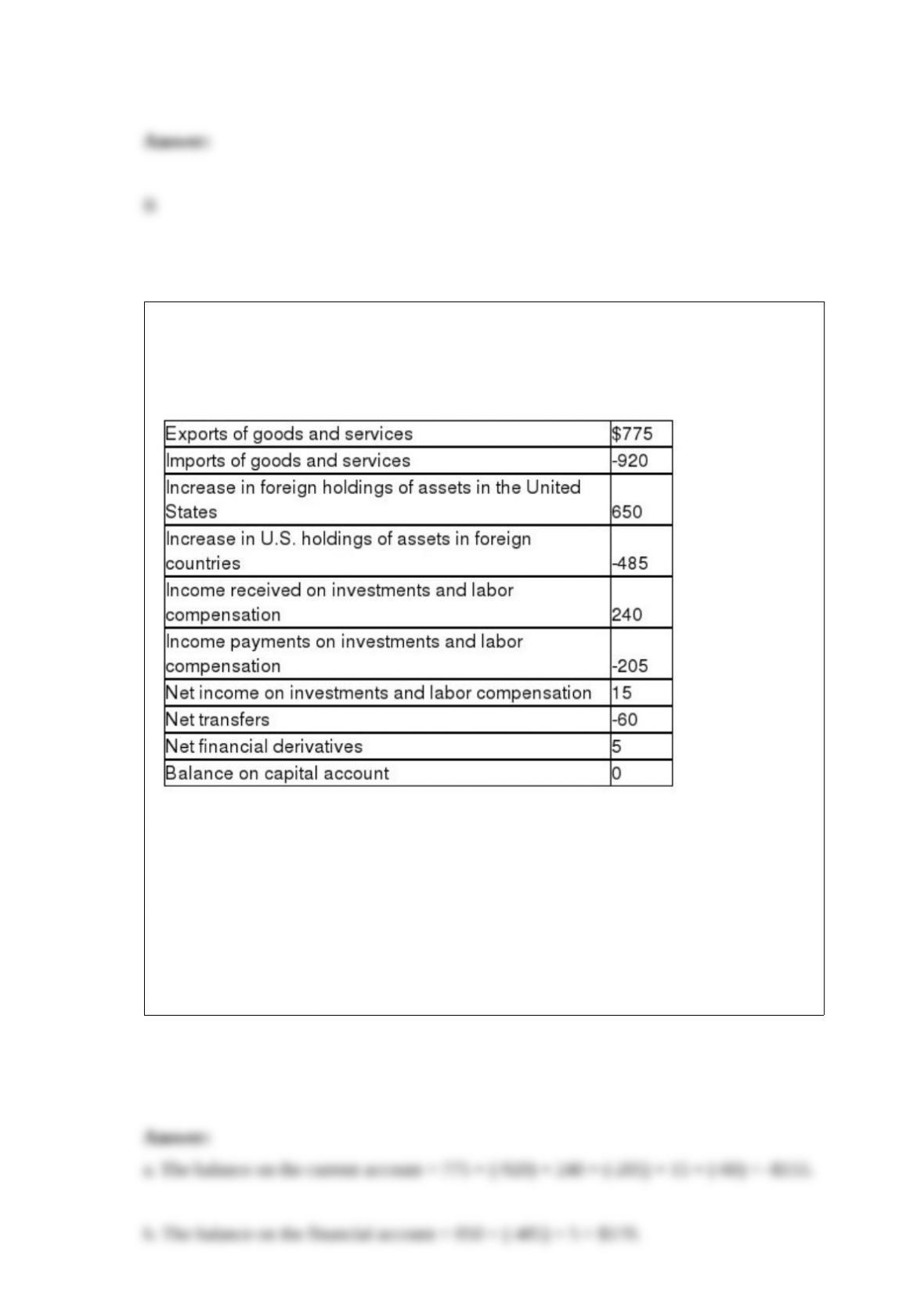
Table 1
Refer to Table 4.1. Using the data in the table calculate the following:
a. The balance on the current account
b. The balance on the financial account
c. The statistical discrepancy
d. The balance of payments
Often, the farther real GDP is below potential GDP,
A) the smaller the multiplier effect.
B) the larger the multiplier effect.
C) the less effective is the multiplier effect.
D) the less meaningful is the multiplier effect.
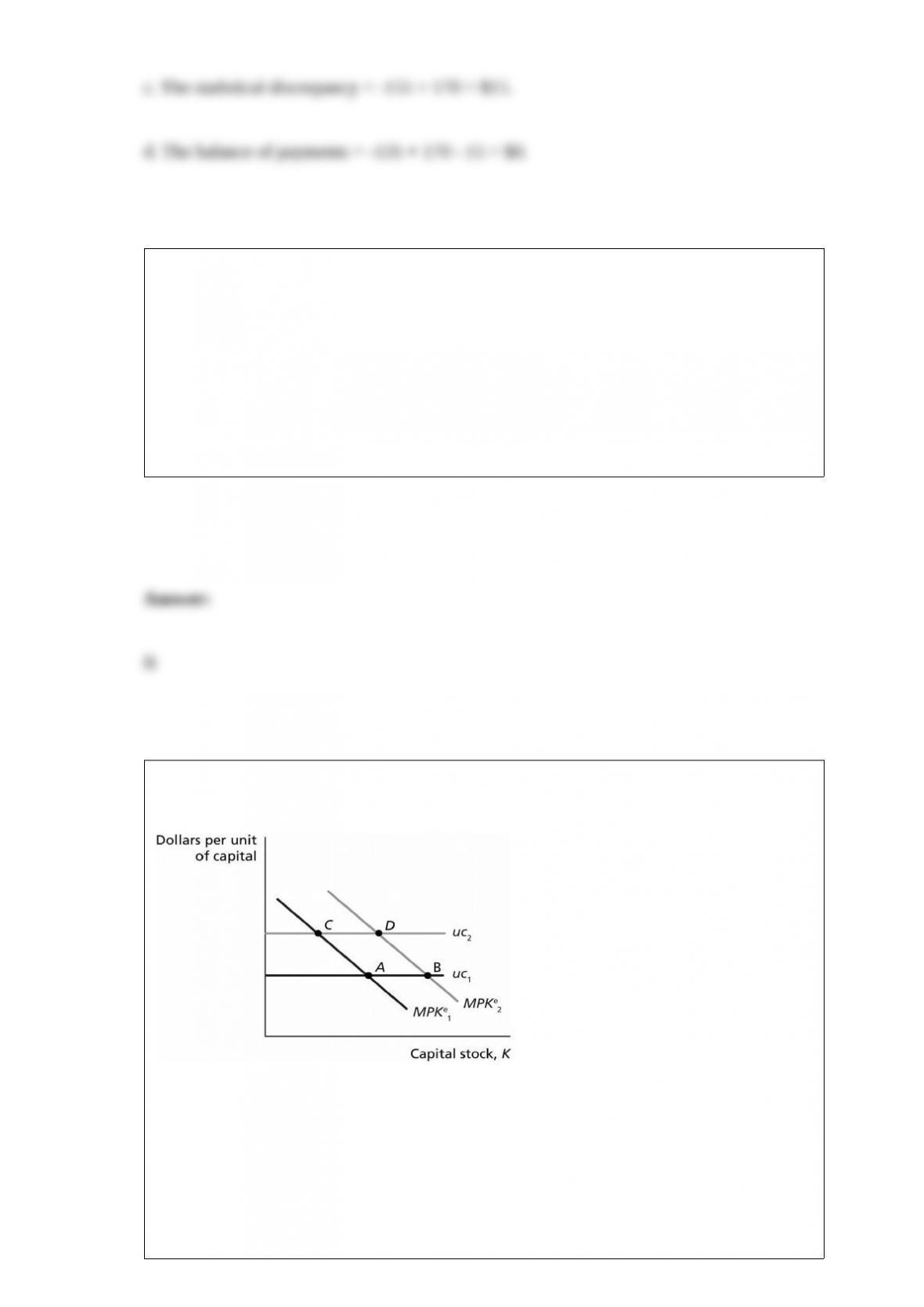
Figure 16.1
Refer to Figure 16.1. A decrease in the depreciation rate is best represented by a
movement from
A) point A to point B.
B) point B to point A.
C) point A to point C.
D) point C to point A.
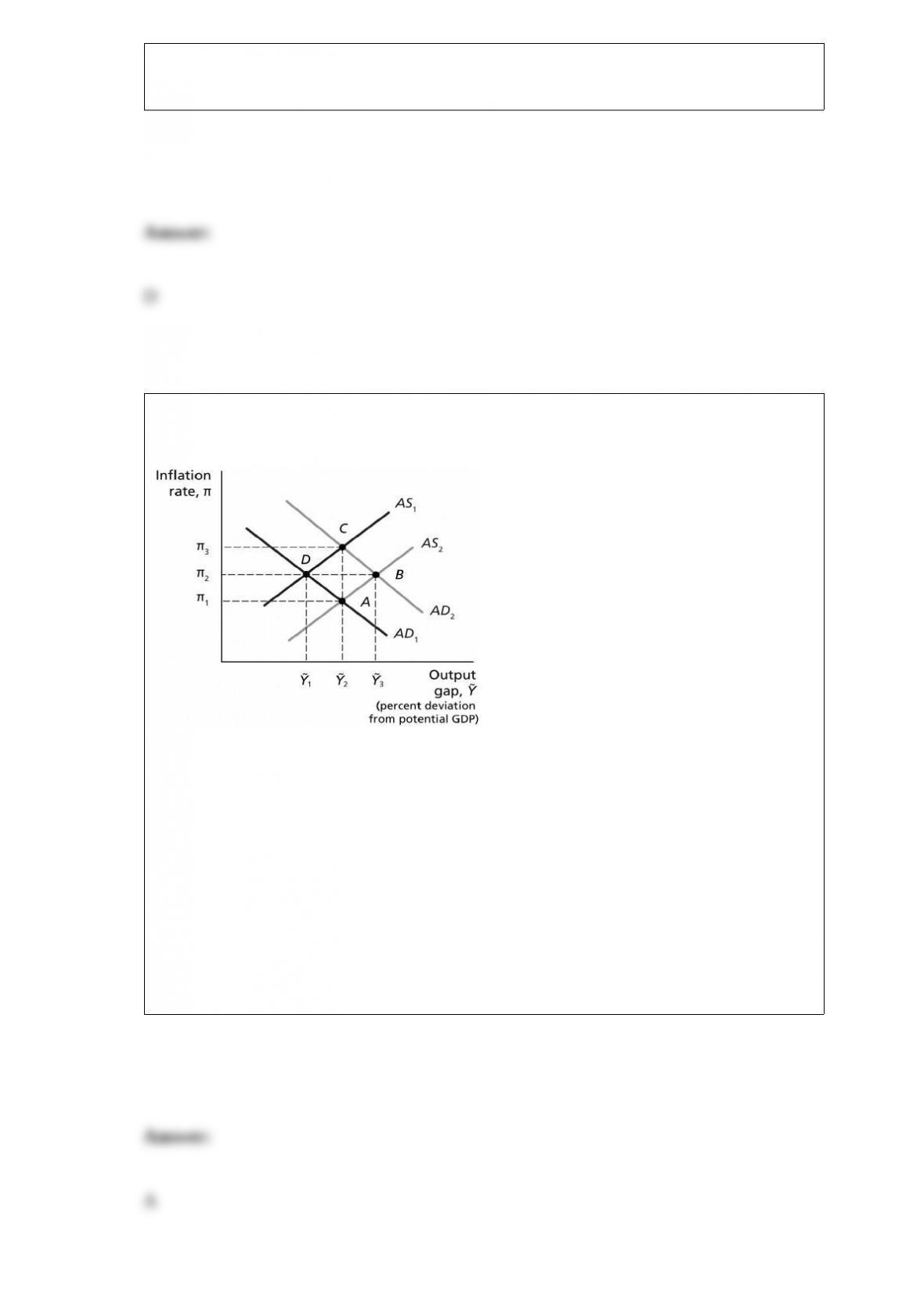
Figure 14.3
Refer to Figure 14.3. Suppose the economy is initially at long-run equilibrium and the
economy experiences a demand shock such as a stock market crash. Other things equal,
following the effect of the stock market crash, the economy will ultimately end up at a
new long-run equilibrium ________ the initial long-run equilibrium.
A) that is the same as
B) with a higher real GDP and a higher inflation rate than
C) with a higher real GDP than, and the same inflation rate as
D) with a higher inflation rate than, and the same real GDP as

Long-run economic growth is the process by which productivity increases
A) the employment rate.
B) the average standard of living.
C) the size of the labor force.
D) federal tax revenues.
Over half of the increase in labor productivity in India since 1993 has been due to
A) the growth rate of the capital stock.
B) total factor productivity growth.
C) a decrease in the population.
D) successful infrastructure investment.
The current account includes all of the following accounts except
A) net transfers.
B) net exports.

C) net financial derivatives.
D) net factor payments.
Hector’s wealth is zero, he expects to work for another 45 years at a constant salary of
$80,000 and live for another 60 years. Yearly taxes are $20,000, and Hector received a
one-time tax rebate of $5,000 during his first year of work. If Hector completely
smooths consumption over his lifetime, he will save ________ of the tax rebate during
his first year of work.
A) $1,250.00
B) $2,666.67
C) $3,750.00
D) $4,916.67
The costs of inflation to firms due to reprinting price lists are known as
A) seigniorage.
B) menu costs.
C) velocity costs.

D) shoe-leather costs.
Equilibrium in the goods market occurs where
A) real GDP equals nominal GDP.
B) aggregate expenditure equals autonomous consumption.
C) autonomous consumption equals induced consumption.
D) aggregate expenditure equals real GDP.
Changes in taxes, transfer payments, or government expenditures that naturally occur
with the business cycle is known as
A) expansionary fiscal policy.
B) contractionary fiscal policy.
C) discretionary fiscal policy.
D) automatic stabilizers.