
If an economy with constant returns to scale were to double its physical capital stock,
its available natural resources, and its human capital, but leave the size of the labor
force the same,
a. its output would stay the same and so would its productivity.
b. its output and productivity would increase, but less than double.
c. its output and productivity would increase by more than double.
d. None of the above is correct.
In the circular-flow diagram, which of the following items flows from firms to
households through the markets for goods and services?
a. goods and services
b. dollars paid to land, labor, and capital
c. dollars spent on goods and services
d. wages, rent, and profit
Policymaking in a representative democracy
a. is straightforward and does not involve any disagreement.

b. benefits from the input of economists, even if their advice is not always followed.
c. is conducted without the input of economists.
d. is always based exclusively on the results of economic analysis.
If there is a shortage in the market for loanable funds, what happens to desired saving
and desired investment as the interest rate moves to its equilibrium value?
a. desired saving and desired investment both fall
b. desired saving and desired investment both rise
c. desired saving falls and desired investment rises
d. desired saving rises and desired investment falls
According to purchasing-power parity, if it took 55 Indian rupees to buy a dollar today,
but it took 58 to buy it a year ago, then the dollar has
a. appreciated, indicating inflation was higher in the U.S. than in India.
b. appreciated, indicating inflation was lower in the U.S. than in India.
c. depreciated, indicating inflation was higher in the U.S. than in India.
d. depreciated, indicating inflation was lower in the U.S. than in India.

According to liquidity preference theory, the money-supply curve would shift if the Fed
a. engaged in open-market operations.
b. increased money demand.
c. increase the real income.
d. did any of the above.
Although growth rates across countries vary some, rankings of countries by income
remain pretty much the same over time.
a. True
b. False

Economists equate money with
a. individual wealth.
b. income regularly earned.
c. assets people use regularly to buy goods and services.
d. individual saving.
Which of the following statements is notcorrect?
a. Trade allows for specialization.
b. Trade has the potential to benefit all nations.
c. Trade allows nations to consume outside of their production possibilities curves.
d. Absolute advantage is the driving force of specialization.
In a simple circular-flow diagram, households buy goods and services with the income
they get from
a. wages.
b. rents.

c. profits.
d. All of the above are correct.
An increase in the government’s budget surplus means
a. public saving is greater than $0 and increasing.
b. public saving is greater than $0 and decreasing.
c. public saving is less than $0 and increasing.
d. public saving is less than $0 and decreasing.
Monetary Policy in Mokania
Mokania has had inflation of 15% for many years. Mokania establishes a new central
bank, the Bank of Mokania, with the hopes of reducing the inflation rate.
Refer to MonetaryPolicyinMokania. The Bank of Mokania reduced inflation to its
announced goal of 5%. However the unemployment rate was on average higher for
many years after. A newspaper editorial argues that the unemployment rate had moved
to this higher natural rate because (1) by itself the decrease in inflation had permanently
increased unemployment and (2) that at the same time the central bank was fighting
inflation the government of Mokania had made a large increase in the minimum wage.
Which of these arguments is consistent with the Phillip’s curve model?

a. both explanations 1 and 2
b. neither explanation 1 nor 2
c. explanation 1 but not explanation 2
d. explanation 2 but not explanation 1
A very hot summer in Atlanta will cause
a. the demand curve for lemonade to shift to the left.
b. the demand for air conditioners to decrease.
c. the demand for jackets to decrease.
d. a movement downward and to the right along the demand curve for tank tops.
According to the assumptions of the quantity theory of money, if the money supply
increases by 5 percent, then
a. nominal and real GDP would rise by 5 percent.
b. nominal GDP would rise by 5 percent; real GDP would be unchanged.
c. nominal GDP would be unchanged; real GDP would rise by 5 percent.

d. neither nominal GDP nor real GDP would change.
Ethel purchased a bag of groceries in 1970 for $8. She purchased the same bag of
groceries in 2006 for $25. If the price index was 38.8 in 1970 and the price index was
180 in 2006, then what is the price of the 1970 bag of groceries in 2006 dollars?
a. $5.39
b. $25.00
c. $29.11
d. $37.11
If the cost of medical care increases by 40 percent, then, other things the same, the CPI
is likely to increase by about
a. 0.9 percent.
b. 2.8 percent.
c. 8.0 percent.
d. 40 percent.

Serena purchased 10 shares of GLC, Inc. stock for $200 per share; one year later she
sold the 10 shares for $220 a share. Over the year, the price level increased from 135.0
to 143.1. The tax rate on capital gains is 50 percent. If the capital gains tax is on
nominal gains, how much tax does Serena pay on her gain?
a. $90
b. b. $95
c. c. $100
d. None of the above is correct.
Suppose there is a decrease in short-run aggregate supply. If the Federal Reserve wants
to stabilize output it should
a. buy bonds. These purchases also move the price level closer to its original level.
b. buy bonds. However these purchases move the price level farther from its original
level.
c. sell bonds. These purchases also move the price level closer to its original level.
d. sell bonds. However these purchase move the price level farther from its original
level.
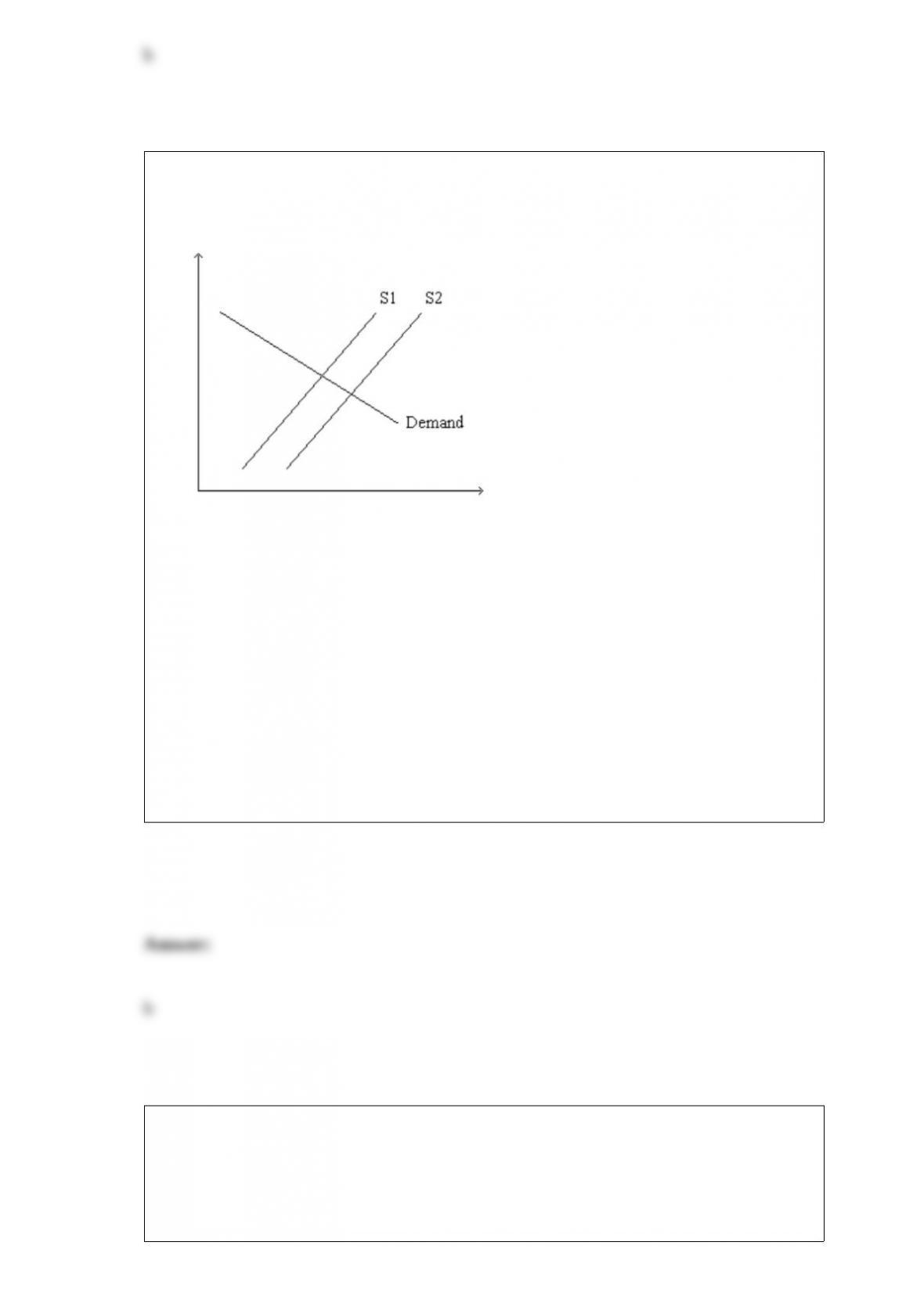
Figure 26-1. The figure depicts a demand-for-loanable-funds curve and two
supply-of-loanable-funds curves.
RefertoFigure26-1.Which of the following events would shift the supply curve from
S1 to S2?
a. In response to tax reform, firms are encouraged to invest more than they previously
invested.
b. In response to tax reform, households are encouraged to save more than they
previously saved.
c. Government goes from running a balanced budget to running a budget deficit.
d. Any of the above events would shift the supply curve from S1 to S2.
Suppose you win a small lottery and you are given the following choice: You can (1)
receive an immediate payment of $10,000 or (2) three annual payments, each in the
amount of $3,600, with the first payment coming one year from now, the second two
years from now, and the third three years from now. You would choose to take the three
annual payments if the interest rate is

a. 2 percent, but not if the interest rate is 3 percent.
b. 3 percent, but not if the interest rate is 4 percent.
c. 4 percent, but not if the interest rate is 5 percent.
d. 5 percent, but not if the interest rate is 6 percent.
The government enforces property rights by
a. requiring property owners to pay property taxes.
b. providing police and courts.
c. forcing people to own property.
d. providing public parks and recreation facilities.
According to the theory of efficiency wages, firms operate more efficiently if wages are
below the equilibrium level.
a. True
b. False

Christopher is an unpaid, stay-at-home father who works as a volunteer at the local
Habitat for Humanity chapter. Currently, Christopher is not looking for a paid job. The
Bureau of Labor Statistics counts Christopher as
a. unemployed and in the labor force.
b. unemployed but not in the labor force.
c. in the labor force but not unemployed.
d. neither in the labor force nor unemployed.
Once state and federal taxes are added together, a typical worker faces about a 40
percent marginal tax-rate on interest income.
a. True
b. False
The nominal exchange rate is 30 Thai bhat for one U.S. dollar. A sub sandwich combo
deal in the U.S. costs $6 dollars in the U.S. and 120 bhat in Thailand. The real exchange

rate is
a. 3/8
b. 2/3
c. 3/2
d. 8/3
Which of the following events would shift money demand to the left?
a. an increase in the interest rate or an increase in the price level
b. an increase in the interest rate, but not an increase in the price level
c. an increase in the price level, but not an increase in the interest rate
d. neither an increase in the interest rate nor an increase in the price level
A duty of economists at the Department of Labor is to
a. analyze data on workers.
b. schedule federal holidays.
c. enforce the nation’s antitrust laws.

d. All of the above are correct.
Prices in both the U.S. and India rise, but prices in India increase by a smaller
percentage. According to purchasing- power parity the U.S. dollar
a. gains value both in terms of the domestic goods and services it can buy and in terms
of the Indian currency it can buy.
b. gains value in terms of the domestic goods and services it can buy, but loses value in
terms of the Indian currency it can buy.
c. loses value in terms of the domestic goods and services it can buy, but gains value in
terms of the Indian currency it can buy.
d. loses value both in terms of the domestic goods and services it can buy and in terms
of the Indian currency it can buy.
The Bureau of Labor Statistics’ U1 measure of joblessness is larger than its U6 measure
of joblessness.
a. True
b. False

The “invisible hand” directs economic activity through
a. advertising.
b. prices.
c. central planning.
d. government regulations.
Which of the following is an example of an externality?
a. Annie purchases a new dress.
b. Antonio’s dog barks loudly during the night, waking his neighbors.
c. Harold sells a book to Cathy, who reads the book and then gives it to James as a gift.
d. Gloria watches a scary movie.