
Technological change will
A) shift the per-worker production function up.
B) shift the per-worker production function down.
C) move the economy to a point beneath the per-worker production function.
D) move the economy along a given per-worker production function.
Your roommate Hansen argues that American producers cannot compete with foreign
producers because wages are lower in foreign countries than in the United States.
Hansen
A) is incorrect. Free trade raises living standards by increasing economic efficiency.
B) is right in asserting the need to protect high wages if the United States wishes to
maintain its high standard of living.
C) is correct in arguing that the high wages of U.S. workers make it impossible to
compete with workers in low-wage countries.
D) is advancing the anti-dumping argument for protectionism.
Potential GDP refers to the level of
A) real GDP in the long run.
B) nominal GDP in the long run.

C) real GDP in the short run.
D) nominal GDP in the short run.
If Sweden exports cell phones to Denmark and Denmark exports butter to Sweden,
which of the following would explain this pattern of trade?
A) Sweden has a lower opportunity cost of producing cell phones than Denmark and
Denmark has a comparative advantage in producing butter.
B) The opportunity cost of producing butter in Denmark is higher than the opportunity
cost of producing butter in Sweden.
C) Sweden must have an absolute advantage in producing cell phones and Denmark
must have an absolute advantage in producing butter.
D) Sweden has a higher opportunity cost of producing cell phones than Denmark, and
Denmark has a higher opportunity cost of producing butter.
According to a recent study, “Stricter college alcohol policies, such as raising the price
of alcohol, or banning alcohol on campus, decrease the number of students who use
marijuana.” On the basis of this information, how would you describe alcohol and
marijuana?
A) The two goods are substitutes in consumption.
B) There is no relationship between the two goods.
C) The two goods are complements in consumption.
D) They are both luxury goods.
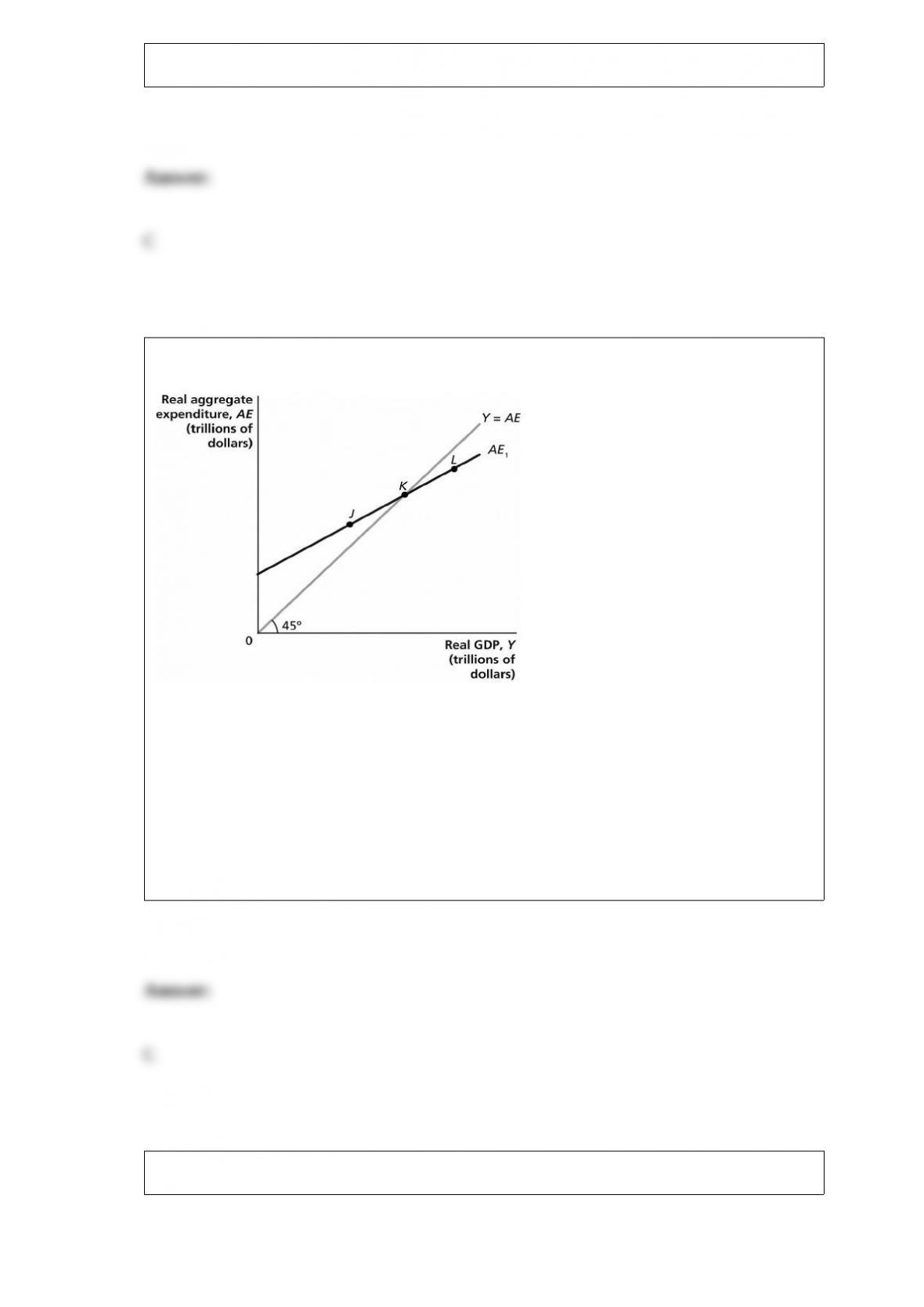
Figure 12-1
Refer to Figure 12-1. At point J in the figure above, which of the following is true?
A) Aggregate expenditure is less than GDP.
B) The economy has achieved macroeconomic equilibrium.
C) Actual inventories are less than planned inventories.
D) GDP will be decreasing.
Table 4-2
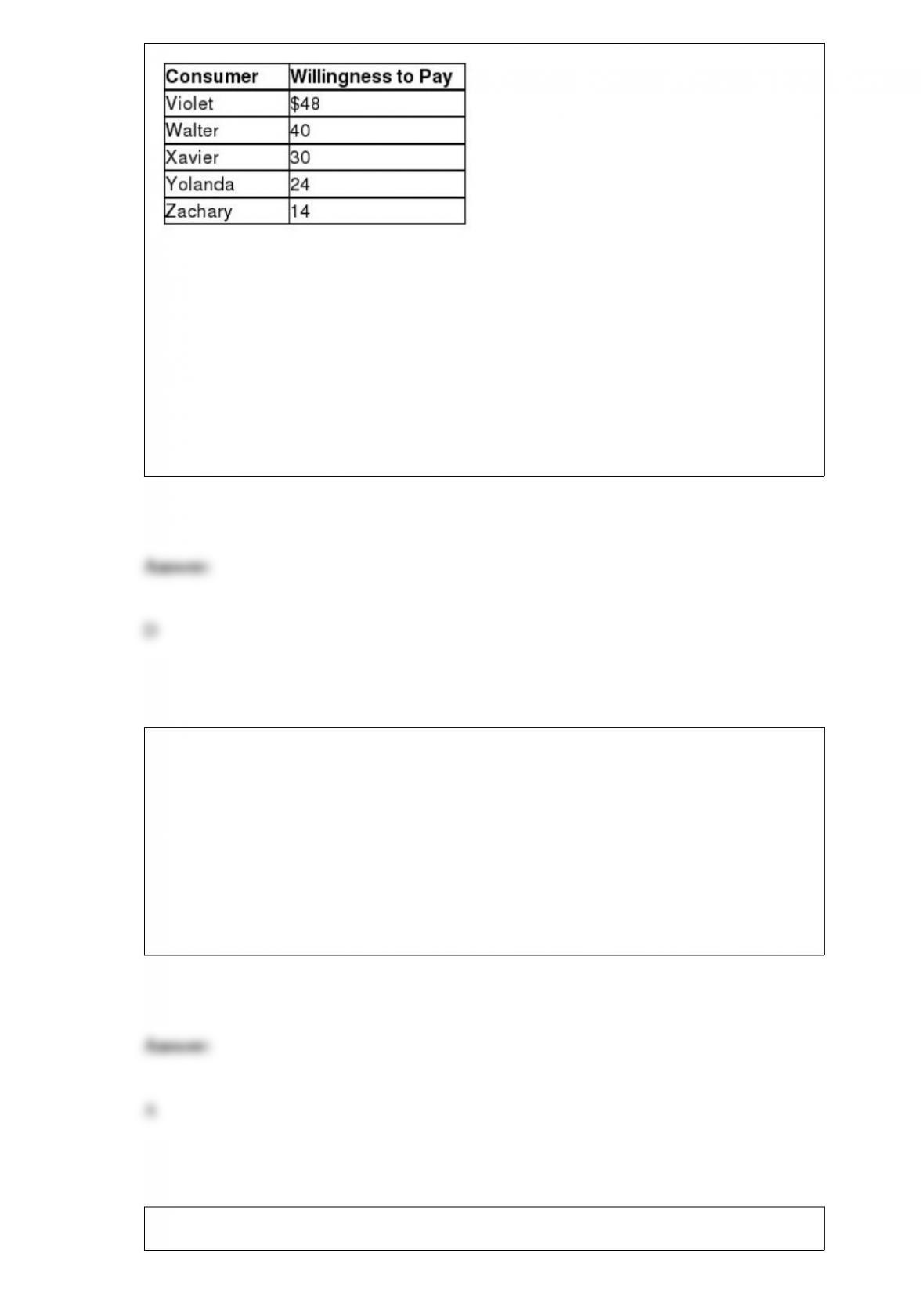
Refer to Table 4-2. The table above lists the highest prices five consumers are willing to
pay for a concert ticket. If the price of one ticket is $50
A) everyone will buy a ticket.
B) consumer surplus will be maximized.
C) Violet’s consumer surplus is $2.
D) no one will buy a ticket.
Which of the following assets is most liquid?
A) money
B) bond
C) savings account
D) stock
Table 4-1

Refer to Table 4-1. The table above lists the highest prices three consumers, Curly,
Moe, and Larry, are willing to pay for a bottle of champagne. If the price of one of the
bottles is $27 dollars, total consumer surplus will be
A) $0.
B) $14.
C) $26.
D) $53.
By the height of the housing bubble in 2005 and early 2006, lenders had greatly
loosened the standards for obtaining a mortgage loan, with many mortgages being
granted to sub-prime borrowers ________ and “Alt-A” borrowers ________.
A) with flawed credit histories; who did not document their incomes
B) who borrowed money at rates below the prime interest rate; who had AAA credit
ratings
C) who borrowed more than 120 percent of the value of the house; with no proof of
U.S. citizenship
D) who purchased homes in depressed housing markets; who purchased homes which
were repossessed by government agencies.