1) unanticipated inflation benefits debtors at the expense of creditors.
2) The U.S. poverty rate for African-Americans is substantially higher than that for
Asians.
3) specialization may expand total output even though the individuals involved may
have identical abilities.
4) graphically, the consumer maximizes total utility where the budget line is tangent to
an indifference curve.
5) Society’s marginal cost of pollution abatement curve slopes upward because of the
law of diminishing marginal utility.
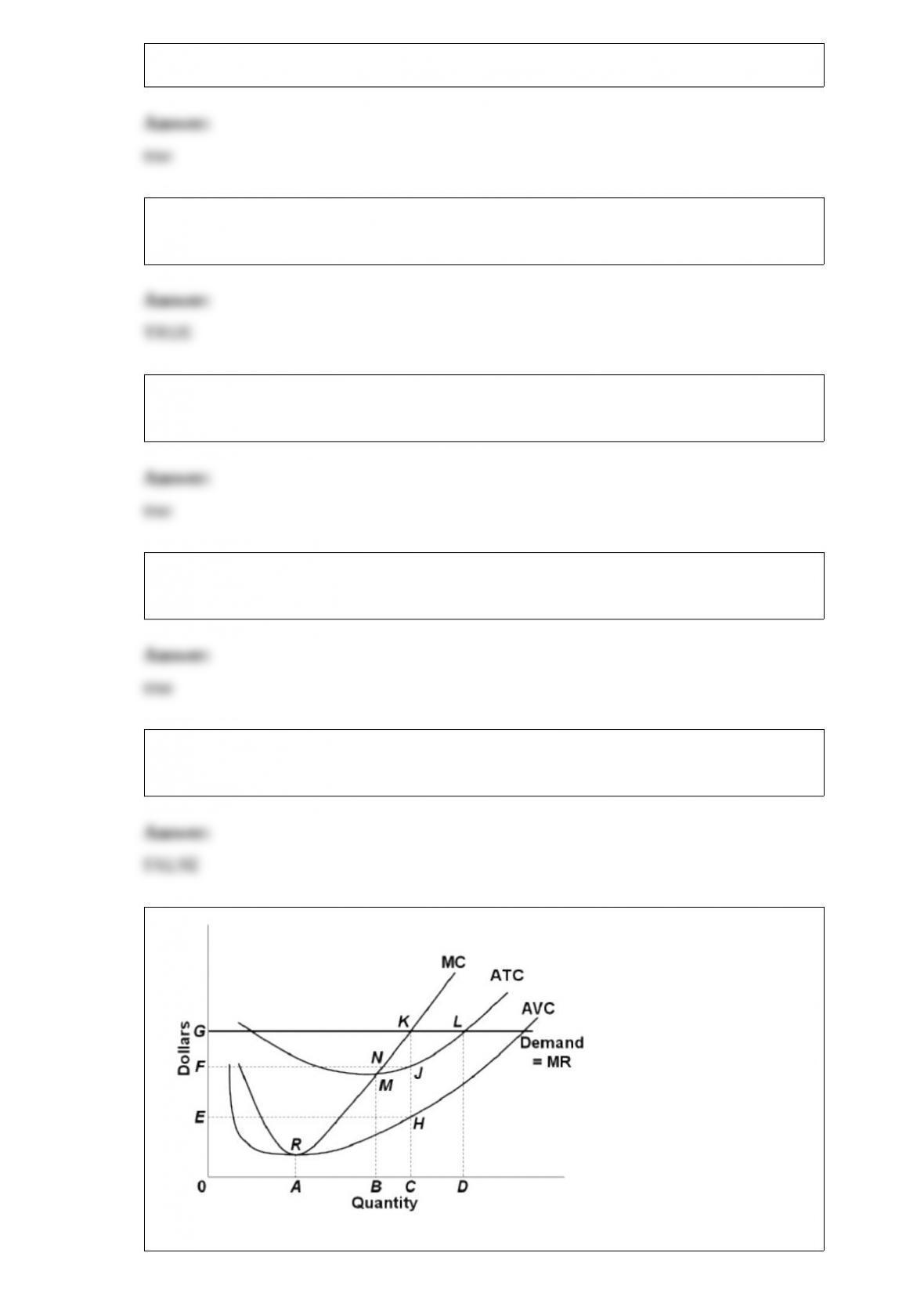
6)
refer to the above diagram. total costs are minimized at output level b.
7) Renewable natural resources can never be exhausted.
8) The public debt is the accumulation of all deficits and surpluses that have occurred
through time.
9) Monetarists say the velocity of money is highly variable and there is no close link
between the money supply and the level of economic activity.
10) Unions prefer agency shops to open shops.
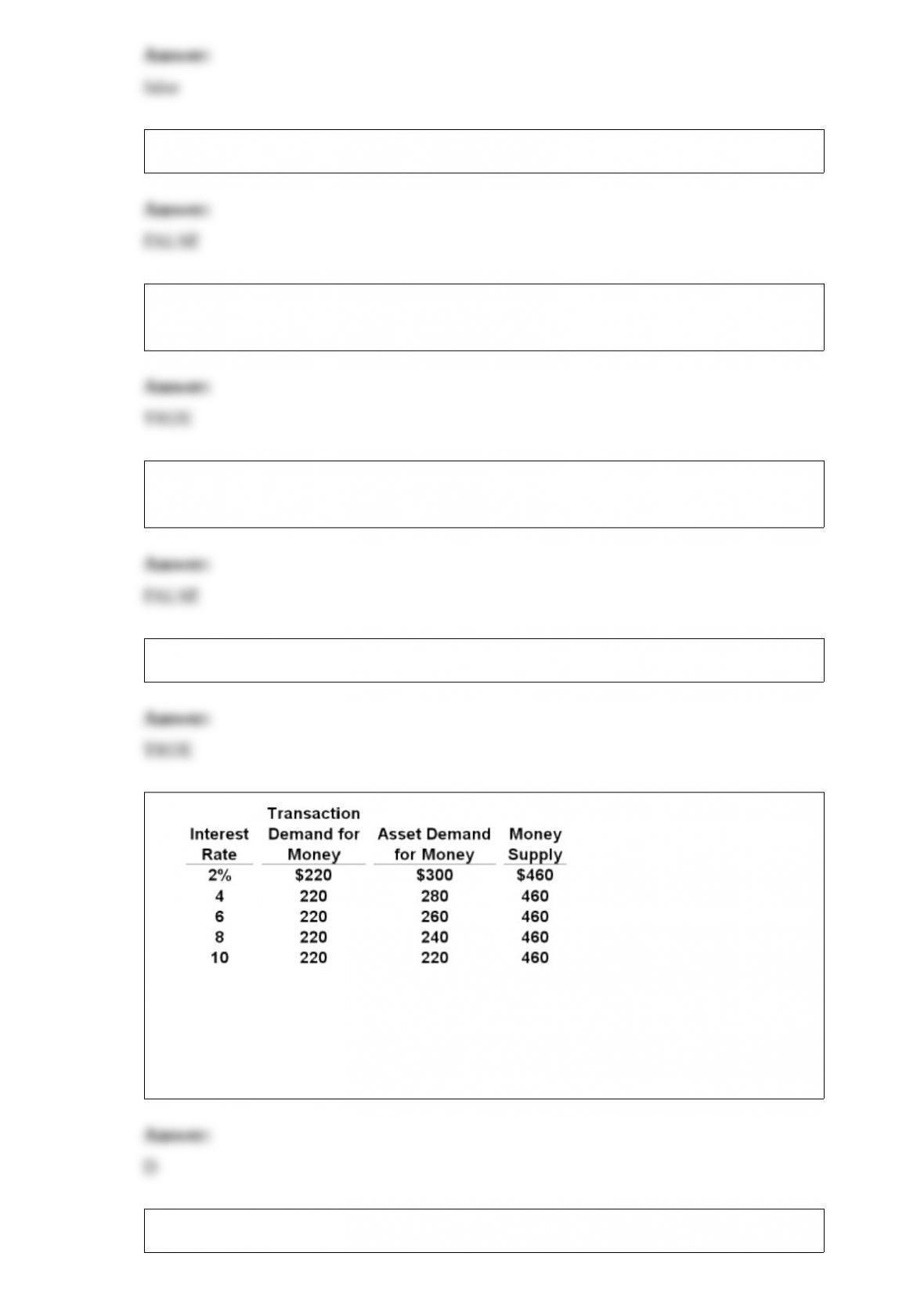
11)
The total demand for money curve in the above market for money would graph as a:
A.vertical line.
B.horizontal line.
C.line sloping upward to the right.
D.line sloping downward to the right.
12) any combination of goods lying outside of the budget line:
a.implies that the consumer is not spending all his income.
b.yields less utility than any point on the budget line.
c.yields less utility than any point inside the budget line.
d.is unattainable, given the consumer’s income.
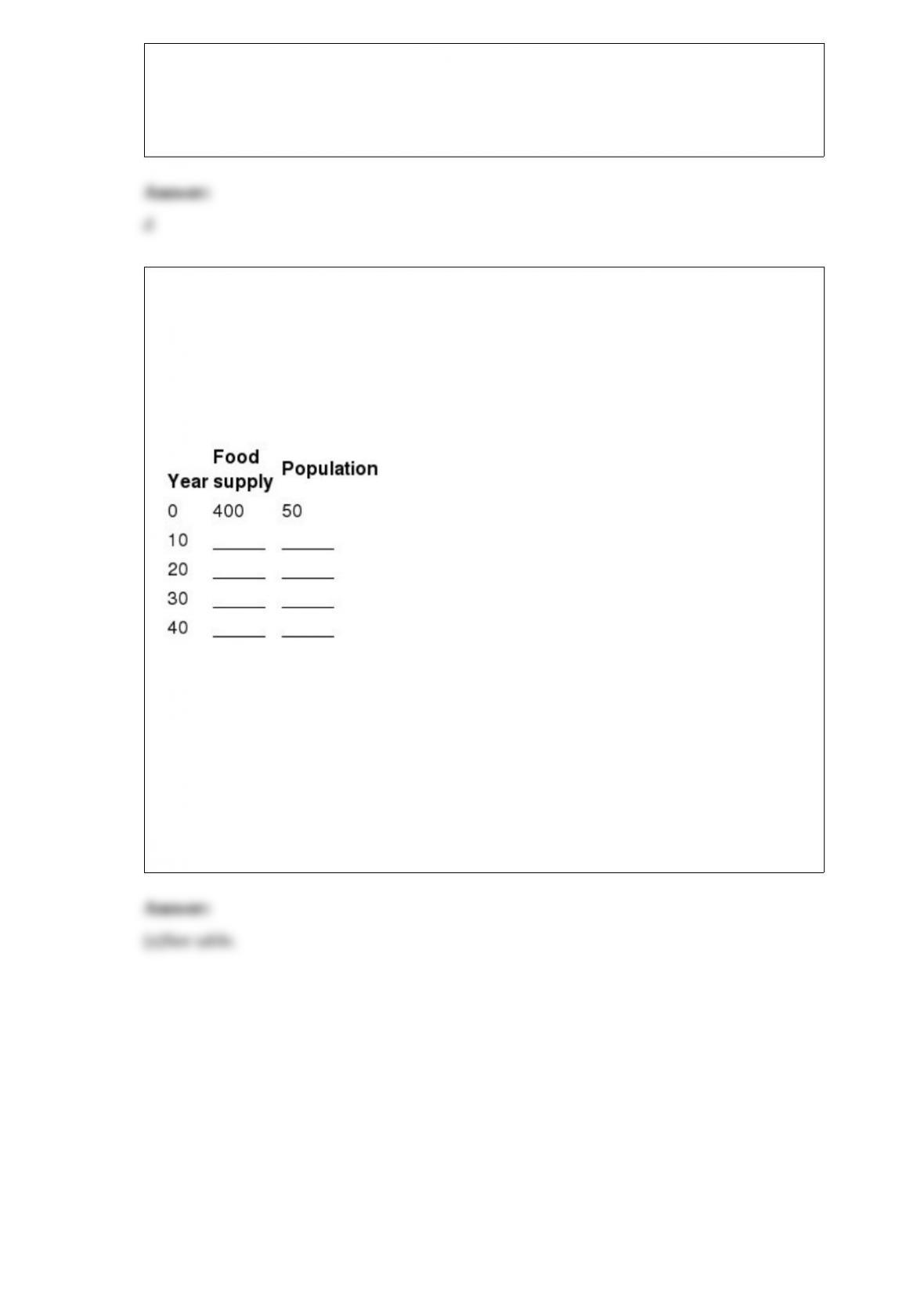
13) Suppose that it takes a minimum of 6 units of food to keep a person alive for a year,
that the population can double every 10 years, and that the food supply can increase
every 10 years by an amount equal to what it was in the beginning (year 0).
(a)Assume that both the population and the food supply grow at these rates. Complete
the following table by computing the size of the population and the food supply in years
10 through 40.
(b)What is the relationship between the food supply and the population in the 20th
year?
(c)What would actually prevent the population from growing at this rate following the
20th year?
(d)Assuming that the actual population growth in the years following the 20th year does
not outrun the food supply, what would be the size of the population in year 30 and year
40?
(e)Why did the standard of living fail to increase in the years following the 20th even
though the food supply increased between years 20 and 40?
14) U.S. union membership has declined substantially in recent years. Which of the
following is not usually cited as a causal factor?
A.Most nonunion workers are in manufacturing industries.
B.Import competition has reduced or restrained the growth of employment in some
highly unionized industries.
C.Some industries and firms have migrated to the South.
D.Managerial opposition to unions has intensified.
15) in the short run a purely competitive seller will shut down if:
a.it cannot produce at an economic profit.
b.price is less than average variable cost at all outputs.
c.price is less than average fixed cost at all outputs.
d.there is no point at which marginal revenue and marginal cost are equal.
16) An extraordinarily small crop of farm products due to drought causes:
A.a large increase in the price of farm products because the demand for farm products is
price inelastic.
B.only a slight increase in the price of farm products because the demand for farm
products is income elastic.
C.only a slight increase in the price of farm products because the demand for farm
products is income inelastic.
D.a large increase in the price of farm products because the demand for farm products is
price elastic.
17) The multiple by which the commercial banking system can expand the supply of
money on the basis of excess reserves:
A.is larger the smaller the legal reserve ratio.
B.is the reciprocal of the bank’s actual reserves.
C.is directly or positively related to the size of the required reserve ratio.
D.will be zero when the required reserve ratio is 100 percent.
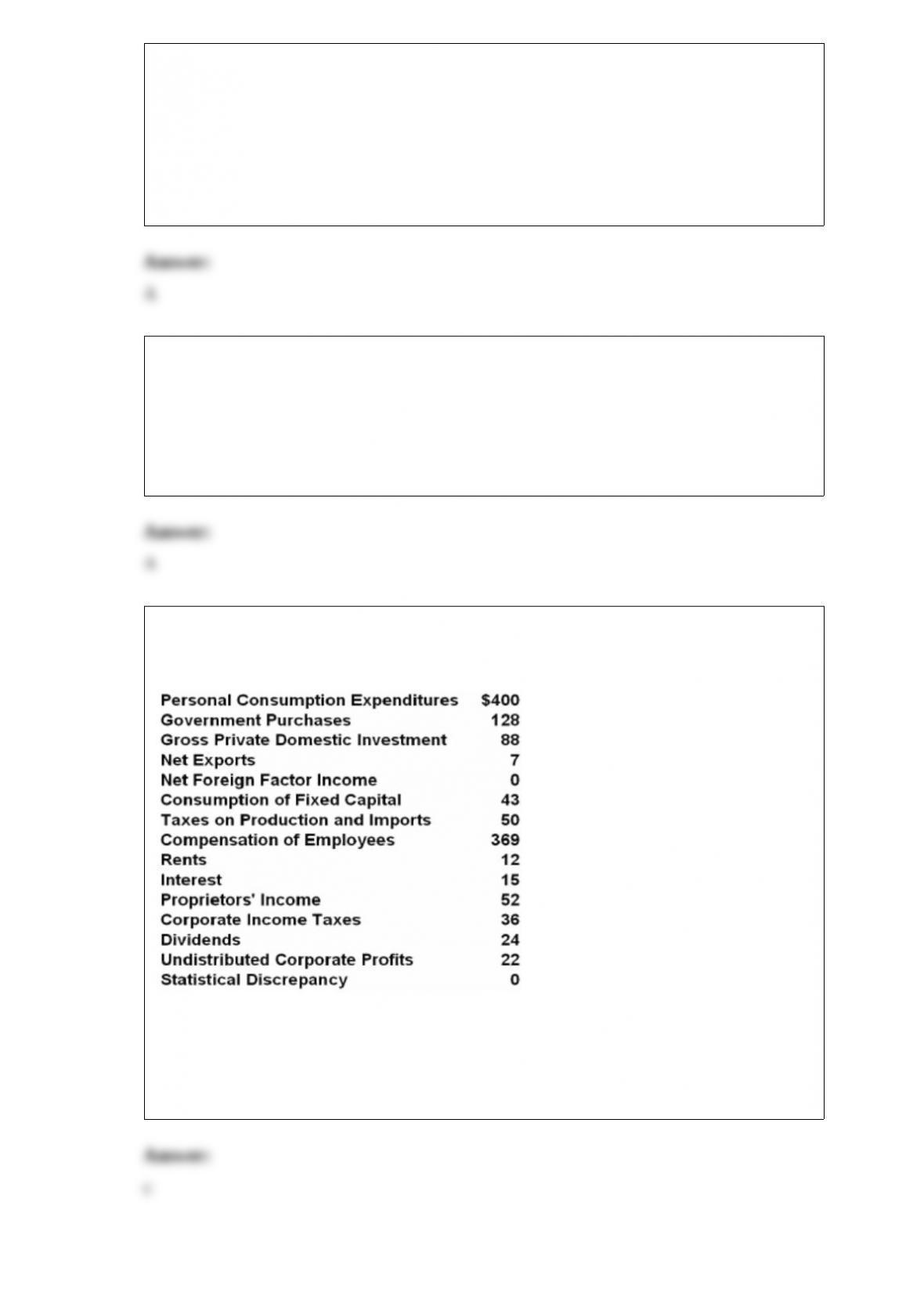
18) answer the next question(s) on the basis of the following national income data for
the economy. all figures are in billions of dollars.
refer to the above data. the national income is:
a.$561.
b.$573.
c.$580.
d.$530.
19) (consider this) free products offered by firms:
a.may or may not be free to society, but are never free to individuals.
b.may or may not be free to individuals, but are never free to society.
c.are produced and distributed at no cost to society.
d.usually are items nobody wants.
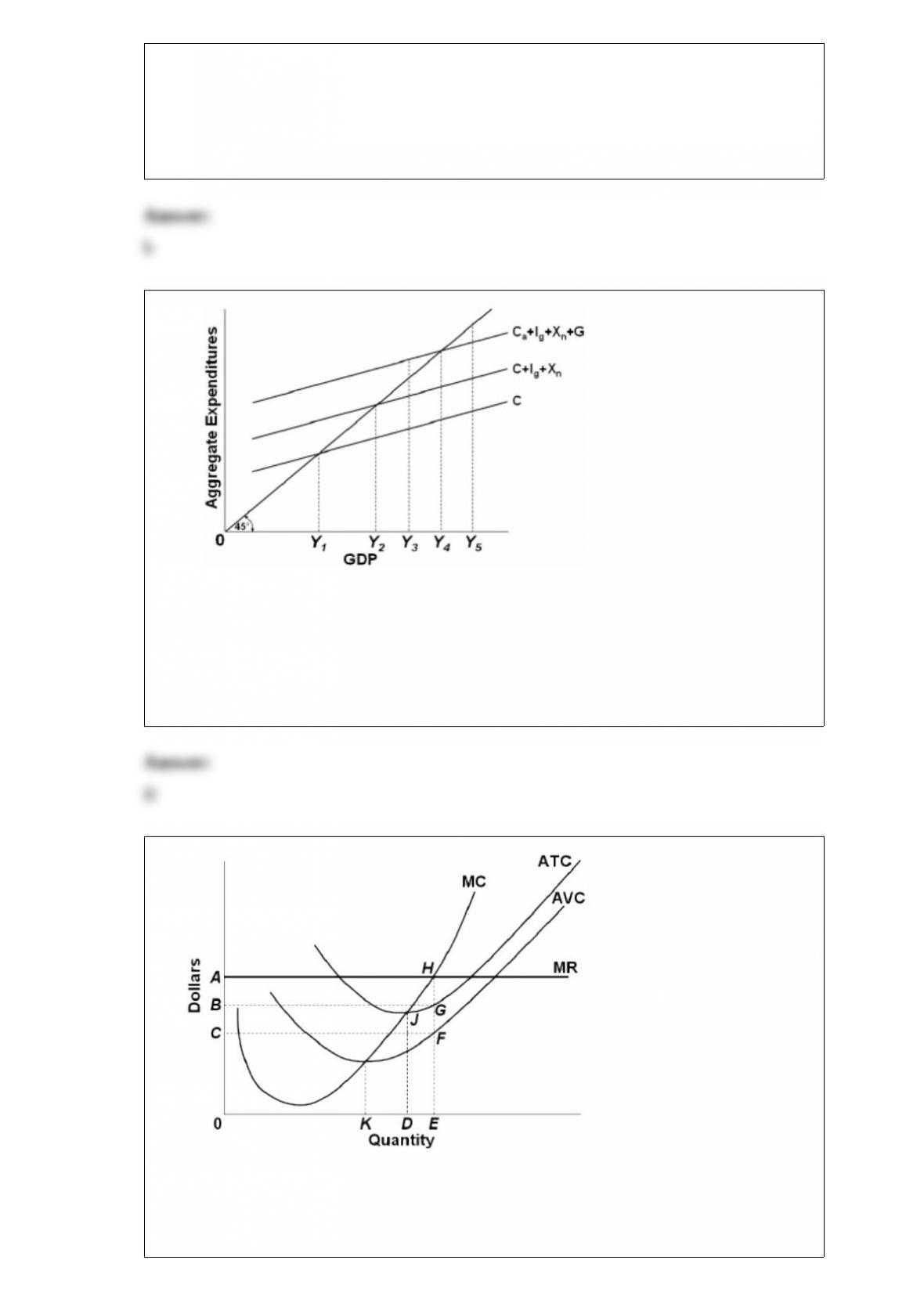
20)
In the above diagram it is assumed that investment, net exports, and government
purchases:
A.are leakages from the circular flow.
B.are independent of the level of GDP.
C.vary inversely with GDP.
D.vary directly with GDP.
21)
refer to the above diagram. at the profit-maximizing output, total revenue will be:
a.0ahe.
b.0bge.
c.0cfe.

d.abge.
22) Which of the following statements is correct?
A.The standardized budget and the actual budget differ because the latter does not take
government transfer payments into account.
B.The standardized budget is less likely to show a deficit than is the actual budget.
C.The standardized budget and the actual budget will show the same size deficit or
surplus in any given fiscal year.
D.The standardized budget is more likely to show a deficit than is the actual budget.
23) Sellers will opt out of markets in which:
A.there are significant negative externalities.
B.standardized products exist.
C.there are only foreign buyers.
D.information about buyers is inadequate, and some buyers can impose high costs on
the sellers.
24) if money income increases and the prices of products a and b both increase, then the
budget line:
a.must shift to the right.
b.must shift to the left.
c.may shift either to the right or the left.
d.will no longer be tangent to an indifference curve.
25) Suppose a firm anticipates that a particular R&D expenditure of $20 million will
result in a new product and thus create a one-time added profit of $22 million a year
later. The firm will:
A.not undertake the R&D expenditure if its interest-rate-cost of borrowing is 8 percent.
B.undertake the R&D expenditure if its interest-rate-cost of borrowing is 12 percent.
C.undertake the R&D expenditure if its interest-rate-cost of borrowing is 20 percent.
D.undertake the R&D expenditure if its interest-rate-cost of borrowing is 9 percent.
26) Is there a trade-off between wage increases for union members and employment?
Explain.
27) The achievement of full employment is a sufficient condition for the achievement of
economic growth. Evaluate.
28) What conditions gave rise to the Temporary Assistance to Needy Families (TANF)
program?
29) What determines the equilibrium price level and the level of real domestic output in
the aggregate demandaggregate supply model?
30) Define the four categories of expenditures which comprise GDP.
31) Briefly explain the loanable funds theory of interest rate determination.
32) Why is GDP overstated in terms of the environment? What are some ways to
address this issue?
33) How have firms and organizations devised ways to overcome information problems
without government intervention? Give three examples.
34) Explain the collusive pricing model of oligopoly behavior.