1) in the forward market, the exchange rate is agreed on at the time of the currency
contract, but payment is not made until the future delivery of the currency actually takes
place.
a.true
b.false
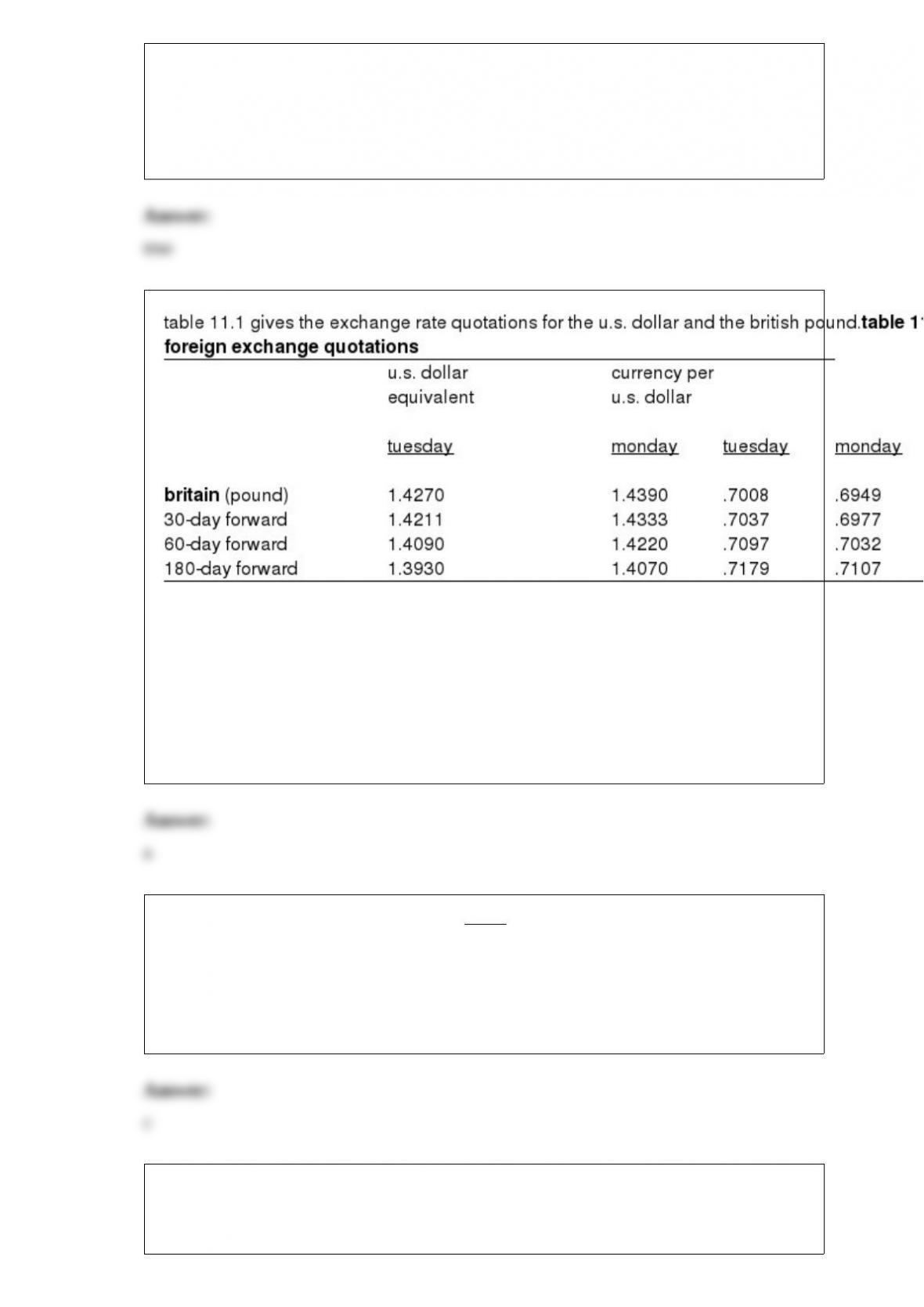
2) consider table 11.1. if one were to sell dollars for immediate delivery, on tuesday the
pound cost of each dollar would be:
a..7008 pounds per dollar
b..7037 pounds per dollar
c.1.4270 pounds per dollar
d.1.4211 pounds per dollar
3) when short-term interest rates become lower in tokyo than in new york, interest
arbitrage operations will most likely result in a(n):
a.increase in the spot price of the yen
b.increase in the forward price of the dollar
c.sale of dollars in the forward market
d.purchase of yen in the spot market
4) the largest amount of trade with the united states in recent years has been conducted
by:
a.canada
b.germany
c.chile
d.united kingdom
5) export-led growth industrialization suffers a major problem: it depends on the
willingness and ability of foreign nations to absorb the goods exported by the country
pursuing such a policy.
a.true
b.false
6) which type of multinational diversification occurs when the parent firm establishes
foreign subsidiaries to produce intermediate goods going into the production of finished
goods?
a.forward vertical integration
b.backward vertical integration
c.forward horizontal integration
d.backward horizontal integration
7) the product-life-cycle theory applies best to trade in primary products in the short
run.
a.true
b.false
8) a tariff on steel imports tends to improve the competitiveness of domestic automobile
companies.
a.true
b.false
9) the gold standard’s “rules of the game” required central bankers in a trade deficit
nation to expand the money supply, leading to falling interest rates and net investment
outflows.
a.true
b.false
10) when the dollar gets stronger
a.u.s. firms become more competitive in international market
b.foreign tourists travel in the u.s. at a higher cost
c.u.s. inflation increases
d.u.s. consumers face higher prices on foreign goods
11) if the marginal propensity to save equals 0.2 and the marginal propensity to import
equals 0.3, the foreign-trade multiplier equal 2.0.
a.true
b.false
12) figure 9.2 represents the u.s. labor market. assume that labor and capital are the only
factors of production. also assume the initial supply schedule of labor is denoted by s0
and consists entirely of native u.s. workers. the demand schedule of labor is denoted by
d0.
figure 9.2. u.s. labor market
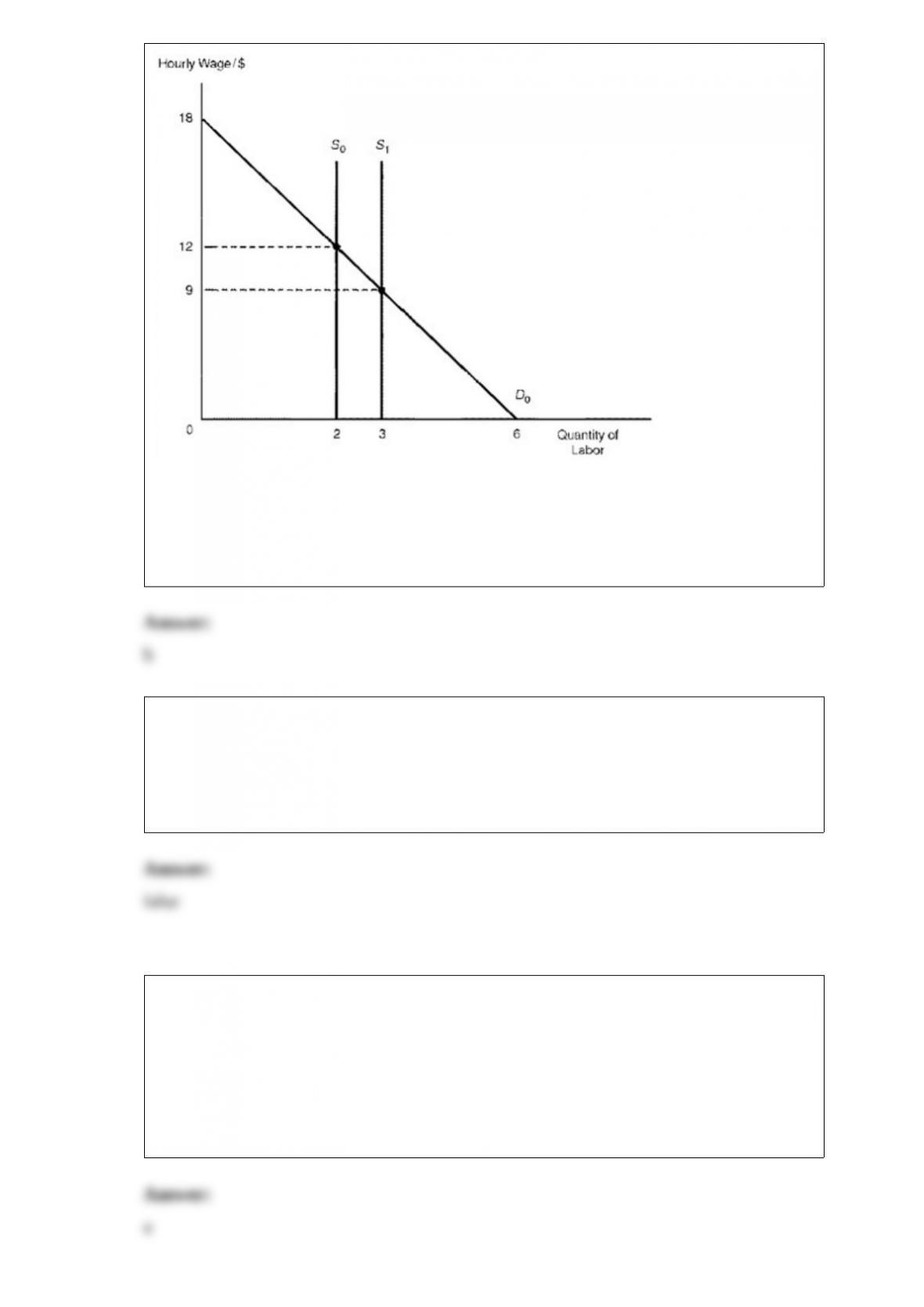
consider figure 9.2. as the result of the mexican migration to the united states:
a.u.s. capital owners lose
b.native u.s. workers lose
c.u.s. capital owners and native u.s. workers lose
d.u.s. capital owners and native u.s. workers gain
13) the classical theory of comparative advantage assumes that firms operate in
imperfectly competitive markets, while the theory of strategic trade policy assumes that
firms operate in perfectly competitive markets.
a.true
b.false
14) from 1985 to 1988 the u.s. dollar depreciated over 50 percent against the yen, yet
japanese export prices to americans did not come down the full extent of the dollar
depreciation. this is best explained by:
a.partial currency pass-through
b.complete currency pass-through
c.partial j-curve effect
d.complete j-curve effect
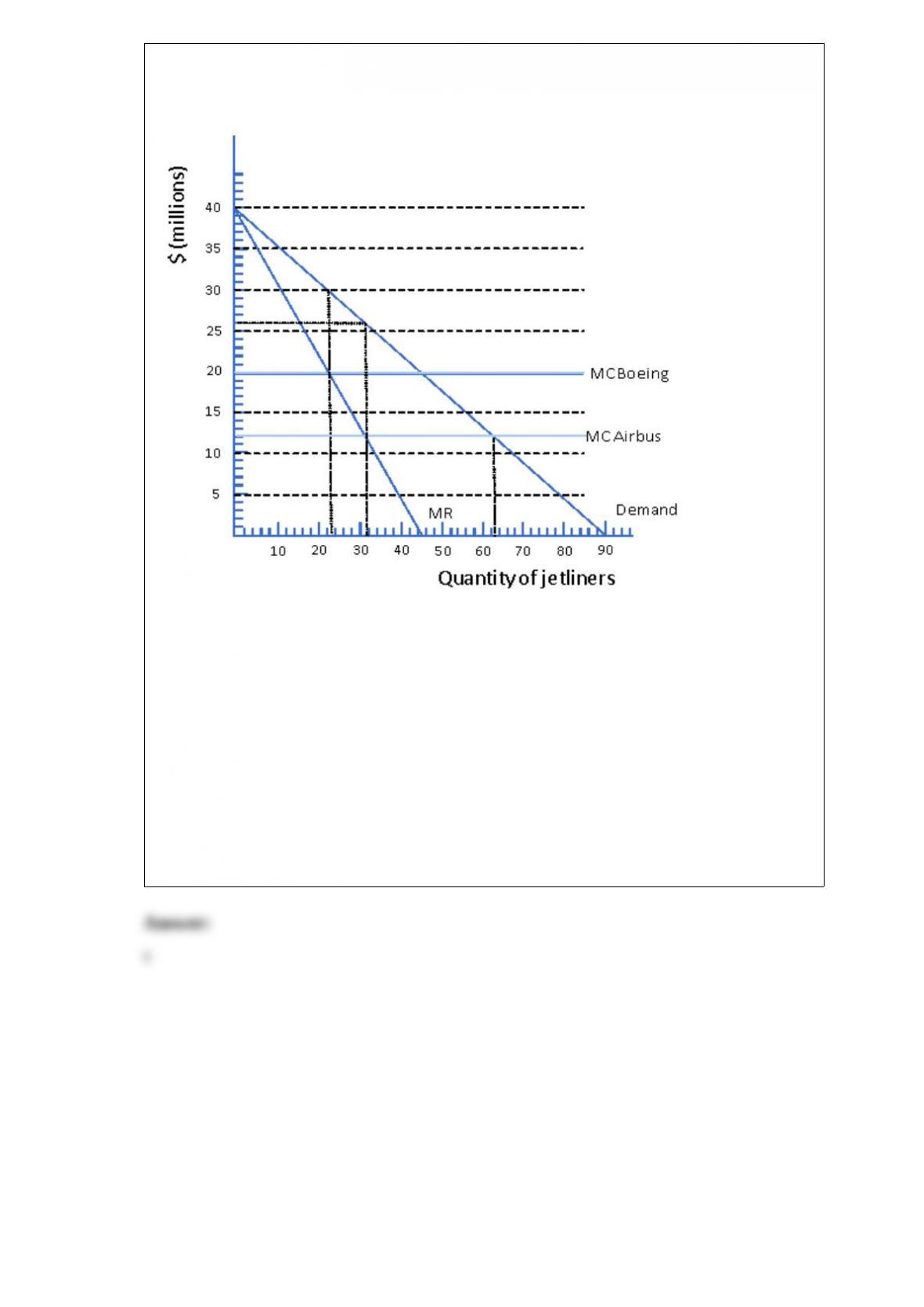
15) figure 6.5 japanese market for jetliners
consider the japanese market for jetliners as depicted in figure 6.5.suppose lone
producer of jetliners in the world is boeing and boeing faces a constant marginal cost of
$20 million per jetliner but now a european manufacturer, airbus, begins
production.airbus faces the same marginal cost as boeing but the european government
provides airbus with a subsidy of $8 million per jetliner produced.as a result of the
competition, boeing leaves the japanese market leaving airbus as a monopoly.as a result
of the entery of the subsidized producer what will happen to the consumer surplus
gained by japanese airlines from buying jetliners?
a.decrease by $109 million
b.nothing
c.increase by $50 million
d.increase by $109 million