1) Peter was recently hired as a salesman for a national consulting firm. His job
involves spending a significant portion of his time out of the office visiting prospects
and attending conferences. His firm is paying him a wage that is higher than the
equilibrium wage, but he receives much of his income in quarterly bonuses based on
how much he sells.
a.The consulting firm is trying to prevent adverse selection with its compensation
strategy.
b.Peter has an incentive to go golfing with his buddies rather than conducting sales
meetings.
c.The consulting firm is responding to the moral hazard problem with its compensation
strategy.
d.Peter should quit this job and take a job where he gets paid an equilibrium wage more
frequently.
2) Which of the following expressions is correct for a competitive firm?
a.profit = (quantity of output) x (price – average total cost)
b.marginal revenue = (change in total revenue)/(quantity of output)
c.average total cost = total variable cost/quantity of output
d.average revenue = (marginal revenue) x (quantity of output)
3) With perfect price discrimination the monopoly
a.eliminates all price discrimination by charging each customer the same price.
b.charges each customer an amount equal to the monopolist’s marginal cost of
production.
c.eliminates deadweight loss.
d.eliminates profits and increases consumer surplus.
4) A firm in a competitive market has the following cost structure:
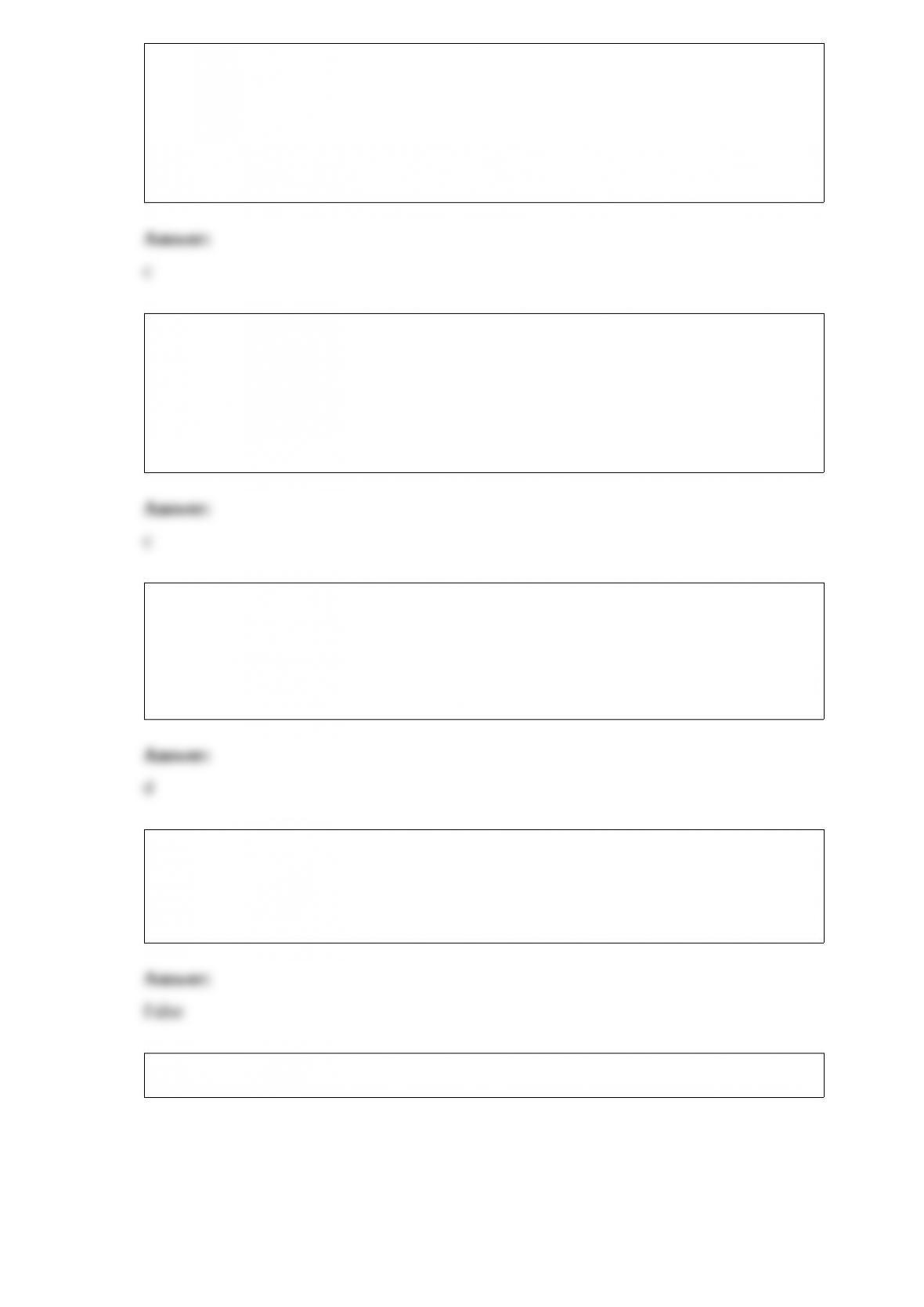
If the firm‘s fixed cost of production is $3, and the market price is $10, how many units
should the firm produce to maximize profit?
a.1 unit
b.2 units
c.3 units
d.4 units
5) The principle of comparative advantage does not provide answers to certain
questions. One of those questions is
a.Do specialization and trade benefit more than one party to a trade?
b.Is it absolute advantage or comparative advantage that really matters?
c.How are the gains from trade shared among the parties to a trade?
d.Is it possible for specialization and trade to increase total output of traded goods?
6) Which of the following is an example of a Giffen good?
a.potatoes during the Irish potato famine
b.rice in the Chinese province of Hunan
c.fish in Japan
d.Both a and b are correct.
7) A U.S. family earning $80,000 would be in the top 20 percent of income distribution
in 2011 .
a.True
b.False
8) Figure 7-15
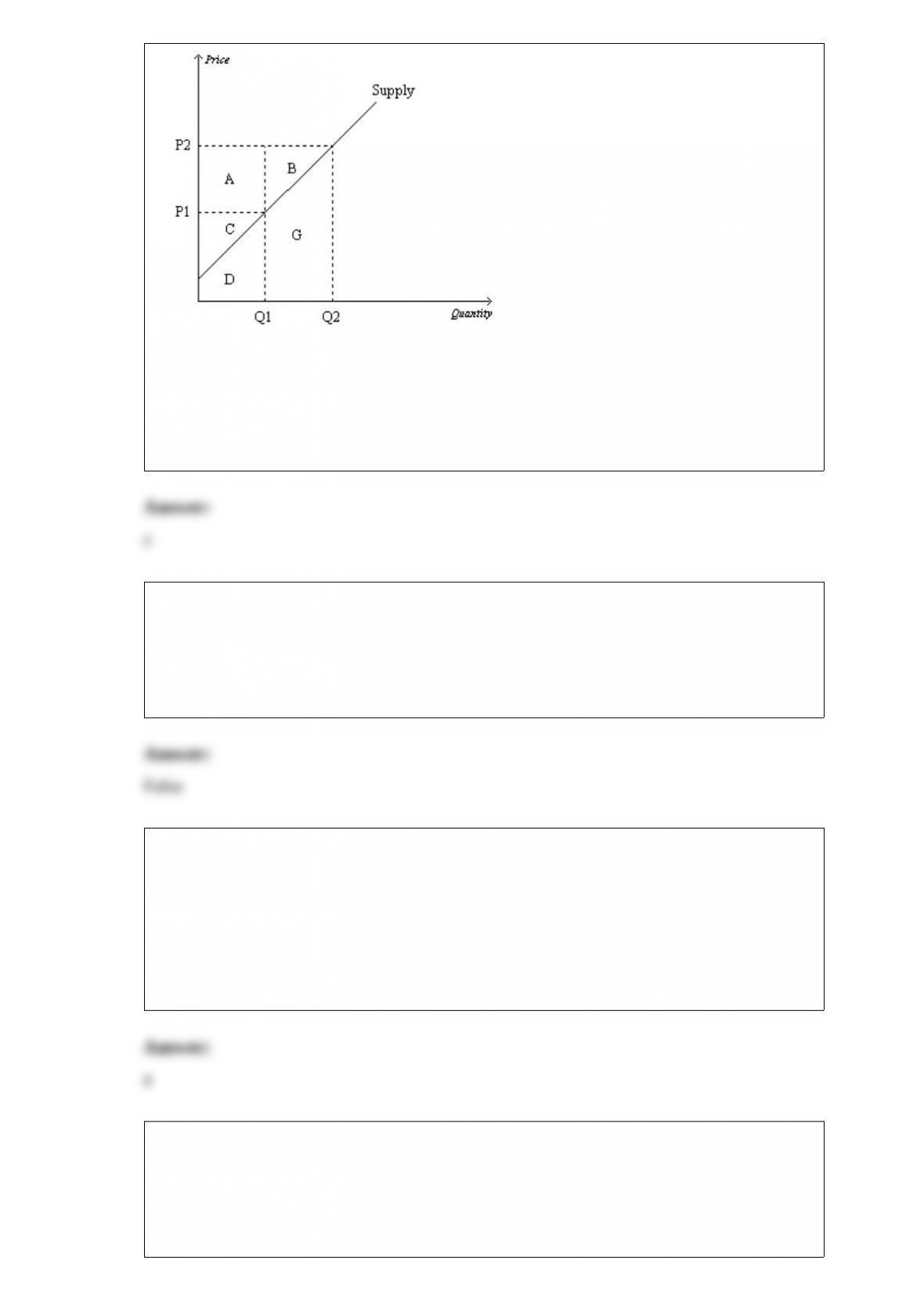
When the price is P2, producer surplus is
a.A.
b.A+C.
c.A+B+C.
d.D+G.
9) If the government deems a newly-invented drug to be truly original, the
pharmaceutical company is given the exclusive right to manufacture and sell the drug
for 50 years.
a.True
b.False
10) Which of the following is an important reason for the projected increase in
government spending as a percentage of GDP over the next several decades?
a.the increase in life expectancy resulting from advances in healthcare
b.an increase in the average number of children per family.
c.the increase in the number of jobs lost each year to foreign countries as a result of
outsourcing
d.the reduction in the number of high-cost medical procedures
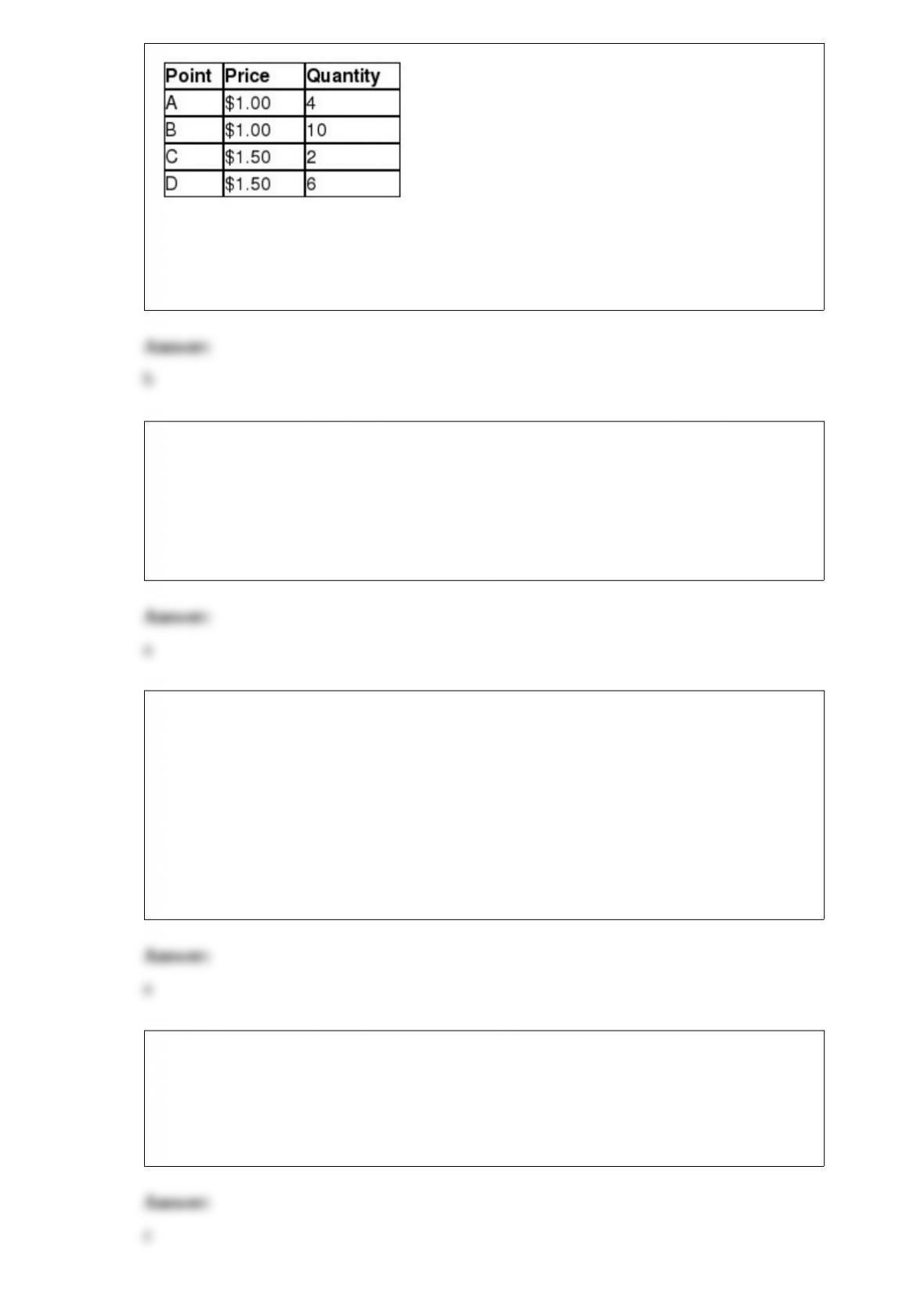
11) Suppose Spencer and Kate are the only two demanders of lemonade. Each month,
Spencer buys six glasses of lemonade when the price is $1.00 per glass, and he buys
four glasses when the price is $1.50 per glass. Each month, Kate buys four glasses of
lemonade when the price is $1.00 per glass, and she buys two glasses when the price is
$1.50 per glass. Which of the following points is on the market demand curve?
a.B only
b.B and D only
c.A and C only
d.D only
12) In the upward-sloping portion of the individual labor-supply curve, the substitution
effect is
a.greater than the income effect.
b.less than the income effect.
c.equal to the income effect.
d.exactly offset by the income effect.
13) Assume there are 4065 voters in a certain small town and let x = the preferred
number of dollars charged monthly to support local parks. For Voters 1-1050, x = $10;
for voters 1051-2121, x= $20, for voters 2122-3334, x = $30; for voters 3335-3998, x =
$40; and for 3999-4065, x = $50. Based on these preferences, which of the dollar
amounts will win over any of the others?
a.$20.
b.$30.
c.$50.
d.None of the above are correct.
14) Which of the following is an example of a monopolistically competitive industry?
a.computer operating systems
b.tennis balls
c.movies
d.cable television
15) For both parties to gain from trade, the price at which they trade must lie between
the two opportunity costs.
a.True
b.False
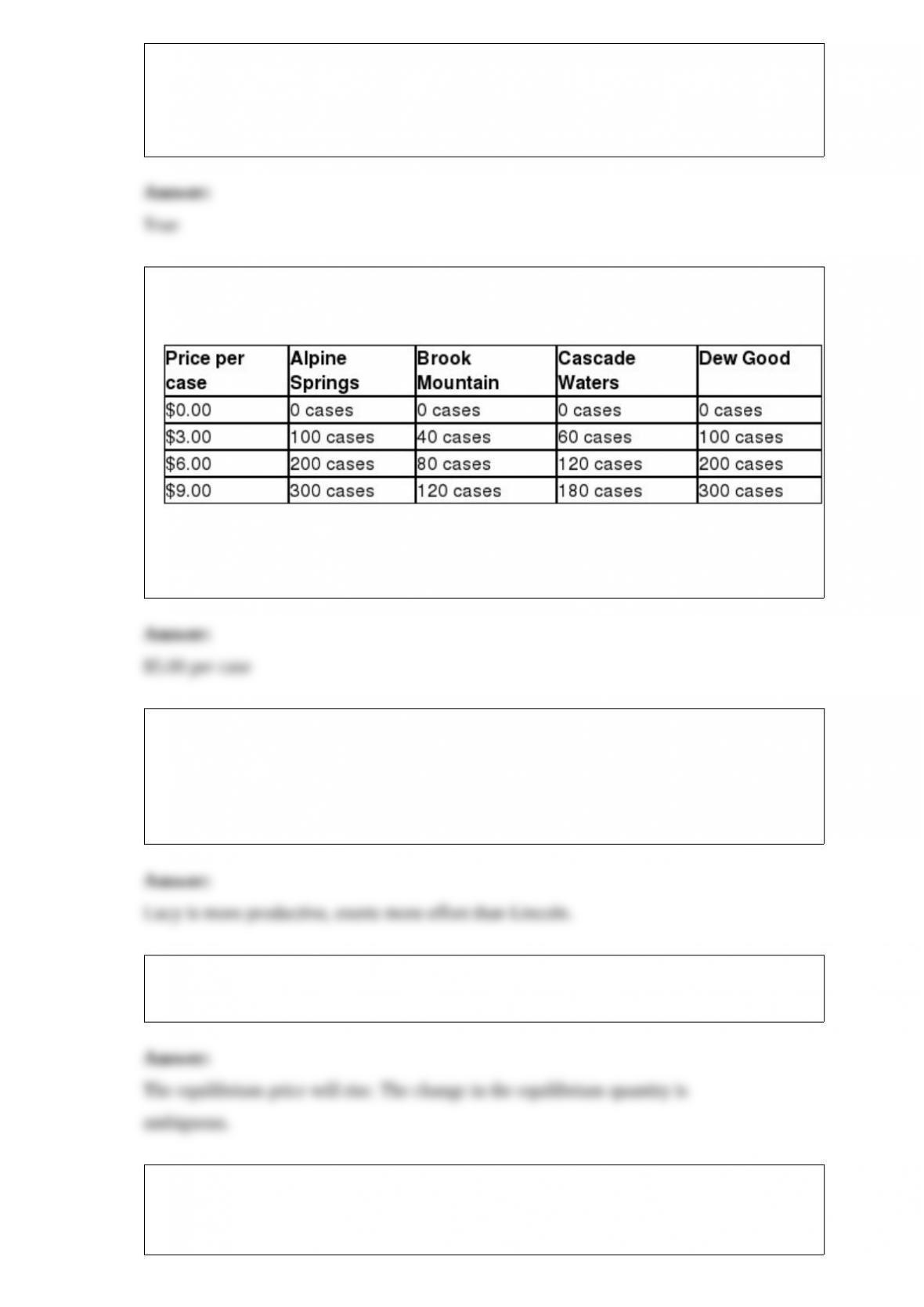
16) The following table shows the number of cases of water each seller is willing to sell
at the prices listed.
Assuming these are the only four suppliers in this market and the function for market
demand is QD=1000-100P, where QDis the quantity demanded and P is the price, what
is the equilibrium price?
17) Lucy and Lincoln are salespeople working for the same company with equal skills,
ability, and experience. Both are paid a small base salary but the majority of their
compensation is in the form of a commission, which is a percentage of the sales they
make. Lucy earns more each year than Lincoln. What can you conclude about Lucy and
Lincoln?
18) If the demand for a good increases at the same time as the supply of the same good
decreases, what will happen to the equilibrium price and quantity of the good?
19) Firms that sell highly differentiated consumer goods, such as over-the-counter
drugs, soft drinks, breakfast cereals, and dog food, typically spend between 10 and 20
percent of revenue for
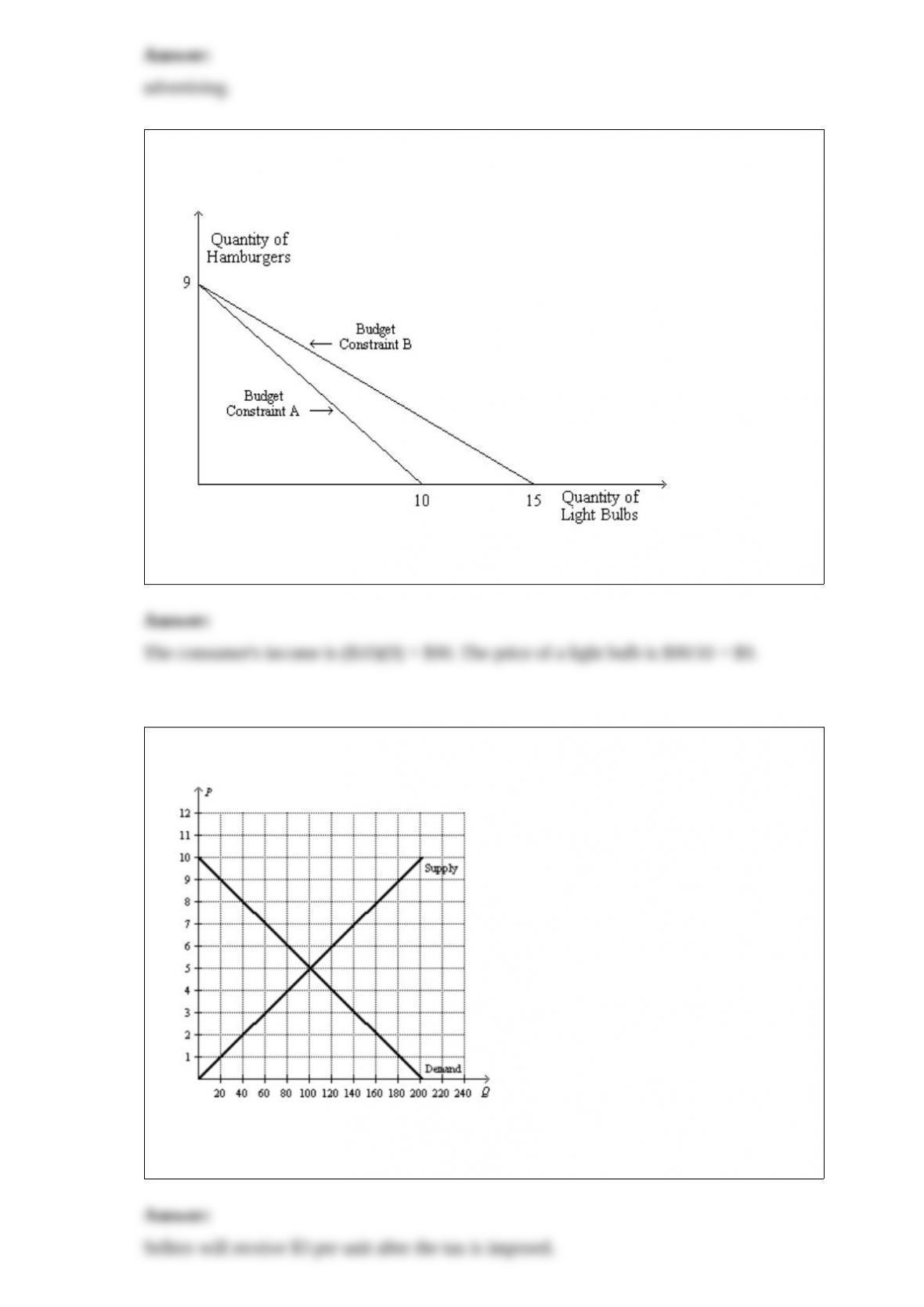
20) Figure 21-30
The graph shows two budget constraints for a consumer.
Refer to Figure 21-30. Suppose the price of a hamburger is $10 and Budget Constraint
A applies. What is the consumer’s income? What is the price of a light bulb?
21) Figure 8-25
Suppose the government places a $4 tax per unit on this good. What price will sellers
receive for the good after the tax is imposed?

22) Give two reasons why the long-run industry supply curve may slope upward. Use
an example to demonstrate your reasons.