
One of the ways that a perfectly competitive firm and a nondiscriminating monopolist
are different is that
a. the marginal cost curve is U-shaped for a perfectly competitive firm but not for a
monopolist
b. P = AR for a perfectly competitive firm but not for a monopolist
c. P = MR for a perfectly competitive firm but not for a monopolist
d. the average revenue curve and demand curve are the same for a perfectly competitive
firm but not for a monopolist
e. only the monopolist seeks to maximize profits
Rent seeking
a. is the attempt to find apartments in a rent-controlled city
b. only makes sense in a monopolistically competitive industry
c. is a zero-sum game because the public’s loss is the rent seeker’s gain
d. is the expenditure of resources to obtain favorable treatment from government
e. occurs because of cyclical majority
If a firm experiences economies of scope, per unit production costs fall as it produces
more and more of its product.
a. True
b. False
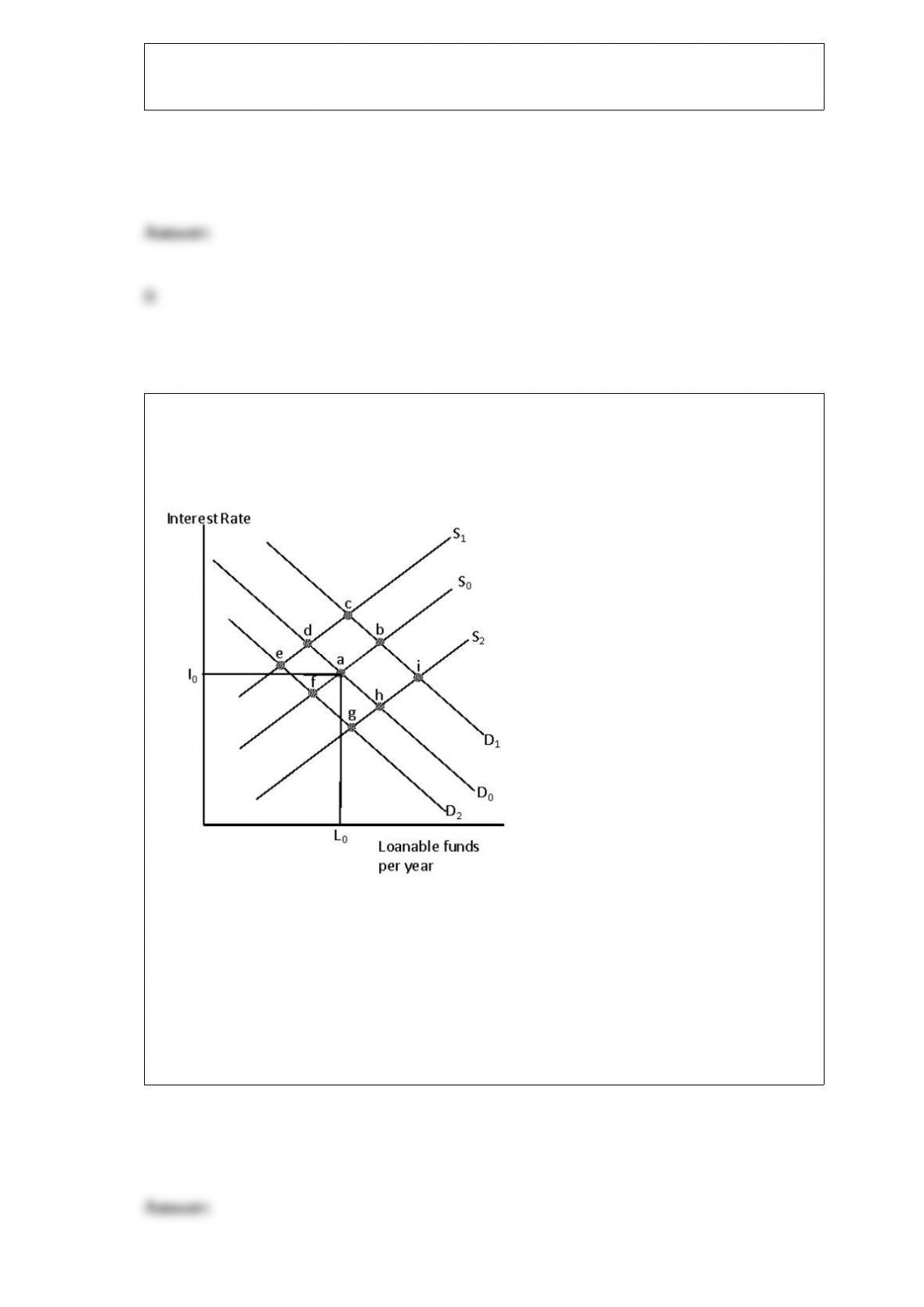
Exhibit 13-8
In Exhibit 13-8, D0 and S0represent the initial demand and supply of loanable funds. If
consumers decide to save more in preparation for retirement it would shift the
equilibrium in this market from point a to
a. point b
b. point c
c. point d
d. point f
e. point h

If the interest rate is 8 percent, $54 nextyear is worth __________ today.
a. $62
b. $50.68
c. $50
d. $62
e. $4.32
Increasing marginal returns are generally the result of
a. diseconomies of scale
b. increasing costs
c. specialization and division of labor
d. labor unions
e. technology
If the firms in a monopolistically competitive industry are earning short-run profit,
which of the following is not likely to occur in the long run?
a. New firms will enter the industry.
b. New firms in the industry will draw customers away from existing firms.
c. Existing firms in the industry will face a decrease in demand.
d. Firms will continue to earn profit.
e. Firms will produce with some excess capacity.
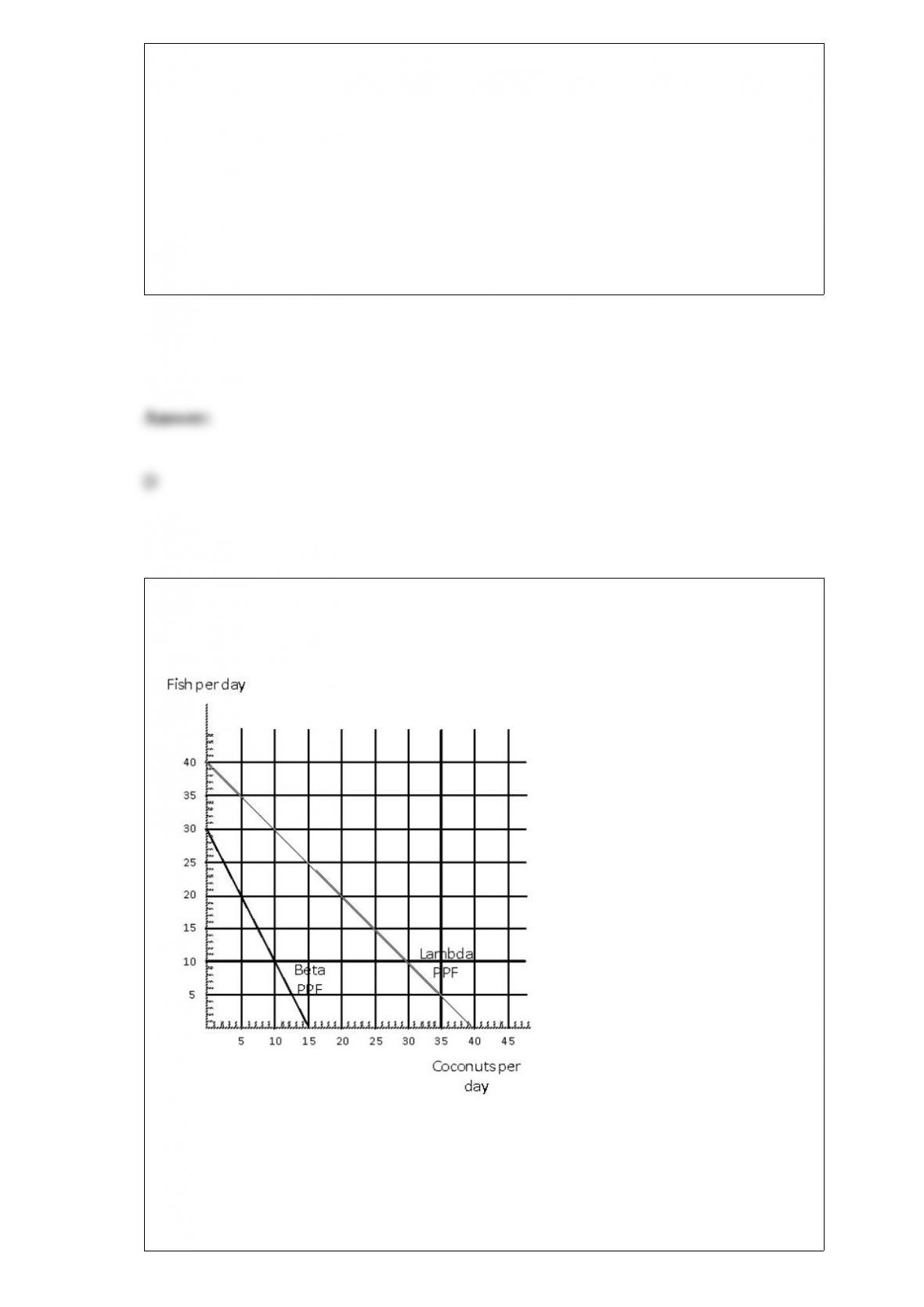
Exhibit 19-1
Exhibit 19-1 shows the production possibilities frontiers for the countries of Lambda
and Beta for fish and coconuts. What is the opportunity cost of a fish in Beta?
a. 1/2 coconut
b. 1 coconut
c. 2 coconut
d. 21/2 coconut
e. cannot tell from the information provided
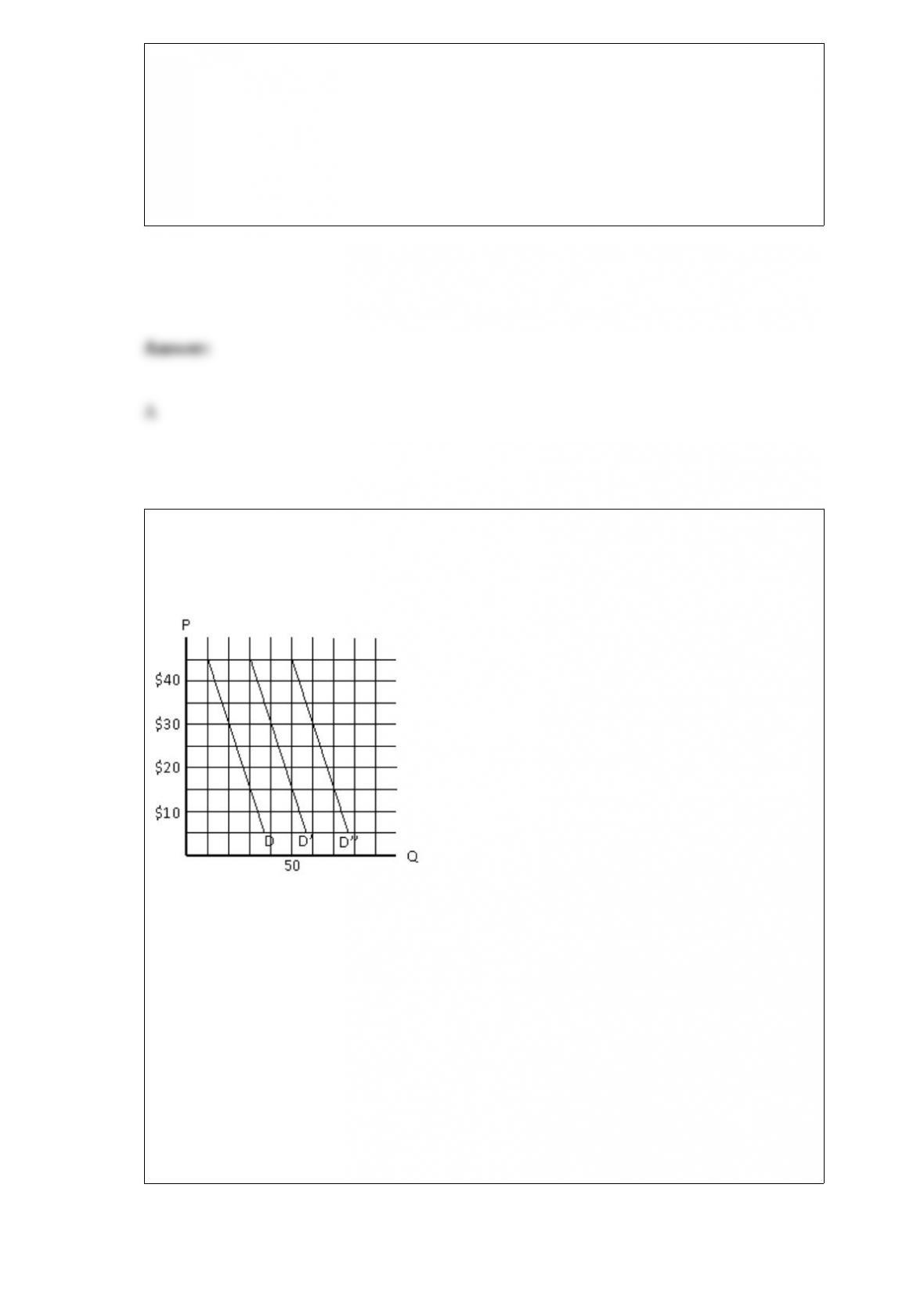
Exhibit 6-20
Refer to Exhibit 6-20. If D, D” and D”” represents the demand curves for the only three
consumers in a market, then the market quantity demanded at a price of $30 will be:
a. 40
b. 60
c. 80
d. 100
e. 120
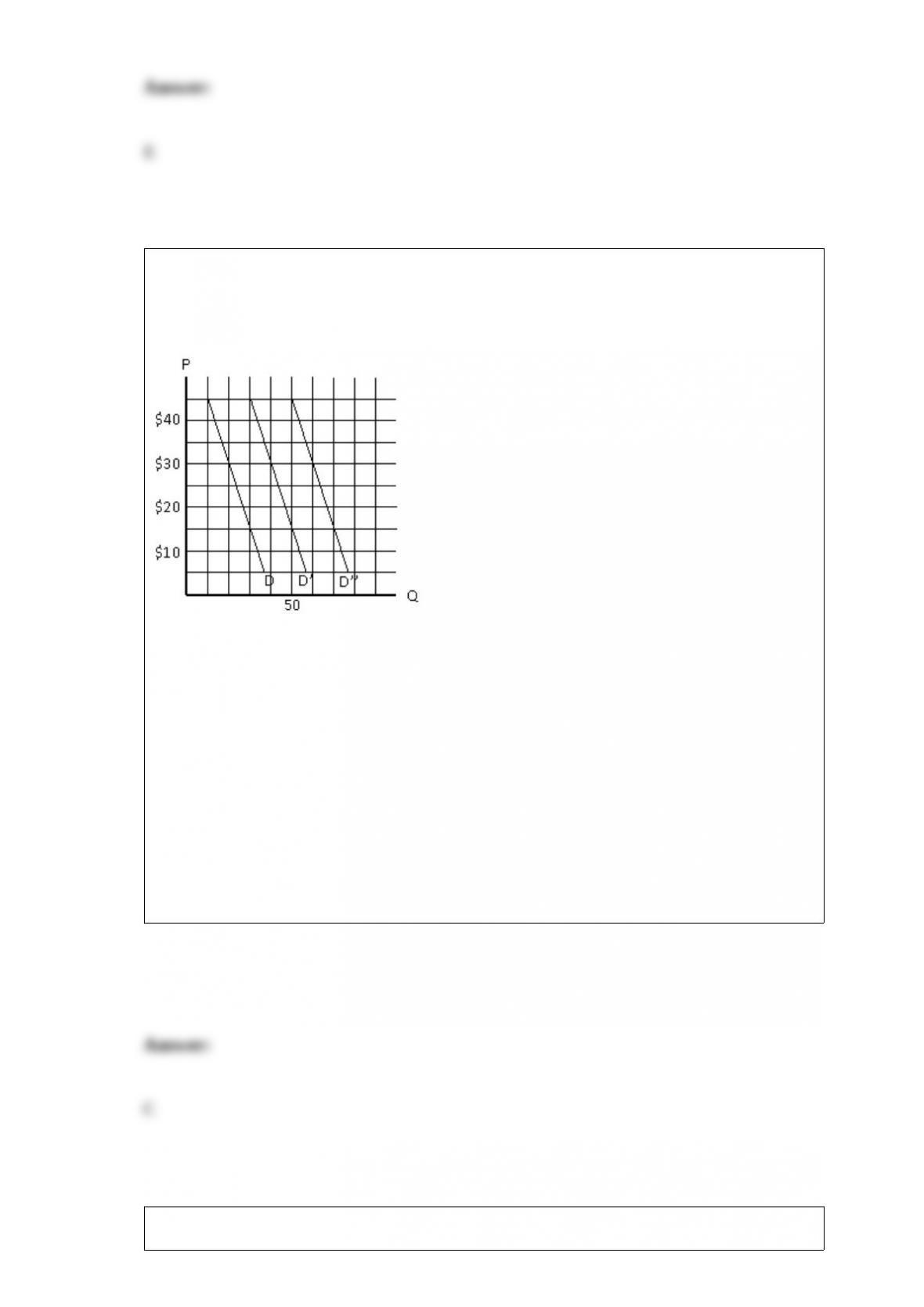
Exhibit 6-20
Refer to Exhibit 6-20. If D, D” and D”” represents the demand curves for the only three
consumers in a market, then the market quantity demanded at a price of $45 will be:
a. 50
b. 70
c. 90
d. 110
e. 130
Which of the following is not a reason why some production continues in households?

a. Some household production requires many specialized resources
b. The opportunity cost of household production has decreased over time
c. Household production avoids taxes
d. There have been important technological advances in household production
e. Some households prefer the ability to control production
Which of the following can lead to permanent differentials in resource prices?
a. an increase in demand for a product produced by the resource
b. differences in the inherent quality of resources
c. differences in the time and money involved in developing necessary skills
d. differences in the nonmonetary rewards of a job
e. a lack of resource mobility
Leisure is
a. not subject to the law of diminishing utility because you can never have enough
leisure time

b. not subject to the law of diminishing utility because you can derive utility only from
goods and services
c. subject to the law of diminishing utility, just as the consumption of goods and
services is
d. subject to the law of diminishing utility only if it involves the consumption of goods
and services
e. not considered in maximizing utility
The income effect refers to the impact of a change in
a. income on the price of a good
b. the general price level caused by a change in the price of another good
c. the price of a good on real income
d. the price of a substitute for the good under consideration
e. demand when income changes
Exhibit 8-18

Assuming all of the firms are identical, how many firms are in the industry before and
after the demand shift depicted in Exhibit 8-18?
a. Fifty firms are in the industry before and after the demand shift.
b. Forty firms are in the industry before the demand shift; after the shift, the amount
can’t be determined.
c. Fifty firms are in the industry after the demand shift; before the shift, the amount
can’t be determined.
d. The number of individual firms cannot be determined from the information given.
e. The exact number of individual firms can’t be determined, but more are in the
industry after the demand shift than before it.
Exhibit 14-2
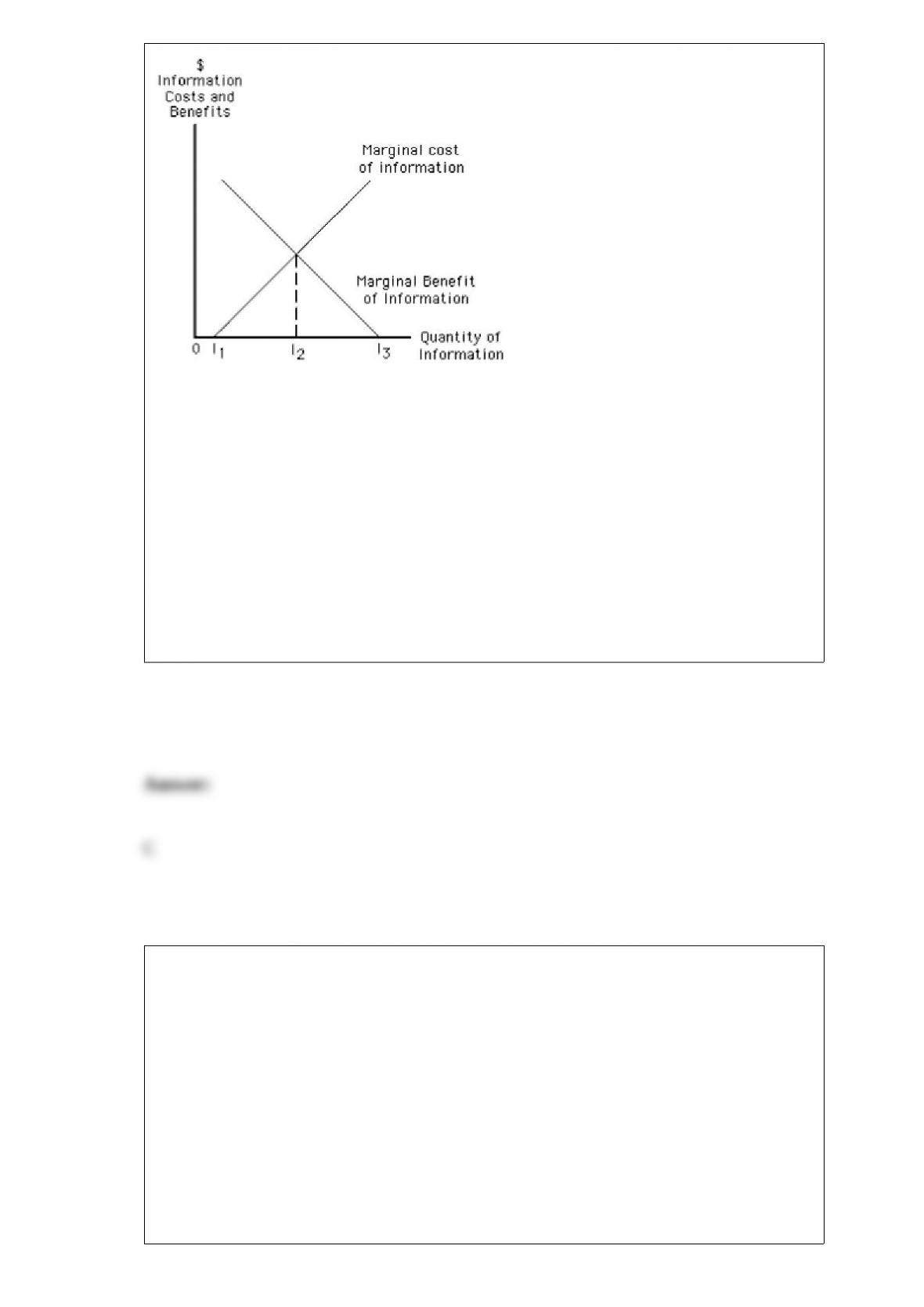
In Exhibit 14-2, if a consumer gathers an amount of information equal to I3,
a. he has made the optimal search
b. he has avoided the cost of acquiring information
c. he has searched too much
d. further information will be costless to him
e. he should increase his search
Which of the following is likely to occur when it is known that a two-person game is to
be played only once?
a. Collusion
b. The demand curve becomes perfectly inelastic for this time period
c. The prisoner’s dilemma
d. The pursuit of profit maximization for the entire industry
e. An attempt to equate marginal revenue with marginal cost
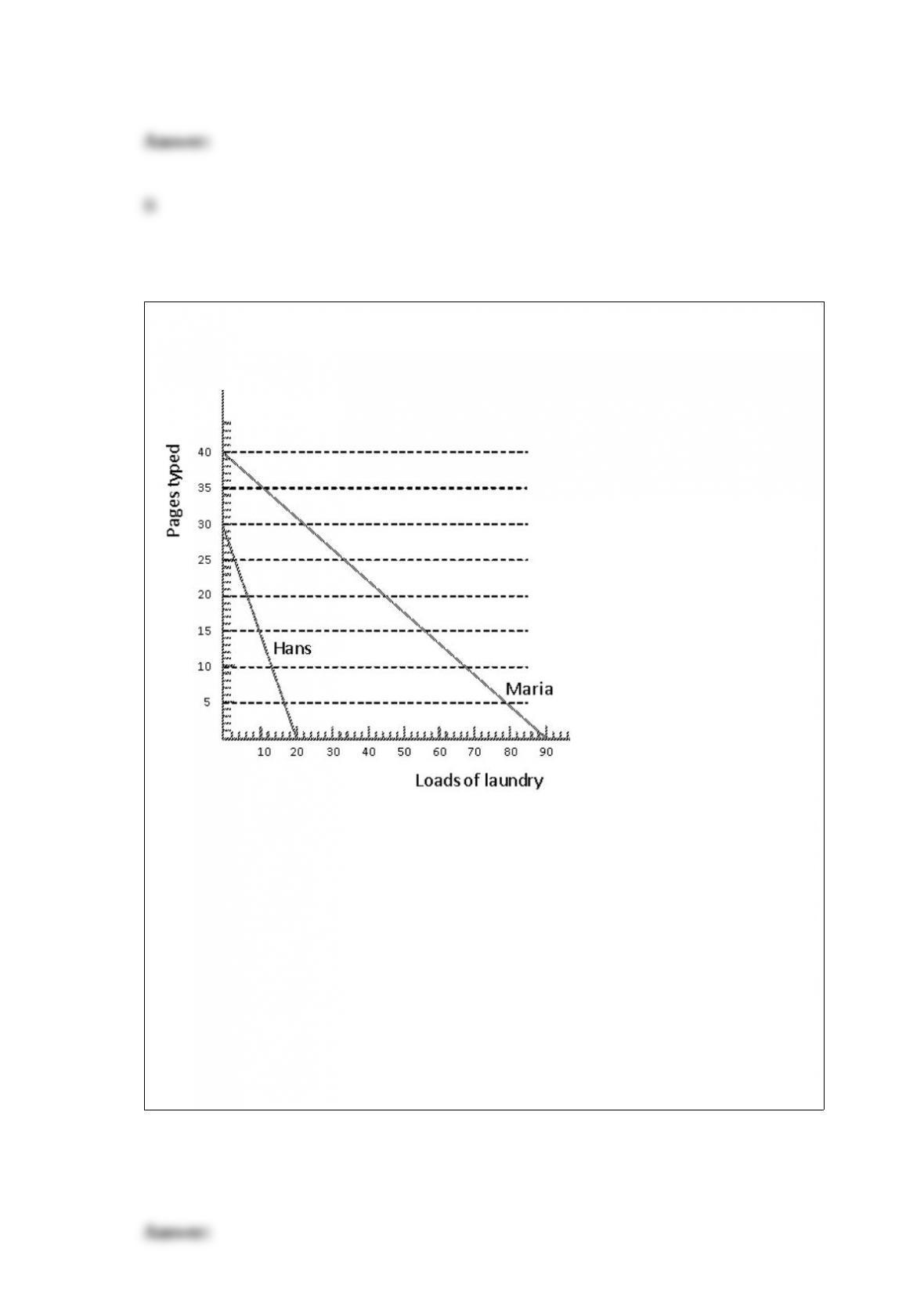
Exhibit 2-12 Maria and Hans Production Possibilities for Laundry and Typing
According to Exhibit 2-12, if Hans does one fewer load of laundry, how many pages
can he type in the time saved on laundry?
a. 12 pages
b. 8 pages
c. 3/2 of a page
d. 2/3 of a page
e. it cannot be determined
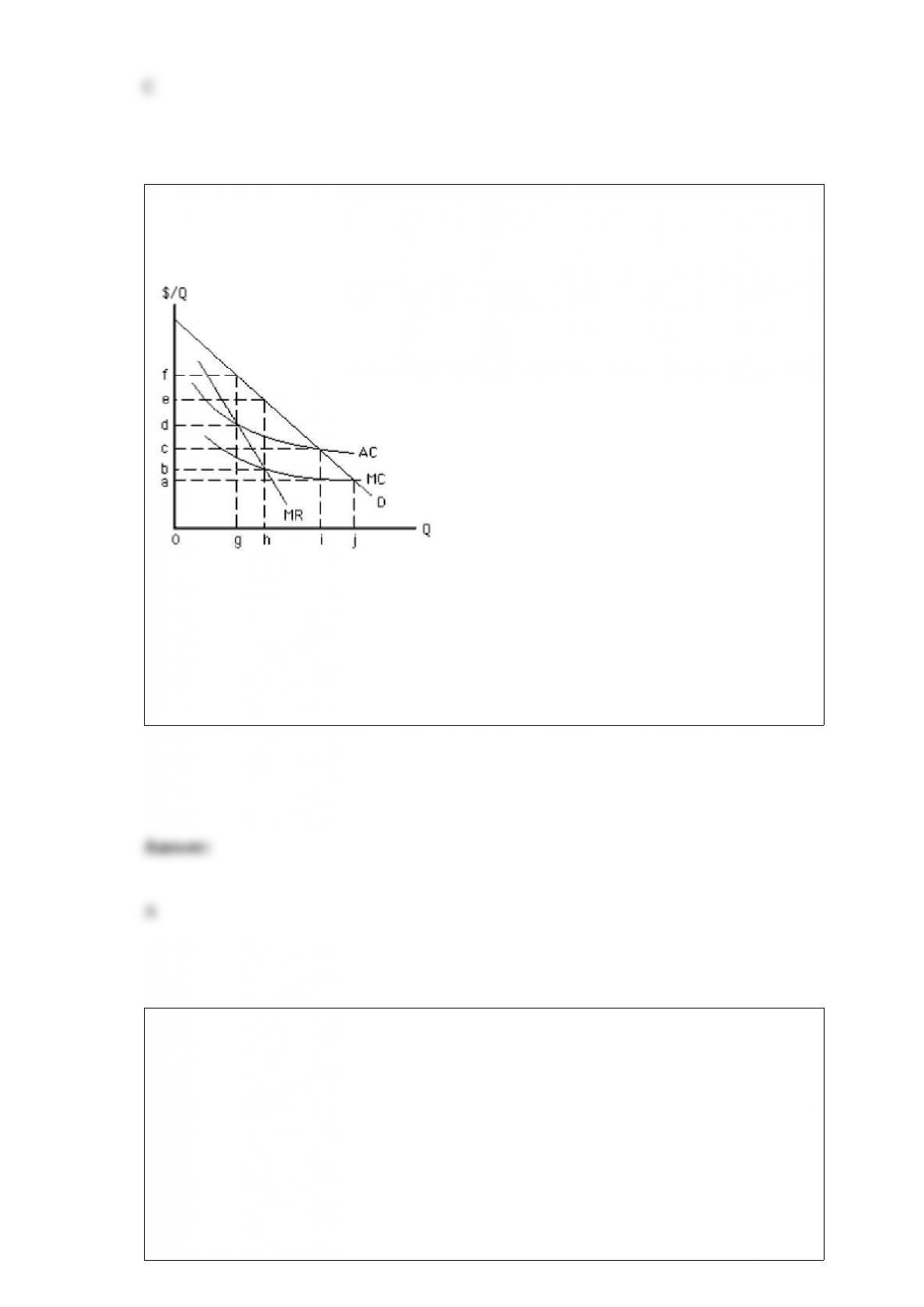
Exhibit 15-4
If regulators allow the natural monopolist in Exhibit 15-4 to earn only a normal profit, it
will result in an increase in consumer surplus compared to the profit maximizing result.
a. True
b. False
Unpriced by-products of production or consumption that impose costs on other
consumers or firms are known as
a. negative externalities
b. effluent fees
c. pollution rights
d. positive externalities

e. moral hazards
Janis mows the lawn in 1 hour and types a paper in 1 hour. Kristen mows the lawn in 2
hours and types a paper in 1 hour. Which of the following statements is true?
a. Kristen has an absolute advantage in typing and a comparative advantage in mowing.
b. Janis has an absolute advantage in both activities and a comparative advantage in
typing.
c. Janis has an absolute advantage in both activities and a comparative advantage in
mowing.
d. The opportunity cost of mowing the lawn is greater for Kristen than it is for Janis.
e. Neither Janis nor Kristen would gain from specialization.
One significant reason for the declining membership in unions in the U.S. is
a. more workers are entering the teaching field
b. increasing employment in the industrial sector
c. the structural shift of the economy toward services
d. increasing cultural diversity in the workforce

e. a decrease in the number of public sector employees
One result of asymmetric information in the market for used cars is that few lemons are
sold.
a. True
b. False
The Clean Air Act of 1970
a. set up a depletion tax system
b. reduced air pollution standards
c. recognized air as a resource
d. established a system of transferable pollution rights
e. forbade producers to emit any pollutants into the air
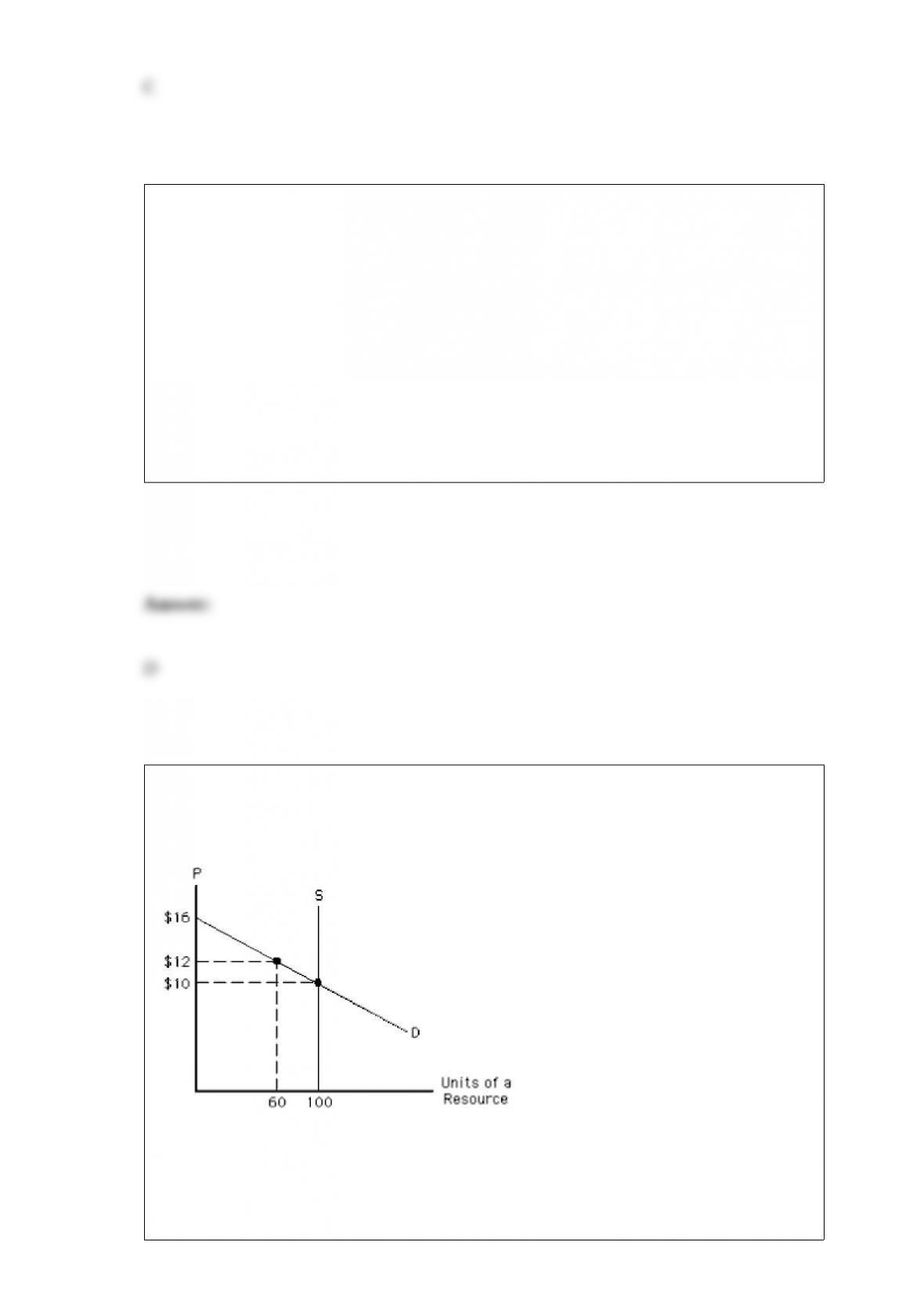
If other things constant, as more bananas are consumed, marginal utility eventually
a. decreases at the same rate for all people
b. decreases at the same rate for all goods for a given person
c. increases at the same rate for all people
d. decreases at different rates for different people and for other goods
e. decreases at different rates for different people but at the same rate as other goods for
an individual
Exhibit 11-4
In Exhibit 11-4, opportunity costs in equilibrium equal
a. $0

b. $120
c. $1,000
d. $300
e. $1,300
Harold, a delivery man, washes and irons his own shirts. Sarah, his boss, sends her
clothes to a laundry. Which is the most plausible economic explanation for this
difference?
a. Harold must enjoy ironing more than Sarah does.
b. Harold must be better at ironing than Sarah is.
c. The opportunity cost of ironing is greater for Harold.
d. Harold probably has an absolute advantage in ironing.
e. Sarah has a higher opportunity cost of laundering her clothes than Harold does.
On which of the following goods would you expect the revenue generated from the
imposition of a tax to be the greatest?
a. milk
b. gasoline
c. bread
d. a specific brand of beer
e. all beer
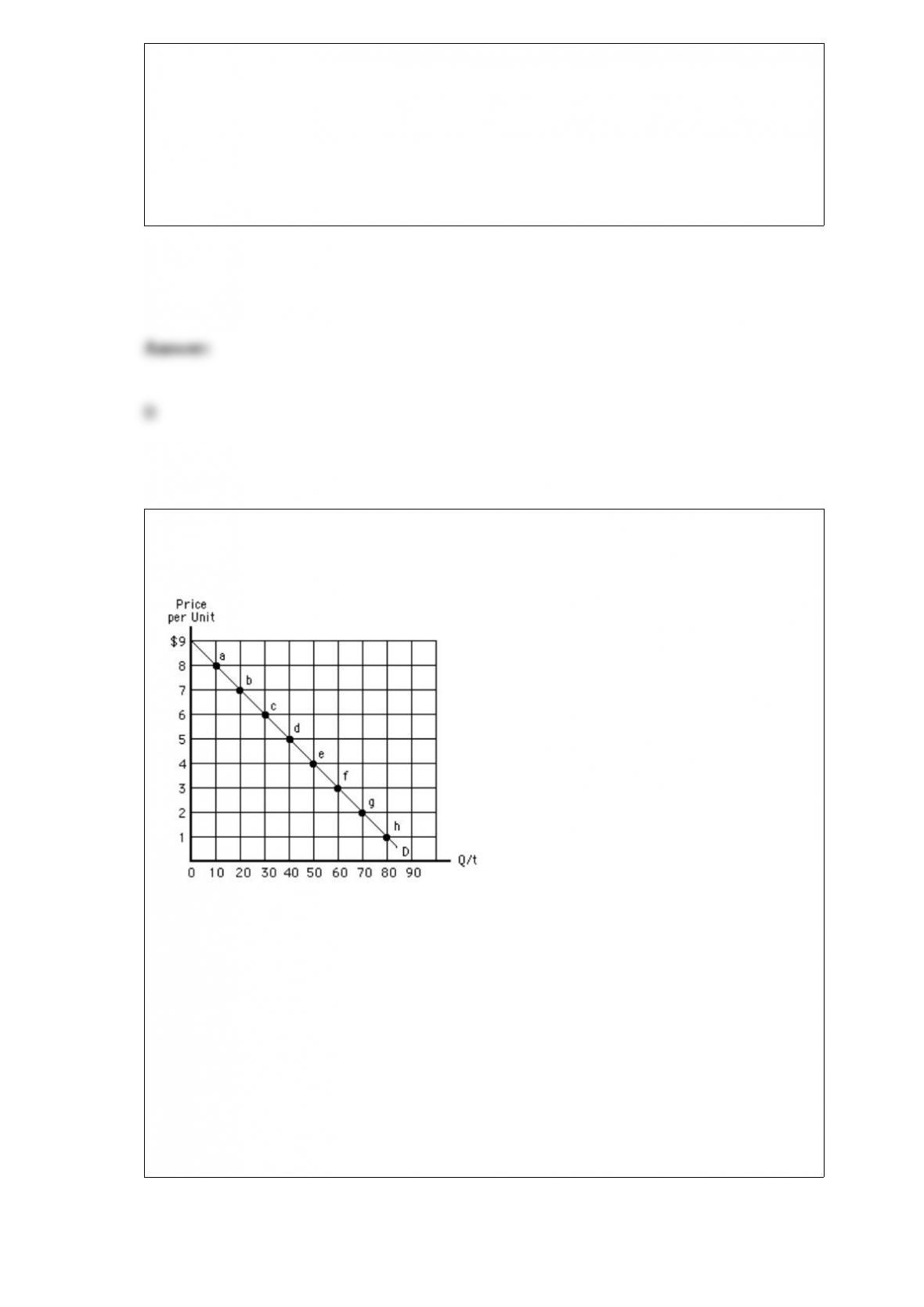
Exhibit 5-7
In Exhibit 5-7, demand is unit elastic
a. between points a and d
b. between points d and e
c. between points e and g
d. only at the top and bottom of the curve
e. anywhere along the curve
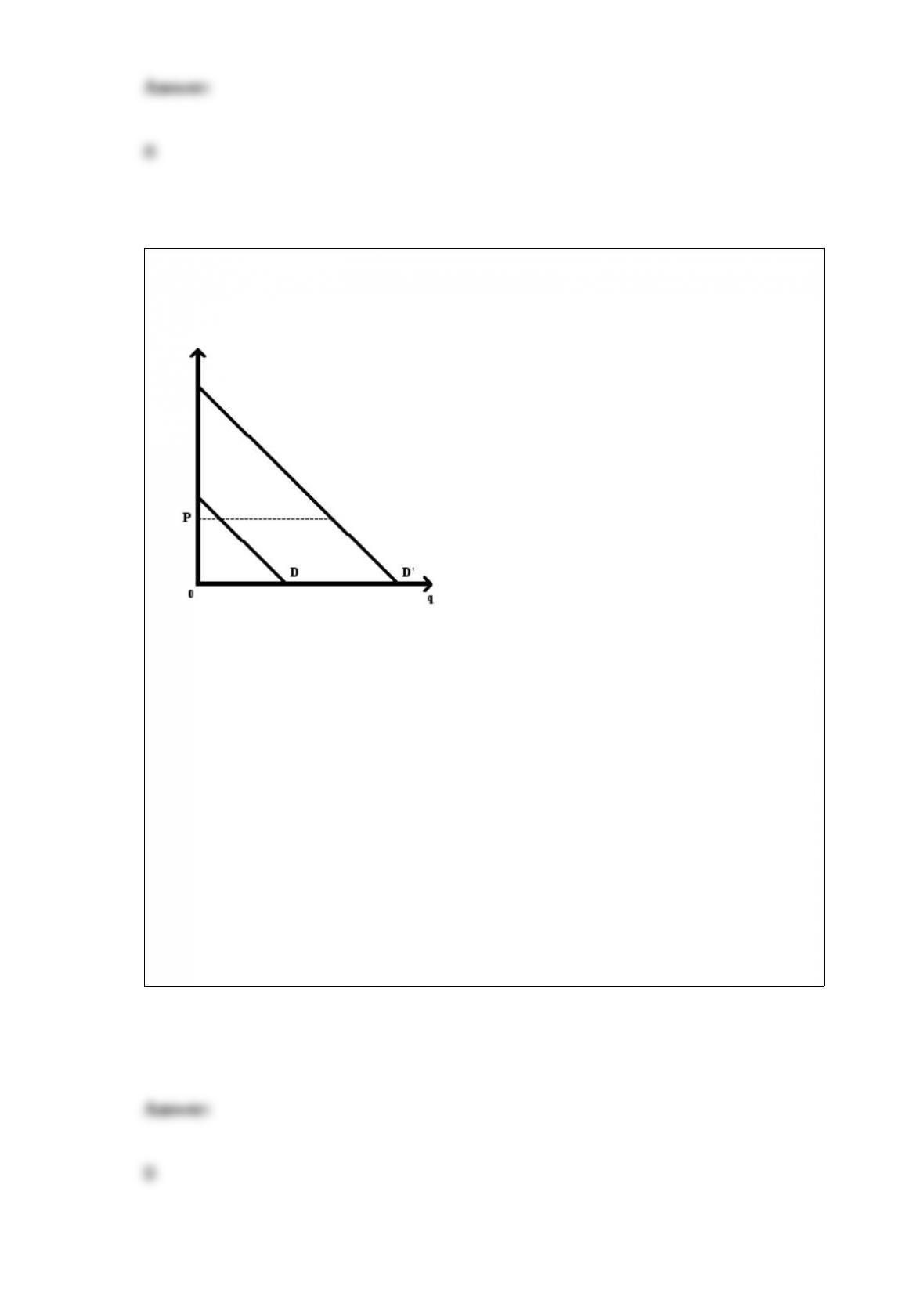
Exhibit 6-18
On a normal day, Emily Mapai’s demand curve for a cup of hot chocolate is initially
shown as D in Exhibit 6-18. On a day when the high temperature does not get above
zero degrees, her demand curve increases to D”. At a price P for a cup of hot chocolate,
Emily’s consumer surplus on a freezing day
a. cannot be determined without calculating an exact marginal valuation
b. increases a great deal over her consumer surplus on a normal day
c. will vary depending on whether hot chocolate is a normal or an inferior good
d. increases only if her demand curve is unit-elastic
e. decreases a great deal over her consumer surplus on a normal day

In one week, Mohammed can knit 5 sweaters or bake 240 cookies. The opportunity cost
per cookie for Mohammed is
a. $5
b. 5 sweaters
c. 48 sweaters
d. 1/48 of a sweater
e. 48 cookies
Labor productivity depends on the
a. quality of the labor
b. the amount of capital
c. the amount of natural resources
d. the amount of other inputs, such as technology
e. All of the answers are correct
Suppose that the demand for my new book, Spatulas From Around the World,is such

that the demand curve lies everywhere below the average variable cost of producing it.
To maximize profits or minimize losses, I should
a. raise price
b. lower price to increase demand
c. shut down the presses printing my book
d. lower price until demand is inelastic
e. charge the highest price I can