
The 2005-2008 Chinese policy with respect to the Yuan has been to
a. allow its currency to float.
b. allow its currency to rise in value quickly.
c. allow its currency to rise in value slowly.
d. allow its currency to fall in value slowly.
e. allow its currency to fall in value quickly.
Commercial banks can increase the money supply by
a. accepting demand deposits
b. loaning out required reserves
c. loaning out excess reserves
d. selling bonds to the public
e. buying bonds from the Fed
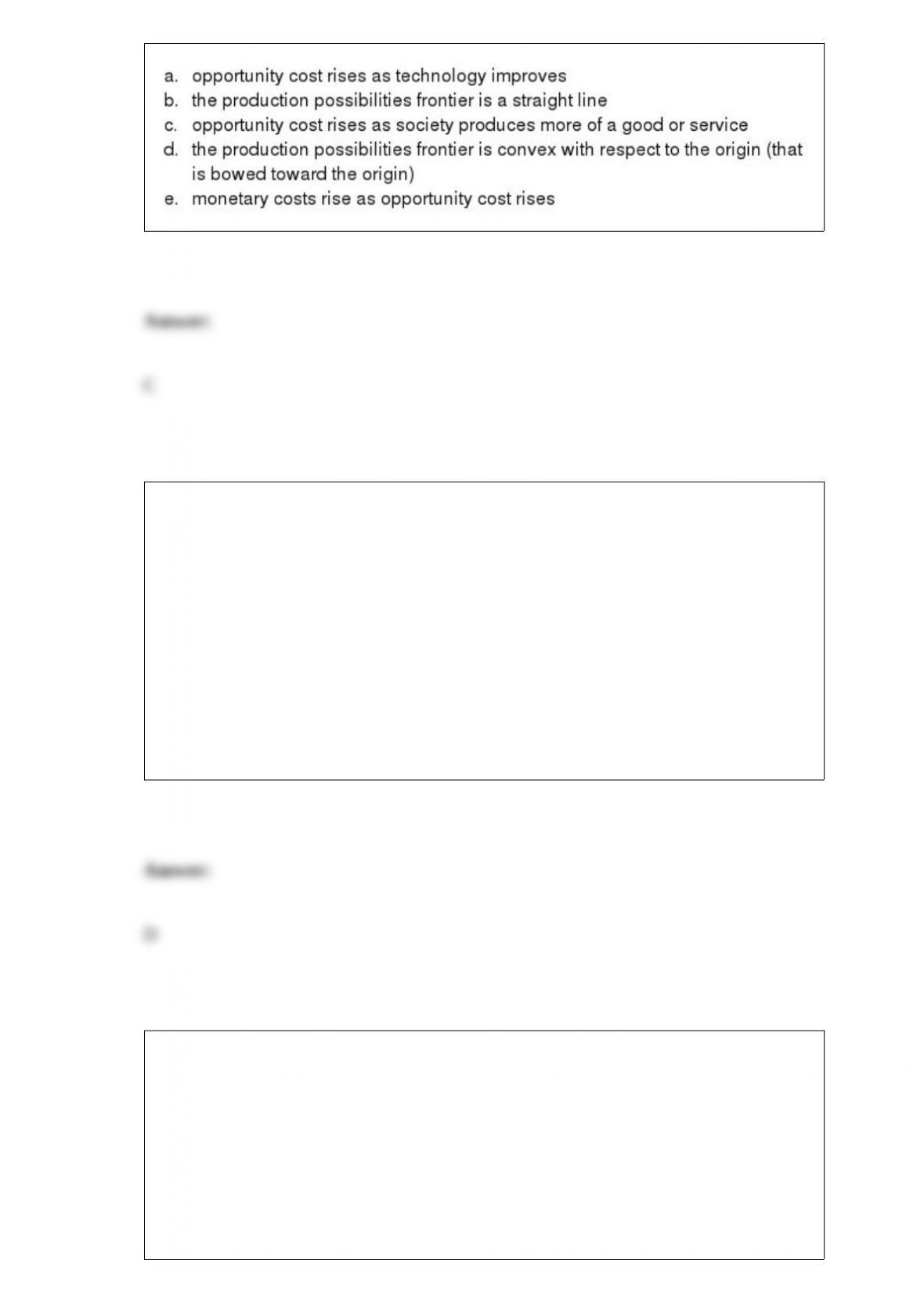
According to the law of increasing opportunity cost,
The outcome of monetary policy can never be certain because
a. unemployment is always changing
b. the concept of a natural rate of unemployment is still not accepted by all policy
makers
c. the slope of the AS curve is never clear
d. time lags disrupt policy planning
e. the natural rate of unemployment lags behind the actual rate of unemployment
The total stock of capital will always increase when
a. depreciation is zero.
b. investment is greater than depreciation.
c. investment is greater than population growth.
d. investment is positive.

e. depreciation is greater than investment.
Suppose you recently took a pay cut of 2% at your job. You expect the price level to fall
by 3% during this year. What would be the impact on your real wage?
a. The real wage would fall by 3%
b. The real wage would rise by 3%
c. The real wage would fall by 1%
d. The real wage would rise by 1%
e. The real wage would be unchanged
Which of the following is a microeconomic problem?
a. frictional unemployment.
b. structural unemployment.
c. cyclical unemployment.
d. natural unemployment.
e. inflation.
Each Federal Reserve District has 9 directors. ____ are appointed by the member banks
in the district and ____ are appointed by the Board of Governors of the Federal Reserve
.
a. 9; 0.
b. 0; 9.
c. 4; 5.
d. 6; 3.
e. 7; 2.
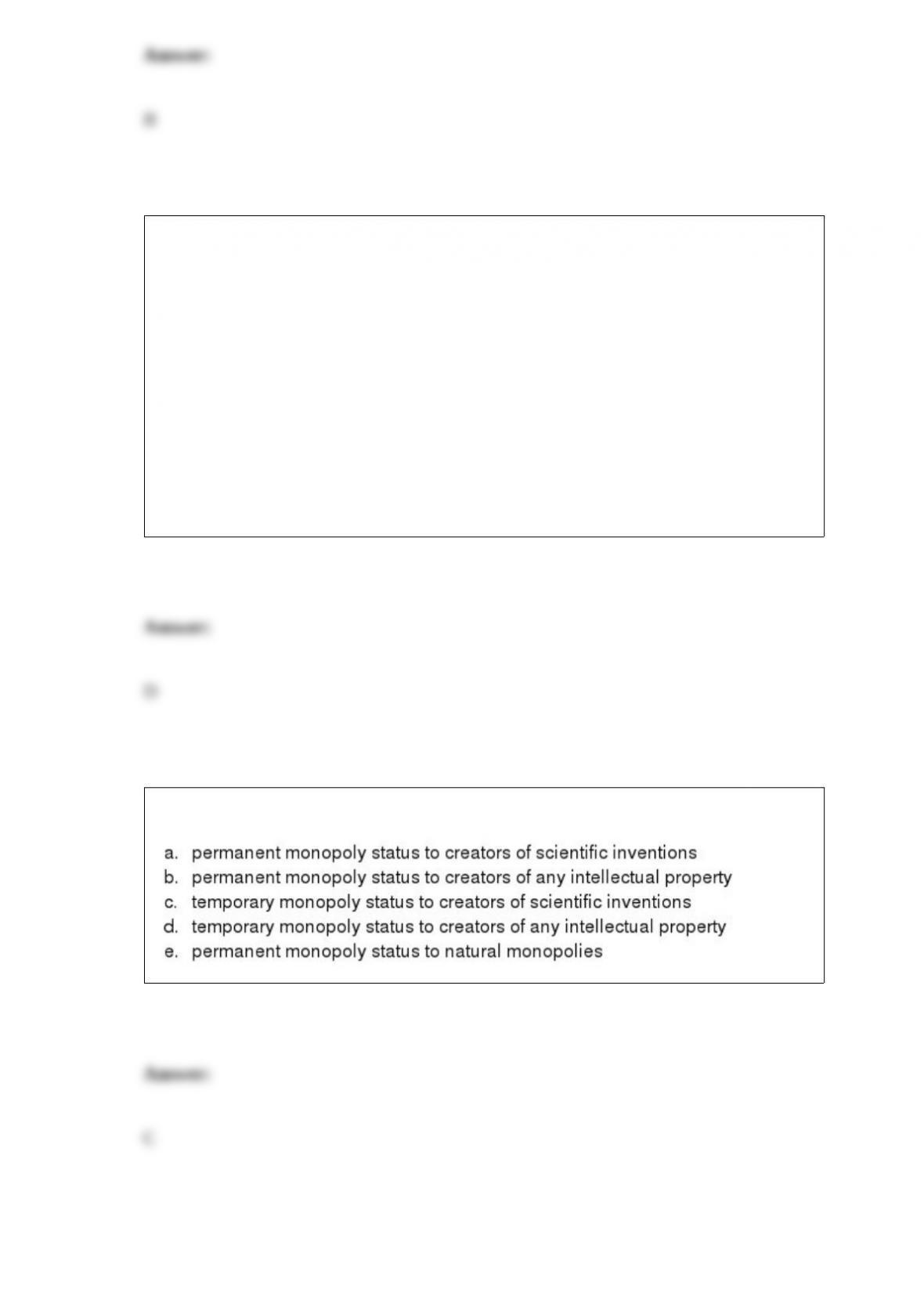
Patents grant

Assume that the U.S. population is 300 million. If 70 million individuals are legally
classified as unable to work (or are less than 16 years of age), 80 million are classified
as unwilling to work, and 14 million are unemployed, what is the unemployment rate?
a. 10.3 percent
b. 6.4 percent
c. 4.7 percent
d. 9.3 percent
e. 6.7 percent