1) A monopolistically competitive firm’s choice of output level is virtually identical to
the choice made by
a.a perfectly competitive firm.
b.a duopolist.
c.a monopolist.
d.an oligopolist.
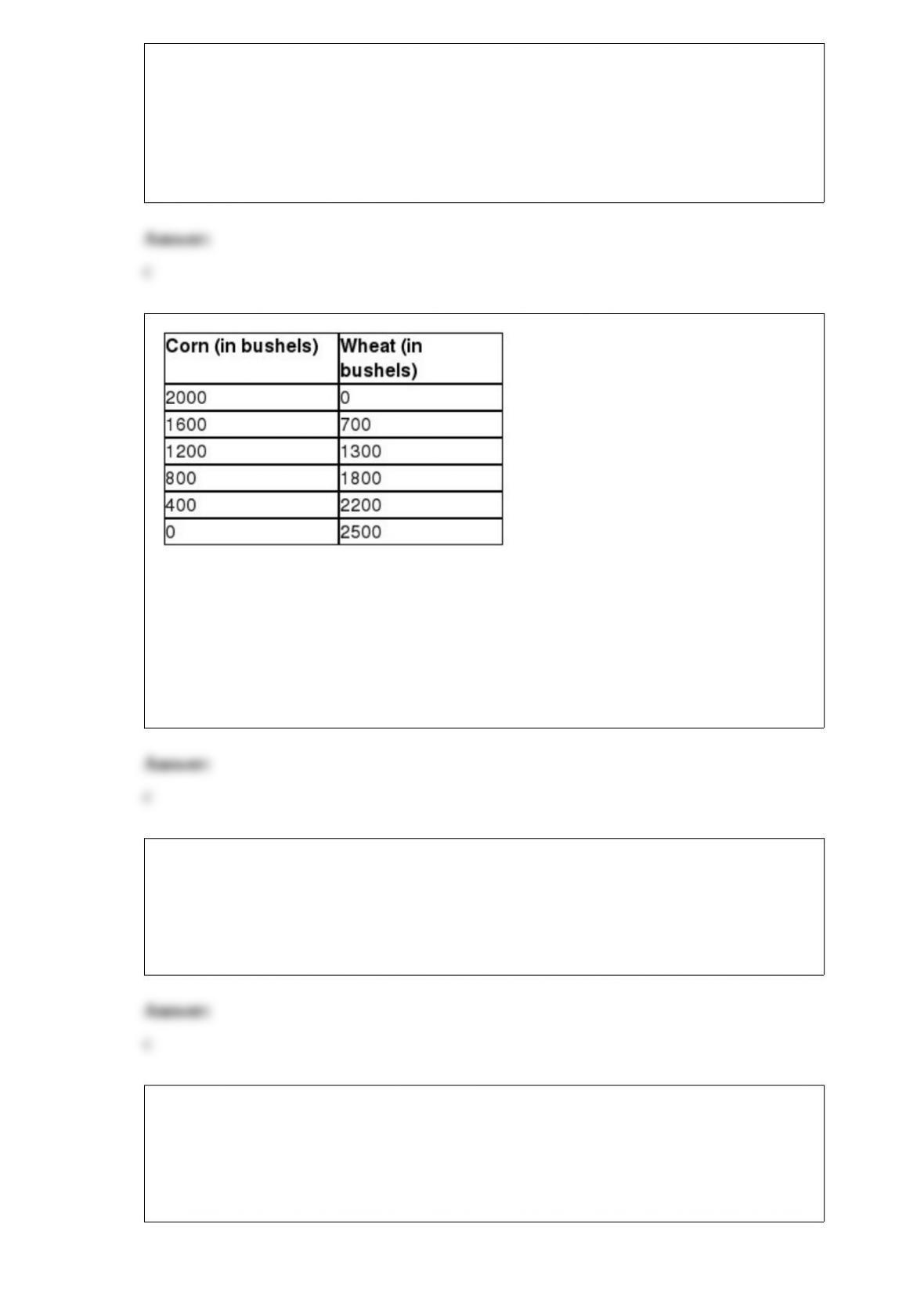
2) Table 2-5 shows one set of production possibilities. Which of the following
combinations of corn and wheat is not currently attainable but would be attainable if
there was an improvement in overall production technology?
a.1600 bushels of corn and 300 bushels of wheat
b.1400 bushels of corn and 800 bushels of wheat
c.1000 bushels of corn and 2000 bushels of wheat
d.600 bushels of corn and 1800 bushels of wheat
3) If something happens to alter the quantity demanded at any given price, then
a.the demand curve becomes steeper.
b.the demand curve becomes flatter.
c.the demand curve shifts.
d.we move along the demand curve.
4) Evidence of differences in average wages of women compared to men
a.clearly illustrates differences in productivity between genders.
b.provides conclusive evidence of discrimination on the basis of gender.
c.is seldom used to provide evidence of discriminatory bias.
d.does not provide conclusive evidence of discrimination.
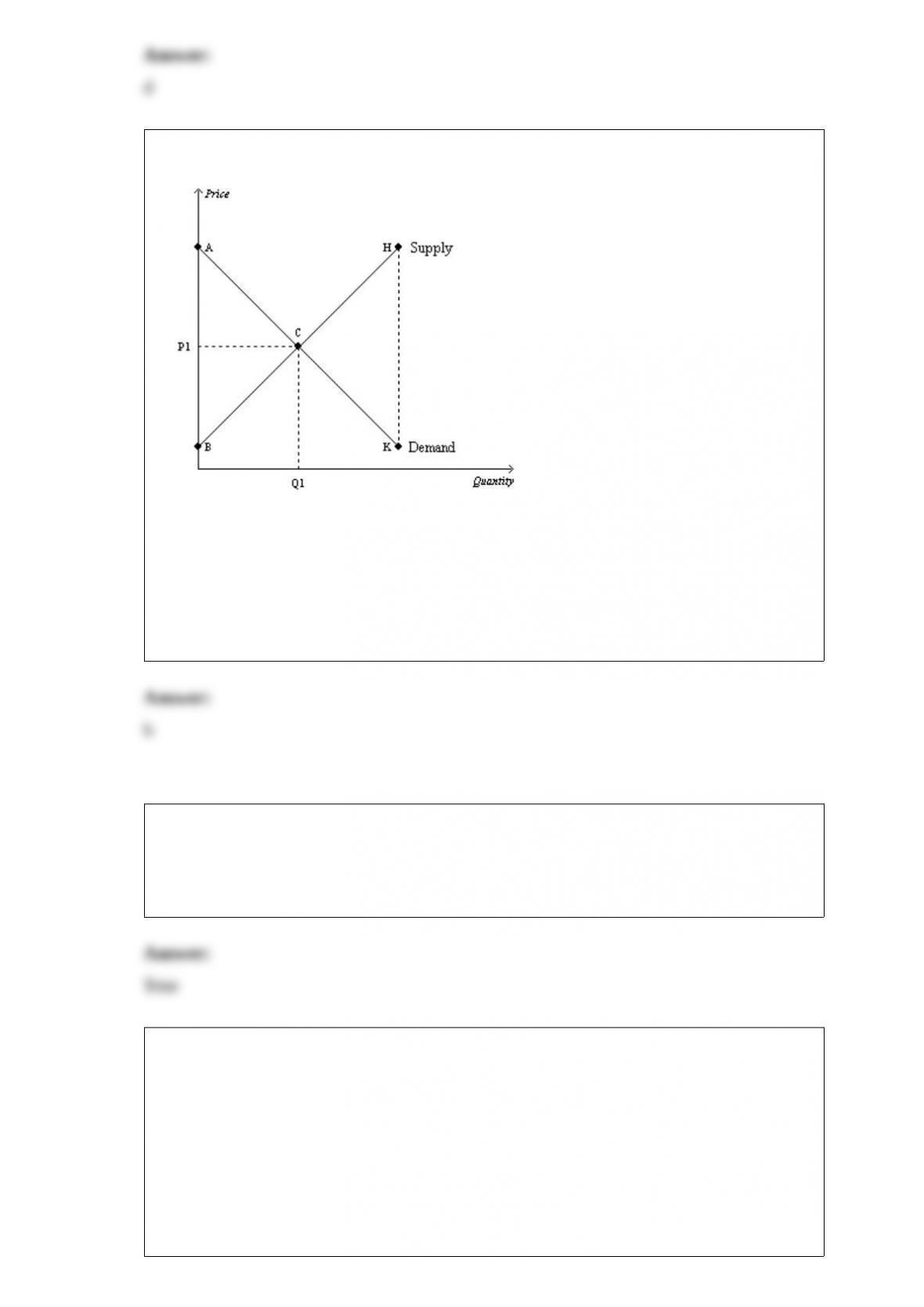
5) Figure 7-27
Refer to Figure 7-27. Buyers who value this good less than the equilibrium price are
represented by which line segment?
a.AC.
b.CK.
c.BC.
d.CH.
6) The business cycle refers to fluctuations in economic activity such as employment
and production.
a.True
b.False
7) Table 17-26
Two prescription drug manufacturers (Firm A and Firm B) are faced with lawsuits from
states to recover the healthcare related expenses associated with side-effects from its
drugs. Each drug manufacturer has evidence that indicates that taking its prescription
drug causes liver failure. State prosecutors do not have access to the same data used by
drug manufacturers and thus will have difficulty recovering full costs without the help
of at least one of the drug manufacturer’s studies. Each firm has been presented with an
opportunity to lower its liability in the suit if it cooperates with attorneys representing
the states.
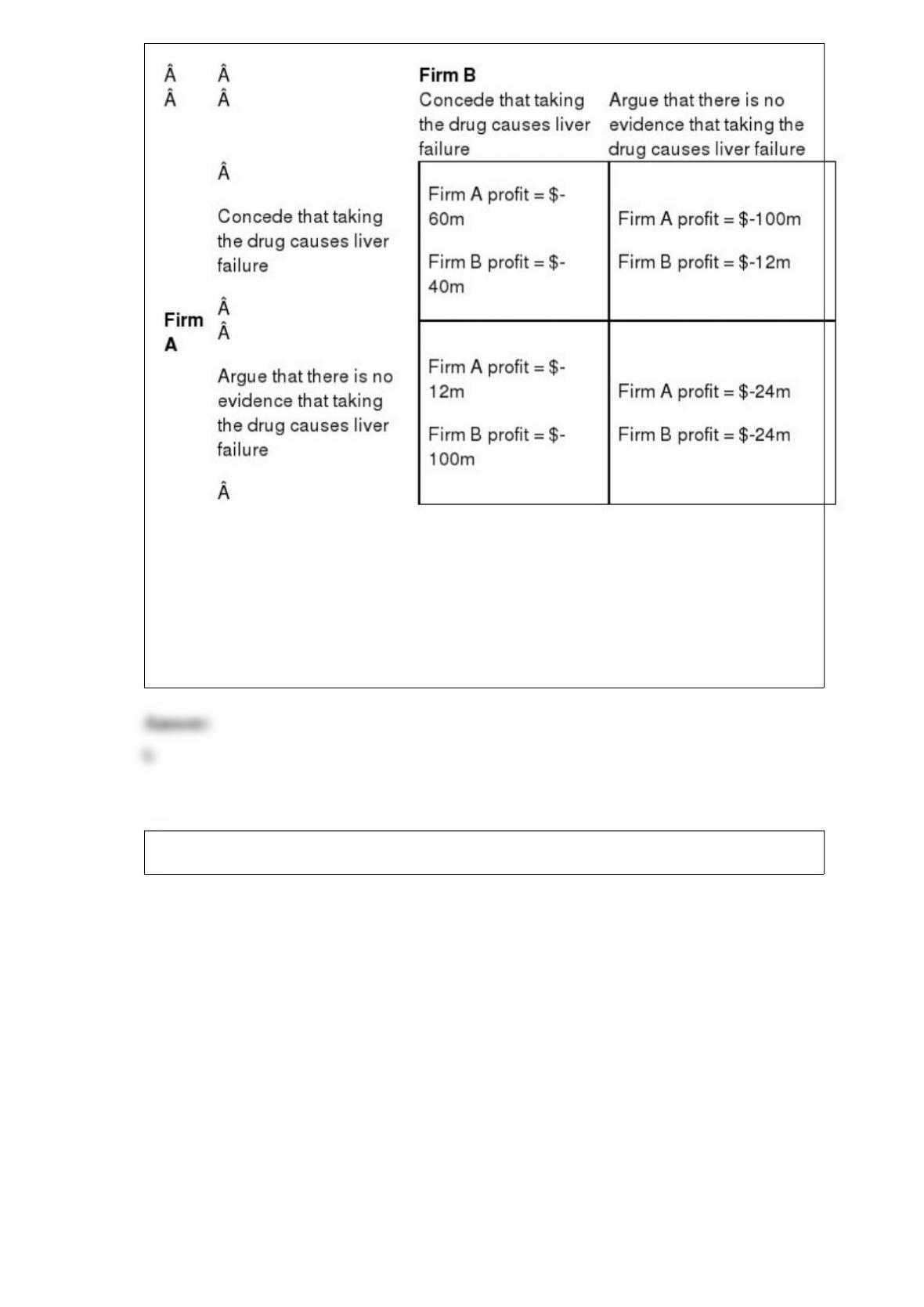
Refer to Table 17-26. Which of the following statements is correct?
a.Neither firm A nor firm B has a dominant strategy.
b.Both firm A and firm B have a dominant strategy.
c.If this game were repeated, these firms would choose different strategies than they
choose in a one-period game.
d.This game is a typical prisoner’s dilemma in which the firms are worse off by making
decisions in their own self-interest.
8) Figure 10-10
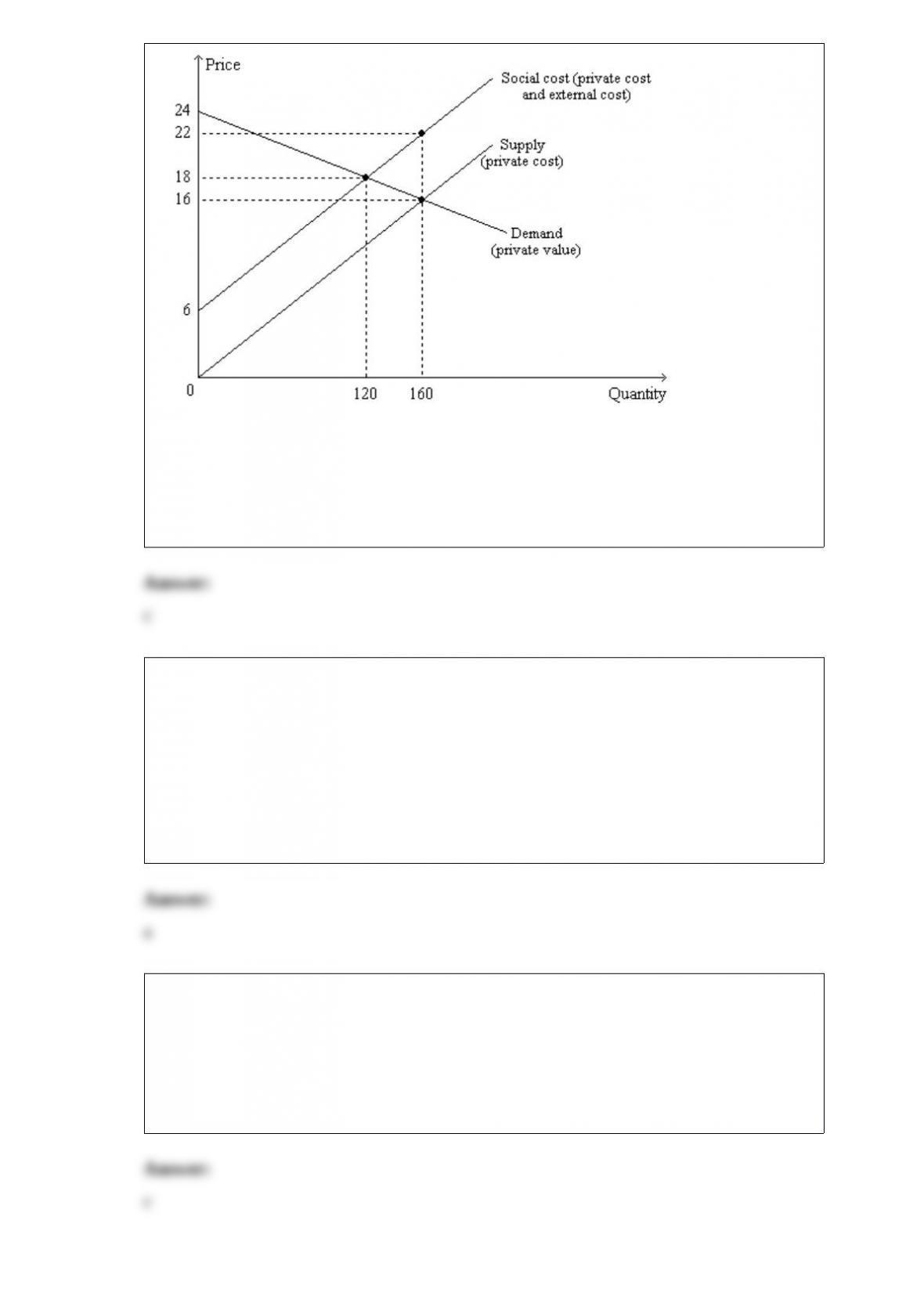
The graph represents a market in which
a.there is no externality.
b.there is a positive externality.
c.there is a negative externality.
d.The answer cannot be determined from inspection of the graph.
9) Maria has just graduated from Princeton University and has applied for a job at a
major bank. The bank decides to offer Maria a job because they perceive her degree
from Princeton to be an indication of her high-ability. To which of the following views
of education does the bank subscribe?
a.signaling
b.human-capital view
c.superstar phenomenon
d.benefits of beauty
10) Get Smart University is contemplating an increase in tuition to enhance revenue. If
GSU feels that raising tuition would enhance revenue, it is
a.ignoring the law of demand.
b.assuming that the demand for university education is elastic.
c.assuming that the demand for university education is inelastic.
d.assuming that the supply of university education is elastic.

11) Jerome says that he will spend exactly $25 each month on new apps for his mobile
device, regardless of the price
of apps. Jerome’s demand for apps is
a.perfectly elastic.
b.unit elastic.
c.perfectly inelastic.
d.somewhat inelastic, but not perfectly inelastic.
12) Why do economists study sports teams when looking for evidence of labor-market
discrimination?
a.because the salaries paid to professional athletes exhibit the superstar phenomenon,
which is highly correlated with discrimination
b.because all four United States professional sports leagues (football, basketball,
hockey, and baseball) require discrimination studies every five years
c.because nonwhites comprise a majority of starters for many professional sports teams
d.because the wide availability of performance statistics allows economists to control
for individual player productivity in ways that are difficult to do for other types of firms
13) Scenario 17-2.
Imagine that two oil companies, BQ and Exxoff, own adjacent oil fields. Under the
fields is a common pool of oil worth $144 million. Drilling a well to recover oil costs
$5 million per well. If each company drills one well, each will get half of the oil and
earn a $67 million profit ($72 million in revenue – $5 million in costs). Assume that
having X percent of the total wells means that a company will collect X percent of the
total revenue.
Refer to Scenario 17-2. If BQ and Exxoff are able to successfully collude to maximize
their joint profits, BQ will
a.drill one well and Exxoff will drill one well.
b.drill one well and Exxoff will drill two wells.
c.drill two wells and Exxoff will drill one well.
d.drill two wells and Exxoff will drill two wells.