According to the production possibility model, if more resources are allocated to the
production of physical and human capital, then which of the following is likely to
happen?
A) Fewer goods will be produced for consumption today.
B) The production possibilities frontier will be shift inward in the future.
C) Future economic growth will decline.
D) The country’s total production will fall.
Figure 9-5 Suppose the U.S. government
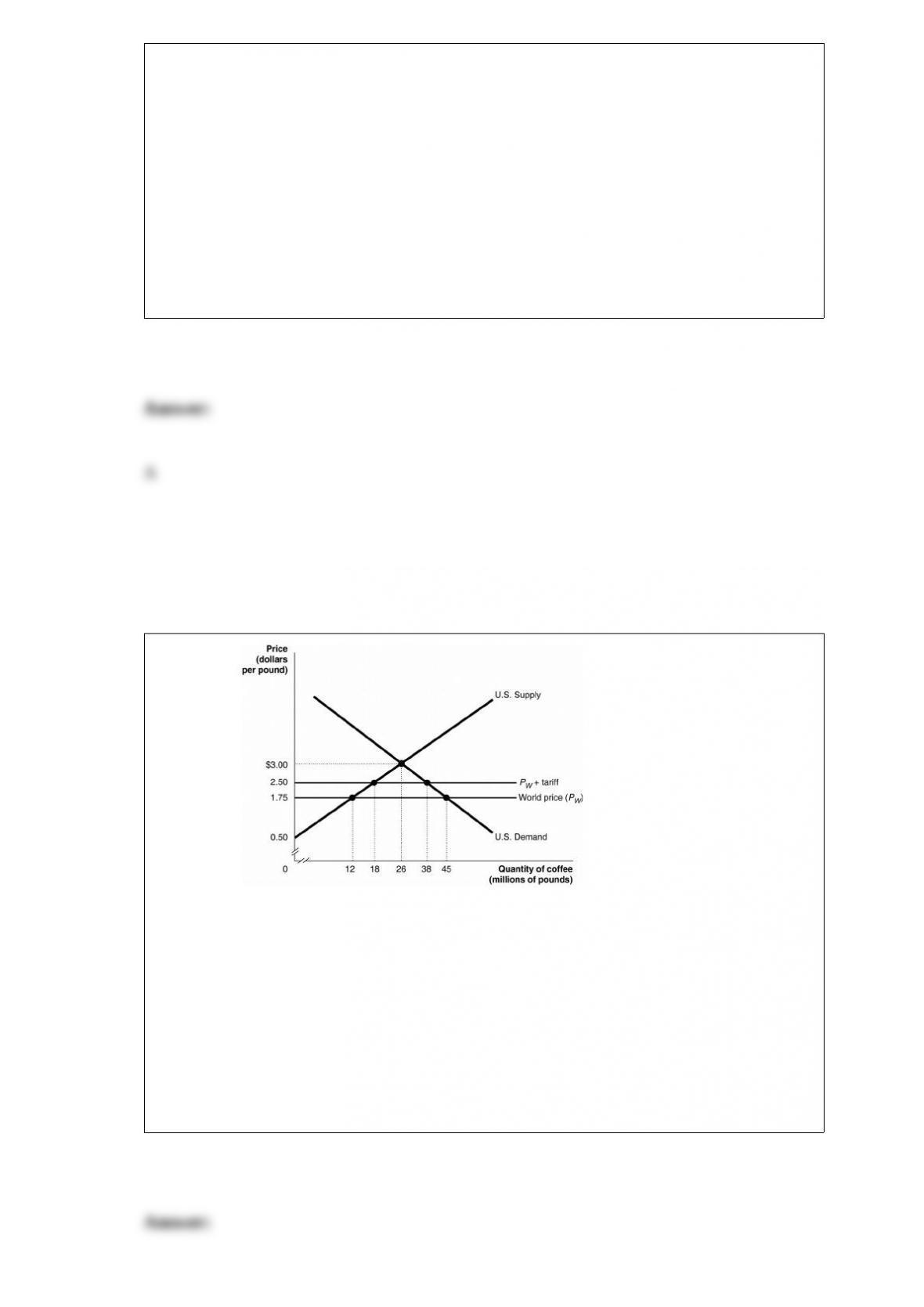
imposes a $0.75 per pound tariff on coffee imports. Figure 9-5 shows the impact of this
tariff. Without the tariff in place, the United States produces
A) 12 million pounds of coffee.
B) 26 million pounds of coffee.
C) 33 million pounds of coffee.
D) 45 million pounds of coffee.
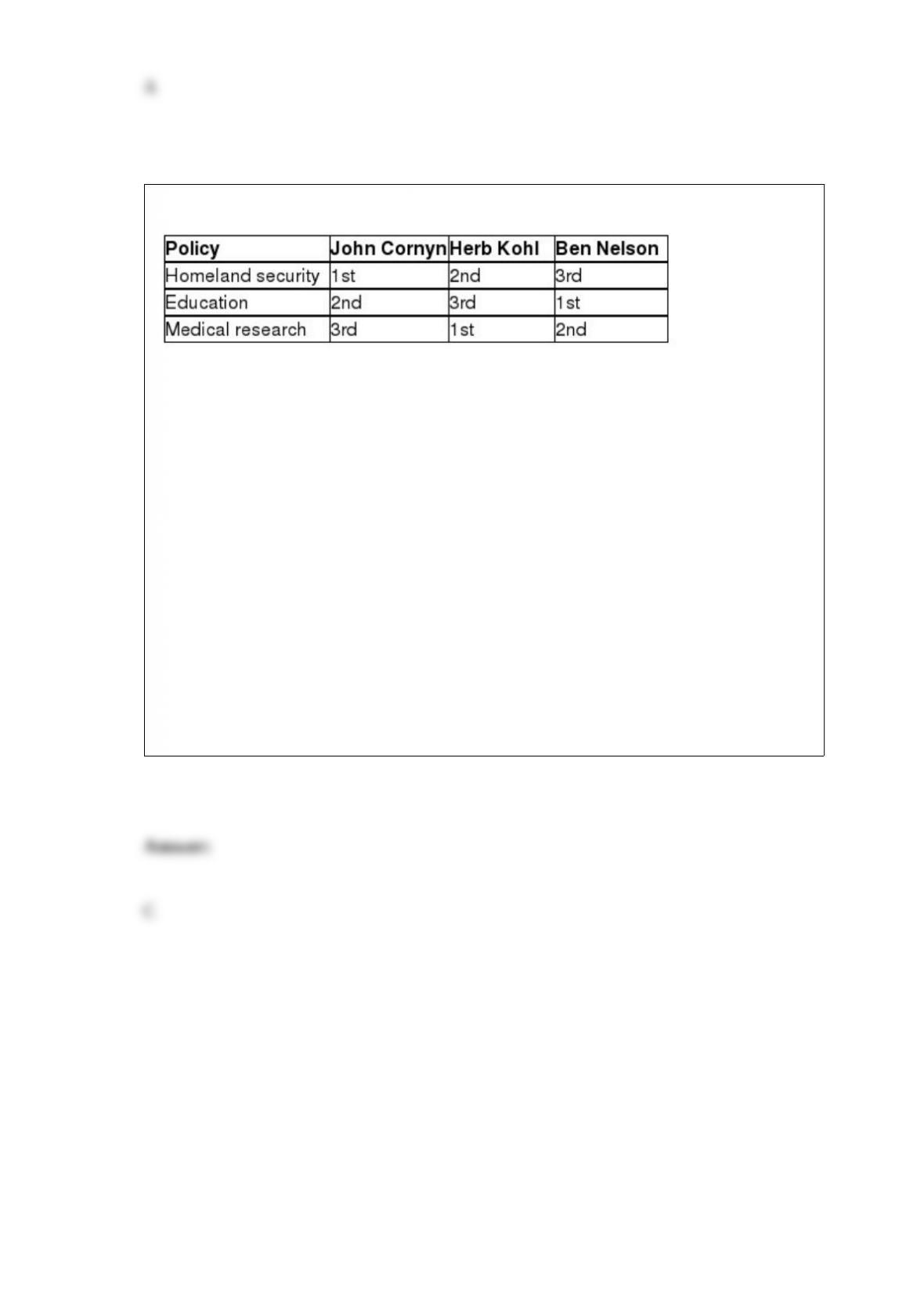
Table 18-2
The table above lists three policy alternatives that the U.S. Senate will vote on, along
with the ranking of these alternates. The Senate must decide which of these alternatives
should receive an additional $1 billion of funding, and there is enough money in the
federal budget for only one of these alternatives. If a series of votes is taken in which
each pair of alternatives is considered (homeland security and education; homeland
security and medical research; education and medical research) which of the following
will result from these votes?
A) When the vote is between homeland security and education, the Senators will vote
for education to receive funding.
B) The Senators’ votes will demonstrate transitivity.
C) The results will illustrate the voting paradox.
D) The results from the voting will illustrate the median voter theorem.
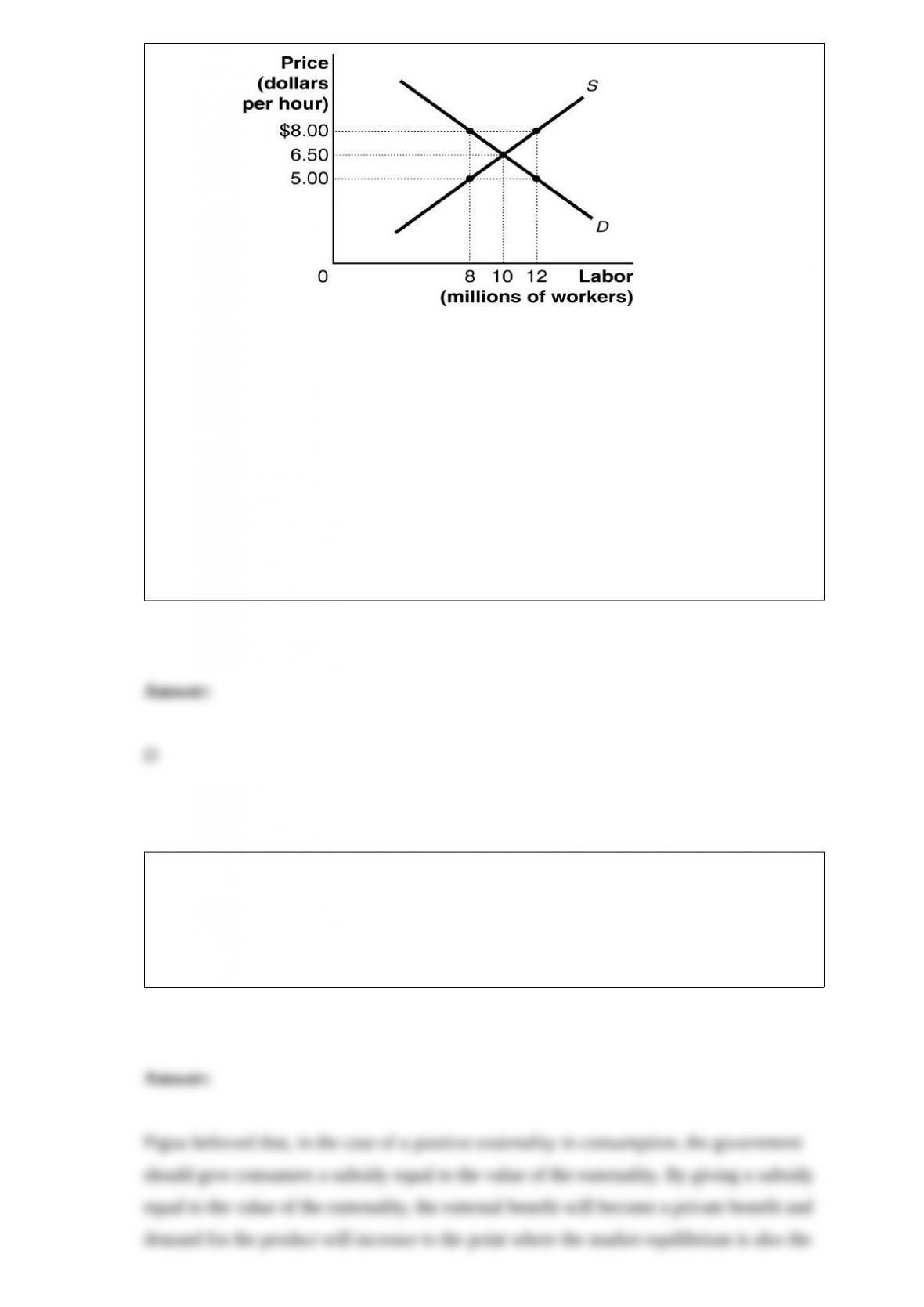
Figure 9-1
Based on the graph of the labor market above, if a minimum wage is set at $5 per hour,
which of the following will occur?
A) The unemployment rate will rise.
B) The unemployment rate will fall.
C) The level of unemployment will rise, but the percentage of the labor force
unemployed will not change.
D) None of the above will occur.
Economist A.C. Pigou argued that to deal with a negative externality in production, the
government should impose a tax equal to the cost of the externality. What did Pigou
believe should be done in the case of a positive externality in consumption? How would
his recommendation impact the demand and market equilibrium for the product which
is generating the positive externality?

A Gini coefficient of ________ means that an income distribution is perfectly equal and
a Gini coefficient of ________ means the income distribution is perfectly unequal.
A) 0; 1
B) 1; 0
C) 0, 100
D) 100, 0
In theory, in the long run, monopolistically competitive firms earns zero profits.
However, in reality there are some ways by which a firm can avoid losing profits.
Which of the following is one such way?
A) gradually increase the mark up on the goods produced
B) lower the price of its products to expand its market share
C) identify new markets and develop products precisely for those markets
D) find a market niche and keep it as narrow as possible so as to prevent other
producers from entering this market segment
Which of the following is a true statement regarding the economic growth model’s
predictions and how it actually affects the real world?
A) The growth model predicts that poor countries should catch up with rich countries,
but developing countries are not catching up to lower-income industrialized countries as
a group.
B) The growth model predicts that poor countries will never catch up with rich
countries, but lower-income industrialized countries are catching up to higher-income
industrialized countries as a group.
C) The growth model predicts that poor countries will catch up with rich countries, but
lower-income industrialized countries are not catching up to higher-income
industrialized countries as a group.
D) The growth model predicts that poor countries will catch up with rich countries, and
this is what we observe across all developmental categories of countries.
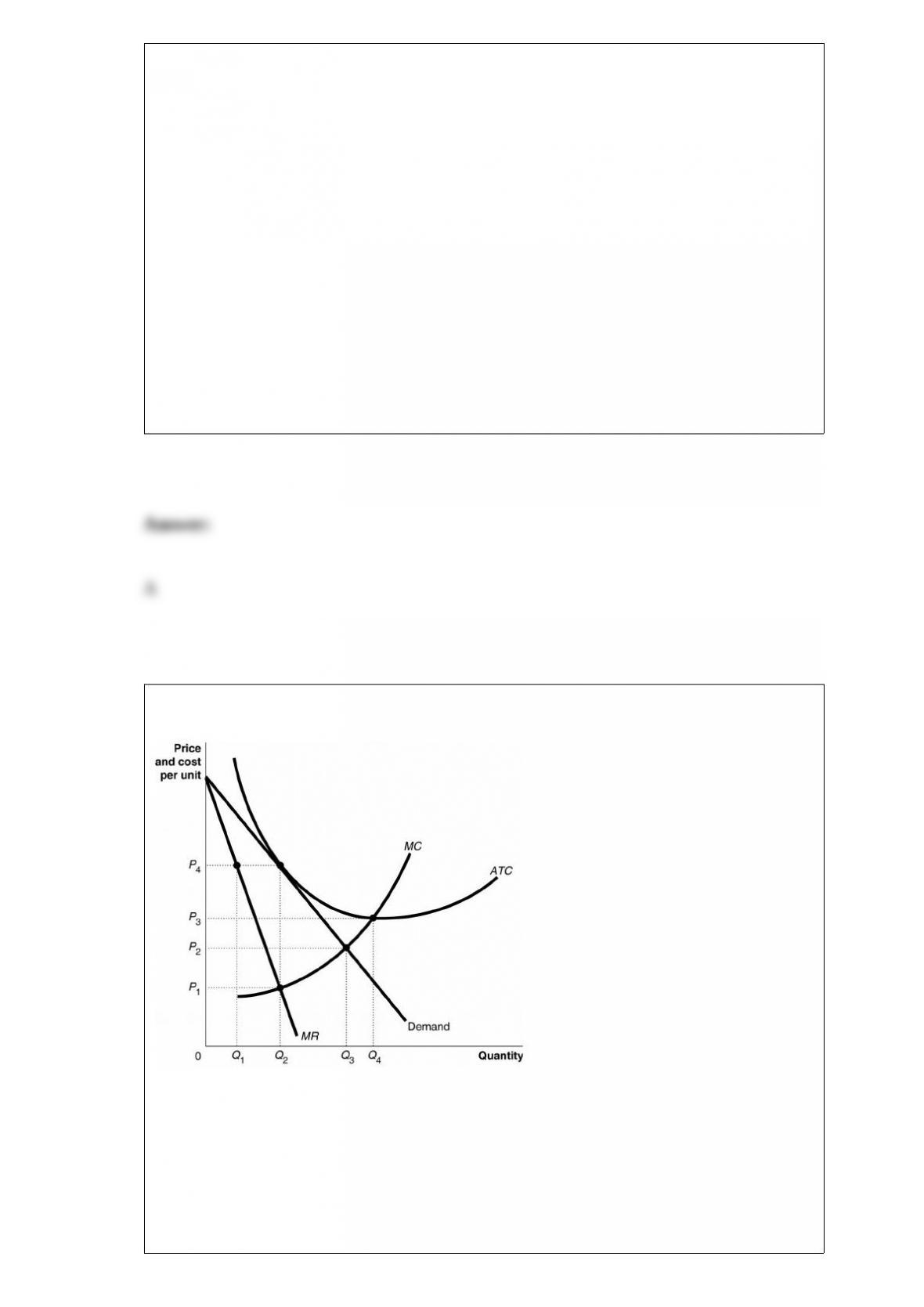
Figure 13-11
What is the allocatively efficient output for the firm represented in the diagram?
A) Q1 units
B) Q2 units

C) Q3 units
D) Q4 units
If the Fed lowers the reserve requirement, then this
A) increases excess reserves, encourages banks to make more loans, and increases the
money supply.
B) decreases excess reserves, causes banks to reduce their loans, and decreases the
money supply.
C) decreases excess reserves, causes banks to reduce their loans, and increases the
money supply.
D) increases excess reserves, causes banks to reduce their loans, and increases the
money supply.
In the short run, if marginal product is at its maximum, then
A) average cost is at its minimum.
B) average variable cost is at its minimum.
C) marginal cost is at its minimum.
D) total cost is at its maximum.
In his book The Wealth of Nations, Adam Smith employed the example of a pin factory
in order to explain what economic concept?
A) the relationship between the marginal and average product of labor
B) the law of diminishing returns
C) why no firm would want to hire so many workers as to experience a negative
marginal product of labor
D) the division of labor
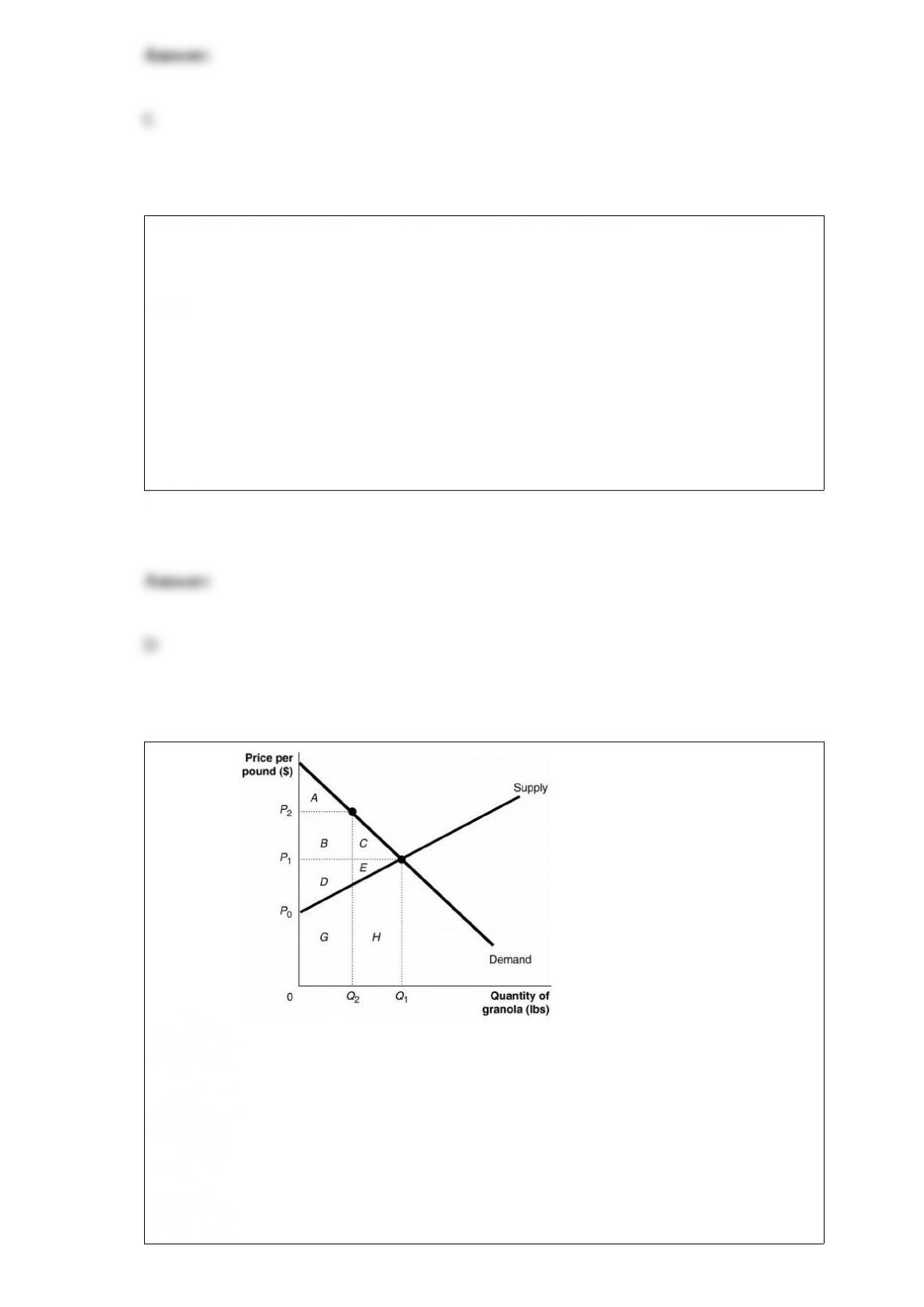
Figure 4-3 Figure 4-3 shows the market for
granola. The market is initially in equilibrium at a price of P1 and a quantity of Q1. Now
suppose producers decide to cut output to Q2 in order to raise the price to P2. At the
price P2, consumers are willing to buy the Q2pounds of granola. Is this an economically
efficient quantity?
A) No, the marginal benefit of the last unit (Q2) exceeds the marginal cost of that last
unit.

B) Yes, otherwise consumers would not buy Q2 units.
C) Yes, because the price P2 shows what consumers are willing to pay for the product.
D) No, the marginal cost of the last unit (Q2) exceeds the marginal benefit of the last
unit.