
Suppose the president of a college argues that a 25 percent tuition increase will raise
revenues for the college. It can be concluded that the president thinks that demand to
attend this college is:
a. elastic. c. unitary elastic.
b. inelastic, but not perfectly inelastic. d. perfectly elastic.
Which of the following statements is true?
a. A less developed country (LDC) is a country with a low GDP per capita, low levels
of capital, and uneducated workers.
b. The vicious circle of poverty exists because GDP must rise before people can save
and invest.
c. LDCs are characterized by rapid population growth and low levels of investment in
human capital.
d. All of these.
Much of the nation’s coal is extracted by strip mining. This process leaves a huge barren
hole in the ground when complete, and the cost of replanting the trees is approximately
$10 per ton of coal. Burning the coal for electricity causes air pollution. No one knows
how much damage the air pollution causes, but we know that for another $10 per ton
the power plant can be outfitted with a pollution control device. What is one measure of
the true social cost of coal fired electricity, in dollars per ton?
a. Private marginal cost plus the $10 replanting charge.

b. Private marginal cost plus the $10 emission control charge.
c. Only the $20 of replanting and emission control charges, because the other costs are
private, not social.
d. Private marginal cost plus the $20 of replanting and emission control charges.
e. In order to answer this question we need to know the dollar value of the pollution.
Which of the following is a normative statement?
a. A decrease in price leads to an increase in quantity consumed.
b. Incomes grow more rapidly in high-tax states than low-tax states.
c. People would be better off if government expenditures were higher.
d. People will buy less butter at $1.50 per pound than they will at $1 per pound.
Market failure occurs when supply and demand curves only reflect:
a. private or market costs and benefits. c. external benefits.
b. external costs and benefits. d. external costs.
The primary purpose of WTO is to:
a. protect the United States from cheap foreign labor.
b. foster trade among nations.
c. promote the dumping of foreign products.
d. increase worldwide tariffs.
e. form a union of European nations.
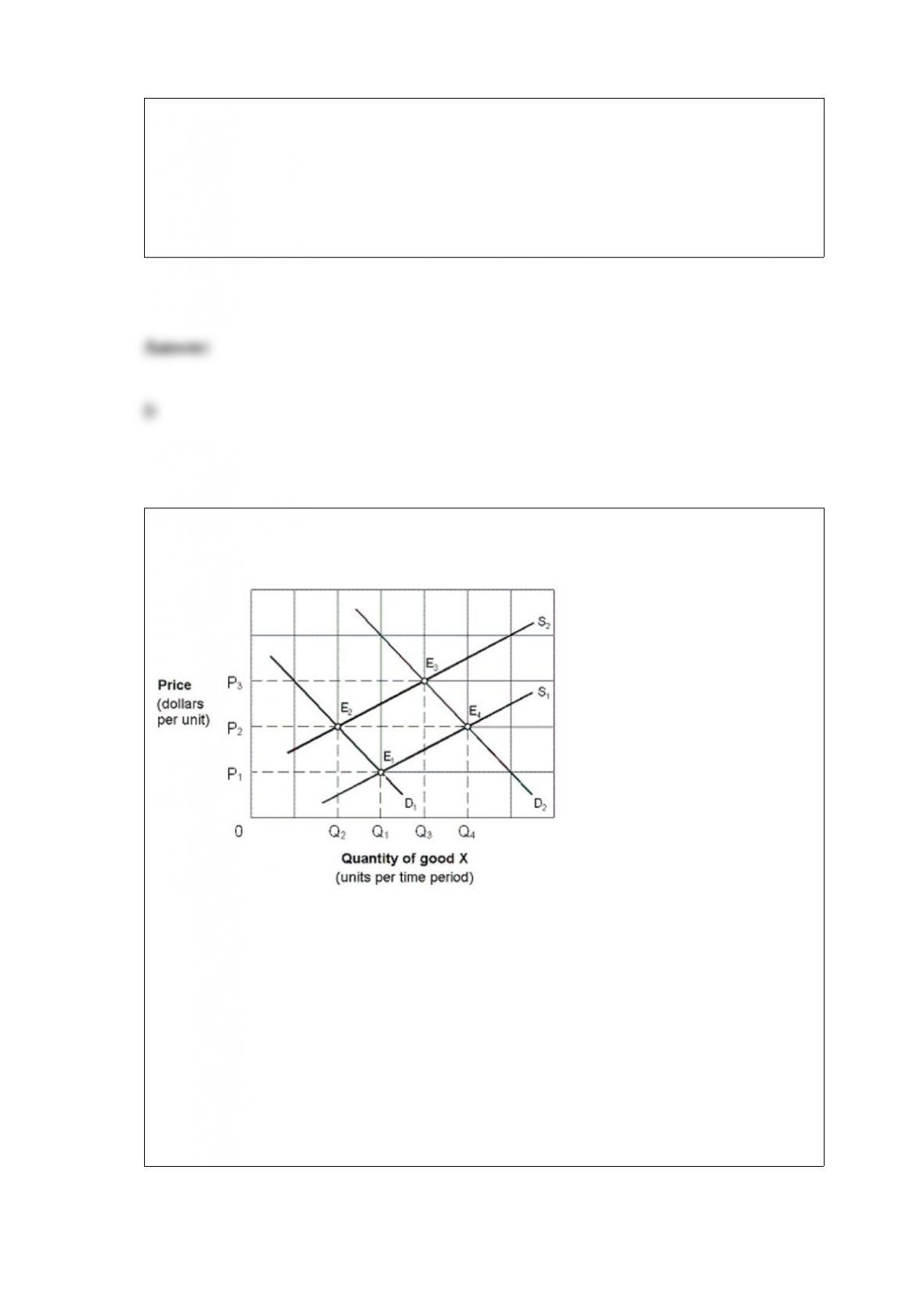
Exhibit 4-3 Supply and demand curves
Initially the market shown in Exhibit 4-3 is in equilibrium at P3, Q3 (E3). Changes in
market conditions result in a new equilibrium at P2, Q2 (E2). This change is stated as a:
a. decrease in demand and an increase in supply.
b. decrease in demand and a decrease in quantity supplied.
c. decrease in quantity demanded and an increase in quantity supplied.
d. decrease in quantity demanded and an increase in supply.

Which of the following is not associated with the monopoly market structure?
a. Many sellers.
b. A single seller.
c. A unique product.
d. Impossible entry into the market.
What is the name of the monopolist having a declining long-run average cost
throughout the market?
a. Monopolistic competition.
b. Monopoly by legal barrier.
c. Natural monopoly.
d. Contrived monopoly.
The purchase of the assets of one steelmaker by another steelmaker might be a violation
of the:
a. Clayton Act. c. Celler-Kefauver Act.
b. Federal Trade Commission Act. d. Robinson-Patman Act.

Sugar and honey are viewed as substitutes for each other in many cooking applications.
If the price of sugar rises, we would expect the:
a. demand for honey to increase.
b. demand for honey to decrease.
c. quantity demanded of honey to decrease.
d. price of honey to decrease.
e. quantity demanded of honey to increase.
If automobiles and gasoline are complements, then their cross-elasticity coefficient will
be:
a. strictly greater than one. c. equal to zero.
b. positive. d. negative.
Ronald Coase’s analysis of externalities emphasizes the importance of:
a. command-and-control regulations. c. property rights.

b. effluent taxes. d. international sovereignty.
If input prices for a perfectly competitive firm increase as the output of the industry
expand in the long run, the long-run industry supply curve will:
a. have a positive slope.
b. have a negative slope.
c. be perfectly horizontal.
d. be perfectly vertical.
Which of the following is the best example of a public good?
a. Cars. c. Radios.
b. Education. d. Air traffic control.
The Civil Aeronautics Board (CAB) was:
a. established in 1934 and reorganized in 1984.
b. established in 1938 and eliminated in 1984.
c. established in 1938 and reorganized in 1991.
d. never a regulatory agency.
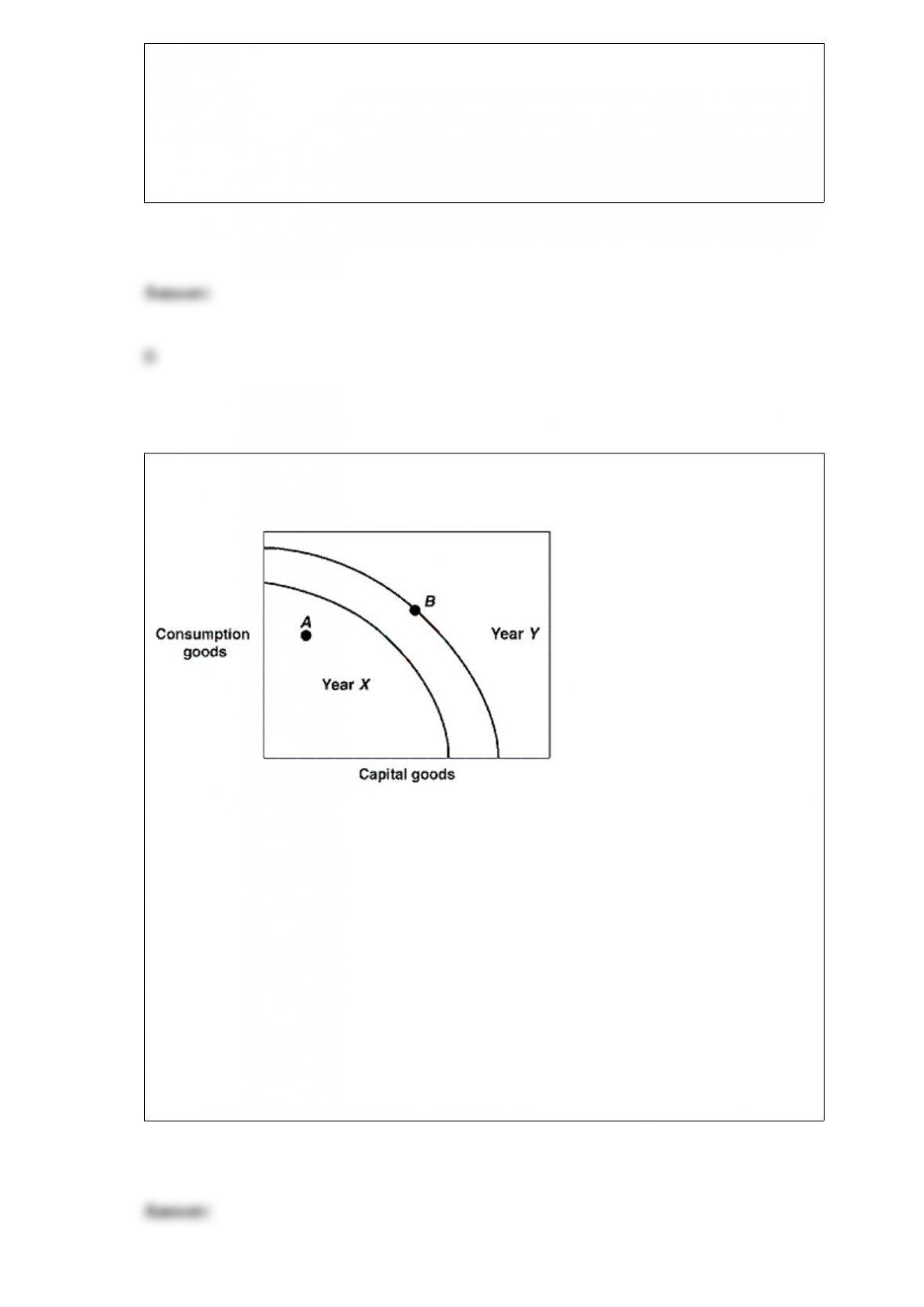
Exhibit 2-19 Production possibilities curves
In Exhibit 2-19, the production possibilities curves for a country are shown for the years
Year X and Year Y. Suppose this country was located at point A in Year X and point B
in Year Y. This economy:
a. has lower unemployment in Year Y than in Year X.
b. was more efficient in Year X than in Year Y.
c. achieved full employment in Year X and in Year Y.
d. showed no growth between Year X and Year Y.
e. is worse off in Year Y than in Year X.
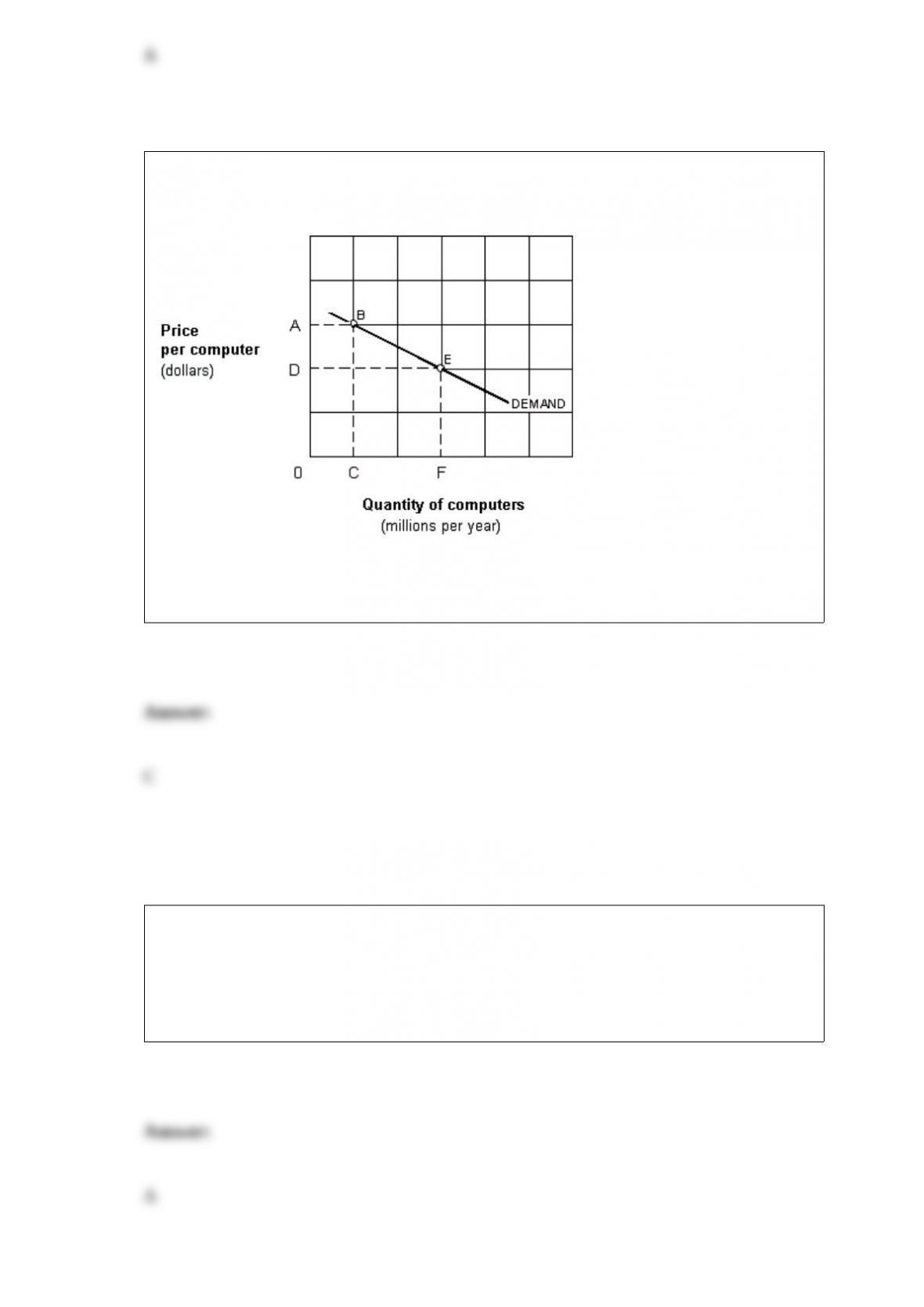
Exhibit 5-5 Demand curve for computers
In Exhibit 5-5, if the area OABC equals the area ODEF, the demand curve is:
a. elastic. c. unitary elastic.
b. inelastic. d. nonelastic.
The ____ is the absolute value of the slope of an indifference curve.
a. marginal rate of substitution
b. average rate of transitivity
c. relative rate of utility
d. marginal rate of transposition

Which of the following would cause the U.S. dollar to depreciate against the Japanese
yen?
a. Greater popularity of U.S. exports in Japan.
b. A higher price level in Japan.
c. Higher real interest rates in the United States.
d. Higher incomes in the United States.
The price elasticity of demand between rifles and bullets is likely to be:
a. negative, because the goods are complements.
b. positive, because the goods are complements.
c. negative, because the goods are substitutes.
d. positive, because the goods are substitutes.
Diseconomies of scale exist over the range of output for which the long-run average
cost curve is:
a. constant.
b. falling.
c. rising.
d. none of these.
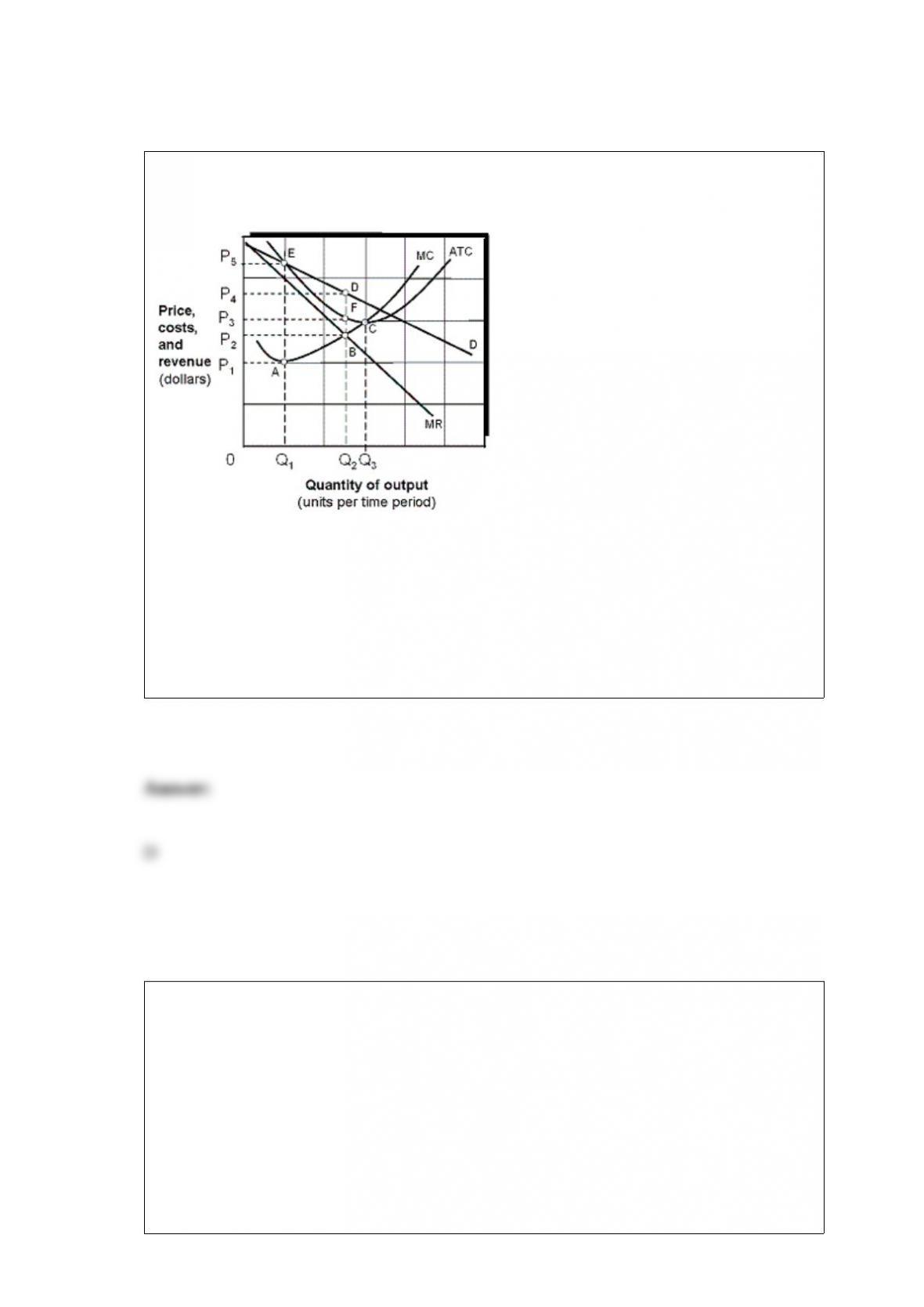
Exhibit 9-8 Profit maximizing for a monopolist
As shown in Exhibit 9-8, the profit-maximizing price for the monopolist is:
a. OP1.
b. OP2.
c. OP3.
d. OP4.
e. OP5.
Investment in both physical and human capital enhances economic growth because it:
a. increases consumption during the current period.
b. makes it possible for individuals to produce more goods and services per hour
worked.
c. encourages firms to expand output by employing more low-productivity workers.
d. encourages workers to unionize and, thereby, fight for higher wages.
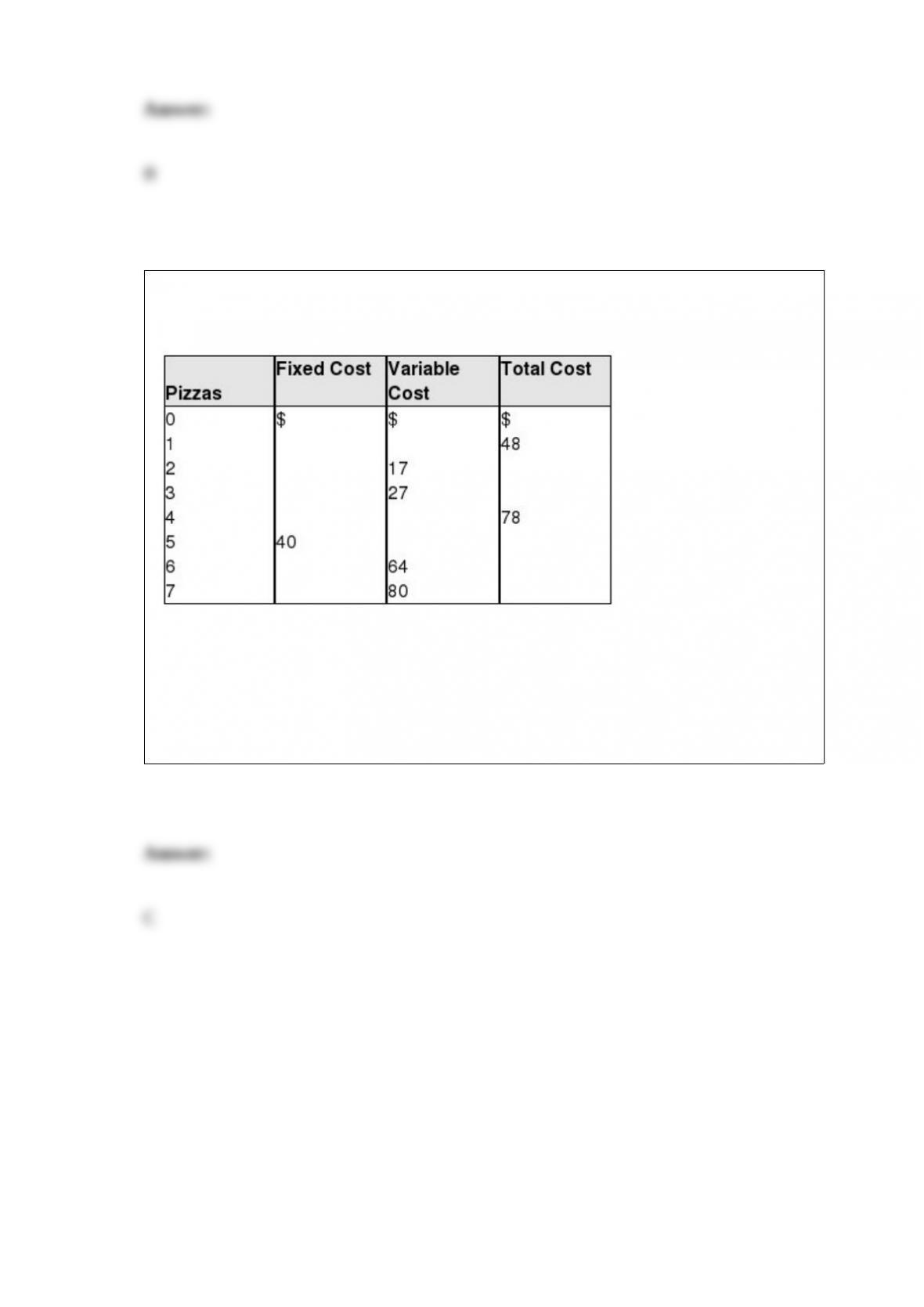
Exhibit 7-12 Cost schedule for producing pizza
By filling in the blanks in Exhibit 7-12, the ATC of 4 pizzas is shown to be equal to:
a. $10.
b. $9.50.
c. $19.50.
d. $40.
e. $78.