1)
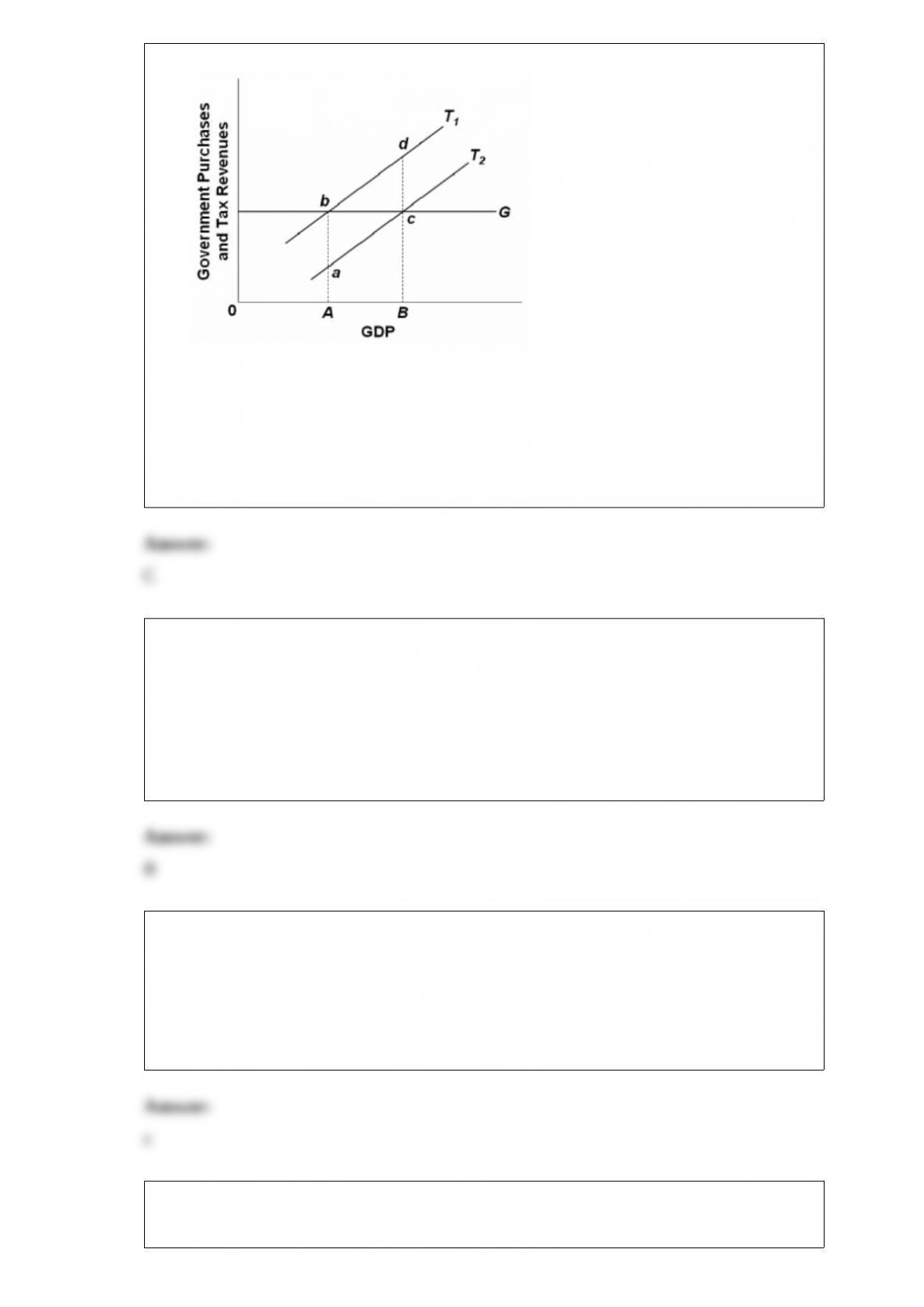
Refer to the above diagram. Assume that G and T1 are the relevant curves and that the
economy is currently at B, which is its full-employment GDP. This economy has a:
A.standardized budget surplus only.
B.standardized budget deficit only.
C.standardized budget surplus and an actual budget surplus.
D.standardized deficit and an actual budget deficit.
2) The Fed is like a sponge in that it can:
A.clean up economic problems just as one would wash dirt of a car.
B.squeeze new reserves into the banking system, or soak up reserves if the banking
reserve “bowl” is too full.
C.wipe away inflation when used with the ‘soap” of fiscal policy.
D.wash the “windows” of the banking system so that monetary policy is more
transparent.
3) according to estimates, what percentage of agricultural workers in the united states
are illegal immigrants?
a.12
b.17
c.24
d.43
4) All of the following increase the expected rate of return on R&D expenditures,
except:
A.patents.
B.trademarks.
C.imitation by others.
D.trade secrets.
5)
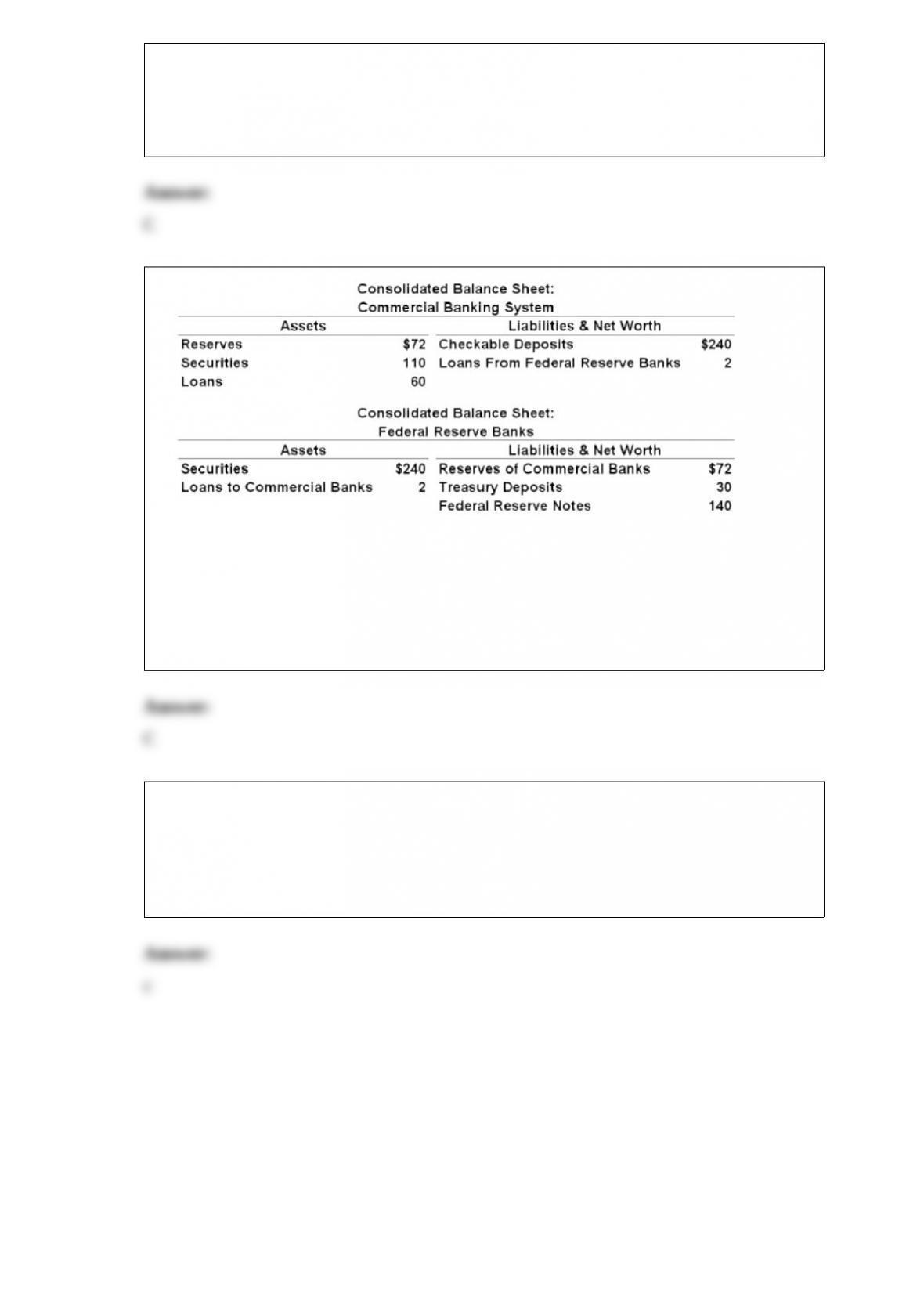
Refer to the above balance sheets. If the reserve ratio is 25%, the maximum
money-creating potential of the commercial banking system is:
A.$36.
B.$17.
C.$48.
D.$24.
6) externalities:
a.relate to costs only.
b.relate to benefits only.
c.relate to both costs and benefits.
d.have been legislated out of existence.
7)
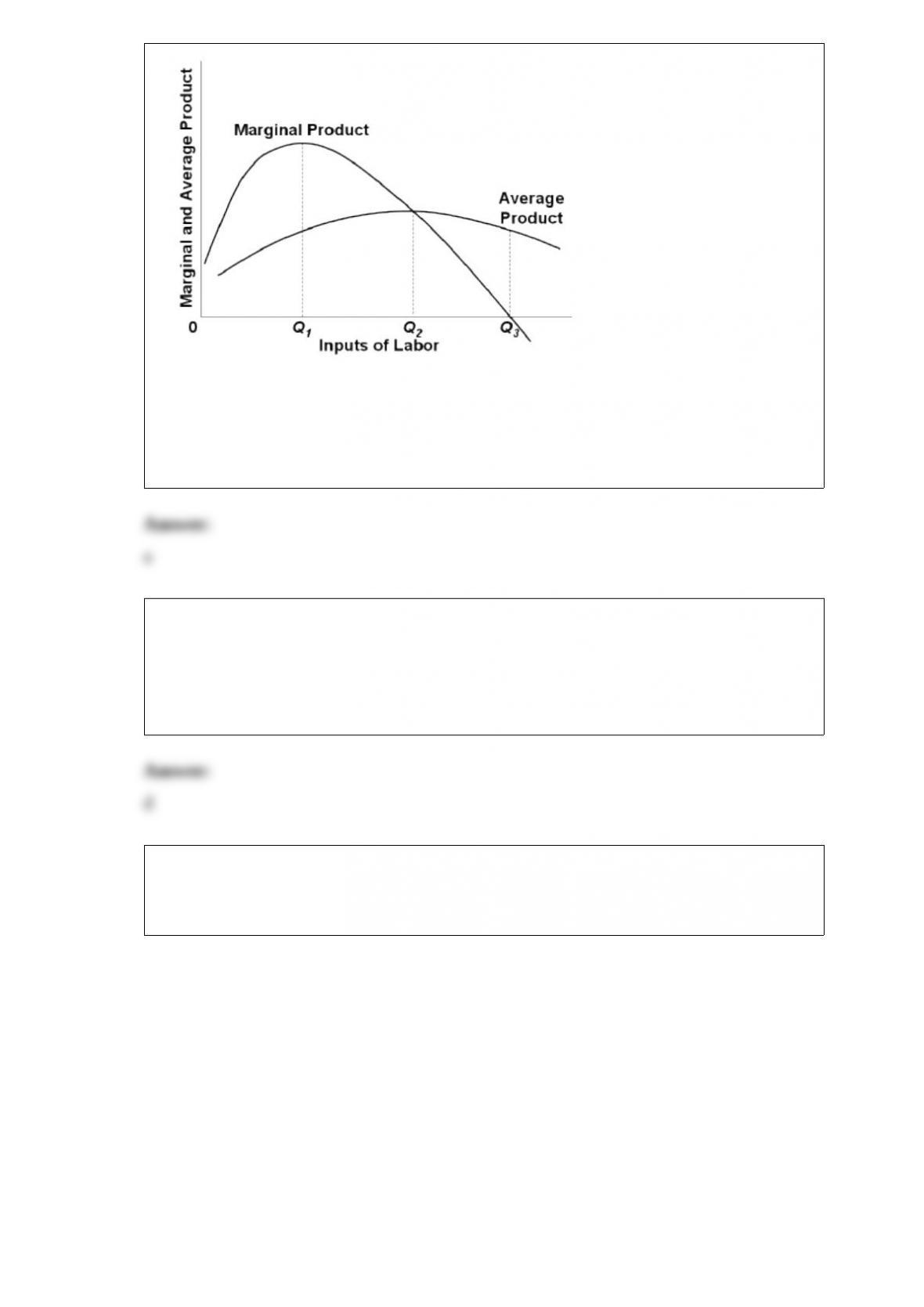
in the above diagram, total product will be at a maximum at:
a.q3 units of labor
b.q2 units of labor
c.q1 units of labor
d.some point that cannot be determined with the above information.
8) economists use the term “demand” to refer to:
a.a particular price-quantity combination on a stable demand curve.
b.the total amount spent on a particular commodity over a stipulated time period.
c.an upsloping line on a graph that relates consumer purchases and product price.
d.a schedule of various combinations of market prices and amounts demanded.
9) Complete the following table, where L is the units of labor, TPL is the total product
of labor, MPL is the marginal product of labor, P is product price, TR is total revenue,
and MRPL is the marginal revenue product of labor.
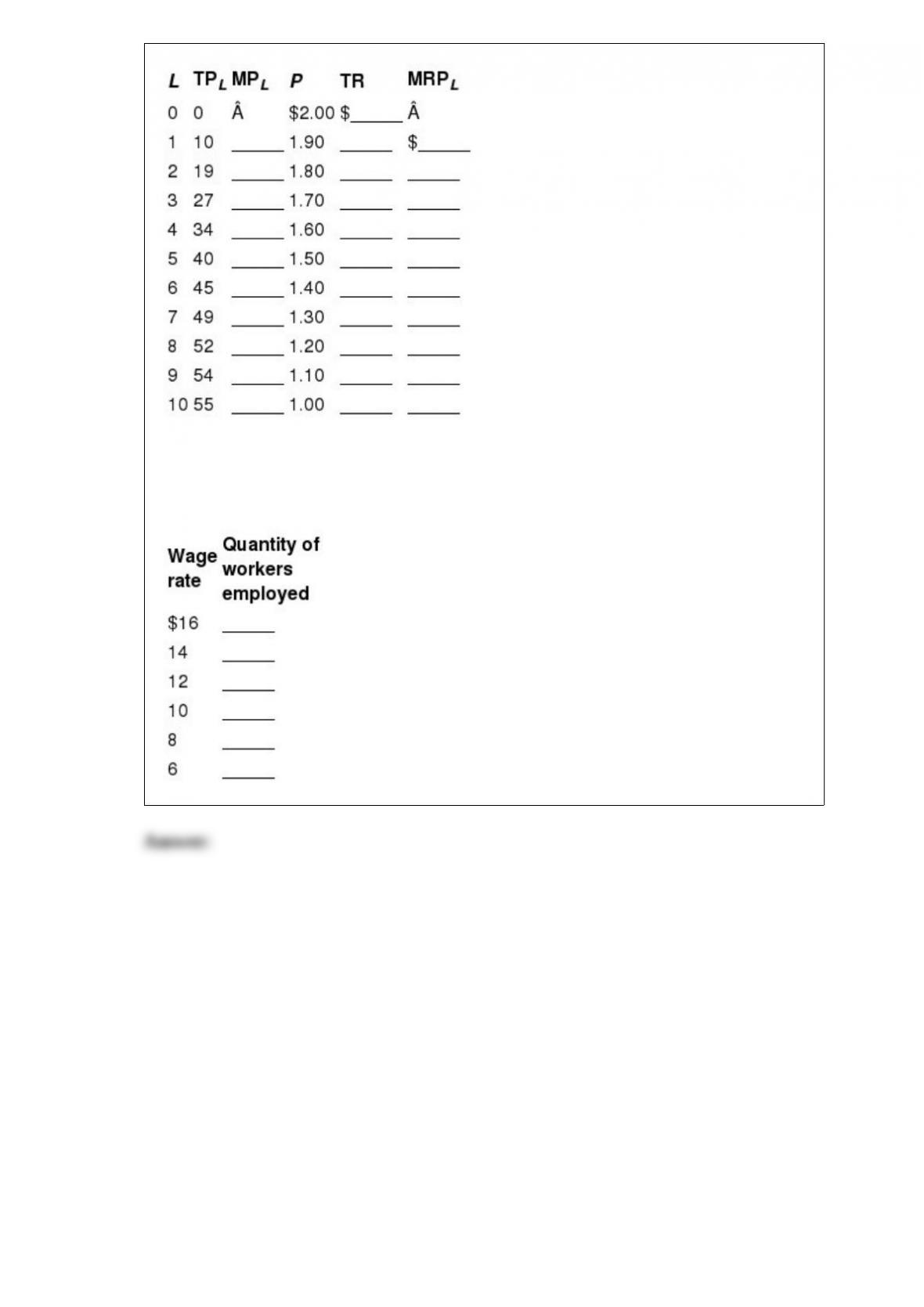
(a)In what type of market is the firm selling its product? How do you know?
(b)Why does the MRP schedule decrease as labor increases?
(c)Complete the following table.
10) What percentage of their spending do U.S. consumers allocate to food purchases?
A.1 percent
B.7 percent
C.11 percent
D.14 percent
11) Monetary policy is expected to have its greatest impact on:
A.Xg.
B.Ig.
C.C.
D.G.
12)
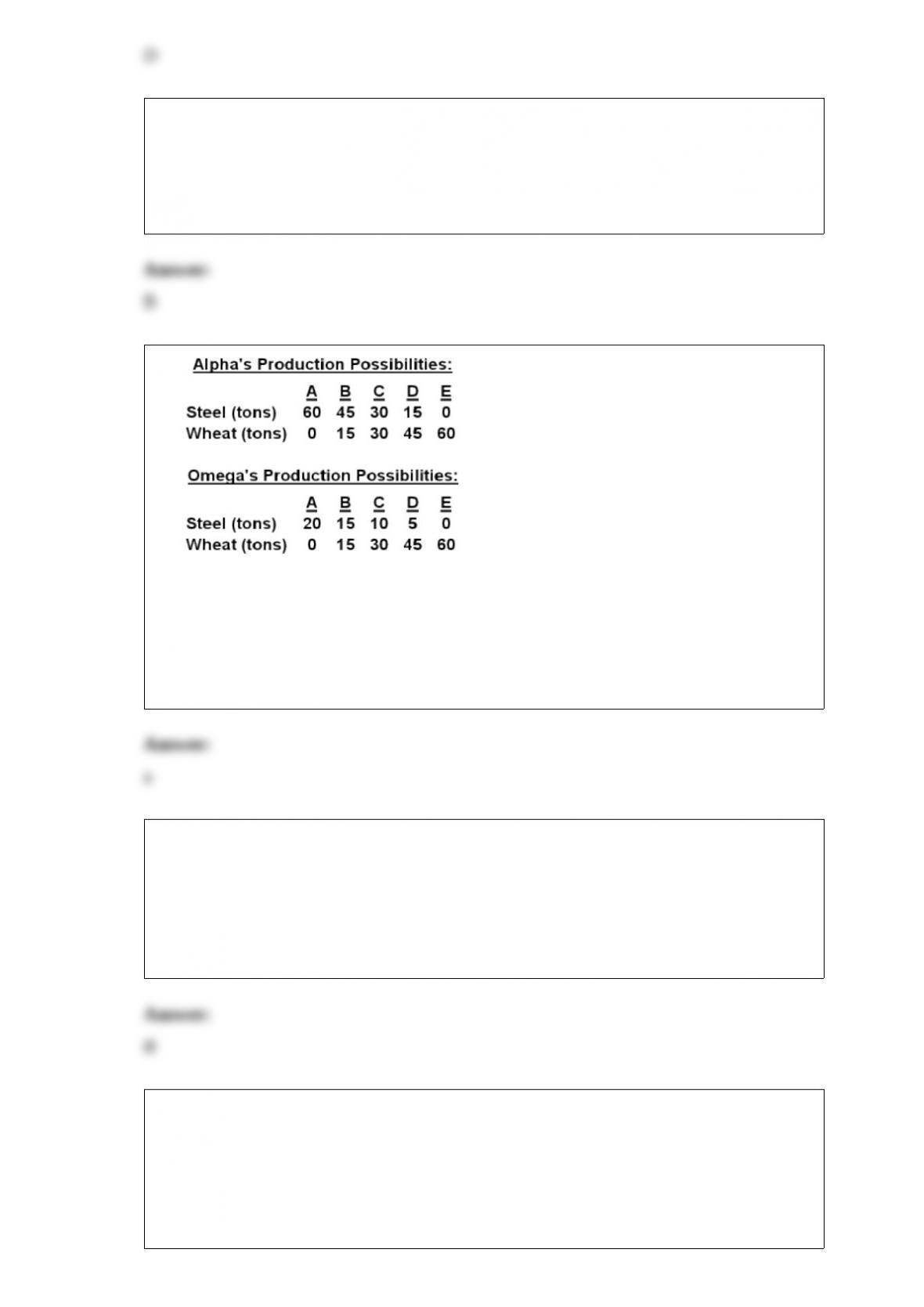
refer to the above data. if alpha and omega each were producing at alternatives b before
trade, the gain from specialization and trade would be:
a.30 tons of wheat.
b.15 tons of steel.
c.30 tons of steel and 30 tons of wheat.
d.60 tons of wheat and 60 tons of steel.
13) Which of the following statements concerning the equilibrium level of GDP is
incorrect?
A.there will be no tendency for businesses to alter the aggregate rate of production
B.full employment will necessarily be realized
C.no unintended changes in inventories will occur
D.leakages equal injections
14) Which of the following helps finance the medical expenses of individuals receiving
TANF or SSI?
A.Medicare
B.Supplemental Security Income (SSI)
C.Medicaid
D.Social Security

15) the demand for autos is likely to be:
a.less elastic than the demand for honda accords.
b.more elastic than the demand for honda accords.
c.of the same elasticity as the demand for honda accords.
d.perfectly inelastic.
16) Which of the following statements is correct?
A.The actual reserves of a commercial bank equal its excess reserves minus its required
reserves.
B.A bank’s liabilities plus its net worth equal its assets.
C.When borrowers repay bank loans, the supply of money increases.
D.A single commercial bank can safely lend a multiple amount of its excess reserves.