1) Which of the following is correct?
a.A horizontal line has an infinite slope, and a vertical line has a zero slope.
b.A horizontal line has a slope of 1, and a vertical line has a slope of -1.
c.A horizontal line has a zero slope, and a vertical line has an infinite slope.
d.A horizontal line has a slope of -1, and a vertical line has a slope of 1.
2) If the wage exceeds the value of the marginal product of labor, then hiring another
worker
a.decreases the firm’s total revenue.
b.increases the firm’s profit.
c.decreases the firm’s total cost.
d.decreases the firm’s profit.
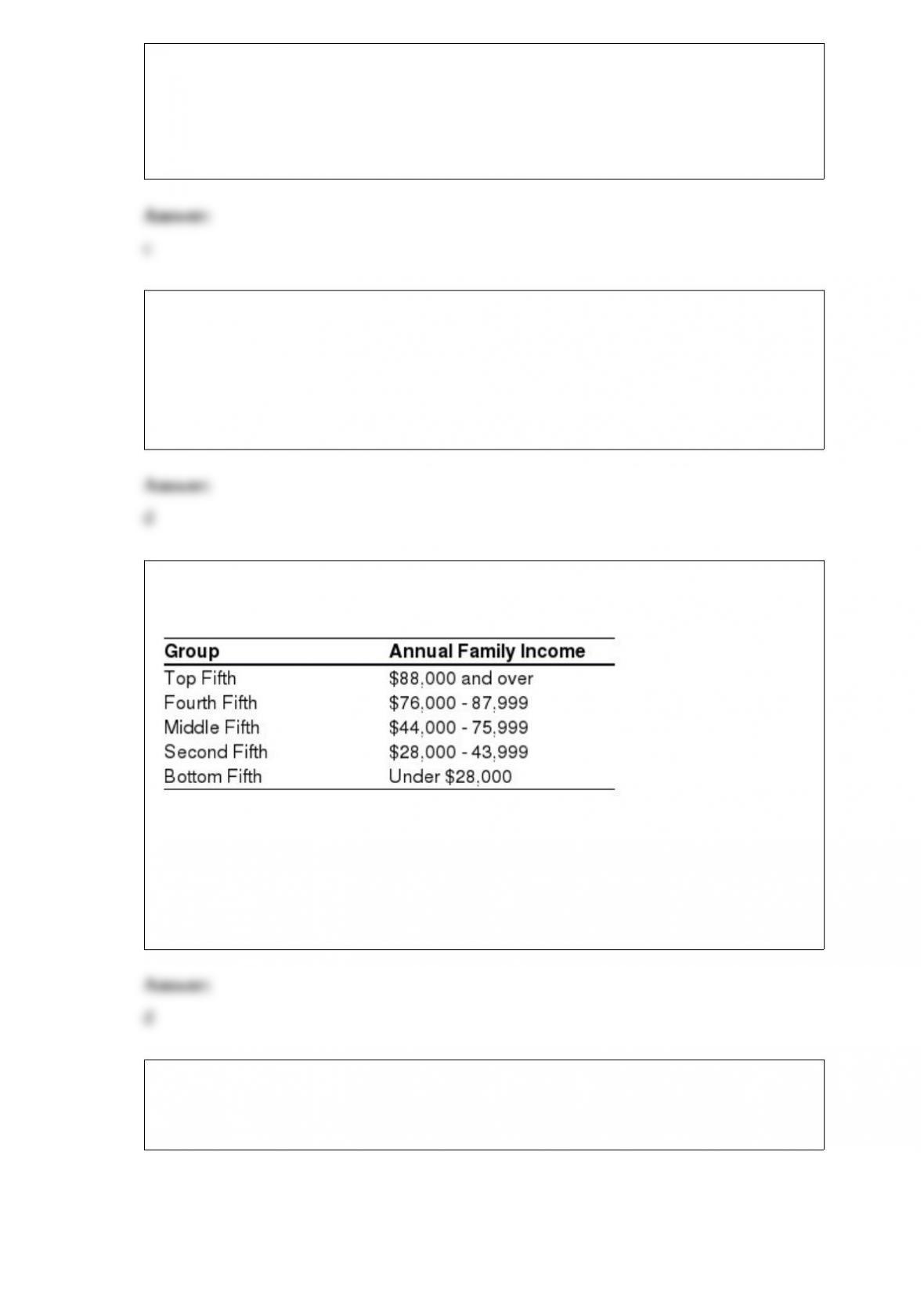
3) Table 20-3
The Distribution of Income in Edgerton
Refer to Table 20-3. According to the table, what percent of families in Edgerton have
income levels at or above $76,000?
a.80 percent
b.60 percent
c.50 percent
d.40 percent
4) Figure 21-24
The figure shows three indifference curves and a budget constraint for a certain
consumer named Steve.
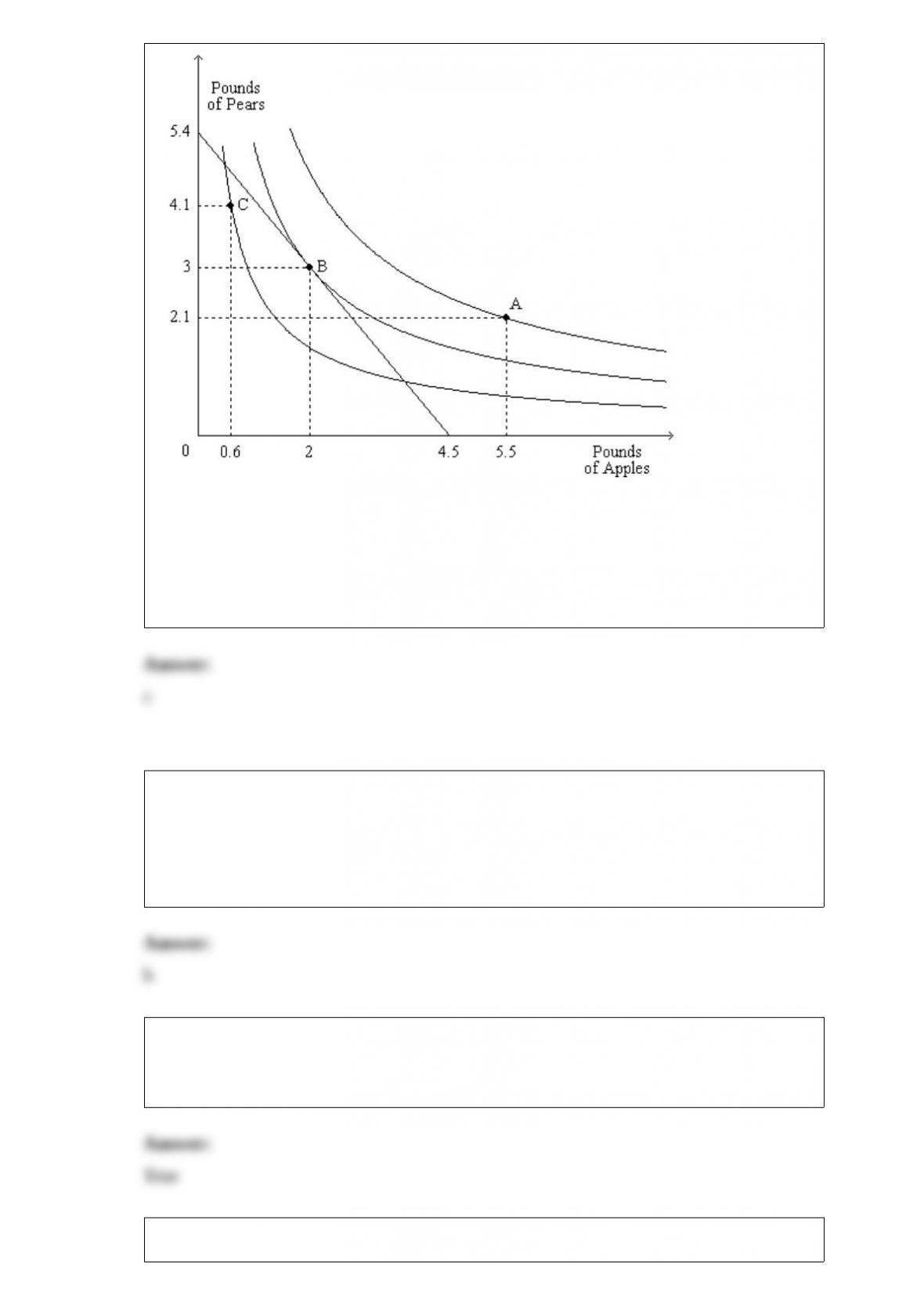
Refer to Figure 21-24. Suppose the price of pears, the price of apples, and Steve’s
income remain constant, and Steve moves from point B to point C. In doing so, Steve
a.becomes better off.
b.moves from a point that is not optimal to a point that is optimal.
c.gives up some apples to get some pears.
d.All of the above are correct.
5) OPEC is able to raise the price of its product by
a.tying.
b.setting production levels for each of its members.
c.increasing the supply of oil above the competitive level.
d.imposing resale price maintenance agreements on members.
6) Firms that can reduce pollution easily would be willing to sell their pollution permits.
a.True
b.False
7) Men and women tend to choose different types of occupations, and so
a.a source of wage differences between men and women is differences in human capital.
b.a source of wage differences between men and women is compensating differentials.
c.the gap between the earnings of men and the earnings of women is likely even more
significant than the data alone indicate.
d.we should expect the earnings of women to rise relative to the earnings of men, in
order to induce women to accept jobs that they have been reluctant to accept in the past.
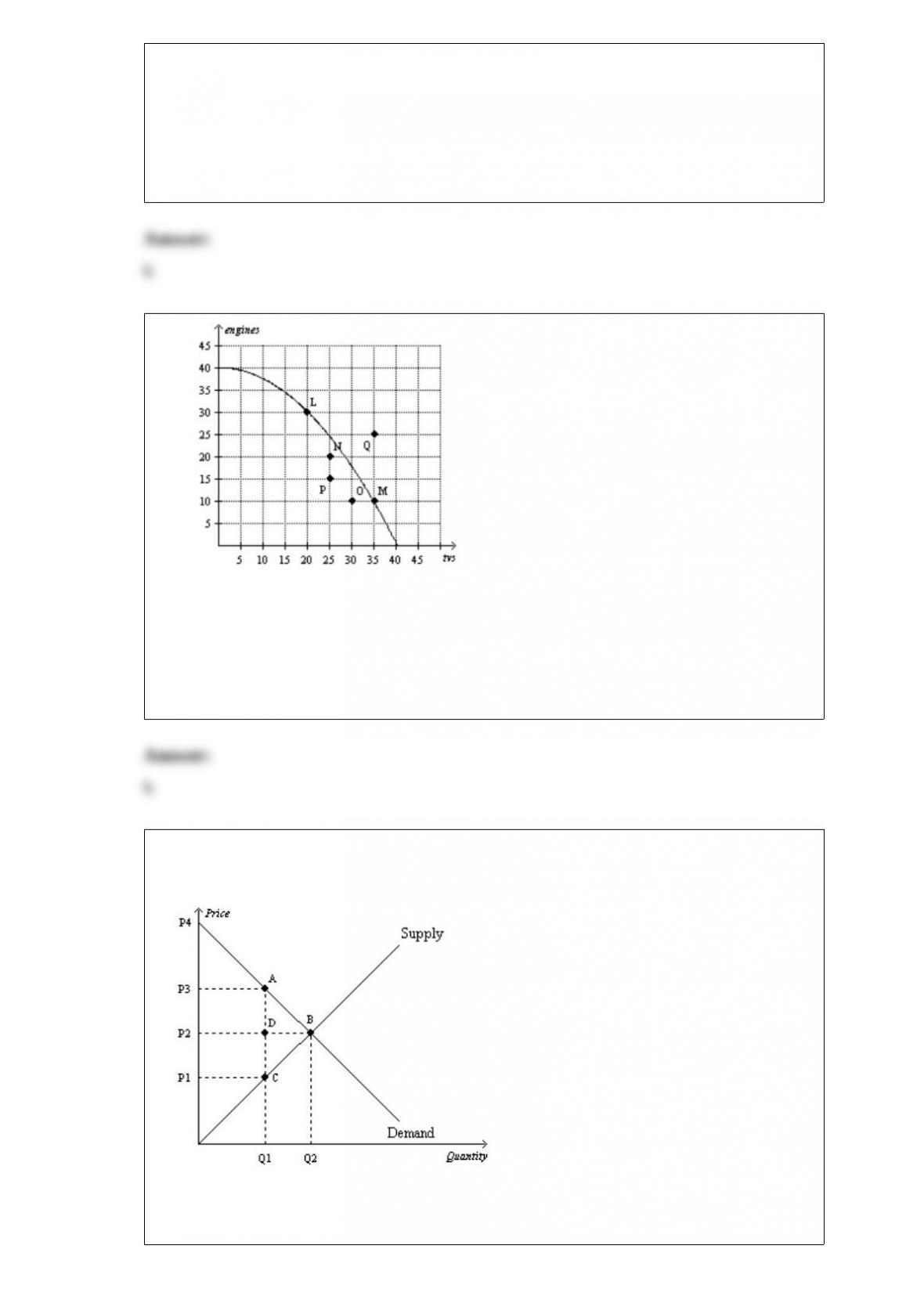
8)
What is the opportunity cost of moving from point M to point L?
a.zero
b.15 tvs
c.20 engines and 15 tvs
d.20 engines
9) Figure 8-3
The vertical distance between points A and C represents a tax in the market.
Which of the following equations is valid for the tax revenue that the tax provides to the
government?

a.Tax revenue = (P2 – P1)xQ1
b.Tax revenue = (P3 – P1)xQ1
c.Tax revenue = (P3 – P2)xQ1
d.Tax revenue = (P3 – P1)x(Q2 – Q1)
10) When a consumer is purchasing the best combination of two goods, X and Y,
subject to a budget constraint, we say that the consumer is at an optimal choice point. A
graph of an optimal choice point shows that it occurs
a.along the highest attainable indifference curve.
b.where the indifference curve is tangent to the budget constraint.
c.where the marginal utility per dollar spent is the same for both X and Y.
d.All of the above are correct.
11) The “invisible hand” refers to
a.the marketplace guiding the self-interests of market participants into promoting
general economic well-being.
b.the fact that social planners sometimes have to intervene, even in perfectly
competitive markets, to make those markets more efficient.
c.the equality that results from market forces allocating the goods produced in the
market.
d.the automatic maximization of consumer surplus in free markets.