The largest in-kind transfer program is:
a. Transitory Assistance to Needy Families.
b. Medicaid.
c. Social Security.
d. Food stamps.
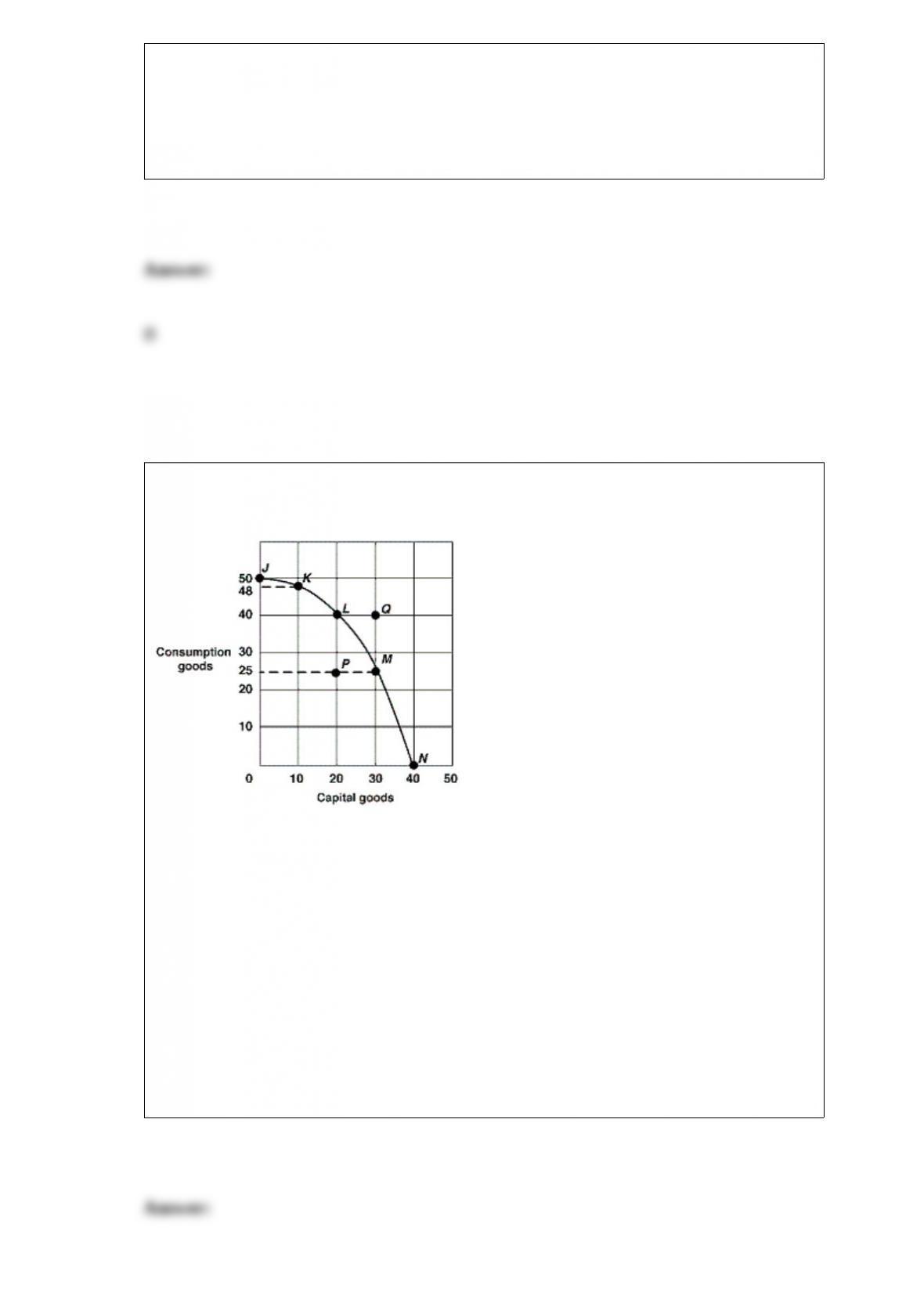
Exhibit 2-15 Production possibilities curve
In Exhibit 2-15, the economy will experience the most future economic growth if it
chooses what point now?
a. J.
b. K.
c. M.
d. N.
e. P.

The branch of economics that focuses on decision making for the economy as a whole
is called:
a. normative economics. c. microeconomics.
b. macroeconomics. d. consumer economics.
Which of the following statements is true?
a. b and d.
b. Total revenue is maximized when elasticity is one.
c. Goods are said to be price inelastic when the elasticity is greater than two.
d. Demand for milk is more elastic than demand for football tickets.
e. Demand for 5-cent candy is more elastic than demand for sweaters.
The production possibilities curve illustrates all of the following concepts except:
a. the law of increasing costs.
b. unlimited wants.
c. scarcity.
d. opportunity cost.

e. availability of resources.
The long-run supply curve for a competitive constant-cost industry is:
a. horizontal.
b. vertical.
c. upward-sloping.
d. downward-sloping.
If the exchange rate of yen for dollars increases from 100 yen = $1 to 110 yen = $1,
then:
a. Japanese-produced goods would become more expensive.
b. the dollar has depreciated.
c. the yen has appreciated.
d. U.S.-produced goods would become more expensive.
e. U.S. exports would increase.
Which of the following is true about the market equilibrium?

a. As the price increases, the quantity demanded and the quantity supplied increases.
b. As the price increases, the quantity demanded and the quantity supplied decreases.
c. As the price increases, the quantity demanded increases and the quantity supplied
decreases.
d. As the price increases, the quantity demanded decreases and the quantity supplied
increases.
e. As the price increases, neither the quantity demanded nor quantity supplied change.
Government regulations that set an environmental goal and dictate how the goal will be
achieved are called:
a. effluent-offset regulations. c. Coasian regulations.
b. incentive-based regulations. d. command-and-control-regulations.
Which of the following makes short-term conditional low-interest loans to LDCs?
a. World Bank.
b. Agency for International Development (AID).
c. Agency for International Finance (AIF).
d. International Monetary Fund (IMF).

Which of the following questions would not be studied by a microeconomist but would
be studied by a macroeconomist?
a. Why do national economies grow?
b. What percentage of consumer income is spent on entertainment?
c. Why do workers prefer the 4-day workweek?
d. How is the electric industry harmed by the passage of new clean air legislation?
The central question in economics is how to:
a. deal with the problem of scarcity.
b. change government economic policy.
c. change people’s wants to match their needs.
d. manage money and become wealthy.
Which of the following statements best describes firms under monopolistic
competition?
a. Profits will be positive in the long run.
b. Price always equals average variable cost.
c. In the long run, positive economic profit will be eliminated.
d. Marginal revenue equals minimum average total cost in the short run.
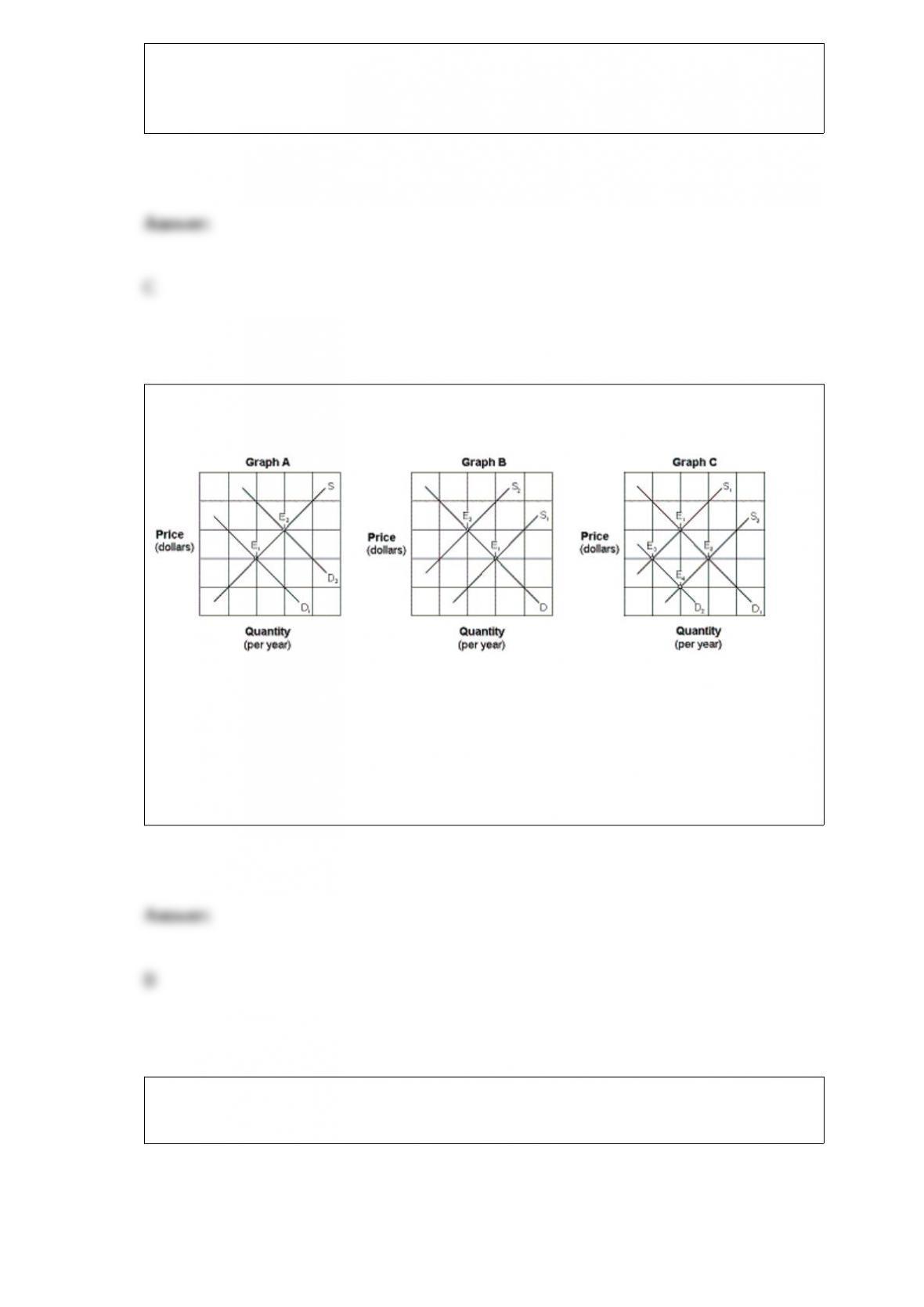
Exhibit 4-4 Supply and demand curves for good X
An increase in the wage rate paid to workers producing good X would be represented
by which of the graphs in Exhibit 4-4?
a. Graph A. c. Graph C.
b. Graph B. d. None of these.
Exhibit 12-4 Lorenz curve
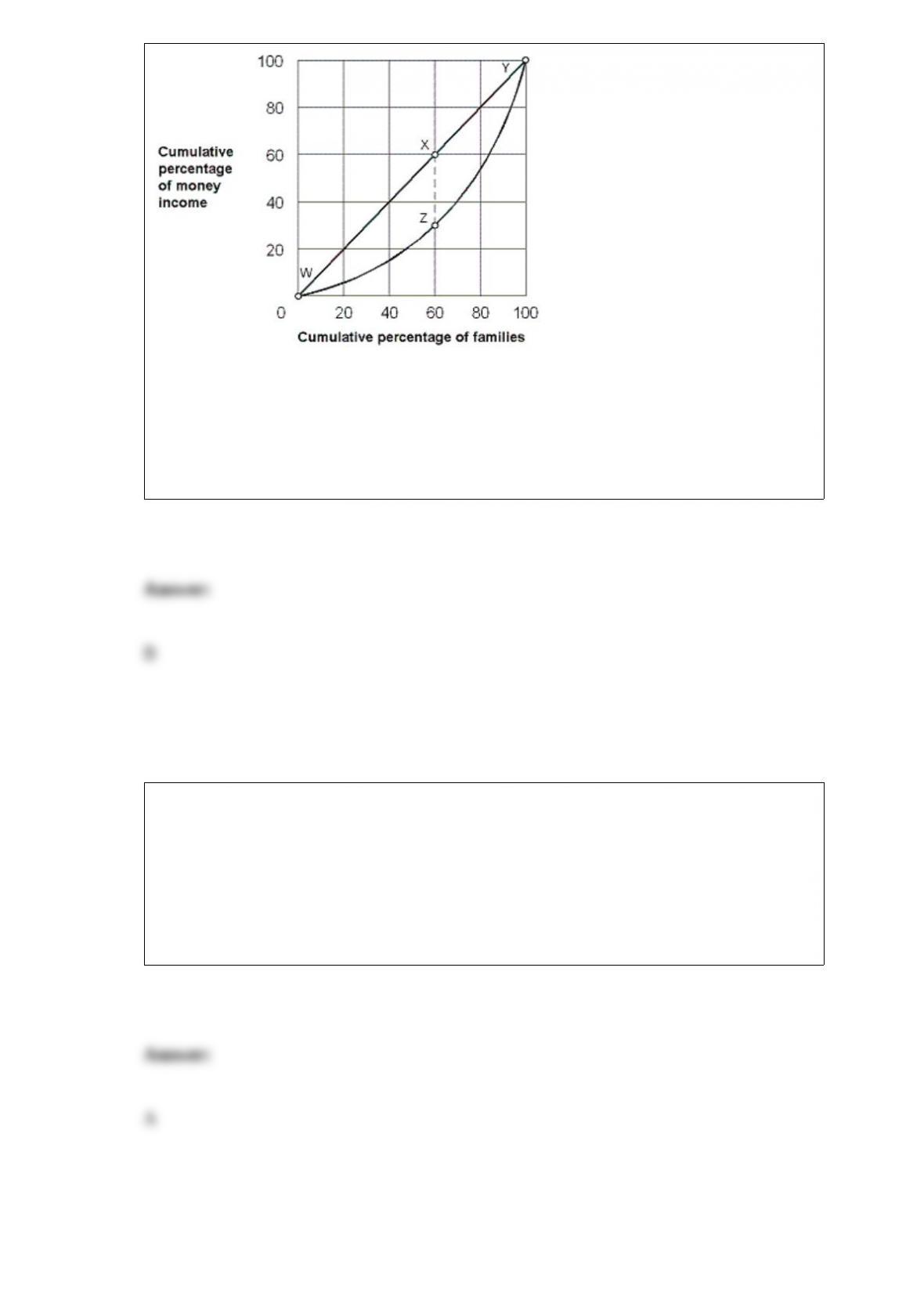
As shown in Exhibit 12-4, 40 percent of families earned a cumulative share of about
____ percent of income.
a. 5
b. 15
c. 30
d. 50
If a firm is operating at a loss in the short run and finds that its price is greater than
average variable cost, then in the short run:
a. it should produce where MR = MC.
b. it should produce zero output.
c. it should go out of business.
d. total revenue is less than total variable costs.
e. total revenue is greater than total costs.

Price discrimination that tends to lessen competition is outlawed by the:
a. Sherman Antitrust Act. c. Federal Trade Commission Act.
b. Clayton Act. d. Interstate Commerce Act.
The theory of comparative advantage suggests that a(n):
a. industrialized country should not import.
b. country that is not competitive should import everything.
c. country specialize in producing goods or services for which it has a lower
opportunity cost.
d. none of these.
In long-run equilibrium, which of the following is not equal to price for a perfectly
competitive firm?
a. Short-run average variable cost.
b. Long-run average total cost.
c. Short-run marginal cost.
d. Short-run average total cost.
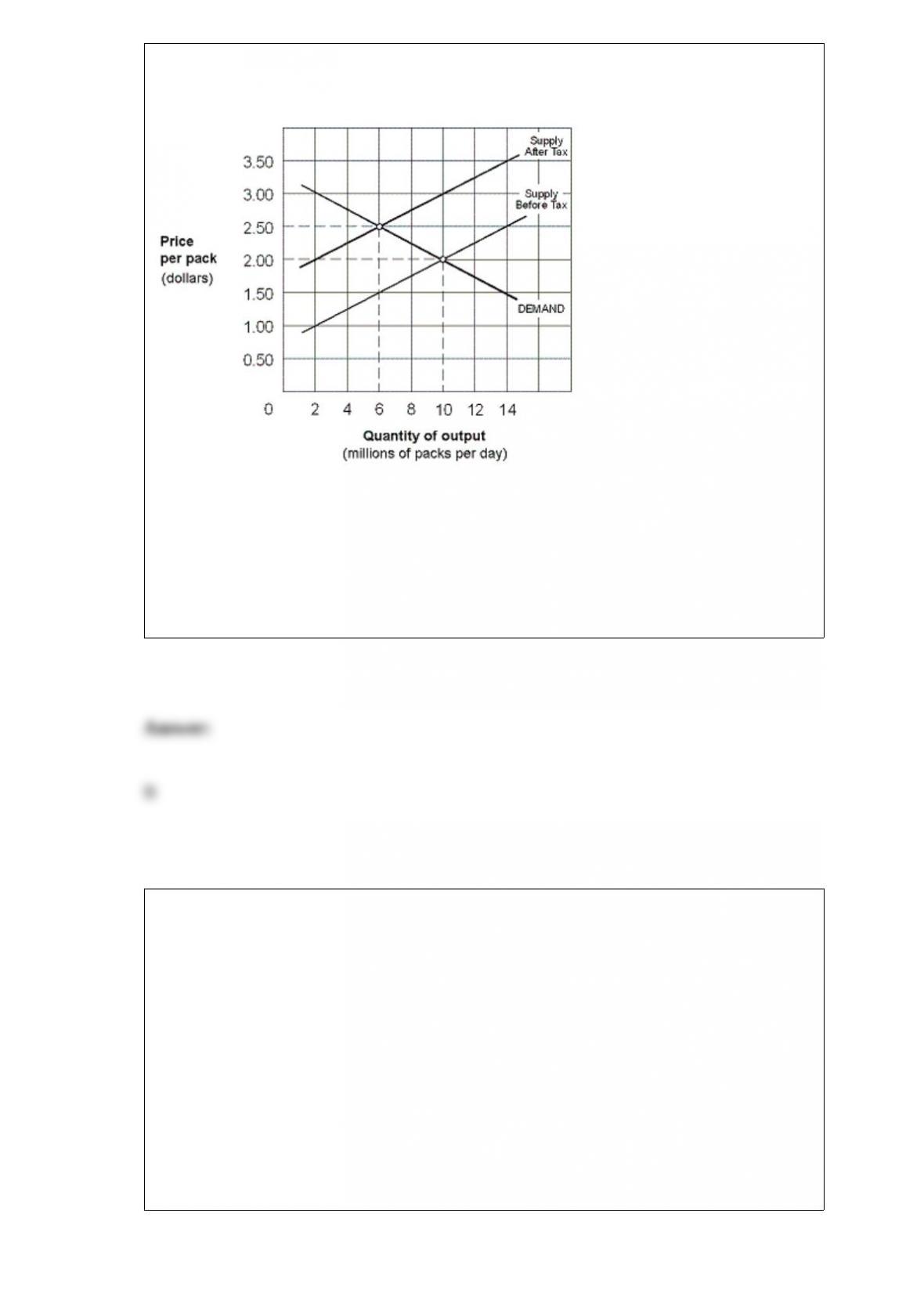
Exhibit 5-10 Supply and demand curves for cigarettes
As shown in Exhibit 5-10, assume the government places a $1 per pack sales tax on
cigarettes. The percentage of the burden of taxation paid by tobacco sellers is:
a. zero. c. 75 percent.
b. 50 percent. d. 100 percent.
Product differentiation:
a. refers to the attempt of firms to make their products look like those of the other firms
in the industry.
b. refers to the attempt of firms to make real or apparent differences in essentially
substitutable products look different in the minds of the consumers.
c. refers to the advantage big firms have in research and development.
d. is a common characteristic of a perfectly competitive market structure.
e. is only employed in a monopoly market structure.

For a normal good, an increase in consumer income will cause the market demand for
the product to:
a. decrease, which is a shift to the left of the demand curve.
b. decrease, which is a shift to the right of the demand curve.
c. increase, which is a shift to the left of the demand curve.
d. increase, which is a shift to the right of the demand curve.
The total fixed cost remains constant as which of the following varies?
a. Cost of resources.
b. Time.
c. Output in a given period of time.
d. Profit.
A firm that places its assets in the custody of a board of trustees is called a:
a. trust. c. cartel.
b. combination. d. all of these.