
If a country is producing efficiently and is on the production possibilities frontier, the
country can produce more of one good without producing less of the other good.
A monopolistically competitive firm can increase its profits beyond the long-run
equilibrium break-even level by deliberately lowering its price to force some of its
competitors out of the market.
Banks hold 100% of their checking deposits as vault cash to ensure that bank runs do
not occur.
Any output combination outside a production possibility frontier is associated with
unused or
underutilized resources.

Net worth and stockholders’ equity are both equal to the difference between assets and
liabilities.
If planned aggregate expenditure equals GDP, the economy is in macroeconomic
equilibrium.
The marginal propensity to consume measures the average amount of wealth that a
consumer spends in a given period of time.
The Fed was founded in 1913 to serve as lender of last resort to bankers during bank
runs and panics.

In the United States, domestic investment is greater than national saving.
The demand for gasoline is perfectly inelastic because most people need gasoline to
drive their cars.
One effect of adverse selection in a market is that the equilibrium quantity of the
product may
be smaller than it would have been if there were no information problems.
Direct finance includes the sale by a corporation of stocks or bonds, but does not
include borrowing money from a bank.

Each person goes about her daily business seeking to maximize her own self interests.
In doing so, she contributes to the welfare of society at large. This is the idea underlying
Adam Smith’s “invisible hand.”
The short run is the time period during which a firm has at least one input constraint.
The NBER’s Business Cycle Dating Committee defines a recession as at least two
consecutive quarters of falling real GDP.

________ shows that if all resources are fully and efficiently utilized, more of one good
can be produced only by producing less of another good.
A) Comparative advantage
B) Absolute advantage
C) The mixed market system
D) The production possibilities frontier model
If society decides it wants more of one good and ________, then it has to give up some
of another good and incur some opportunity costs.
A) technology advances
B) resources are underutilized
C) all resources are fully utilized
D) new resources are discovered
Figure 2-4
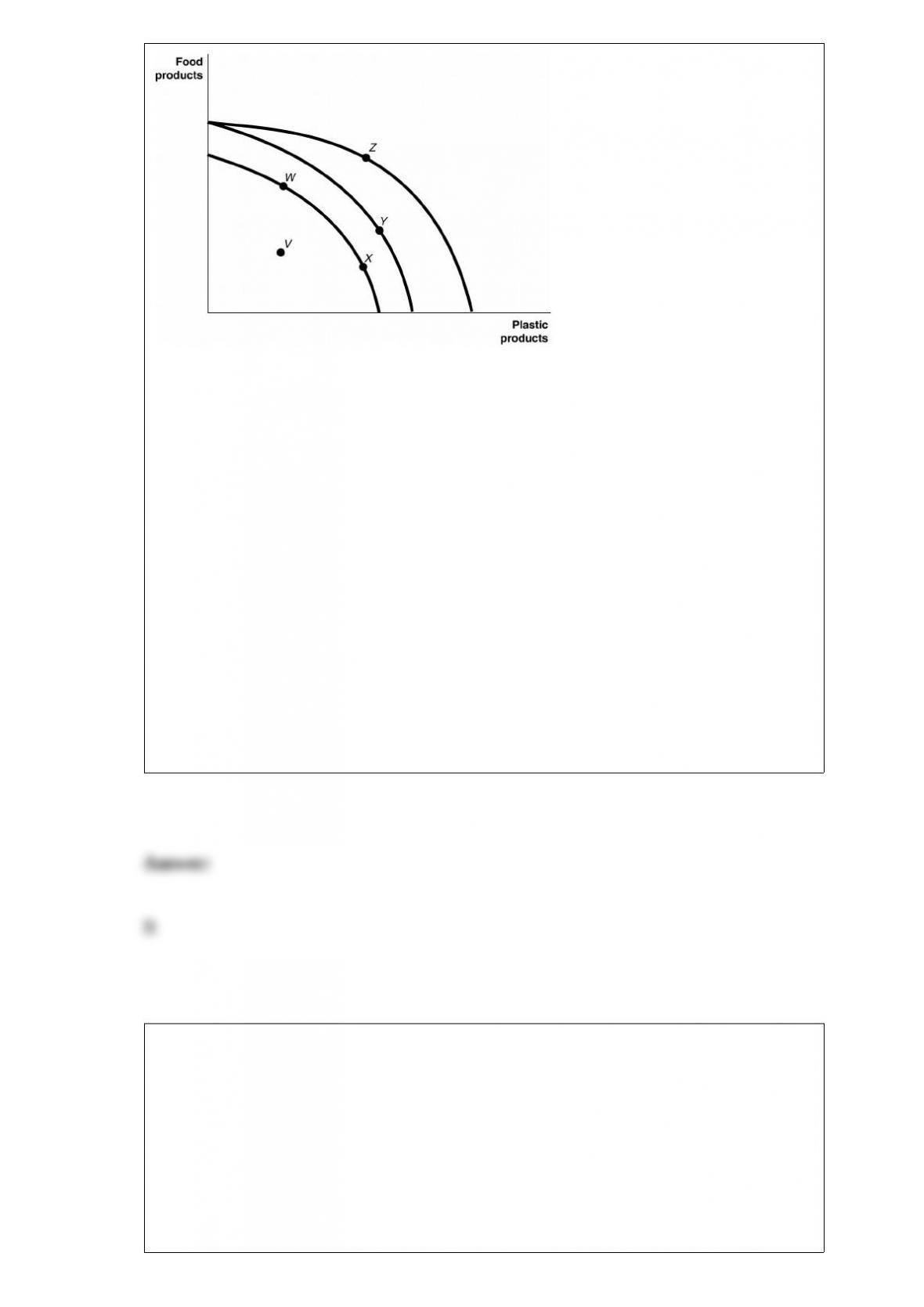
Figure 2-4 shows various points on three different production possibilities frontiers for
a nation. Consider the following movements:
a. from point V to point W
b. from point W to point Y
c. from point Y to point Z Which of the movements listed above represents economic
growth?
A) a, b, and c
B) b and c only
C) a only
D) b only
If workers and firms have rational expectations, they form their expectations using
A) all the information available to them.
B) only information from the past.
C) only information provided to them by the government.
D) only information gathered from random sources.

Mrs. Lovejoy decides to invest in companies which she believes are producing its
goods based on the preferences of consumers. Mrs. Lovejoy is investing in companies
that are
A) productively efficient.
B) allocatively efficient.
C) both productively and allocatively efficient.
D) always going to be profitable.
Why do corporations want to keep the price of their stock high?
A) A higher stock price increases the funds the firm can raise when it sells a given
amount of stock.
B) Corporations can pay their managers lower salaries and avoid principal-agent
problems when stock prices are higher.
C) Higher stock prices are correlated with lower expected profitability.
D) All of the above provide incentive for corporations to keep the price of their stock
high.

Which of the following accurately describes economic growth and standards of living
between 1,000,000 B.C. and 1300 A.D.?
A) Standards of living in 1300 A.D. were substantially better than what they were in
1,000,000 B.C.
B) Standards of living substantially declined from 1,000,000 B.C. to 1300 A.D.
C) Significant economic growth took place between 1,000,000 B.C. and 1300 A.D.
D) No sustained economic growth occurred between 1,000,000 B.C. and 1300 A.D.
If the production possibilities frontier is ________, then opportunity costs are constant
as more of one good is produced.
A) bowed out
B) bowed in
C) non-linear
D) linear
Which of the following is a positive economic statement?

A) Everyone should live at the same standard of living.
B) If the price of gasoline rises, a smaller quantity of it will be bought.
C) The government should close income tax loopholes.
D) U.S. firms should not be allowed to outsource production of goods and services.
Which of the following statements is false?
A) Japan is less dependent on foreign trade than is the United States.
B) Imports and exports account for over one-half of the GDP of the Netherlands.
C) The United States is the leading exporting country, accounting for almost 10 percent
of total world exports.
D) Because the cost of labor used on farms is so high, the United States exports very
little of its wheat, rice and corn crops.
The slope of a production possibilities frontier
A) has no economic relevance or meaning.
B) is always constant.
C) is always varying.
D) measures the opportunity cost of producing one more unit of a good.
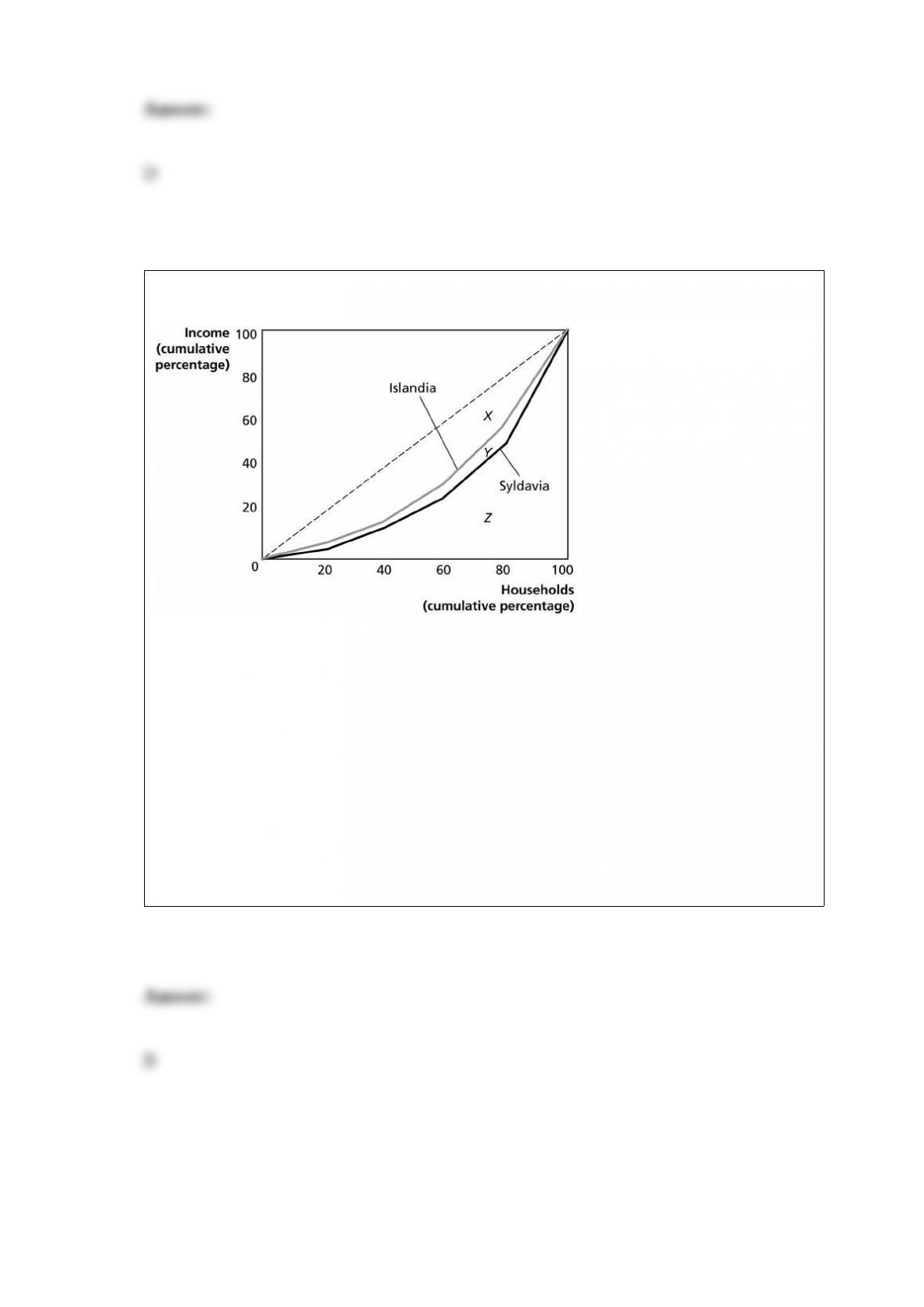
Figure 18-6
Figure 18-6 shows the Lorenz
curves for Islandia and Syldavia.
Which country has the more unequal distribution of income?
A) Islandia
B) Syldavia
C) They may have the same absolute income distribution although their relative income
distribution is different.
D) There is insufficient information to answer the question.
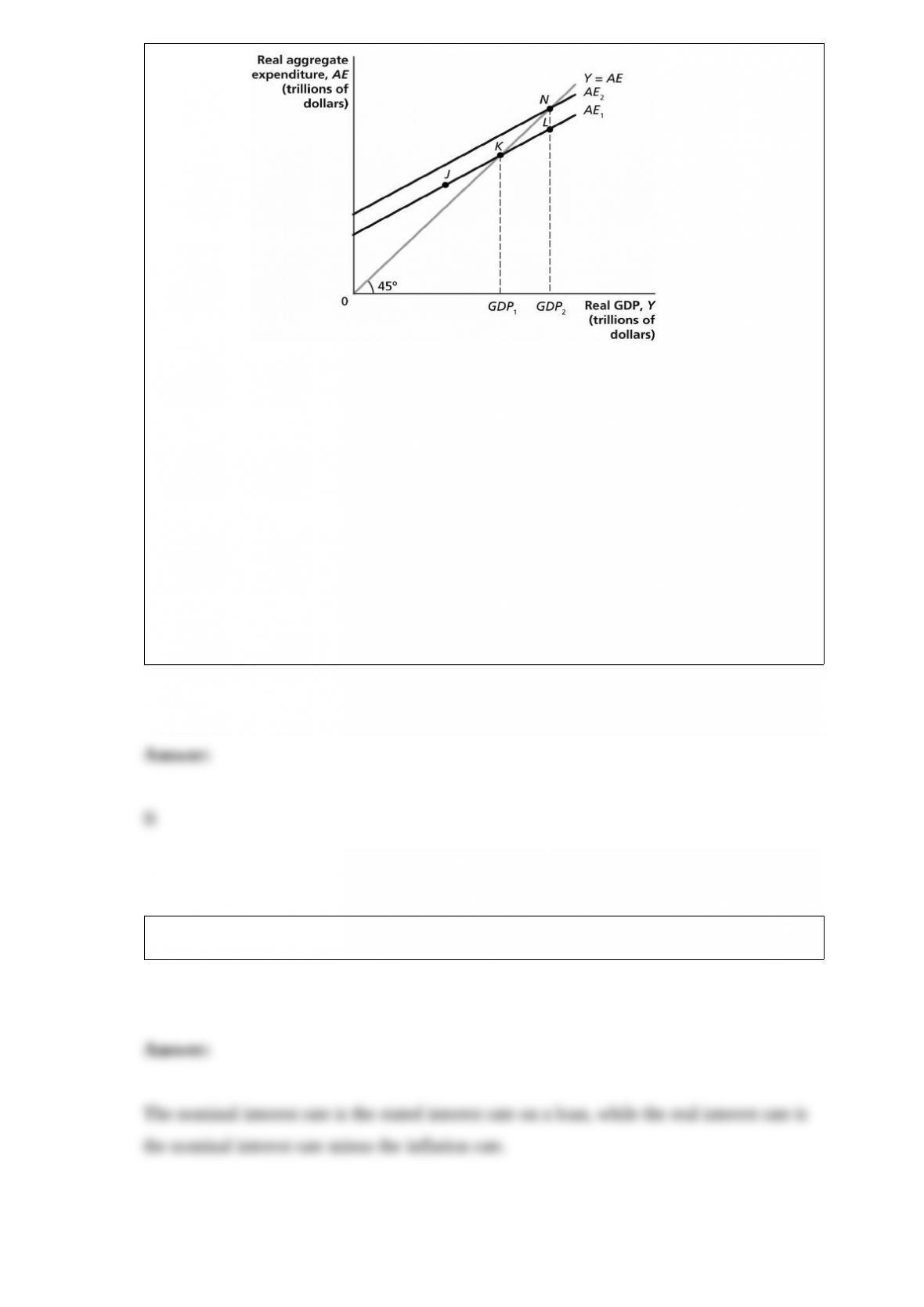
Figure 12-3
Suppose that government spending increases, shifting up the aggregate expenditure
line. GDP increases from GDP1 to GDP2, and this amount is $400 billion. If the MPC
is 0.75, then what is the distance between N and L or by how much did government
spending change?
A) $10 billion
B) $100 billion
C) $200 billion
D) $300 billion
What is the difference between the nominal interest rate and the real interest rate?
Under what circumstances will the law of one price hold, and when might it not hold?
Suppose you see a 2006 Scion xB Sport Wagon advertised in the local newspaper for
$8,500. If you knew the car was reliable, you would be willing to pay $10,000 for it. If
you knew the car was unreliable, you would only be willing to pay $5,500 for it. Under
what circumstances should you buy the car?
Is a typical person likely to gather more information when buying a new computer or
when voting for a member of the U.S. Senate? Why?
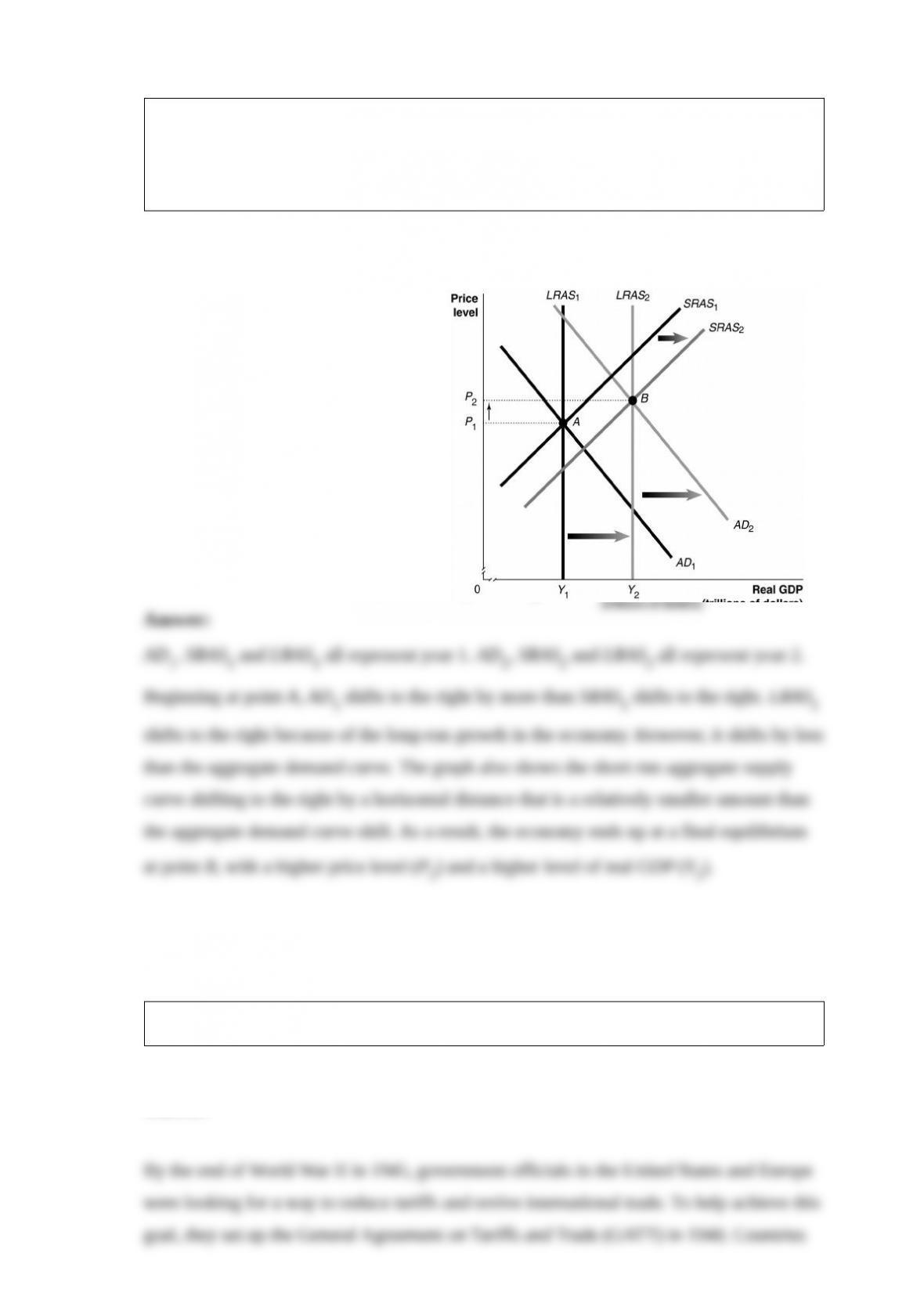
Use the dynamic model of aggregate demand and supply to illustrate a situation where
aggregate demand and short-run aggregate supply are both increasing from year 1 to
year 2, resulting in a higher price level and higher level of real GDP at macroeconomic
equilibrium in year 2.
What was the GATT, why was it established, and why and with what was it replaced?