
Two consequences of asymmetric information are adverse selection and moral hazard.
An important distinction between the two is
A) adverse selection exists prior to the completion of a transaction while moral hazard
occurs after the transaction is completed.
B) moral hazard exists prior to the completion of a transaction while adverse selection
occurs after the transaction is completed.
C) adverse selection leads to an inefficient quantity while moral hazard leads to an
efficient quantity.
D) moral hazard leads to an inefficient quantity while adverse selection leads to an
efficient quantity.
If households choose to take some fraction of each check they deposit and hold it as
currency, then the simple deposit multiplier ________ the real-world multiplier.
A) is greater than
B) is less than
C) is equal to
D) bears no relationship to
The value you give today to money you will receive in the future is called the future
payment’s
A) time-sensitive value.

B) future value.
C) present value.
D) historical value.
Which of the following is not an advantage of starting a new business as a corporation?
A) separation of ownership and business liability
B) enhanced ability to raise funds
C) ability to share risks
D) possibility of double taxation
The volatility of a stock’s market price is indicated by
A) the highest stock price and the lowest stock price over the previous year.
B) the price of newly issued shares compared to the price of previously issued shares.
C) the difference between the stock’s selling price and its asking price.
D) the stock’s price-earnings ratio.

Ceteris paribus, a rise in interest rates in the United States will cause the yen price of
the dollar in international exchange markets to ________. I.e., the dollar ________ in
value against the yen.
A) increase; appreciates
B) increase; depreciates
C) decrease; depreciates
D) decrease; appreciates
Which of the following would decrease the value of the dollar in the long run?
A) a decrease in inflation in the United States relative to other countries
B) a decrease in the demand for American goods relative to goods from other countries
C) an increase in U.S. tariffs on foreign goods
D) a decrease in the supply of dollars on the foreign exchange market
Last month, the Tecumseh Corporation supplied 400 units of three-ring binders at $6
per unit. This month, the company supplied the same quantity of binders at $4 per unit.
Based on this evidence, Tecumseh has experienced
A) a decrease in supply.
B) an increase in supply.
C) an increase in the quantity supplied.
D) a decrease in the quantity supplied.
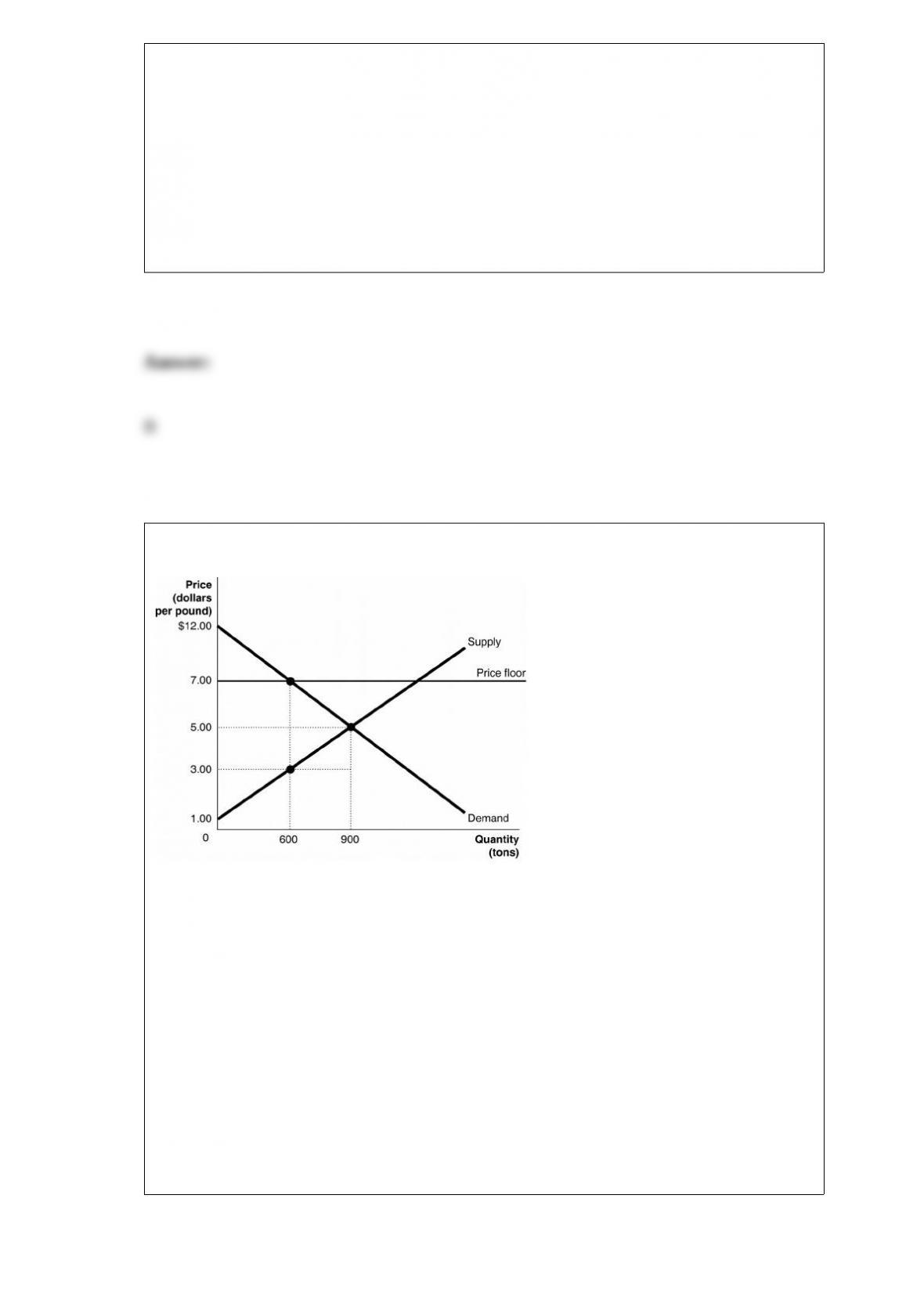
Figure 4-6
Figure 4-6 shows the demand and supply curves for the coffee market. The government
believes that the equilibrium price is too low and tries to help almond growers by
setting a price floor at $7.00.
Refer to Figure 4-6. What is the value of the deadweight loss after the imposition of the
price floor?
A) $600
B) $1,800
C) $2,700
D) $3,300
Long-run macroeconomic equilibrium occurs when aggregate demand ________
short-run aggregate supply and they ________ the long-run supply curve.
A) equals; intersect at a point to the right of
B) equals; intersect at a point on
C) is greater than; intersect at a point to the left of
D) is less than; intersect at a point to the right of
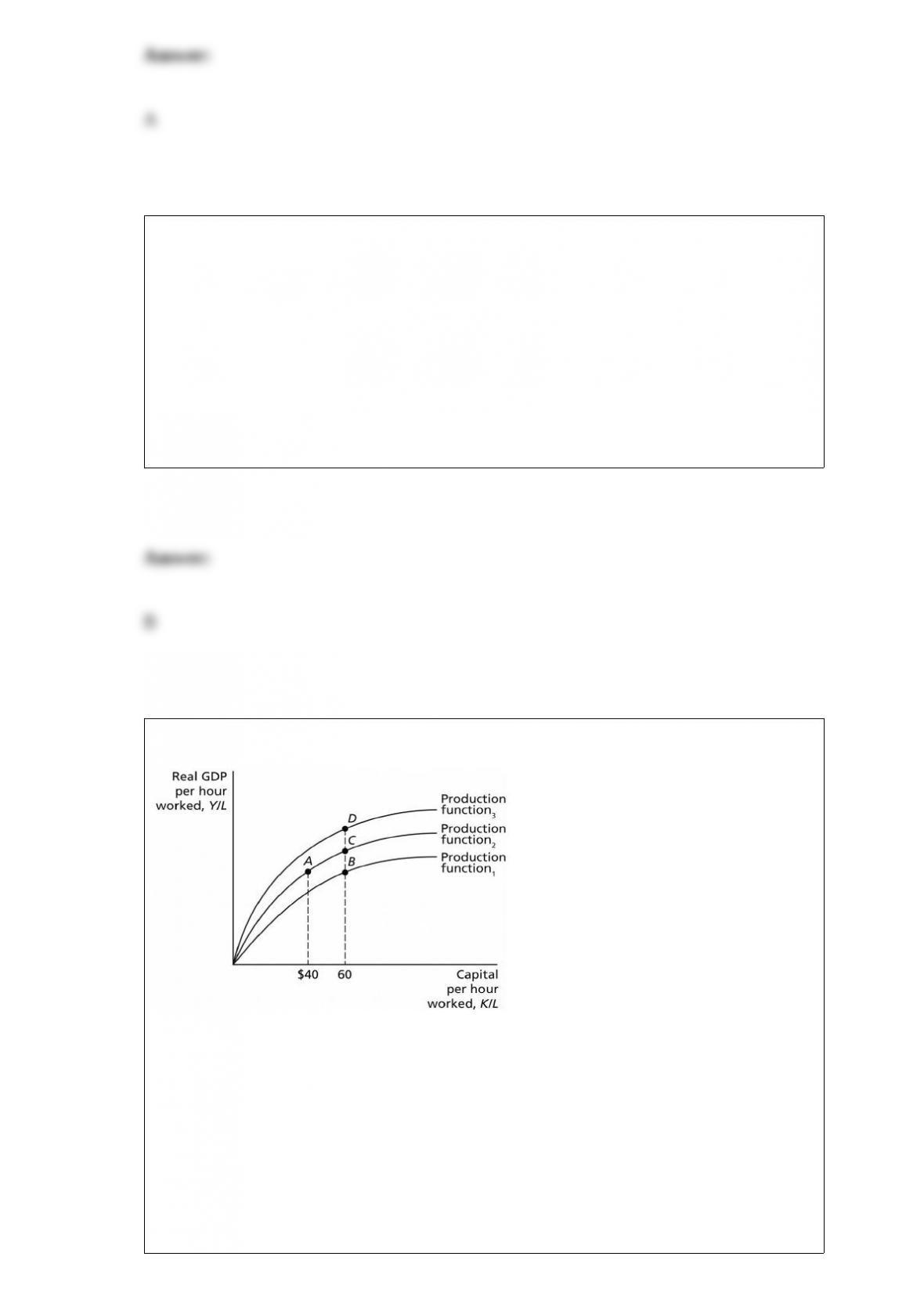
Figure 11-1
Refer to Figure 11-1. Using the per-worker production function in the figure above, the
largest changes in an economy’s standard of living would be achieved by a movement
from
A) A to B to C.
B) B to C to D.
C) C to B to A.

D) D to C to B.
Which of the following are not considered part of government purchases?
A) welfare benefits
B) teachers’ salaries paid by a local government
C) a tank purchased by the federal government
D) a bridge purchased by the state government
If a country’s currency ________ the dollar, its exchange rate is fixed.
A) is exchanged in currency markets for
B) depreciates against
C) is pegged to
D) has a floating exchange rate value which is equal to
The number of people who have gray hair is very high among residents living in
Florida. A student concludes that living in Florida causes hair to turn gray. What is the
flaw in this student’s reasoning?
A) The student is drawing a false conclusion by making the mistake of omitting critical
variables such as the age and gender of the residents.
B) The student is using an inadequate sample size.
C) The student is drawing a false conclusion; he is confusing cause and effect.
D) The student has failed to take into account other causes of gray hair.
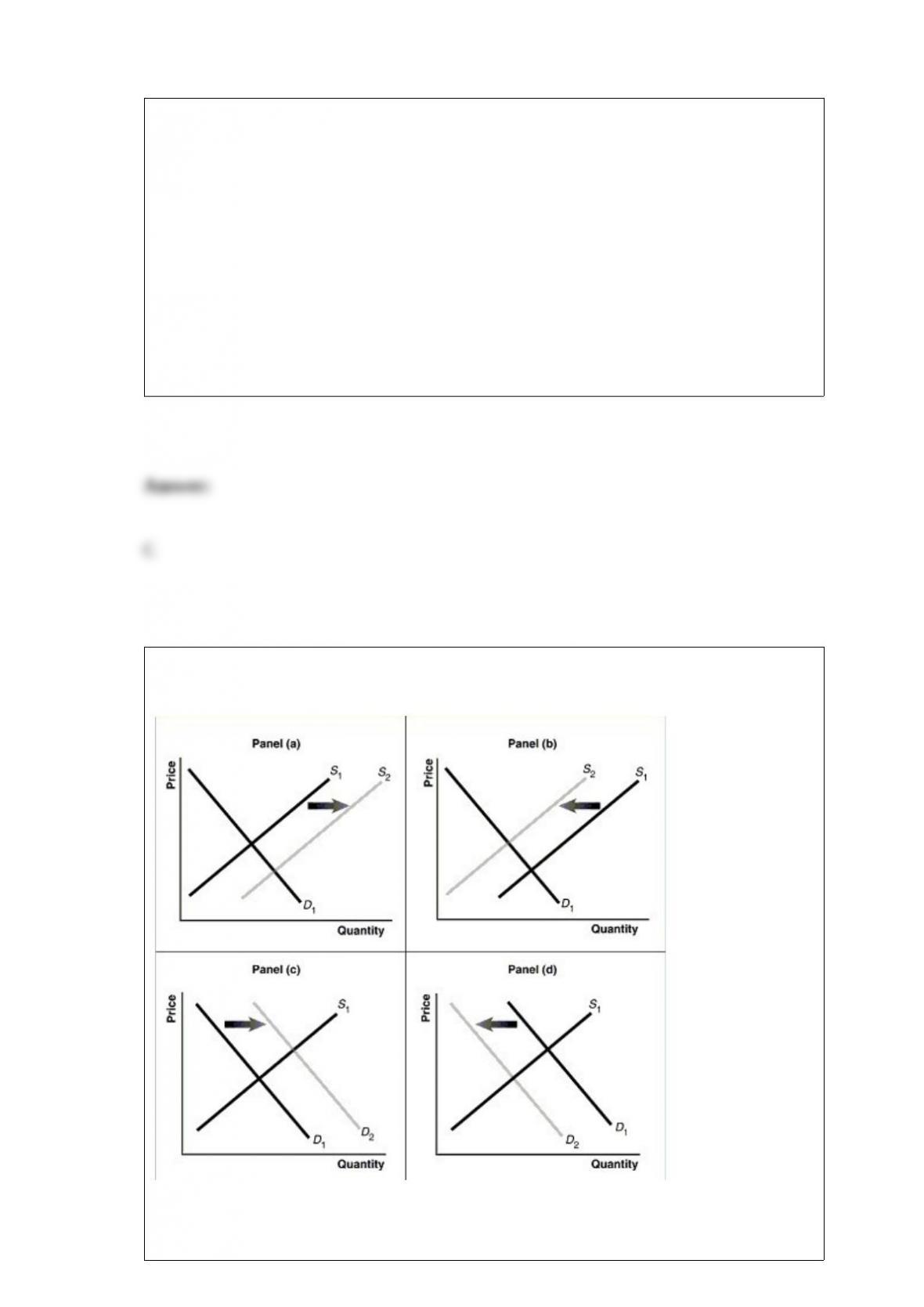
Figure 3-7
Refer to Figure 3-7. Assume that the graphs in this figure represent the demand and
supply curves for blu-ray discs. Which panel best describes what happens in this market
if there is a substantial increase in the price of blu-ray players?

A) Panel (a)
B) Panel (b)
C) Panel (c)
D) Panel (d)
Indicate whether each of the following situations would shift the supply curve to the
left, to the right, or not at all.
a. An increase in the price of an input
b. An increase in productivity
c. An increase in the price of a substitute in production
d. A decrease in the expected future price of a product
e. A decrease in the current price of the product
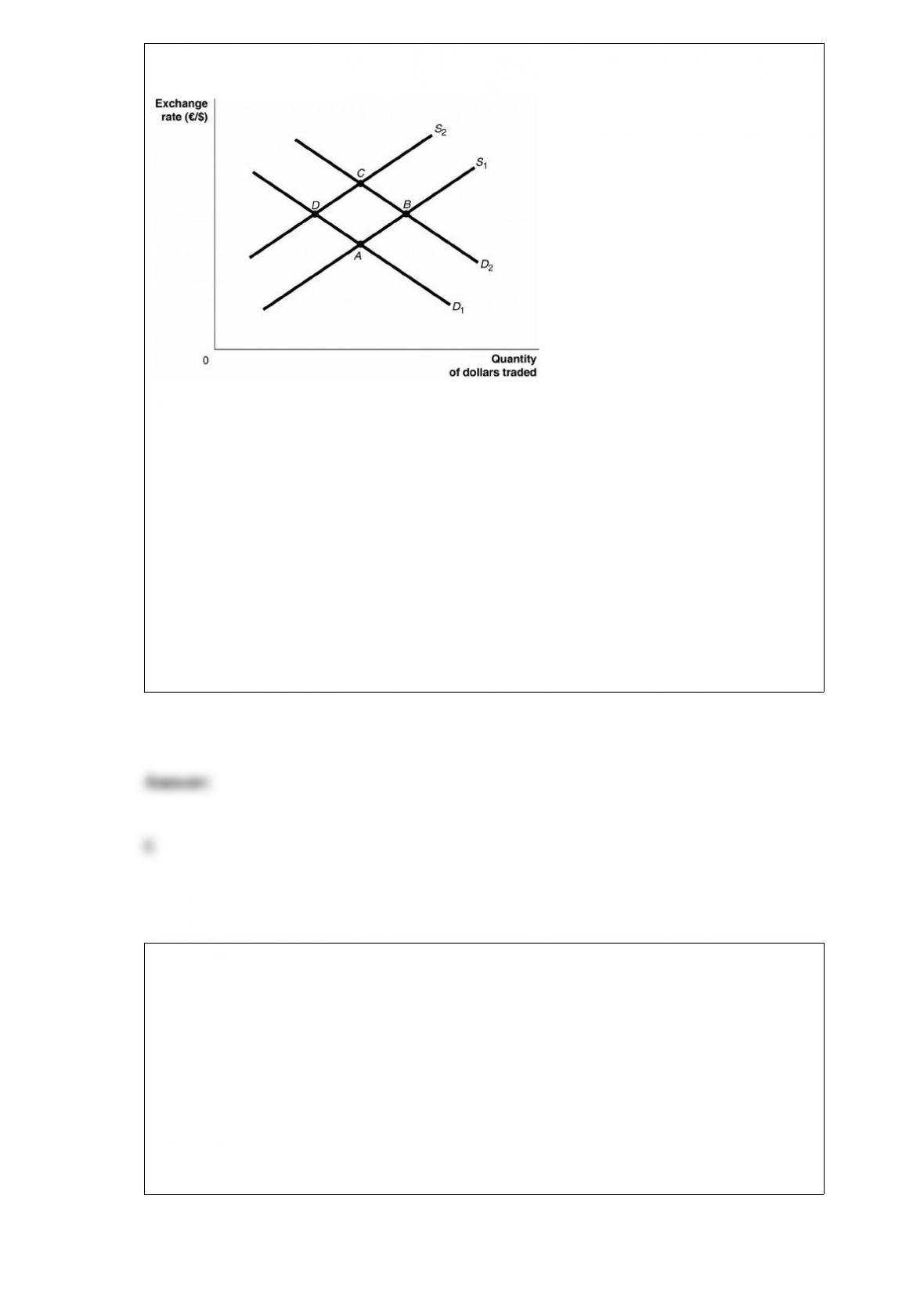
Figure 18-1
Refer to Figure 18-1. The French fall in love with California wines and triple their
purchases of this beverage. Assuming all else remains constant, this would be
represented as a movement from
A) B to A.
B) C to D.
C) B to C.
D) A to D.
E) A to B.
When a financial asset is first sold, the sale takes place in the ________ market, and
subsequent sales take place in the ________ market.
A) stock; bond
B) primary; secondary
C) investment; commercial
D) secure; risk