
If you were told that the exchange rate between the U.S. dollar and the Canadian dollar
was 1.2, that would mean that Canadians would have to spend ____ to buy a $12 watch
in New York City.
a. c and e
b. 10 U.S. dollars
c. 12 U.S. dollars
d. 14.4 U.S. dollars
e. 14.4 Canadian dollars
Suppose there is no change in total revenue when the price changes. The demand curve
for this good is:
a. perfectly elastic.
b. perfectly inelastic.
c. elastic.
d. inelastic.
e. unitary elastic.
A fall in the price of a good causes an increase in its:
a. quantity demanded. c. quantity supplied.
b. demand. d. supply.
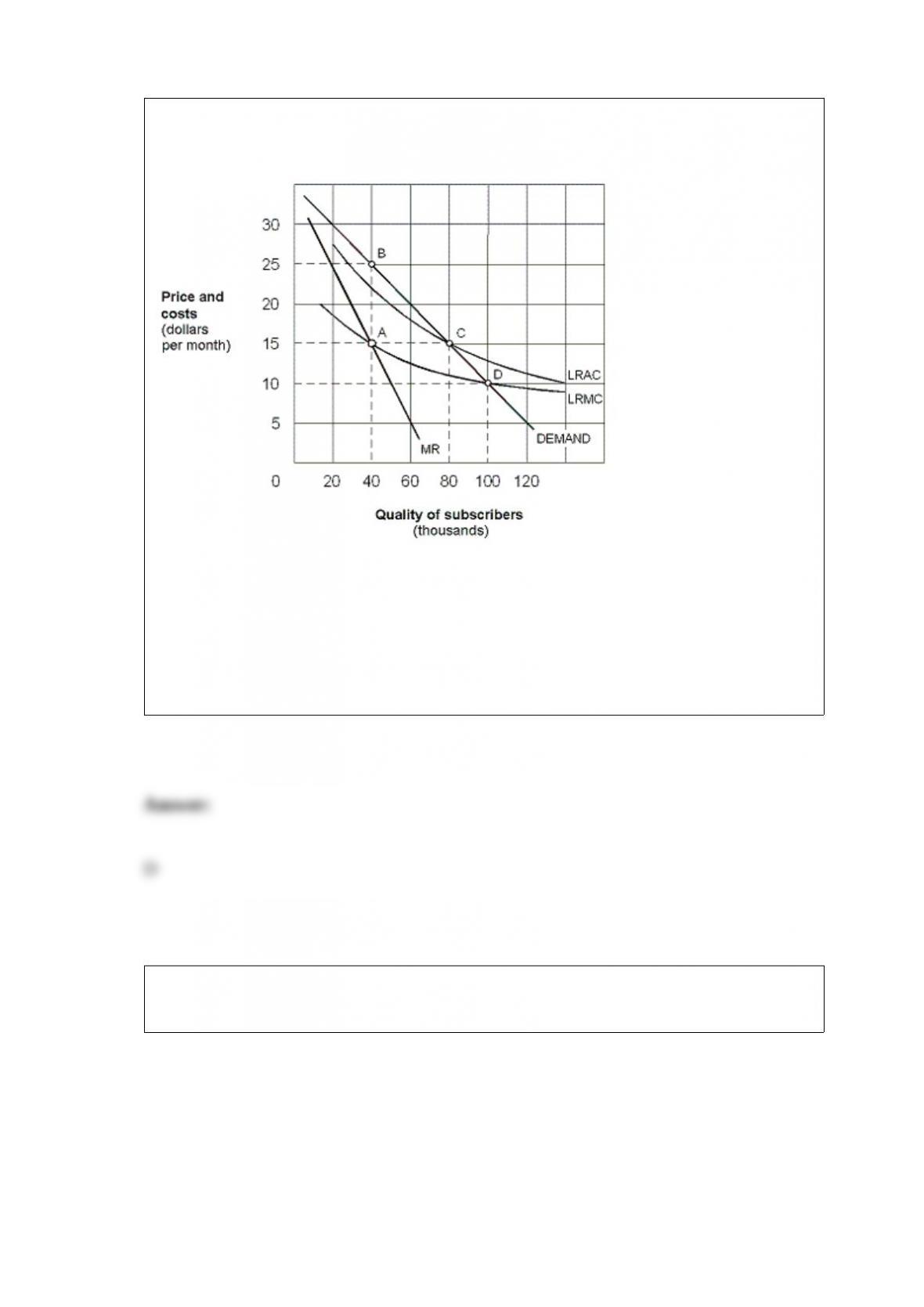
Exhibit 13-1 Cable television monopolist
As shown in Exhibit 13-1, regulators might follow a marginal cost pricing strategy and
require the cable television monopolist to operate at point:
a. A. c. C.
b. B. d. D.
Exhibit 5-6 Demand curve for concert tickets
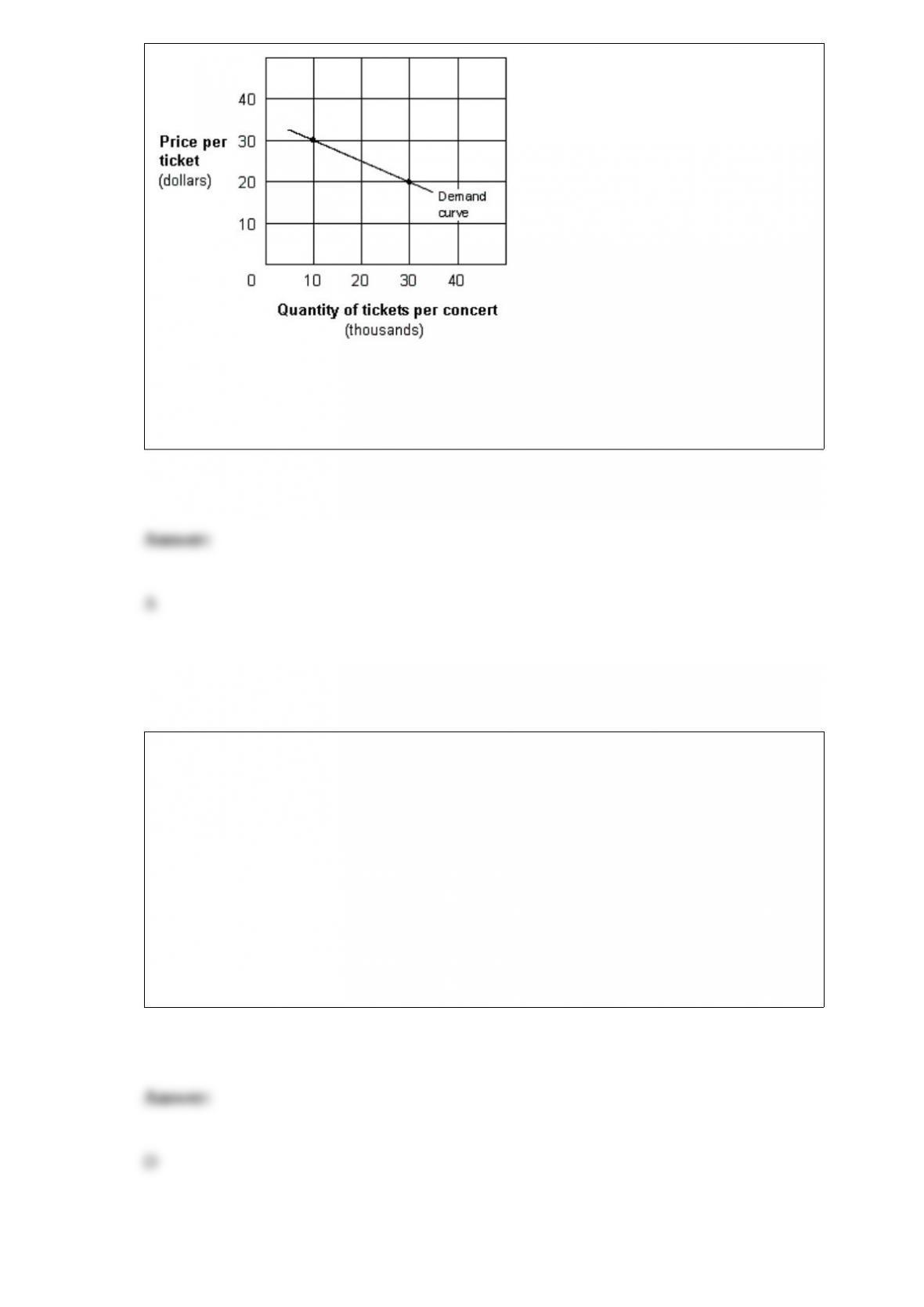
In Exhibit 5-6, suppose promoters charge a price of $30 per ticket. How much total
revenue will their sales generate?
a. $300,000. c. $500,000.
b. $400,000. d. $600,000.
After a hurricane in Florida knocked out the regional water supply for several days, the
demand for bottled water increased sharply. In a market economy, how will this
increase in demand affect the equilibrium price and quantity of bottled water?
a. Price will increase, and quantity will decrease.
b. Price will decrease, and quantity will decrease.
c. Price will decrease, and quantity will increase.
d. Price will increase, and quantity will increase.
Which of the following is not a factor of production?
a. A computer chip. c. Dollars.
b. The service of a lawyer. d. All of these are factors of production.
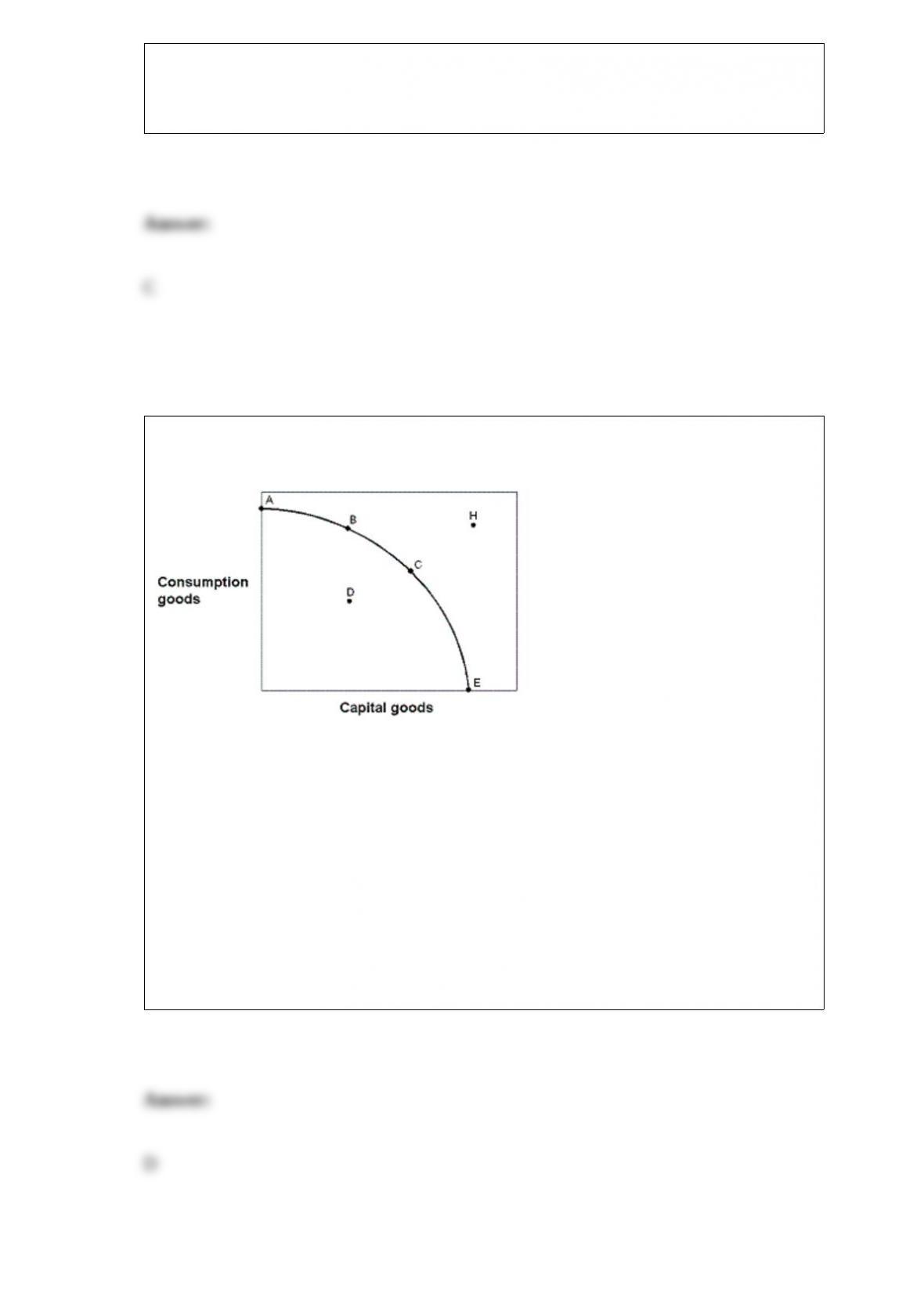
Exhibit 2-13 Production possibilities curve
In Exhibit 2-13, the combination of goods given by point H could:
a. never be achieved by this economy.
b. be achieved today if the economy achieved full employment.
c. be achieved today if the economy achieved maximum efficiency.
d. not be achieved today.
e. be achieved today with the proper allocation of resources.
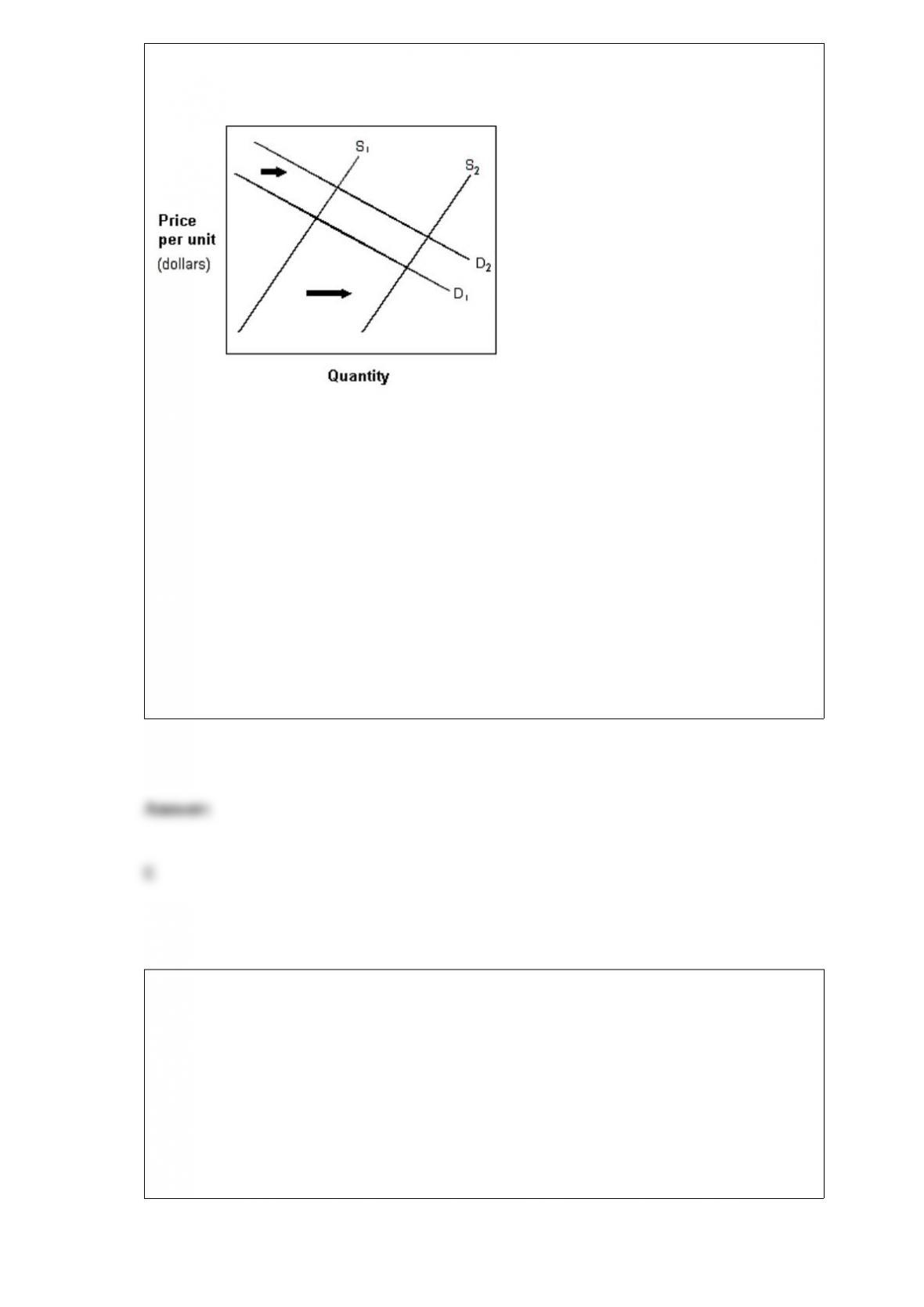
Exhibit 4-6 Demand and supply curves
In Exhibit 4-6, the demand curve has shifted from D1 to D2 and, simultaneously, the
supply curve has shifted from S1 to S2. Describe these actions in this market.
a. Market supply has decreased, and market demand has increased.
b. Market supply has increased, and market demand has decreased.
c. Market supply has decreased, and market demand has decreased.
d. The quantity supplied has decreased, and the quantity demanded has increased.
e. Market supply has increased, and market demand has increased.
A young chef is considering opening his own sushi bar. To do so, he would have to quit
his current job, which pays $20,000 a year, and take over a store building that he owns
and currently rents to his brother for $6,000 a year. His expenses at the sushi bar would
be $50,000, for food and $2,000 for gas and electricity. What are his implicit costs?
a. $26,000.
b. $66,000.
c. $78,000.
d. $52,000.
e. $72,000.

To maximize its profit, a monopoly should choose a price where demand is:
a. elastic.
b. inelastic.
c. unitary elastic.
d. vertical.
Video rental stores in cities are an illustration of:
a. perfect competition. c. monopolistic competition.
b. monopoly. d. oligopoly.
Exhibit 4-2 Supply and demand curves
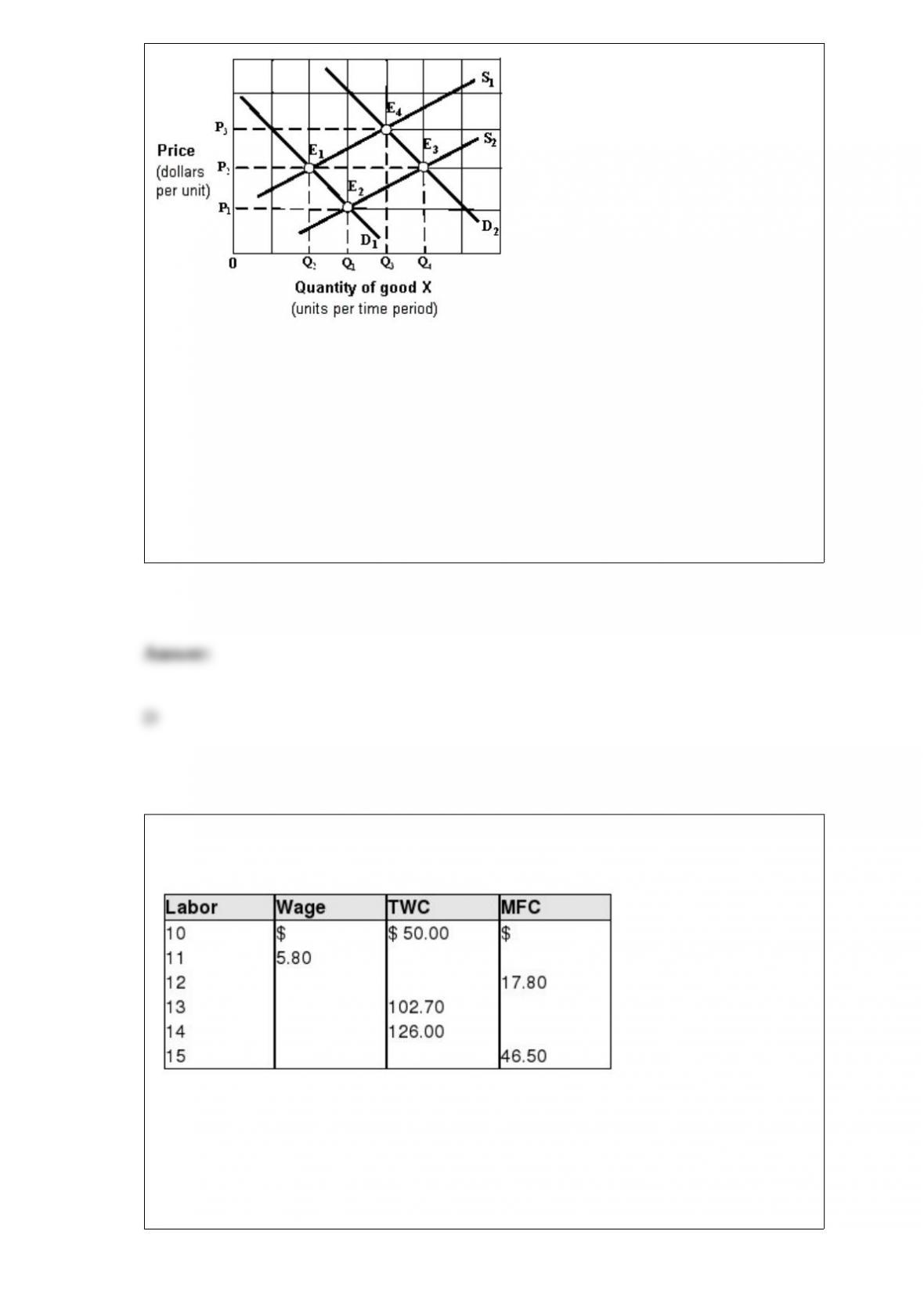
The market shown in Exhibit 4-2 is initially in equilibrium at point E1. Union
negotiations for workers producing good X result in a wage increase. Other things
being equal, which of the following is the new equilibrium after this wage increase is in
effect?
a. E1. c. E3.
b. E2. d. E4.
Exhibit 11-11 Labor wage and cost data
In Exhibit 11-11, the wage required to hire 12 employees is equal to:
a. $5.80.
b. $6.00.
c. $6.50.
d. $6.80.
e. $7.00.
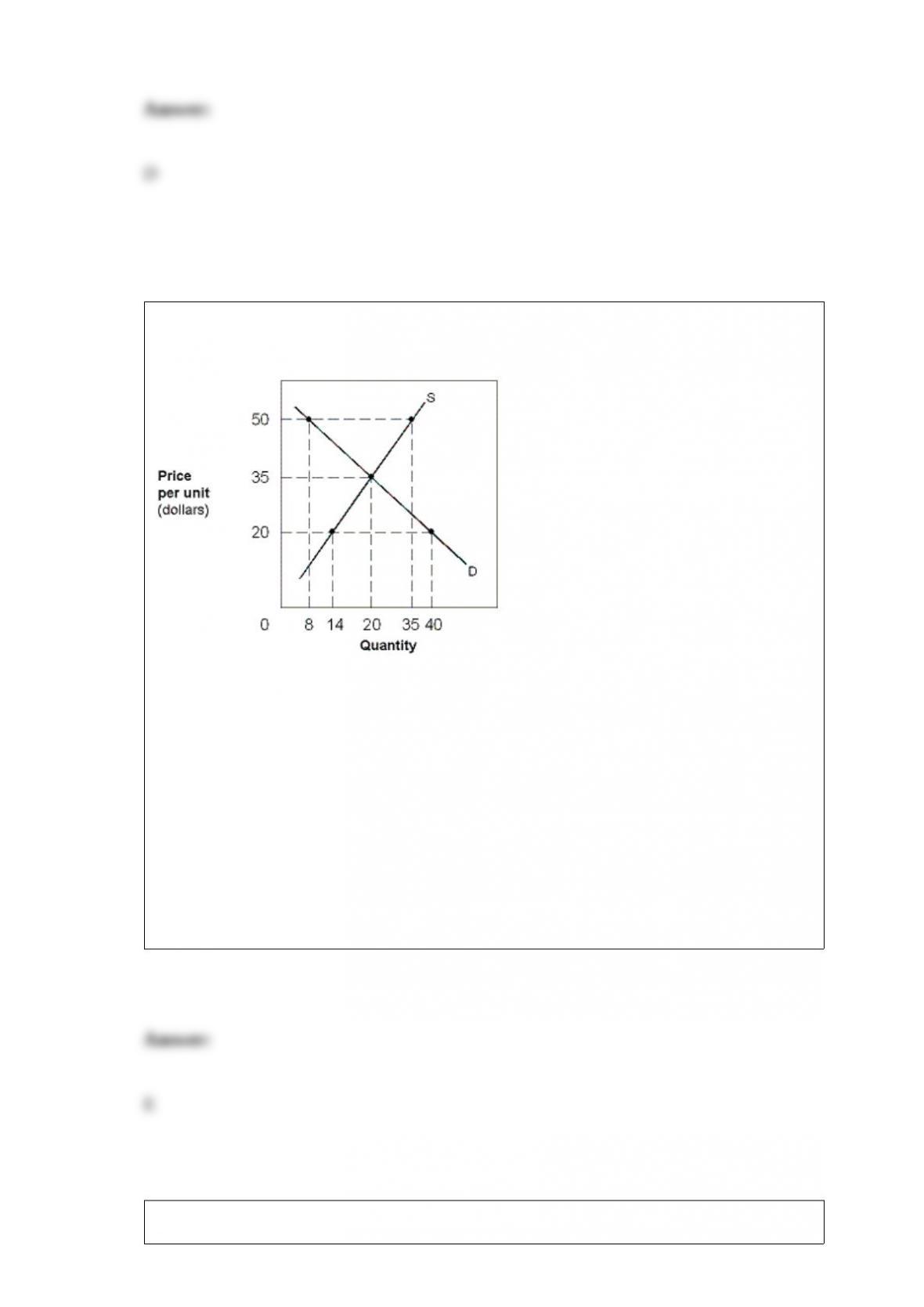
Exhibit 3-9 Demand and supply curves
In Exhibit 3-9, if the market price is $20,
a. this market will be in equilibrium.
b. a shortage of 27 units will result.
c. the price is above the equilibrium price.
d. a surplus of 26 units will result.
e. a shortage of 26 units will result.
If a firm increases output when MR < MC, then:

a. profit will equal zero.
b. profit will increase.
c. profit will decrease.
d. profit will remain the same.
e. the firm is minimizing losses.
When economists want to hold a number of factors constant, they are demonstrating
which of the following expressions?
a. Positive economics model. c. Ceteris paribus.
b. Consumer sovereignty. d. Normative economics.
Which of the following would cause a shift in the demand curve for a good?
a. An increase in consumers’ income.
b. A decrease in the number of consumers.
c. The expectation that the price of a good will increase in the future.
d. All of these.

Which statement about price elasticity of demand along a linear demand curve is true?
a. As the quantity demanded increases, so does the buyer’s sensitivity to price.
b. When price elasticity of demand is equal to 1, consumers are indifferent to subtle
price changes.
c. The ratio of current price to quantity demanded is a good estimate of the elasticity of
demand.
d. As the prices of goods increase, the elasticity of demand increases.
e. When an individual buys 4 units of a good his/her elasticity of demand for each unit
increases.
Which of the following is the best example of an activity that would be undertaken by
an entrepreneur?
a. Buying and selling of stocks and bonds.
b. Starting a new business.
c. Working on an assembly line.
d. Running for political office.
An economist left his $100,000-a-year teaching position to work full-time in his own
consulting business. In the first year, he had total revenue of $200,000 and business
expenses of $150,000. He made a(n):
a. implicit profit.
b. economic loss.
c. economic profit.
d. accounting loss but not an economic loss.
e. zero economic profit.

Which of the following is illegal under the Sherman Antitrust Act?
a. Attempts to monopolize.
b. Price fixing.
c. Formation of cartels.
d. All of these are illegal under the Sherman Antitrust Act.
Ceteris paribus, which of the following would cause a decrease in the demand for HD
TVs?
a. decline in the price of HD TVs. c. increase in consumers’ income.
b. increase in the price of HD TVs. d. decrease in consumers’ income.
The slope of the indifference curve for goods X and Y is called the marginal:
a. product rate.
b. rate of transformation.
c. rate of substitution.
d. rate of utility.
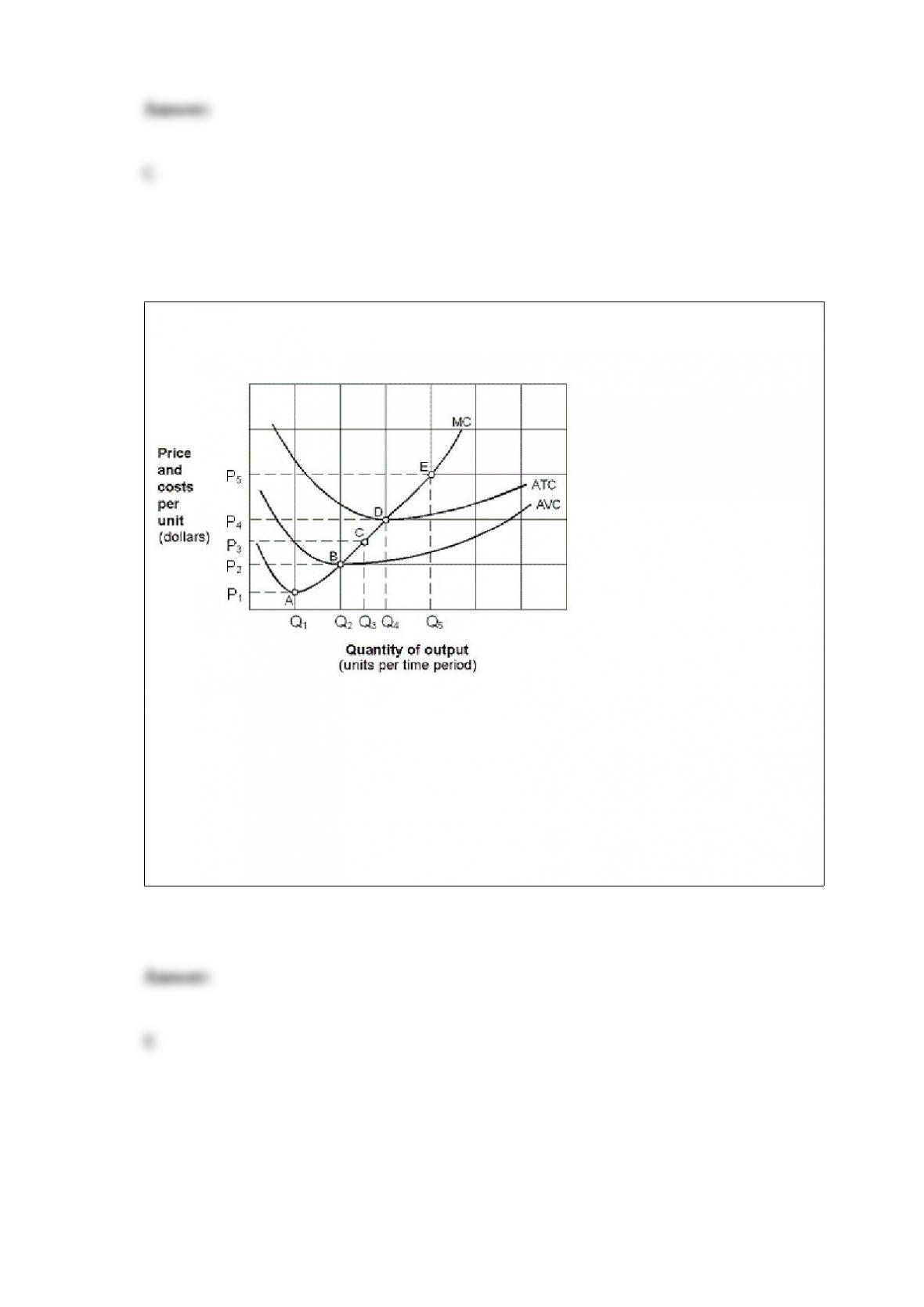
Exhibit 8-13 Price and cost per unit curves
As shown by the five points in Exhibit 8-13, the firm’s total economic profit is
maximized when the price is:
a. P1.
b. P2.
c. P3.
d. P4.
e. P5.