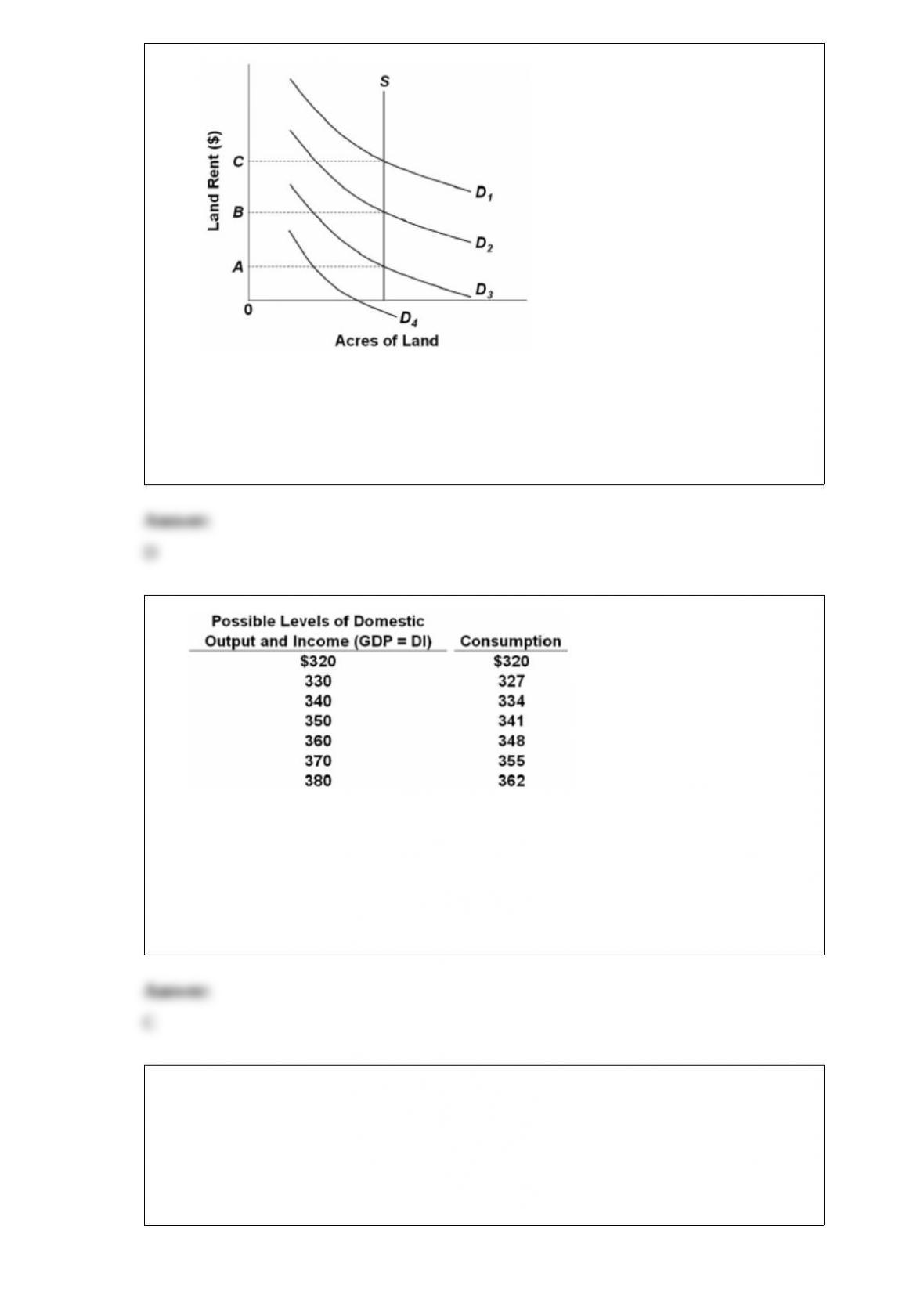
1)
Refer to the above diagram. If demand is D2, a tax of A per acre will:
A.encourage the substitution of land for other productive resources.
B.lower the cost of land to individual farmers.
C.reduce the demand for land to, say, D3 or D4.
D.not affect the quantity of land available to society.
2)
Refer to the above data for a private closed economy. If gross investment is $12 billion,
the equilibrium level of GDP will be:
A.$380.
B.$370.
C.$360.
D.$350.
3) In economists’ models, technological advance occurs in:
A.the very long run.
B.either the short run, long run, or very long run.
C.manufacturing industries but not in service industries.
D.pure competition, but not in monopolistic competition, oligopoly, and pure
monopoly.
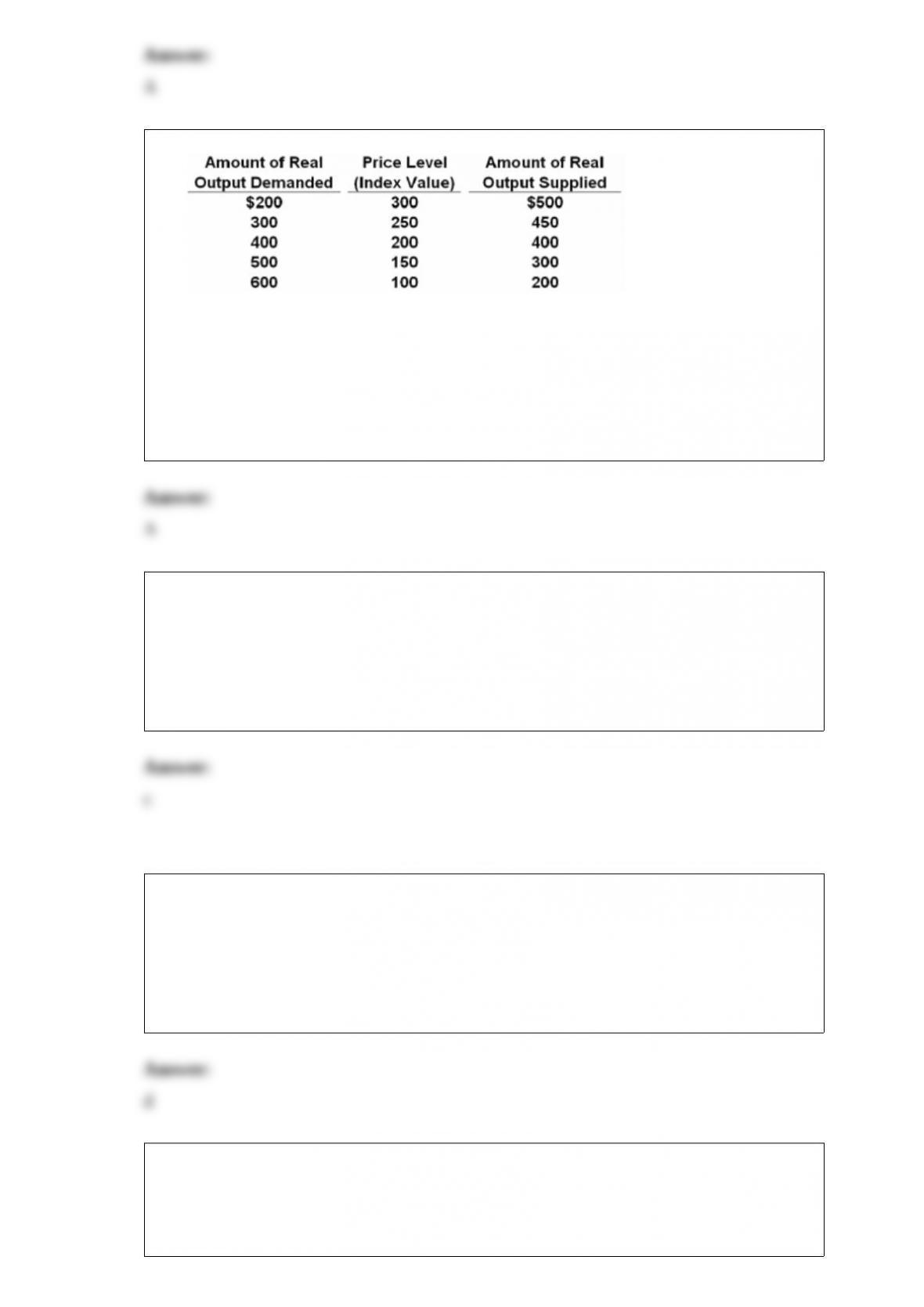
4)
Refer to the above data. If the price level is 150 and producers supply $300 of real
output:
A.a shortage of real output of $200 will occur.
B.a shortage of real output of $100 will occur.
C.a surplus of real output of $300 will occur.
D.neither a shortage nor a surplus of real output will occur.
5) for a pure monopolist marginal revenue is less than price because:
a.the monopolist’s demand curve is perfectly elastic.
b.the monopolist’s demand curve is perfectly inelastic.
c.when a monopolist lowers price to sell more output, the lower price applies to all units
sold.
d.the monopolist’s total revenue curve is linear and slopes upward to the right.
6) if net foreign factor income is zero and there are no statistical discrepancies, the sum
of national income and the consumption of fixed capital equals:
a.disposable income.
b.personal income.
c.net domestic product.
d.gross domestic product.
7) if there are important external benefits associated with the consumption of a product:
a.government should enact legislation to prohibit the production of the commodity.
b.special excise taxes should be levied on producers of the product.
c.the market demand curve understates the relative importance of the product and
resources are therefore underallocated to its production.
d.the market supply curve for the product lies too far to the right to provide an efficient
allocation of resources.
8) Harry owns a barber shop and charges $6 per haircut. By hiring one barber at $10 per
hour the shop can provide 24 haircuts per 8-hour day. By hiring a second barber at the
same wage rate the shop can now provide a total of 42 haircuts per day.
Refer to the above information. The MP of the second barber is:
A.$240.
B.$108.
C.18 haircuts.
D.42 haircuts.
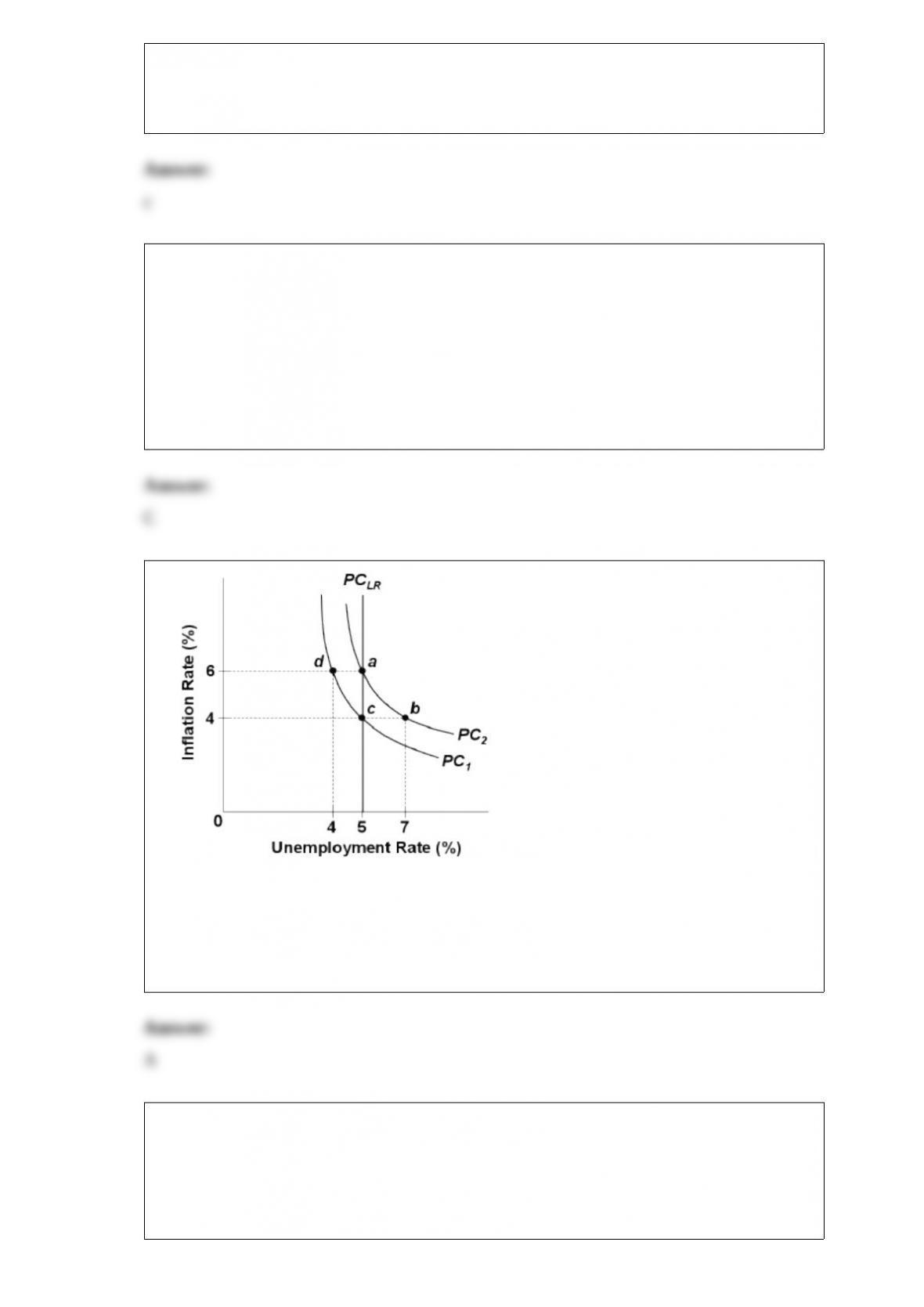
9)
Refer to the above diagram. Point b would be explained by:
A.an actual rate of inflation that exceeds the expected rate.
B.an actual rate of inflation that is less than the expected rate.
C.cost-push inflation.
D.an increase in long-run aggregate supply.
10) the coefficient of price elasticity is 0.2. demand is thus:
a.perfectly inelastic.
b.perfectly elastic.
c.relatively inelastic.
d.relatively elastic.
11) marginal costs exist because:
a.the decision to engage in one activity means forgoing some other activity.
b.wants are scarce relative to resources.
c.households and businesses make rational decisions.
d.most decisions do not involve sacrifices or tradeoffs.
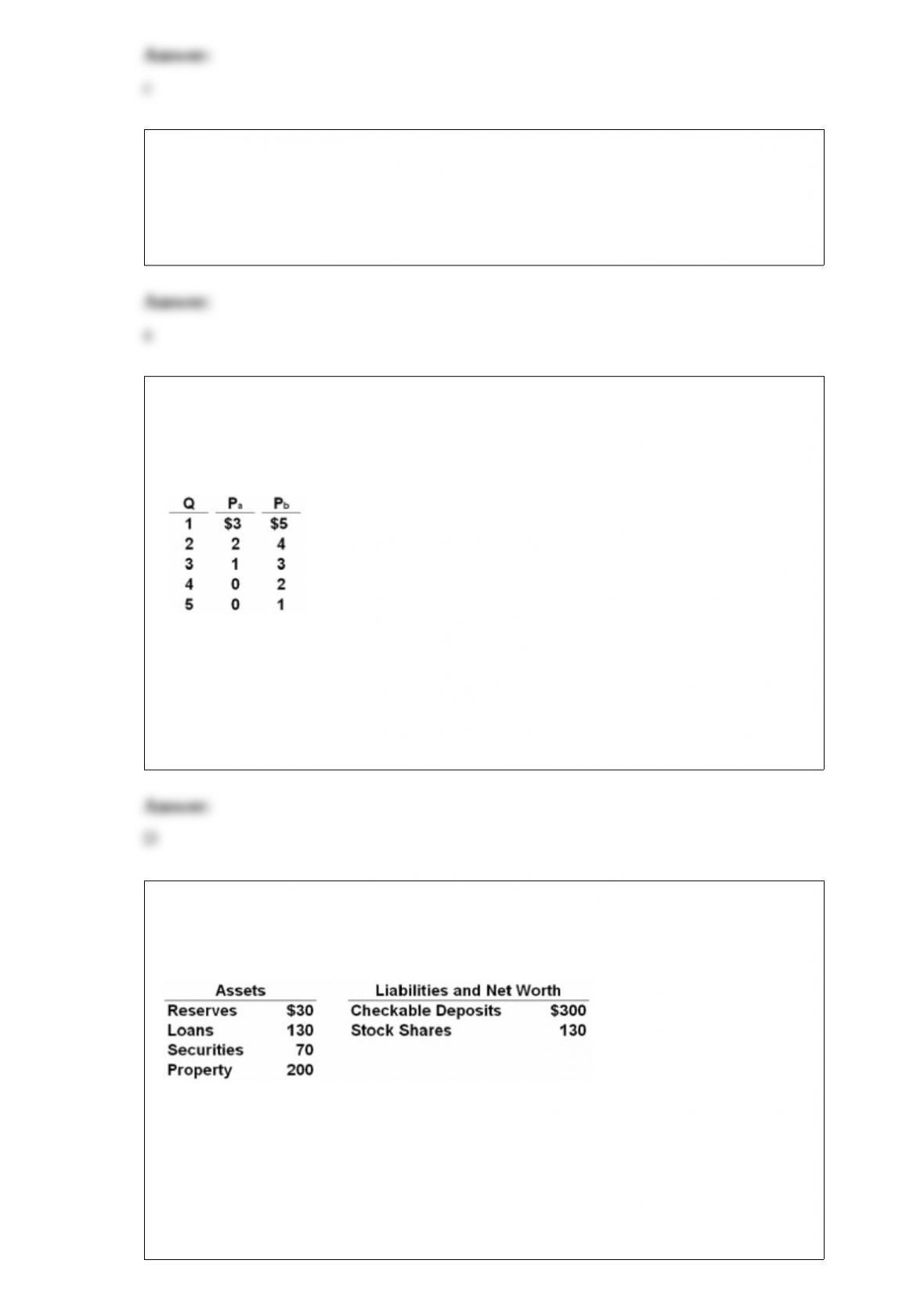
12) Pa and Pb are the prices that individuals A and B are willing to pay for the last unit
of a public good, rather than do without it. These people are the only two members of
society.
Refer to the above data. If this good were a private good instead of a public one, the
total quantity demanded at a $3 market price would be:
A.2 units.
B.3 units.
C.6 units.
D.4 units.
13) The following consolidated balance sheet for the commercial banking system.
Assume the required reserve ratio is 10 percent. All figures are in billions.
Refer to the above data. After the deposit of $10 billion of new currency, the maximum
amount by which this commercial banking system can expand the supply of money by
lending is:
A.$9 billion.
B.$45 billion.
C.$36 billion.
D.$90 billion.
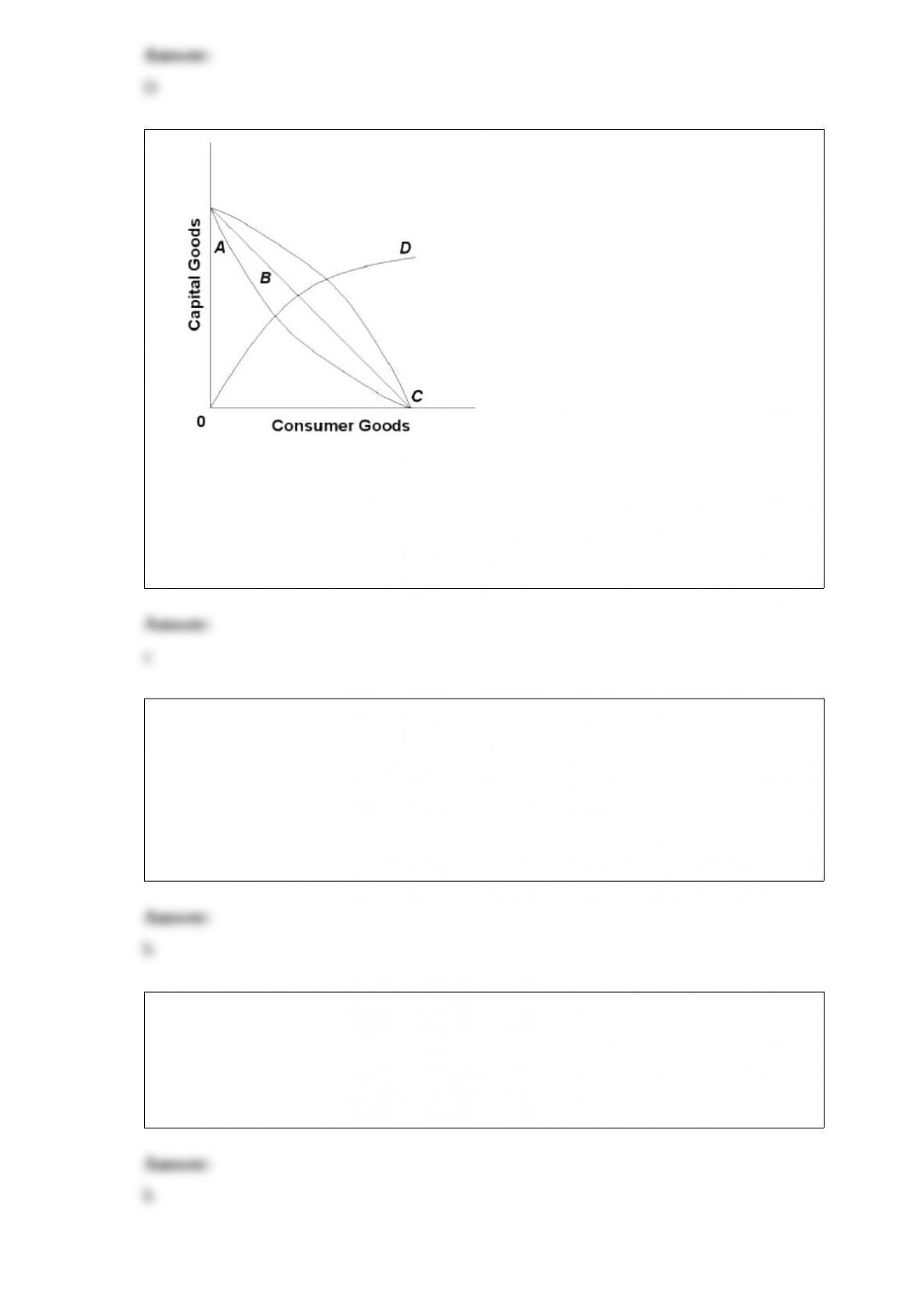
14)
refer to the above diagram. as it relates to production possibilities analysis, the law of
increasing opportunity cost is reflected in curve:
a.a
b.b
c.c
d.d
15) suppose the price of local cable tv service increased from $16.20 to $19.80 and as a
result the number of cable subscribers decreased from 224,000 to 176,000. along this
portion of the demand curve, price elasticity of demand is:
a.0.8.
b.1.2.
c.1.6.
d.8.0
16) (consider this) free products offered by firms:
a.may or may not be free to society, but are never free to individuals.
b.may or may not be free to individuals, but are never free to society.
c.are produced and distributed at no cost to society.
d.usually are items nobody wants.
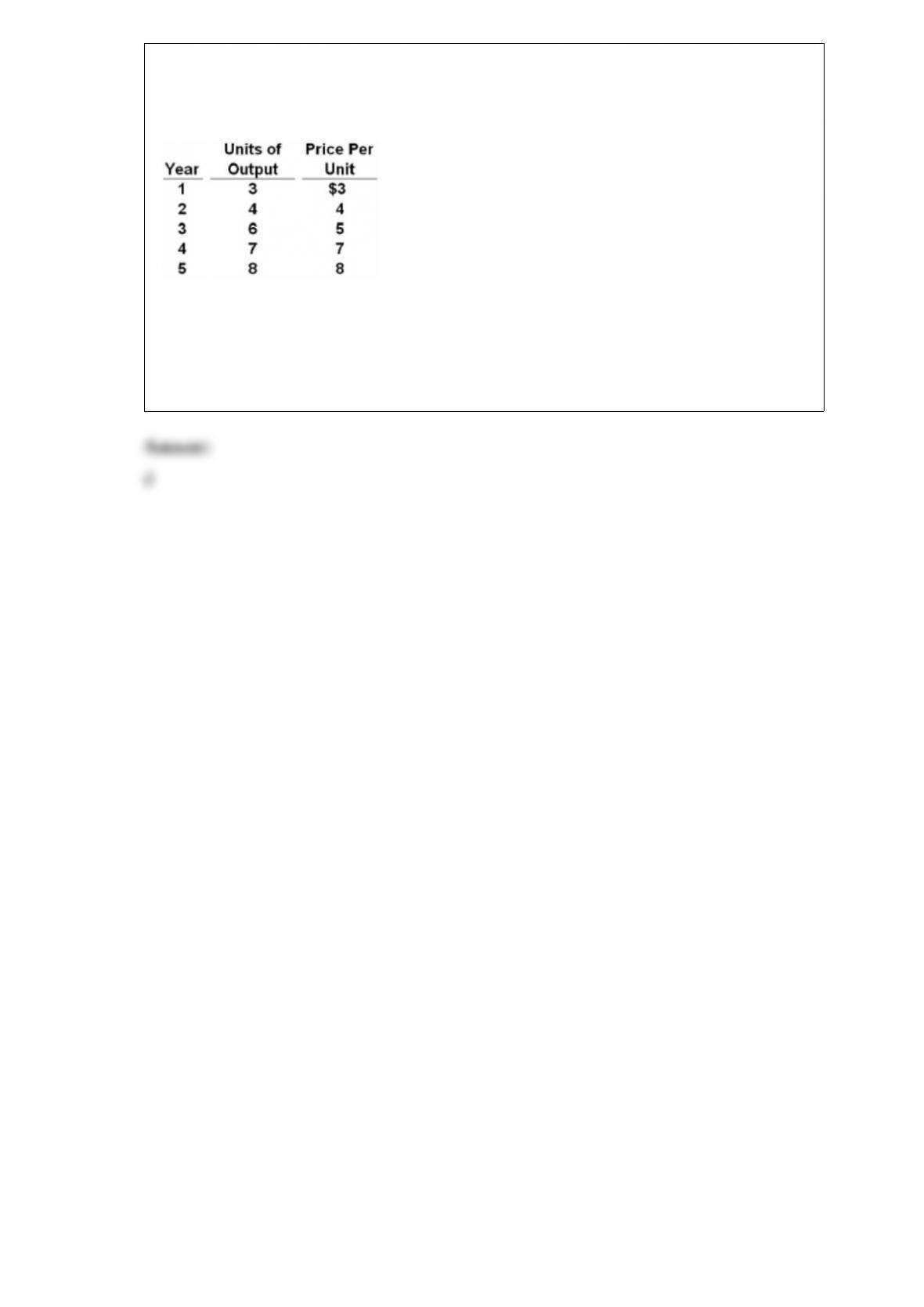
17) assume an economy that is producing only one product and that year 3 is the base
year. output and price data for a five-year period are as follows. answer the next
question(s) on the basis of these data.
refer to the above data. if year 3 is chosen as the base year, the price index for year 1 is:
a.140.
b.40.
c.167.
d.60.