1) to protect its farmers from foreign competition, the european union has utilized
variable import levies and export subsidies.
a.true
b.false
2) under free trade, sweden enjoys all of the gains from trade with holland if sweden:
a.trades at holland’s rate of transformation
b.trades at sweden’s rate of transformation
c.specializes completely in the production of its export good
d.specializes partially in the production of its export good
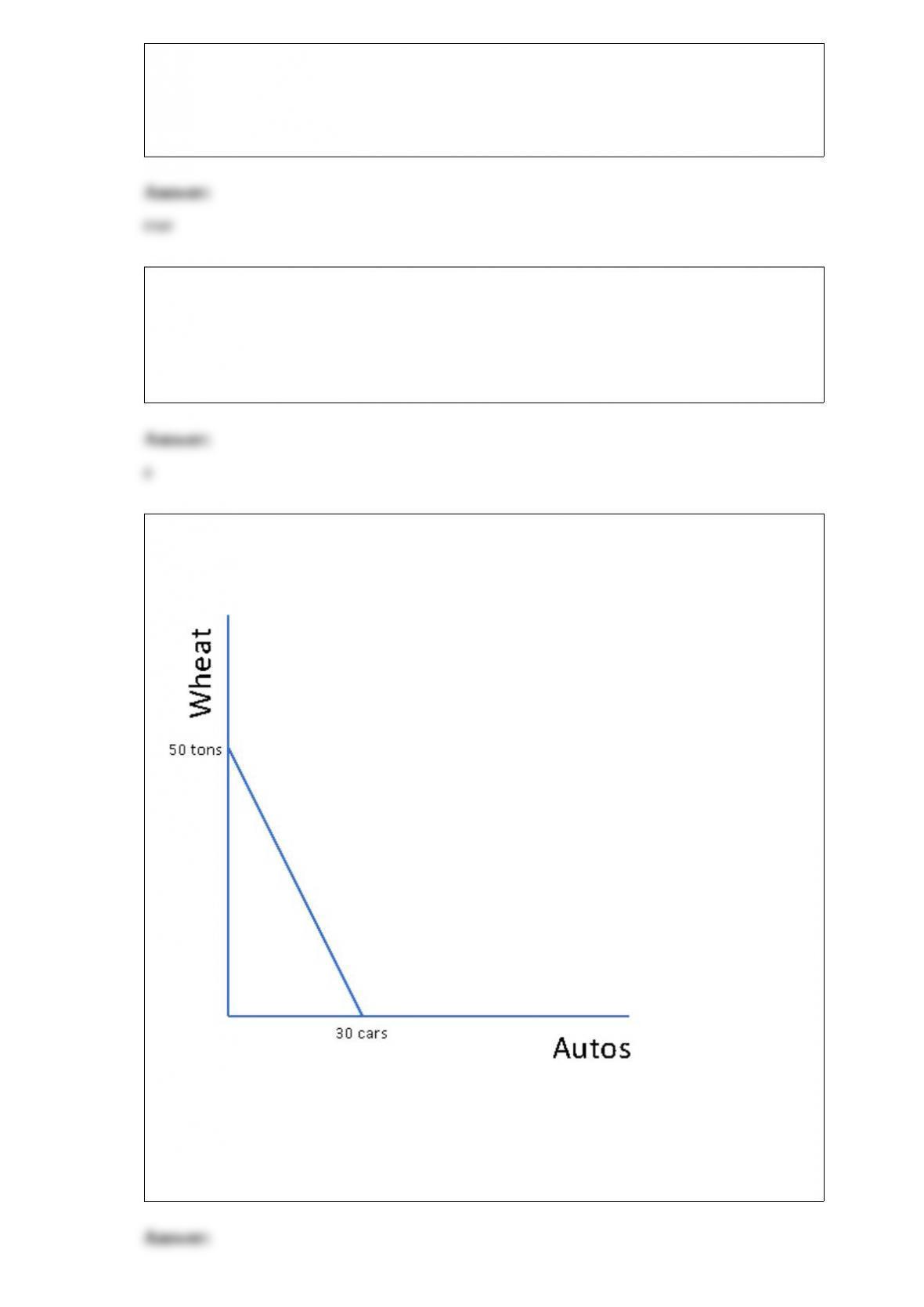
3) figure 2.4 production possibilities frontier
in figure 2.4 one ton of wheat can be produced at a cost of
a.one and two-thirds cars
b.two and one-third cars
c.three fifths of a car
d.three sevenths of a car

4) foreign ownership of u.s. financial assets
a.has decreased since the 1960’s
b.has increased since the 1960’s
c.has made the u.s. a net borrower since the late 1980’s
d.both a and c
5) according to the asset-markets approach, adjustments among financial assets are a
key determinant of long-run movements in exchange rates.
a.true
b.false
6) the export-import bank of the united states encourages american firms to sell
overseas by providing direct loans and loan guarantees to foreign purchasers of
american goods. to american firms, this represents a:
a.specific subsidy
b.ad valorem subsidy
c.domestic subsidy
d.export subsidy
7) as yen-denominated costs become a larger portion of ford’s total costs, a dollar
appreciation results in a smaller increase in the yen-denominated cost of a ford auto
than occurs when all input costs are dollar denominated.
a.true
b.false
8) policy coordination is complicated by

a.different economic objectives
b.different national institutions
c.different phases in the business cycle
d.all of the above
9) concerning exchange rate forecasting, ____ involves the use of historical exchange
rate data to estimate future values, while ignoring the economic determinants of
exchange rate movements.
a.econometric analysis
b.judgmental analysis
c.technical analysis
d.sunspot analysis
10) increased foreign competition tends to:
a.intensify inflationary pressures at home
b.induce falling output per worker-hour for domestic workers
c.place constraints on the wages of domestic workers
d.increase profits of domestic import-competing industries