
1) A good that is excludable but not rival is known as a club good.
a.True
b.False
2) Which of the following theories explains why increased education translates into
higher wages?
a.human-capital theory
b.the theory of compensating differentials
c.the theory of supply and demand
d.comparative advantage
3) Average productivity can be measured as total output divided by total units of labor.
a.True
b.False
4) Which of the following statements best characterizes a basic difference between
market economies and centrally- planned economies?
a.Society relies more upon prices to allocate resources when the economy is
centrally-planned than when it is market-based.
b.The self-interest of households is reflected more fully in the outcome of a
centrally-planned economy than in the outcome of a market economy.
c.Government plays a larger role in the economic affairs of a market economy than in
the economic affairs of a centrally-planned economy.
d.None of the above are correct.
5) Figure 14-6
Suppose a firm operating in a competitive market has the following cost curves:
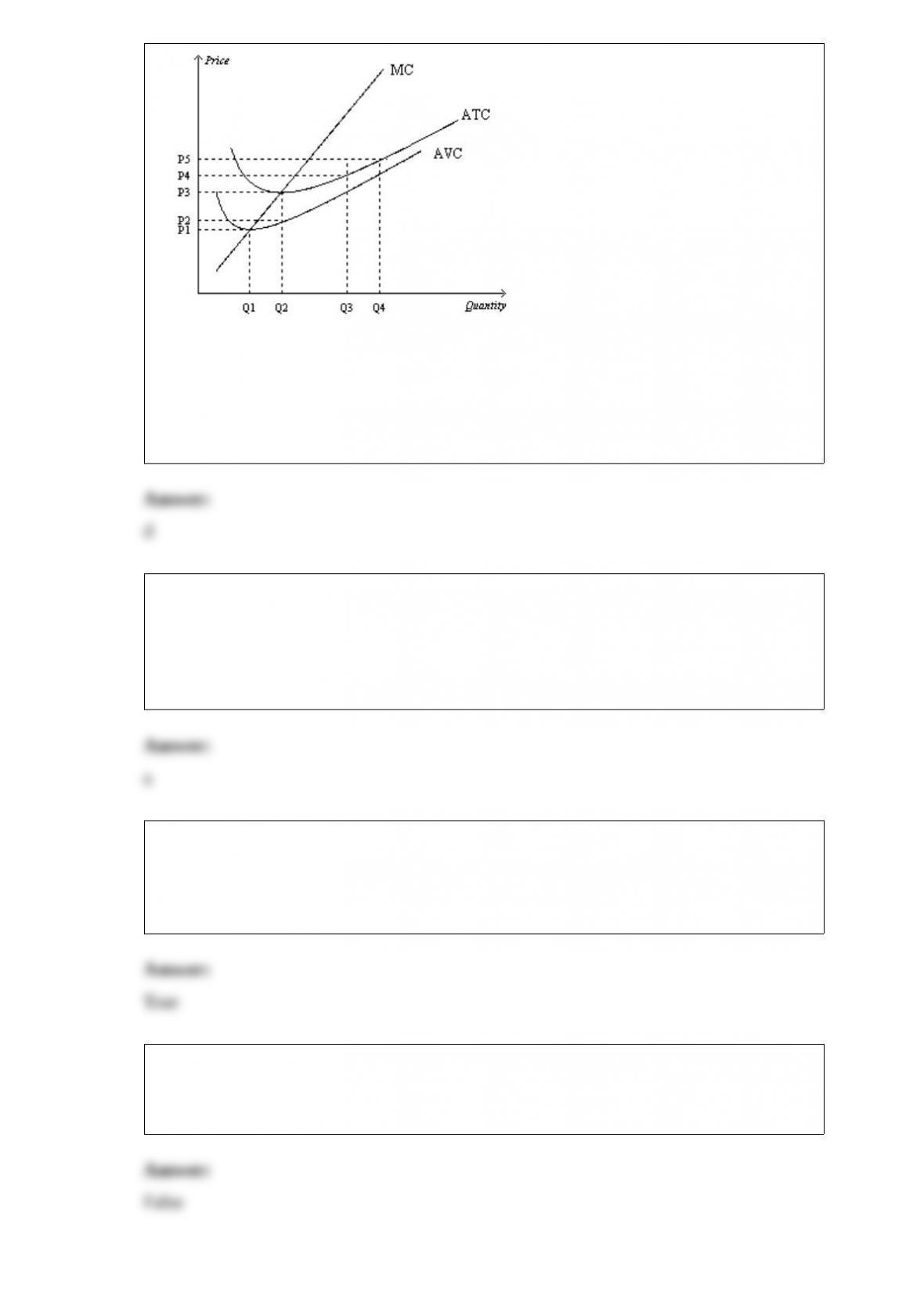
When market price is P3, a profit-maximizing firm‘s profit
a.can be represented by the area P3 x Q3.
b.can be represented by the area P3 x Q2.
c.can be represented by the area (P3-P2) x Q3.
d.is zero.
6) In a perfectly competitive market,
a.no one seller can influence the price of the product.
b.price exceeds marginal revenue for each unit sold.
c.average revenue exceeds marginal revenue for each unit sold.
d.All of the above are correct.
7) The Condorcet paradox demonstrates that the order in which people vote on choices
may influence the final outcome.
a.True
b.False
8) The best solution to the problem of welfare loss from monopoly is public ownership.
a.True
b.False
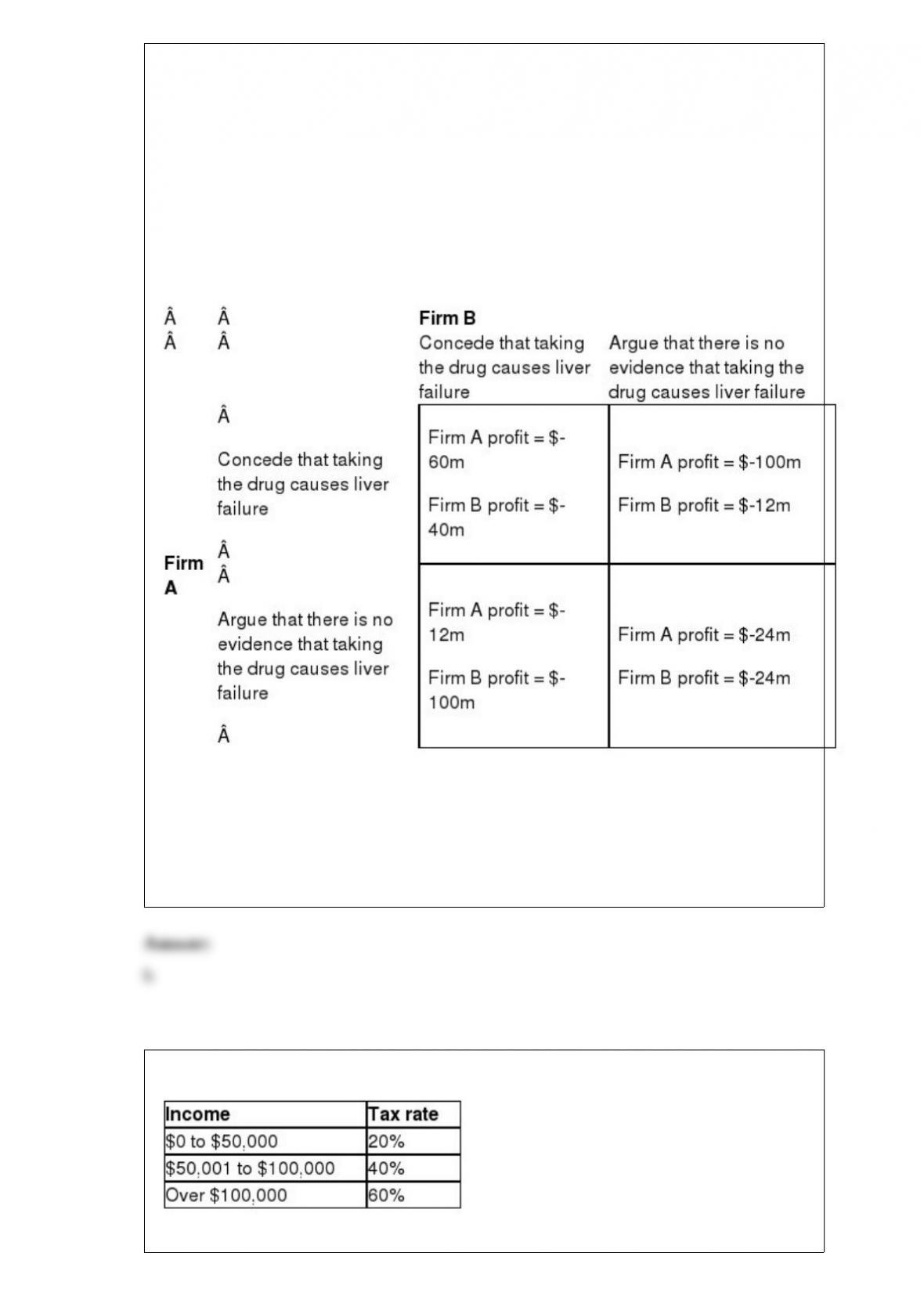
9) Table 17-26
Two prescription drug manufacturers (Firm A and Firm B) are faced with lawsuits from
states to recover the healthcare related expenses associated with side-effects from its
drugs. Each drug manufacturer has evidence that indicates that taking its prescription
drug causes liver failure. State prosecutors do not have access to the same data used by
drug manufacturers and thus will have difficulty recovering full costs without the help
of at least one of the drug manufacturer’s studies. Each firm has been presented with an
opportunity to lower its liability in the suit if it cooperates with attorneys representing
the states.
Refer to Table 17-26. If both firms follow a dominant strategy, Firm A’s profits (losses)
will be
a. $-12m
b. $-24m
c. $-60m
d. $-100m
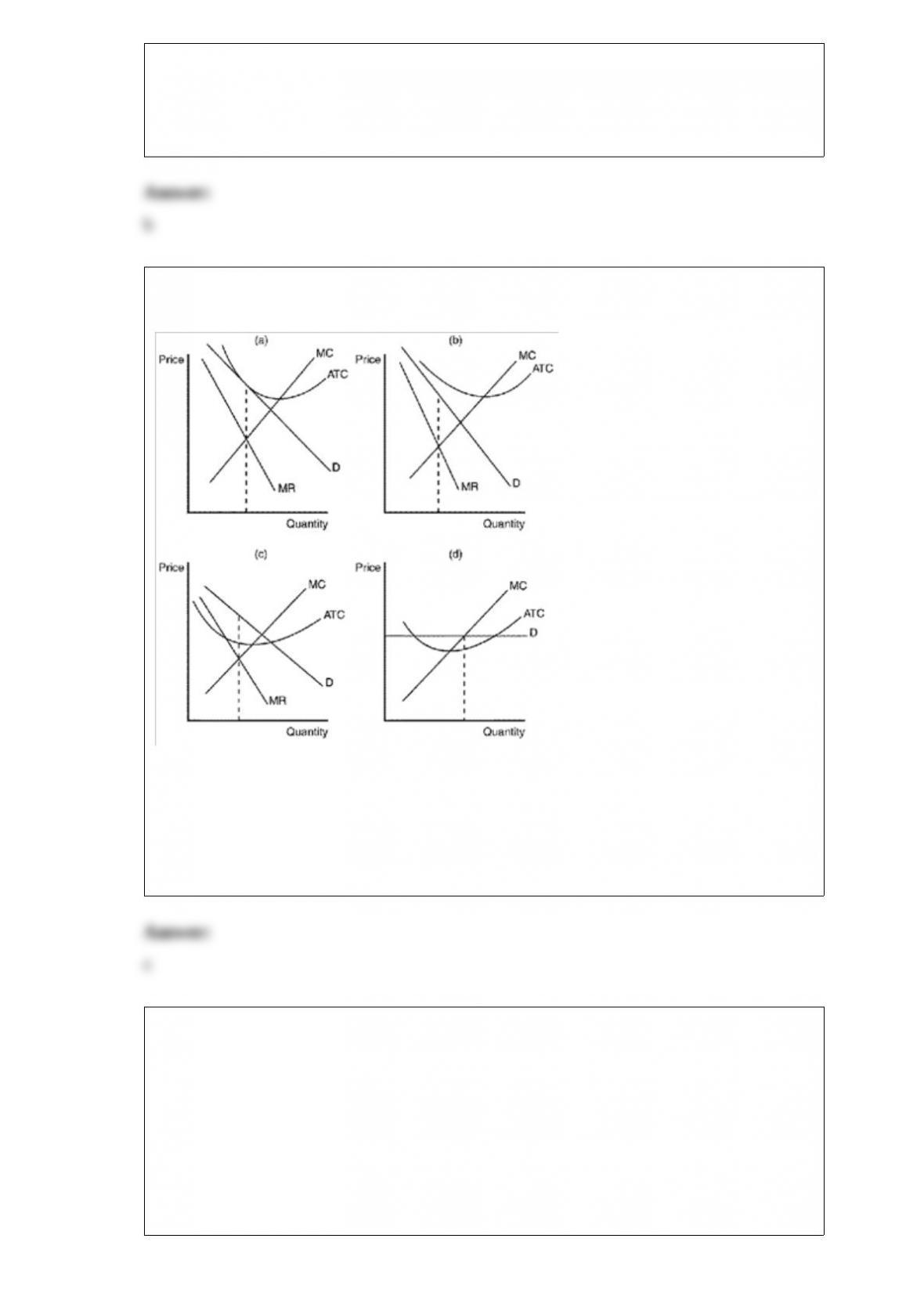
10) Table 12-5
What is the marginal tax rate for a person who makes $37,000?
a. 9.25%
b.20%
c.25%
d.40%
11) Figure 16-5
Which of the panels depicts a firm in a monopolistically competitive market earning
positive economic profits?
a.panel a
b.panel b
c.panel c
d.panel d
12) Abby, Bobbi, and Deborah each buy ice cream and paperback novels to enjoy on
hot summer days. Ice cream costs $5 per gallon, and paperback novels cost $8 each.
Abby has a budget of $80, Bobbi has a budget of $60, and Deborah has a budget of $40
to spend on ice cream and paperback novels. Which of the following statements is
correct?
a.Each woman faces the same budget constraint.
b.The slope of the budget constraint is the same for each woman.
c.The area underneath the budget constraint is larger for Deborah than for Abby.
d.All of the above are correct.
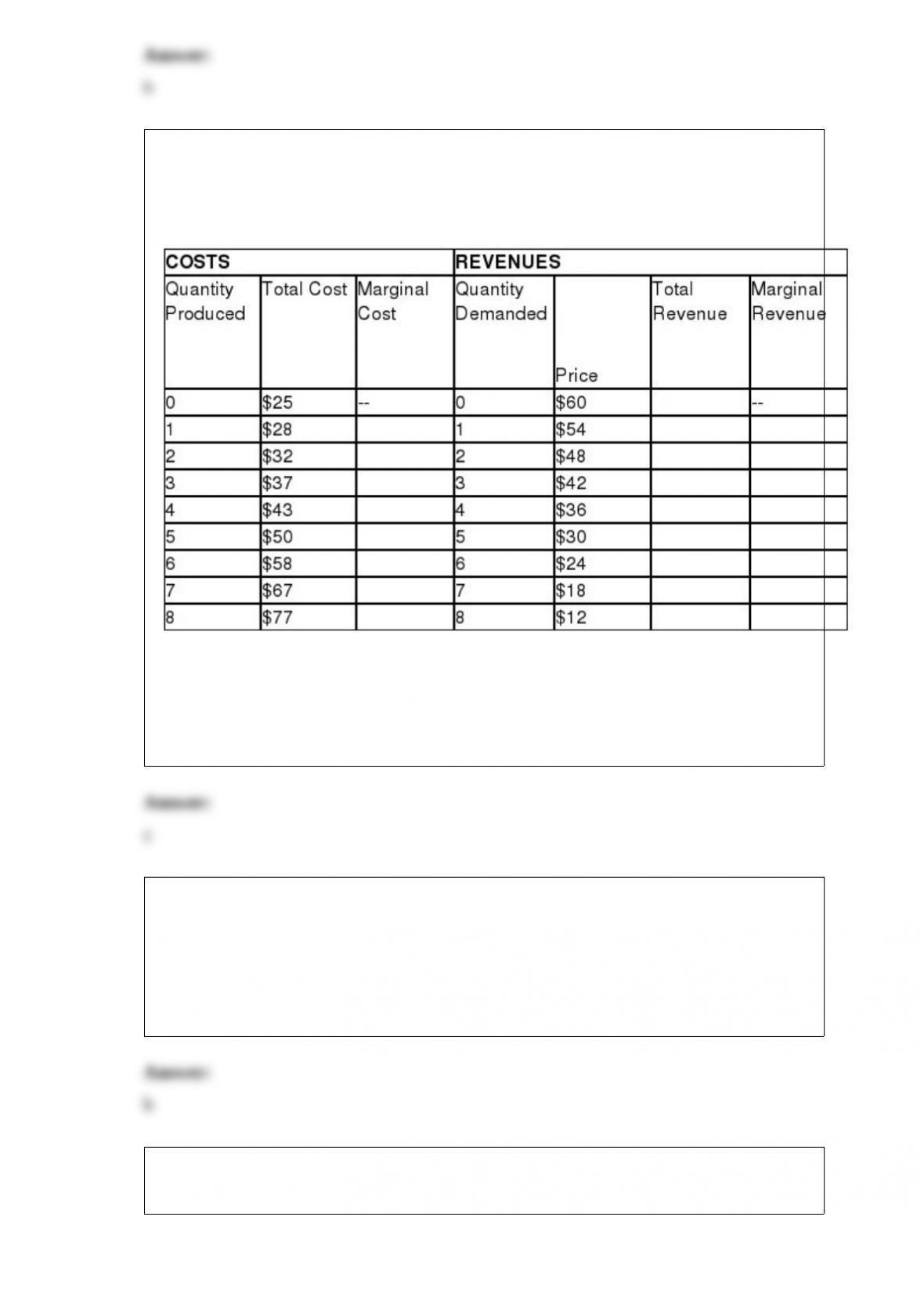
13) Table 16-6
Beatrice’s Birthday Cakes is one bakery among many in the market for birthday cakes.
The following table presents cost and revenue data for birthday cakes at Beatrice’s.
At the profitmaximizing quantity, what is Beatrice’s total profit?
a.$43
b.$89
c.$101
d.$144
14) When an economy is operating at a point on its production possibilities frontier,
then
a.consumers are content with the mix of goods and services that is being produced.
b.there is no way to produce more of one good without producing less of the other.
c.equal amounts of the two goods are being produced.
d.All of the above are correct.
15) Perry’s Production Possibilities FrontierJordan’s Production Possibilities
Frontier