The deflation of the 1930s impacted the U.S. economy because it led some consumers
to ________ and because it ________.
A) postpone purchases while they waited for prices to fall even lower; increased the
burden on borrowers
B) demand higher wages in anticipation of prices eventually rising again; increased
manufacturing since firms could afford to hire more labor
C) borrow more money since money was now cheap; reduced the amount of money
consumers would have to pay back on their outstanding loans
D) increase purchases to take advantage of the falling prices; increased the burden on
lenders
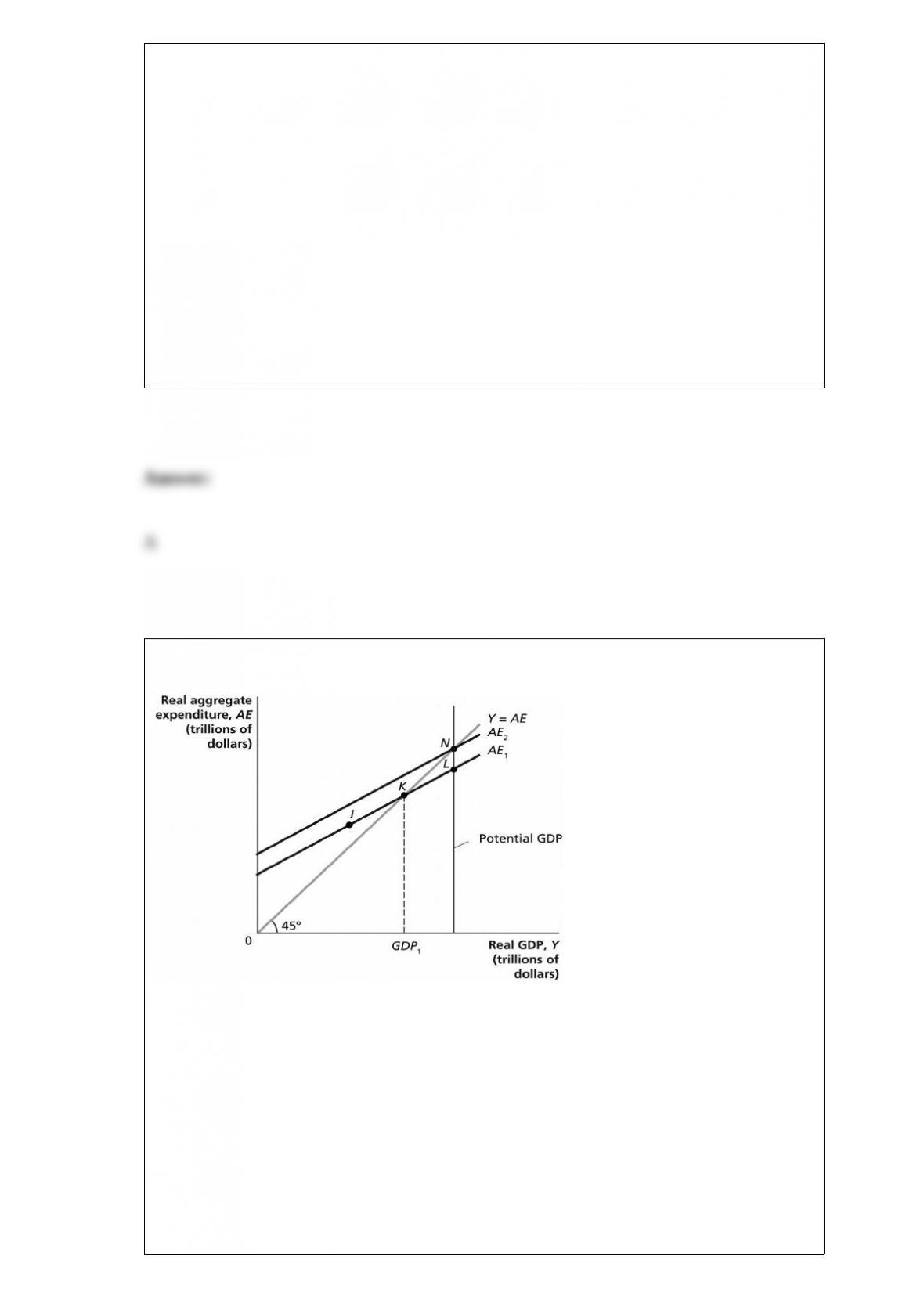
Figure 12-4
Refer to Figure 12-4. Potential GDP equals $100 billion. The economy is currently
producing GDP1 which is equal to $90 billion. If the MPC is 0.8, then how much must
autonomous spending change for the economy to move to potential GDP?
A) -$18 billion
B) -$2 billion
C) $2 billion
D) $18 billion

A financial asset is considered a security if
A) the owner of the security receives dividends and realizes a capital gain when the
asset is sold.
B) it can be sold in a secondary market.
C) its value increases after it is sold in a primary market.
D) its value is secure; that is, the owner will not suffer a financial loss when the asset is
sold.
Suppose you deposit $2,000 into Bank of America and that the required reserve ratio is
10 percent. How does this affect the bank’s balance sheet?
A) Reserves rise by $200.
B) Required reserves rise by $2,000.
C) Deposits rise by $1,000.
D) Excess reserves rise by $1,800.
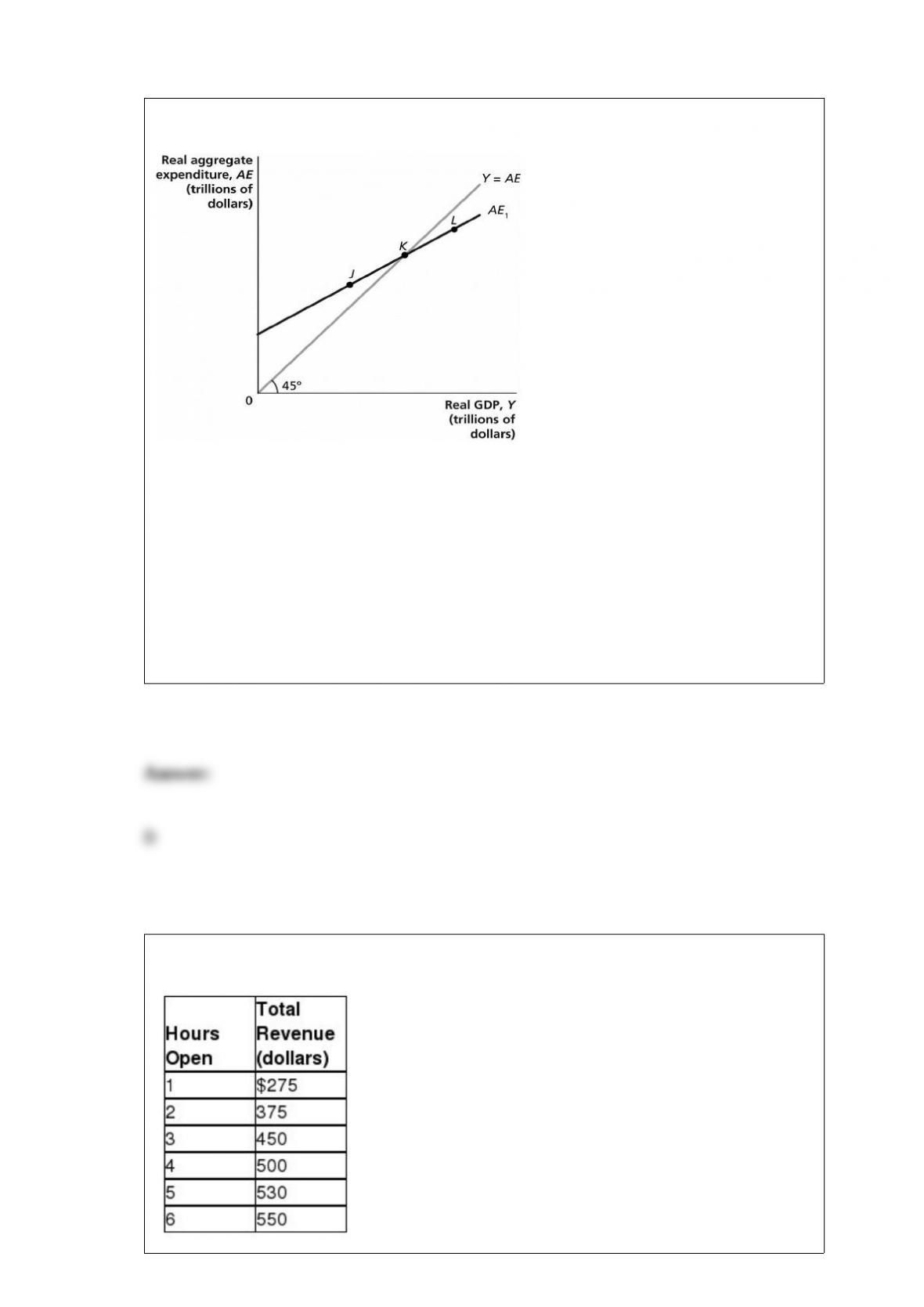
Figure 12-1
Refer to Figure 12-1. If the economy is in equilibrium, it is at a level of aggregate
expenditure given by point
A) J.
B) K.
C) L.
D) Points J, K and L all represent equilibrium.
Table 1-3

Ivan runs a custom jewelry shop in Sparkle City. He is debating whether he should
extend his hours of operation. Ivan figures that his sales revenue will depend on the
number of hours the jewelry shop is open as shown in the table above. He would have
to hire a worker for those hours at a wage rate of $25 per hour.
Refer to Table 1-3. What is Ivan’s marginal cost if he decides to stay open for six hours
instead of five hours?
A) $10
B) $20
C) $25
D) $91.67
According to the text, economists consider full employment to occur when
A) everyone who wants a job has a job.
B) frictional unemployment equals zero.
C) the sum of frictional unemployment and structural unemployment equals zero.
D) the unemployment rate consists of only frictional and structural unemployment.
If the current unemployment rate is 5%, under which of the following circumstances
would you expect the Fed to use contractionary monetary policy?
A) if the natural rate of unemployment is below 5%
B) if the natural rate of unemployment is above 5%
C) if the inflation rate is above 5%
D) if the inflation rate is below 5%
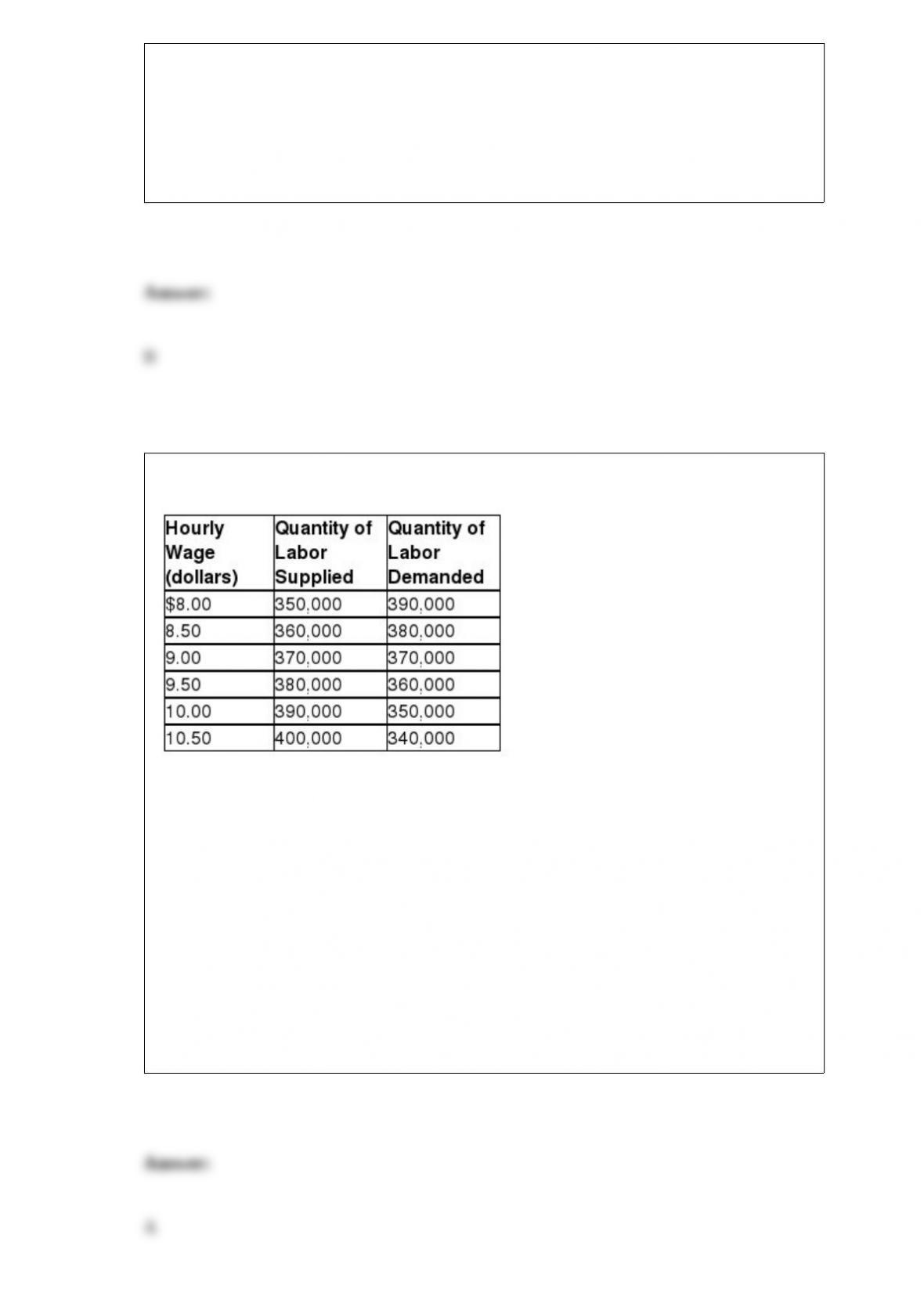
Table 4-4
Table 4-4 shows the demand and supply schedules for the low-skilled labor market in
the city of Westover.
Refer to Table 4-4. What is the equilibrium hourly wage (W*) and the equilibrium
quantity of labor (Q*)?
A) W* = $9.00; Q* = 370,000
B) W* = $8.50; Q* = 380,000
C) W* = $8.50; Q* = 360,000
D) W* = $9.00; Q* = 740,000
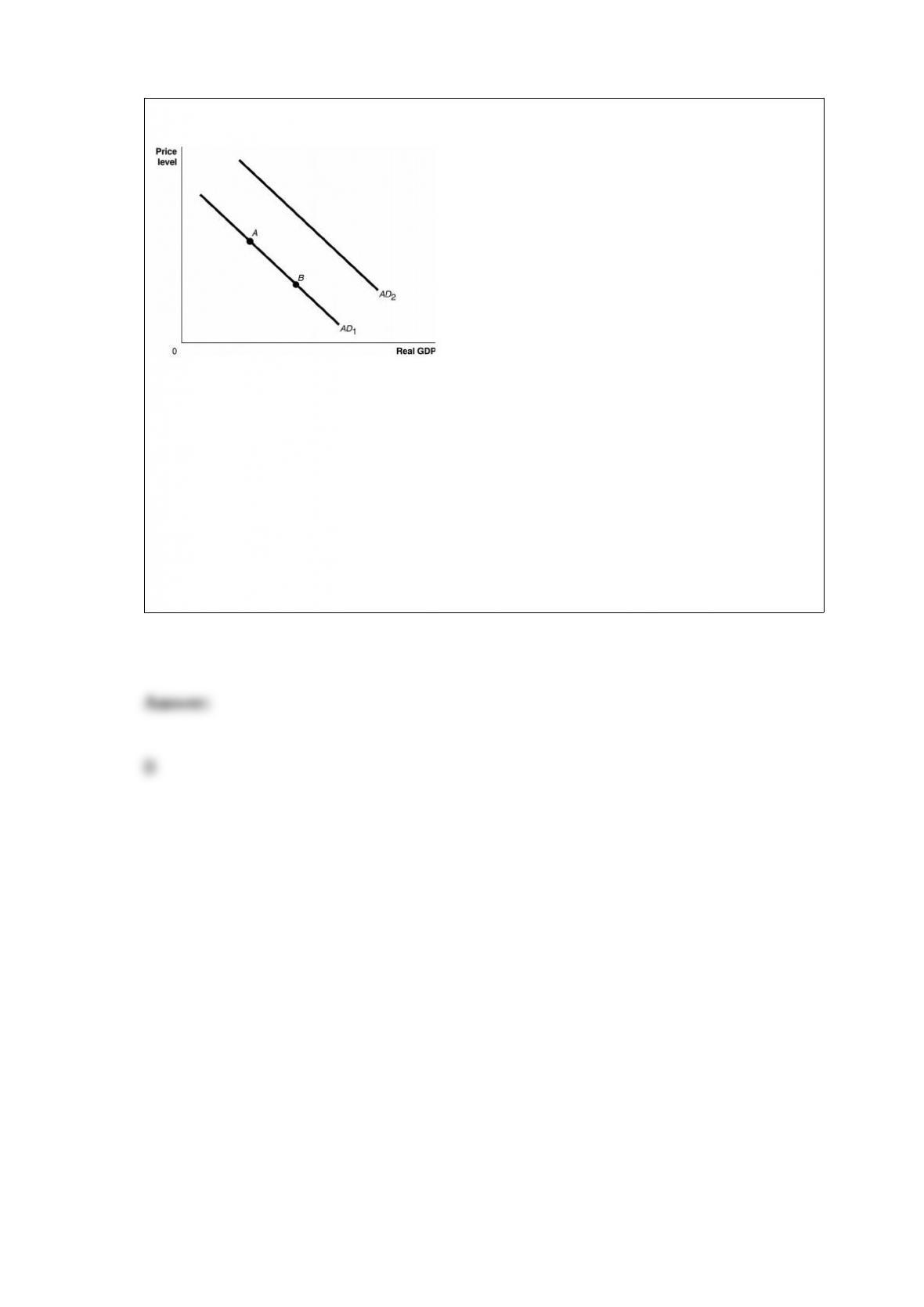
Figure 13-1
Refer to Figure 13-1. Ceteris paribus, a decrease in government spending would be
represented by a movement from
A) AD1 to AD2.
B) AD2 to AD1.
C) point A to point B.
D) point B to point A.