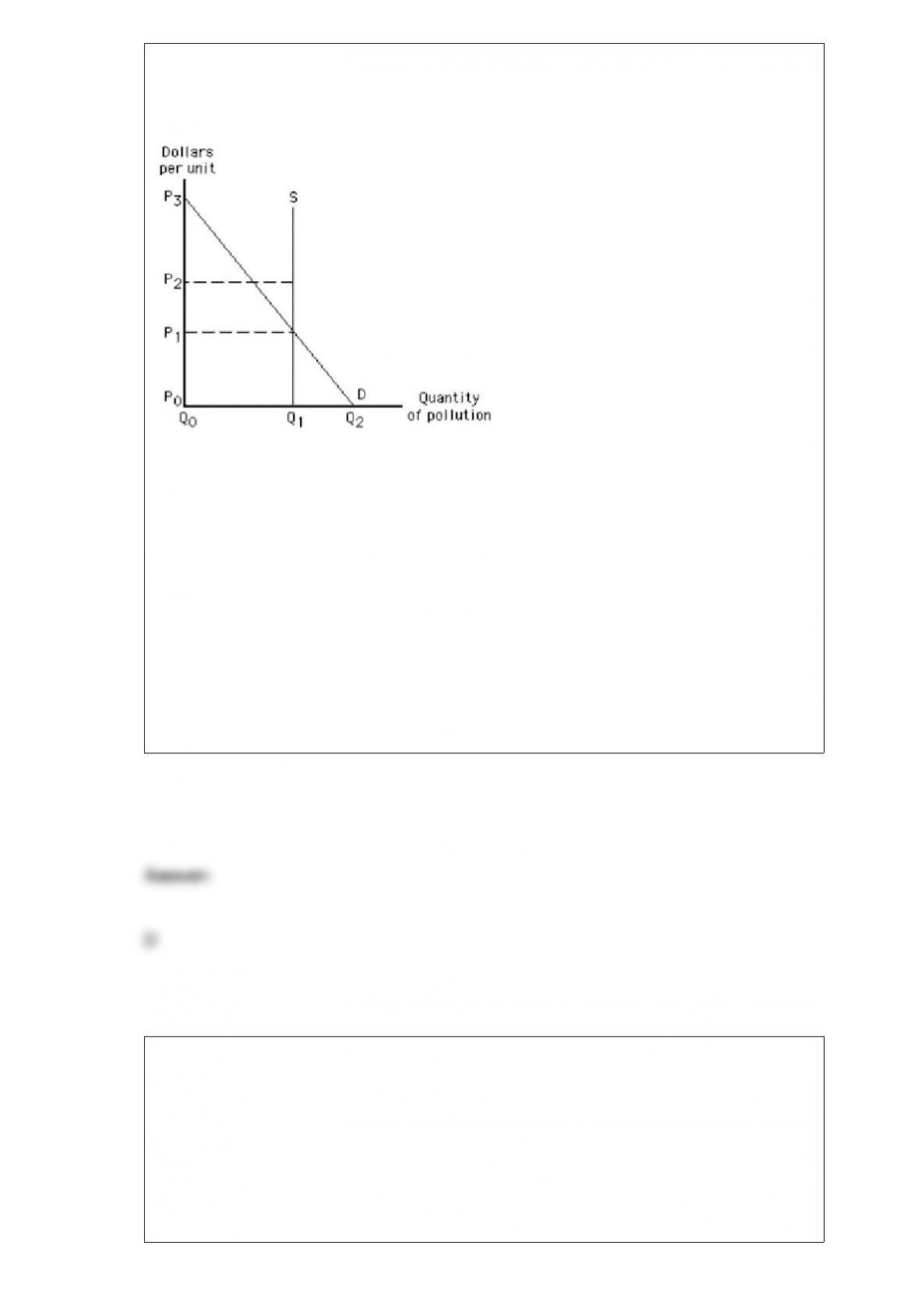
Exhibit 17-5
In Exhibit 17-5, if the government sells the right to pollute a river,
a. firms will emit Q1 units of pollutant at a price of P0 each
b. firms will emit Q2 units of pollutant at a price of P0 each
c. firms will emit Q0 units of pollutant at a price of P3 each
d. firms will emit Q1 units of pollutant at a price of P1 each
e. firms will emit Q2 units of pollutant at a price of P3 each
Suppose the current equilibrium price of pizza is $5. If the government decides the
price of pizza cannot rise above $4, the result of this policy would be
a. a shortage
b. a surplus
c. that the market would remain in equilibrium but with a larger quantity bought and

sold than at $5
d. at the $4 price, the quantity sold would be greater than the quantity bought
e. a shift of demand to the right
Abby maximizes utility by allocating time among leisure, market work, and nonmarket
work so that the
a. total utility of each is equal
b. average utility of each is equal
c. total utility per hour of each is equal
d. marginal utility per hour of each is equal
e. maximum amount of goods and services can be acquired
As a result of a tariff on an imported good,
a. domestic producers are better off because they sell more goods at the same price
b. domestic producers are better off because they sell more goods at a higher price
c. domestic producers are better off because they sell the same quantity of goods at a
higher price

d. domestic consumers are better off because there are more domestically produced
goods available
e. domestic consumers are neither better off nor worse off because imports do not
change
If you enjoy playing golf, the opportunity cost of cleaning your room
a. is the same on sunny days as it is on rainy days
b. is greater on sunny days than it is on rainy days
c. is smaller on sunny days than it is on rainy days
d. does not change with the weather conditions
e. is equal to the opportunity cost of any other chore you have to do that day
If the price of a good falls, the marginal utility per dollar received from consuming a
specific unit of that good
a. also falls
b. stays the same
c. rises

d. will rise or fall, depending on the consumer
e. remains unchanged, provided the consumer buys no more of the good
The two main categories of U.S. exports are
a. transportation goods and fuel
b. steel and fuel
c. capital goods and industrial supplies and materials
d. fuels and agricultural goods
e. agricultural and transportation goods
For each watch Denmark produces, it gives up the opportunity to make 50 pounds of
cheese. Germany can produce one watch for every 100 pounds of cheese it produces.
Which of the following is true concerning comparative advantage between the two
countries?
a. Denmark has the comparative advantage in watches and cheese.
b. Germany has the comparative advantage in watches and cheese.
c. Germany has the comparative advantage in watches.

d. Denmark has the comparative advantage in watches.
e. Denmark has the comparative advantage in cheese.
After an increase in demand in a constant-cost industry, firms will find themselves with
higher average cost curves.
a. True
b. False
If the leading canned soup company introduces dozens of new flavors in order to
dominate shelf space, the company is most likely trying to create a barrier to entry by
a. increasing the total investment needed to reach the minimum efficient size
b. spending more on advertising than potential competitors can afford
c. exploiting economies of scale
d. crowding out the competition
e. establishing an undifferentiated oligopoly
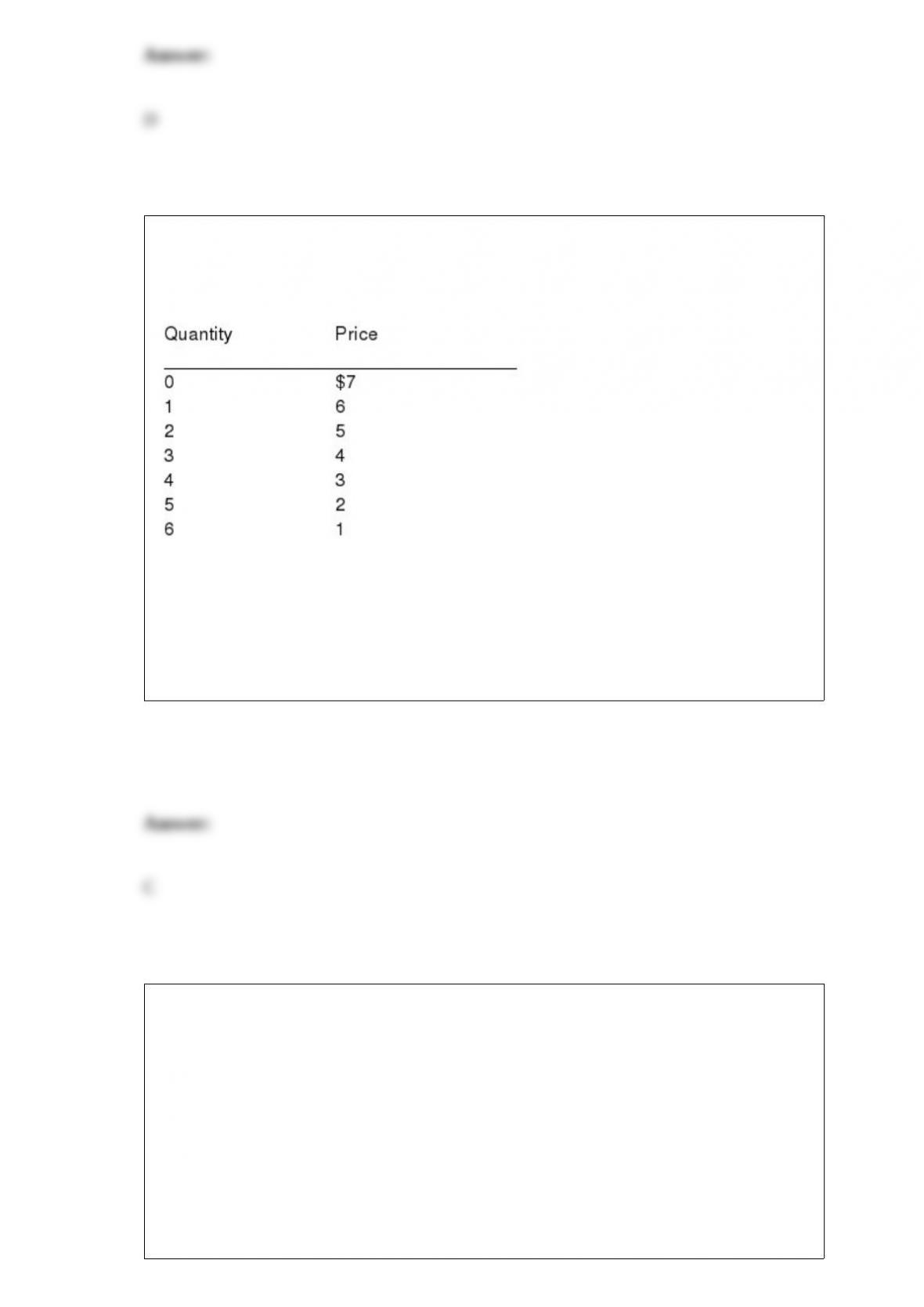
Exhibit 9-2
The price elasticity of demand between P = $3 and P = $2 in Exhibit 9-2 is
a. 9/5
b. $1.80
c. 5/9
d. $0.56
e. 1
Which of the following is an example of a normative statement?
a. The moon is made of green cheese.
b. Women should earn the same income as men.
c. When the price of a good rises, people will buy more of it.
d. The more time you spend studying, the higher your economics test scores will be.
e. The more time you spend studying for chemistry, the higher your economics test

score will be.
This morning, Yoriko Dazai learned that the price of clams had dropped overnight while
the price of mussels and her income stayed constant. Assuming that she must maintain
the same level of utility, an increase in Yoriko’s quantity demanded of clams would be
caused by
a. the income effect
b. the law of supply
c. the substitution effect
d. a perfectly elastic demand curve
e. clams being an inferior good
If perfect competition existed everywhere, along with frictionless exchange, perfect
information, and constant returns to scale,
a. consumers would carry out transactions directly with resource suppliers
b. firms would not have the information necessary to calculate marginal productivities
of resources
c. entrepreneurs would be needed to collect information
d. consumers would produce output and then engage in barter
e. the economy would be organized into one large firm
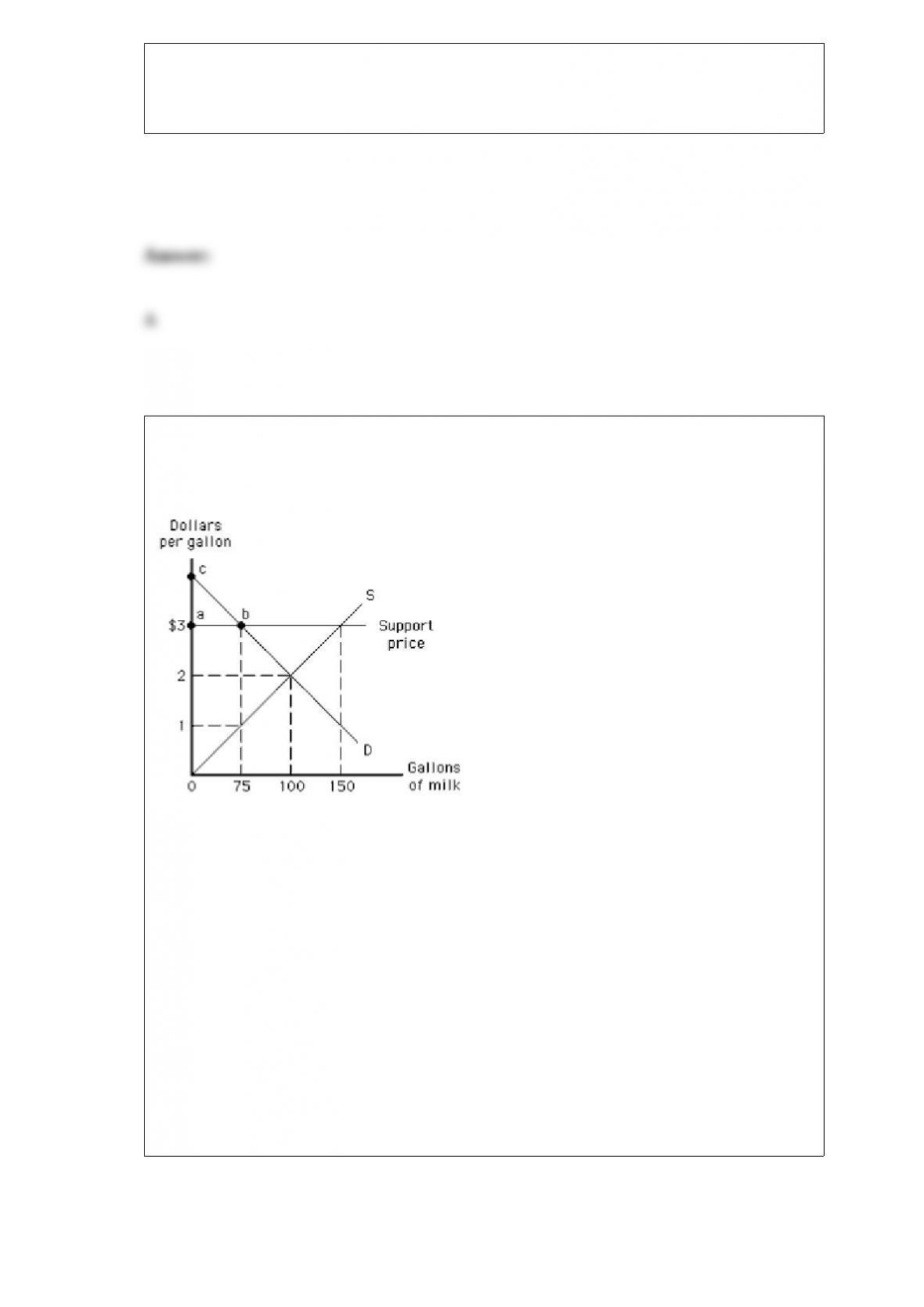
Exhibit 16-1
In Exhibit 16-1, triangle abc
a. represents consumer surplus before the price support
b. represents producer surplus at the support price
c. does not represent consumer surplus at the support price because the equilibrium
price is not $2.50
d. does not represent consumer surplus at the support price because the consumer also
pays for the storage of cheese, butter, and powdered milk as well as the purchase of
excess supply
e. represents consumer surplus after the price support
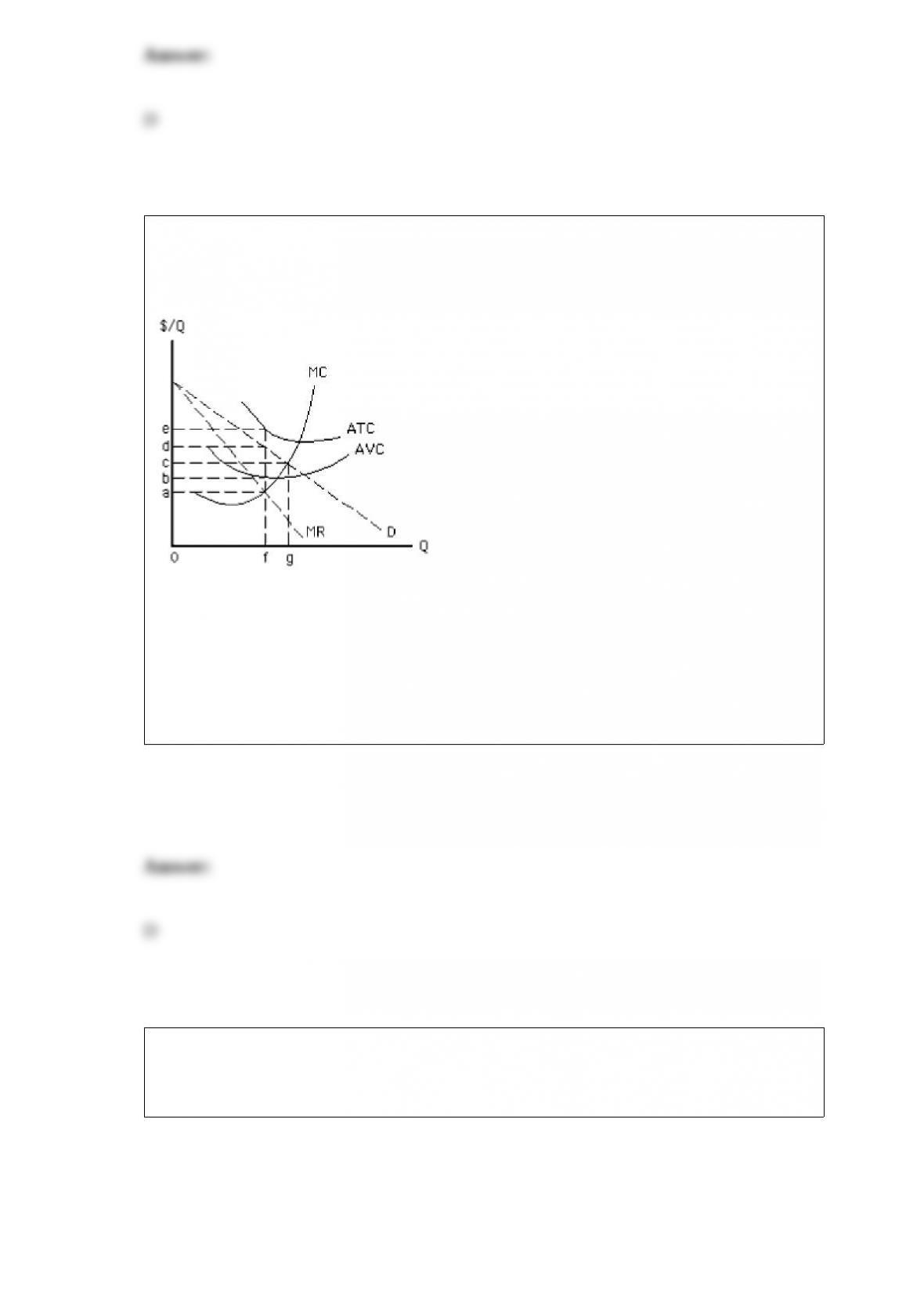
Exhibit 9-12
The profit-maximizing level of output and price for the nondiscriminating monopolist
in Exhibit 9-12 are
a. f and $a
b. g and $c
c. f and $b
d. f and $d
e. f and $e
Exhibit 11-4
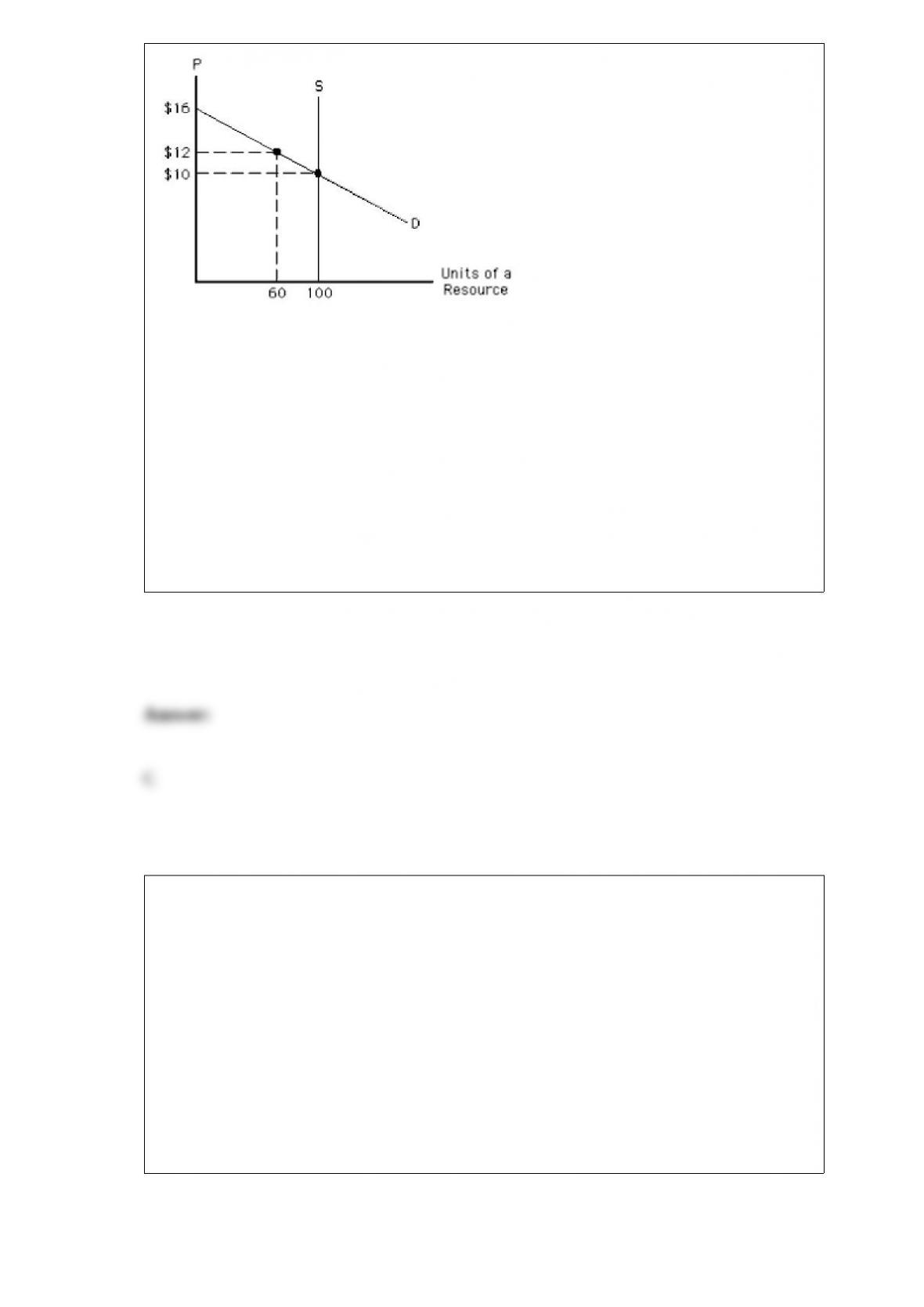
In Exhibit 11-4, the equilibrium price of the resource is
a. $16
b. $12
c. $10
d. less than $10
e. unable to tell from the information given
The World Trade Organization (WTO)
a. members are required to eliminate tariffs and customs duties
b. supervises trade in merchandise and in services
c. supervises merchandise trade only
d. members are required to eliminate ad valorem tariffs but not specific tariffs
e. includes all nations with populations greater than 10 million, with the exception of
North Korea and Cuba

Which of the following is a reason why government is a participant in a
market-oriented economy?
a. to enforce contracts and protect private property
b. to promote collusion
c. to promote the growth of natural monopolies
d. to provide more inequality in the distribution of income
e. all of the above
A perfectly competitive firm has a horizontal supply curve in the short run.
a. True
b. False

An IOU reflecting the corporation’s promise to pay the holder a fixed sum of money at
a designated maturity date plus an annual interest payment until maturity is
a. a bond
b. a stock certificate
c. a prospectus
d. a golden parachute
e. an underwriting note
If by purchasing a little more milk and a little less ice cream you could increase your
total utility,
a. the MU of milk must be greater than that of ice cream
b. the MU of ice cream must be greater than that of milk
c. the MU/P of milk must be greater than that of ice cream
d. milk must be cheaper than ice cream
e. the MU of milk will increase
A firm’s long-run average cost curve is also called its
a. profit curve
b. explicit cost curve

c. opportunity cost curve
d. production curve
e. planning curve
Newspaper vending machines illustrate that publishers believe
a. the average utility of two identical papers is zero or less
b. the total utility from two identical newspapers is zero or less
c. the marginal utility of a second identical newspaper is zero or less
d. the marginal utility of a second identical newspaper is greater than the marginal
utility of the first newspaper
e. the total utility from two identical newspapers is less than the total utility from the
first newspaper
Exhibit 15-3
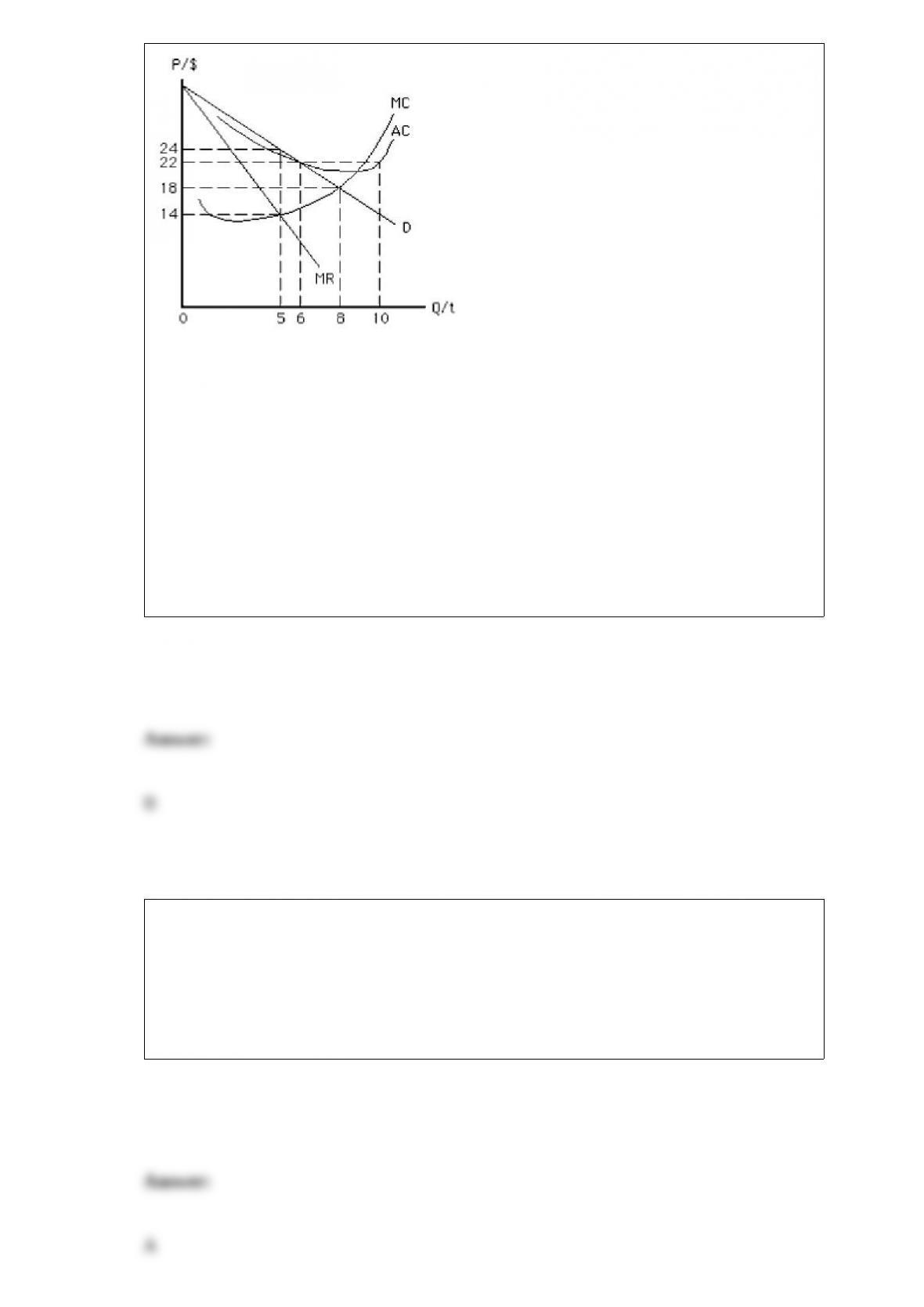
If the natural monopoly in Exhibit 15-3 is regulated so that it earns a normal profit, then
a. P = $24 and Q = 8
b. P = $22 and Q = 6
c. P = $24 and Q = 5
d. P = $20 and Q = 8
e. P = $18 and Q = 5
If a firm experiences economies of scope, per unit production costs fall as it produces
more than one kind of product.
a. True
b. False
Game theory is the study of which of the following?
a. The prisoner’s dilemma
b. The behavior of people engaged in recreational games
c. The mutual interdependence of firms in oligopolistic industries
d. The downward sloping demand curve faced by firms in an oligopoly
e. The interaction between marginal and average revenue
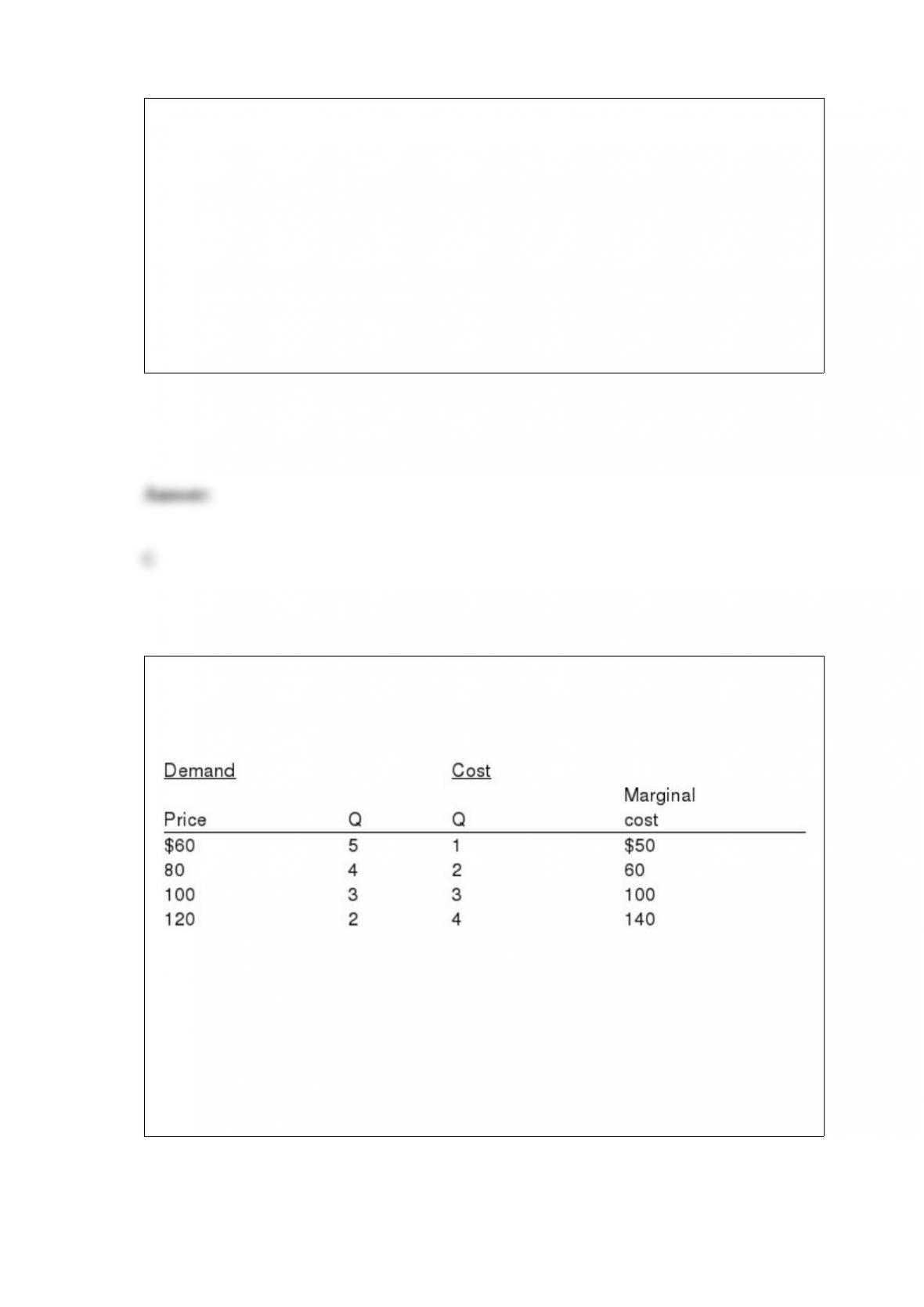
Exhibit 8-1
The perfectly competitive firewood market is composed of 1,000 identical consumers
and 1,000 identical firms. Exhibit 8-1 shows cost data for one firm and demand data for
one consumer. How many cords of firewood wil be bought and sold in equilibrium?
a. 5,000
b. 4,000
c. 3,000
d. 2,000
e. 1,000

One reason the U.S. government is sensitive to demands by the elderly is that the
elderly have higher voter participation rates than members of other age groups.
a. True
b. False
Suppose a lawyer leaves his $50,000-a-year job and starts his own firm breeding pit
bulls. In the first year, his accounting profit is $70,000. The lawyer finances his new
business with $100,000 from his savings account, which had earned 10 percent interest.
His economic profit is
a. $10,000
b. $60,000
c. $70,000
d. -$80,000
e. -$90,000
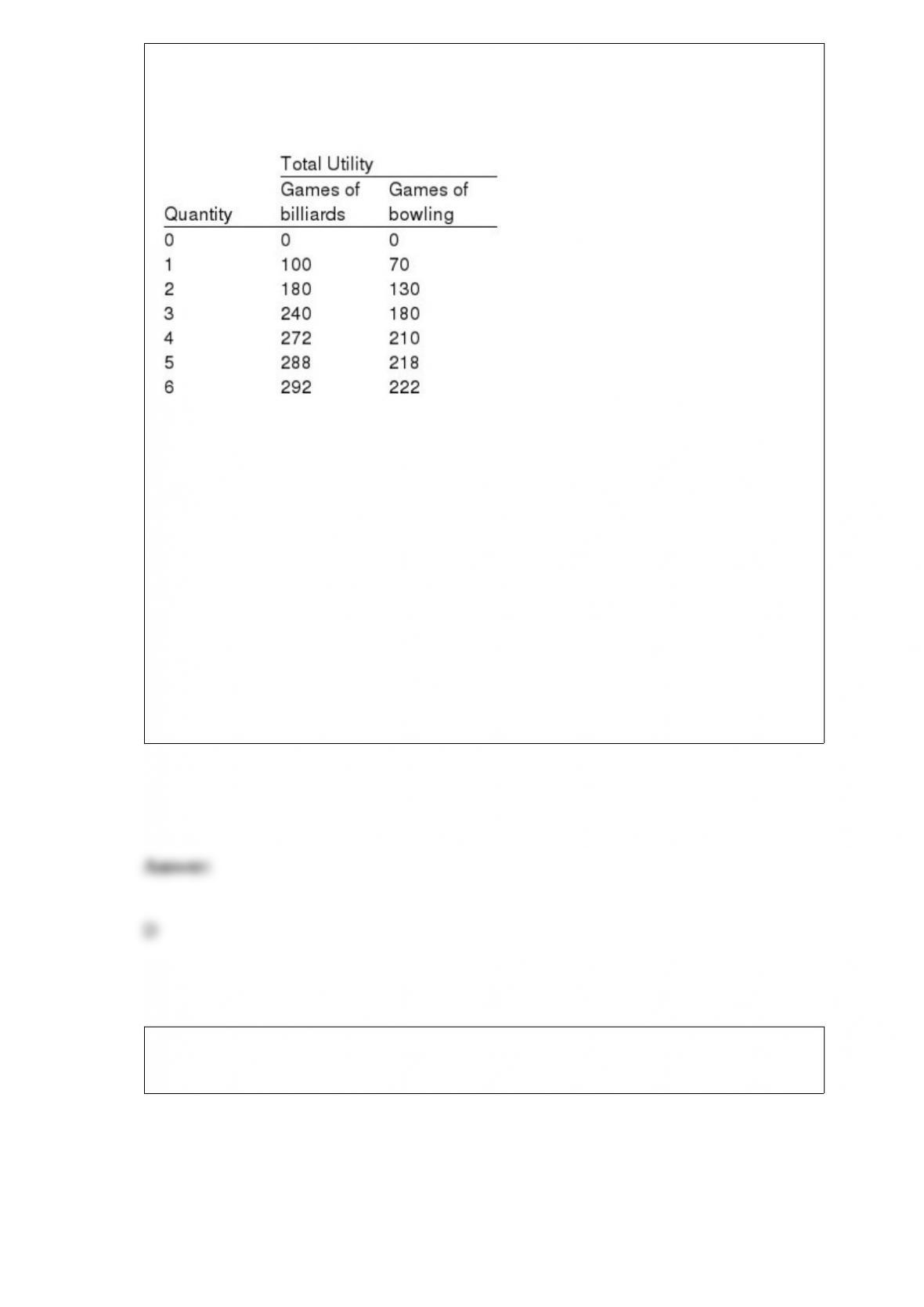
Exhibit 6-9
Suppose you have $30 to spend on either bowling or billiards. A game of billiards costs
you $4, and bowling costs $2 per game. Using the information in Exhibit 6-9, determine
the utility-maximizing combination of bowling and billiards.
a. four billiards games, four games of bowling
b. five billiards games, two games of bowling
c. three billiards games, eight games of bowling
d. five billiards games, five games of bowling
e. twelve games of bowling
Exhibit 9-21
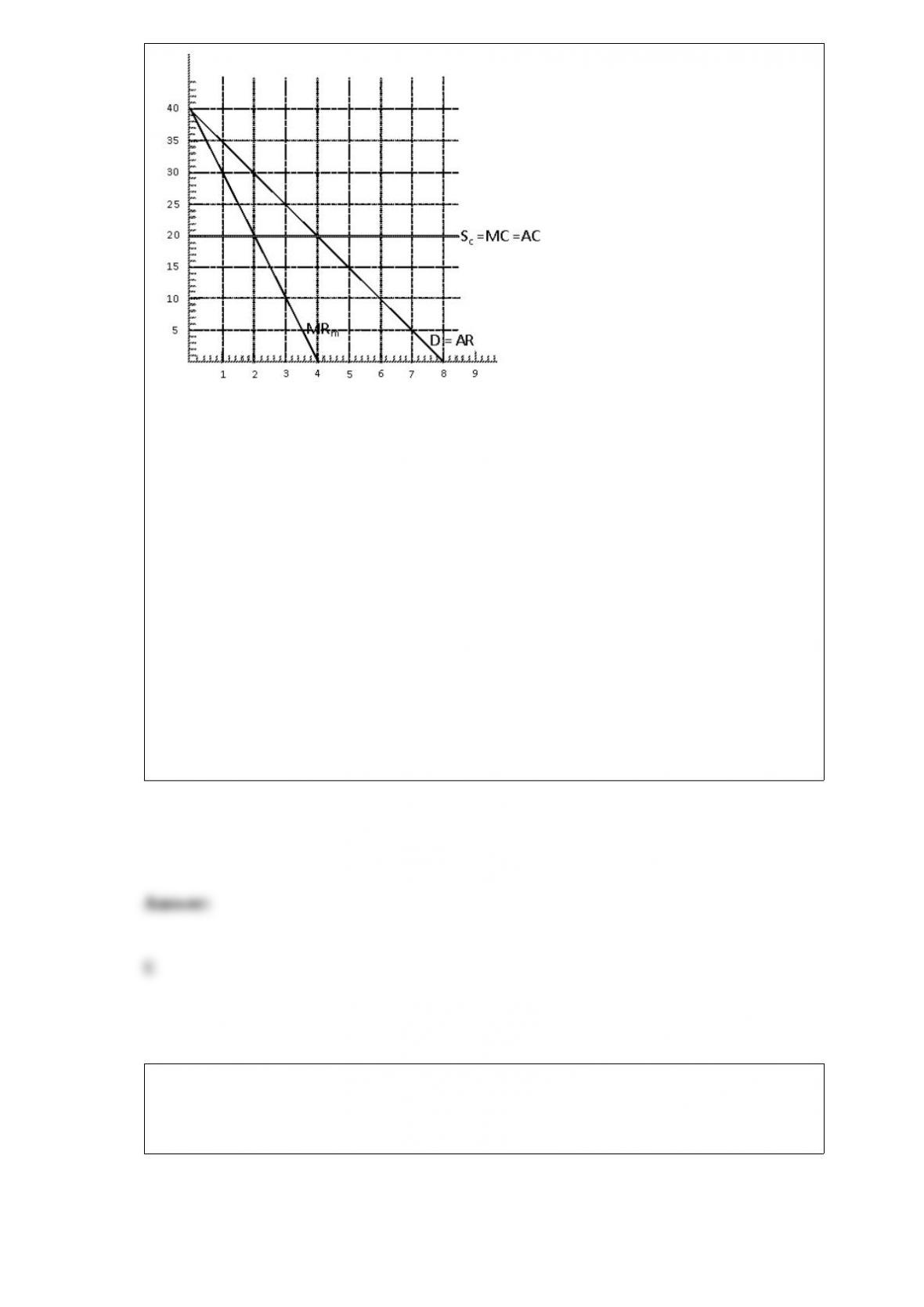
In Exhibit 9-21, D = AR represents the market demand curve for bicycles, MRm
represents the marginal revenue curve for a monopolist producer of bicycles and Sc =
MC = AC represents the marginal cost curve for a monopolist producer of bicycles and
the market supply curve when the market is perfectly competitive. The market price in a
monopolist market would
a. $10
b. $15
c. $20
d. $25
e. $30
Exhibit 9-8
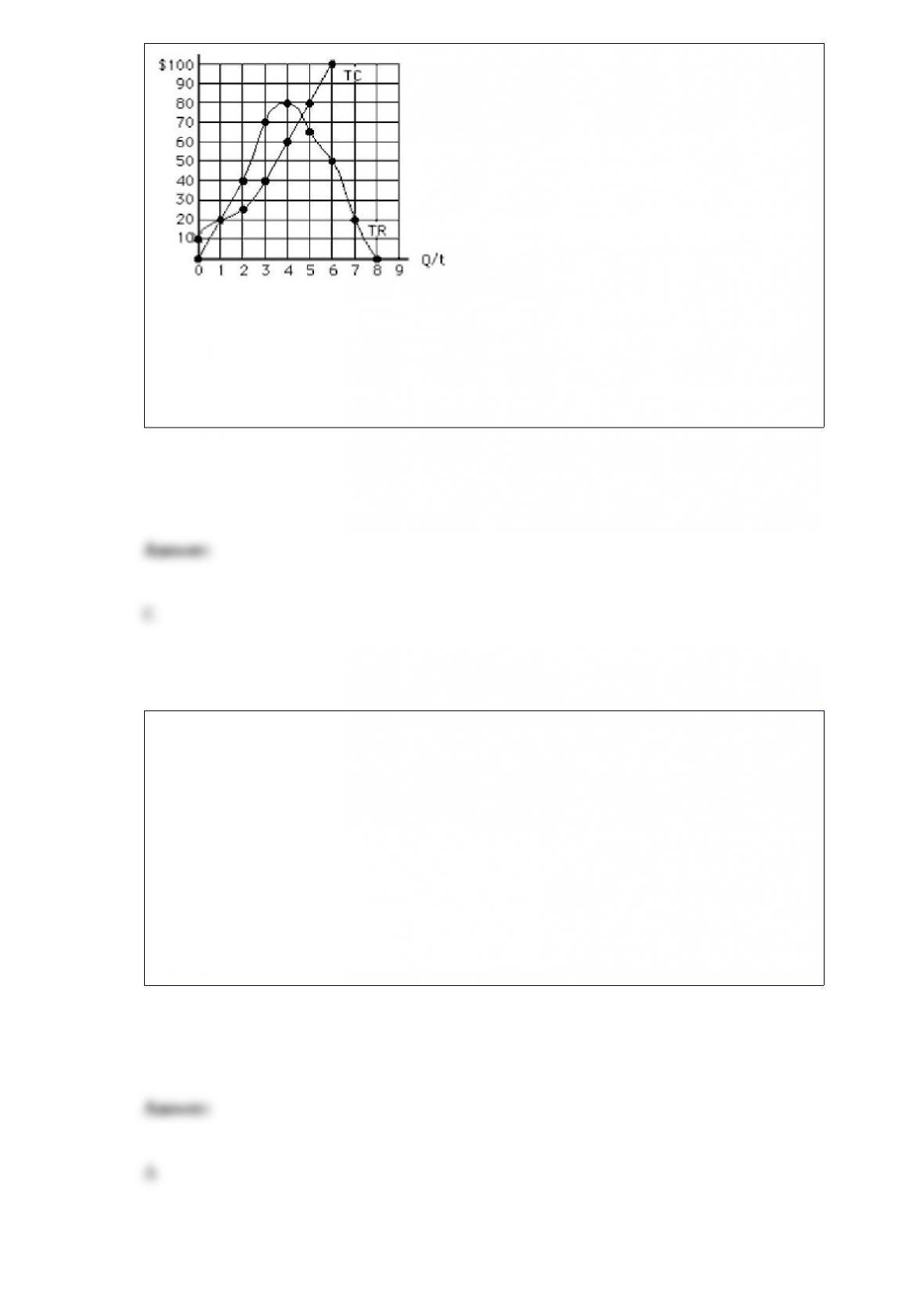
Consider Exhibit 9-8. What is the profit-maximizing quantity?
a. 1 unit
b. 2 units
c. 3 units
d. 4 units
e. 5 units
Leisure is
a. subject to the law of diminishing marginal utility
b. usually considered an inferior good
c. a complementary good with nonmarket work
d. a complementary good with market work
e. an irrational way to spend valuable time

If a firm experiencing “economies of scale” decreases its output, its long-run average
cost will decrease.
a. True
b. False