
If for good Z income elasticity is greater than 1, then demand for good Z is income
__________, and good Z is a(n) __________ good.
a. inelastic; normal
b. inelastic; inferior
c. elastic; normal
d. elastic; inferior
e. unit elastic; normal
In the textbook, economics is defined as the science of scarcity.
a. True
b. False
The concept of an optimal currency area arose from the debate over whether fixed or
flexible exchange rates are better.
a. True
b. False

Decision making “at the margin” means making a choice based on __________ of a
decision.
a. the total benefits
b. the total costs
c. comparing the total benefits and costs
d. comparing the additional benefits and costs
The antitrust act that bans anticompetitive mergers that occur as a result of one
company acquiring the physical assets of another company is the
a. Celler-Kefauver Antimerger Act.
b. Wheeler-lea Act.
c. Federal Trade Commission Act.
d. Robinson-Patman Act.
e. Clayton Act.
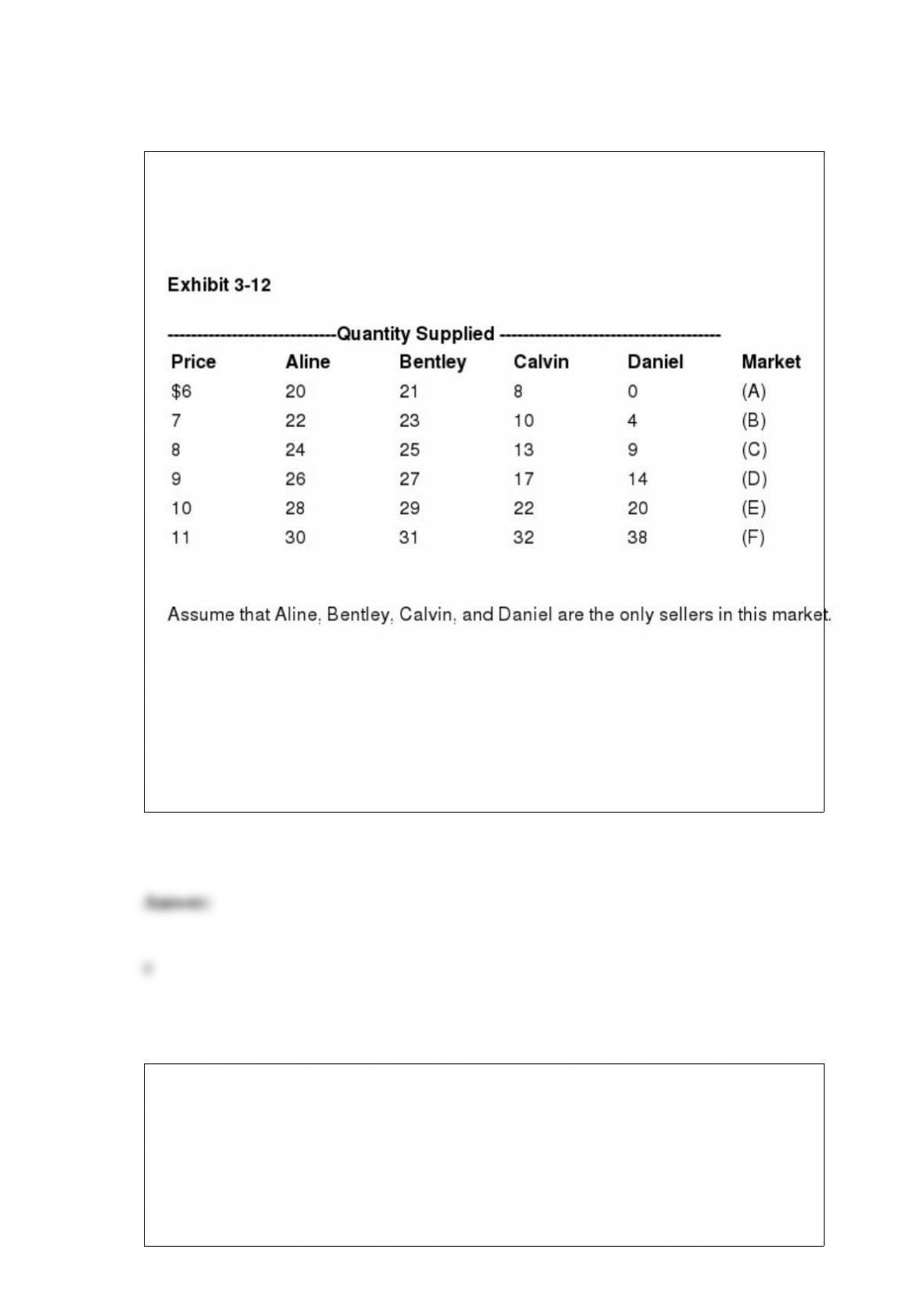
Refer to Exhibit 3-12.Each individual seller’s supply curve is ________________
sloping and the market supply curve is _________________ sloping.
a. upward; also upward
b. downward; also downward
c. upward; downward
d. downward; upward
The Justice Department considers a Herfindahl index that is
____________________________ to be representative of a moderately concentrated
industry.
a. less than 1,000
b. between 1,000 and 1,800

c. greater than 1,800
d. greater than 2,000
In the long run, if inputs are increased by 10 percent and output increases by 20 percent,
then __________ are said to exist.
a. economies of scale
b. constant returns to scale
c. diseconomies of scale
d. diminishing marginal returns
Suppose farmers get together and decide to be less productive. They want to do this so
that they can shift the supply curve of farm products leftward and raise the price. They
must be assuming that the demand curve between the current price and the higher price
is
a. inelastic.
b. elastic.
c. unit elastic.

d. There is not enough information to answer this question.
The demand for seats in 10 a.m. classes at the university is higher than the demand for
seats in 8 a.m. classes. The supply of seats is fixed. If the university can only charge a
single price and wishes to maximize the total number of seats purchased during the day,
it should set the price
a. at equilibrium for 8 a.m. classes.
b. at equilibrium for 10 a.m. classes.
c. midway between the two equilibria.
d. below either 8 a.m. or 10 a.m. equilibrium price.
If resources are better suited toward the production of one good than toward another
good, then the PPF for those two goods is
a. a straight line.
b. bowed outward.
c. upward sloping.
d. any of the above

The diamond-water paradox is the observation that
a. those things that have the greatest price often have little value in exchange and those
things that have the lowest price often have the greatest value in exchange.
b. those things that have the greatest value in use often have little value in exchange and
those things that have little value in use often have the greatest value in exchange.
c. those things that have the least value in use often have little value in exchange and
those things that have the greatest value in use often have the greatest value in
exchange.
d. those things that have the least price often have little value in exchange and those
things that have the greatest price often have the greatest value in exchange.
For a certain good, when price rises from $50 to $55, quantity demanded falls from
8,400 to 7,500. The price elasticity of demand here is _____________, making the
demand for this good ____________ in the price range between $50 and $55.
a. 1.19; inelastic
b. 1.19; elastic
c. 1.45; elastic
d. 0.84; elastic
e. 0.84; inelastic
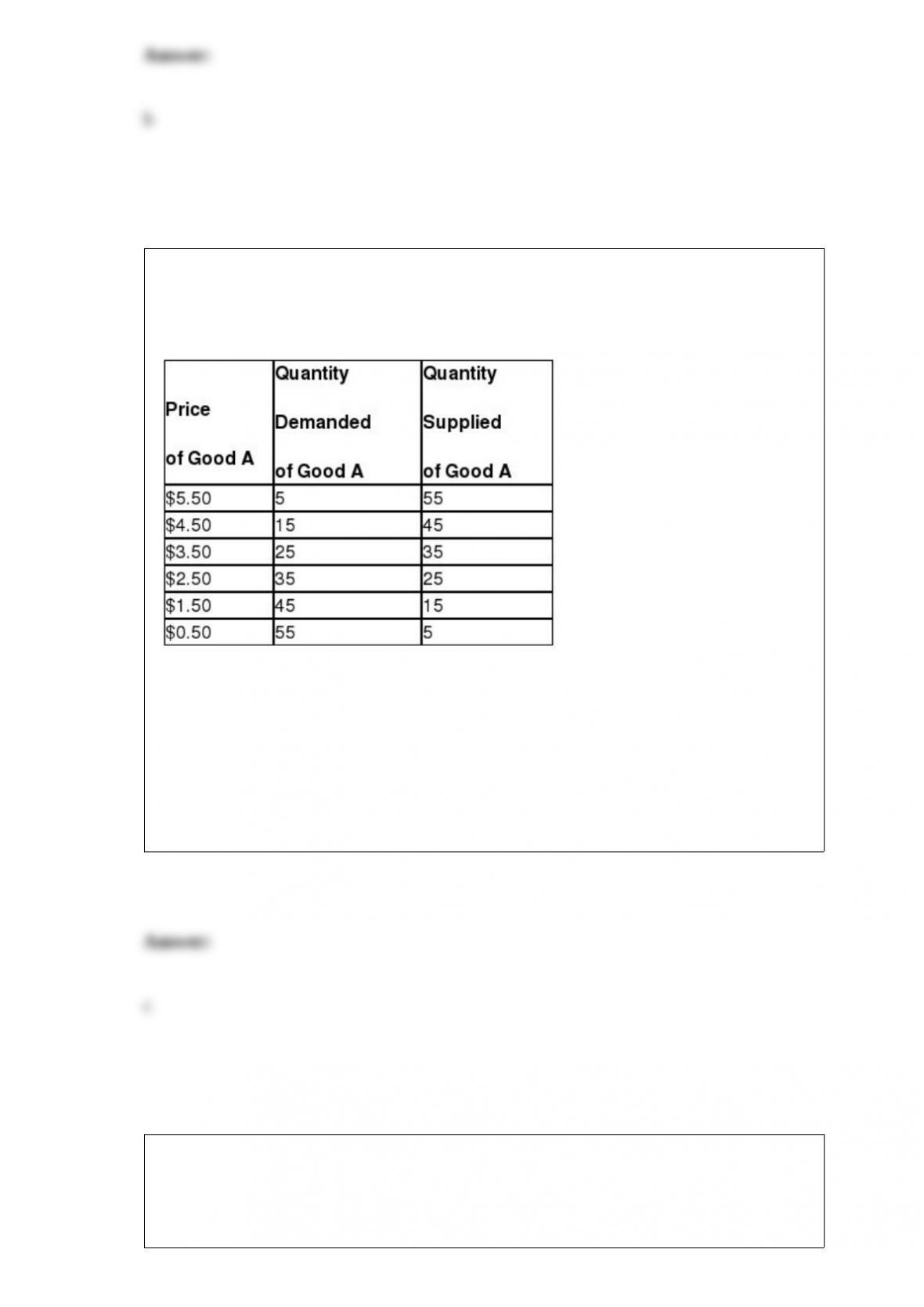
Refer to Exhibit 20-3. If price increases from $2.50 to $3.50, total revenue along the
demand curve
Exhibit 20-3
a. increases to $67.50.
b. increases to $87.50.
c. remains at $87.50.
d. decreases to $67.50.
If the percentage change in quantity demanded of a good is less than the percentage
change in buyer’s income, then the good is said to be
a. income elastic.
b. income inelastic.
c. income unit elastic.
d. price elastic.
e. price inelastic.
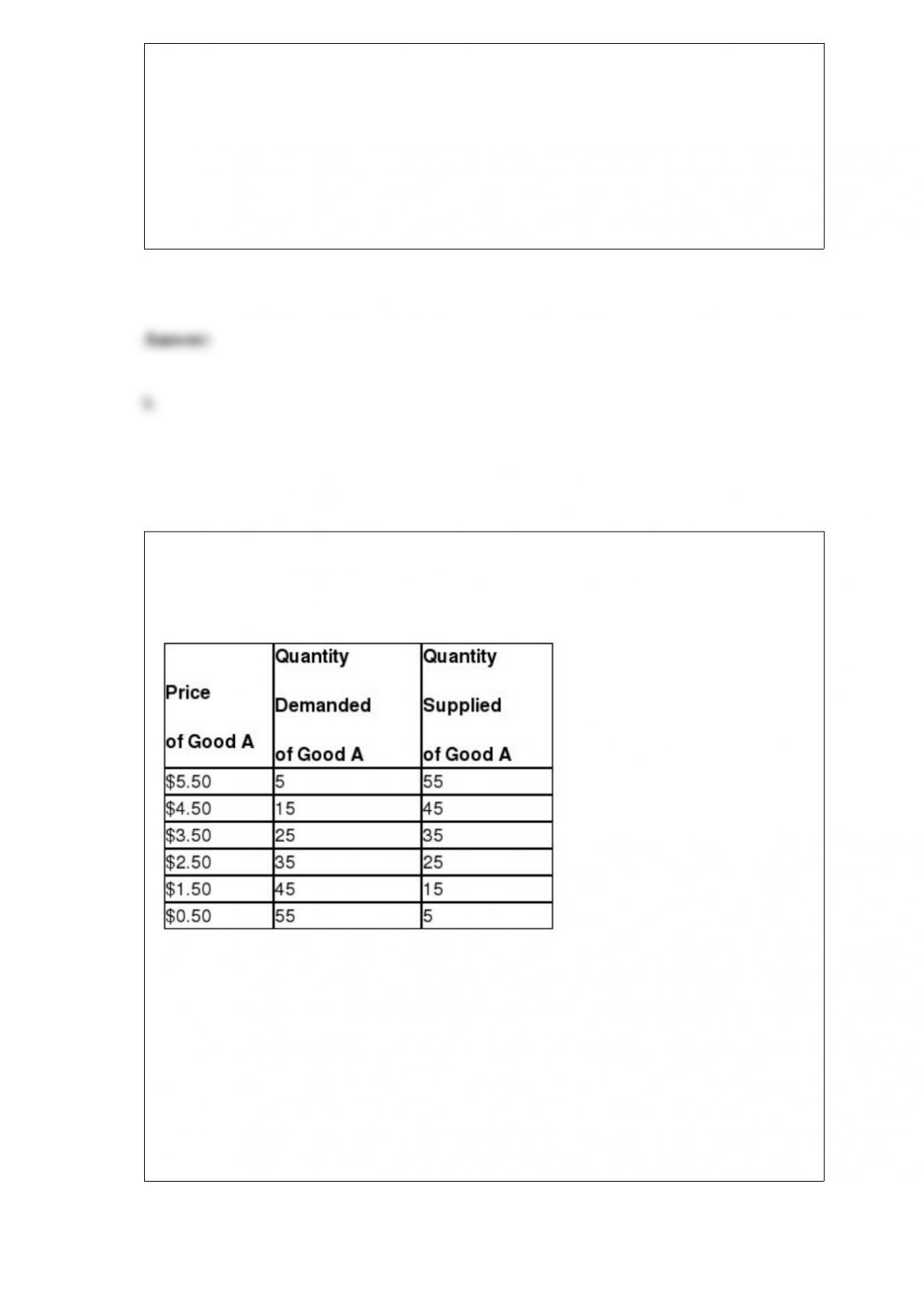
Refer to Exhibit 20-3. When price decreases from $4.50 to $3.50, the price elasticity of
demand is
Exhibit 20-3
a. 0.4375.
b. 0.50.
c. 1.0.
d. 2.00.
e. 2.86.

Which of the following statements is false?
a. Private equity firms often need to borrow the money needed to buy a public
corporation.
b. Once a private equity firm owns a formerly publicly held corporation, they tend to
cut costs and enhance efficiency.
c. Critics of private equity firms say that companies that have too much cash and too
little debt become targets for private equity firms to buy.
d. A private equity firm is a group of investors that takes a privately held corporation
and uses an investment banker to turn it into a publicly held corporation.
Refer to Exhibit 22-7. The average fixed cost of producing 5 units of output is
a. $16.25.

b. $4.00.
c. $11.15.
d. $6.00.
e. There is not enough information to answer this question.
How are changes in opportunity cost predicted to affect behavior?
a. The lower the opportunity cost of doing X, the less likely X will be done.
b. The higher the opportunity cost of doing X, the less likely X will be done.
c. The lower the opportunity cost of doing X, the more likely X will be done.
d. a and c
e. b and c
Refer to Exhibit 21-5.What value goes in blank (A)?
Exhibit 21-5

a. 12.0
b. 13.5
c. 10.0
d. 14.0
e. There is not enough information to answer this question.
Real-world markets that approximate the four assumptions of the theory of perfect
competition include
a. some agricultural markets.
b. the soft drink market.
c. the stock market.
d. a and c
e. a, b, and c
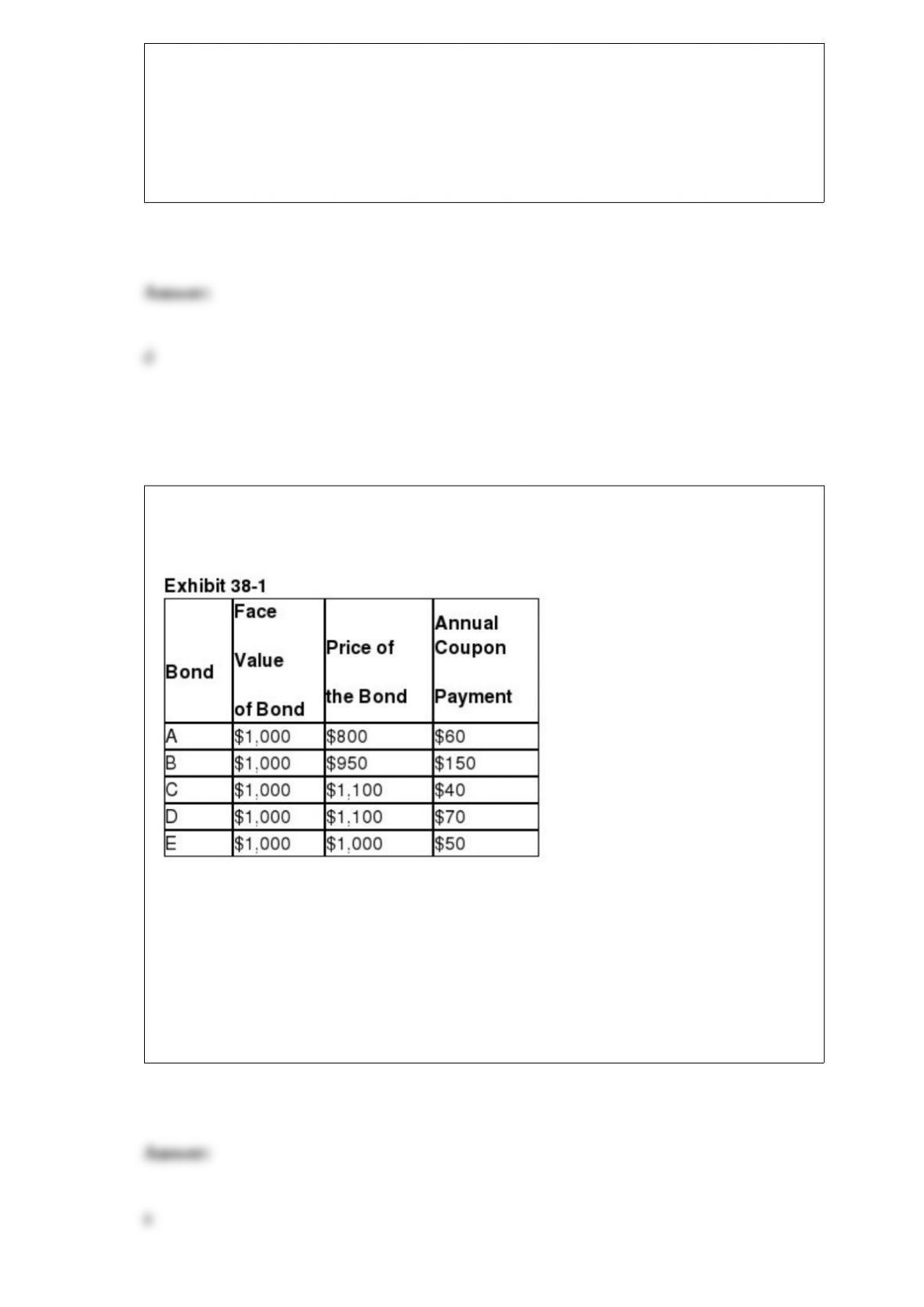
Refer to Exhibit 38-1. The coupon rate for bond A is
a. 6.0 percent.
b. 10.0 percent.
c. 7.5 percent.
d. 0.075 percent.