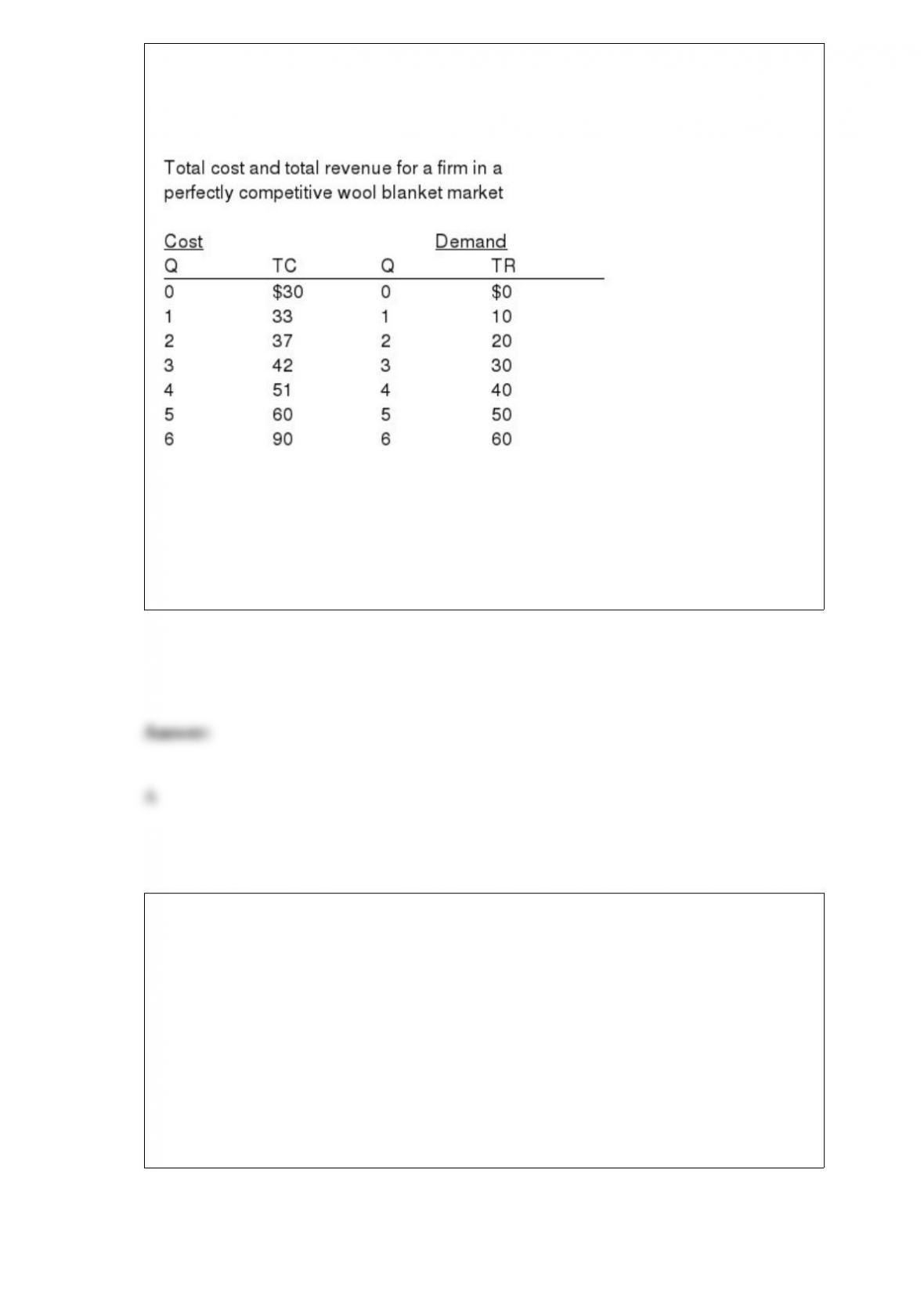
Exhibit 8-2
Given the information in Exhibit 8-2, the price of a wool blanket
a. is $10
b. is $20
c. is $30
d. is $40
e. depends on the quantity sold
In economics, capital is defined as
a. natural resources, such as water, oil, and iron ore
b. the natural, unskilled abilities of people
c. human creations used in the production process
d. money and other financial assets
e. the willingness of business owners to take risks
Direct transfer programs
a. are generally less efficient and less politically acceptable than subsidy programs
b. are generally more efficient and more politically acceptable than subsidy programs
c. are generally less efficient but more politically acceptable than subsidy programs
d. are generally more efficient but less politically acceptable than subsidy programs
e. will generally result in increased production by the group being subsidized
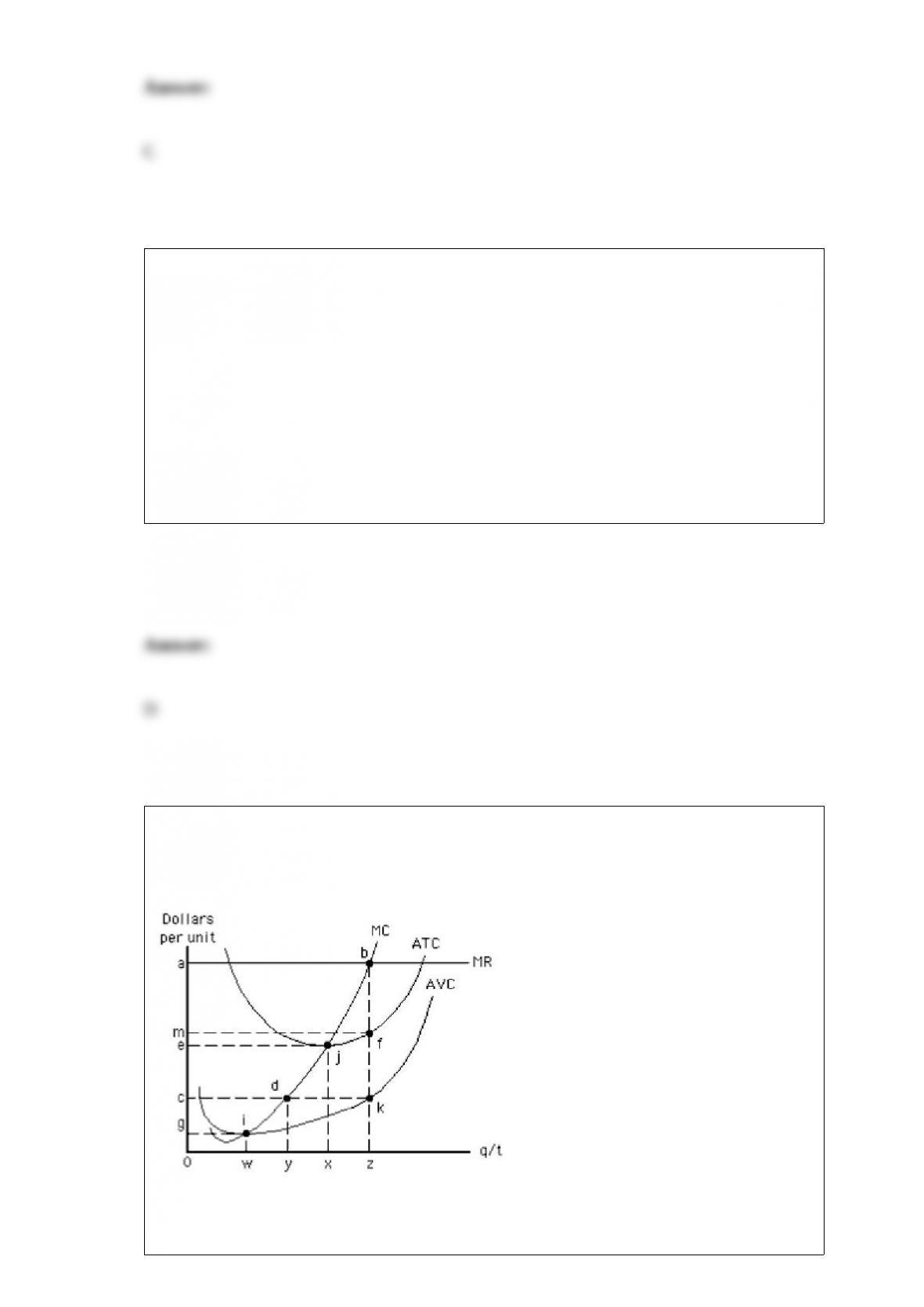
Exhibit 8-11
In Exhibit 8-11, total revenue at the profit-maximizing output level equals
a. c . x
b. a . z

c. e z
d. c y
e. g w
Which state manufactures the most toxic chemicals and has the worst toxic waste
burden?
a. California
b. Louisiana
c. New York
d. New Jersey
e. West Virginia
A perfectly competitive firm will produce at an economic loss (negative profit) in the
short run rather than discontinue production if there is a rate of output at which price
a. exceeds average variable cost
b. exceeds average fixed cost
c. exceeds average total cost
d. exceeds marginal revenue
e. equals marginal cost

Which of the following is an accurate list, in order, of the steps of the scientific
process?
a. define variables; state assumptions; form a hypothesis; test
b. state assumptions; define variables; form a hypothesis; test
c. identify variables; state assumptions; test; form a hypothesis
d. identify variables; form “other things equal” assumptions; form behavioral
assumptions; test
e. form “other things equal” assumptions; form behavioral assumptions; form
hypothesis; test
Most securities traded in the United States are
a. secondhand securities bought by individuals
b. secondhand securities bought by institutional investors
c. new securities bought by institutional investors
d. new securities bought by banks and insurance companies
e. new securities bought by individuals

Compared to the productive efficiency of a perfectly competitive firm, a monopolist
tends to be
a. very efficient because it charges a higher price
b. more efficient because it produces greater output
c. inefficient
d. equally efficient, as it also produces where MR = MC
e. very efficient because it conserves resources by producing less output
Compared to the profit-maximizing outcome, marginal cost pricing in natural monopoly
leads to
a. reduced demand
b. higher price
c. reduced consumer surplus
d. more economic profit
e. greater output
The source of power for a labor union is its ability to
a. increase the supply of labor

b. decrease the demand for capital
c. increase the quantity supplied of labor
d. decrease the quantity supplied of labor
e. decrease the supply of labor
Welfare data show that in the United States
a. most welfare recipients receive benefits only for a short time
b. welfare encourages young women to have children
c. children brought up on welfare tend to remain on welfare as adults
d. having poor parents does not increase the chances of a child’s being on welfare as an
adult
e. children of poor parents have a 50 percent chance of being middle-income adults
Ronald Coase’s study, “The Nature of the Firm,” argued that
a. market exchange is less costly than hierarchical exchange
b. markets are more efficient than hierarchies

c. firms are formed to take advantage of situations in which hierarchies are more
efficient than markets
d. the role of the entrepreneur is primarily to deal with central authority
e. markets tend to be less competitive over time
The most common form of business organization in the United States is the sole
proprietorship.
a. True
b. False
The demand for labor is likely to increase when
a. the supply of the good it produces falls
b. the demand for the good it produces rises
c. the supply of the good it produces rises
d. the demand for the good it produces falls
e. the real wage rate rises
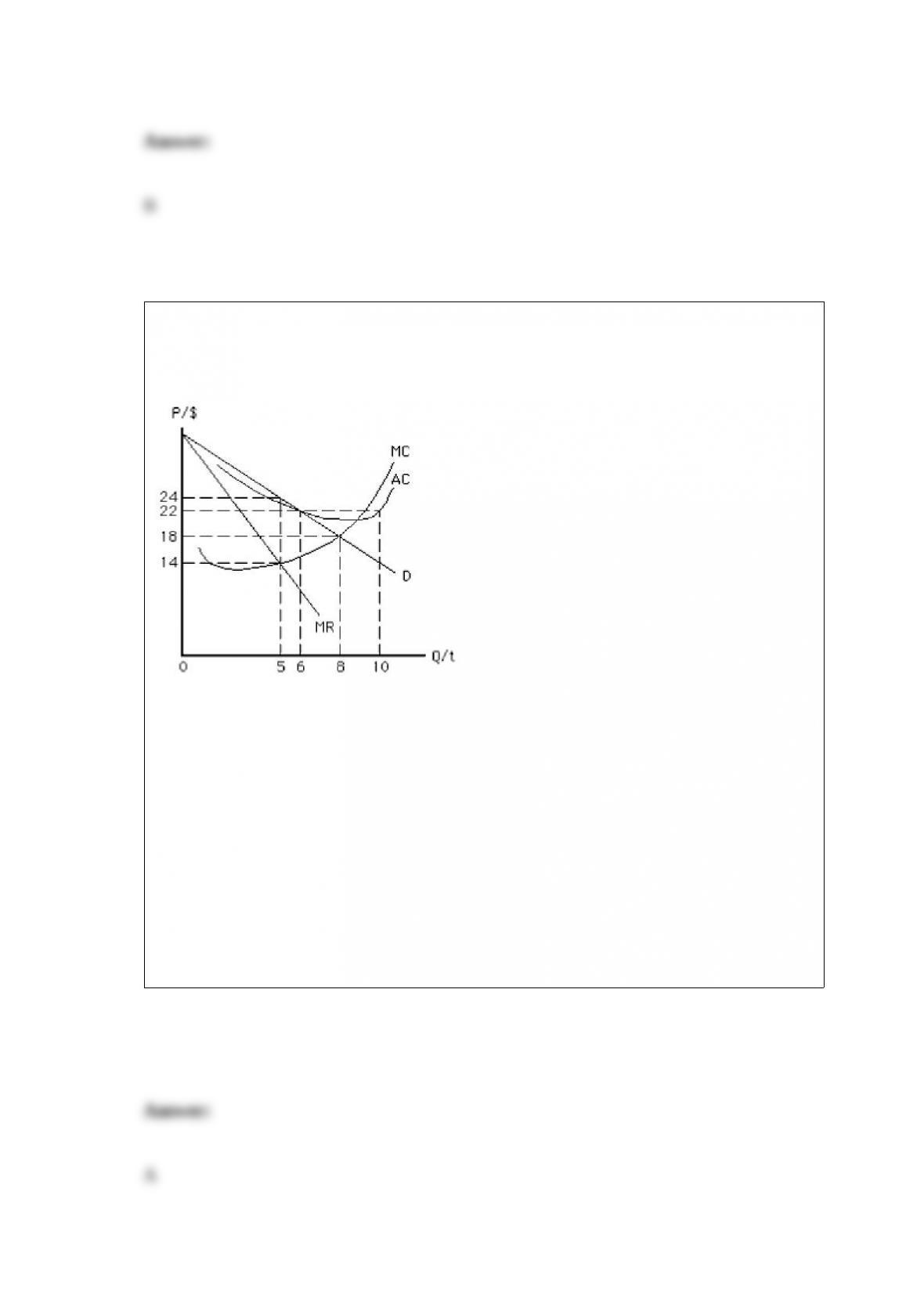
Exhibit 15-1
If regulators set price equal to marginal cost for the natural monopoly in Exhibit 15-1,
then from the usual profit-maximizing position, price changes from
a. $24 to $18, and quantity increases from 5 to 8
b. $14 to $20, and quantity increases from 5 to 8
c. $24 to $18, and quantity remains unchanged
d. $24 to $18, and quantity increases from 5 to 8
e. $24 to $22, and quantity increases from 5 to 10

Which of the following is true of import tariffs and quotas?
a. They benefit domestic producers.
b. Domestic consumers gain because they purchase the output of domestic firms.
c. Specialization and comparative advantage are advanced by tariffs and quotas.
d. They tend to expand the volume of world trade.
e. Because they increase the output levels of domestic firms, they tend to lower
domestic prices.
Claude’s Copper Clappers sells clappers for $40 each in a perfectly competitive market.
At its present rate of output, Claude’s marginal cost is $39, average variable cost is $45,
and average total cost is $60. To improve his profit/loss situation, Claude should
a. increase output
b. reduce output but not to zero
c. maintain the present rate of output
d. shut down
e. raise the price
Another word for elasticity is
a. responsiveness

b. happiness
c. bonus
d. profit
e. surplus
Which of the following is true of vertical integration?
a. It leads to the formation of larger firms from smaller ones.
b. It occurs when a firm adds more layers of management.
c. It occurs when firms try to buy up their competitors and corner the market.
d. It has no effect on the internal organization of a firm; it only affects outside markets.
e. It occurs when a firm buys another firm in a completely unrelated market.
The slope of a horizontal straight line is infinity.
a. True
b. False

If featherbedding raises the price of output produced by the union workers, it
a. increases employment at the firm and in the industry
b. decreases employment at the firm and in the industry
c. increases employment at the firm but may decrease it in the industry
d. decreases employment at the firm and increases it in the industry
e. increases employment at the firm but reduces the number of firms so that there is no
net effect on industry employment
Which of the following is true of perfect price discrimination?
a. Profit is lower than it would be without discrimination.
b. Revenue is higher than it would be without discrimination, but profit is lower.
c. Average revenue and average cost are both higher than they would be without
discrimination, so it is not certain whether profit will be higher.
d. Consumer surplus is zero.
e. Profit is zero.
Which of the following probably has the shortest long run?
a. a law firm
b. a steel mill
c. an automobile plant
d. a tire factory
e. an aircraft engine factory
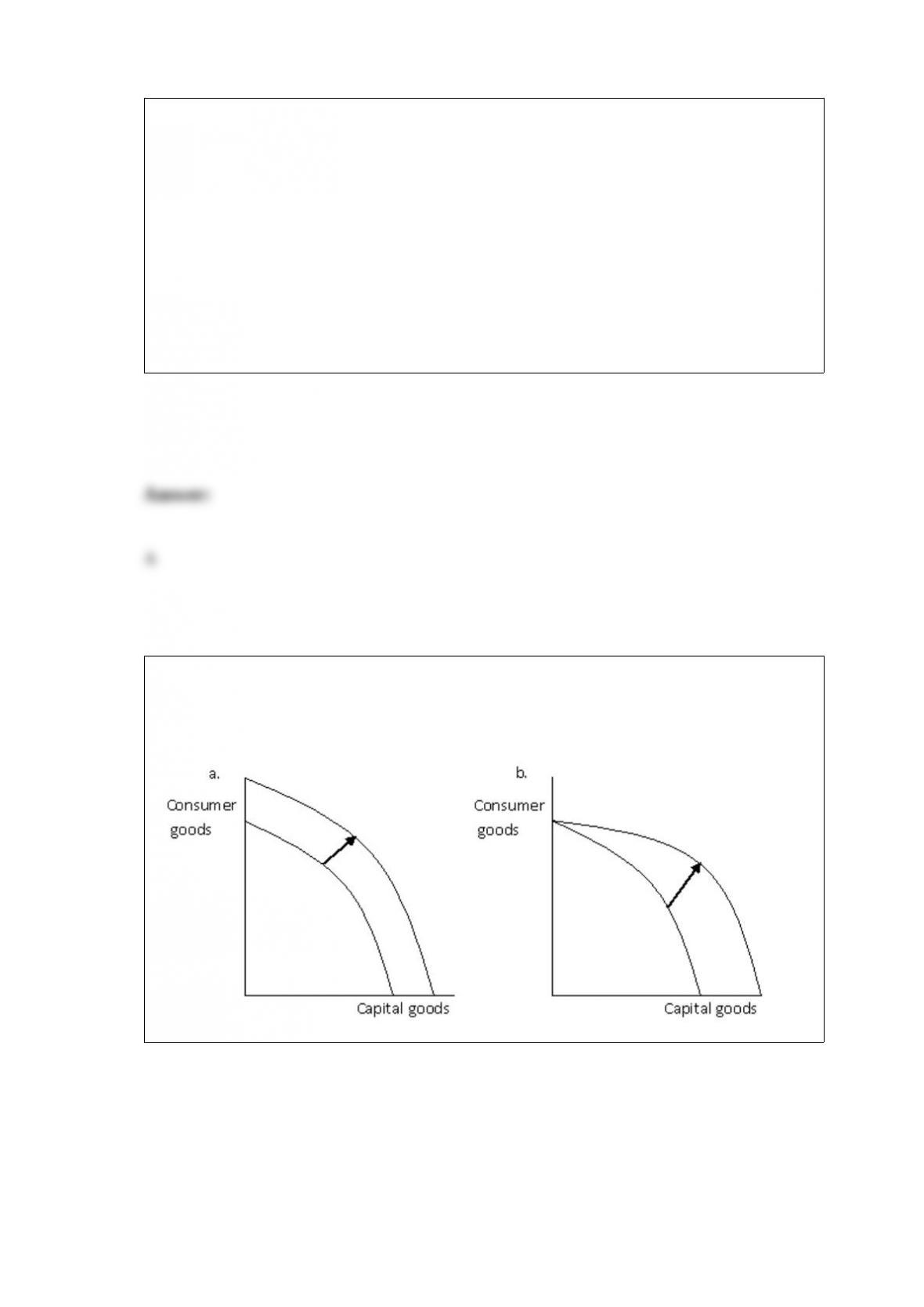
Exhibit 2-10
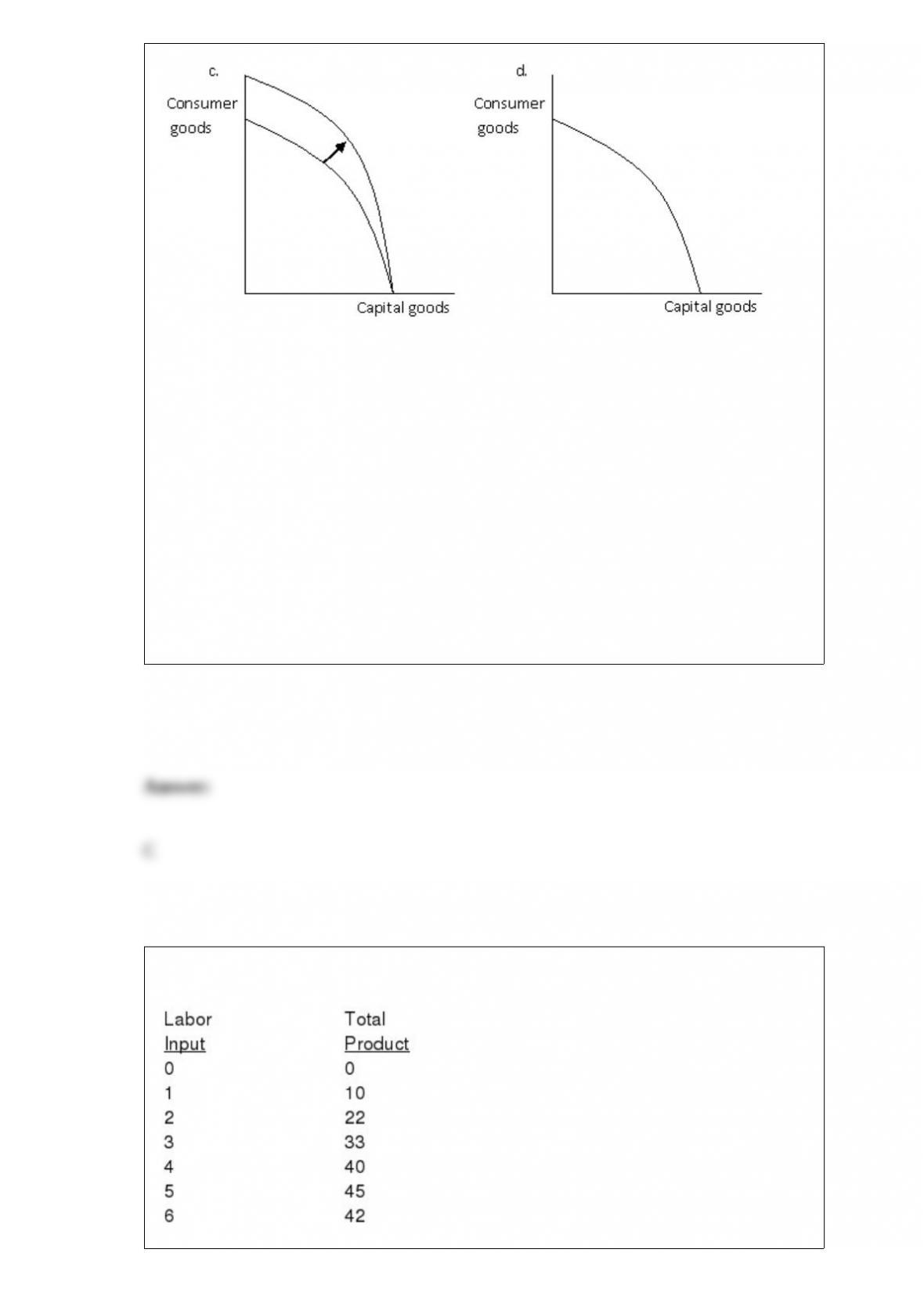
Refer to Exhibit 2-10. Which of the graphs best illustrates the impact on the production
possibilities frontier of a technological improvement that will make the resources used
to produce consumer goods more efficient?
a. a
b. b
c. c
d. d
e. b and c
The law of diminishing marginal returns is first evident in the following table
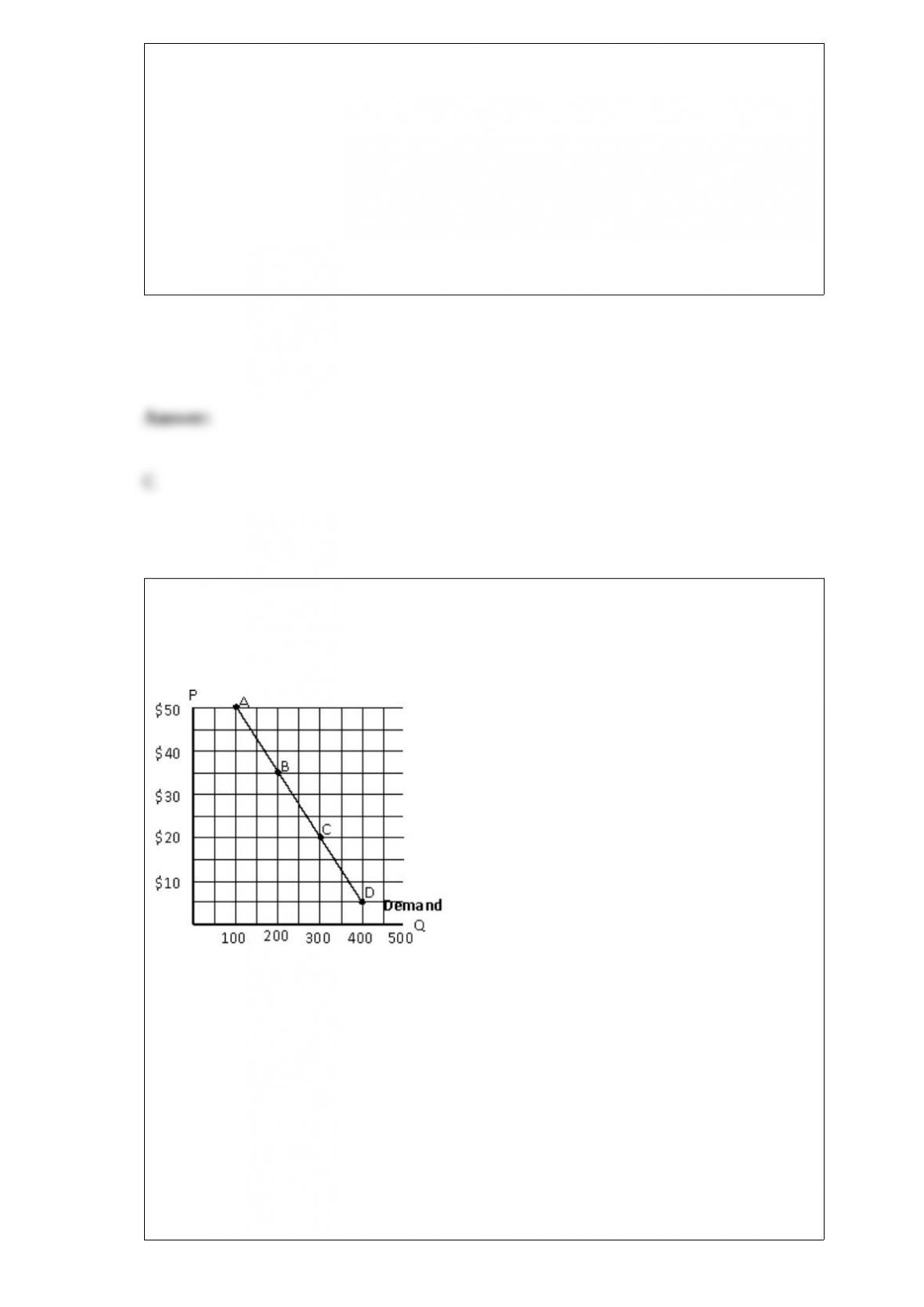
a. when the first worker begins
b. with each of the workers
c. when the third unit of labor is added
d. with the last unit of labor input
e. when the fourth unit of labor is added
Exhibit 5-26
Refer to Exhibit 5-26. Between points B and C price elasticity of demand is:
a. unitary
b. elastic
c. inelastic
d. perfectly elastic
e. perfectly inelastic

The law of comparative advantage says that
a. the individual with the lowest opportunity cost of producing a particular good should
produce it
b. comparative advantage exists only when one person has an absolute advantage in the
production of two goods
c. whoever has a comparative advantage in producing a good also has an absolute
advantage in producing that good
d. whoever has an absolute advantage in producing a good also has a comparative
advantage in producing that good
e. gains from trade are possible only when one person has the comparative advantage in
producing both goods
Choices made by economic decision makers
a. are government decisions only
b. are the primary focus of economics
c. are not important in economic analysis
d. occur infrequently
e. do not involve ordinary citizens

A perfectly competitive firm that should notshut down in the short run will maximize
profit where
a. VC = 0
b. FC = 0
c. AFC = MC
d. P = MC
e. ATC = 0
Imagine a budget line between two goods, A and B. If both prices triple while income
doubles,
a. the budget line stays the same
b. the budget line rotates clockwise
c. the budget line rotates counterclockwise
d. the budget line shifts outward
e. the budget line shifts toward the origin

In May 2007, Congress and the president passed a law increasing the minimum hourly
wage from $5.15 to
a. $4.15
b. $5.25
c. $7.25
d. $17.25
e. $70.25
Which of the following activities would be considered tax avoidance?
a. increasing your level of charitable contributions in December
b. selling illegal drugs on the street
c. underestimating your income that is subject to taxation
d. failure of a waitress to report all tips earned on the job
e. buying a house and neglecting to deduct interest payments

Suppose that at an output of 1,000 units, a monopolist has marginal cost of $40,
marginal revenue of $30, average variable cost of $30, and average total cost of $50. In
order to maximize profit or minimize loss in the short run, the firm should
a. shut down
b. continue to produce 1,000 units
c. produce fewer than 1,000 units but still operate
d. produce more than 1,000 units
e. increase its plant size to gain economies of scale