1) exchange rates are determined by the unregulated forces of supply and demand for
foreign currencies as long as central banks do not intervene in the foreign exchange
markets.
a.true
b.false
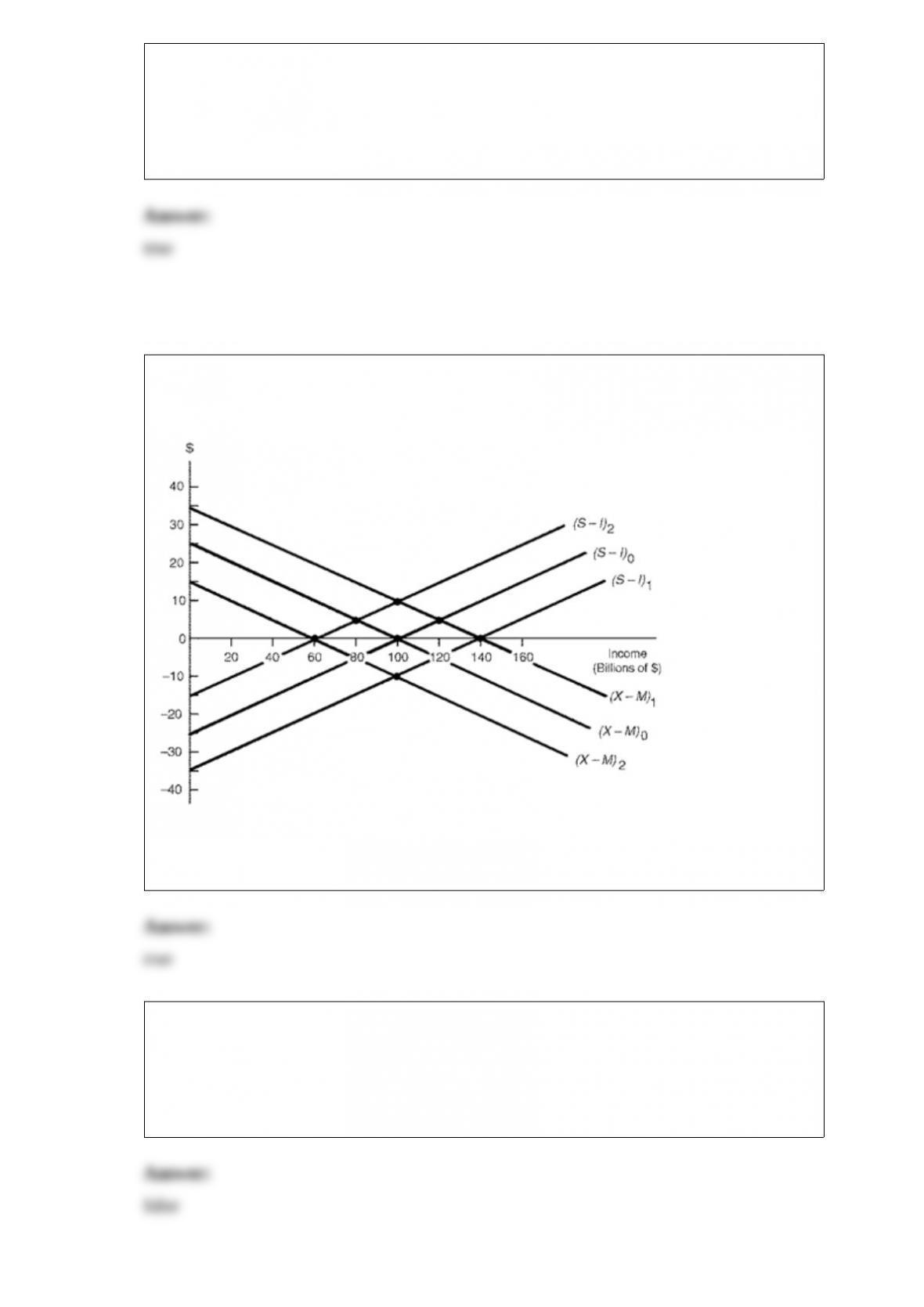
2) figure 13.4. canadian economy under a fixed exchange rate system
referring to figure 13.4, canada’s foreign-trade multiplier equals 2.0.
a.true
b.false
3) with constant opportunity costs, a nation will achieve the greatest possible gains
from trade if it partially specializes in the production of the commodity of its
comparative disadvantage.
a.true
b.false
4) in u.s. trade law, which measure permits the levying of restrictions on fairly traded
imports that harm or threaten to harm american manufacturers?
a.antidumping duty
b.countervailing duty
c.national security clause
d.escape clause
5) to be considered a good candidate for an export cartel, a commodity should:
a.be a manufactured good
b.be a primary product
c.have a high price elasticity of supply
d.have a low price elasticity of demand
6) concerning the balance of payments, the goods-and-services balance is commonly
referred to as the “trade balance” by the news media.
a.true
b.false
7) figure 6.2 illustrates the calculator market for mexico, assumed to be a small nation
that is unable influence the south korean (world) price. assume the south korean price to
be $60 per calculator.
figure 6.2. effects of an export subsidy
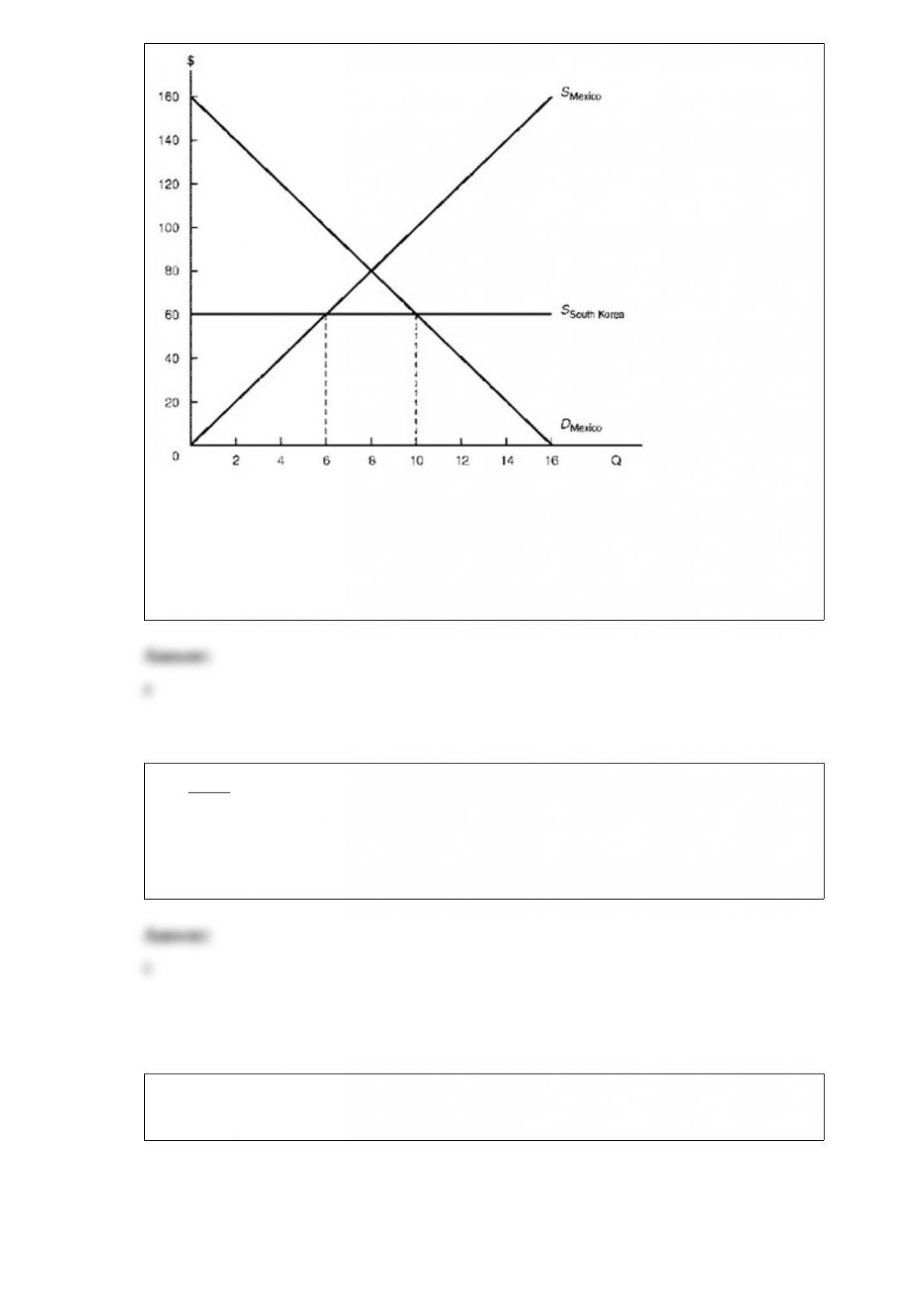
consider figure 6.2. for mexico’s producers and consumers as a whole, the south korean
subsidy leads to a:
a.$120 welfare gain
b.$320 welfare gain
c.$120 welfare loss
d.$320 welfare loss
8) a lower tariff on imported aluminum would most likely benefit:
a.foreign producers at the expense of domestic consumers
b.domestic manufacturers of aluminum
c.domestic consumers of aluminum
d.workers in the domestic aluminum industry
9) figure 4.3 domestic market for gasoline in the united states
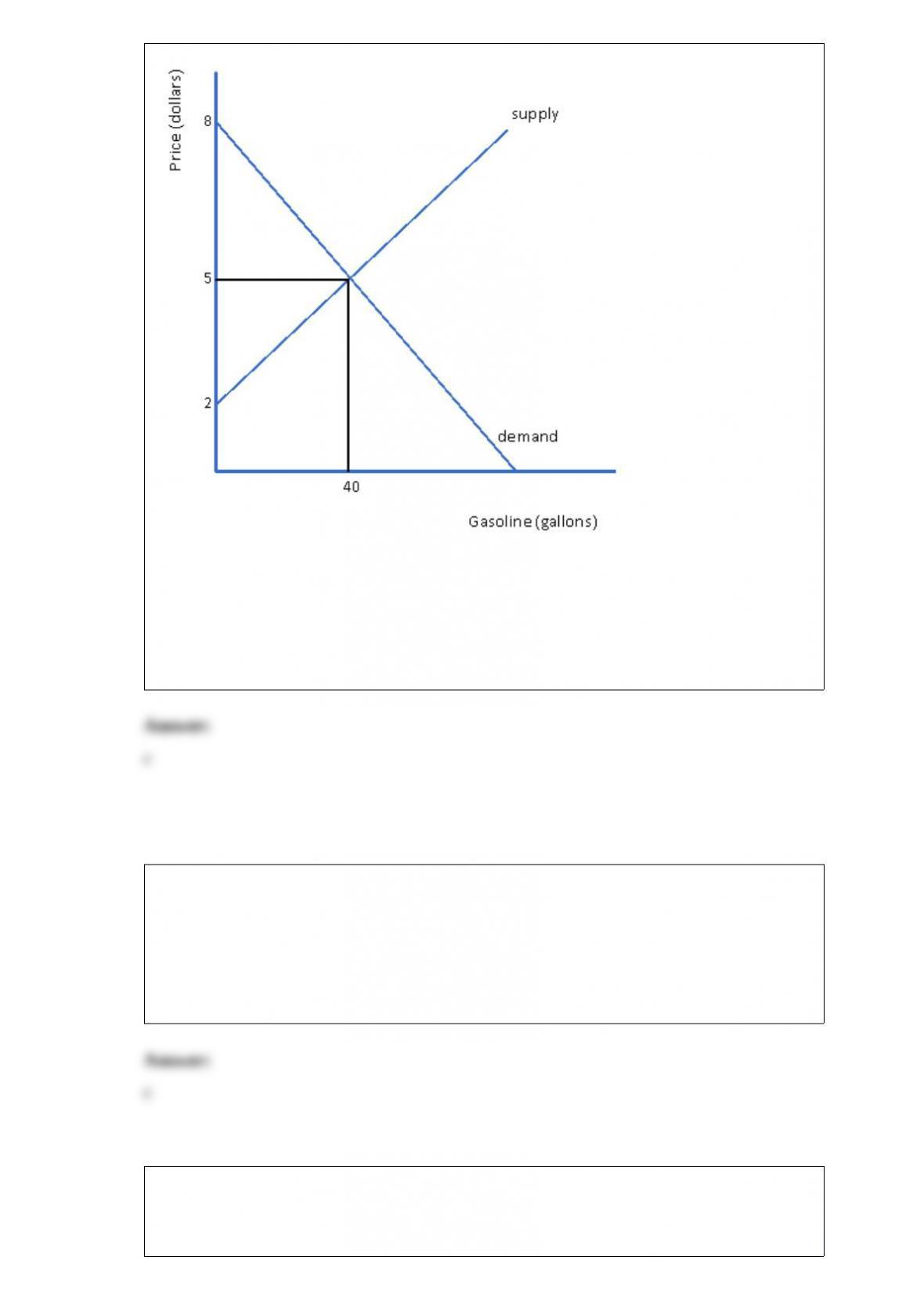
figure 4.3 represents the domestic market for gasoline in the united states.what is the
consumer surplus in this market?
a.60 gallons of gasoline
b.$120
c.$60
d.$3
10) the world trade organization was established by the ____ of multilateral trade
negotiations:
a.kennedy round
b.tokyo round
c.uruguay round
d.clinton round
11) multinational enterprises:
a.always produce primary goods
b.always produce manufactured goods
c.produce primary goods or manufactured goods
d.none of the above
12) by limiting the amount of foreign sourcing, local content laws are viewed as a
means of jobs preservation for domestic workers.
a.true
b.false
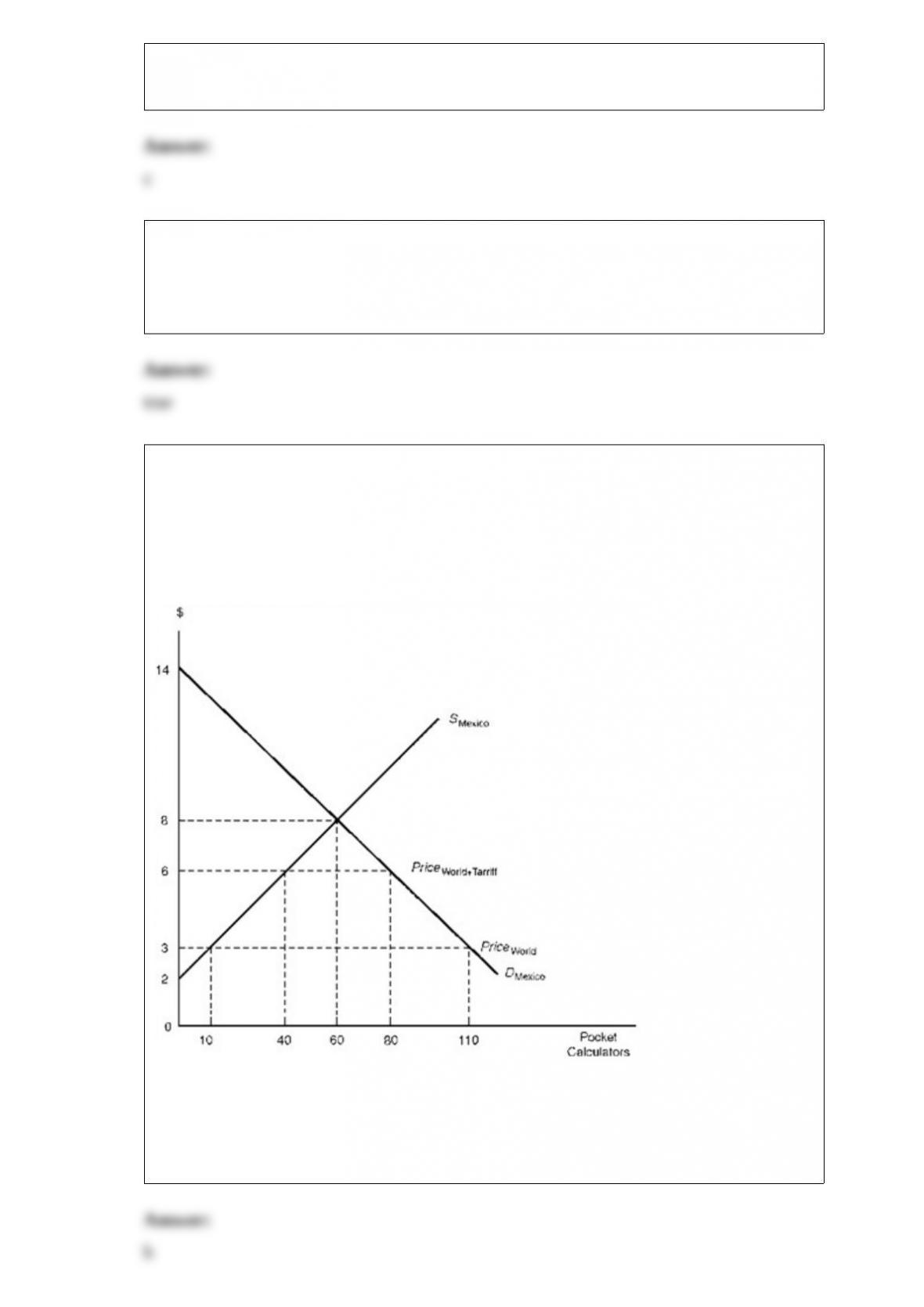
13) figure 4.1 illustrates the demand and supply schedules for pocket calculators in
mexico, a ‘small” nation that is unable to affect the world price.
figure 4.1. import tariff levied by a ‘small” country
consider figure 4.1. with a per-unit tariff of $3, the quantity of imports decreases to:
a.20 calculators
b.40 calculators
c.50 calculators
d.70 calculators
14) under the normal-trade-relations (most-favored-nation) principle, two nations agree
to apply tariffs to each other at rates as low as those applied to any other nation.
a.true
b.false
15) suppose the dollar appreciates 10 percent against the swiss franc. according to the
j-curve effect, the u.s. balance of trade will initially worsen, but then improve as time
passes.
a.true
b.false
16) a “key currency” is one that is widely traded on world money markets, has
demonstrated relative stable values over time, and has widely been accepted as a means
of international settlement.
a.true
b.false