
In international exchange markets, a rise in interest rates in the United States will cause
the demand for dollars to ________ and the supply of dollars to ________.
A) increase; increase
B) increase; decrease
C) decrease; increase
D) decrease; decrease
Abercrombie & Fitch wants to raise $8 million to finance the construction of a new
store, and the company wishes to raise the funds through direct finance. Which of the
following methods could it use?
A) It could sell $8 million in bonds.
B) It could borrow $8 million from a bank.
C) It could issue $8 million in stocks.
D) It could choose either A or C.
In 2013, the average height of adult males in the United States was
A) 5′ 7.”
B) 5′ 9.”
C) 6′ 0.”

D) 6′ 4.”
Eighty-five percent of all firms employ ________ workers.
A) only one or two
B) fewer than 20
C) 50 or more
D) over 100
The larger the fraction of an investment financed by borrowing,
A) the greater the potential return and potential loss on that investment.
B) the smaller the potential return and potential loss on that investment.
C) the greater the potential return and the smaller the potential loss on that investment.
D) the smaller the potential return and the greater the potential loss on that investment.
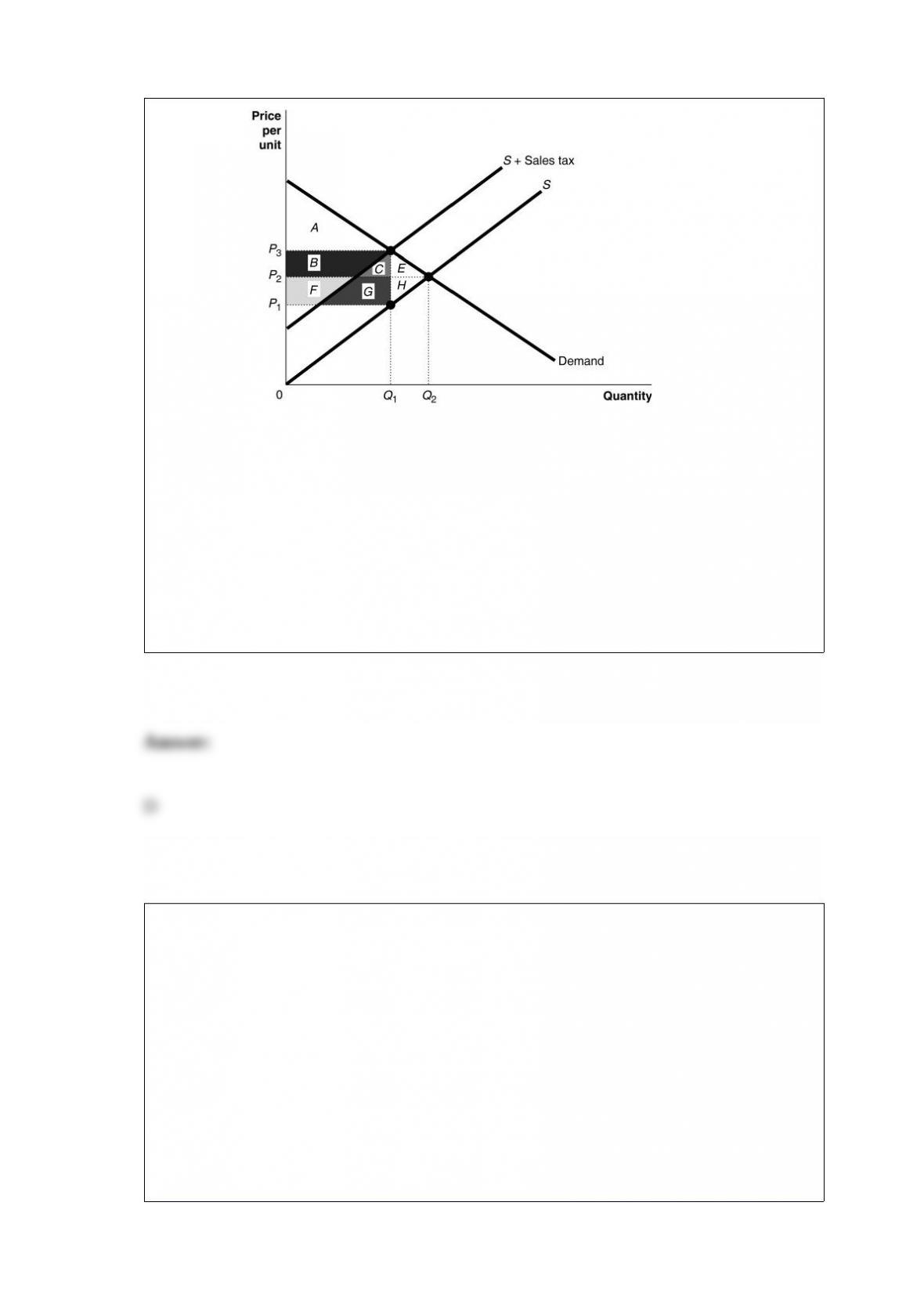
Figure 18-1
The sales tax revenue collected by the government is represented by the area
A) B + C.
B) F + G.
C) E + H.
D) B + C + F + G.
Making “how much” decisions involves
A) calculating the total benefits of the activity and determining if you are satisfied with
that amount.
B) calculating the total costs of the activity and determining if you can afford to incur
that expenditure.
C) calculating the average benefit and the average cost of an activity to determine if it is
worthwhile undertaking that activity.
D) determining the additional benefits and the additional costs of that activity.

Who controls a partnership?
A) stockholders
B) bondholders
C) the owners
D) all of these
Marginal cost is
A) the total cost of producing one unit of a good or service.
B) the average cost of producing a good or service.
C) the Difference between the lowest price a firm would have been willing to accept
and the price it actually receives.
D) the additional cost to a firm of producing one more unit of a good or service.
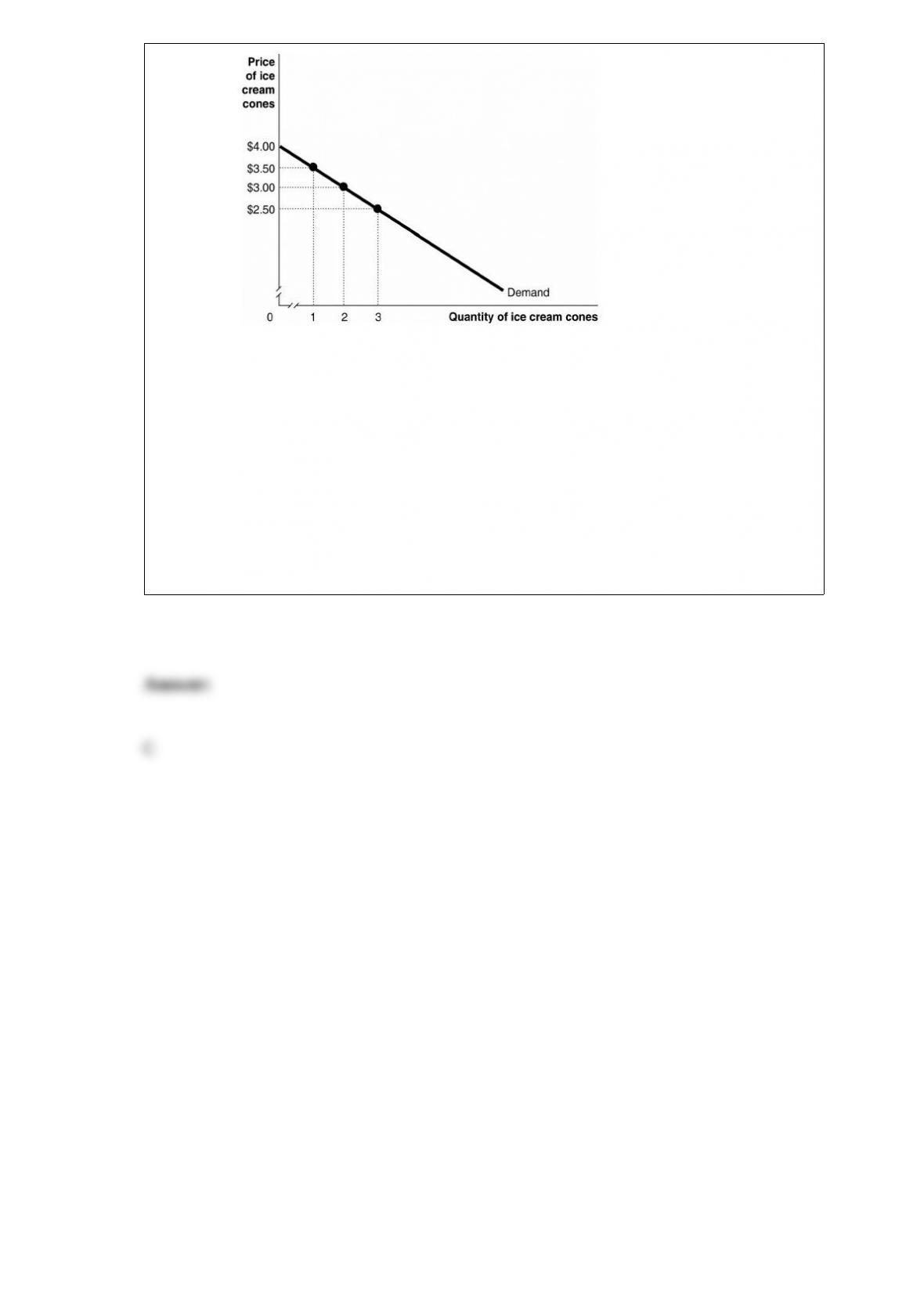
Figure 4-1 Figure 4-1 shows Kendra’s
demand curve for ice-cream cones.
If the market price is $2.50, what is Kendra’s consumer surplus?
A) $9.00
B) $7.50
C) $1.50
D) $0