1) The twin problems of health care in the U.S. are the rapidly rising cost of health care
and limited access to health insurance coverage.
2) If changes in demand cause significant changes in equilibrium price, then supply
must be quite inelastic.
3)
Refer to the diagram. At the profit-maximizing output, total revenue will be 0GLD.
4) Usury laws will result in a shortage of loanable funds and nonmarket rationing in
credit markets.
5) The endowment effect makes people value things less when they think of those
things as their own as opposed to identical things that are not theirs – as in “grass is
greener on the other side”.
6) As it relates to oligopoly, game theory focuses on the strategic behavior of rival
firms.
7) Excludability means that when someone is consuming a good, then others are
excluded from using the good anymore.
8) Cost-benefit analysis is frequently difficult to apply because it is difficult to quantify
the full benefits of a public good or service.
9) Farmers, though a small proportion of the population, can impose a large total cost to
taxpayers in the form of agricultural subsidies because the average cost imposed on
each individual taxpayer is small and not given much attention by a large number of
taxpayers.
10) User cost is defined as the present value of the profit the company would earn if it
delayed extraction until next year.
11) When somebody buys an insurance policy, that person is seeking to transfer risk
away from herself and pass it on to the insurance company.
12) In the table below are data on five different industries and the market shares for
each of the firms in the industry. Assume that there is no foreign competition, entry into
the industry is difficult, and that no firm in each industry is on the verge of bankruptcy.
In the column to the right of the table, calculate the Herfindahl index.
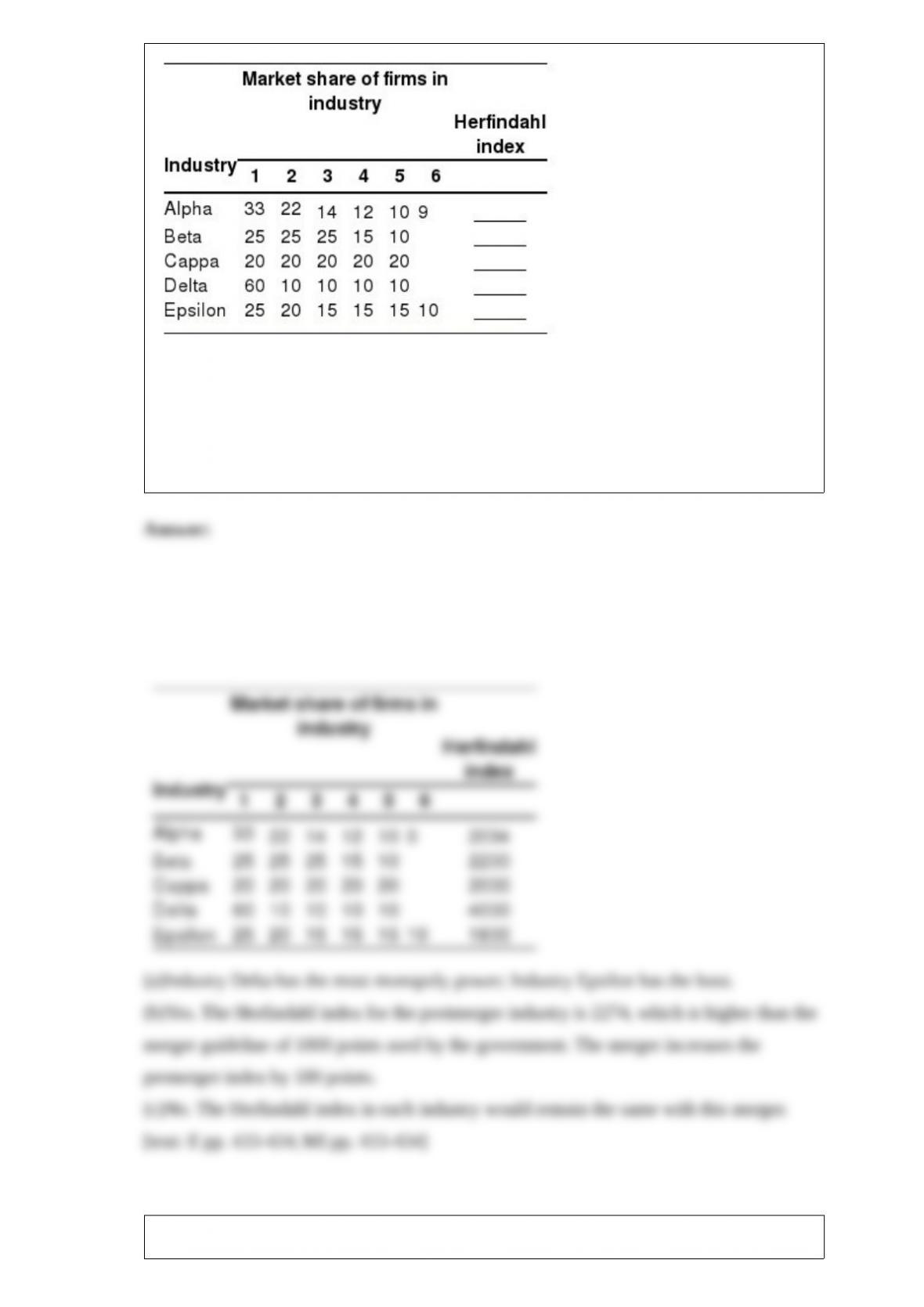
(a)Which industry has the most monopoly power and which industry has the least
monopoly power?
(b)If the sixth firm in Industry Alpha sought to merge with the fifth firm in that
industry, would the government be likely to challenge the merger?
(c)Would a conglomerate merger between the fourth firm in Industry Beta and the sixth
firm in Industry Epsilon likely be challenged by the government?
13) Where there is natural monopoly, government is most likely to implement:
A.social regulation.
B.antitrust policy.
C.industrial regulation.
D.an externality containment policy.
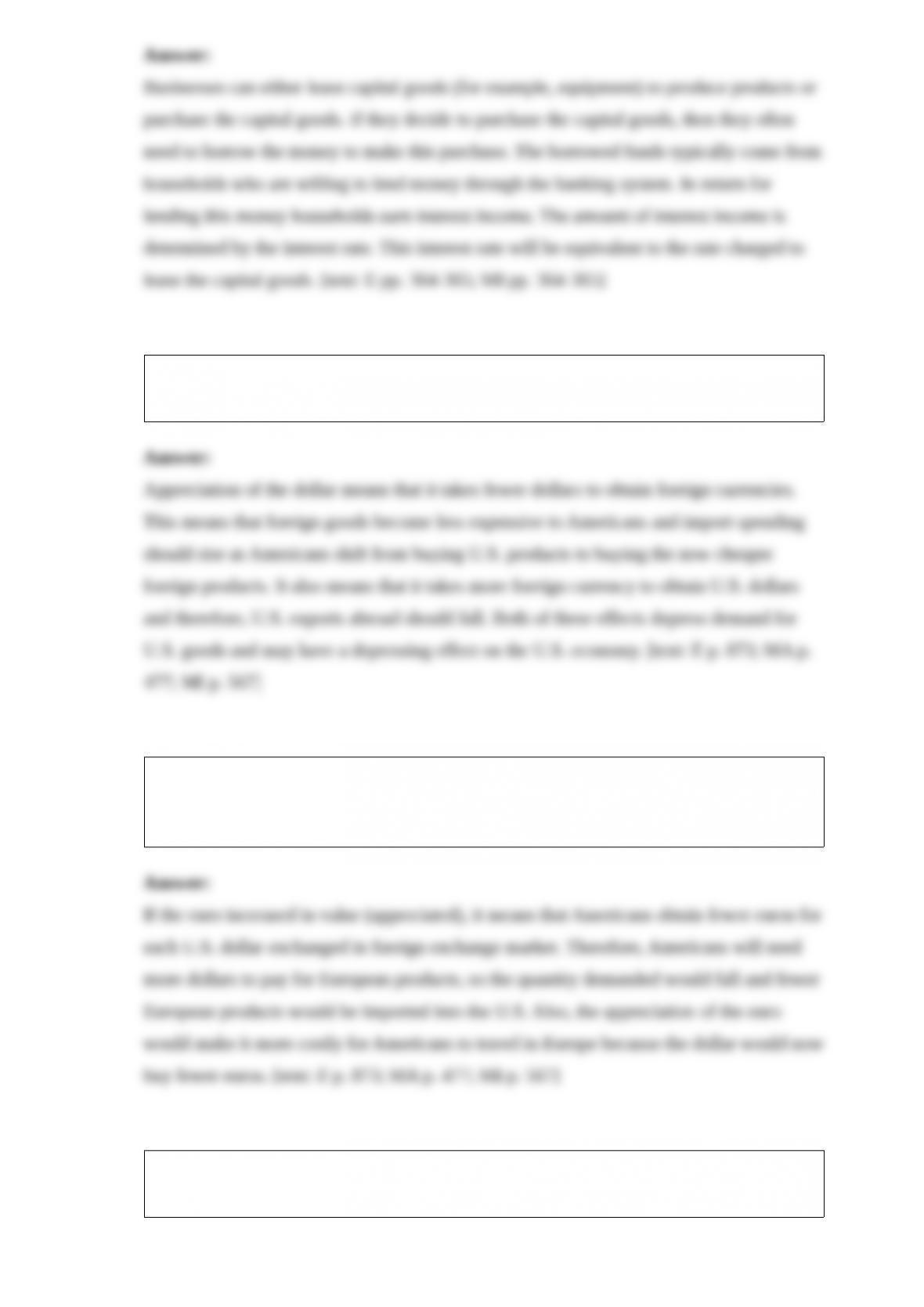
14) The supply curve for a monopoly is:
A.The portion of the marginal cost curve that lies above the average variable cost curve
B.The portion of the marginal cost curve that lies above the average total cost curve
C.The portion of the marginal cost curve that lies above the average fixed cost curve
D.Not clearly defined
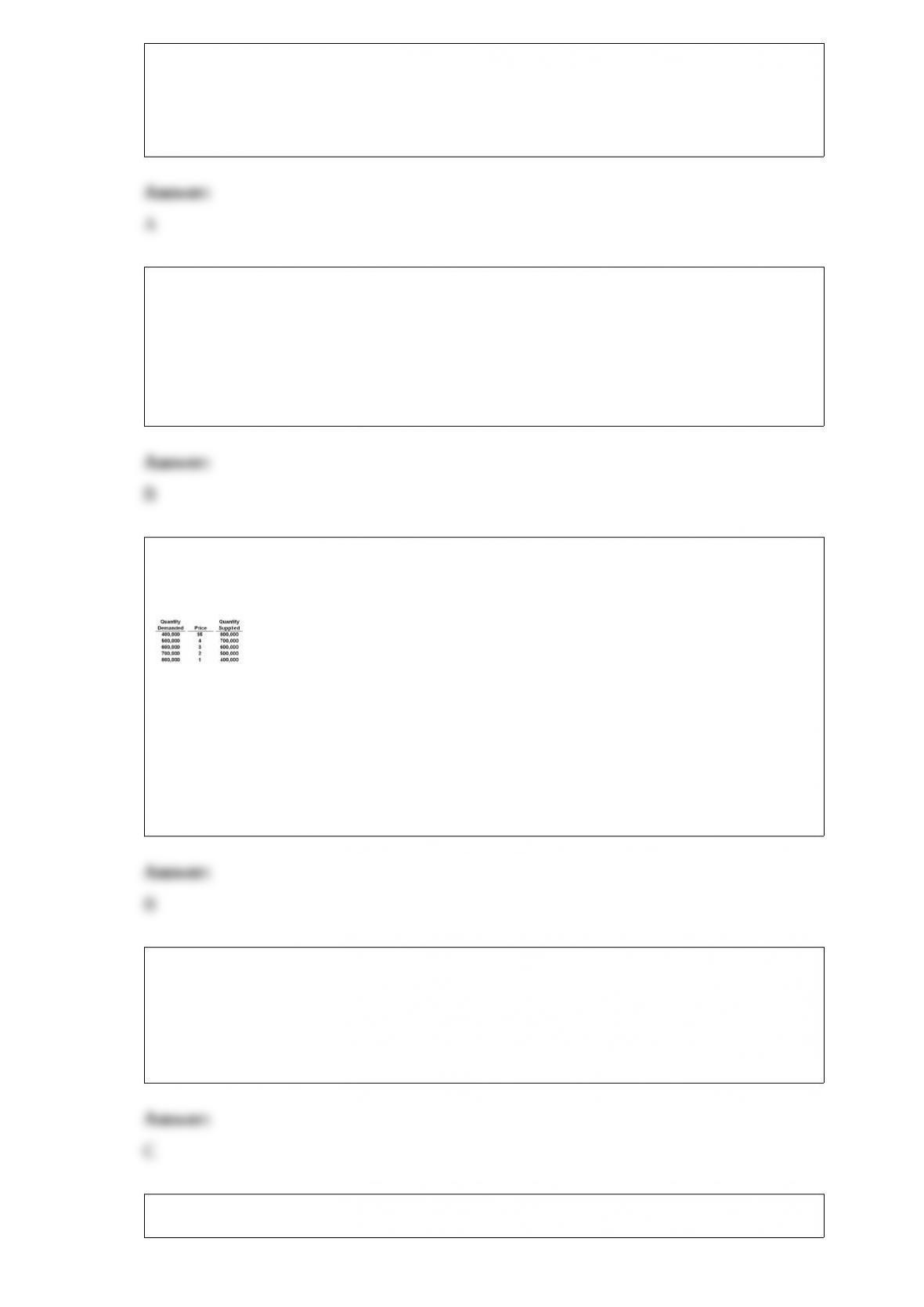
15)
Which of the diagrams best describes the long-run path of real (inflation-adjusted) farm
prices?
A.A
B.B
C.C
D.D
16) The demand curve confronting a non-discriminating pure monopolist is:
A.Horizontal
B.The same as the industry’s demand curve
C.More elastic than the demand curve confronting a competitive firm
D.Derived by vertically summing the individual demand curves for the buyers
17) A significant benefit of monopolistic competition compared with pure competition
is:
A.less likelihood of X-inefficiency.
B.improved resource allocation.
C.greater product variety.
D.stronger incentives to achieve economies of scale.
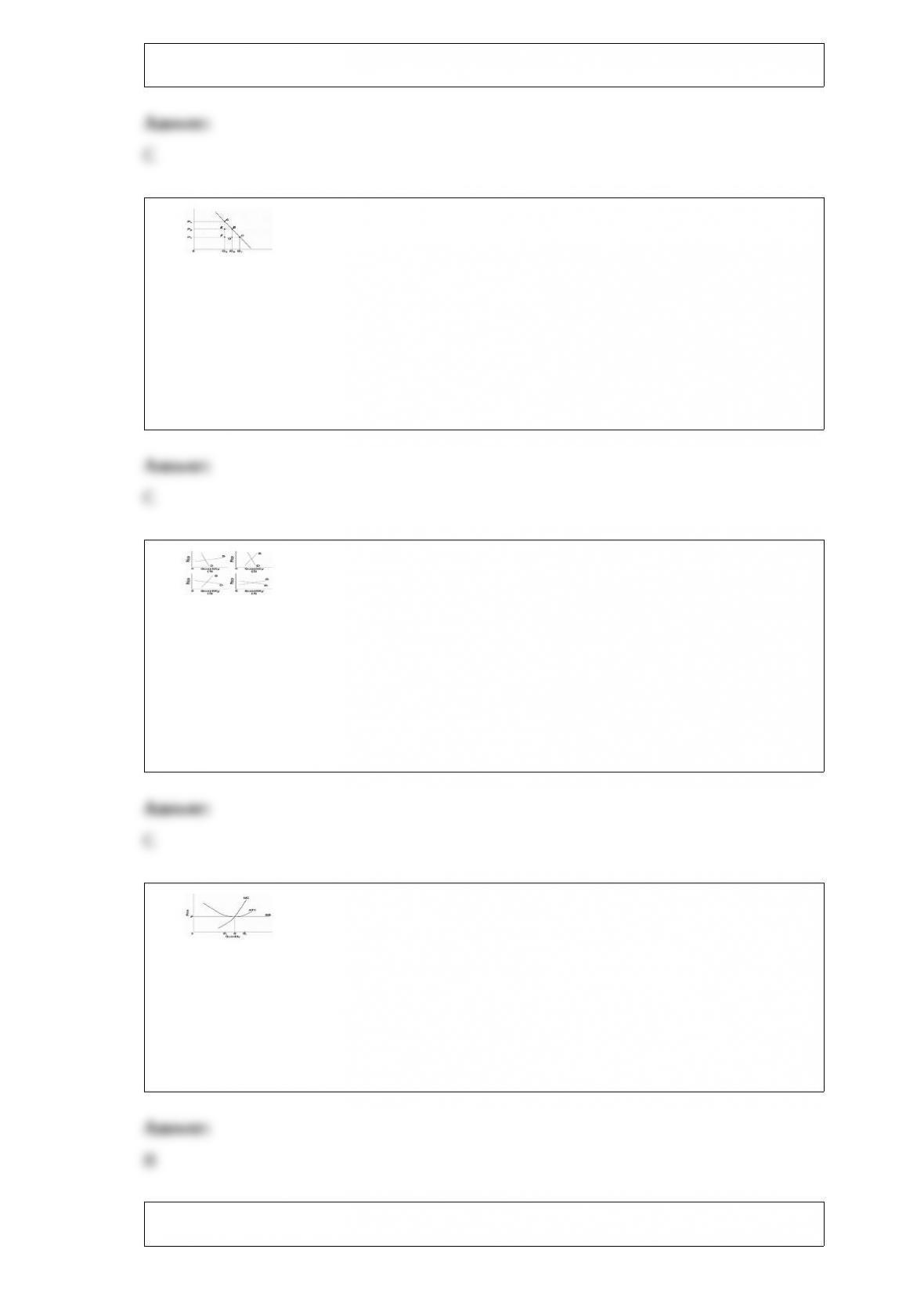
18)
Refer to the above demand graph for a farm product. Which of the following will cause
the largest decrease in farmers’ incomes?
A.A decrease in quantity from QC to QA
B.A decrease in quantity from QB to QA
C.An increase in quantity from QA to QC
D.An increase in quantity from QA to QB
19)
In which of the given market situations will the largest portion of an excise tax of a
specified amount per unit of output be borne by buyers?
A.4
B.3
C.1
D.2
20)
Refer to the diagram. At output level Q1:
A.resources are overallocated to this product and productive efficiency is not realized.
B.resources are underallocated to this product and productive efficiency is not realized.
C.productive efficiency is achieved, but resources are underallocated to this product.
D.productive efficiency is achieved, but resources are overallocated to this product.
21) Three major means of collusion by oligopolists are:
A.cartels, informal understandings, and price leadership.
B.market sharing, mutual interdependence, and product differentiation.
C.cartels, kinked-demand pricing, and product differentiation.
D.informal understandings, P = MC pricing, and mutual interdependence.
22) Comparing an acreage allotment program versus a taxpayer-subsidized
price-support program, the acreage allotment program:
A.And the price-support program have similar costs to the taxpayers
B.Imposes a smaller cost on the taxpayers
C.Imposes a larger cost on the taxpayers
D.Does not impose a cost on the consumers
23) The following table applies to a purely competitive industry composed of 100
identical firms.
Refer to the table. If each of the 100 firms in the industry is maximizing its profit and
earning only a normal profit, each must have an average total cost of:
A.$2.
B.$3.
C.$4.
D.$5.
24) Which statement is correct? The long-run supply curve for a purely competitive:
A.Decreasing-cost industry will be upward-sloping
B.Increasing-cost industry will be perfectly elastic
C.Increasing-cost industry will be upward-sloping
D.Increasing-cost industry will be less elastic than the short-run supply curve
25) What are the relationships among capital, interest rates, and interest income?
26) What are the economic effects of an appreciation of the dollar in foreign exchange
markets?
27) How would a substantial appreciation in the European euro in the foreign exchange
market affect the quantity of imports of European products by the U.S.? How would
such an appreciation of the European euro affect travel by Americans to Europe?
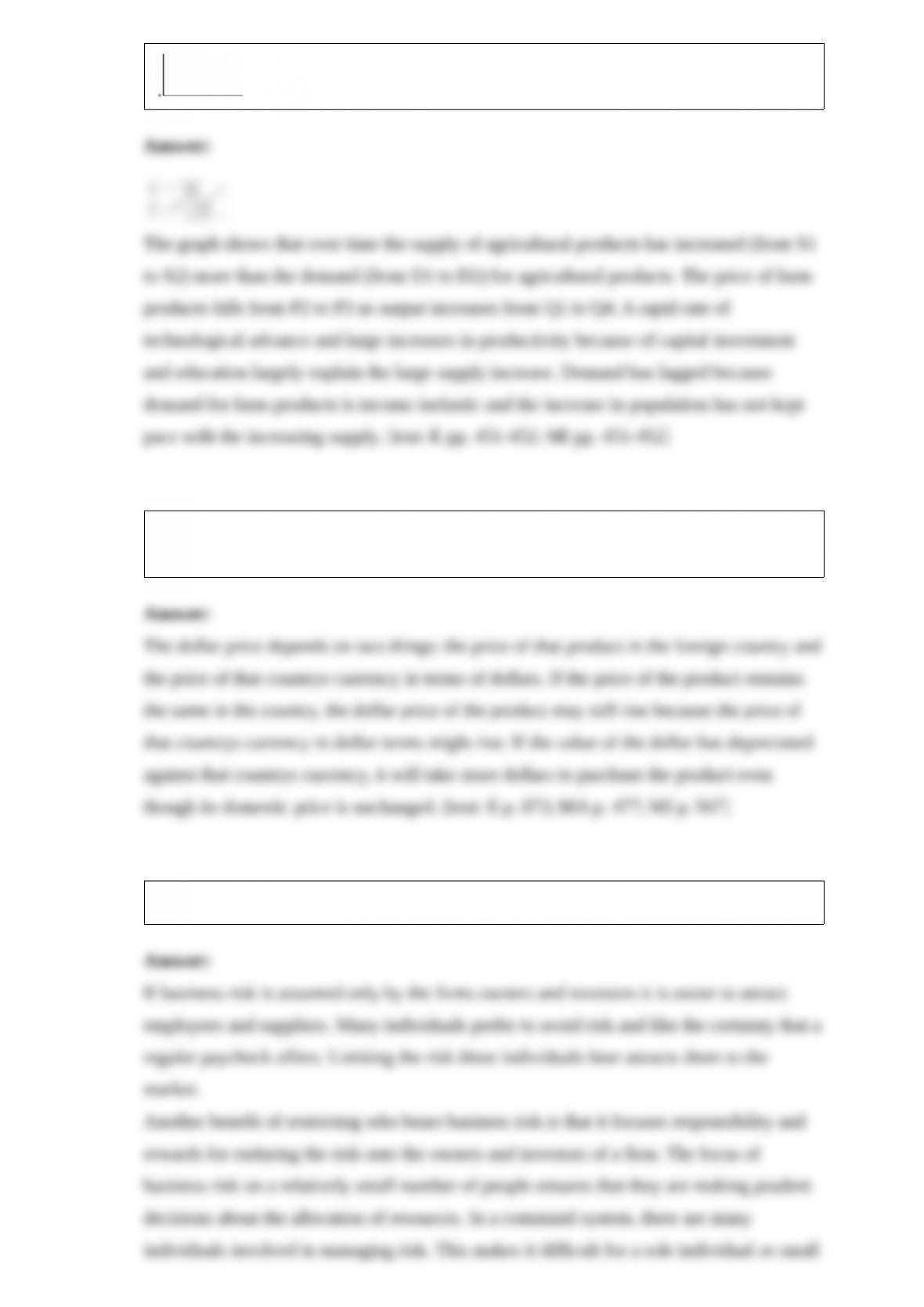
28) Use the below axes to draw a supply and demand diagram that illustrates the
long-run situation in agriculture. Explain the problem.
29) Explain how the dollar price of an imported good may change even though the
foreign production cost of that product remains unchanged.
30) Discuss the benefits of restricting business risk to owners and investors.
31) Why does the private market succeed in meeting consumers demands while
majority voting in many cases fails to do the same?
32) How are government budgets affected by rising health care costs?
33) How is an indifference map like a topographic map?