Which of the following issues is most unlikely to be addressed by an economist
practicing positive economics?
a. the relationship between the minimum wage and the number of unemployed
unskilled workers
b. the effect of a minimum wage increase on inner-city crime rates
c. the desirability of a minimum wage increase
d. the consequences of implementing a minimum wage law in China
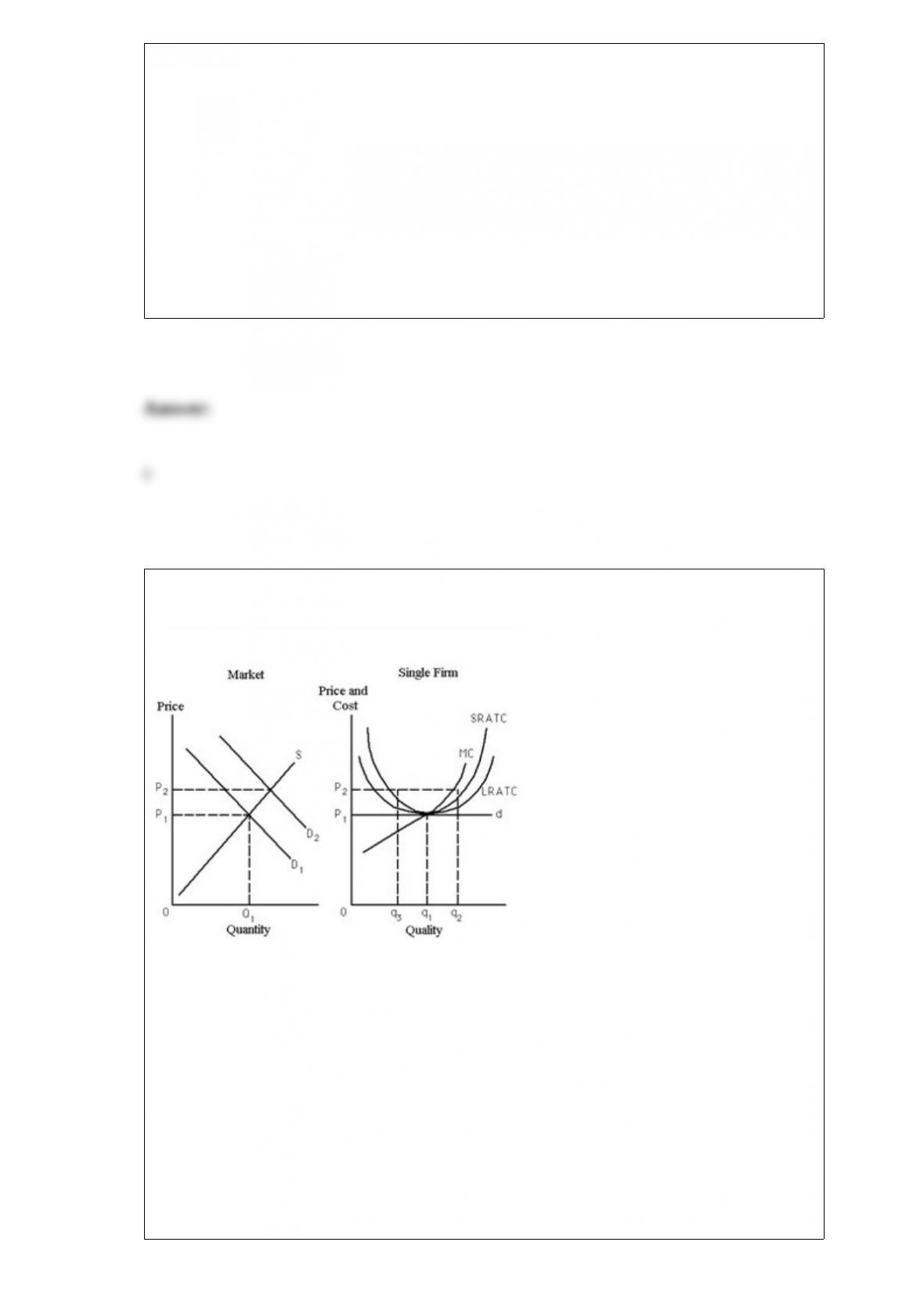
Exhibit 23-9
Assume that demand increases from
D1 to D2; in the new long run equilibrium, price settles at a level between P1 and P2
This means that the industry in question is a(n) __________-cost industry.
a. decreasing
b. increasing
c. constant
d. marginal
e. low

Suppose wages for construction workers are higher in Hawaii than in Florida. This
could be because the
a. moving costs between Florida and Hawaii are so high that construction workers in
Florida do not relocate to Hawaii.
b. product price of what construction workers in Hawaii produce is higher than the
product price of what construction workers in Florida produce and the moving costs
between Florida and Hawaii are zero.
c. moving costs between Florida and Hawaii are zero.
d. marginal physical product of construction workers in Hawaii is higher than the
marginal physical product of construction workers in Florida and the moving costs
between Florida and Hawaii are zero.
e. b and d
Exhibit 24-1
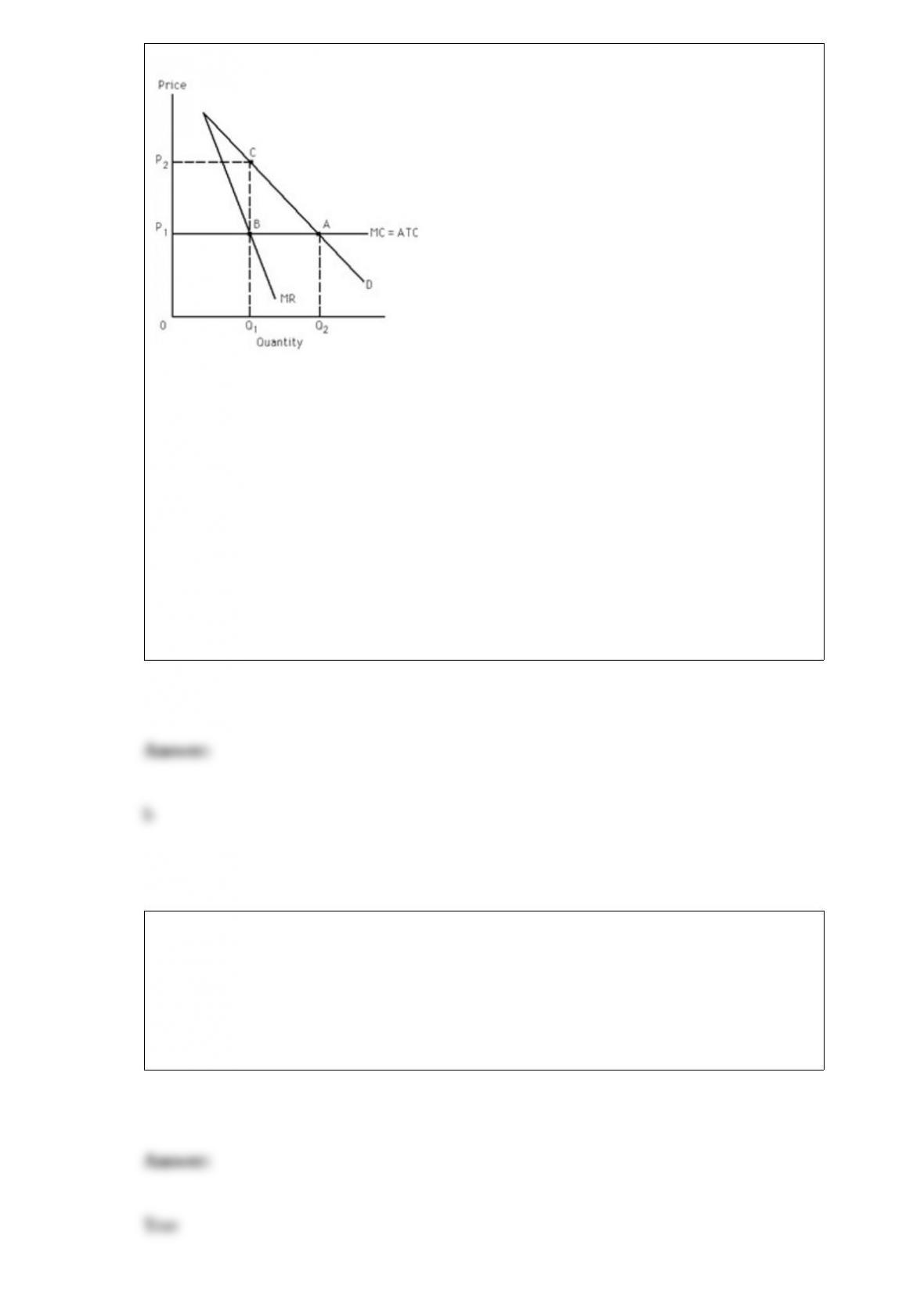
The deadweight loss of the profit-maximizing monopoly is identified by what area?
a. area Q1BAQ2
b. area BCA
c. area P1P2CB
d. area 0P1BQ1
e. none of the above
When universities charge students less than the equilibrium tuition for admission, they
have to impose some nonprice-rationing device.
a. True
b. False
The concentration ratio provides a measure of the extent to which an industry
a. produces a useful product.
b. is dominated by a small number of firms.
c. is earning economic profits.
d. is earning accounting profits.
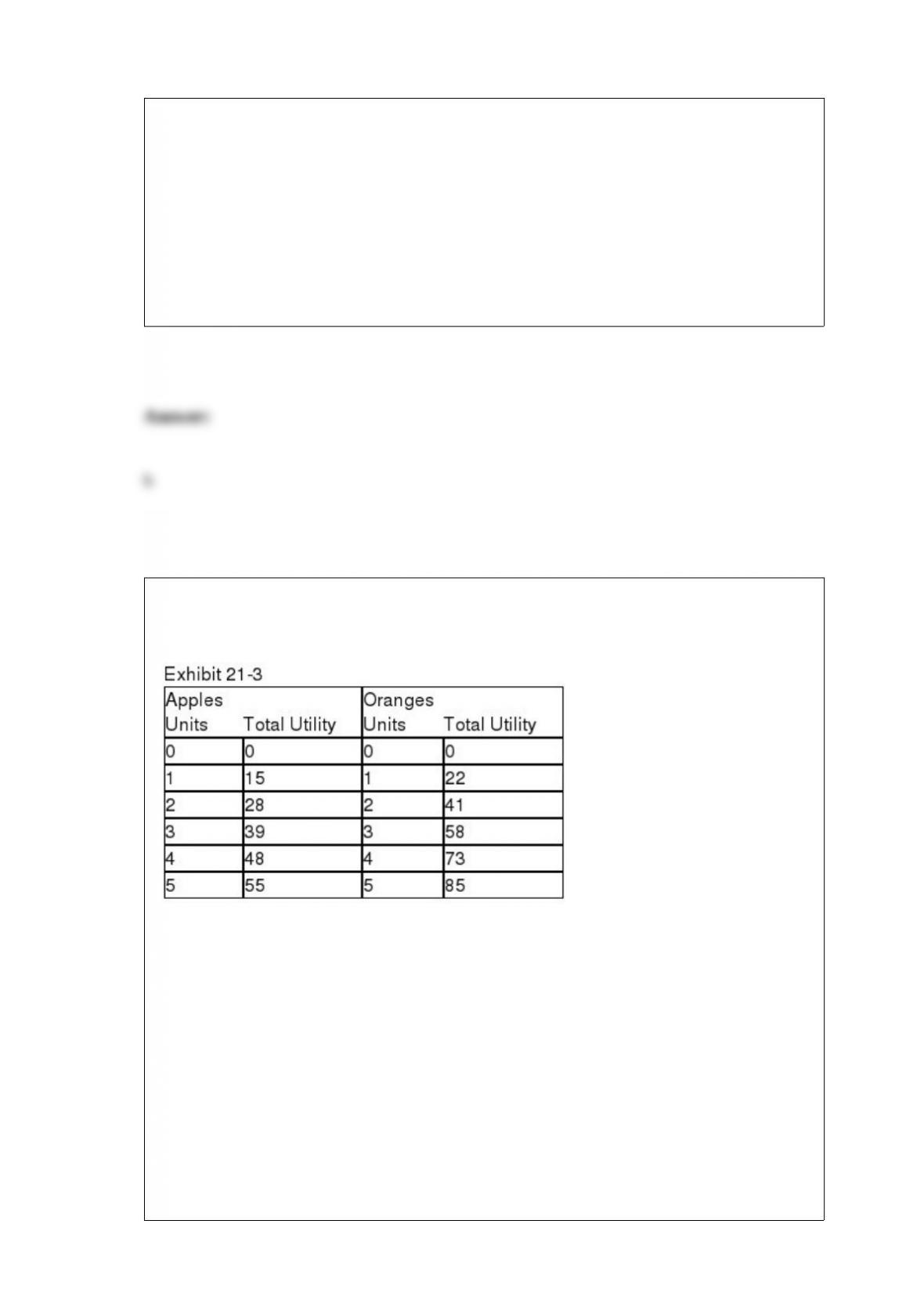
Linda spends $5 a week on apples and oranges. If the price of both goods is $1 per unit,
what is Linda’s total utility from consuming the optimal bundle of goods?
a. 85
b. 86
c. 88
d. 209
e. 279

If firms in an industry are earning accounting profits, it follows that
a. other firms will try to enter the industry to compete away the accounting profits.
b. the firms in the industry are earning economic profits, too.
c. the firms in the industry are earning economic rent.
d. b and c
e. none of the above
Exhibit 20-2
The market for good X is initially in equilibrium at $5. The government then places a
per-unit tax on good X, as shown by the shift of S1 to S2. What is the per-unit tax equal
to?

a. $1.00
b. $2.25
c. $0.25
d. $4.00
e. $1.25
For a certain good, when price rises from $50 to $55, quantity demanded falls from
8,400 to 7,500. The price elasticity of demand here is _____________, making the
demand for this good ____________ in the price range between $50 and $55.
a. 1.19; inelastic
b. 1.19; elastic
c. 1.45; elastic
d. 0.84; elastic
e. 0.84; inelastic
Exhibit 38-1
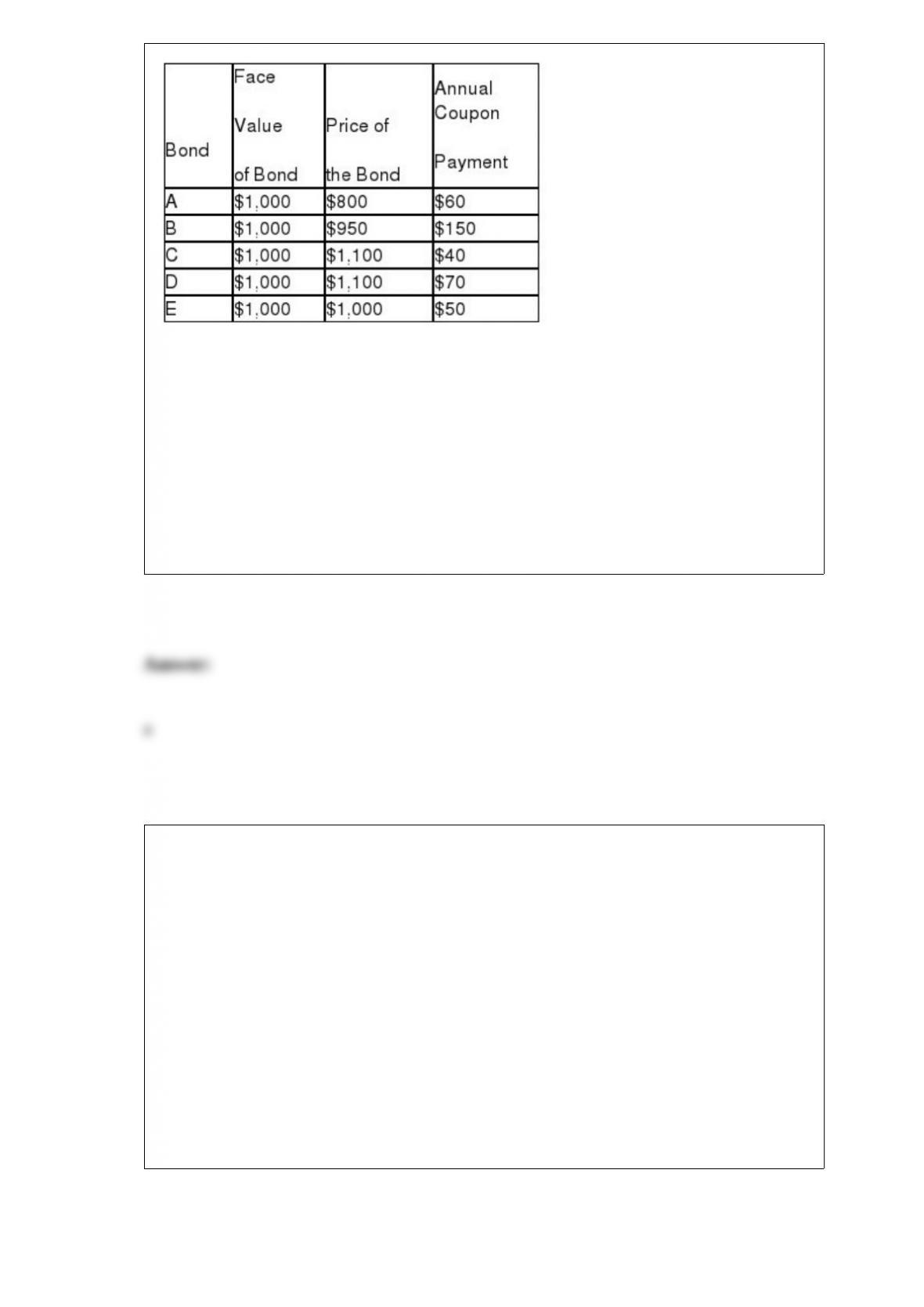
The coupon rate for bond A is
a. 6.0 percent.
b. 10.0 percent.
c. 7.5 percent.
d. 0.075 percent.
Would we expect the “average” person to take more time to learn about the car he or she
is considering purchasing or about the issues in the upcoming U.S. Senate race in his or
her state?
a. The Senate race, because it is critical that we elect the right people to government.
b. The car, but there is no rational reason for this.
c. The Senate race, because the person who is elected senator today may become
president tomorrow.
d. The car, because a mistake here can potentially cause him or her more harm on a
day-to-day basis; in addition, a person is unlikely to be able to determine the outcome
of a Senate race.
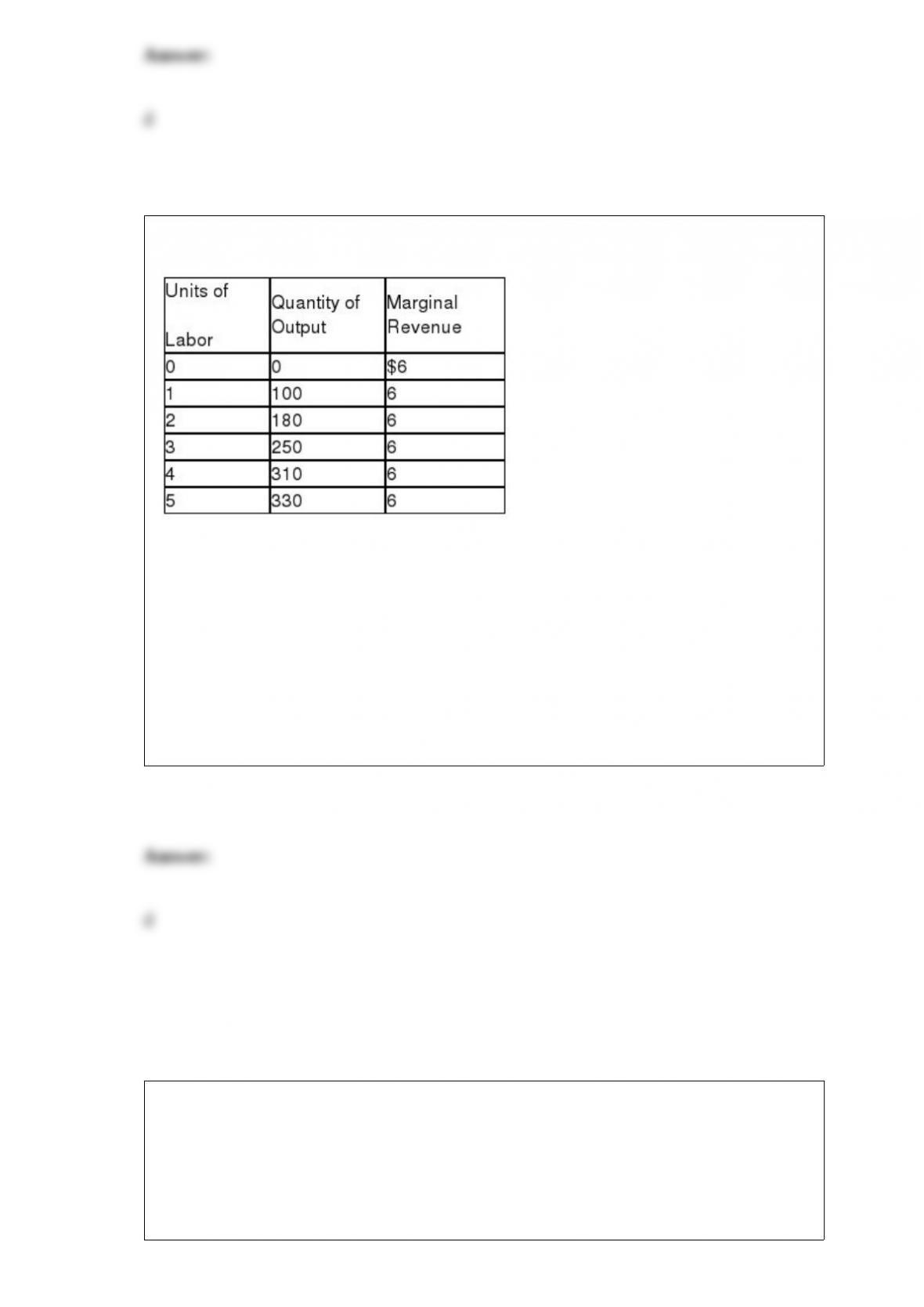
Exhibit 27-5
The marginal revenue product of the second unit of labor is
a. $80.
b. $180.
c. $70.
d. $480.
If there is no comparative advantage in the production of either of the two goods
produced by countries 1 and 2, then
a. the benefits resulting from trade between the two countries are increased.
b. there are no gains from specialization and trade between the two countries.

c. one country must be more productive in producing all goods than the other.
d. each country should specialize in the production of a particular good.
e. none of the above
In long-run equilibrium, the perfectly competitive firm earns __________ economic
profits.
a. positive
b. zero
c. negative
d. any of the above
If two firms in the same industry (but at different stages of the production process)
merged, this would be a(n) __________ merger.
a. vertical
b. conglomerate
c. horizontal
d. antitrust
e. none of the above

To economists, utility means
a. marginal value.
b. relative value.
c. satisfaction.
d. usefulness.
e. a, c, and d
Exhibit 38-2
If the closing price of Vixen’s stock on the previous day was $65.50, what value goes in
blank (D)?
a. 64.00
b. 65.15
c. 65.75

d. 65.00
e. There is not enough information given to answer this question.
If, for a perfectly competitive firm, marginal cost is greater than marginal revenue for
the 100th unit, then it follows that
a. producing the 100th unit adds more to total revenue than it does to total cost.
b. producing the 100th unit adds more to total cost than it does to total revenue.
c. marginal cost equals marginal revenue for the 99th unit.
d. the firm is not maximizing profit, or minimizing losses, if it produces the 100th unit.
e. b and d
The least-cost rule states that a firm minimizes costs by buying factors in the
combination at which the MRP-to-price ratio for each is the same.
a. True
b. False