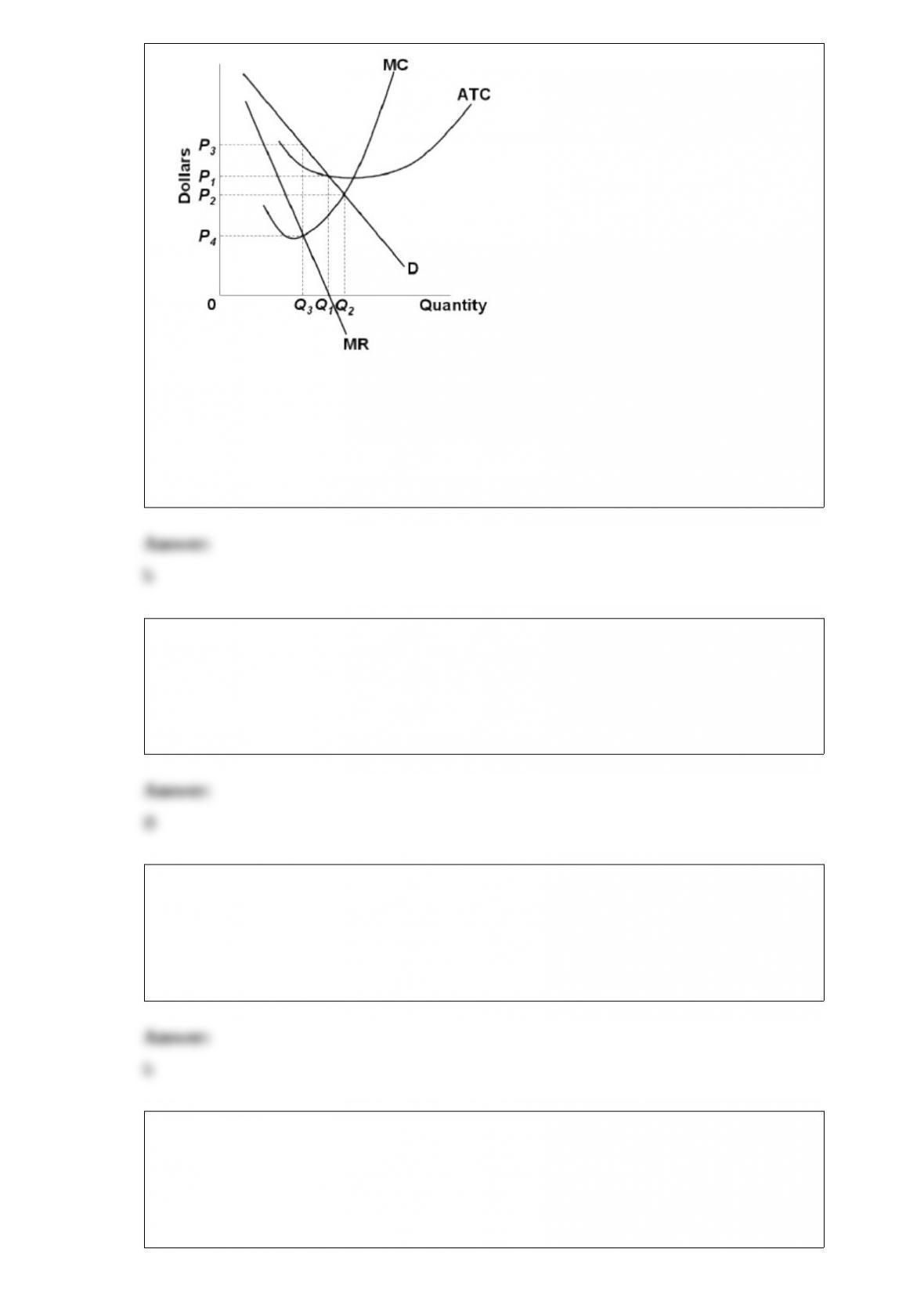
1)
refer to the above diagram for a pure monopolist. if the monopolist is unregulated, it
will maximize profits by charging:
a.a price above p3 and selling a quantity less than q3.
b.price p3 and producing output q3.
c.price p2 and producing output q2.
d.price p1 and producing output q1.
2) The value today of a sum of money to be received in the future is referred to as:
A.the future value of that sum of money.
B.the present value of that sum of money.
C.compound interest.
D.the time-value of money.
3) an effective price floor will:
a.force some firms in this industry to go out of business.
b.result in a product surplus.
c.result in a product shortage.
d.clear the market.
4)
Which of the following statements is true? Other things equal, the demand for labor will
be less elastic the:
A.the easier it is to substitute capital for labor.
B.greater the elasticity of resource supply.
C.greater the elasticity of product demand.
D.smaller the ratio of labor costs to total costs.
5) Assume a firm faces these costs: total cost of capital = $4000; price paid for labor =
$20 per labor unit; and price paid for raw materials = $8 per raw-material unit.
(a)If the firm can produce 2000 units of output by combining its fixed capital with 200
units of labor and 500 units of raw materials, then what are the total cost and average
total cost of producing the 2000 units of output?
(b)The firm now improves its production process so that it can produce 3000 units of
output by combining its fixed capital with 100 units of labor and 500 units of raw
materials. What are the total cost and average cost of producing the 3000 units of
output?
(c)Based on the data, what conclusion can you draw about the effect of process
innovation on economic efficiency?
6) which of the following holds true?
a.there is no relationship between ap and avc.
b.when mp is rising avc is falling, and when mp is falling avc is rising.
c.when ap is rising avc is falling, and when ap is falling avc is rising.
d.when ap is rising avc is rising, and when ap is falling avc is falling.
7) The total demand for money is equal to the transactions demand plus the asset
demand for money.
(a)Assume that each dollar held for transactions purposes is spent on the average five
times per year to buy final goods and services. If the nominal GDP is $10,000 billion
($10 trillion), what is the transaction demand?
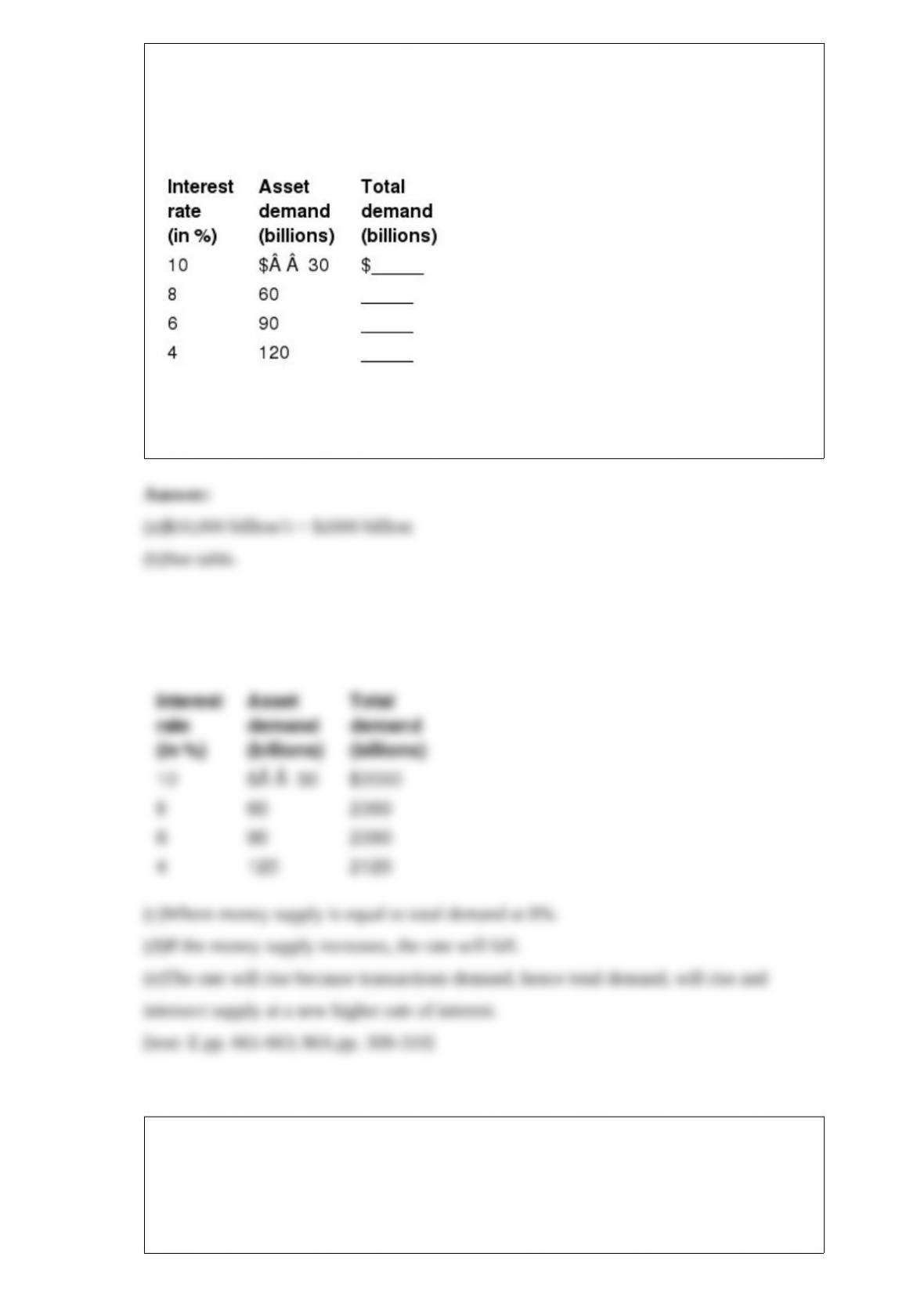
(b)The table below shows the asset demand at certain rates of interest. Using your
answer to part (a), complete the table to show the total demand for money at various
rates of interest.
(c)If the money supply is $2060 billion, what will be the equilibrium rate of interest?
(d)If the money supply rises, will the equilibrium rate of interest rise or fall?
(e)If GDP rises, will the equilibrium rate of interest rise or fall?
8) an increase in money income:
a.shifts the consumer’s budget line to the right.
b.shifts the consumer’s budget line to the left.
c.increases the slope of the budget line.
d.has no effect on the budget line.
9) if the consumer price index rises from 300 to 333 in a particular year, the rate of
inflation in that year is:
a.11 percent.
b.33 percent.
c.91 percent.
d.10 percent.
10) which of the following will not hold true for a competitive firm in long-run
equilibrium?
a.p equals afc
b.p equals minimum atc
c.mc equals minimum atc
d.p equals mc
11) Other things equal, if there is an increase in nominal GDP:
A.the demand for money will decrease.
B.the interest rate will rise.
C.bond prices will rise.
D.consumption spending will fall.
12) The next three questions refer to the information in the following table.
(a)What would price and quantity be if the market were closed to international trade?
What would the domestic and foreign quantity supplied be if it were open to
international trade and the world price was $2?
(b)If the world price was $2 and a tariff of $1 were placed on the product, what would
be the total revenues going to domestic producers, foreign producers (after-tax), and the
government? Explain.
(c)Given a world price of $2, what would be the difference in the total revenue received
by foreign producers with a $1 per unit tariff compared with a quota of 200 units?
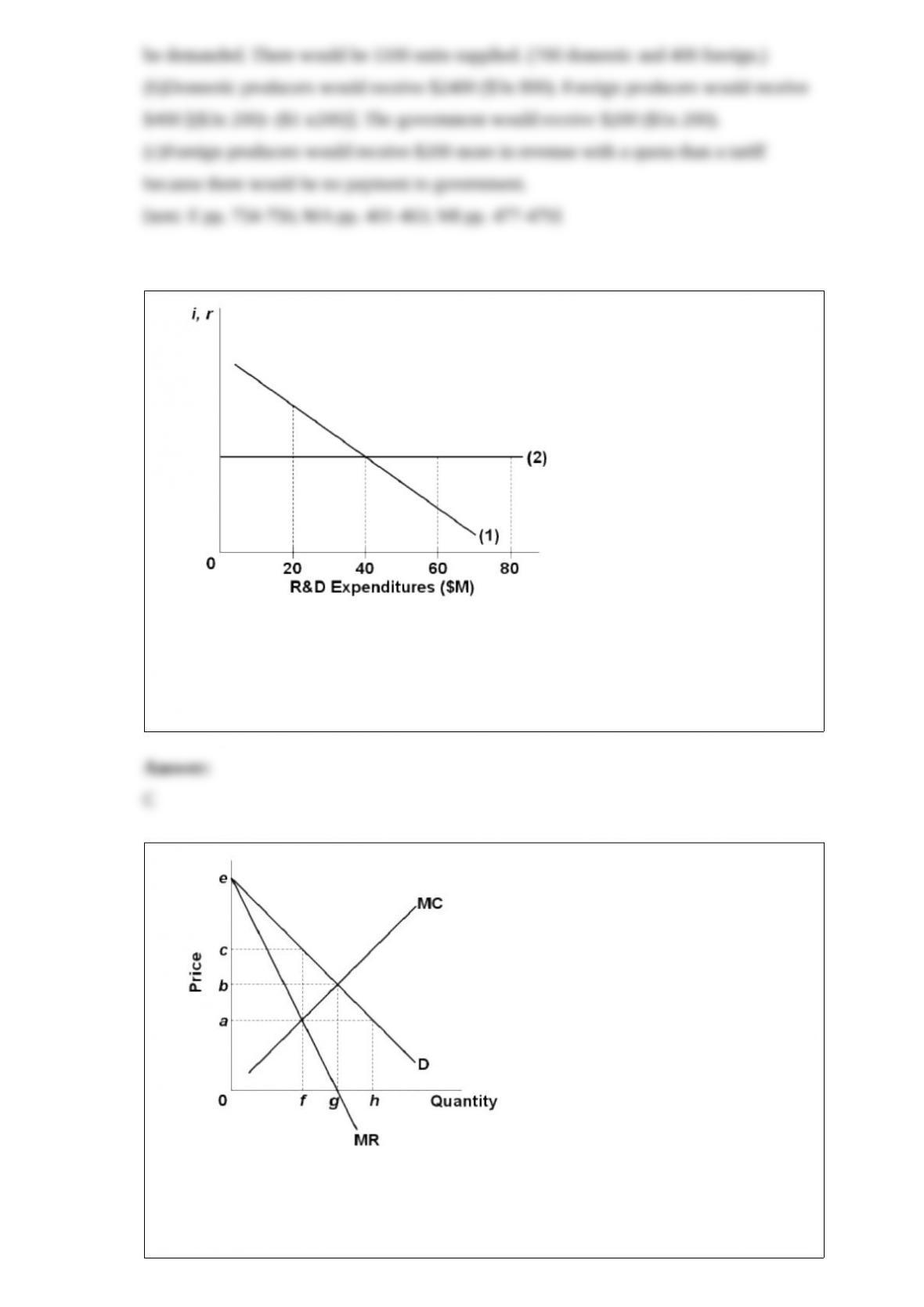
13)
In the above diagram, the optimal amount of R&D is:
A.$20 million.
B.$80 million.
C.$40 million.
D.$60 million.
14)
refer to the above diagram for a pure monopolist. monopoly price will be:
a.e
b.c
c.b
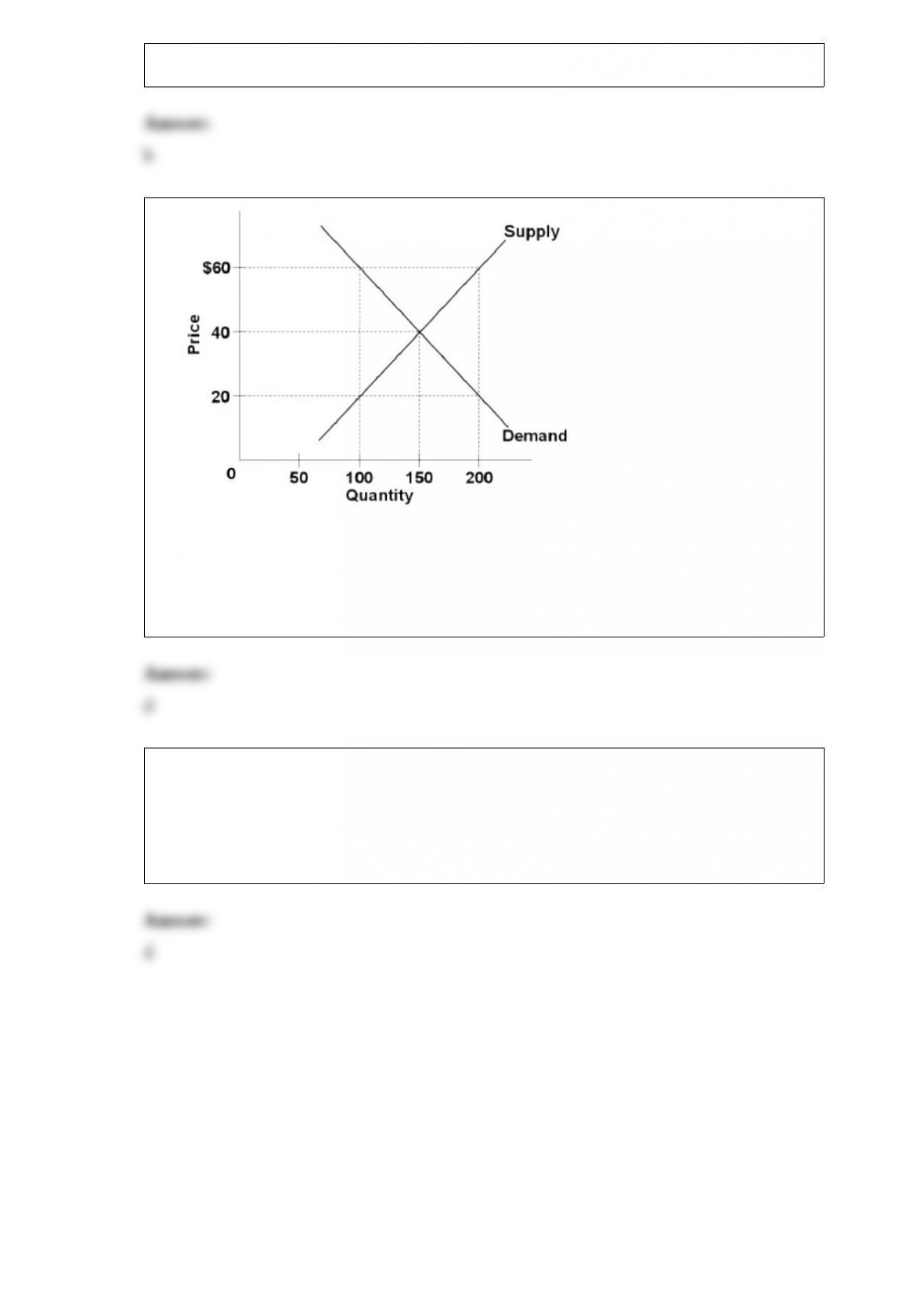
d.a
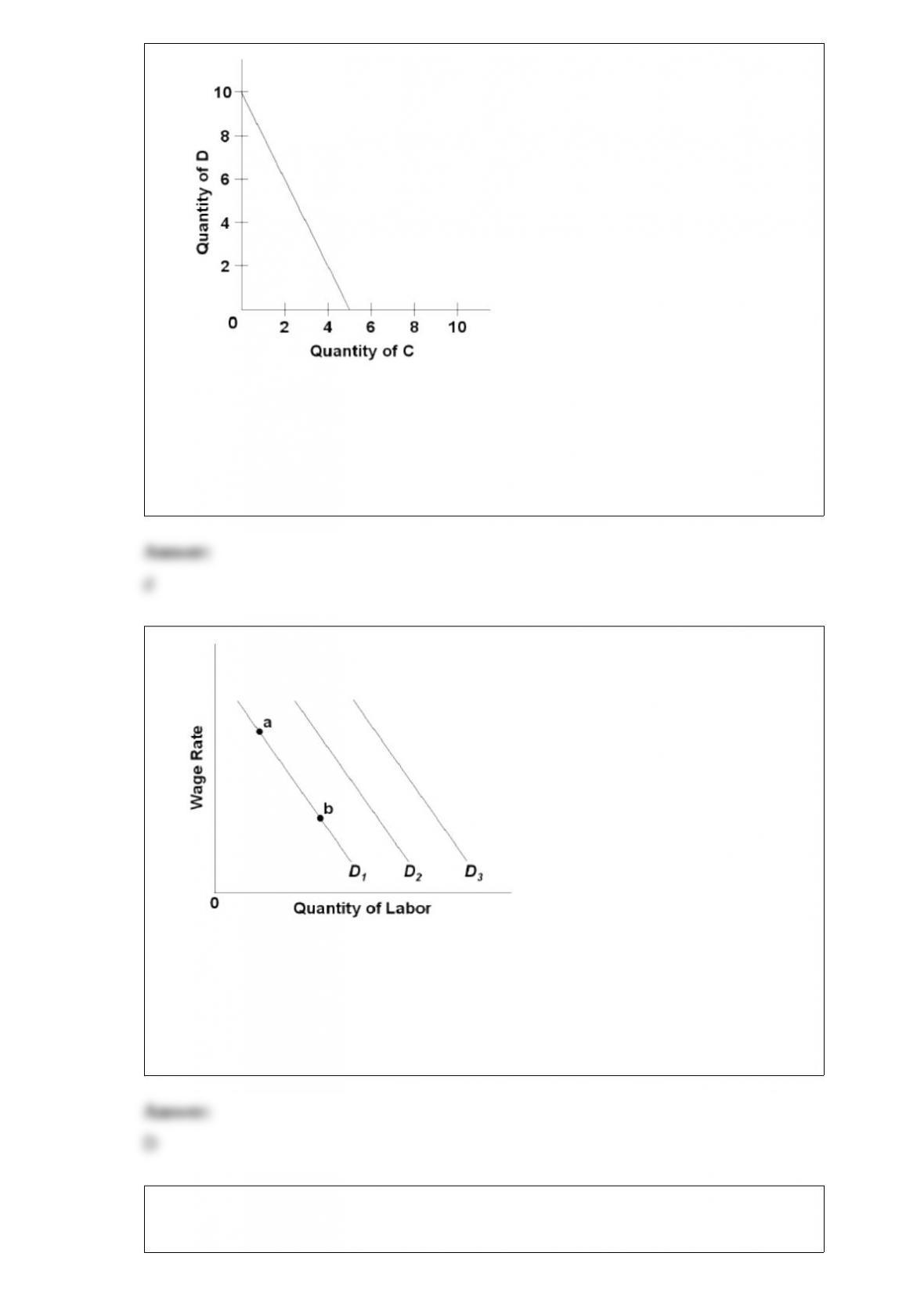
15)
refer to the above diagram. a price of $60 in this market will result in:
a.equilibrium.
b.a shortage of 50 units.
c.a surplus of 50 units.
d.a surplus of 100 units.
16) gdp includes:
a.neither intermediate nor final goods.
b.both intermediate and final goods.
c.intermediate, but not final, goods.
d.final, but not intermediate, goods.
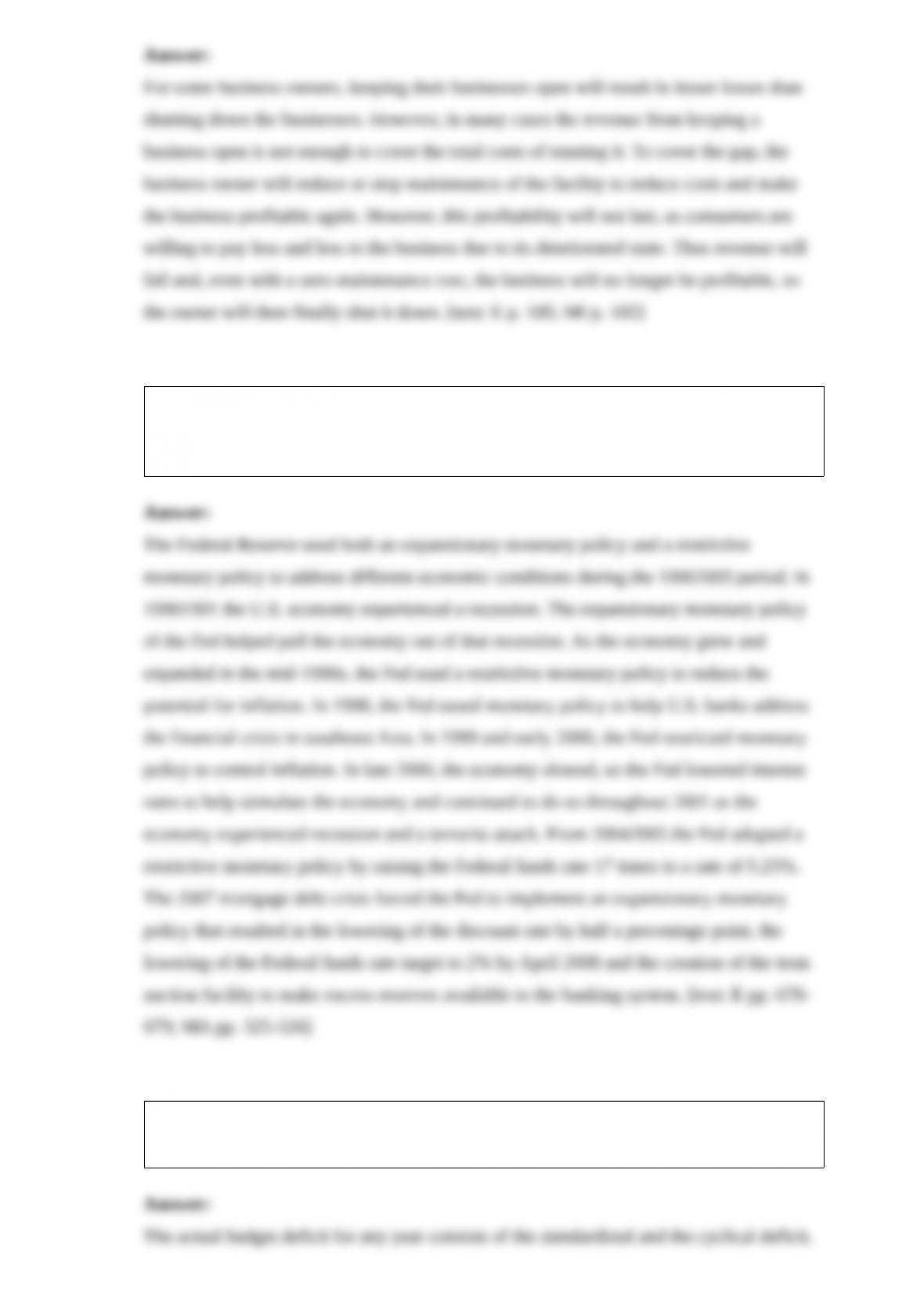
17)
refer to the budget line shown in the diagram above. the absolute value of the slope of
the budget line is:
a.muc/mud.
b.one-half.
c.pd/pc.
d.pc/pd.
18)
Refer to the above graph. Each of the three labor demand curves shown slopes
downward because of the:
A.law of diminishing marginal utility.
B.law of increasing opportunity costs.
C.principal-agent problem.
D.law of diminishing returns.
19) Why might a business owner keep their business open but let it deteriorate, rather
than shut it down? Will this profitability last?
20) Describe how the Federal Reserve handled the monetary policy from 19902008.
What type of economic events did it face and how did it use monetary policy to address
them?
21) What is the difference between the actual deficit, the standardized deficit, and the
cyclical deficit?
22) Net investment can be positive, negative, or zero, but gross investment can never be
less than zero. Explain.
23) Explain why the long run product price for a perfectly competitive firm will equal
its minimum average total cost.
24) Cite three important reasons why nations trade.
25) (Consider This) Explain the importance in understanding the difference between
income inequality and consumption inequality.