1) an important economic problem associated with pure monopoly is that, at the profit
maximizing outputs, resources are:
a.overallocated because price exceeds marginal cost.
b.overallocated because marginal cost exceeds price.
c.underallocated because price exceeds marginal cost.
d.underallocated because marginal cost exceeds price.
2) which of the following is not considered to be a growth-promoting institutional
structure?
a.well-established and enforced property rights.
b.strong government restrictions on international trade.
c.financial institutions that effectively link savers to investors.
d.a competitive market system.
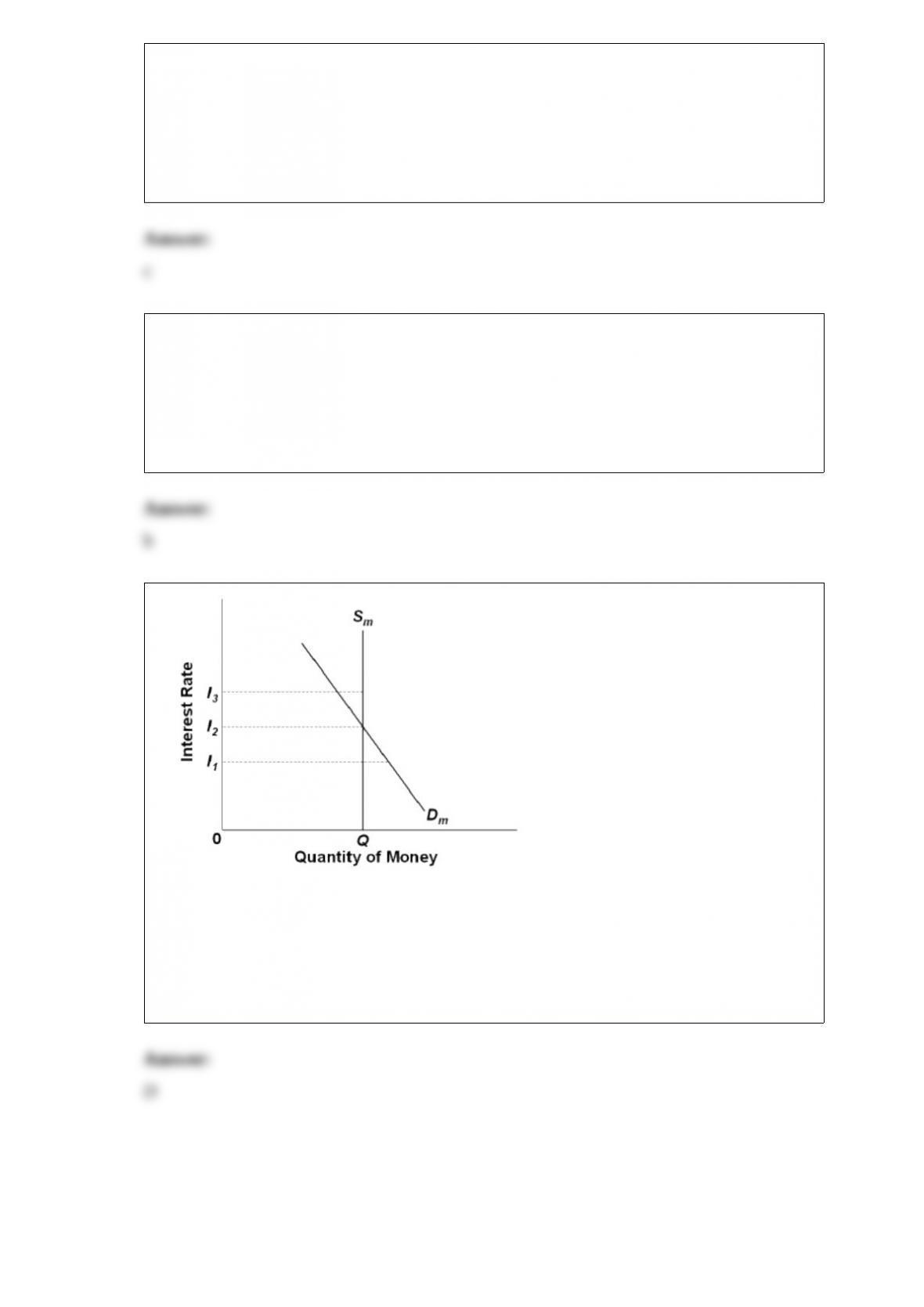
3)
Refer to the above diagram of the market for money. Given Dm and Sm, an interest rate
of i3 is not sustainable because the:
A.supply of bonds in the bond market will decline and the interest rate will rise.
B.supply of bonds in the bond market will increase and the interest rate will decline.
C.demand for bonds in the bond market will decline and the interest rate will rise.
D.demand for bonds in the bond market will rise and the interest rate will fall.
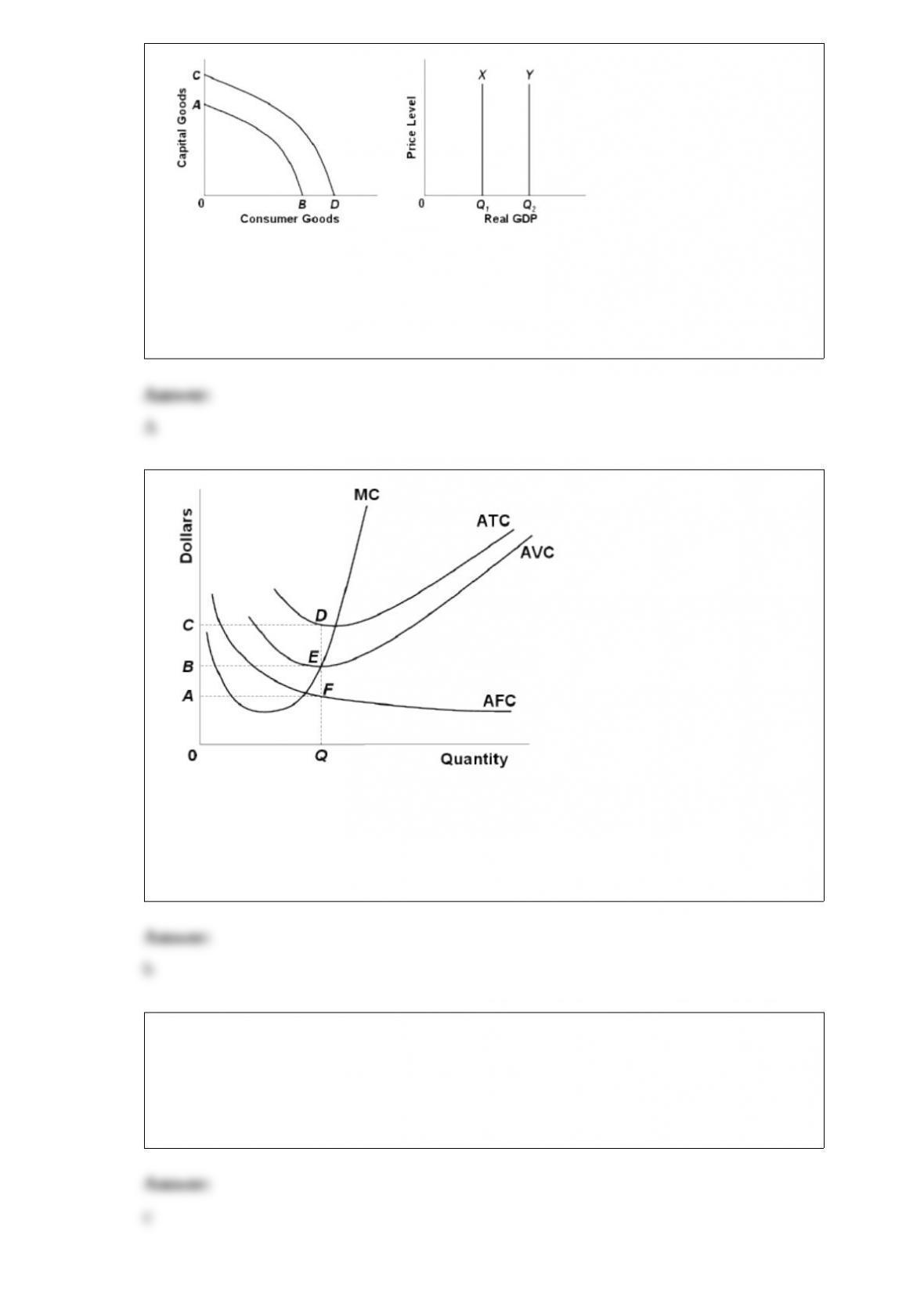
4)
Refer to the above graphs. Curve AB is a:
A.production possibilities curve and curve X is a long-run aggregate supply curve.
B.consumer demand curve and curve X is a long-run aggregate supply curve.
C.long-run aggregate supply curve and Y is potential real GDP curve.
D.long-run aggregate supply curve and X is a production possibilities curve.
5)
refer to the above diagram. the vertical distance between atc and avc reflects:
a.the law of diminishing returns.
b.the average fixed cost at each level of output.
c.marginal cost at each level of output.
d.the presence of economies of scale.
6) (consider this) at fast-food restaurants:
a.consumers enjoy complete and accurate information.
b.decisions are usually made by trial and error.
c.decisions entail comparisons of marginal costs and marginal benefits.
d.benefits always exceed costs.
7) In the United States:
A.taxes decrease, but transfers increase, income inequality.
B.taxes increase, but transfers reduce, income inequality.
C.both taxes and transfers decrease income inequality.
D.both taxes and transfers increase income inequality.
8) An increase in taxes of a specific amount will have a smaller impact on the
equilibrium GDP than will a decline in government spending of the same amount
because:
A.the MPC is smaller in the private sector than it is in the public sector.
B.declines in government spending always tend to stimulate private investment.
C.disposable income will fall by some amount smaller than the tax increase.
D.some of the tax increase will be paid out of income that would otherwise have been
saved.
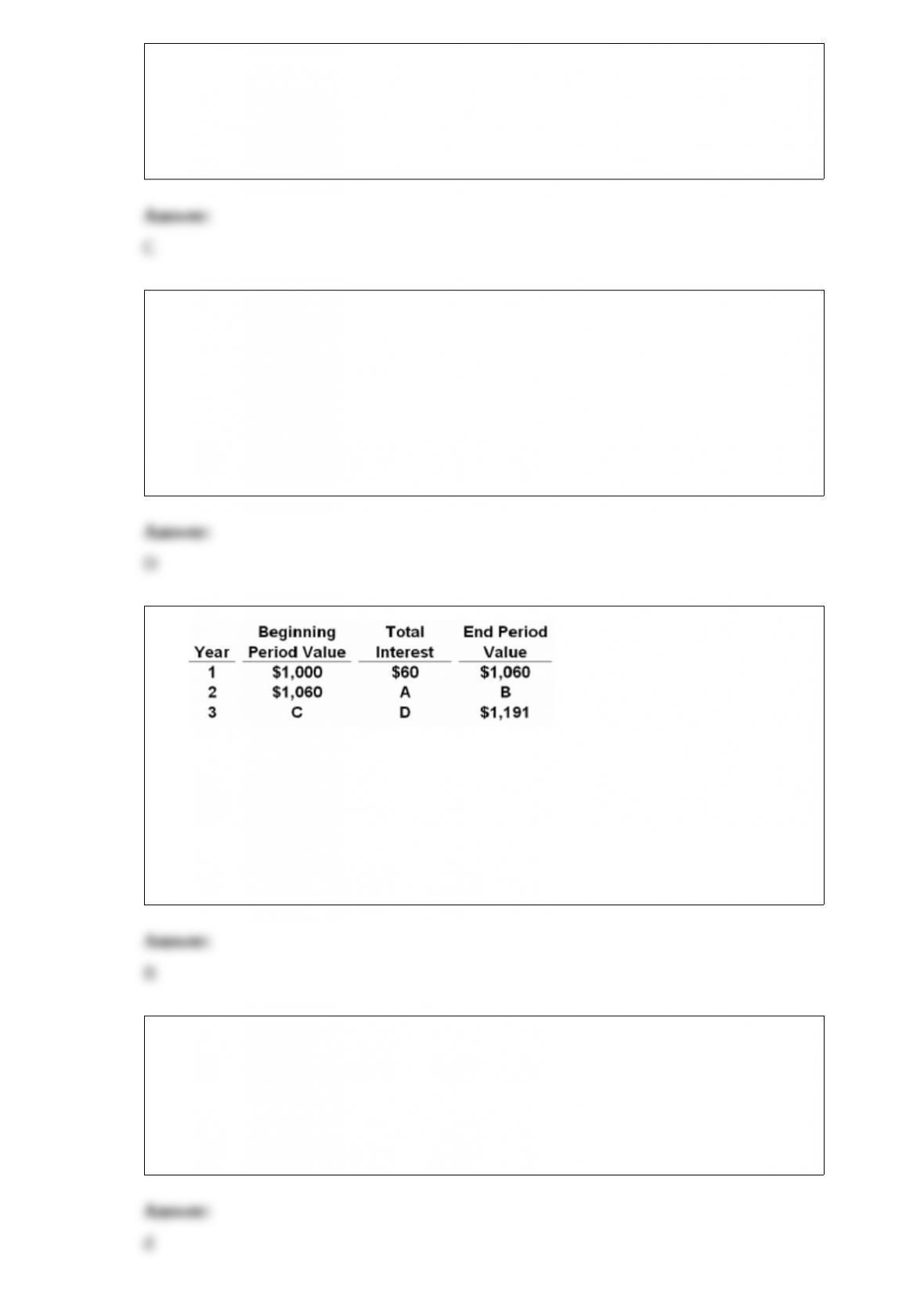
9)
Refer to the above table representing Darcy’s bank account. Assuming that $1000 was
deposited into her account at the beginning of year 1, and no further deposits or
withdrawals were made, how much interest would Darcy receive in Year 2 only?
A.$60
B.$63.6
C.$120
D.$123.6
10) the alternative combinations of two goods which a consumer can purchase with a
given money income is shown by:
a.a production possibilities curve.
b.a demand curve.
c.consumer expenditure line.
d.a budget line.
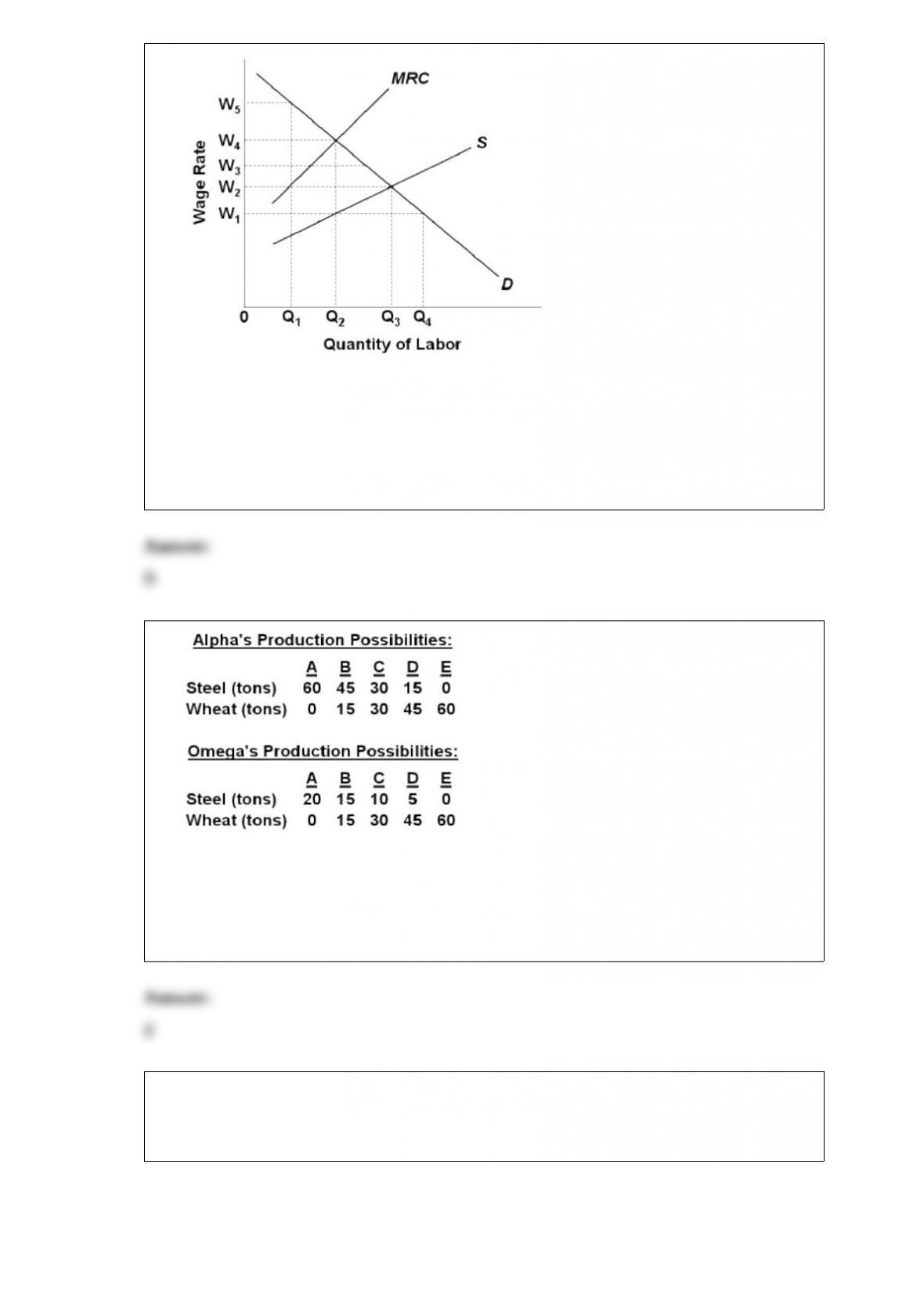
11)
If the above diagram was relevant to an individual firm, we could conclude that the firm
is:
A.a pure competitor in the hire of labor.
B.a monopsonist in the hire of labor.
C.selling its product in an imperfectly competitive market.
D.selling its product in a purely competitive market.
12)
refer to the above data. on the basis of the above information:
a.alpha should export both steel and wheat to omega.
b.omega should export both steel and wheat to alpha.
c.omega should export steel to alpha and alpha should export wheat to omega.
d.alpha should export steel to omega and omega should export wheat to alpha.
13) assume an economy that is producing only one product and that year 3 is the base
year. output and price data for a five-year period are as follows. answer the next
question(s) on the basis of these data.
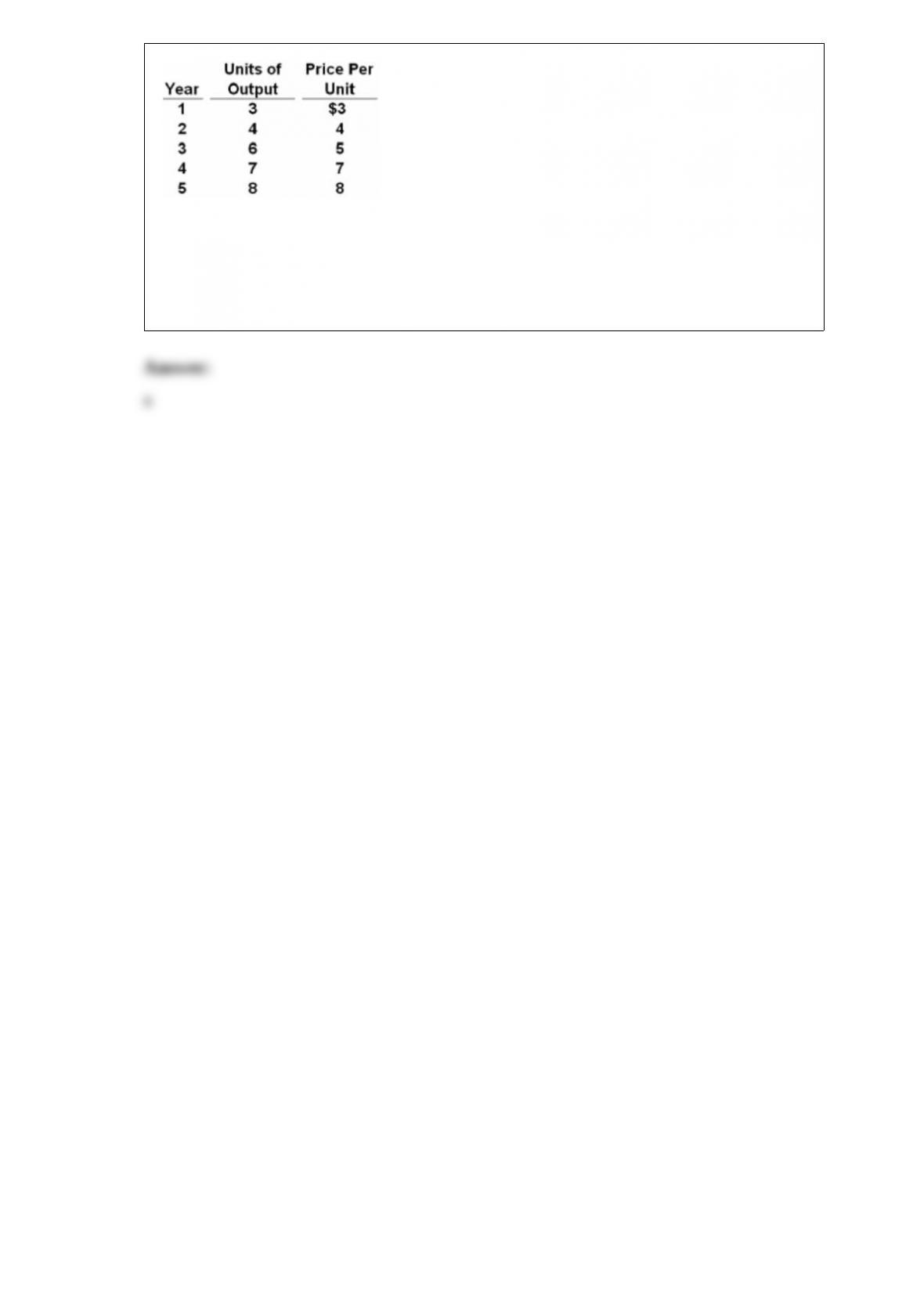
refer to the above data. the nominal gdp for year 4 is:
a.$49.
b.$55.
c.$40.
d.$35.