1) The Overnight Construction Company has just signed a collective bargaining
contract in which it agrees that all workers it hires must be union members in good
standing at the time they are hired. This provision reflects:
A.preferential hiring.
B.a maintenance-of-membership shop.
C.a union shop.
D.a closed shop.
2)
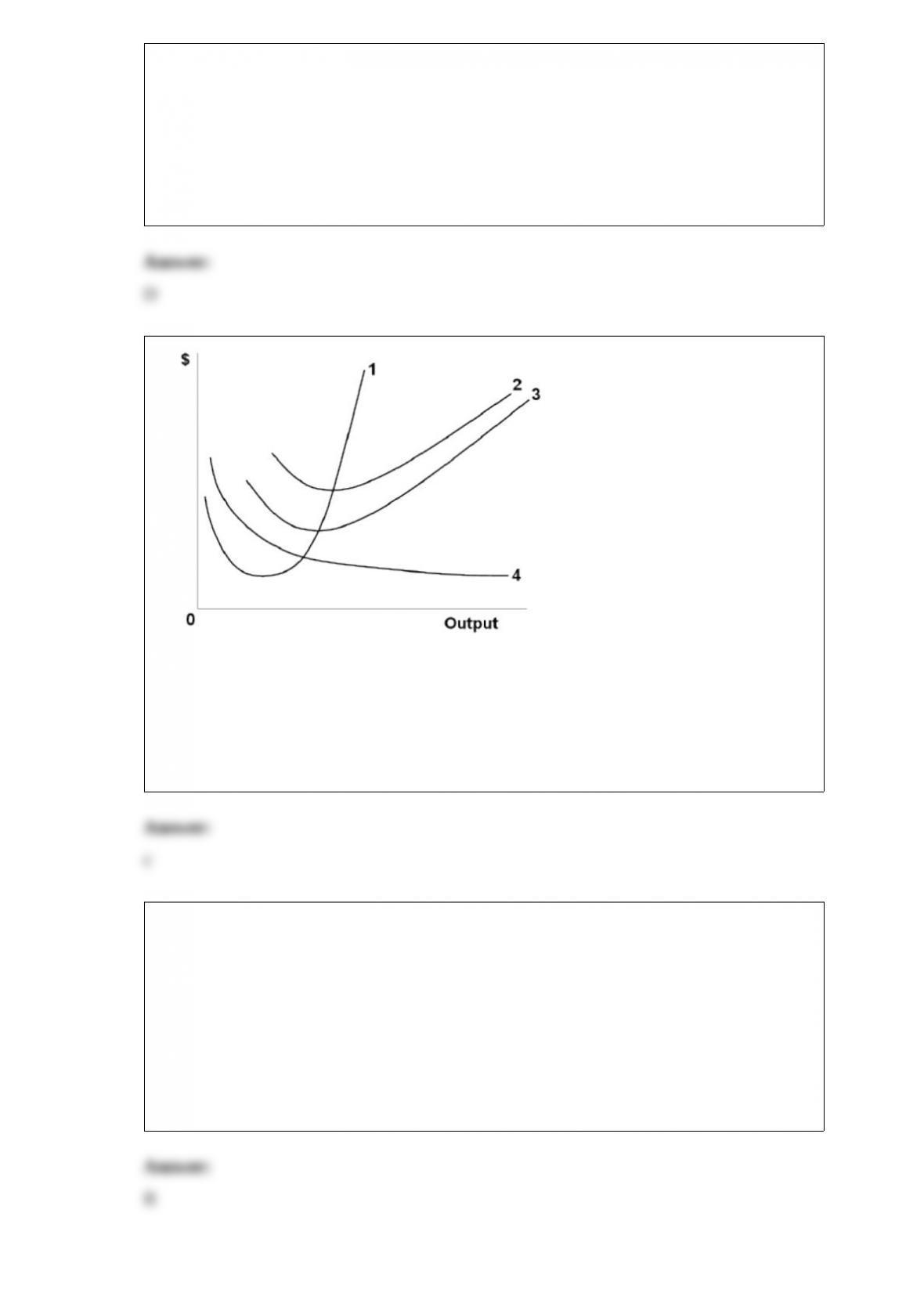
in the above figure, curves 1, 2, 3, and 4 represent the:
a.atc, mc, afc, and avc curves respectively.
b.mc, afc, avc, and atc curves respectively.
c.mc, atc, avc, and afc curves respectively.
d.atc, avc, afc, and mc curves respectively.
3) The assumption that the legal reserve ratio is 20 percent. Suppose that the Fed sells
$500 of government securities to commercial banks (paid for out of commercial bank
reserves) and buys $500 of securities from individuals, who deposit the cash in
checking accounts.
As a result of the above transactions, the supply of money in the economy will:
A.remain unchanged.
B.rise by $500.
C.fall by $100.
D.fall by $500.
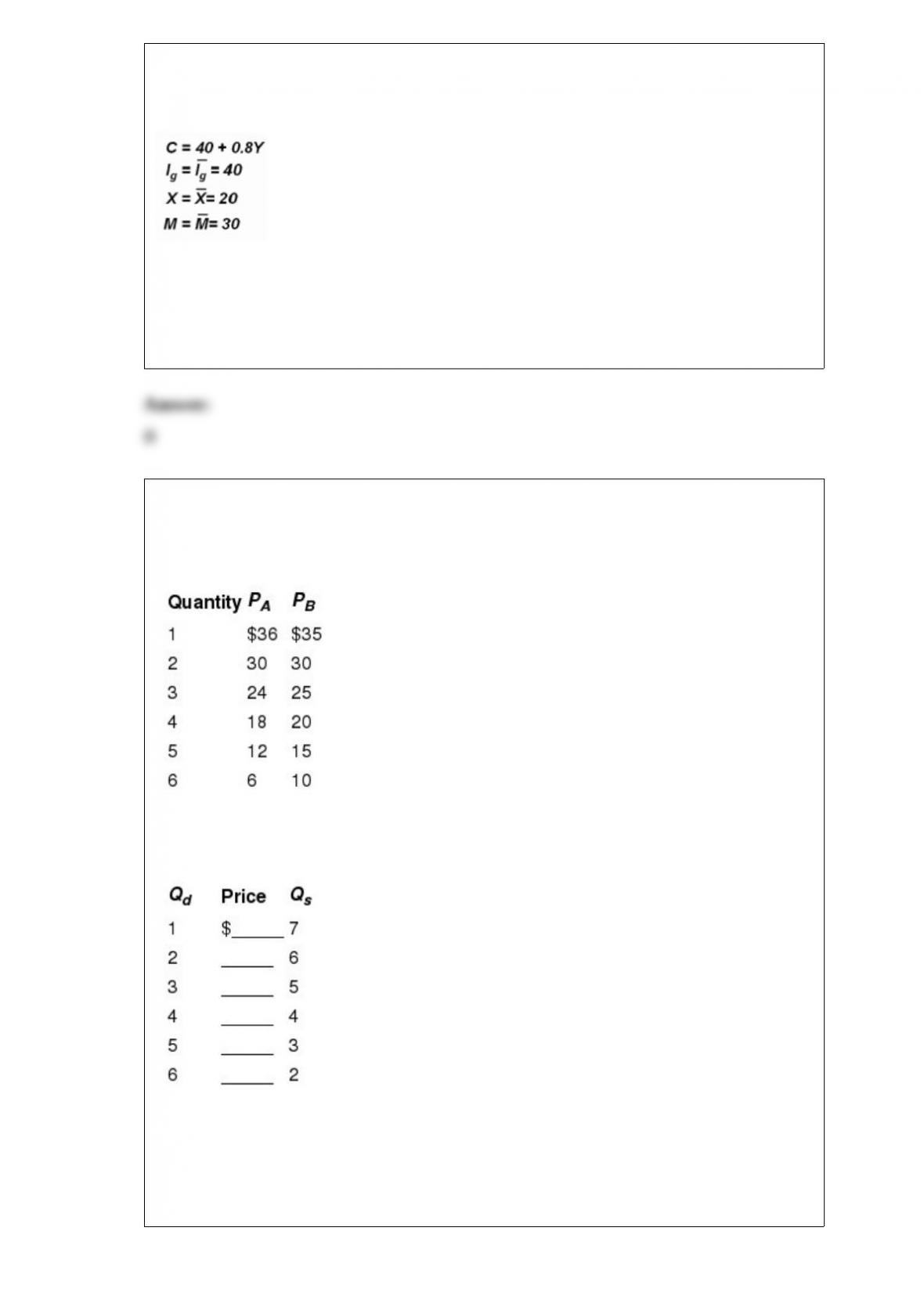
4) (Advanced analysis) Answer the next question(s) on the basis of the following
information for a private open economy:
Refer to the above information. In equilibrium, saving is:
A.$20.
B.$30.
C.$40.
D.$50.
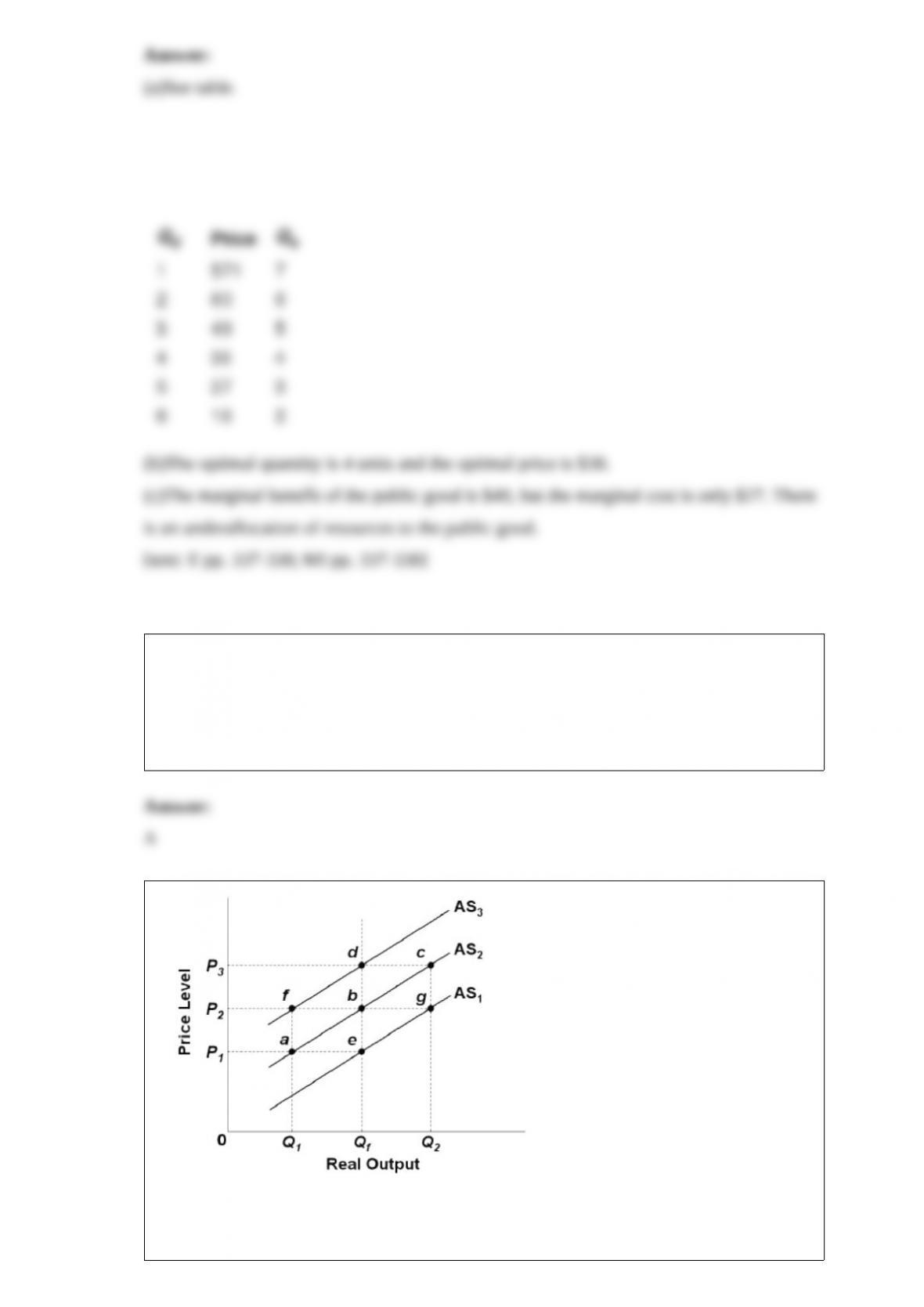
5) Data on two individuals preferences for a public good are reflected in the table
below. PA and PB represent the prices individuals A and B, the only two people in the
society, are willing to pay for the last unit of a public good, rather than do without.
(a)Complete the table below showing the collective willingness to pay for the public
good in this society.
(b)Given the supply schedule for this public good as shown by the Qs column, what is
the optimal quantity of this public good and what is the optimal price?
(c)What is the perceived marginal benefit and perceived marginal cost when 3 units of
the public good are supplied? What does this indicate about the allocation of resources
to this public good?
6) The poverty rate for African-Americans is:
A.greater than for any other racial or ethnic group.
B.below that for whites.
C.considerably lower than that for Hispanics.
D.below that for persons 65 years of age or older.
7)
Refer to the above diagram. Assume that nominal wages initially are set on the basis of
the price level P2 and that the economy initially is operating at its full-employment
level of output Qf. In terms of this diagram, the long-run aggregate supply curve:
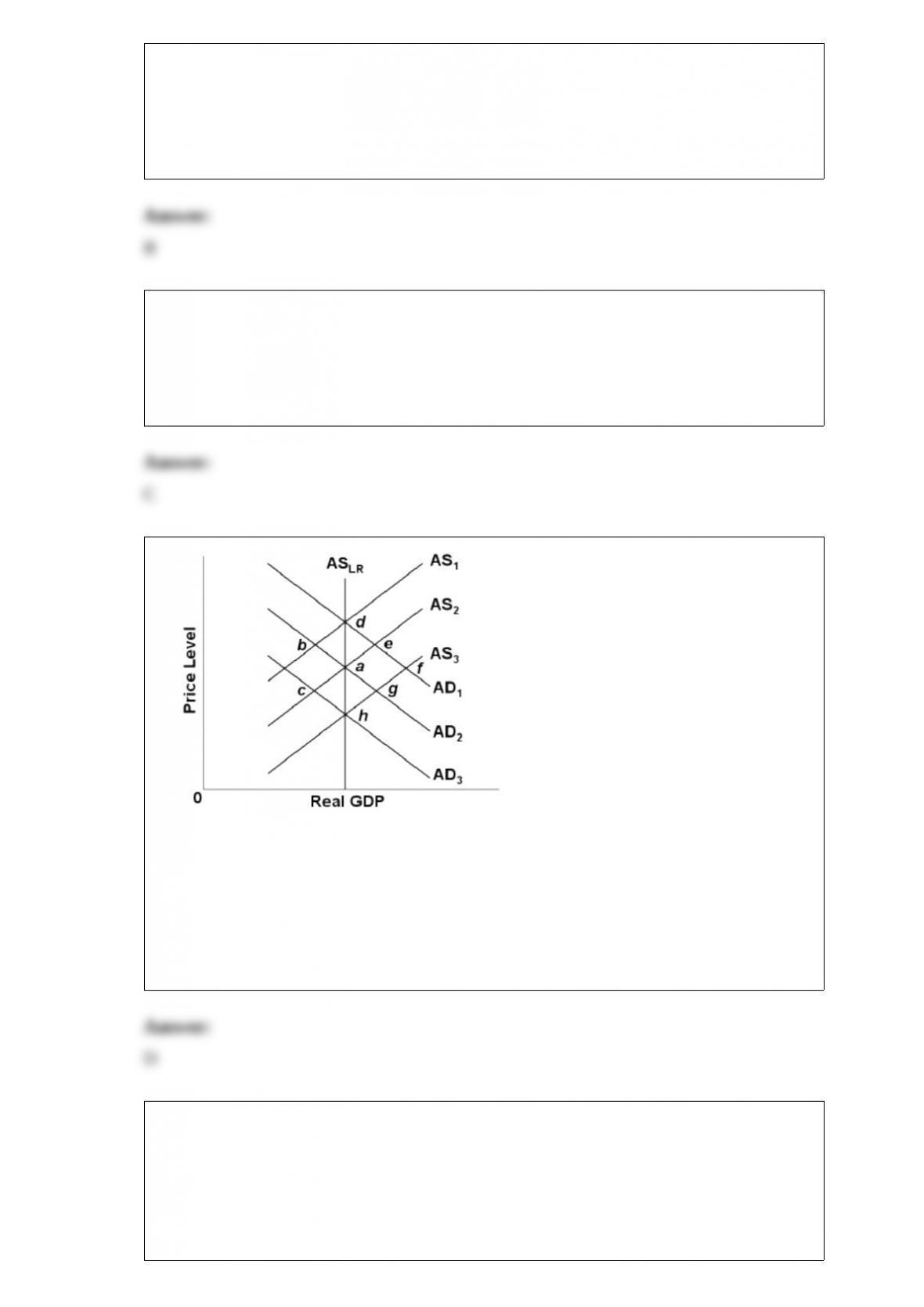
A.is AS2.
B.is a vertical line extending from Qf upward through e, b, and d.
C.may be either AS1, AS2, or AS3 depending on whether the price level is P1, P2, or
P3.
D.is a horizontal line extending from P2 rightward through f, b, and g.
8) In 2007, there were about _____ million union members in the United States.
A.5.8
B.11.2
C.15.7
D.32.5
9)
Refer to the above figure and assume the economy initially is in equilibrium at point a.
In the new classical theory, an unanticipated decrease in aggregate demand from AD2 to
AD3 would move the economy:
A.directly from a to h
B.from a to g to h
C.directly from a to d
D.from a to c to h
10) If a firm is hiring variable resources D and F in perfectly competitive input markets,
it will minimize the cost of producing any level of output by employing D and F in such
amounts that:
A.the price of each input equals its MP.
B.MPD = MPF.
C.MPD/PD = MPF/PF.
D.MPD/PF = MPF/PD.
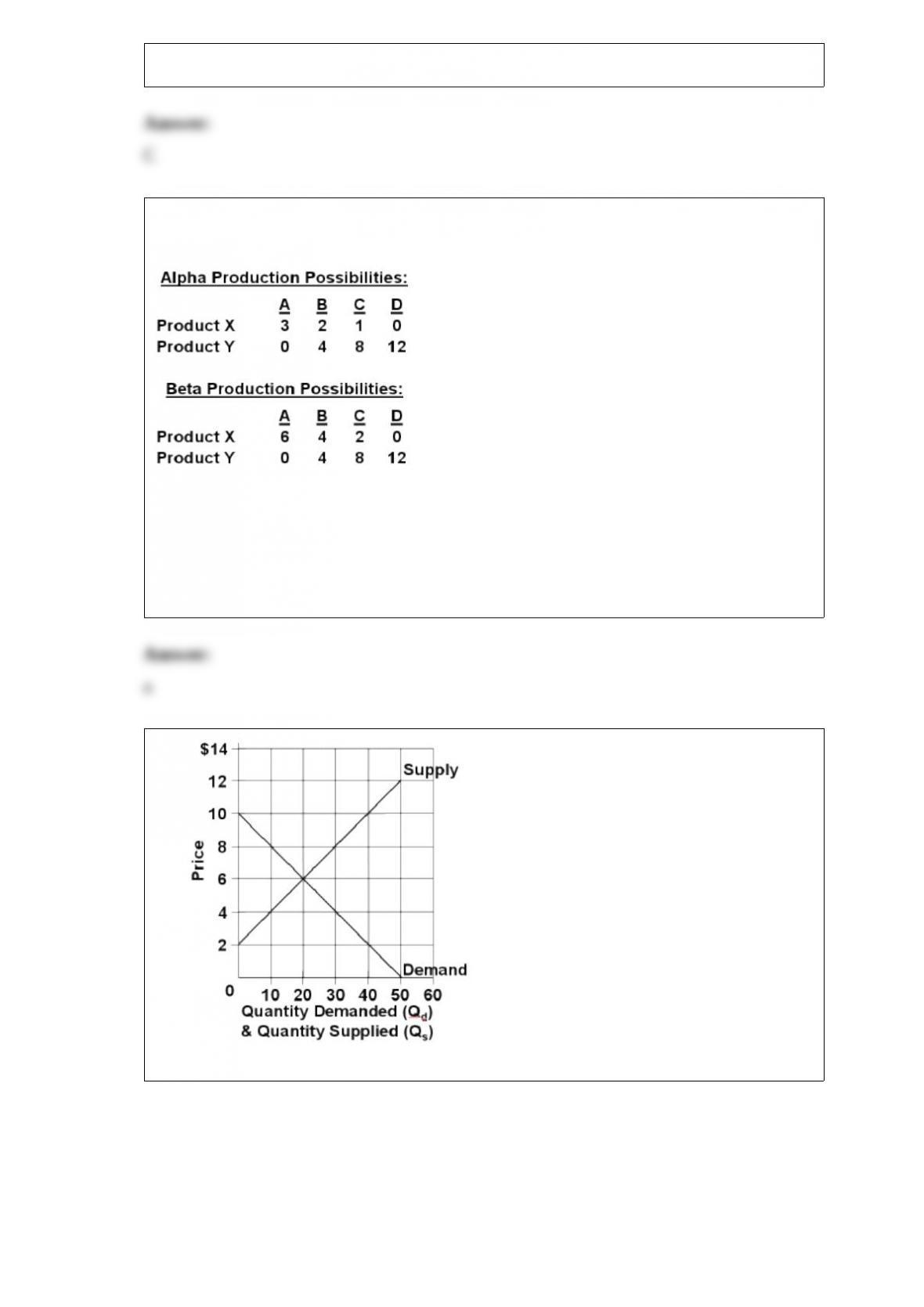
11) the following production possibilities tables for countries alpha and beta:
refer to the above tables. which one of the following terms of trade would be acceptable
to both countries?
a.1 unit of x for 3 units of y
b.1 unit of x for 5 units of y
c.1 unit of x for 12 units of y
d.1 unit of x for 1 unit of y
12)
refer to the above graph. which of the following schedules correctly reflects “demand”?

a.choice a
b.choice b
c.choice c
d.choice d
13) In which of the following U.S. cities is one of the twelve Federal Reserve Banks
located?
A.Miami
B.New Orleans
C.San Francisco
D.Denver