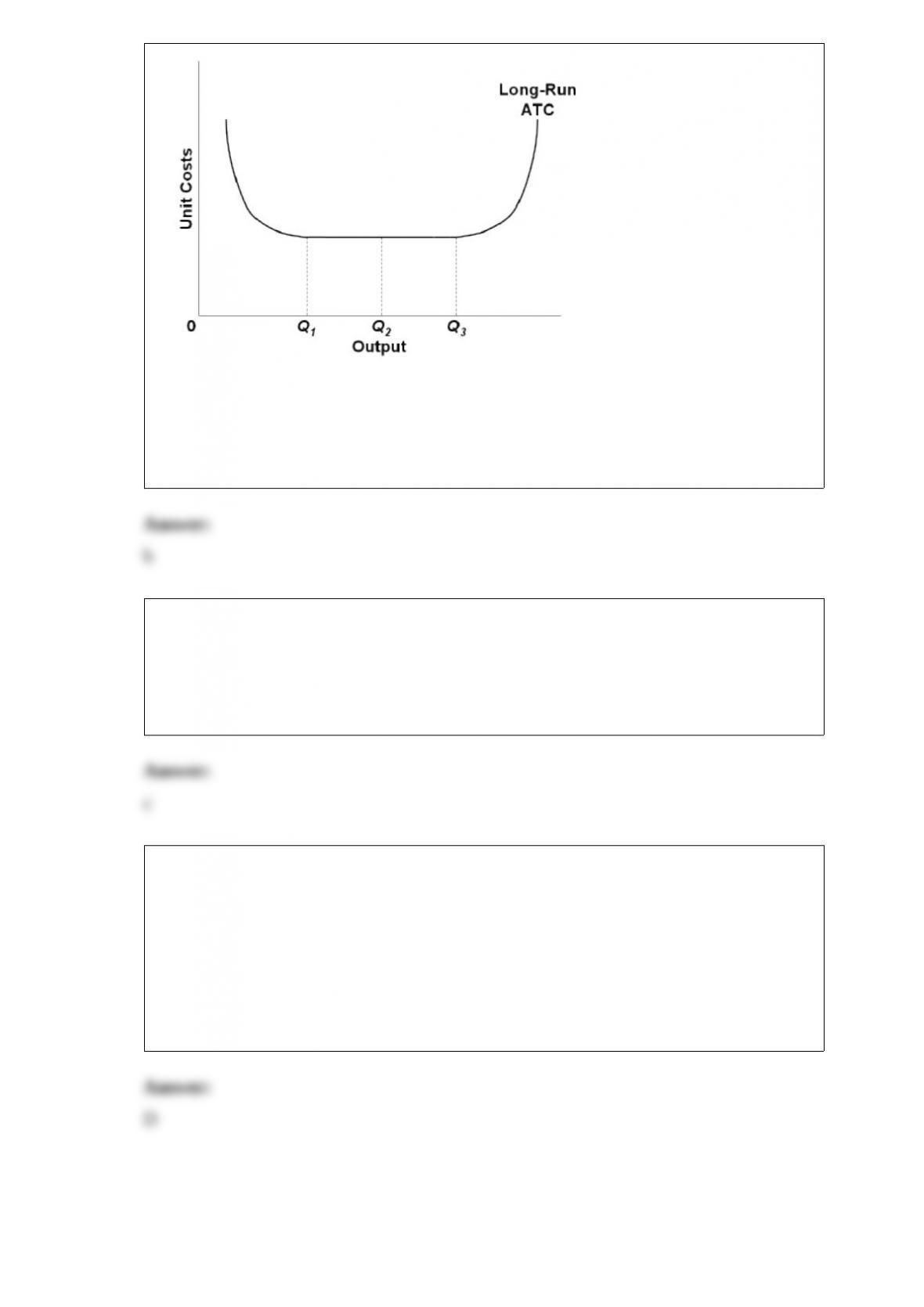
1)
in the above diagram it is assumed that:
a.some costs are fixed and other costs are variable.
b.all costs are variable.
c.the law of diminishing returns determines the shape of the cost curve.
d.marginal product first falls, but ultimately rises as output is increased.
2) the amount of after-tax income received by households is measured by:
a.discretionary income.
b.national income.
c.disposable income.
d.personal income.
3) Suppose the Federal government had budget surpluses of $80 billion in year 1 and
$120 billion in year 2 but had budget deficits of $10 billion in year 3 and $40 billion in
year 4. Also assume that it used its budget surpluses to pay down the public debt. At the
end of these four years, the Federal government’s public debt would have:
A.increased by $50 billion.
B.increased by $150 billion.
C.decreased by $200 billion.
D.decreased by $150 billion.
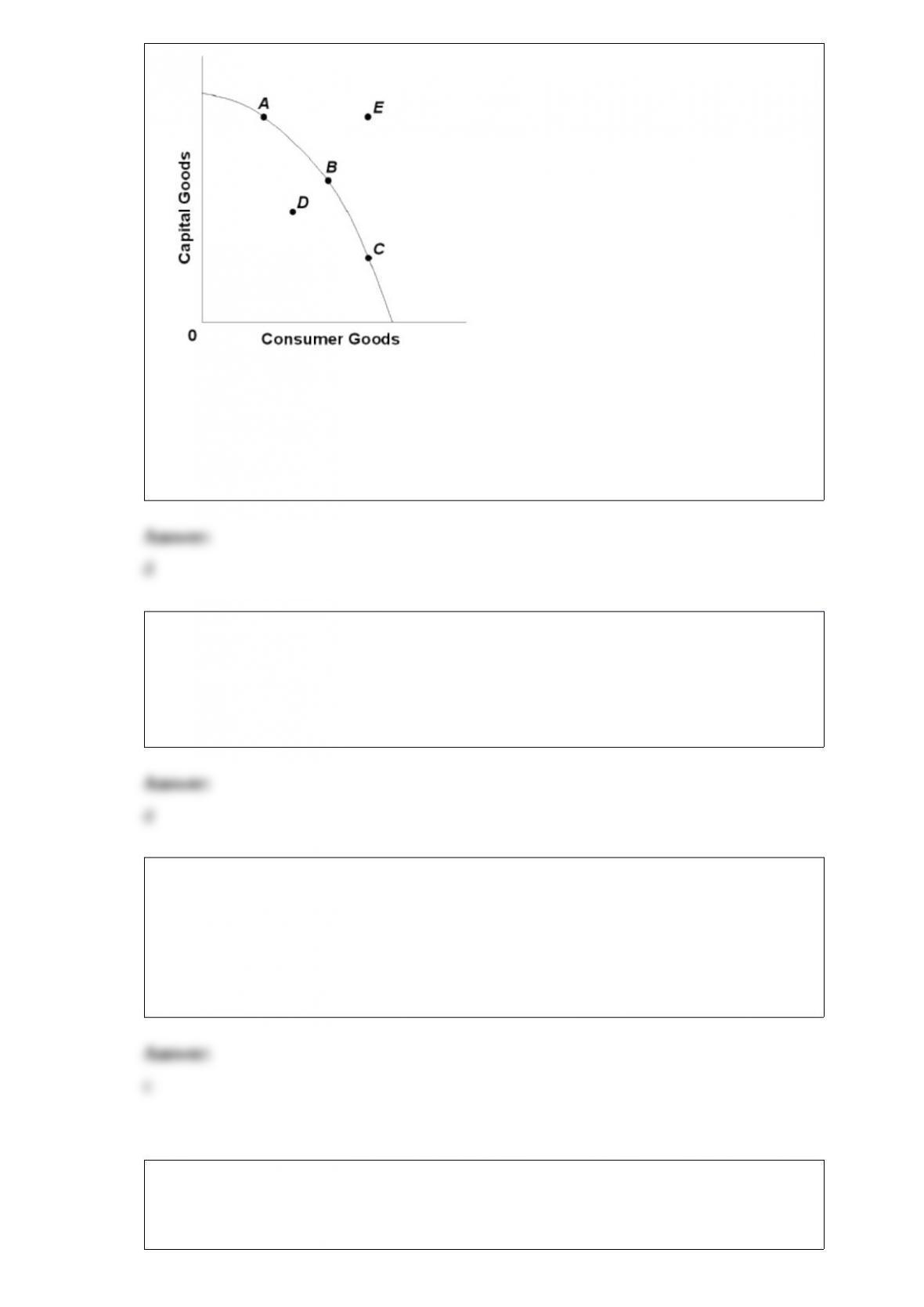
4)
refer to the above diagram. this economy will experience unemployment if it produces
at point:
a.a.
b.b.
c.c.
d.d.
5) refer to the above diagram. at the profit-maximizing output, the firm will realize:
a.a loss equal to bcfg
b.a loss equal to acfh
c.an economic profit of acfh
d.an economic profit of abgh
6) suppose there are 10 million part-time workers and 90 million full-time workers in
an economy. five million of the part-time workers switch to full-time work. as a result:
a.the official unemployment rate will fall.
b.the official unemployment rate will rise.
c.the official unemployment rate will remain unchanged.
d. the size of the labor force will increase.
7) “beaten paths” from one country to another:
a.discourage migration to that country because of a perception that all of the good jobs
have already been taken.
b.discourage migration by increasing the cost of moving.
c.encourage migration by providing employment contacts and job information.
d.are more prevalent the greater the distance between the two countries.
8) at each point on an indifference curve:
a.money income is the same.
b.the prices of the two products are the same.
c.total utility is the same.
d.marginal utility is the same.
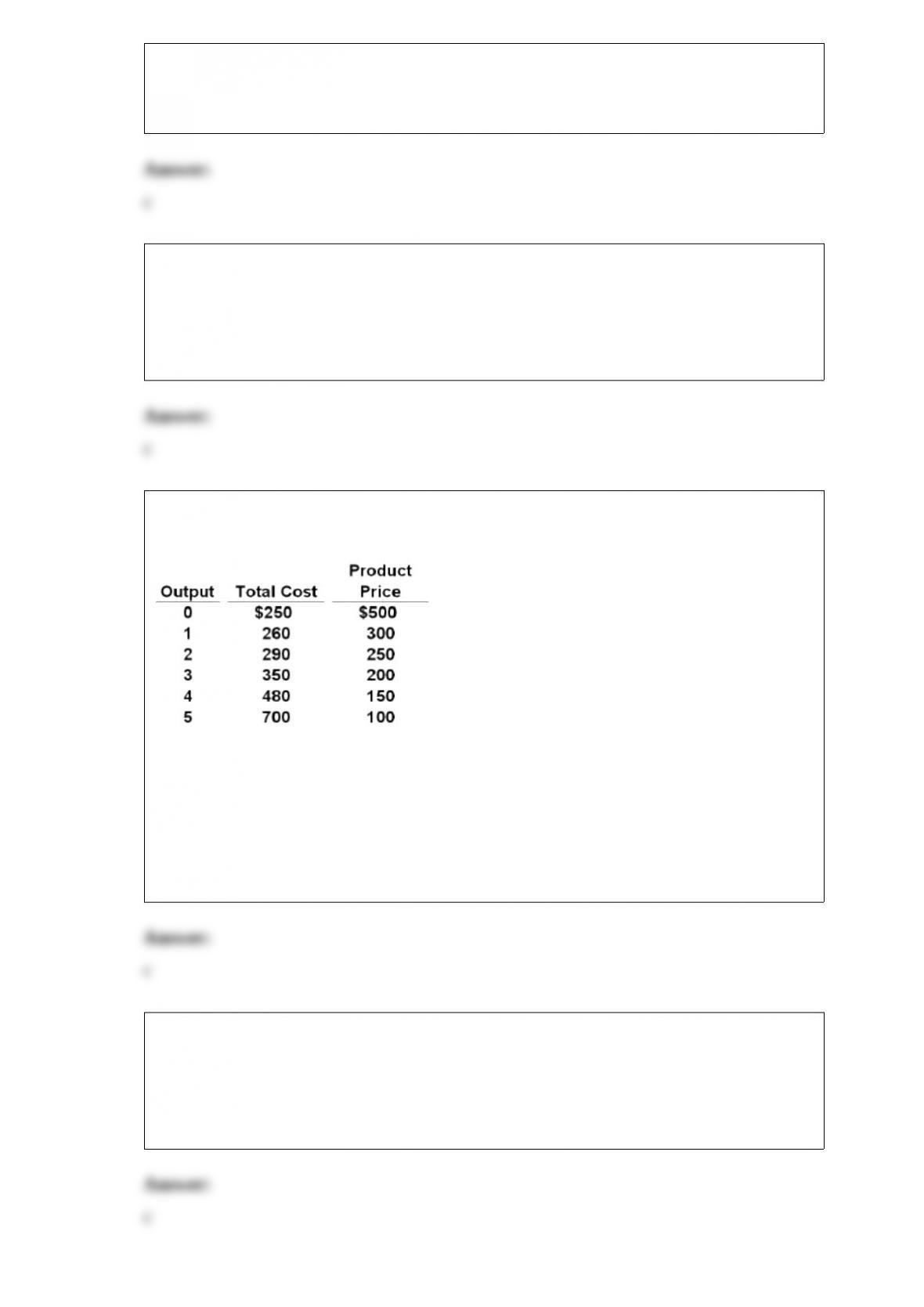
9) the following information for a pure monopolist:
if the above profit-maximizing monopolist is able to price discriminate, charging each
customer the price associated with each given level of output, how many units will the
firm produce?
a.2
b.3
c.4
d.5
10) in drawing a budget line it is assumed that:
a.consumer preferences are fixed.
b.the prices of the two products are variable.
c.money income is fixed.
d.consumer willingness to substitute between the two products is fixed.
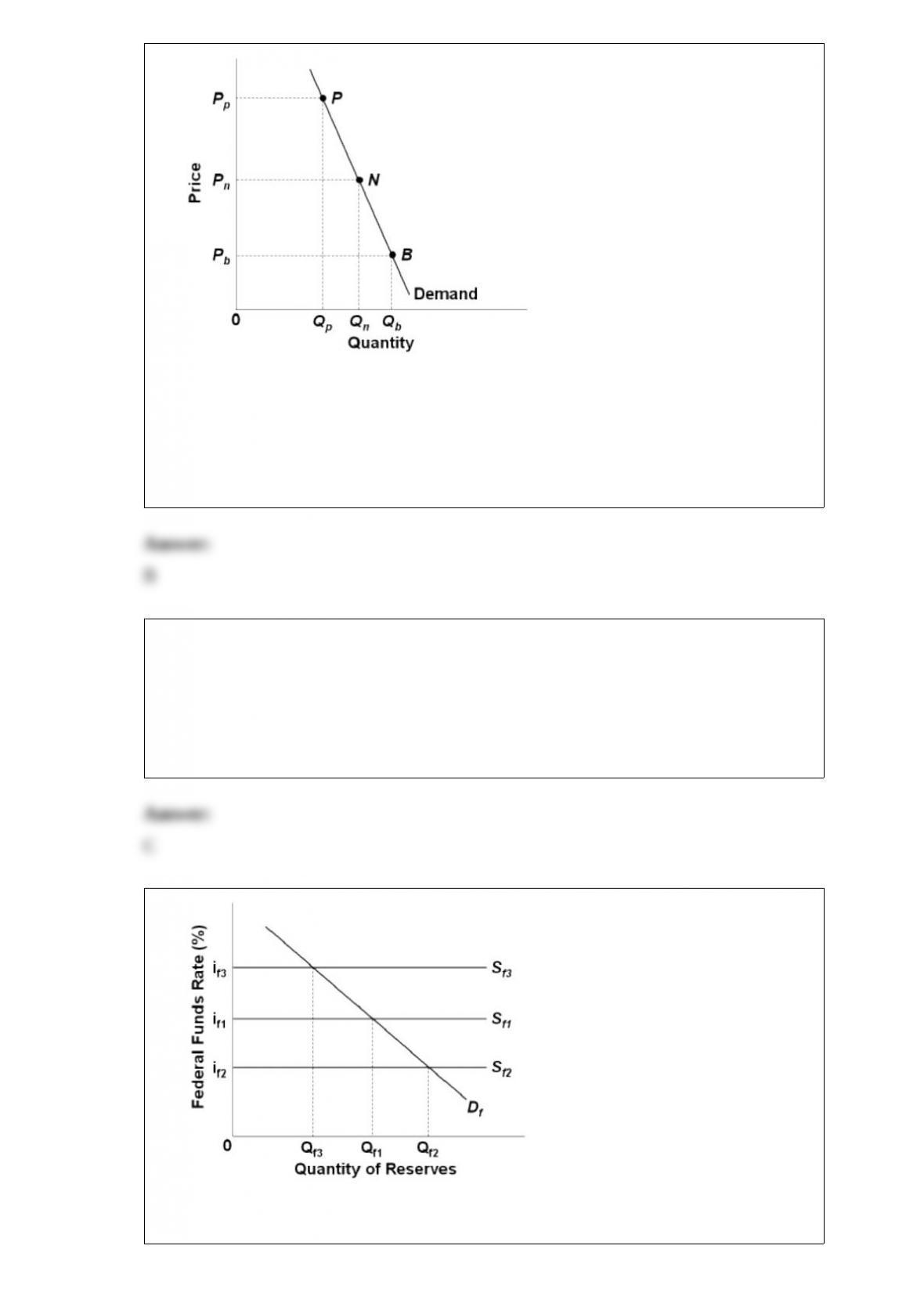
11)
Refer to the above diagram. If farmers produce a normal crop of Qn, their gross
income:
A.will be 0PpPNQn.
B.will be 0PnNQn.
C.will be Pp Qn.
D.cannot be determined.
12) Which of the following is the basic economic policy function of the Federal
Reserve Banks?
A.holding the deposits or reserves of commercial banks
B.acting as fiscal agents for the Federal government
C.controlling the supply of money
D.the collection or clearing of checks among commercial banks
13)
The demand for Federal funds is
A.horizontal.
B.downward sloping.
C.upward sloping.
D.vertical.
14)
refer to the above table. in relation to column (3), a change from column (5) to column
(4) would indicate a(n):
a.increase in demand.
b.decrease in demand.
c.increase in supply.
d.decrease in supply.
15) which of the following is the smallest dollar amount in the united states?
a.disposable income
b.personal income
c.gross domestic product
d.national income
16)

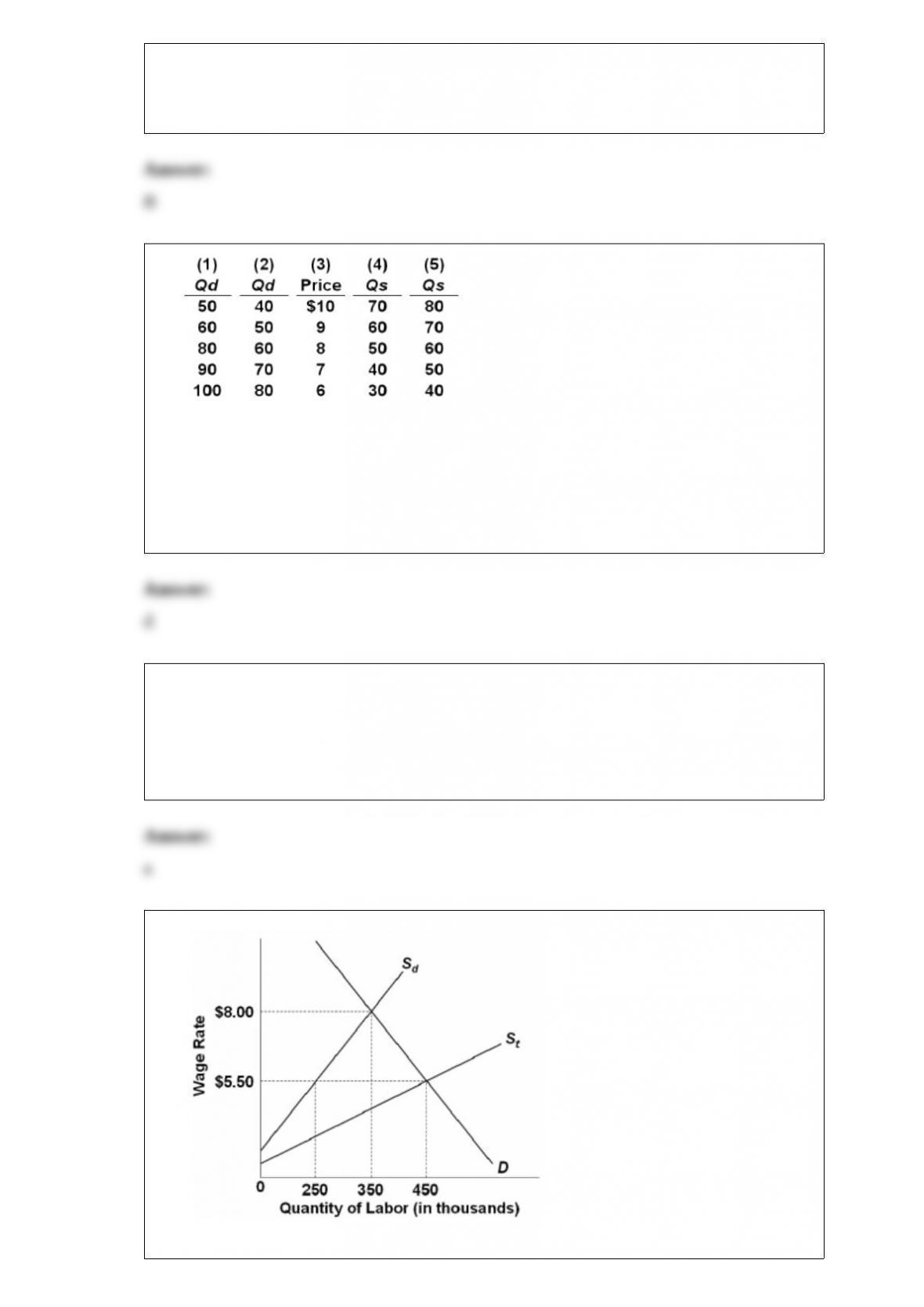
assumptions: 1) employers in this market are willing and able to ignore minimum wage
laws; 2) sd represents the supply of domestically-born (and legal immigrant) workers;
3) st represents the total supply of workers in this labor market (sd plus illegal
immigrants); and 4) unless otherwise stated, illegal immigration is not effectively
blocked by the government.
refer to the above figure. how many illegal immigrant workers will be hired at
equilibrium?
a.200,000
b.250,000
c.350,000
d.450,000
17) recurring upswings and downswings in an economy’s real gdp over time are called:
a.recessions.
b.business cycles.
c.output yo-yos.
d.total product oscillations.