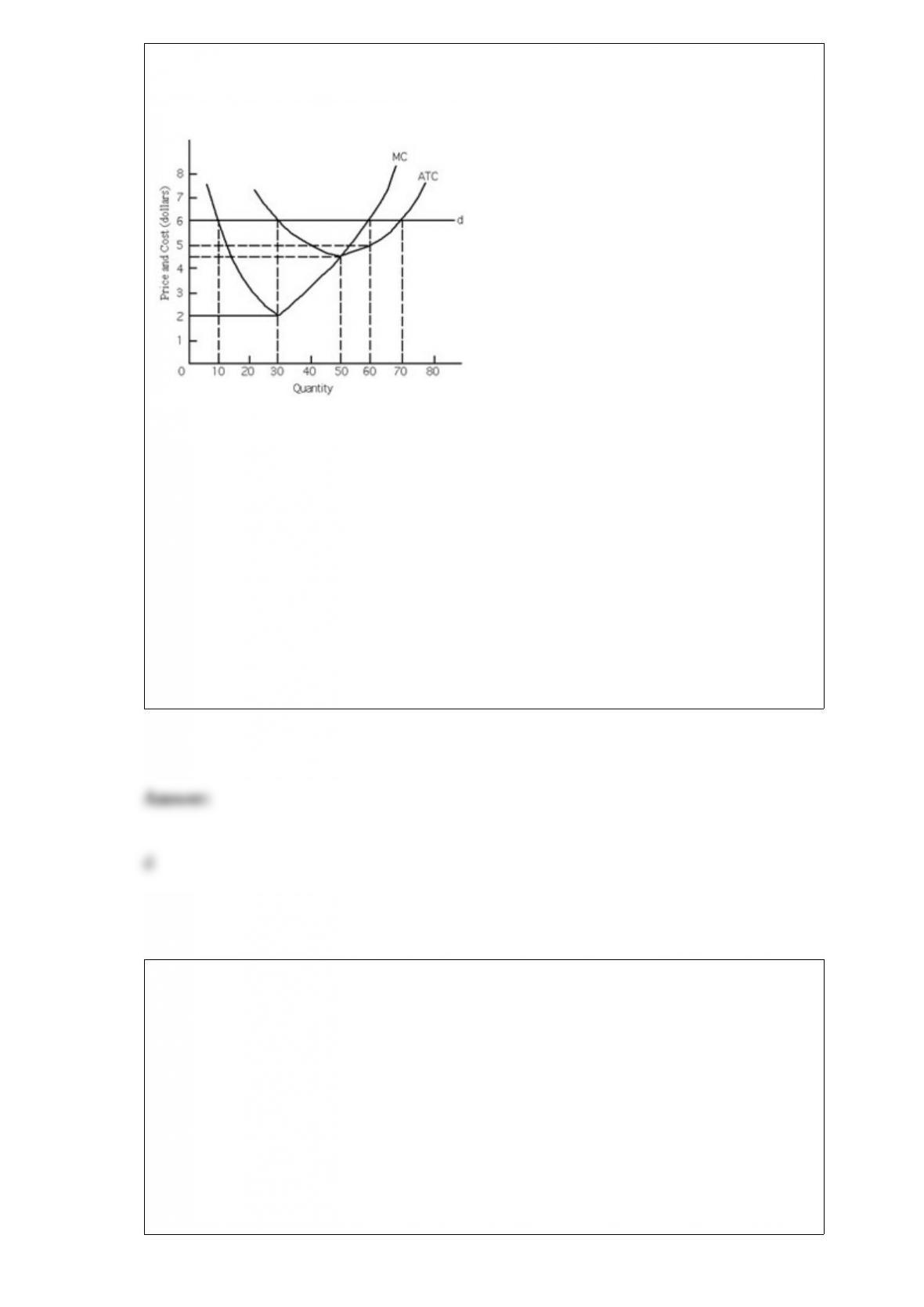
Exhibit 23-7
The perfectly competitive, profit-maximizing firm will produce __________ units of
output.
a. 10
b. 30
c. 50
d. 60
e. 70
Which of the following can cause an increase in real wages?
a. a technological advance that increases the quality of the capital goods used by labor.
b. higher demand for labor.
c. an increase in the price level.
d. a and b
e. all of the above
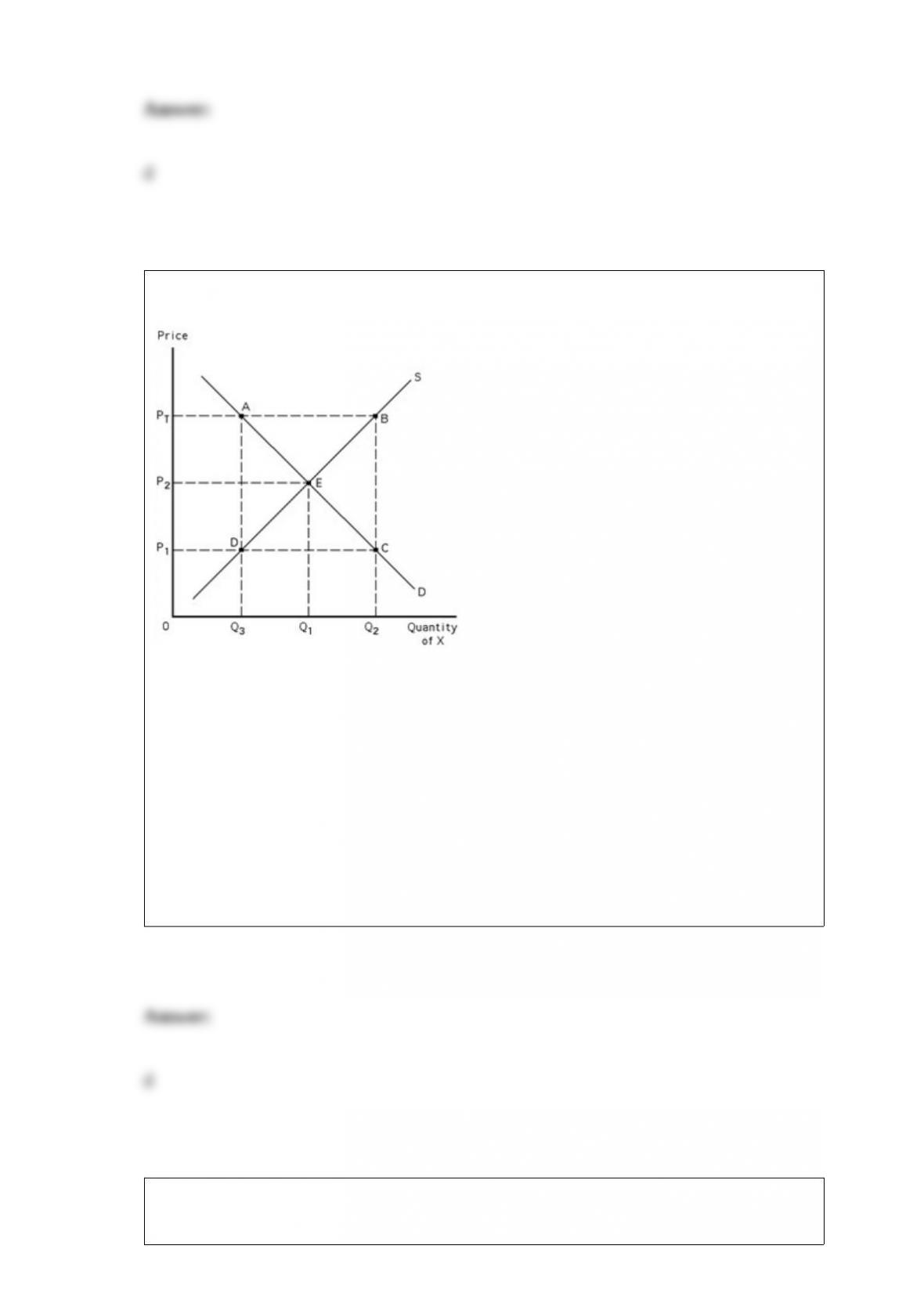
Exhibit 39-1
Given the target price of PT, the deficiency payment per unit is
a. PT – P2.
b. PT + P1.
c. PT – P2.
d. PT – P1.
When the equilibrium dollar price of a foreign currency decreases due to changes in
demand for or supply of the foreign currency, the foreign currency

a. has appreciated.
b. has depreciated.
c. is overvalued.
d. is undervalued.
e. is devalued.
Profits are income to
a. owners of capital.
b. all factors of production in a profitable firm.
c. owners of land.
d. entrepreneurs who bear the risks of production.
e. owners of a highly productive resource.
The market shares (in percentage terms) for the 12 firms that comprise an industry are
15, 12, 11, 10, 8, 7, 7, 6, 6, 6, 6, and 6. The Herfindahl index will rise by __________
points if the firms with the two largest market shares merge.
a. 400
b. 360
c. 100
d. 220
e. 140
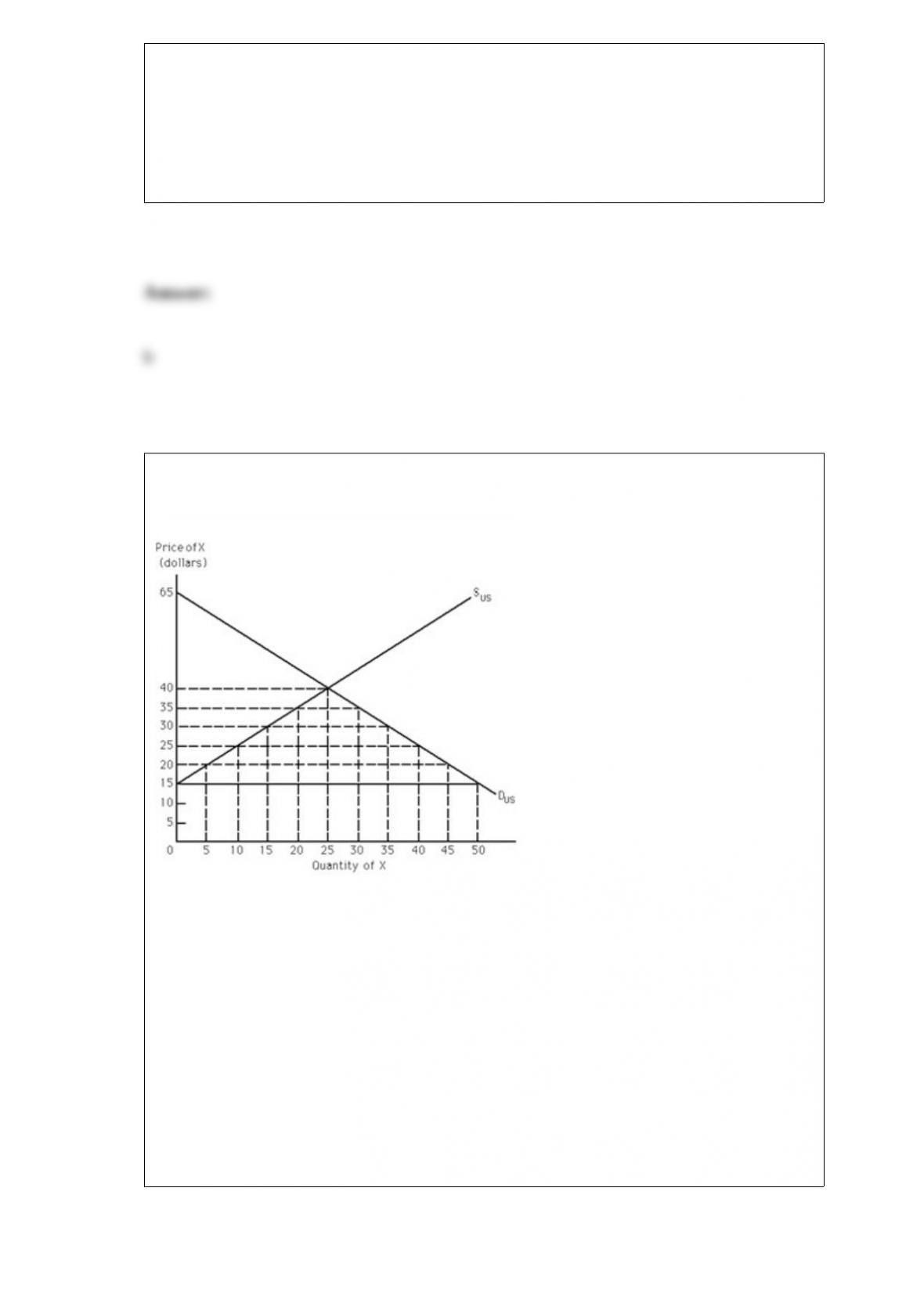
Exhibit 34-7
Assume that the current price of good X is $25 (which includes a $10 tariff on imports
of good X).The government collects tariff revenue on good X in the amount of
a. $100
b. $200
c. $250
d. $300
e. There is not enough information to answer this question.

In a monopolistic competitive market, which of the following factors probably does not
give rise to product differentiation?
a. packaging of the product
b. brand names
c. loyalty of customers to a particular producer
d. quality difference
e. the small number of sellers
The traditional view of labor unions is that they enhance worker productivity because
the workers feel more secure in their jobs and because there is a low turnover rate in
union firms.
a. True
b. False
Applying the least-cost rule to two factors, a firm will

a. maximize profits at the output at which MRP = MFC.
b. minimize costs when the MPP of factor A equals the MPP of factor B.
c. minimize costs when the MRP of factor A equals the MRP of factor B.
d. minimize costs when the MPP of factor A divided by the price of A equals the MPP
of factor B divided by the price of B.
In an interview an economist states, “This problem should be of greater concern to the
federal government.” We can explicitly put this statement in the category of
a. microeconomics.
b. macroeconomics.
c. positive economics.
d. normative economics.
Which of the following statements is true?
a. The traditional view of labor unions predicts that unionization of a firm will result in
improvements in productivity and efficiency.
b. The labor union as a collective voice view of labor unions predicts that unionization
of a firm will result in decreases in productivity and efficiency.
c. The traditional view of labor unions supports the formation of unions as a

counterweight to firms’ factor-hiring power.
d. The labor union as a collective voice view of labor unions supports efforts to
decrease the unions’ role as a “monopolizer of labor.”
e. none of the above
The marginal factor cost (MFC) curve for a factor price taker is
a. vertical.
b. horizontal.
c. downward sloping.
d. upward sloping.
For a natural monopoly firm, the resource-allocative efficient output is 200 units. The
highest per-unit price that can be charged for this output is $3. Average total cost at 200
units is $3.50. For the natural monopoly firm that produces and sells 200 units of
output,
a. marginal cost is below its average total cost.
b. it takes losses of $0.50 per unit.
c. fixed costs must be zero.
d. a and b

e. b and c
Here are three things you could do if you do not attend your economics class: watch
television with some friends (you value this at $25), read a good novel (you value this
at $13), or go in to work (you could earn $20 during the economics class). The
opportunity cost of going to your economics class is
a. $20, because this is the only alternative of the three where you actually receive a
monetary payment.
b. $13, because this is the lowest valued alternative forfeited.
c. $25, because this is the highest valued alternative forfeited.
d. $58, because this is the total dollar sum of the alternatives forfeited.
Special interest groups are very unlikely to push for policies that increase the size of
their slice of the economic pie if it means that the overall size of the economic pie will
shrink.
a. True
b. False

When a firm employs 1 unit of factor X it produces 28 units of output and when it
employs 2 units of factor X it produces 57 units of output. It follows that marginal
revenue product of the second unit of factor X is
a. $22.00.
b. $29.00.
c. $0.53.
d. $114.
e. There is not enough information to answer the question.
If a labor union specifies that certain jobs can only be done by certain people (for
example, only electricians can do electrical work), it is likely trying to
a. affect the elasticity of demand for its labor.
b. reduce the availability of substitute factors for its labor.
c. increase the marginal physical product of its members.
d. a and b
e. none of the above

An indifference curve shows all
a. possible equilibrium positions on an indifference map.
b. equilibrium combinations of two products that are obtainable with a given money
income.
c. combinations of two products that will yield the same utility to a consumer.
d. possible combinations of two products that a consumer can purchase, given her
income and the prices of the products.
e. none of the above
The economy moves from point A, where it produces 100 units of X and 200 units of Y,
to point B, where it produces 200 units of X and 150 units of Y. It follows that
a. point A is a productive inefficient point.
b. point A may be a productive inefficient point.
c. point A may be a productive efficient point.
d. point B is a productive efficient point.
e. b and c