1) Public choice theorists point out that the political process:
A.differs from the marketplace in that voters and congressional representatives often
face limited and bundled choices.
B.is less prone to failure than is the marketplace.
C.is a much fairer way to allocate society’s scarce resources than is the impersonal
marketplace, which is dominated by high-income consumers.
D.involves logrolling, which is always inefficient.
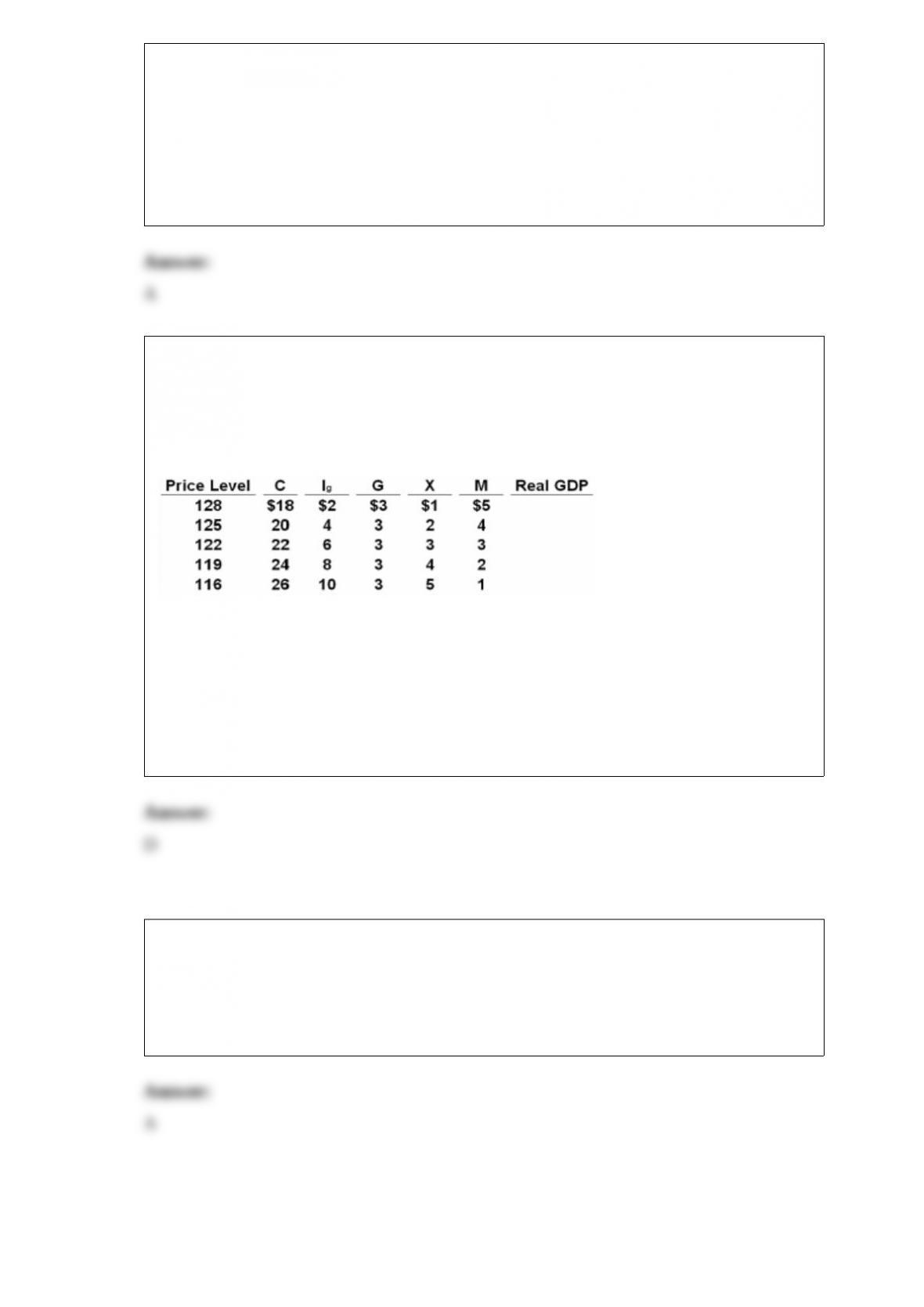
2) Answer the next question(s) on the basis of the following table for a particular
country in which C is consumption expenditures, Ig is gross investment expenditures, G
is government expenditures, X is exports, and M is imports. All figures are in billions of
dollars. Each question is independent of the other questions.
Refer to the above table. A decline in the international value of the dollar would:
A.increase the values in columns (5) and (6) and reduce aggregate demand.
B.decrease the values in columns (5) and (6) and increase aggregate demand.
C.decrease the values in column (5), increase the values in column (6), and reduce
aggregate demand.
D. increase the values in column (5), decrease the values in column (6), and increase
aggregate demand.
3) A decline in investment will shift the AD curve to the:
A.left by a multiple of the change in investment.
B.left by the same amount as the change in investment.
C.right by the same amount as the change in investment.
D.right by a multiple of the change in investment.
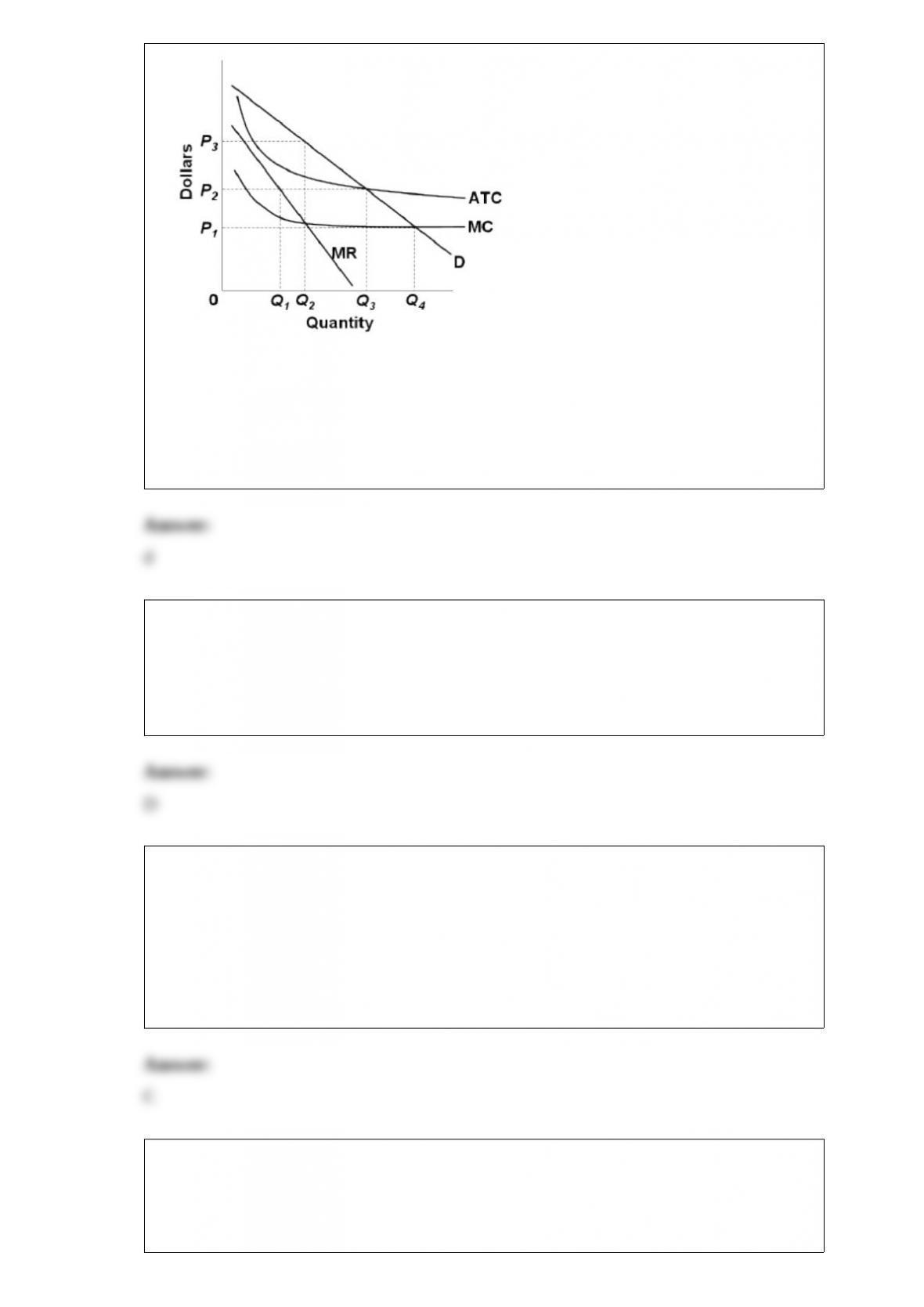
4)
refer to the above diagram for a natural monopolist. if a regulatory commission set a
maximum price of p1, the monopolist would produce output:
a.q2 and realize a normal profit.
b.q4 and realize a normal profit.
c.q3 and realize an economic profit.
d.q4 and realize a loss.
5) A firm hiring labor in a perfectly competitive labor market faces a:
A.downward sloping labor supply curve and upward sloping labor demand curve.
B.upward sloping labor supply curve and downward sloping labor demand curve.
C.upward sloping labor supply curve and horizontal labor demand curve.
D.horizontal labor supply curve and downward sloping labor demand curve.
6) The United Mine Workers is a good illustration of:
A.how unions have increased wages but reduced job opportunities by shifting the
supply-of-labor curve to the left.
B.how unions have raised wages and increased job opportunities by increasing the
demand for labor.
C.inclusive unionism.
D.exclusive unionism.
7) in the short run, a purely competitive firm will earn a normal profit when:
a.p = avc.
b.p > mc.
c.that firm’s mr = market equilibrium price.
d.p = atc.
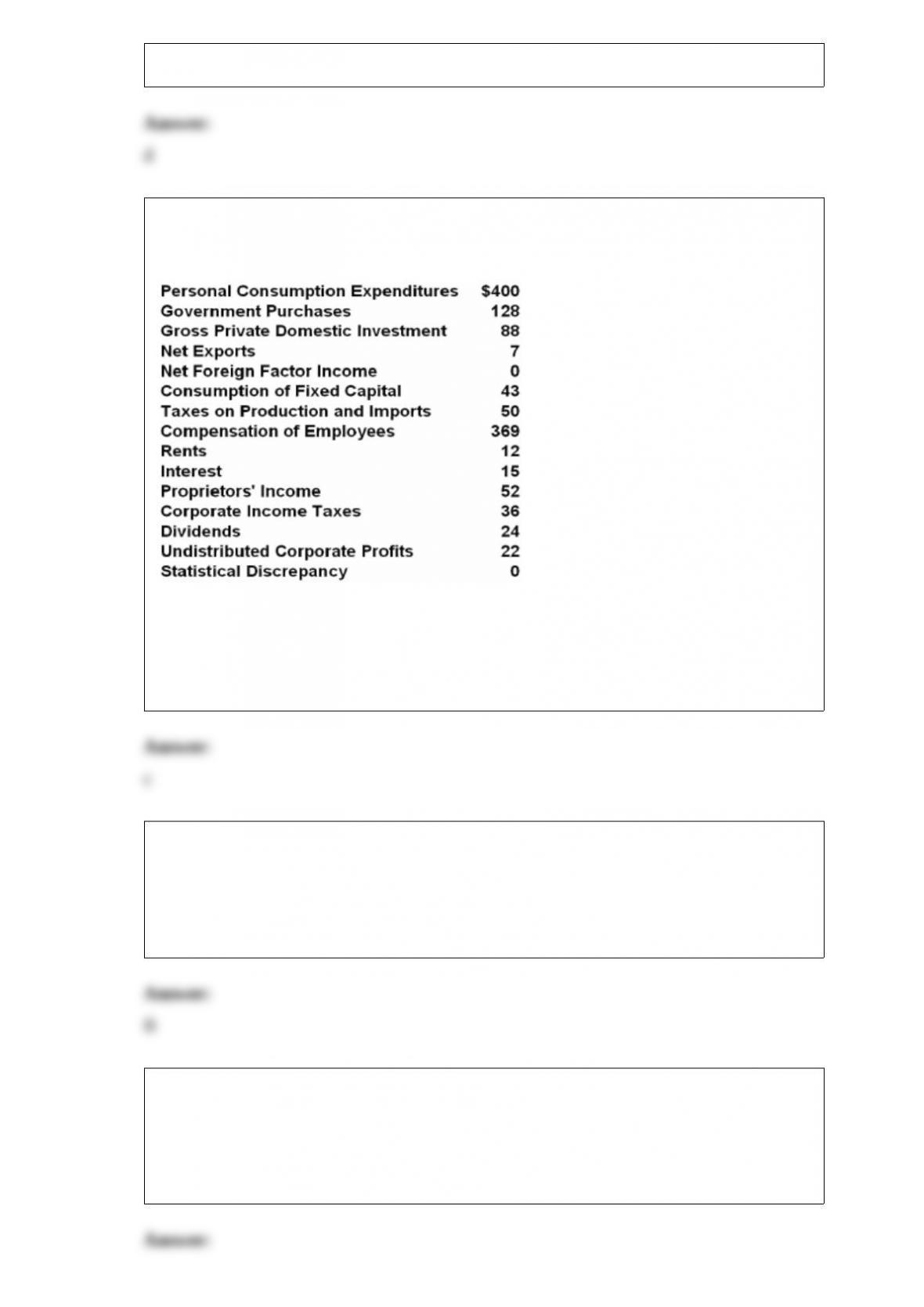
8) answer the next question(s) on the basis of the following national income data for the
economy. all figures are in billions of dollars.
refer to the above data. the national income is:
a.$561.
b.$573.
c.$580.
d.$530.
9) The first successful commercial introduction of a new product refers to:
A.invention.
B.innovation.
C.diffusion.
D.diversification.
10) the largest goods exports of the united states (in dollar volume) are:
a.chemicals, agricultural products, consumer durables, and semiconductors.
b.petroleum, automobiles, clothing, and household appliances.
c.iron and steel, clothing, beef, and sugar.
d.aircraft, glassware, television sets, and furniture.
11) In 2007, the United States:
A.imported more services than it exported.
B.imported more goods than it exported.
C.traded mainly with developing nations such as Mexico and India.
D.had a small trade surplus in goods and services.
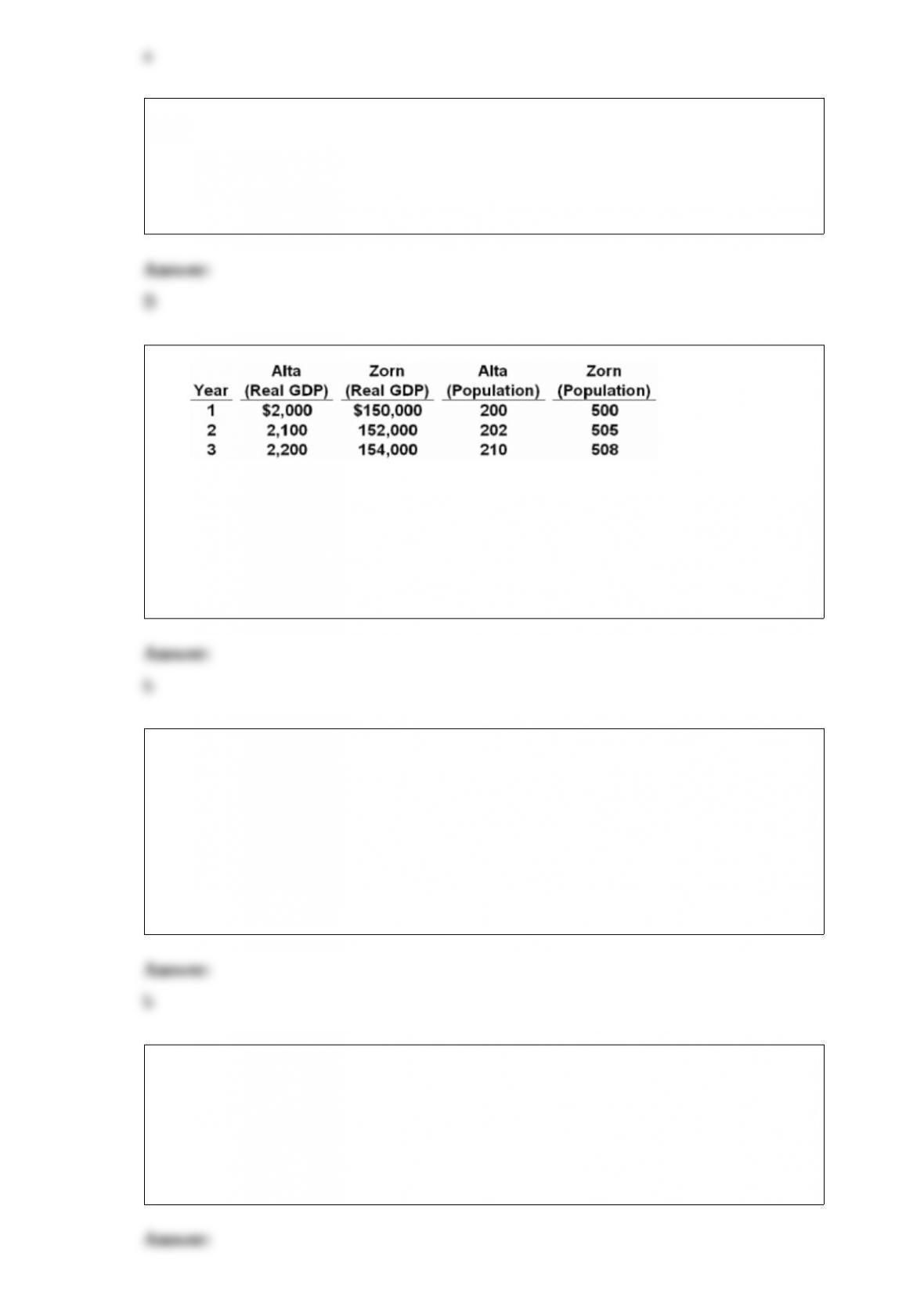
12)
refer to the above table. between years 1 and 2, real gdp per capita grew by __________
percent in alta:
a.3
b.4
c.5
d.10
13) “in the corn market, demand often exceeds supply and supply sometimes exceeds
demand.” “the price of corn rises and falls in response to changes in supply and
demand.” in which of these two statements are the terms demand and supply being used
correctly?
a.in neither statement.
b.in the second statement.
c.in the first statement.
d.in both statements.
14) other things equal, the optimal quantity of immigrants will be greater, the:
a.higher the unemployment rate in the destination nation.
b.greater the degree of substitutability between immigrant and domestic-born workers.
c.greater the degree of complementarity between immigrant and domestic-born
workers.
d.lower the rate at which immigrants can be absorbed.

15) assume that in year 1 you pay an average tax rate of 20 percent on a taxable income
of $20,000. in year 2, you pay an average tax rate of 25 percent on a taxable income of
$30,000. assuming no change in tax rates, the marginal tax rate on your additional
$10,000 of income is:
a.5 percent.
b.12 percent.
c.35 percent.
d.42 percent.
16) The crowding of women and minorities into a restricted number of occupations:
A.has no impact on the size of the domestic output or its distribution in the long run.
B.will increase the size of the domestic output and make its distribution more equal.
C.will decrease the size of the domestic output and make its distribution less equal.
D.will increase the size of the domestic output, but make its distribution less equal.
17) Import quotas on sugar may cost consumers $2 billion per year. But this quota goes
unchallenged because the $10 average annual cost per person is so small that probably
not one voter in 200 knows the quota exists. This statement describes:
A.the voting paradox.
B.the special-interest effect.
C.the median-voter model.
D.free-rider problem.

18)
refer to the above diagram. which line(s) show(s) a negative relationship between x and
y?
a.a only.
b.both a and d
c.a, b, and d
d.both c and e