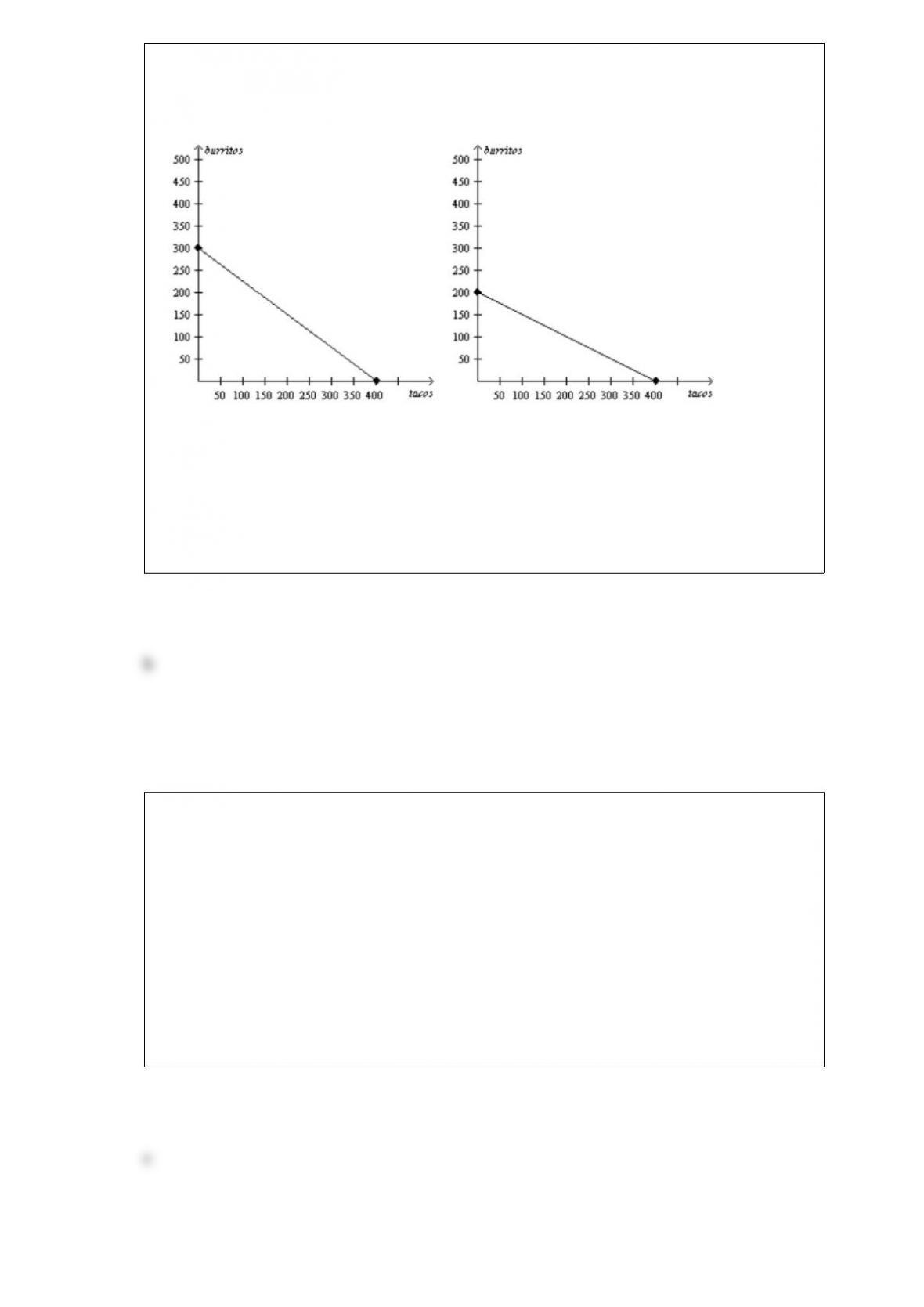
Figure 314
Arturo’s Production Possibilities FrontierDina’s Production Possibilities Frontier
Refer to Figure 314. Arturo would incur an opportunity cost of 36 burritos if he
increased his production of tacos by
a. 27.
b. 48.
c. 108.
d. 144.
Scenario 55
Suppose the government is concerned about firms in the United States importing illegal
caviar. As a result, the government increases border patrols to catch illegal shipments.
U.S. Customs agents perform DNA testing on the caviar to determine if it comes from
endangered species of fish. If so, the government destroys the caviar.
Refer to Scenario 55. What would we expect to observe in the caviar market?
a. Equilibrium prices and quantities will increase.
b. Equilibrium prices will increase by more if the demand for caviar is elastic than if
demand is inelastic.
c. Total revenues to caviar firms will increase if the demand for caviar is inelastic.
d. All of the above are correct.
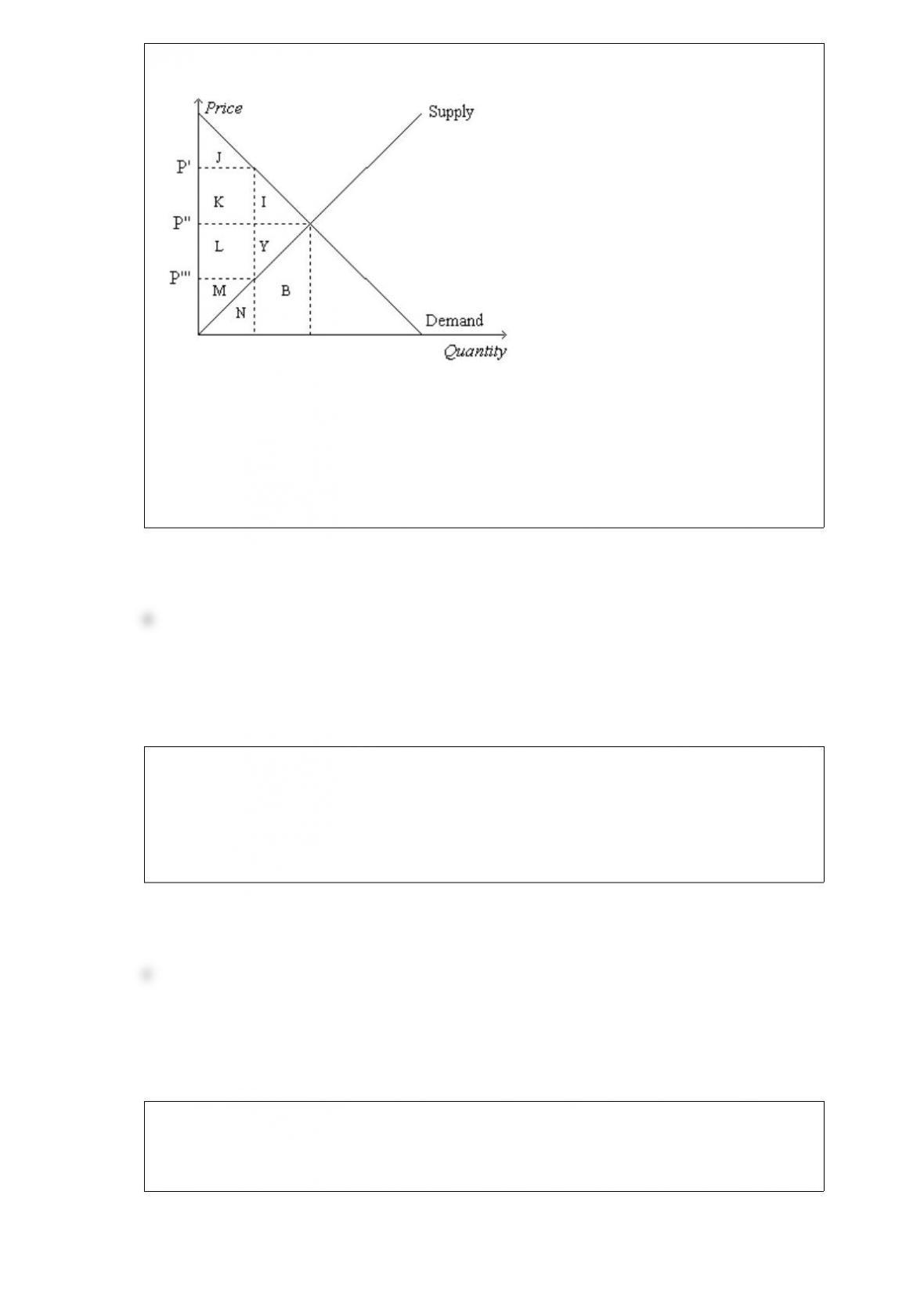
Figure 81
Refer to Figure 81. Suppose the government imposes a tax of P’ P”’. The tax revenue is
measured by the area
a. K+L.
b. I+Y.
c. J+K+L+M.
d. I+J+K+L+M+Y.
Graphs such as bar graphs and pie charts are limited in that they
a. can only show variables that are positively related.
b. can only show variables that have a negative correlation.
c. provide information on only one variable.
d. provide information on no more than two variables.
Figure 314
Arturo’s Production Possibilities FrontierDina’s Production Possibilities Frontier
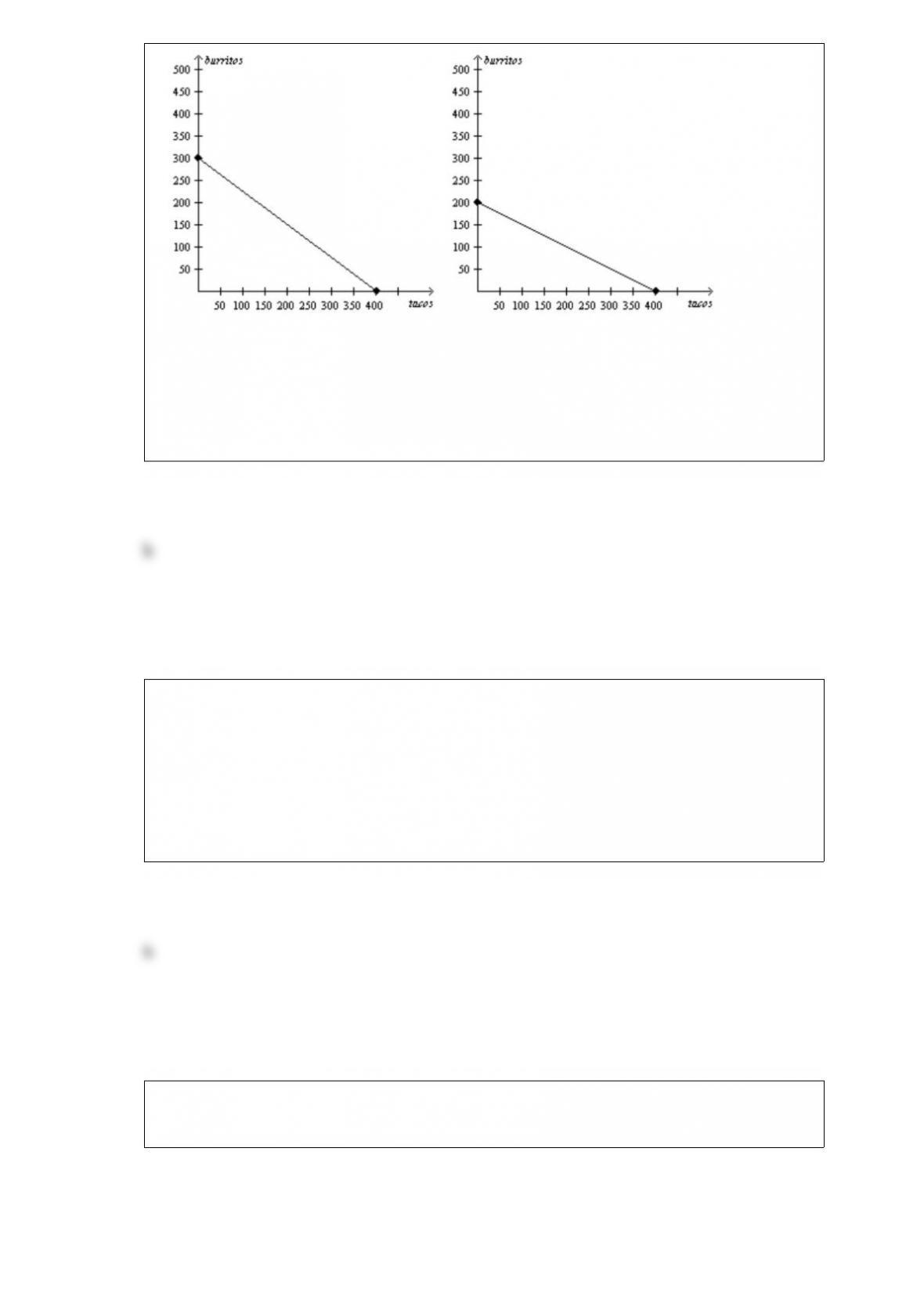
Refer to Figure 314. Arturo has an absolute advantage in the production of
a. burritos and a comparative advantage in the production of tacos.
b. burritos and a comparative advantage in the production of burritos.
c. neither good and a comparative advantage in the production of tacos.
d. neither good and a comparative advantage in the production of burritos.
Suppose a gardener produces both tomatoes and squash in his garden. If the opportunity
cost of one bushel of squash is 2/5 bushel of tomatoes, then the opportunity cost of 1
bushel of tomatoes is
a. 2/5 bushel of squash.
b. 5/2 bushels of squash.
c. 2 bushels of squash.
d. 5 bushels of squash.
Figure 716
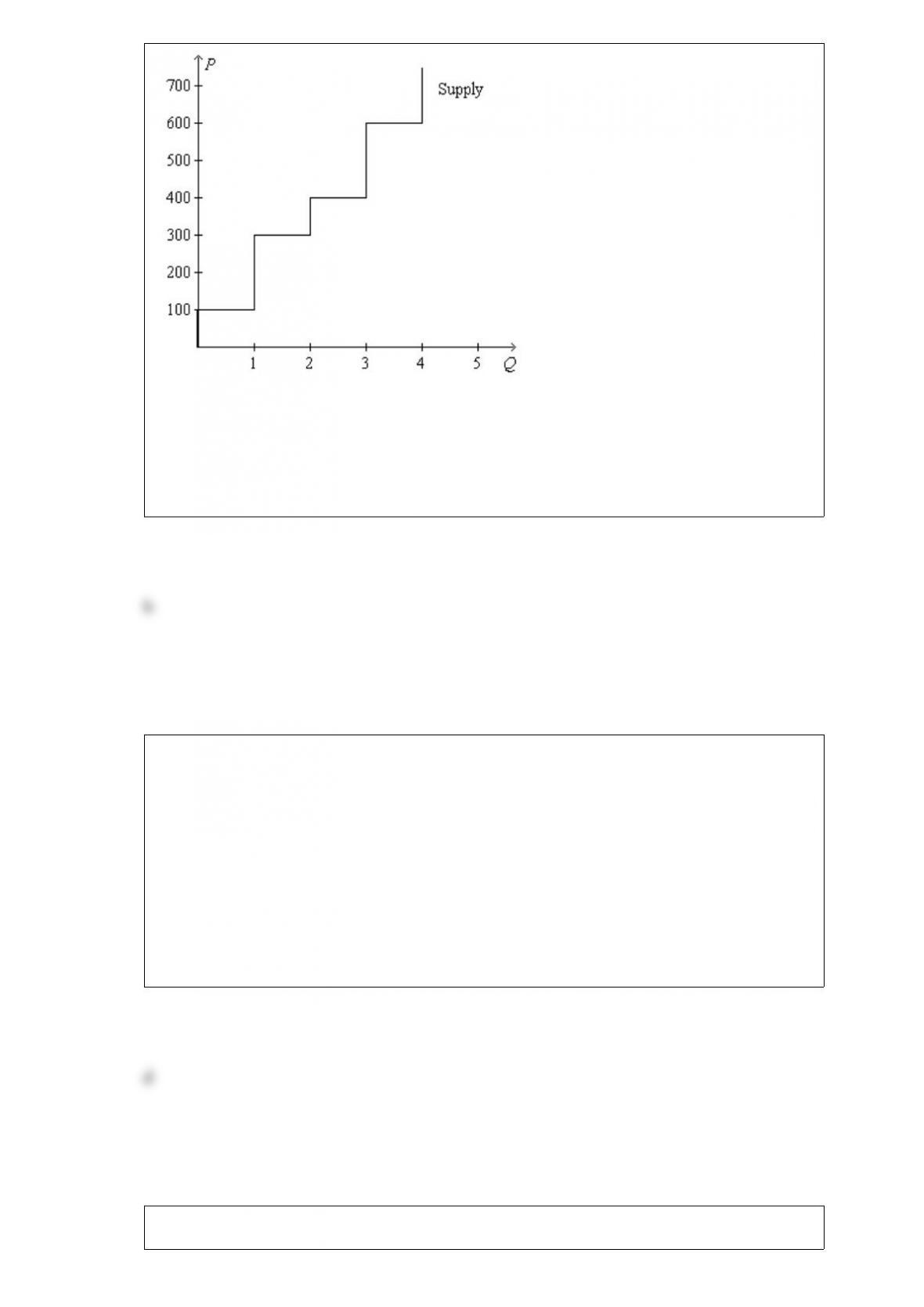
Refer to Figure 716. Producer surplus amounts to $300 if the price of the good is
a. $300.
b. $350.
c. $400.
d. $450.
Scenario 82
Roland mows Karla’s lawn for $25. Roland’s opportunity cost of mowing Karla’s lawn
is $20, and Karla’s willingness to pay Roland to mow her lawn is $28.
Refer to Scenario 82. Assume Roland is required to pay a tax of $3 each time he mows
a lawn. Which of the following results is most likely?
a. Karla now will decide to mow her own lawn, and Roland will decide it is no longer
in his interest to mow Karla’s lawn.
b. Karla is willing to pay Roland to mow her lawn, but Roland will decline her offer.
c. Roland is willing to mow Karla’s lawn, but Karla will decide to mow her own lawn.
d. Roland and Karla still can engage in a mutuallyagreeable trade.
Table 317
The following table contains some production possibilities for an economy for a given
year.
CakesPies
10600
20400
30?
Refer to Table 317. If the production possibilities frontier is a straight line, then “?”
must be
a. 180.
b. 200.
c. 220.
d. 240.
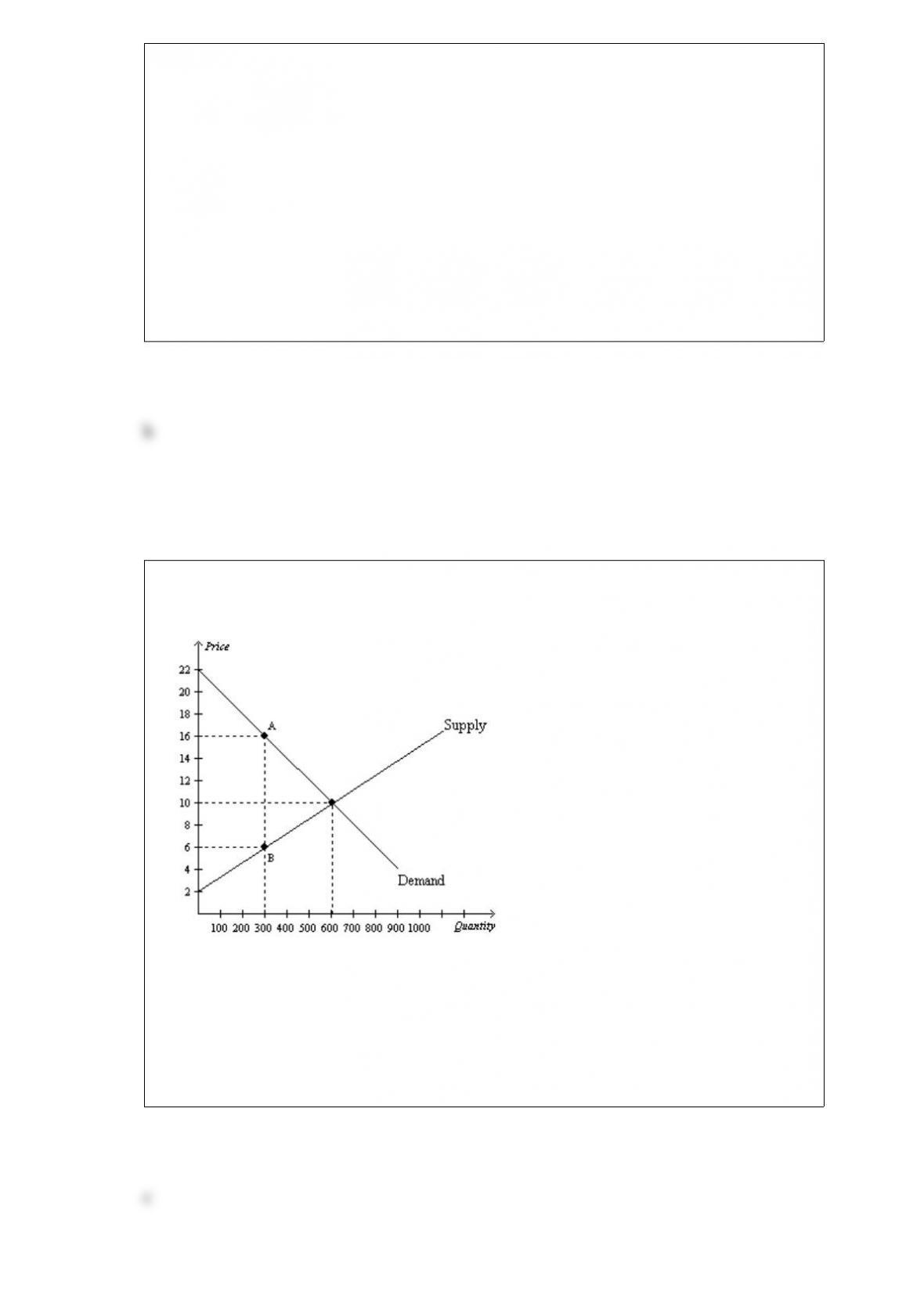
Figure 86
The vertical distance between points A and B represents a tax in the market.
Refer to Figure 86. When the tax is imposed in this market, buyers effectively pay
what amount of the $10 tax?
a. $0
b. $4
c. $6
d. $10
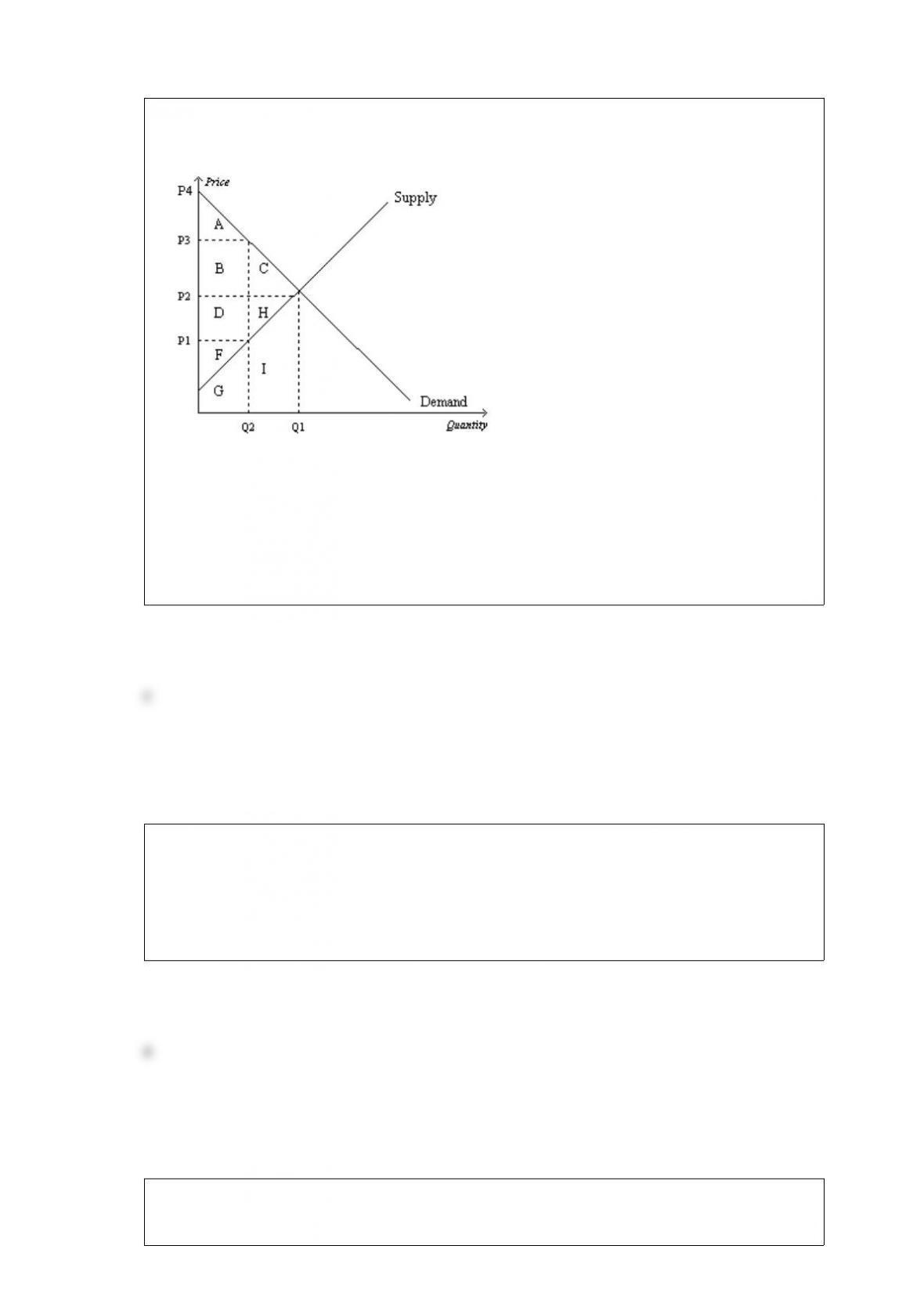
Figure 85
Suppose that the government imposes a tax of P3 P1.
Refer to Figure 85. The tax causes a reduction in producer surplus that is represented
by area
a. A.
b. C+H.
c. D+H.
d. F.
If the demand for donuts is elastic, then a decrease in the price of donuts will
a. increase total revenue of donut sellers.
b. decrease total revenue of donut sellers.
c. not change total revenue of donut sellers.
d. There is not enough information to answer this question.
A candle manufacturer produces 4,000 units when the market price is $11 per unit and
produces 6,000 units when the market price is $13 per unit. Using the midpoint method,

for this range of prices, the price elasticity of supply is about
a. 6.
b. 2.4.
c. 0.4.
d. 0.67.
Table 24
Production Possibilities for Picnicland
HotdogsBurgers
18000
1350450
900750
450975
01125
Refer to Table 24. What is the opportunity cost to Picnicland of increasing the
production of burgers from 450 to 750?
a. 150 hotdogs
b. 225 hotdogs
c. 300 hotdogs
d. 450 hotdogs
Figure 82
The vertical distance between points A and B represents a tax in the market.
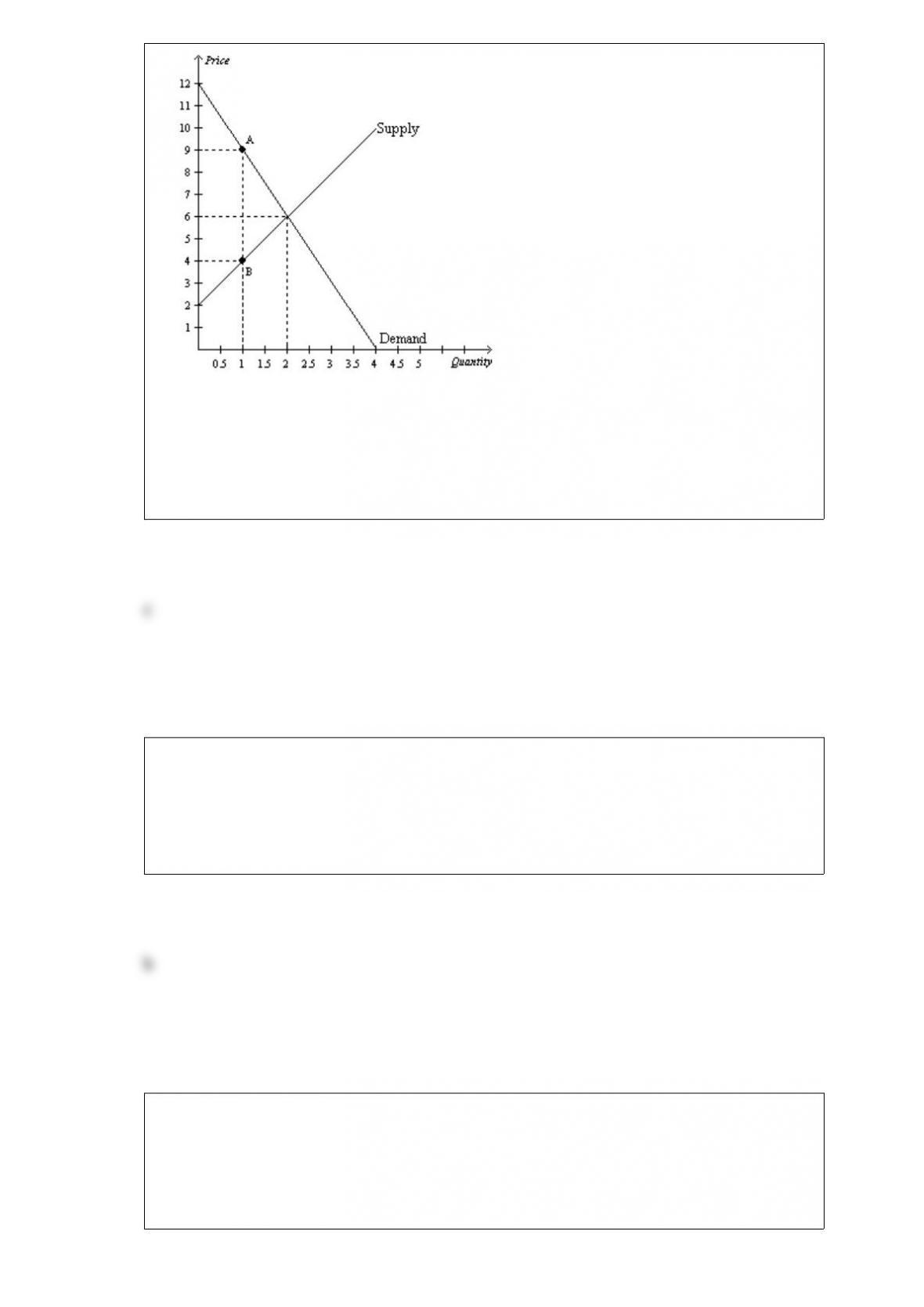
Refer to Figure 82. The loss of producer surplus as a result of the tax is
a. $1.
b. $2.
c. $3.
d. $4.
The demand curve for coffee shifts
a. only when income changes.
b. when a determinant of the demand for coffee other than the price of coffee changes.
c. when the price of coffee changes.
d. Both b and c are correct.
Which of the following is not subject to scarcity?HTMLENTITY#8203HTMLENTITY
a. HTMLENTITY#8203HTMLENTITYwater
b. HTMLENTITY#8203HTMLENTITYsteel
c. HTMLENTITY#8203HTMLENTITYdiamonds
d. none of the above
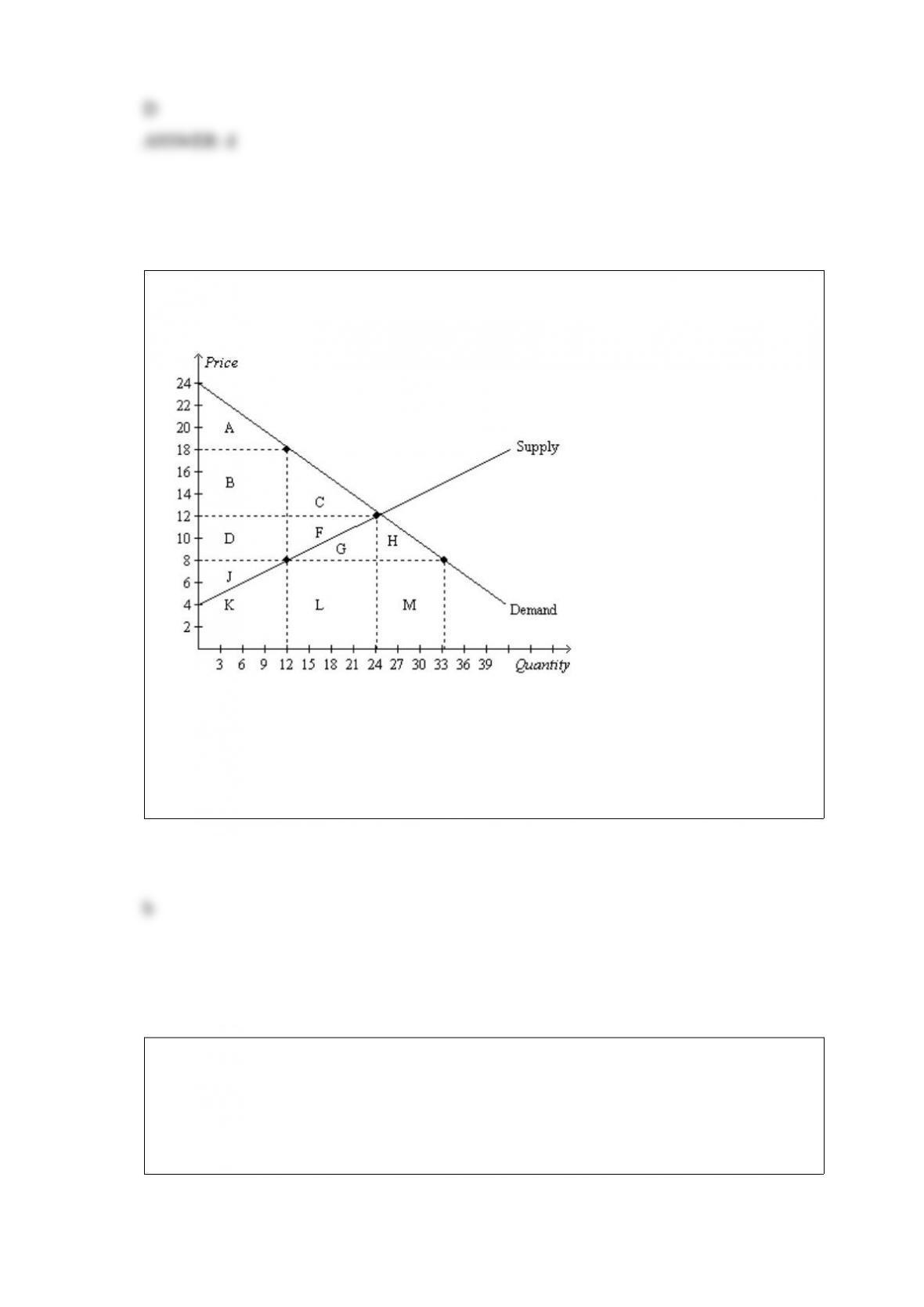
Figure 88
Suppose the government imposes a $10 per unit tax on a good.
Refer to Figure 88. One effect of the tax is to
a. reduce consumer surplus from $180 to $72.
b. reduce producer surplus from $96 to $24.
c. create a deadweight loss of $72.
d. All of the above are correct.
The tax burden will fall most heavily on buyers of the good when the demand curve
a. is relatively steep, and the supply curve is relatively flat.
b. is relatively flat, and the supply curve is relatively steep.
c. and the supply curve are both relatively flat.
d. and the supply curve are both relatively steep.
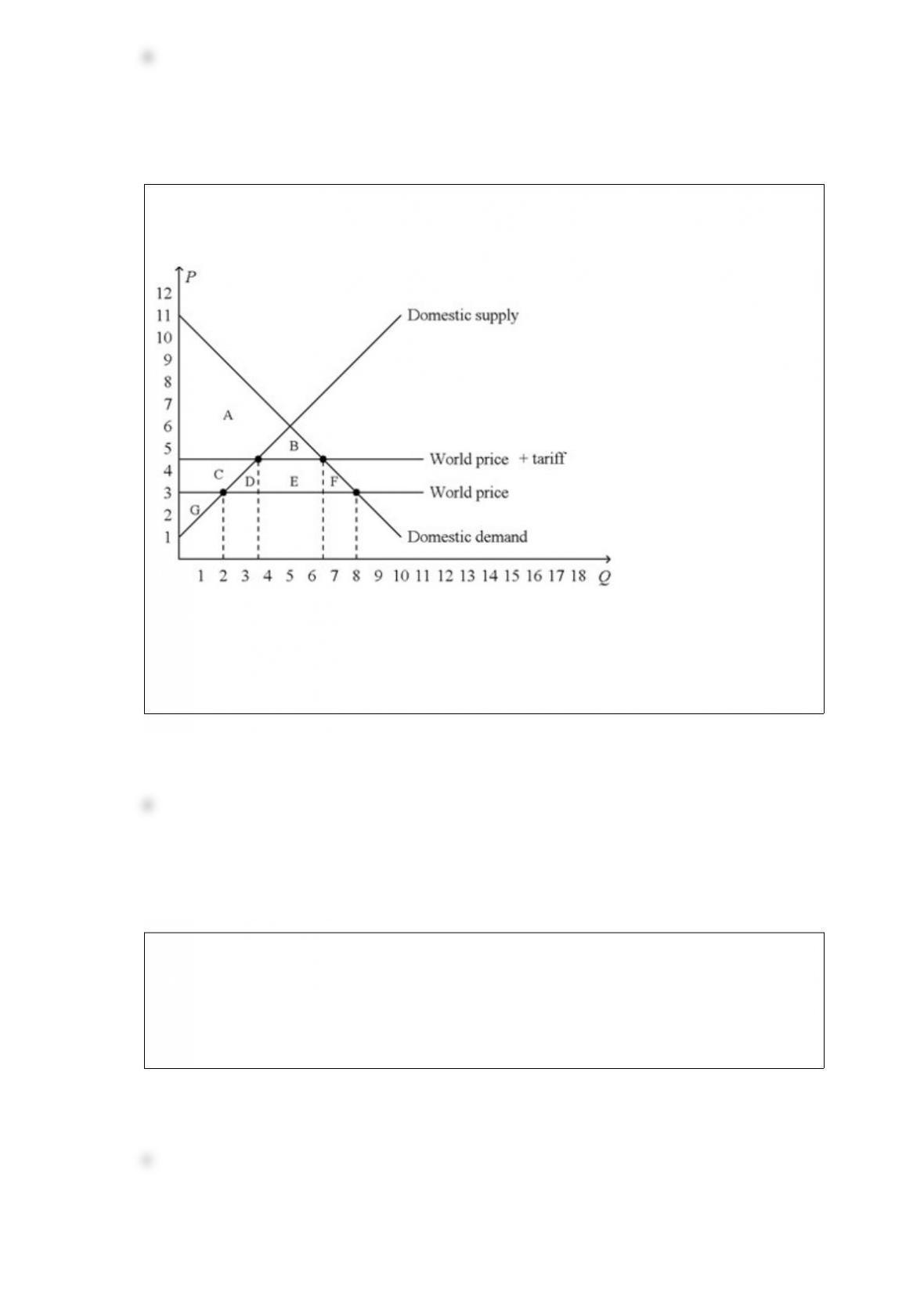
Figure 916. The figure below illustrates a tariff. On the graph, Q represents quantity
and P represents price.
Refer to Figure 916. The area C + D + E + F represents
a. the decrease in consumer surplus caused by the tariff.
b. the decrease in total surplus caused by the tariff.
c. the deadweight loss of the tariff minus government revenue raised by the tariff.
d. the deadweight loss of the tariff plus government revenue raised by the tariff.
An example of normative analysis is studying
a. how market forces produce equilibrium.
b. surpluses and shortages.
c. whether equilibrium outcomes are socially desirable.
d. income distributions.
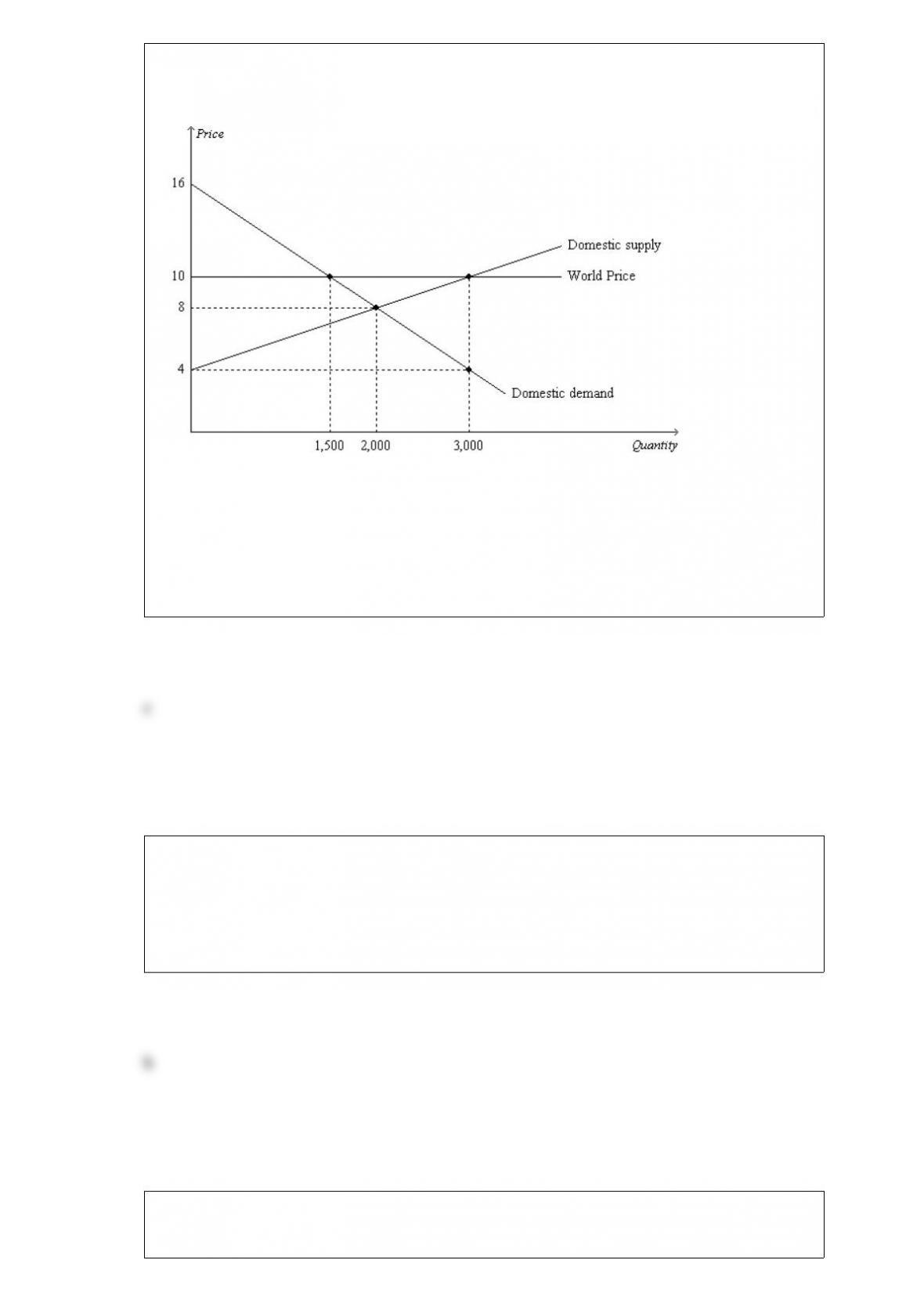
Figure 920
The figure illustrates the market for rice in Vietnam.
Refer to Figure 920. In the absence of trade, total surplus in the Vietnamese rice
market amounts to
a. 9,250.
b. 10,000.
c. 12,000.
d. 13,000.
For a good that is a necessity,
a. quantity demanded tends to respond substantially to a change in price.
b. demand tends to be inelastic.
c. the law of demand does not apply.
d. All of the above are correct.
When a country that imported a particular good abandons a freetrade policy and adopts
a notrade policy,

a. producer surplus increases and total surplus increases in the market for that good.
b. producer surplus increases and total surplus decreases in the market for that good.
c. producer surplus decreases and total surplus increases in the market for that good.
d. producer surplus decreases and total surplus decreases in the market for that good.
Other than OPEC, the shortage of gasoline in the U.S. in the 1970s could also be
blamed on
a. a sharp increase in the demand for gasoline that was brought on by the Vietnam War.
b. the government’s policy of maintaining a price ceiling on gasoline.
c. an indifference among U.S. consumers toward conservation.
d. the lack of substitutes for crude oil.
Consider a good to which a perunit tax applies. The greater the price elasticities of
demand and supply for the good, the
a. smaller the deadweight loss from the tax.
b. greater the deadweight loss from the tax.
c. more efficient is the tax.
d. more equitable is the distribution of the tax burden between buyers and sellers.
Suppose there is currently a tax of $50 per ticket on airline tickets. Sellers of airline
tickets are required to pay the tax to the government. If the tax is reduced from $50 per
ticket to $30 per ticket, then the
a. demand curve will shift upward by $20, and the price paid by buyers will decrease by

less than $20.
b. demand curve will shift upward by $20, and the price paid by buyers will decrease by
$20.
c. supply curve will shift downward by $20, and the effective price received by sellers
will increase by less than $20.
d. supply curve will shift downward by $20, and the effective price received by sellers
will increase by $20.
In competitive markets, buyers
a. are price takers, but sellers are price setters.
b. are price setters, but sellers are price takers.
c. and sellers are price takers.
d. and sellers are price setters.
Honduras is an importer of goosedown pillows. The world price of these pillows is $50.
Honduras imposes a $7 tariff on pillows. Honduras is a pricetaker in the pillow market.
As a result of the tariff, the price of goosedown pillows in Honduras
a. remains at $50 and the quantity of goosedown pillows purchased in Honduras
decreases.
b. increases to $57 and the quantity of goosedown pillows purchased in Honduras
decreases.
c. increases to a new price between $50 and $57 and the quantity of goosedown pillows
purchased in Honduras decreases.
d. increases to a new price above $57 and the quantity of goosedown pillows purchased
in Honduras remains the same.
A price ceiling is binding when it is set
a. above the equilibrium price, causing a shortage.
b. above the equilibrium price, causing a surplus.
c. below the equilibrium price, causing a shortage.
d. below the equilibrium price, causing a surplus.
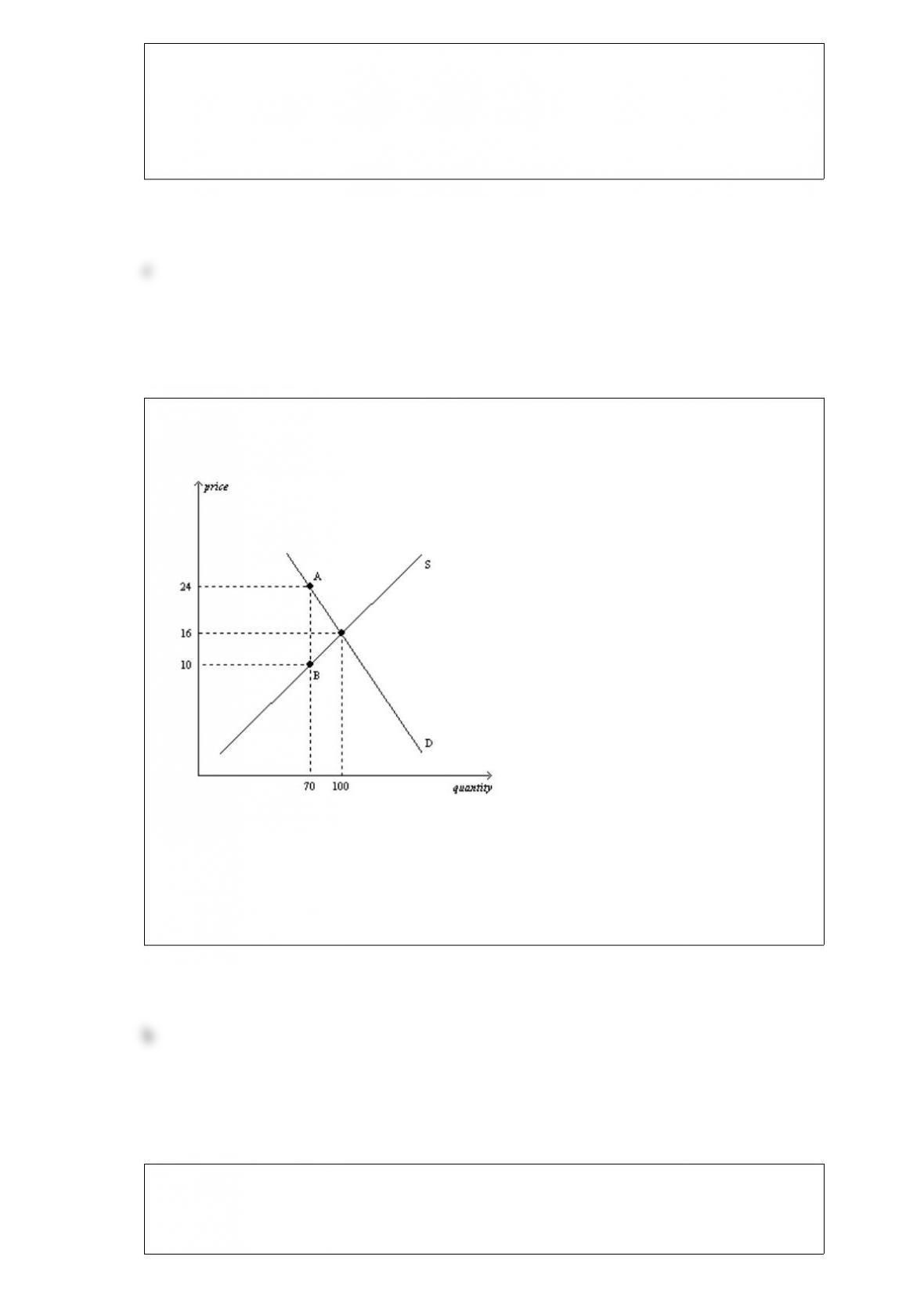
Figure 618
The vertical distance between points A and B represents the tax in the market.
Refer to Figure 618. The perunit burden of the tax on buyers is
a. $6.
b. $8.
c. $14.
d. $24.
Which of the following is an example of a lessthanhighlyorganized market?
a. the market for U.S. Treasury bonds
b. the market for corn

c. the market for soybeans
d. the market for ice cream