
Sequential games are often used to analyze which two types of business strategies?
A) whether to invest in research and development and whether to offer employees an
early retirement package
B) deciding to merge with another firm and deciding how much to spend on an
advertising campaign
C) deciding to end production of an unprofitable product and deciding to shut down
temporarily
D) deterring entry by another firm and bargaining between firms
An oligopolistic industry is characterized by all of the following except
A) existence of entry barriers.
B) the possibility of reaping long-run economic profits.
C) firms pursuing aggressive business strategies, independent of rivals’ strategies.
D) production of standardized or differentiated products.
If a firm charges different consumers different prices for the same product and the
difference cannot be attributed to cost variations, then it is engaging in
A) odd pricing.

B) cost-plus pricing.
C) price discrimination.
D) markup pricing.
For each pair of items below determine which product would have the higher price
elasticity of demand (in absolute value).
a. Blood pressure medicine for someone who has high blood pressure or the purchase of
Clairol hair coloring product.
b. A new Ford Fusion or a tank of gas for your current car.
c. A Seiko watch or watches in general.
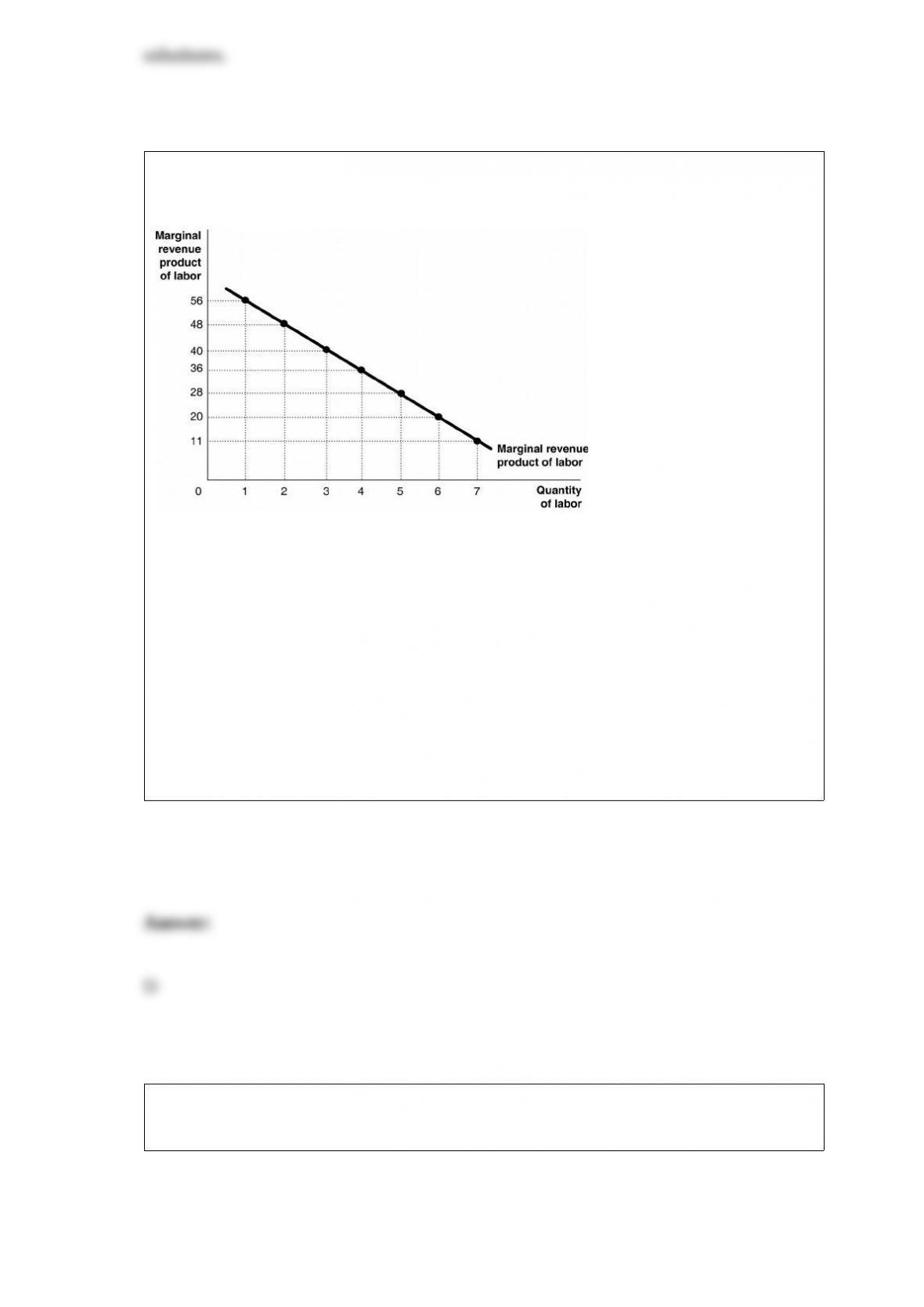
Figure 17-1
Figure 17-1 shows the marginal revenue product for Dale’s Hand-Sewn Doilies, a
producer of linen doilies.
Refer to Figure 17-1. If the wage rate is $40, how many workers should Dale hire?
A) 6
B) 5
C) 4
D) 3
Figure 2-2
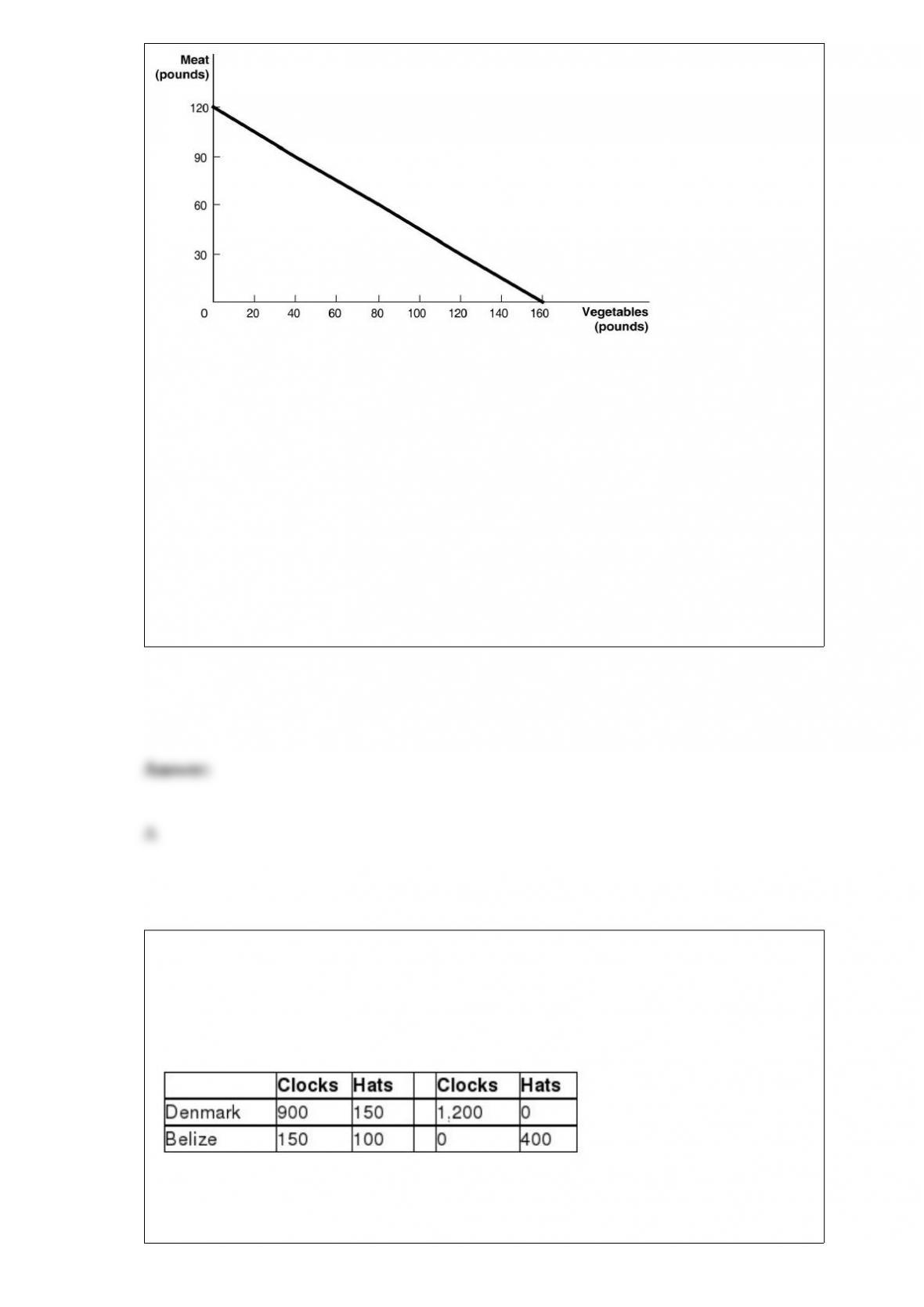
Figure 2-2 above shows the production possibilities frontier for Mendonca, an agrarian
nation that produces two goods, meat and vegetables.
Refer to Figure 2-2. If Mendonca chooses to produce 120 pounds of meat, how much
vegetables can it produce to maximize production?
A) 0 pounds of vegetables
B) 60 pounds of vegetables
C) 100 pounds of vegetables
D) 160 pounds of vegetables
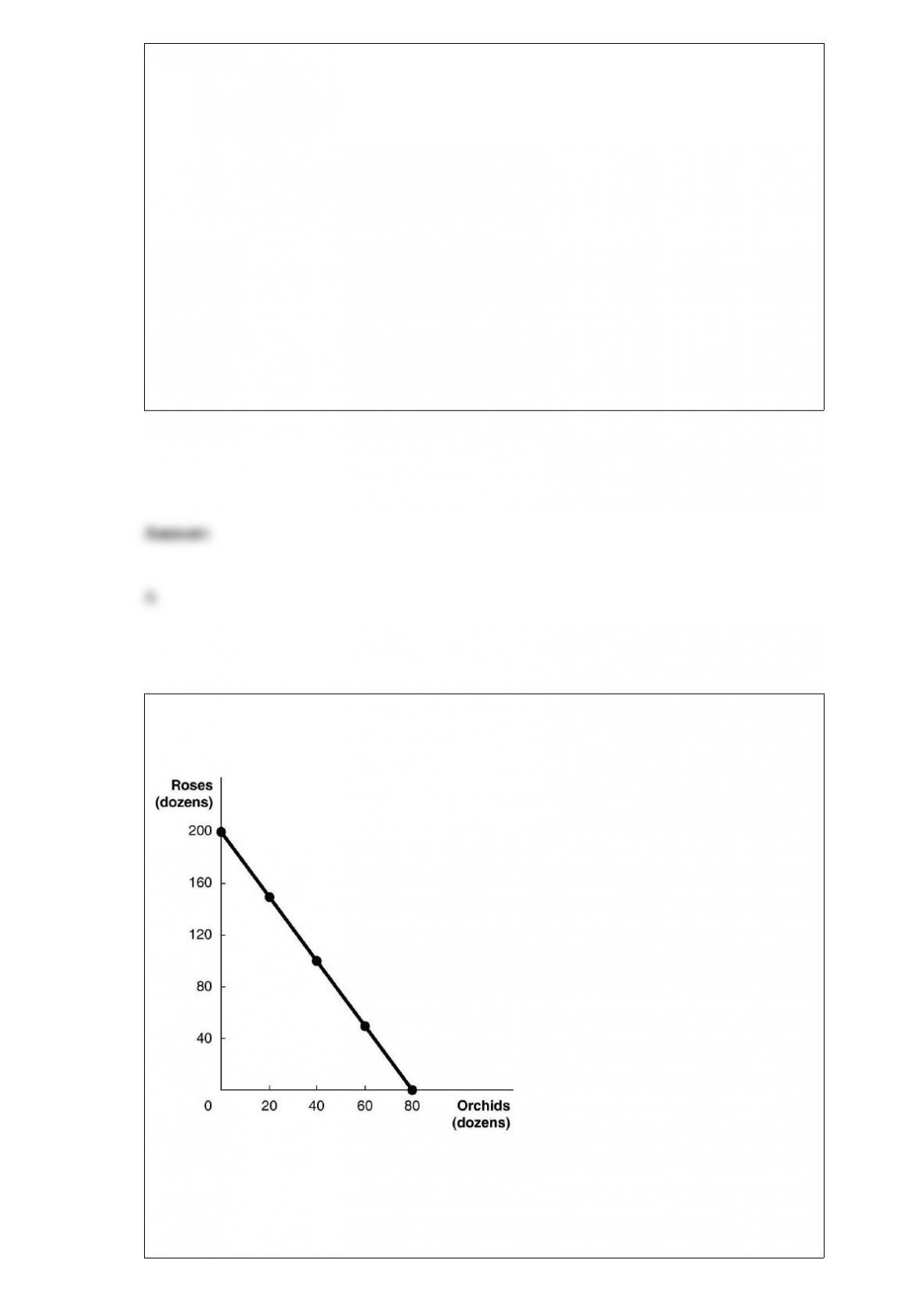
Table 9-6
Production and
Consumption Production
Without Trade With Trade
Denmark and Belize can produce both clocks and hats. Table 9-6 shows the production
and consumption quantities without trade, and the production numbers with trade.

Refer to Table 9-6. Prior to trade, what was the opportunity cost to produce 1 clock in
Denmark?
A) 1/6 of a hat
B) 2/3 of a hat
C) 5 hats
D) 6 hats
What is a factor market?
A) It is a market where financial instruments are traded.
B) It is a market where stocks and bonds are traded.
C) It is a market where producers buy consumption and capital goods.
D) It is a market where resources used to produce final goods are traded.
Consider the following pairs of items:
a. shampoo and conditioner
b. iPhones and earbuds
c. a laptop computer and a desktop computer
d. beef and pork
e. air-travel and weed killer
Which of the pairs listed will have a negative cross-price elasticity?
A) a and b only
B) c and d only
C) e only
D) a, b, and c only
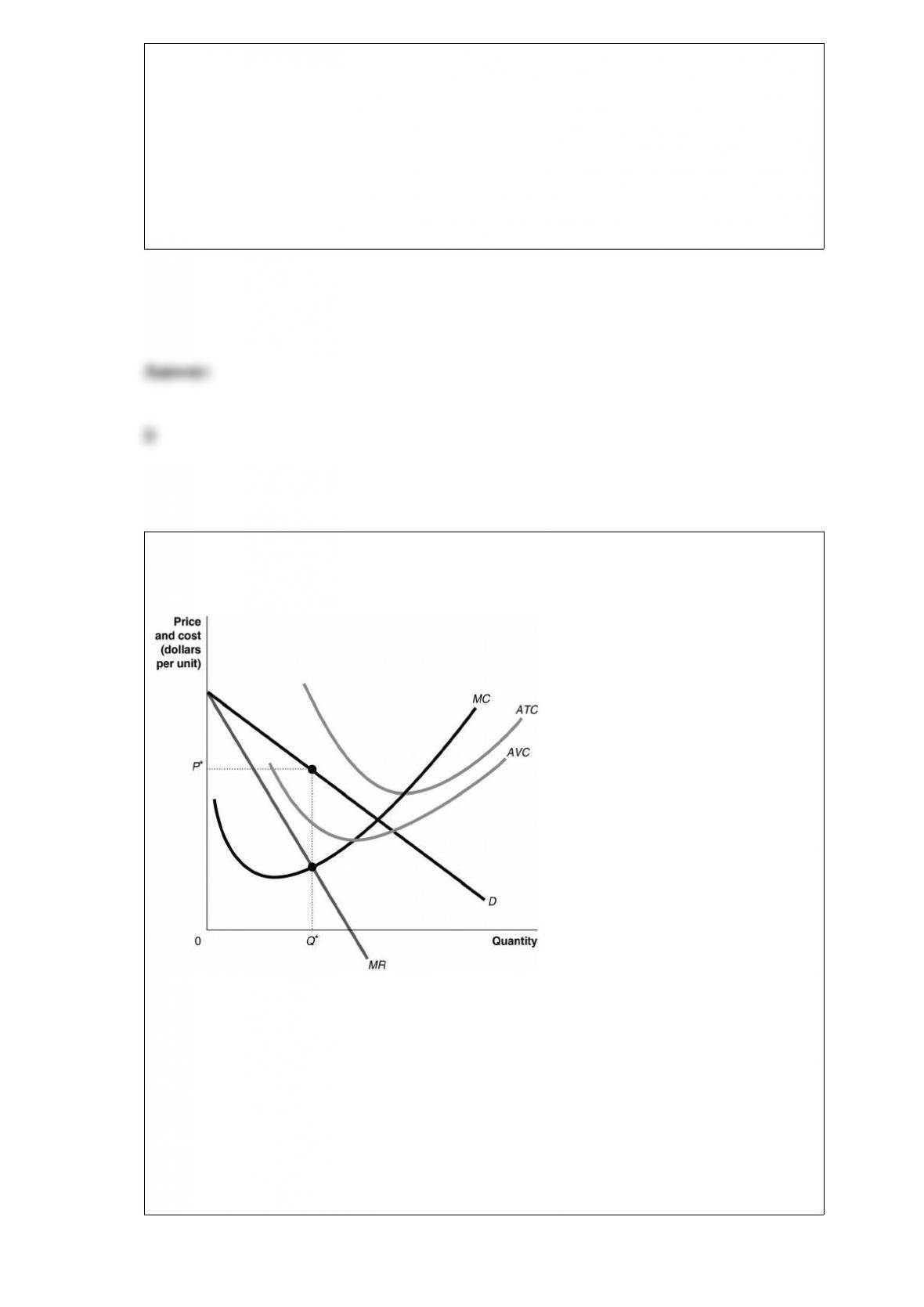
Figure 2-8
Figure 2-8 above shows the production possibilities frontier for Vidalia, a nation that
produces two goods, roses and orchids.
Refer to Figure 2-8. Suppose Vidalia is currently producing 60 dozen orchids per
period. How many roses is it also producing, assuming that resources are fully utilized?
A) 40 dozen roses
B) 50 dozen roses
C) 60 dozen roses
D) 100 dozen roses
Figure 15-5
Refer to Figure 15-5. If the monopolist charges price P* for output Q*, in order to
maximize profit or minimize loss in the short run, it should
A) continue to produce because price is greater than average variable cost.
B) shut down because price is greater than marginal cost.
C) shut down because price is less than average total cost.
D) continue to produce because a monopolist always earns a profit.
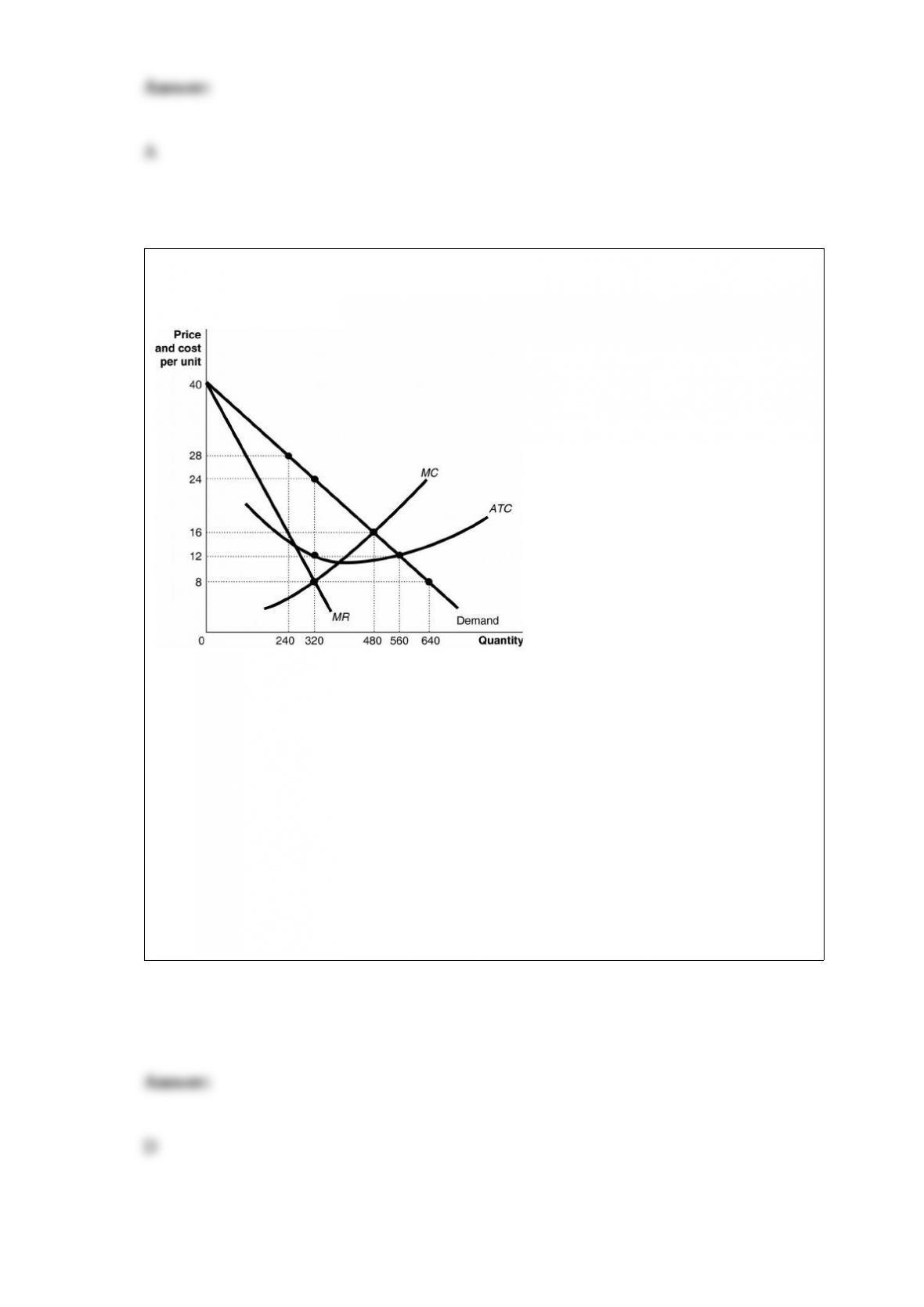
Figure 16-5
Refer to Figure 16-5. Suppose the firm represented in the diagram decides to use a
two-part pricing strategy such that it charges a fixed fee and a per-unit price equal to the
competitive price. (This is also called an optimal two-part tariff.) What is the per-unit
price it should charge, if any?
A) It should not charge a price per unit; just a flat fee to consume as much of the
product as desired.
B) It should charge a range of prices from $40 to $12.
C) $12
D) $16

All of the following are examples of spending on factors of production in the circular
flow model except
A) Bima hires two students to work at his ice-cream store.
B) “Get Fit Together” purchases 3 new treadmills for its gym.
C) Iris buys a dozen roses for her mother’s birthday.
D) The Banyan Tree rents a much larger property so that it can add a restaurant to its
facilities.
Which of the following antitrust laws forbade firms to engage in price discrimination if
the effect would lessen competition or create a monopoly?
A) the Sherman Act
B) the Clayton Act
C) the Robinson-Patman Act
D) the Cellar-Kefauver Act
Arnold Kim began blogging about Apple products during his fourth year of medical
school. Kim’s Website, MacRumors.com, became so successful that he decided to give
up his medical career and work full time on his Website, despite the nearly $200,000 he
had invested in his education. In making his decision, Kim decided to ignore the money

and time he spent on his education. Economists would say that Kim made a
A) rational decision to ignore these sunk costs.
B) poor decision since he had already invested his time and money on his medical
career.
C) poor decision since doctors are in greater demand than bloggers.
D) hasty decision by not waiting to recoup his financial investment before giving up his
medical career.
A change in the slope of an isocost line is due to a change in
A) the output price.
B) the price of one or both inputs.
C) total cost.
D) quantity of output.
Table 2-9

Table 2-9 shows the number of labor hours required to produce a canoe and a sailboat in
Guatemala and Honduras.
Refer to Table 2-9. Honduras has a comparative advantage in the production of
A) canoes.
B) sailboats.
C) both products.
D) neither product.
Which of the following takes place in the direct finance market?
A) Firms borrow funds from banks.
B) Deposits from savers are accumulated and loans made to borrowers.
C) Ownership in corporations is sold in the form of preferred stock.
D) Banks offer savings accounts to customers.

Article Summary
Among a package of anti-smoking bills designed to lower California’s health care costs
by reducing the use of tobacco products is a bill sponsored by Dr. Richard Pan that
would increase the tax on a pack of cigarettes by $2. California currently has a tobacco
tax of 87-cents-per-pack, making California’s tax 33rd in the nation and well below the
New York state tax of $4.35 a pack. The state taxes are in addition to a $1.01 federal tax
on cigarettes. The bill stipulates that the revenue collected must be used to increase the
number of physicians in California as well as support existing health care programs
managed by the state. A Field Poll taken one day following the announcement of the
bill found that two-thirds of California voters support the increase in the cigarette tax.
Source: Tracy Seipel and Jessica Calefati, “Cigarette tax: California voters
overwhelmingly back $2-a-pack increase,” San Jose Mercury News, August 27, 2015.
Refer to the Article Summary above. The additional tax of $2 per pack of cigarettes
being proposed by Senator Pan would have which of the following effects on the
market for cigarettes in California?
A) Consumer surplus will increase.
B) Producer surplus will increase.
C) Deadweight loss will increase.
D) Market efficiency will increase.
A decrease in the wage rate causes
A) an increase in the quantity of labor demanded.
B) a rightward shift of the firm’s labor demand curve.
C) a leftward shift of the firm’s labor demand curve.
D) a decrease in labor’s productivity.

Explain why member firms of a cartel like OPEC have incentives to agree to a low
cartel production level and then produce more than its quota.
How do a sole proprietorship and a corporation differ?
A) Proprietorships have unlimited liability while corporations have limited liability.
B) Corporations can issue stocks and bonds, while proprietorships cannot.
C) Corporations face more taxes than do proprietorships.
D) All of these are differences between the two types of businesses.
The typical labor supply curve is upward sloping but it is possible for the curve to be
backward bending negatively sloped at very high wage levels. Which of the following
would cause a backward-bending supply curve?
A) This would occur when the income effect from an increase in the wage becomes
larger than the substitution effect.
B) This would occur when the substitution effect from an increase in the wage becomes
larger than the income effect.
C) This would occur if leisure is an inferior good.
D) This would occur when a large number of workers choose leisure rather than
employment at low wages; only a very large increase in the wage will lead these
workers to prefer employment to leisure.
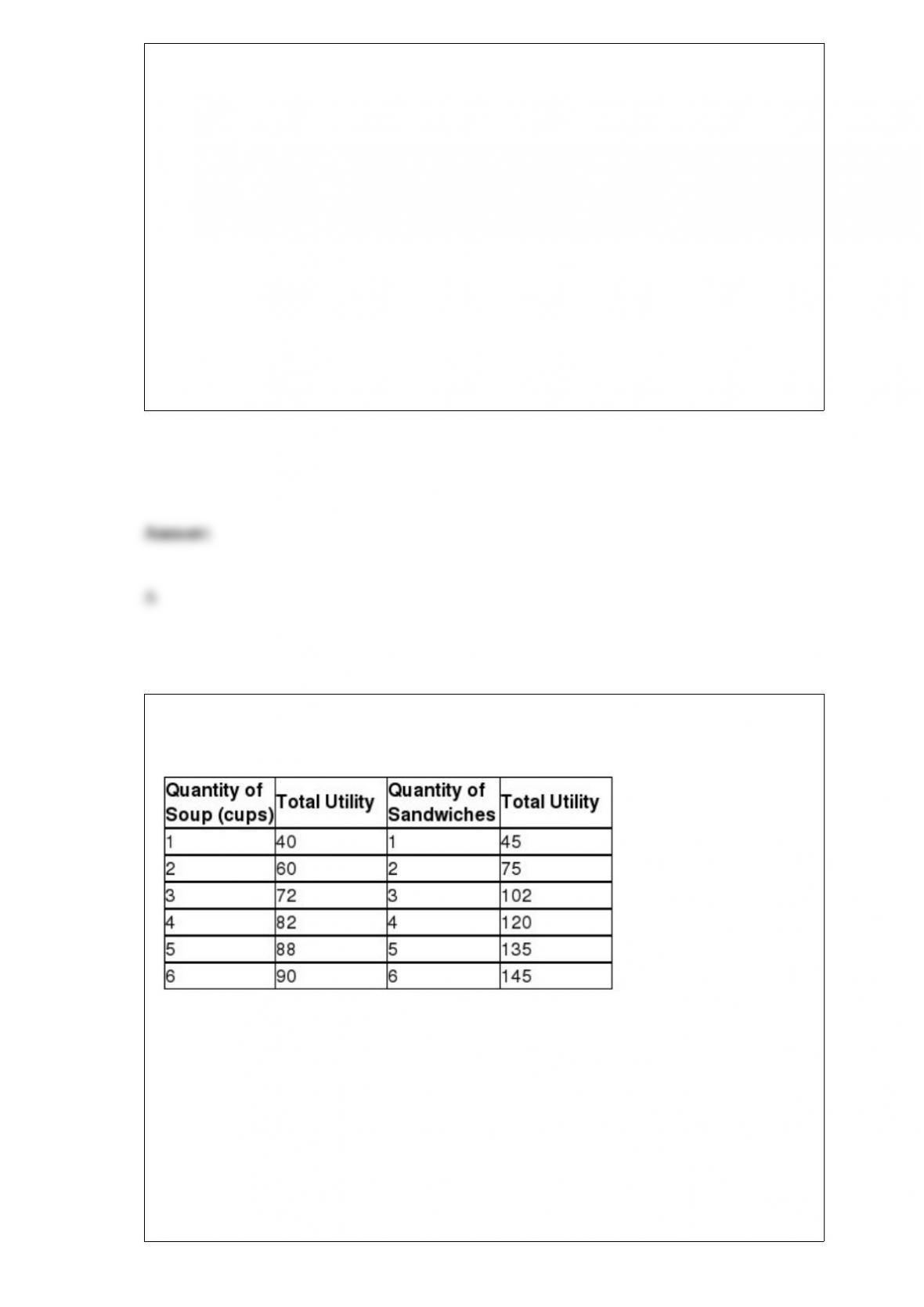
Table 10-2
Table 10-2 above shows Keira’s utility from soup and sandwiches. The price of soup is
$2 per cup and the price of a sandwich is $3. Keira has $18 to spend on these two
goods.
Refer to Table 10-2. If Keira maximizes her utility, how many units of each good
should she buy?
A) 1 cup of soup and 5 sandwiches
B) 3 cups of soup and 4 sandwiches
C) 6 cups of soup and 2 sandwiches
D) 4 cups of soup and 3.5 sandwiches
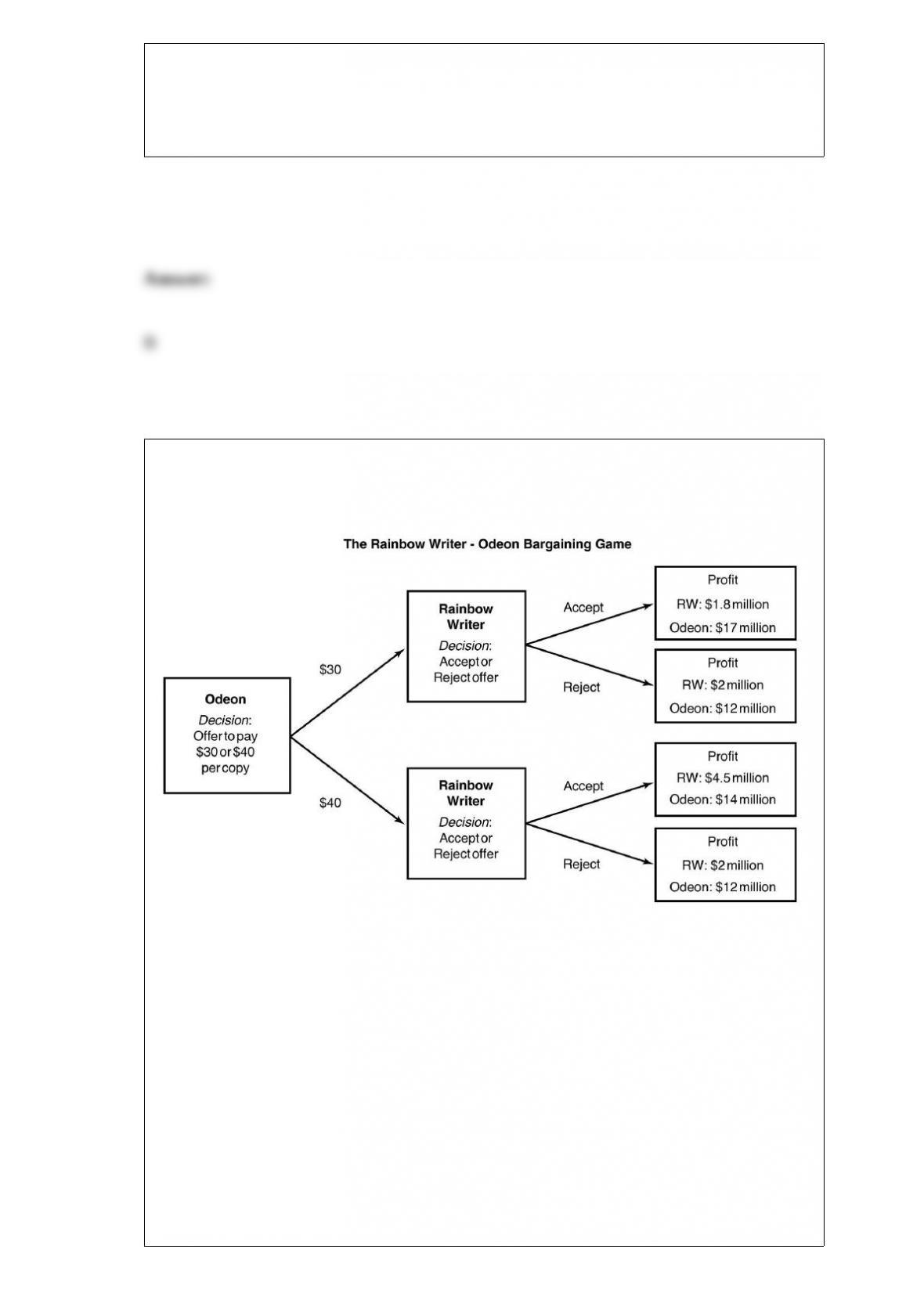
Figure 14-3
Rainbow Writer (RW) is a small online company selling a highly rated software
package for engraving words onto objects produced by 3D printers. The firm currently
earns a profit of $2 million per year selling its package exclusively on its Website.
Odeon, the producer of the most popular 3D printers has expressed interest in bundling
Rainbow Writer’s product with its printers. Odeon expects that bundling would further
boost its sales and allow it to sell its printers at a higher price, thus raising its profits
beyond its current profit of $12 million. Figure 14.3 shows the decision tree for the
Rainbow Writer-Odeon bargaining game.
Refer to Figure 14-3. How will Rainbow Writer respond to Odeon’s two possible
offers?
A) Rainbow Writer will reject either offer.

B) Rainbow Writer will only accept an offer of $30 per copy of the software package.
C) Rainbow Writer will only accept an offer of $40 per copy of the software package.
D) Rainbow Writer will accept either offer.
What do economists call the situation where a hired manager does not have the same
interests as the owners of the business?
A) conquest and control
B) a financial problem
C) a principal-agent problem
D) a financial intermediary problem
Which of the following statements about competition in a market is true?
A) Competition forces firms to outsource the production of their labor-intensive
products.
B) Competition forces firms to undercut their selling price, thus benefiting consumers
who will be able to purchase products at the lowest price possible.
C) Competition forces firms to produce and sell products as long as the marginal benefit
to consumers exceeds the marginal cost of production.
D) Competition forces firms to add only low profit margins to their costs of production.
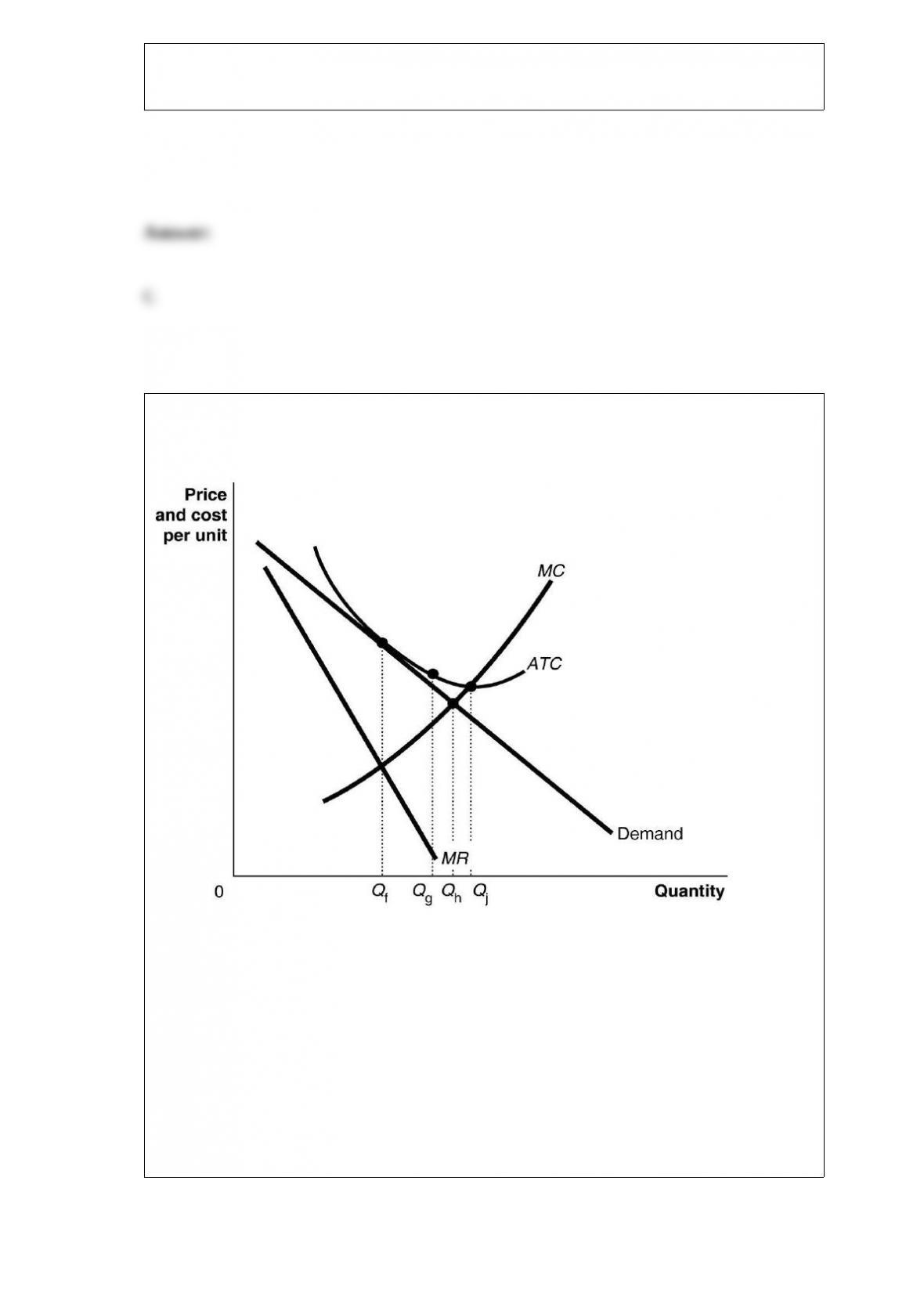
Figure 13-17
Refer to Figure 13-17. What is the allocatively efficient output for the firm represented
in the diagram?
A) Qf units
B) Qg units
C) Qh units
D) Qj units

Assume that the demand curve for MP3 players shifts to the right and the supply curve
for MP3 players shift to the left, but the supply curve shifts less than the demand curve.
As a result
A) both the equilibrium price and quantity of MP3 players will decrease.
B) both the equilibrium price and quantity of MP3 players will increase.
C) the equilibrium price of MP3 players may increase or decrease; the equilibrium
quantity will decrease.
D) the equilibrium price of MP3 players will increase; the equilibrium quantity will
decrease.
The combined effect (both income and substitution) of a wage increase is that
A) the substitution effect always dominates, leading to more work at a higher wage.
B) the income effect always dominates, leading to less work at a higher wage.
C) if the substitution effect outweighs the income effect, the labor supply curve slopes
upward, but if the income effect outweighs the substitution effect, the labor supply
curve is backward bending.
D) if the substitution effect outweighs the income effect, the labor supply curve is
backward bending, but if the income effect outweighs the substitution effect, the labor
supply curve slopes upward.