The recession of 2007-2009 made many consumers pessimistic about their future
incomes. How does this increased pessimism affect the aggregate demand curve?
A) This will move the economy up along a stationary aggregate demand curve.
B) This will move the economy down along a stationary aggregate demand curve.
C) This will shift the aggregate demand curve to the left.
D) This will shift the aggregate demand curve to the right.
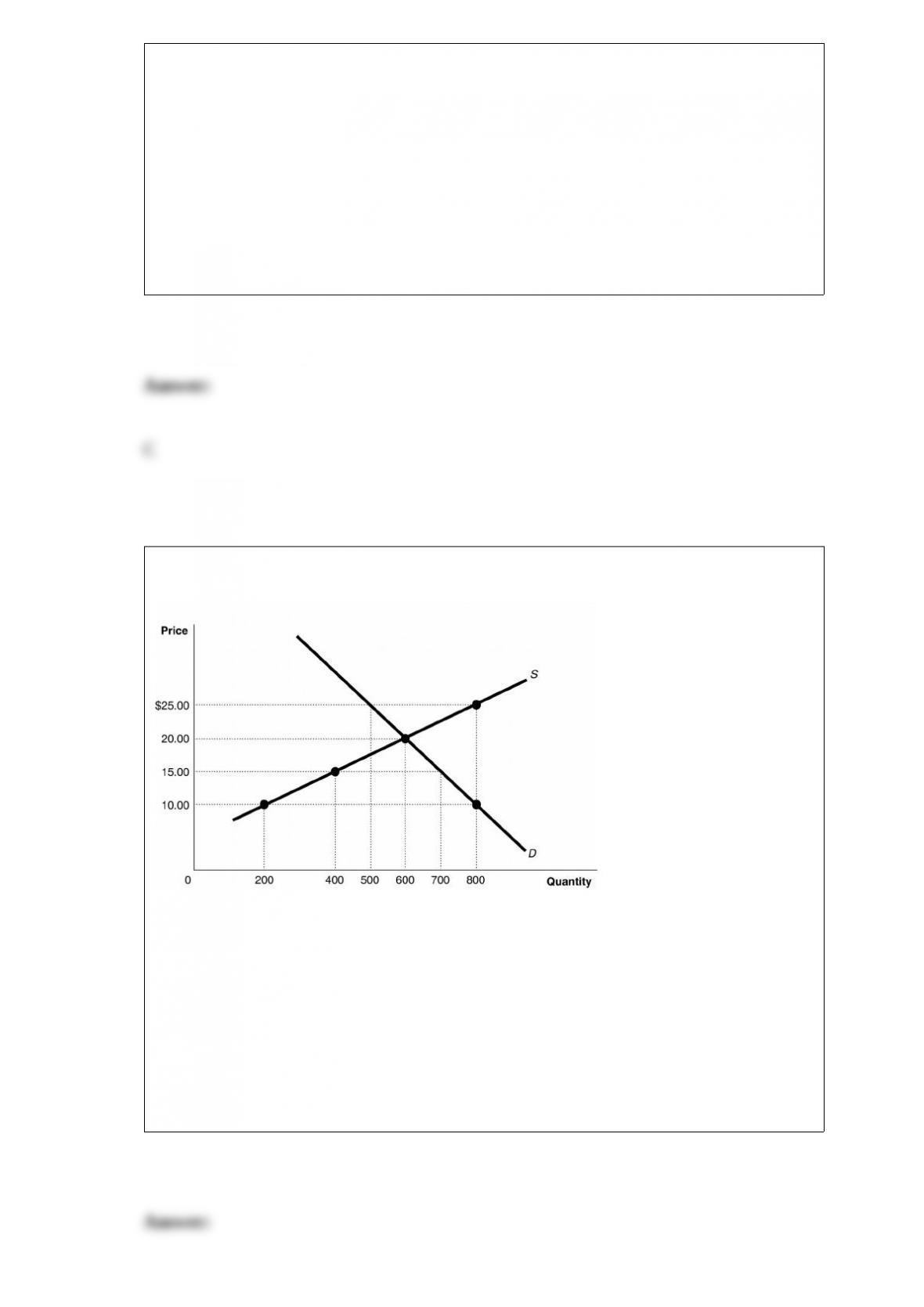
Figure 3-4
At a price of $10, how many units will be sold?
A) 200
B) 400
C) 600
D) 800
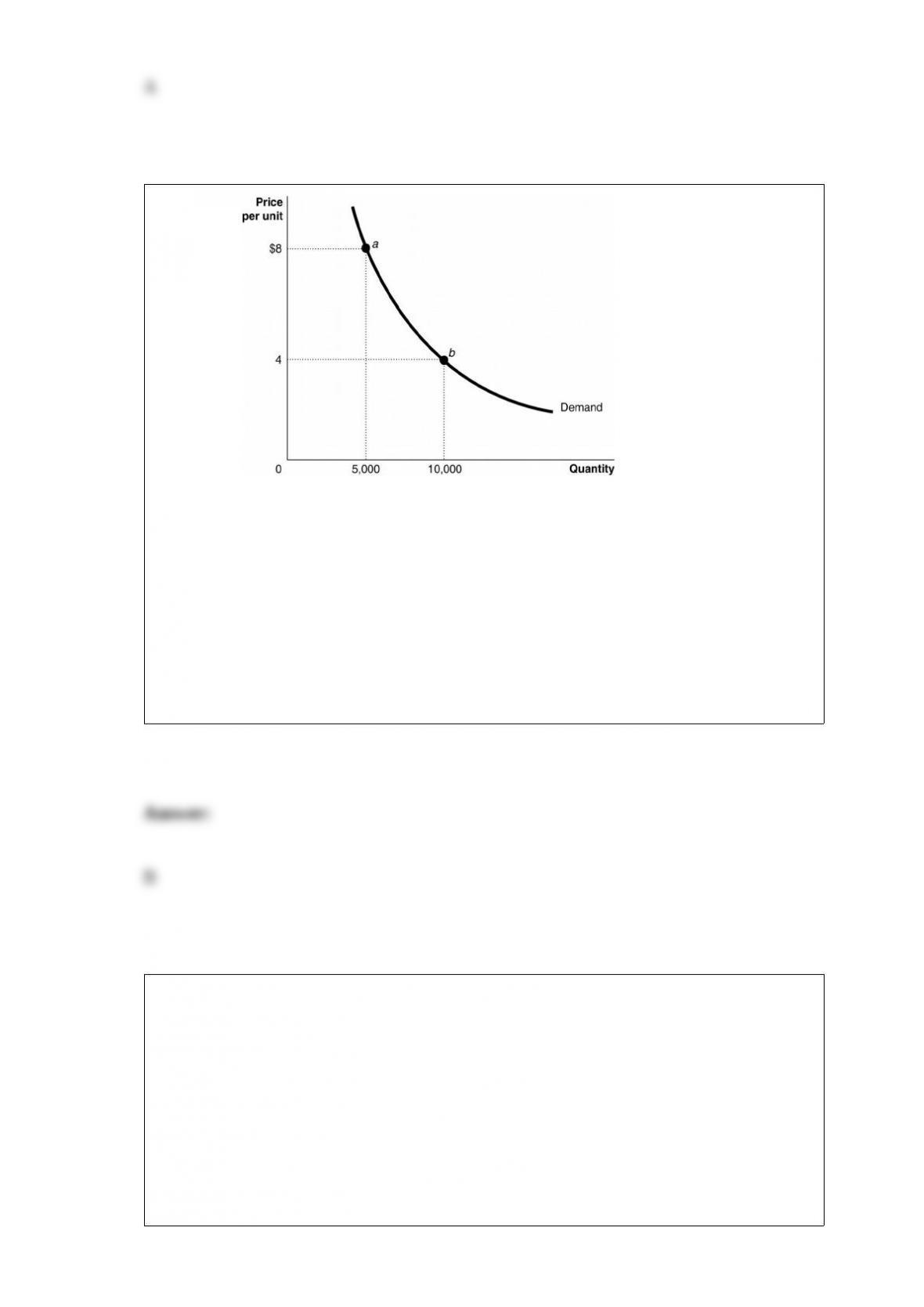
Figure 6-7
Between points a and on the demand curve, demand is
A) perfectly inelastic.
B) unit-elastic.
C) perfectly elastic.
D) elastic.
The recession of 2007-2009 would most likely be represented in a production
possibilities frontier graph by
A) a point inside the frontier.
B) a point outside the frontier.
C) a point on the frontier.
D) an intercept on either the vertical or the horizontal axis.

If a corporate bond with face value of $1,000 has an interest rate of eight percent paid
once a year for a term of 30 years, what is the size of the coupon payment?
A) $1,000
B) $300
C) $80
D) $8
If the price of automobiles was to increase, then
A) the demand for gasoline would decrease.
B) the demand for gasoline would increase.
C) the supply of gasoline would increase.
D) the quantity demanded of gasoline would decrease.
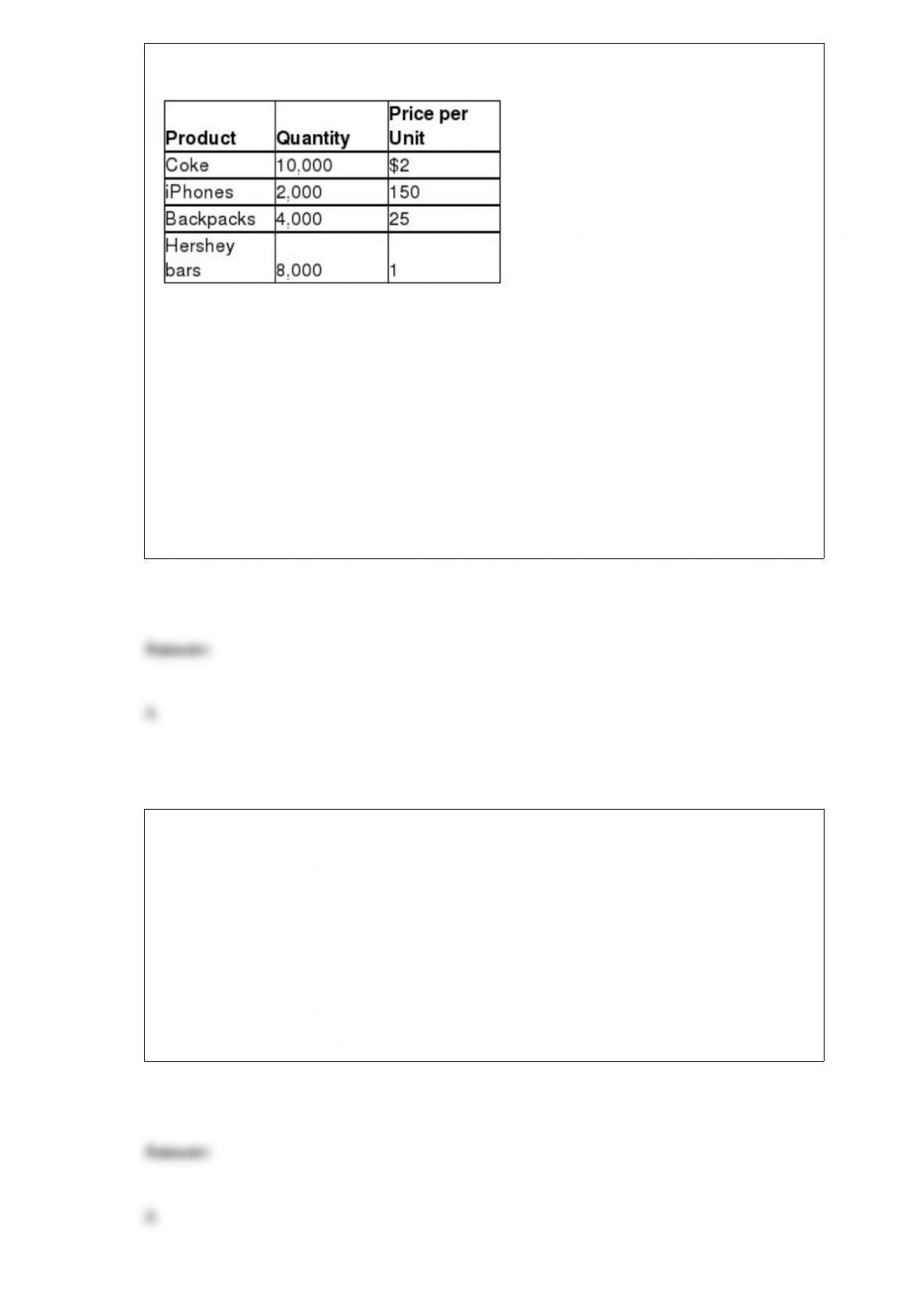
Table 8-6
Consider the table of production and price statistics for a small economy in 2013. If the
economy only produces the four goods listed below, what is GDP for 2013?
A) $428,000
B) $267,000
C) $24,000
D) $1,424
What impact might an increase in the budget deficit have on interest rates and exchange
rates?
A) Interest rates and exchange rates increase.
B) Interest rates increase and exchange rates decrease.
C) Interest rates decrease and exchange rates increase.
D) Interest rates and exchange rates decrease.

Sam Lewis owns a firm in New York City’s garment district. If Sam keeps adding
workers to use the same number of sewing machines, eventually the workplace will
become so crowded that workers will get in each other’s way. At this point
A) the marginal product of labor in Sam’s business would be negative and his total
output would decrease.
B) Sam should encourage his workers to share their sewing machines.
C) Sam’s business will be in violation of safety rules that have been established by the
New York City government.
D) Sam should begin using a division of labor in his business.
Persistent current account deficits in the United States
A) can be seen as a vote of confidence in the strength of the U.S. economy.
B) cause persistent declines in investment in the United States.
C) cause U.S. investors to accumulate more foreign assets than foreign investors
accumulate U.S. assets.
D) will eventually cause the value of the dollar to rise.
The number of people receiving Medicare is expected to ________ by the year 2030.

A) reach 5 million by
B) stabilize
C) decline by 10 percent
D) grow to 80 million
Which of the following functions of money would be violated if inflation were high?
A) unit of account
B) store of value
C) certificate of gold
D) medium of exchange
Suppose a decrease in the supply of bottled water results in a decrease in revenue. This
indicates that
A) the demand for bottled water is inelastic in the price range considered.
B) the demand for bottled water is elastic in the price range considered.
C) the supply of bottled water is inelastic in the price range considered.
D) the supply of bottled water is elastic in the price range considered.
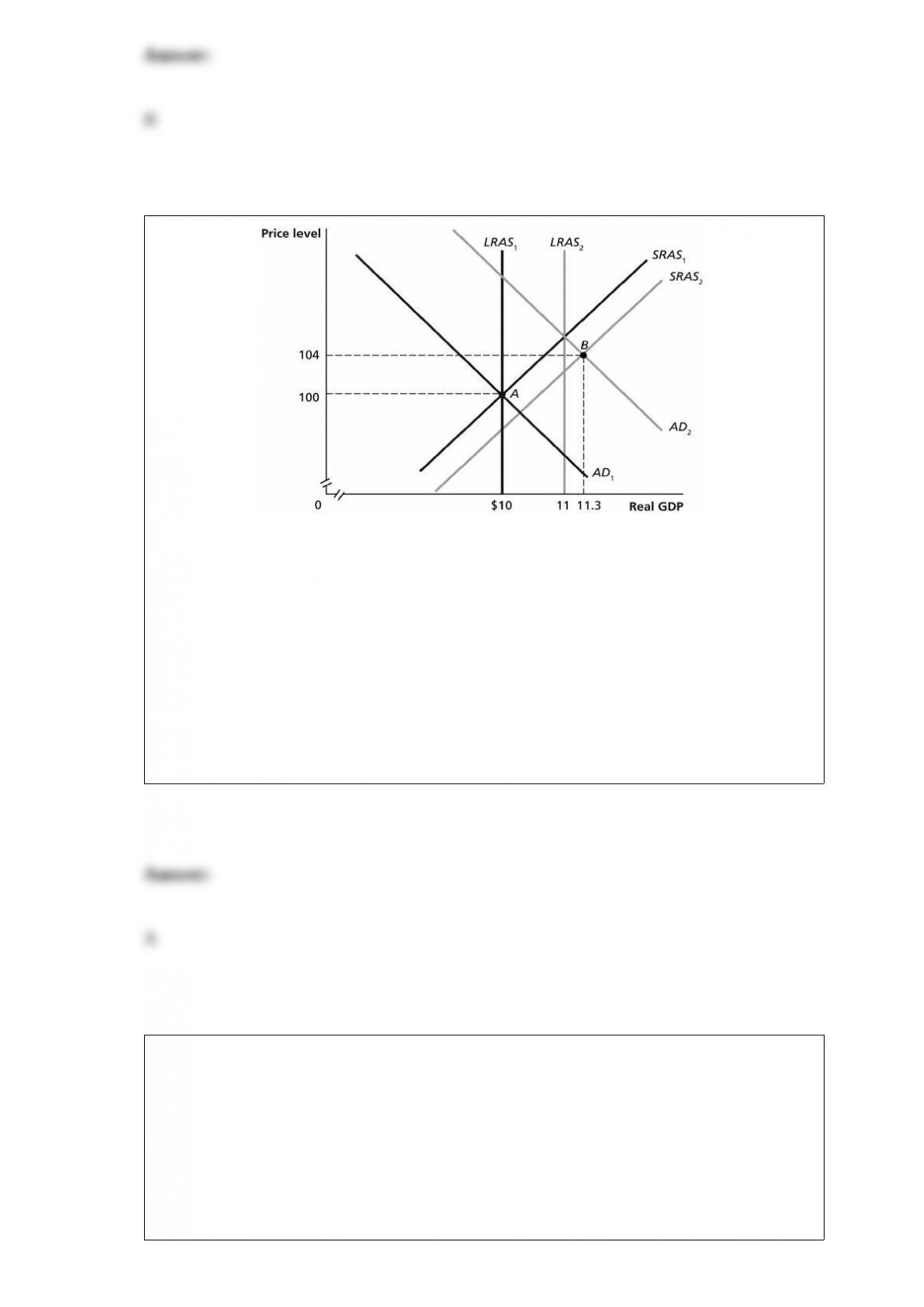
Figure 26-12
In the dynamic AD–AS model, if the economy is at point A in year 1 and is expected to
go to point B in year 2, the Federal Reserve would most likely
A) increase interest rates.
B) decrease interest rates.
C) not change interest rates.
D) increase the inflation rate.
If firms sell what they expected to sell, which of the following will be true?
A) Aggregate expenditure will be greater than GDP.
B) There is no unplanned change in inventories.
C) Inventories will rise, and GDP and employment will fall.
D) Aggregate expenditure will be less than GDP.
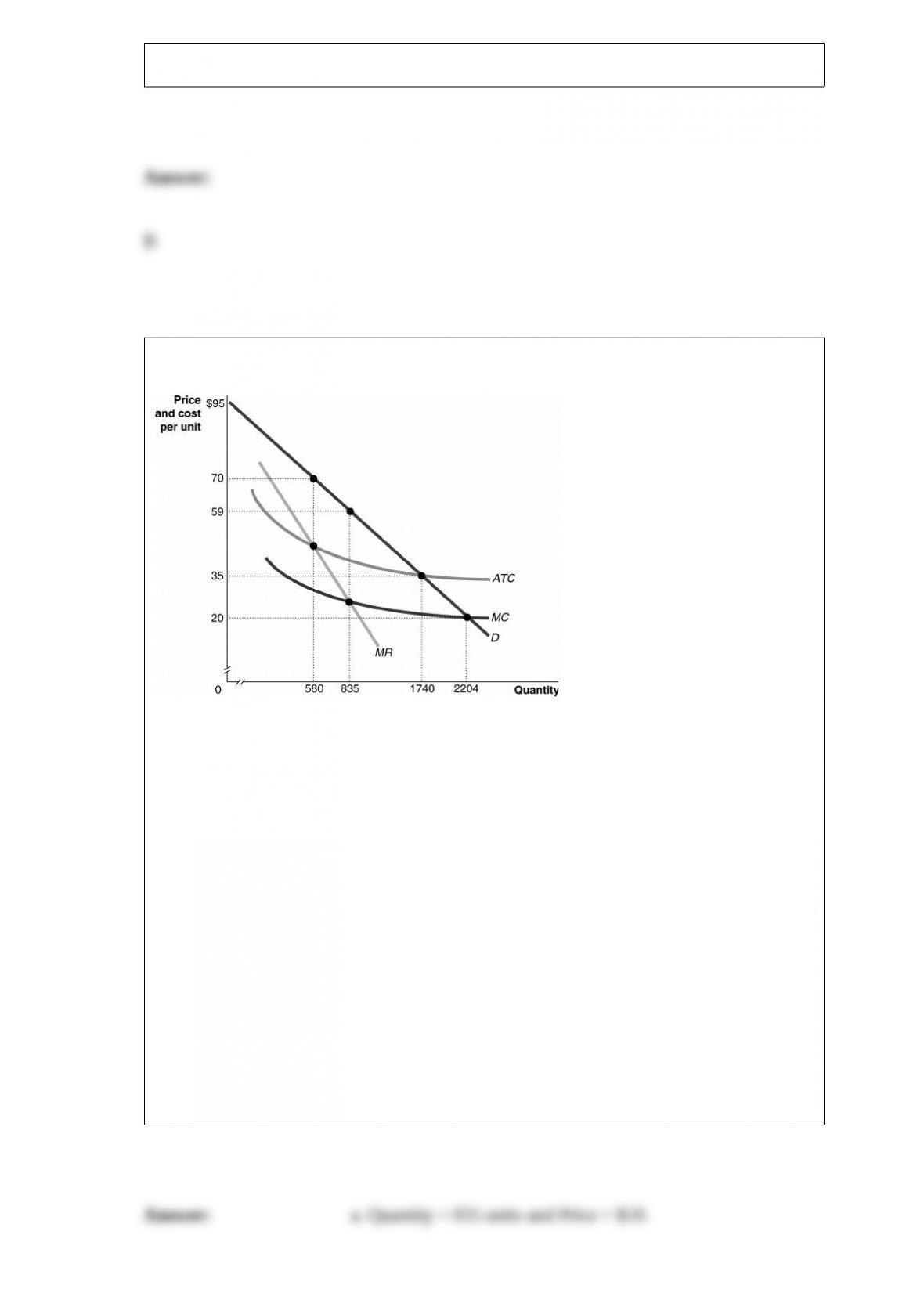
Figure 15-18
Answer the following questions.
a. What quantity will this monopoly produce and what price will it charge?
b. Suppose the monopoly is regulated. If the regulatory agency wants to achieve
economic efficiency, what price should it require the monopoly to charge?
c. To achieve economic efficiency, what quantity will the regulated monopoly produce?
d. Will the regulated monopoly make a profit if it charges the price that will achieve
economic efficiency?
e. Suppose the government decides to regulate the monopoly by imposing a price
ceiling of $35. What quantity will the monopoly produce and what price will the
monopoly charge?
f. With the price ceiling of $35, what profit will the monopoly earn?
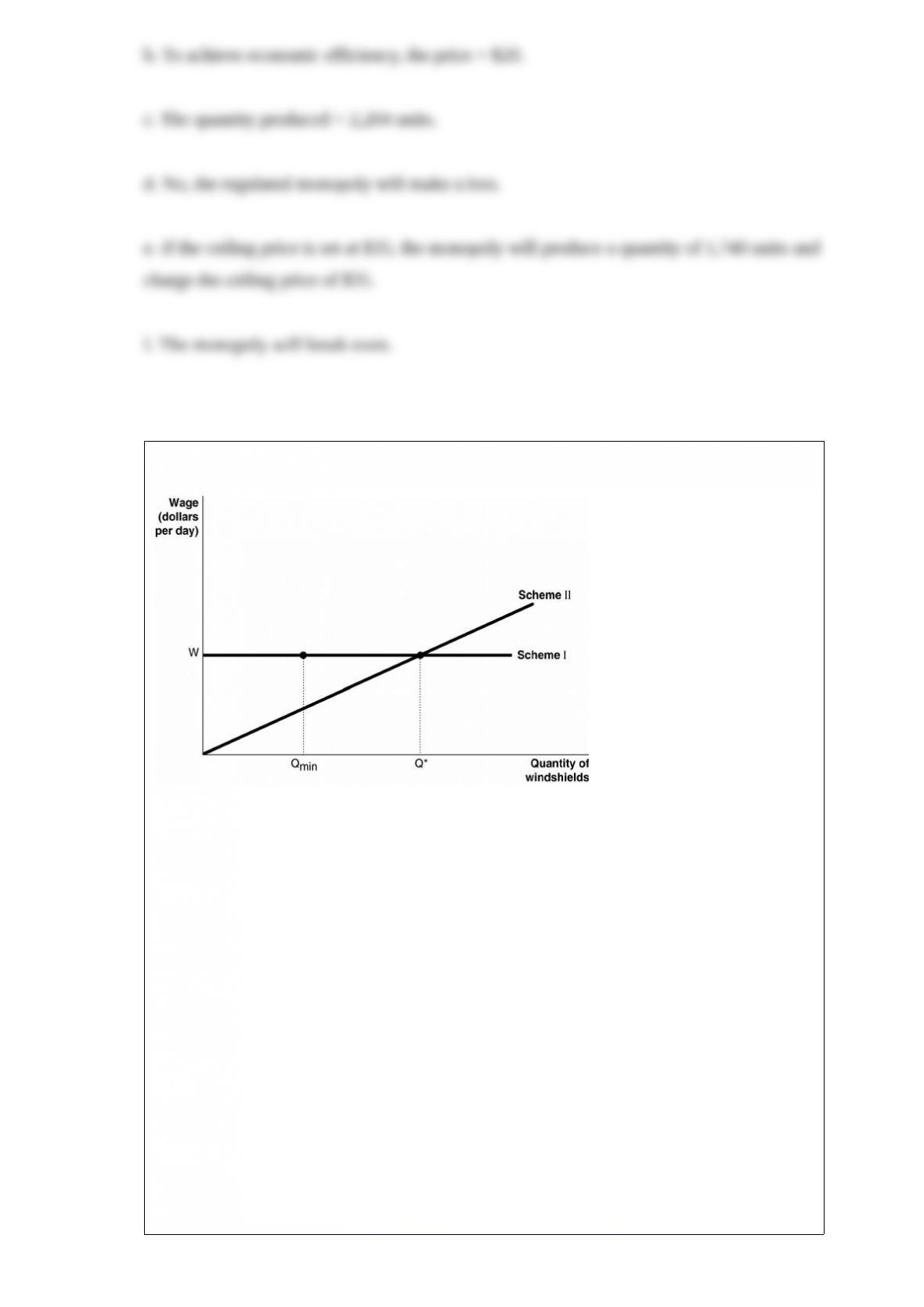
Figure 17-6
Figure 17-6 shows two
different compensation schemes for the Safelite Glass Corporation, an installer of auto
glass windshields. Under Scheme I, the firm pays a consistent wage of $80 per day
based on an 8-hour workday. Qmin represents the cut-off point under the hourly-wage
system: if a worker installed fewer than Qmin windshields, the worker got fired. Scheme
II represents a piece-rate scheme with an earnings floor: no worker would get less than
$80 per day (for an 8-hour workday) and would have to produce at least Qmin. For any
output level beyond Q* the worker earned an additional $20 for each unit produced.
Under Scheme I
A) workers compete with each other to see who can produce beyond Qmin in the
shortest possible time.
B) workers have no incentive to produce beyond Qmin.
C) workers signal their productivity to the firm by consistently producing above Qmin.

D) the incentive to increase productivity depends on where Qmin is set; if it is at a very
high level, then workers will rise to the challenge for fear of losing their jobs.
If you own a $1,000 face value bond with one year remaining to maturity and a 3
percent coupon rate and new bonds are paying 14 percent, what is the most you can get
for your old bond?
A) $903.51
B) $997.19
C) $1,000
D) $1,140