
Exhibit 7-6
In Exhibit 7-6, the marginal cost of the 40th unit of output is
a. $20
b. $35
c. $200
d. $350
e. $1,000
Exhibit 9-10

What output would maximize the profit of the nondiscriminating monopolist in Exhibit
9-10?
a. 0
b. 7
c. 10
d. more than 10
e. less than 7
Suppose Joan uses her savings to purchase computer equipment for her new consulting
business. Soon after this, the market interest rate rises. As a result, her
a. explicit costs rise immediately
b. accounting profit falls immediately
c. accounting profit rises immediately
d. economic profit rises immediately
e. economic profit falls immediately
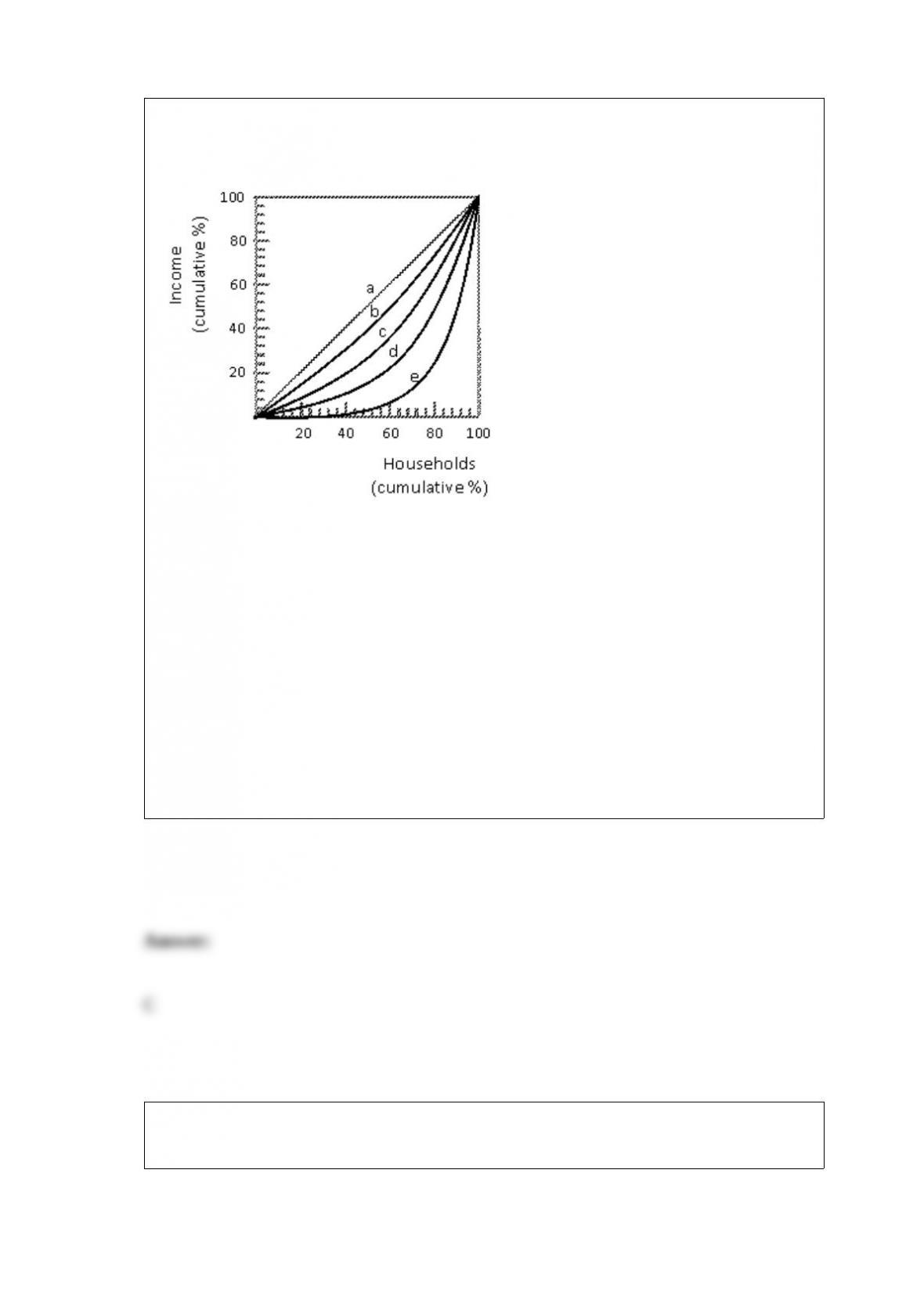
Exhibit 18-1
Exhibit 18-1 shows five different Lorenz curves. Along the Lorenz curve labelled a, the
poorest 60% of the population earns what proportion of the total income?
a. 20%
b. 40%
c. 60%
d. 80%
e. 100%
Exhibit 5-3

Use the information in Exhibit 5-3 to calculate the value of price elasticity of demand
for restaurant meals.
a. -1/2
b. -5/3
c. -3/5
d. -3/7
e. -7/3
The cost of consumption has two components:
a. the substitution effect and the income effect
b. the law of demand and the law of diminishing marginal utility
c. the price effect and the income effect
d. the money price and the time price
e. saving and taxes
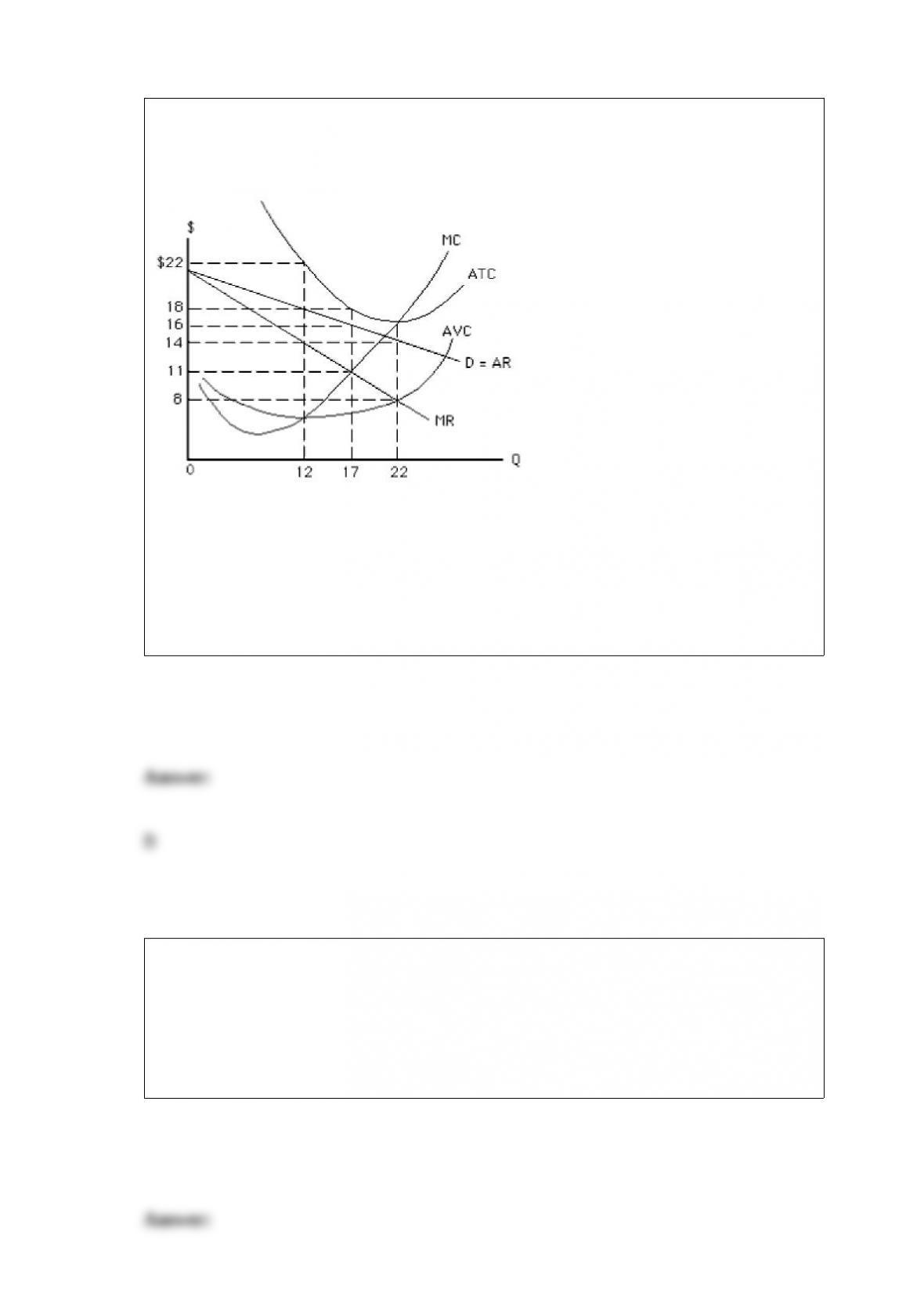
Exhibit 9-14
At the profit-maximizing (or loss-minimizing) level of production, the monopoly in
Exhibit 9-14 will have total cost of
a. $264
b. $306
c. $216
d. $187
e. $176
When it comes to basic commodities, the United States is a net exporter of oil and
metals and a net importer of farm crops.
a. True
b. False

The law of diminishing marginal utility explains why an individual’s demand curve is
elastic.
a. True
b. False
Monopolistically competitive industries consist of
a. one firm selling several products
b. one firm selling one product
c. many firms, all selling identical products
d. many firms, each selling a slightly different product
e. many firms, each selling a completely different product
Exhibit 10-18

In Exhibit 10-18, the monopolistic competitor’s profit-maximizing price is
a. $10
b. $15
c. $20
d. $25
e. $30
The decline of the poverty rate for the elderly can be attributed to
a. Temporary Assistance for Need Families (TANF)
b. tax increases
c. Medicaid
d. the political power of the elderly

e. increased resource earnings
Economies of scope exist when it is less expensive to produce two or more product
lines in a single firm than it is to produce them separately.
a. True
b. False
If one dollar is initially equal in value to one euro and demand for euros increases, then
each dollar will be worth
a. more than one euro, and European imports will be cheaper in the United States
b. less than one euro, and European imports will be more expensive in the United States
c. more than one euro, and European imports will be more expensive in the United
States
d. less than one euro, and European imports will be cheaper in the United States
e. the same as the euro, and there will be no change in the values of imports or exports

U.S. patent laws establish property rights for inventors of new products
a. forever
b. until a superior invention comes along
c. for 3 years
d. for 10 years
e. for 20 years
Special-interest legislation usually
a. has widespread benefits and costs
b. has concentrated benefits and costs
c. has concentrated benefits but widespread costs
d. concerns the provision of public goods
e. concerns the provision of private goods

In which of the following market structures is a firm most likely to advertise
extensively and fear entry of new firms?
a. perfect competition
b. pure monopoly
c. monopolistic competition
d. oligopoly
e. both perfect competition and monopolistic competition
A firm’s demand curve for investment is its
a. marginal resource cost curve
b. marginal product curve
c. marginal revenue curve
d. marginal rate of return on investment curve
e. supply of loanable funds curve
The difference between the maximum amount a person is willing to pay for a given
quantity of a good and the amount actually paid for that quantity is called
a. producer surplus
b. the substitution effect

c. price discrimination
d. the income effect
e. consumer surplus
The International Monetary Fund was founded
a. in Paris in 1938
b. in New York in 1961
c. in Washington in 1971
d. in New York in 1991
e. in Bretton Woods in 1944
In a perfectly competitive labor market, a profit-maximizing firm will hire labor up to
the point at which the
a. wage rate = MRC
b. wage rate < MRP
c. wage rate = MRP

d. wage rate > MRP
e. wage rate = MP
At the market output and price for a good whose production causes pollution,
a. pollution is eliminated
b. the marginal social cost of production exceeds the marginal social benefit of
production
c. the private cost of production equals the private benefit of production
d. the marginal social benefit of production equals the marginal social cost of
production
e. too little of the good is produced
Perfectly competitive firms are price takers because
a. each firm is too small compared to the market to be able to affect price
b. one firm determines price and all other firms accept this price
c. firms take the price that government determines
d. firms must accept any price consumers offer them
e. firms earn high profits by “taking” consumers

The patent and copyright systems
a. reduce the cost of duplicating intellectual property
b. help make the market for intellectual property more competitive
c. are forms of intellectual property
d. help increase the incentives to create new intellectual property
e. help reduce the incentives to create new intellectual property
An isoquant shows the possible combinations of two
a. products that yield the same social utility
b. products that can be produced after an improvement in technology
c. products that can be produced using the constant amount of resources available
d. resources that involve an identical total cost
e. resources that produce an identical quantity of the product

For each watch Denmark produces, it gives up the opportunity to make 50 pounds of
cheese. Germany can produce one watch for every 100 pounds of cheese it produces.
Which of the following is true with regard to opportunity costs in the two countries?
a. The opportunity cost of producing watches is lower in Denmark.
b. The opportunity cost of producing cheese is lower in Denmark.
c. The opportunity cost of producing watches is identical in both countries.
d. It is impossible to compare opportunity costs because the two countries use different
currencies.
e. In Germany the opportunity cost of producing one pound of cheese is one watch.
All of the following are examples of a constant-elasticity demand curve except a(n)
a. perfectly elastic demand curve
b. linear demand curve with a slope of -4
c. perfectly inelastic demand curve
d. unit-elastic demand curve
e. vertical demand curve
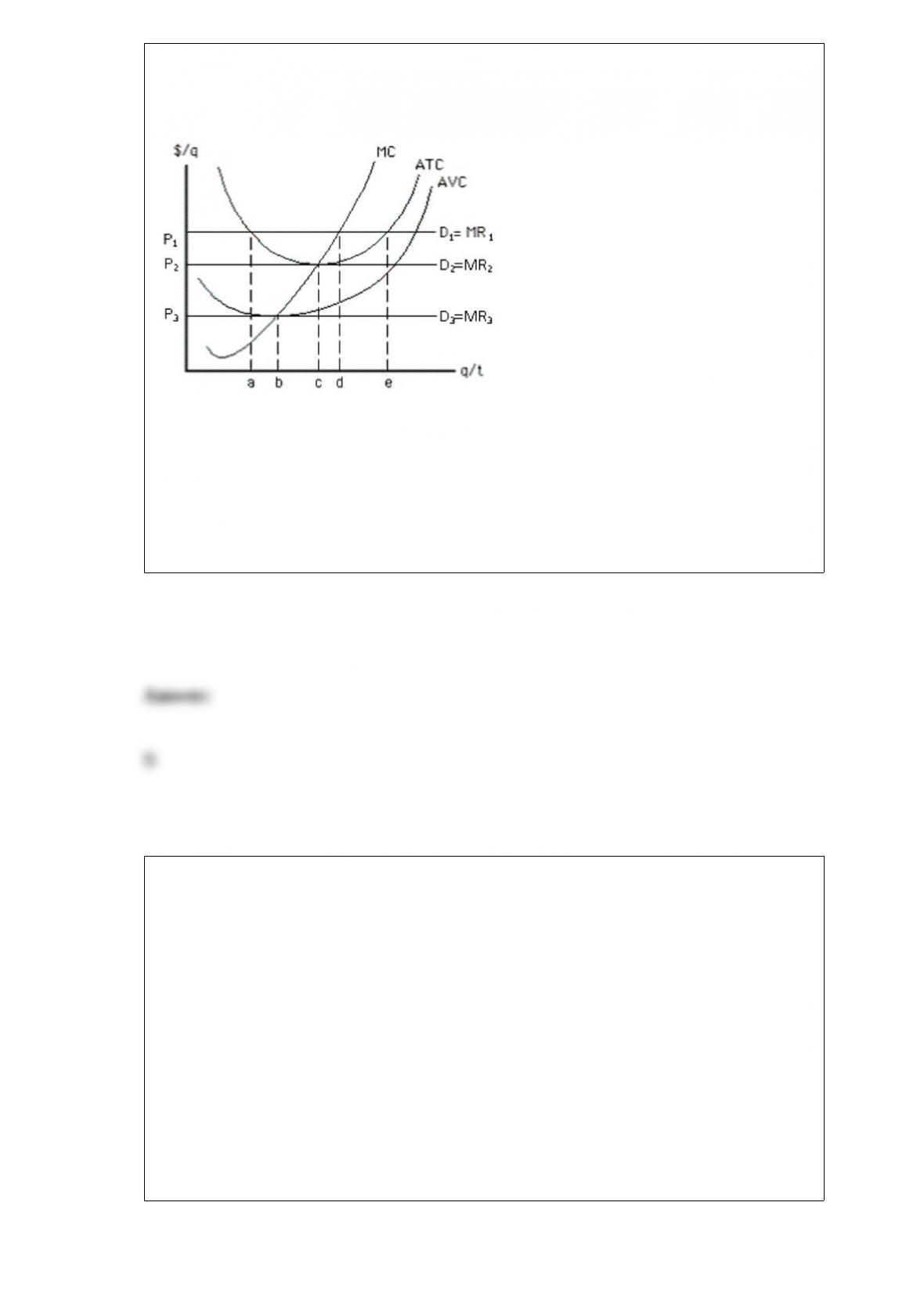
Exhibit 8-6
Consider Exhibit 8-6. At which price will this firm earn zero profit?
a. P1
b. P2
c. P3
d. P2and P3
e. will never earn zero profit
One reason why an increase in the minimum wage may result in increased employment
is that
a. the government prohibits firms from laying-off affected workers
b. the supply of labor sometimes falls as a result of the higher minimum wage
c. all wages rises by the same percent that the minimum wage rises
d. employers react to the higher minimum wage by substituting part-time jobs for
full-time jobs
e. employers react to the higher minimum wage by substituting full-time jobs for
part-time jobs
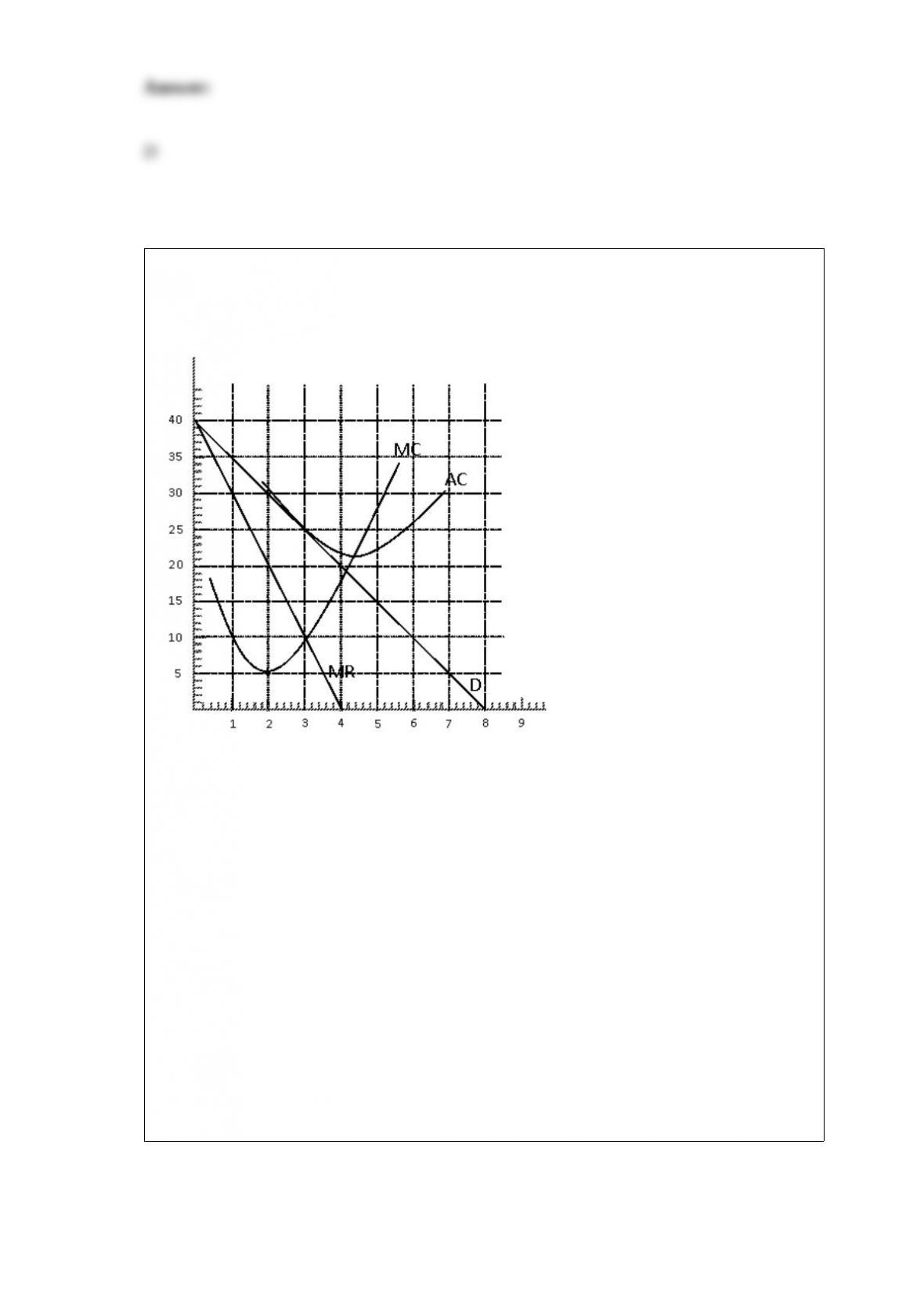
Exhibit 10-18
Consider the situation depicted for the monopolistically competitive firm in Exhibit
10-18. What would you expect to happen in this market in the long-run?
a. exit of resources will occur and this firm’s demand curve will shift out leading to a
higher price
b. exit of resources will occur and this firm’s demand curve will shift out leading to a
lower price
c. nothing will happen the industry is in long-run equilibrium
d. entry of new resources will occur and this firm’s demand curve will shift in leading to
a lower price
e. entry of new resources will occur and this firm’s demand curve will shift in leading to
a higher price